
Farmak Wants to Monopolize the Corvalol Brand. But Its Case Is Unconvincing
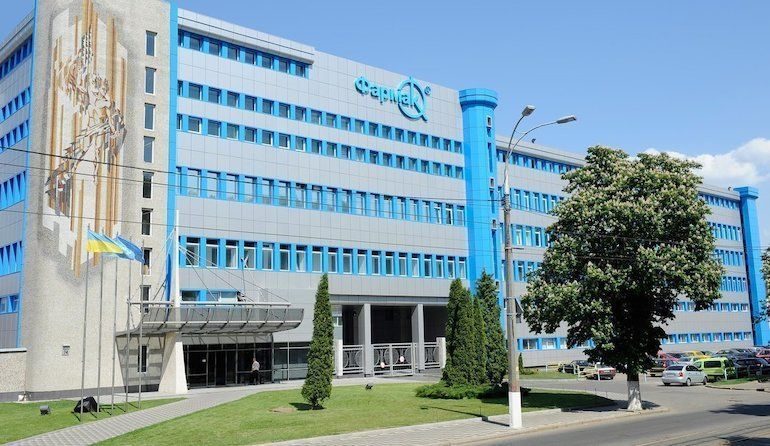
The court battle has been going on for 15 years.
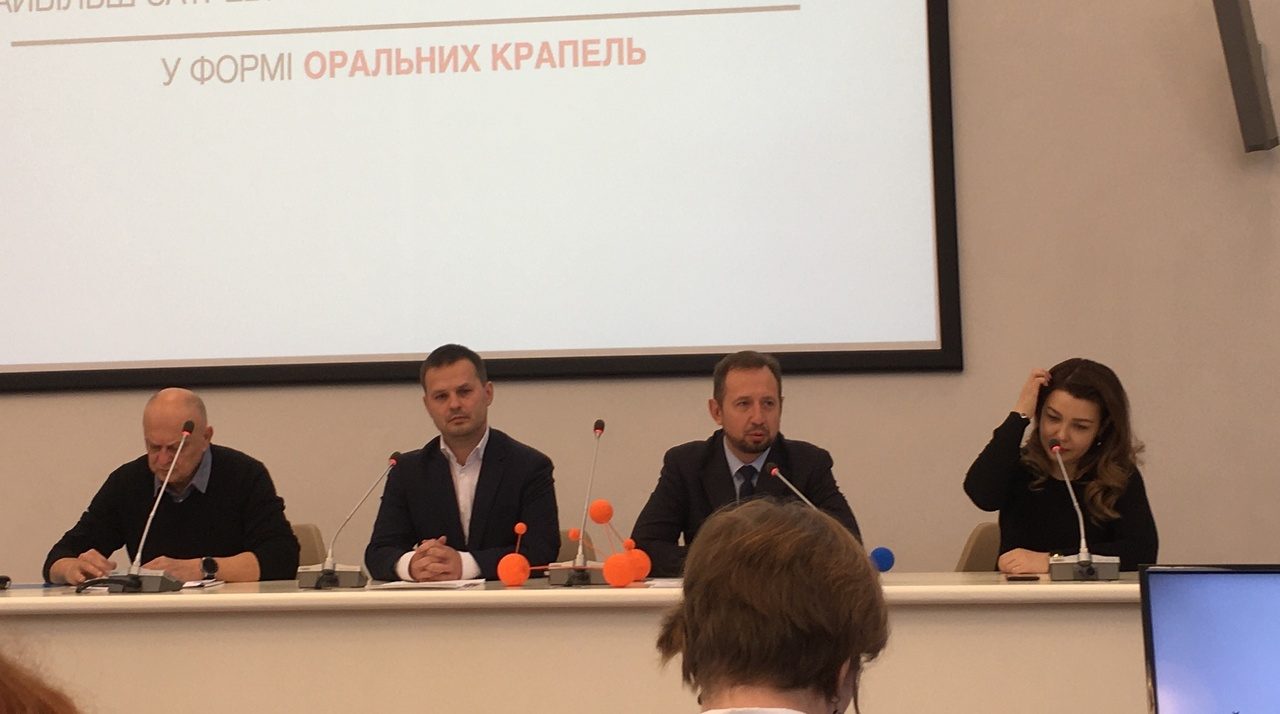
On Monday, Farmak held a factory tour and a press conference for journalists to deliver a clear message: only Farmak can produce the well-known drug called Corvalol.
The fact is that for 15 years Farmak has been in a dispute with its competitor, Darnitsa, over the use of the designation “Corvalol Corvalolum” for this drug. The company, which positions itself as the successor to the Kyiv Chemical Pharmaceutical Plant named after Lomonosov, managed to register “Corvalol Corvalolum” as its own brand at the dawn of Ukraine’s independence and to prohibit other companies from using it.
Darnitsa, which believes the name “corvalol” is a generic term, is contesting the legitimacy of the brand’s assignment to Farmak in court, and is currently using the designation “Corvalol-Darnitsa”. Farmak, in turn, considers this confusingly similar to its brand and intends to use the courts to ban this practice.
We will not analyze here which company is right on the merits, but will name the reasons why Farmak, in trying to prove its rights to the designation, acts very unconvincingly.
Farmak cites data from a sociological survey. Unconvincing
According to a sociological survey commissioned by Farmak, 53.2% of respondents associate “Corvalol” with their company, and all those surveyed are aware that such a drug exists.
Setting aside the fact that the survey was conducted by a firm located on the same street as Farmak (Legal Affairs Director Dmitry Taranchuk did not deny this and called it a coincidence), consider how realistic the figure may be. There is no doubt that Corvalol is fully recognizable, but can more than 50% of people really associate it with Farmak?
To begin with, ask yourself: when buying medicine, how often do you think about the manufacturer? Do you know that “Aspirin” is produced only by Germany’s Bayer? Do you think about who makes “Analgin” or “Paracetamol” when you buy them? Hardly.
Corvalol is used mainly by people over 40, most likely remembering corvalol from the USSR. Do they ask the pharmacist for “Corvalol” rather than “Corvalol-Darnitsa”? Do they understand the difference between them? Accordingly, the objectivity of the 53.2% figure in the survey can and should be questioned. To distort it, one could simply phrase the question to respondents in a convenient way.
Second point. At the press conference, Dmitry Taranchuk repeatedly stated that the survey was conducted in recent years to find out whether corvalol was associated with Farmak before December 1, 2002. How can one objectively determine through a survey whether people associated corvalol with any company 17 (!) years ago?
Farmak assures that Corvalol will not become more expensive under a “monopoly”. But that is not the case
The company’s argument that “We want to ban only competitors from using the designation, not the production of the drug itself, so Corvalol will not get more expensive” is highly disingenuous. Professional marketers cannot fail to understand the influence of a name on the minds of pharmacy customers, especially those who have been accustomed to taking corvalol since Soviet times. And people in pharmacies ask specifically for “Corvalol”, and take “Corvalment” from the Kyiv Vitamin Plant (which, incidentally, was cited as an example of fair competition) only when the first option is unavailable.
In any case, competition will decrease — which means there will be an opportunity to raise prices. Not as much as if there were exclusivity on the manufacture of the drug. But not as little as if the name “Corvalol” could be used by a competitor.
We are not condemning Farmak for wanting to defend its brand and earn more money — that is normal. But the argument that this will in no way affect prices is weak.
Farmak positions itself as an innovative company, but does not try to tell people the truth about corvalol
On the one hand, it is understandable — a brand is a brand, and if it can be used on an exclusive basis, it should be. There is no doubt that Farmak’s marketing invests heavily so that the association — whether it exists or not — arises and is sustained.
The question is different: corvalol may be harmful to health, yet for some reason a modern and innovative company does not want to be fully honest with its customers.
Let us quote Dr. Yevgeny Komarovsky: “People don’t understand that when an adult has heart pain, they need to get qualified medical help from a doctor, have an ECG, rather than treating themselves with “Validol” and “Corvalol”. As a result, he ends up with a heart attack and dies. So if he did not have access to “Validol”, he would have had to go to a doctor. We simply do not realize that direct access to medicines is the murder of tens of thousands of our compatriots”.
Simply put, corvalol and validol are more like painkillers that relieve pain but do not solve the problem. They suppress the signals the body sends to a person, which leads to those signals being ignored and the condition worsening.
In its label, Farmak, of course, does not tell the truth in large letters for patients (because drug manufacturers are not required to write about possible harm, unlike tobacco manufacturers), who in most cases take the drug purely out of ignorance, believing it eliminates the problem.
Making money is pleasant, but perhaps a pharmaceutical company should also have the goal of curing the patient? All the more so for a “modern” and “innovative” one, if you call yourselves that.
Konstantin Chernyak

Russian Attacks in Dnipropetrovsk Region: Two Killed, Seven Injured

Defense Forces Strike Four Russian Drone Control Points in Past Day, Including in Berdiansk

Britain Threatens Sanctions on Kremlin-Linked People; Poland Ready to Hand Ukraine Ammunition

Russia says it has completed "planned exercises" in the Black Sea

MVD: Fake Riots With Prop Blood Were Being Prepared Near Presidential Office

Law Enforcers Name Another Klitschko Deputy as Suspect

Berlin Holds Protest Against War in Ukraine; EU Prepares for Possible Russian Halt of Gas Supplies
North Korea Fires Ballistic Missile Over Record Distance in Five Years
Irish Fishermen Force Russia to Postpone Naval Drills

US sanctions in case of invasion of Ukraine could completely destroy Russia's economy, NYT reports
