
Genetically Modified Pig's Kidney Connected to Human for First Time

But the long-term consequences of such operations are unknown.
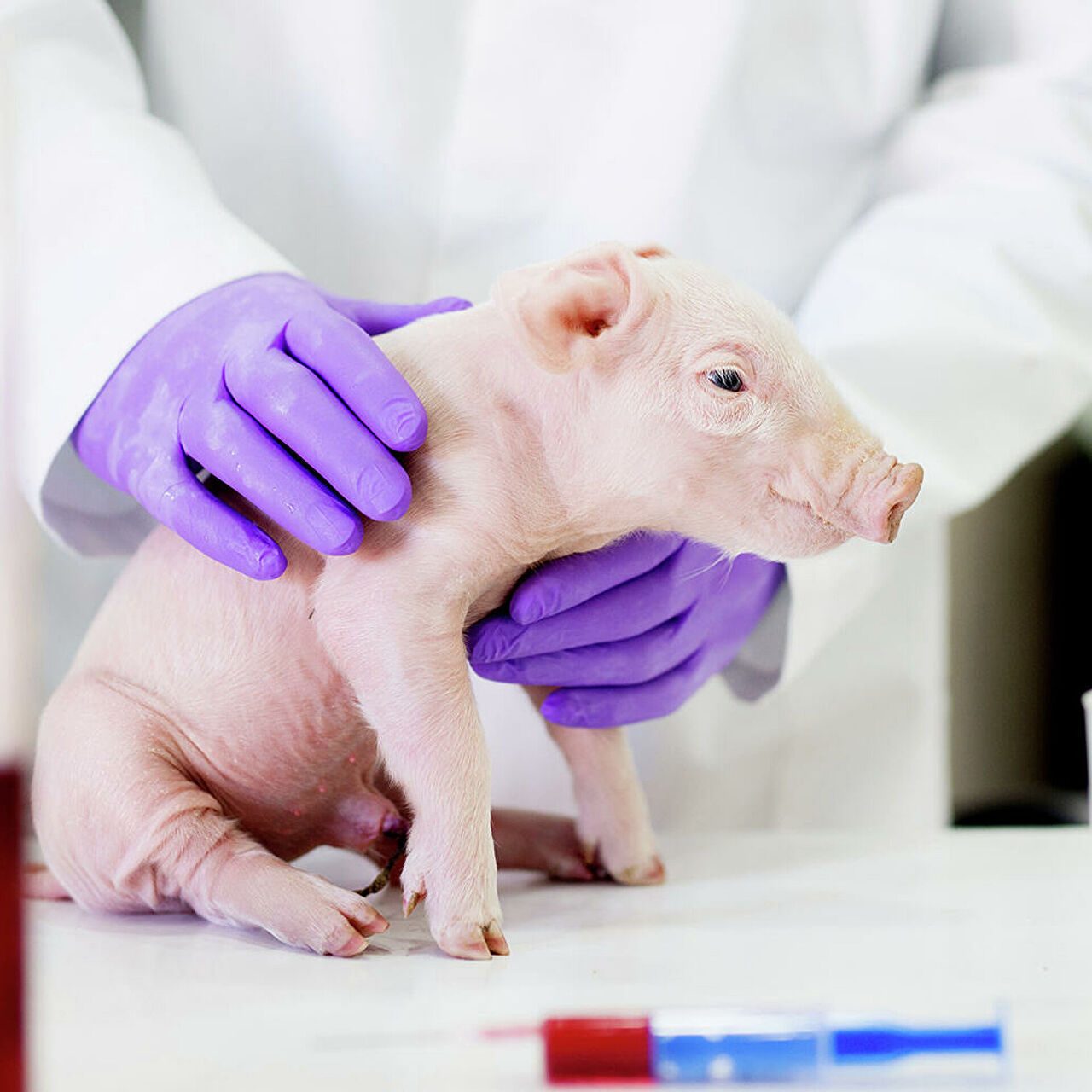
Surgeons at the NYU Langone Medical Center for the first time successfully connected a genetically modified pig's kidney to a human.
The experiment was conducted back in September, but only now have its preliminary results become known. The study has not yet been published in a scientific journal and has not undergone peer review.
The kidney was connected not to a patient who needed such an operation, but to a woman who had been diagnosed with brain death. She was on a ventilator. The woman had wanted to donate her organs, but when they proved unsuitable for transplantation, her family allowed the use of her body for the experiment.

The study participants even consulted ethics specialists before asking her family for permission for such an operation. The kidney was taken from a pig of the GalSafe line, which has the gene responsible for synthesizing a sugar not found in the human body switched off, so it cannot trigger rejection when transplanted from 'ordinary' animals.
The pig was raised by Revivicor, a company specializing in regenerative medicine. The US Food and Drug Administration (FDA) approved the use of the animal as a source of food and medicine for people, including those with allergies.
In the first stage, doctors led by transplant surgeon Robert Montgomery, who survived a heart transplant himself, decided not to implant the pig kidney into the patient's body, but to check the condition of the blood vessels, which suffer most during xenotransplantation (transplantation of organs or tissues from one species to another).

Doctors attached the organ to several blood vessels in the upper part of the leg and covered it with a protective screen. For 54 hours they monitored the body's reaction and took tissue samples for analysis. Montgomery said the results of the operation exceeded the surgeons' expectations.
The kidney was not immediately rejected; the organ almost immediately began to function normally, removing creatinine from the body and producing urine. The transplant surgeon explained that in many cases, kidneys from deceased human donors take days or weeks to start functioning. He said that the fact the organ functioned outside the body is the first sign that it will work inside the body as well.
It is not yet clear how long a kidney from a genetically modified pig can function in the human body or what the long-term reaction of the immune system will be. Experts agreed that the study represents a turning point for the industry. Some of them would like to see what data were collected during the experiment and whether it can be repeated.
Dr. Montgomery said genetically modified pigs could be a 'sustainable and renewable source of organs' and compared them to solar and wind energy. By his estimates, thanks to this experiment, trials on patients with end-stage renal failure may become possible within the next year or two.
During these trials, the transplant surgeon plans to test whether a pig kidney transplant would be suitable as a short-term solution for people in critical condition with low chances of receiving a human kidney or a poor prognosis on dialysis.
Robert Montgomery
transplant surgeonFor many such patients, the mortality rate is comparable to some types of cancer, and we do not think twice about using new drugs or experiments for cancer patients if they can give them another couple of months of life.
According to US government data, in 2010 around 2.6 million people worldwide received renal replacement therapy (RRT), either kidney transplantation or dialysis. But in total, between 4.9 and 9.7 million people needed such therapy. The authors of the estimates suggest that about 2.3 million people may have died due to lack of access to RRT.
Currently, more than 100,000 people in the US are on the waiting list for a transplant, and 90,000 of them need a new kidney.

Russian Attacks in Dnipropetrovsk Region: Two Killed, Seven Injured

Defense Forces Strike Four Russian Drone Control Points in Past Day, Including in Berdiansk

Britain Threatens Sanctions on Kremlin-Linked People; Poland Ready to Hand Ukraine Ammunition

Russia says it has completed "planned exercises" in the Black Sea

MVD: Fake Riots With Prop Blood Were Being Prepared Near Presidential Office

Law Enforcers Name Another Klitschko Deputy as Suspect

Berlin Holds Protest Against War in Ukraine; EU Prepares for Possible Russian Halt of Gas Supplies
North Korea Fires Ballistic Missile Over Record Distance in Five Years
Irish Fishermen Force Russia to Postpone Naval Drills

US sanctions in case of invasion of Ukraine could completely destroy Russia's economy, NYT reports
