
The First Step Is Dialogue With the Counterparty: How to Save Non-Food Retail During Quarantine?
FAQ for business.
On Friday, well-known Ukrainian businessman Garik Korogodsky said that he and his fellow owners of the Dream Town shopping center in the capital do not plan to charge rent to their tenants during the quarantine introduced due to the coronavirus epidemic, when many retail outlets are forced to close and have no opportunity to earn profit.
In addition, the businessman advised partners to draw up proper documents to have a legal basis for not charging rent.
We explain why the principle of "Liber ab omnibus obligationibus" (free from all obligations) and the corresponding legislative changes should protect non-food retail from total collapse.
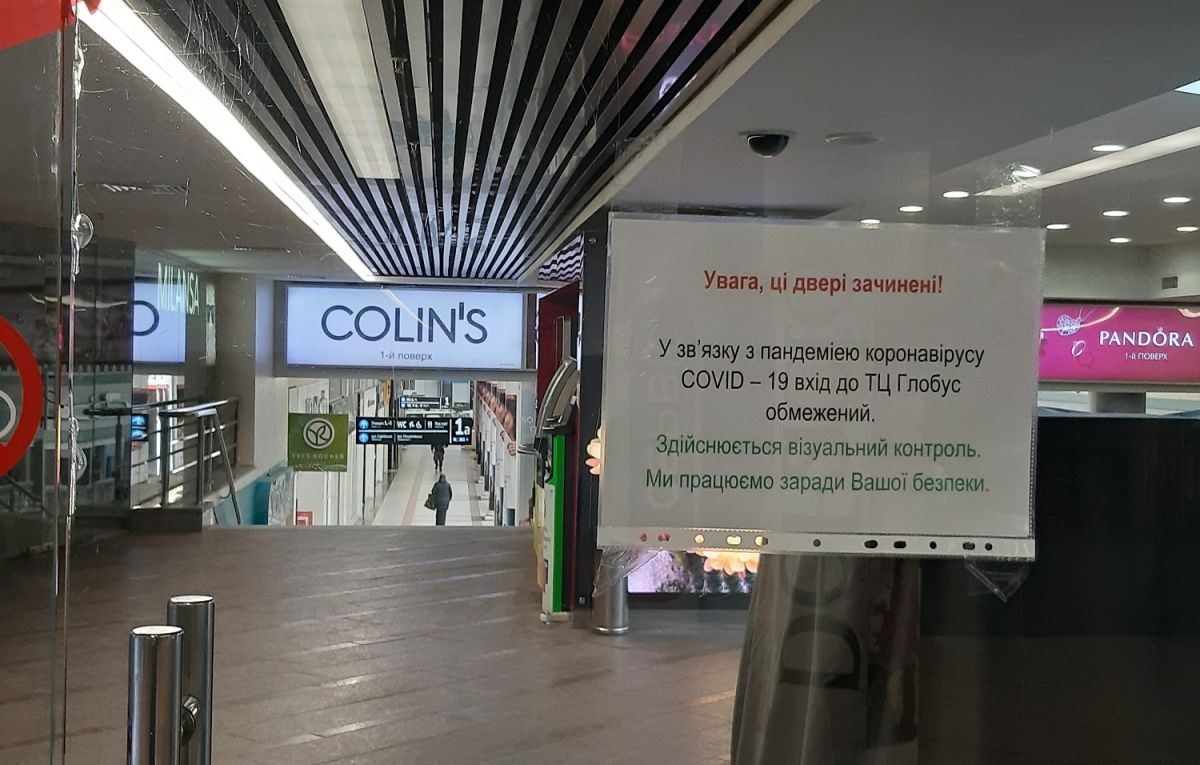
Clearly, due to the quarantine announced in connection with the coronavirus (COVID-19) pandemic, non-food retail, entertainment and personal services establishments, logistics and tourism are suffering a heavy blow. Thus, in accordance with the government's regulatory acts, cinemas, bars, beauty salons have already stopped operating, concerts and performances have been canceled or postponed, exhibitions and forums have been canceled, and retail outlets have closed, except those selling food, medicines and communication products. Catering establishments still have the option to work "for delivery".
First of all, the question arises of whether the above-mentioned business entities can make payments with their counterparties. In particular, everyone is interested in rent payments during the period of suspended business activity and the specifics of using force majeure as a circumstance that releases from paying such payments.
In total, rent usually takes about 10-20% of revenue. That is, while all establishments in the personal and entertainment services sector without exception have zero profit, they actually have nothing to pay rent with. On March 18, 2020, Law of Ukraine No. 530-IX "On Amendments to Certain Legislative Acts of Ukraine Aimed at Preventing the Emergence and Spread of the Coronavirus Disease (COVID-19)" came into force, under which the Verkhovna Rada officially recognized the quarantine as force majeure.
How can business use these provisions to its advantage in mutual settlements with its partners?
First of all, it is worth reviewing the section in contracts concluded with counterparties that sets out the provisions on force majeure and the procedure for performing contractual obligations for the period of its validity.
If the lease agreement states that for the period of force majeure circumstances the tenant is fully exempt from paying rent, you are lucky. That is, while the quarantine is in effect, the tenant can be calm and not pay rent, and there will be no claims or penalties from the landlord.
However, the lease agreement may contain less lenient provisions, under which for the period of force majeure the tenant is only granted a postponement of the deadline for performing the contractual obligation. Thus, the rent must be paid after the force majeure circumstances cease, while during their period the tenant is simply released from liability for late payment of rent.
But where to get the funds for such payments if business activity is not carried out in full or is completely "frozen"? There is no need to despair in advance, since there is light at the end of the tunnel. Note that in accordance with parts four and six of Article 762 of the Civil Code of Ukraine, the tenant has the right to demand from the landlord a reduction of the payment if, due to circumstances for which he is not responsible, the possibility of using the property has significantly decreased. In addition, the tenant is released from payment for the entire time during which the property could not be used by him due to circumstances for which he is not responsible.
Thus, in a situation where an entrepreneur cannot use the premises due to a mandatory suspension of activity because of the quarantine, he may be released from paying rent for the entire time the premises are not used.
In addition, tenants need to apply to the Ukrainian Chamber of Commerce and Industry for certification of force majeure circumstances in the event that it is impossible to use the premises due to restrictions or bans imposed at the level of state authorities on business entities in the relevant sectors.
Immediately after the quarantine was introduced, the UCCI, in response to numerous requests, published explanations on its official website, the essence of which was that the quarantine is not force majeure, but the parliament's adoption of amendments to part two of Article 14-1 of the Law of Ukraine "On Chambers of Commerce and Industry in Ukraine" effectively settled all the issues. The quarantine is recognized as a force majeure circumstance.
In addition, the Verkhovna Rada Committee on Finance, Tax and Customs Policy plans to develop a bill to reduce rent for entrepreneurs, limiting it only to premises maintenance costs (utilities). The adoption of such a law will support the economic activity of entrepreneurs going forward.
As the practice of the first weeks of quarantine shows, parties are independently trying to agree on the terms of rent payments. The scenarios of these agreements vary: payment deferral, reduction, installment plans, and the like. Therefore, in any case, the first step is dialogue with the counterparty, since the situation affects everyone. Quarantine is not forever, and good business relationships are very easy to ruin.
Oleh Onyshchenko, specially for TK Media

Russian Attacks in Dnipropetrovsk Region: Two Killed, Seven Injured

Defense Forces Strike Four Russian Drone Control Points in Past Day, Including in Berdiansk

Britain Threatens Sanctions on Kremlin-Linked People; Poland Ready to Hand Ukraine Ammunition

Russia says it has completed "planned exercises" in the Black Sea

MVD: Fake Riots With Prop Blood Were Being Prepared Near Presidential Office

Law Enforcers Name Another Klitschko Deputy as Suspect

Berlin Holds Protest Against War in Ukraine; EU Prepares for Possible Russian Halt of Gas Supplies
North Korea Fires Ballistic Missile Over Record Distance in Five Years
Irish Fishermen Force Russia to Postpone Naval Drills

US sanctions in case of invasion of Ukraine could completely destroy Russia's economy, NYT reports
