
Food Prices Keep Rising Amid Russia's Gas Blackmail
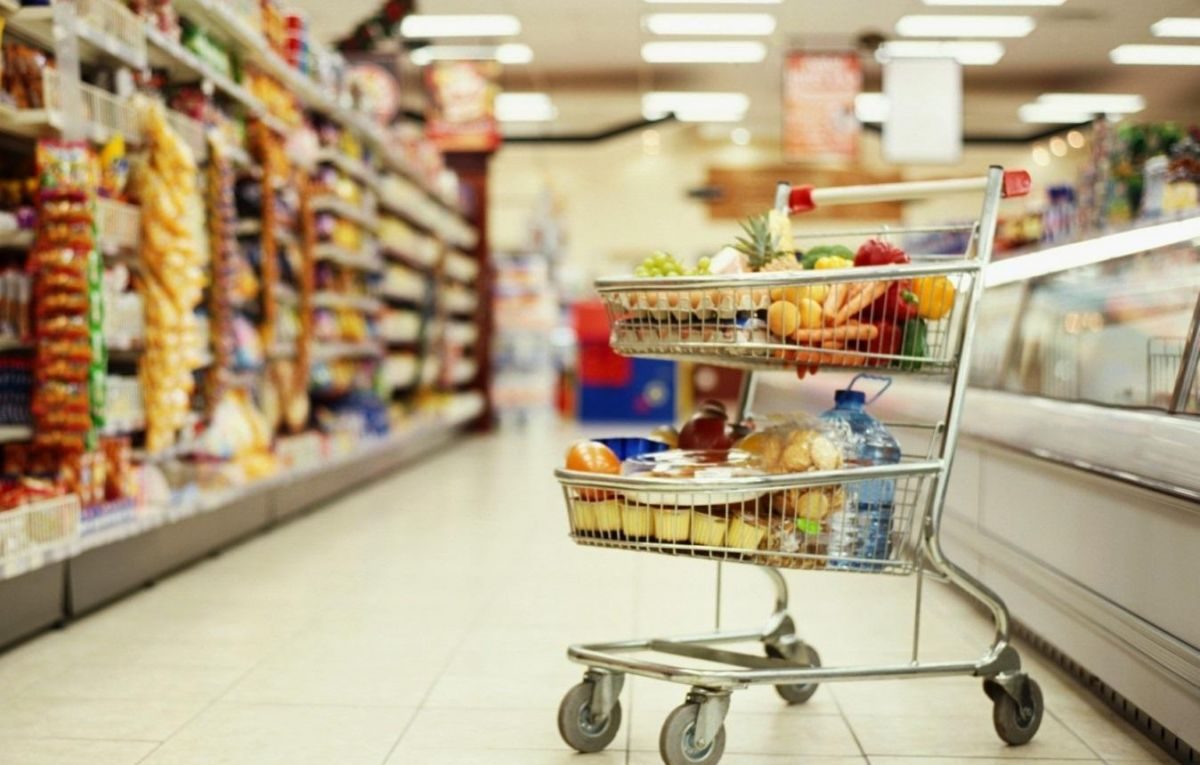
The government has obliged private companies to sell part of their gas to producers of "socially important" food at a regulated price.
Record energy prices in 2021 are turning into record food prices in 2022.
Since the end of last year, food producers — of bread, milk, meat, eggs — have been talking about significantly scaling back production, or even halting their plants.
Current gas prices have proved unaffordable for them. And if these prices are built into the cost of products, those products will become unaffordable for most buyers, reports «BBC News Україна».
The government says it has solved the problem by obliging, in the last days of the old year, private companies to sell part of their gas to producers of "socially important" food at a regulated price via the exchange.
However, extraction companies have already said that the government's decision not only contradicts the law on the gas market, but could also undermine the country's energy security, since under such conditions production will inevitably begin to decline.
So what should we prepare for in the new year?
First of all, for further price rises for practically everything on store shelves.
Back in the autumn of 2021, when public attention was focused mainly on gas tariffs and heating, experts warned that not only gas prices for household consumers matter, which the government fixed at the May level thanks to annual gas contracts.
"Cosmic" gas prices for industry, which were and remain market-based, will still hit Ukrainians' wallets through the prices of all goods and, above all, food.
Now Oleg Ustenko, the president's adviser on economic issues, says that price growth in the raw food group in the new year could reach 20% and require "anti-crisis measures".
And if one considers that food accounts for almost half of the Ukrainian consumer basket, "such a price increase could become a serious inflationary shock," the economist said, forecasting overall inflation in the country at 8-10%.
Still, the presidential adviser argues that price rises will be felt not only in Ukrainians' wallets but across the whole world. Moreover, a significant part of inflation in Ukraine this year will be "imported".
First and foremost from the world's largest economy — the United States. There, tens of billions that were spent to support the economy during the pandemic have resulted in long-forgotten inflation — last year it reached its highest level in almost four decades, at 6.8%.
For Americans, such a figure is a shock — many of them have faced such price growth for the first time in their lives.
The extraordinary nature of the situation is shown, for example, by the fact that the White House is having to deal with rising meat prices. As it turns out, in the country with the world's most powerful economy, four companies control 85% of beef production and 54% of poultry production.
And President Biden is working on a plan of measures that should stimulate competition in this sector and, accordingly, lower prices.
What is to be done?
According to the Ministry of Economy, in December alone the average price of imported gas rose by 62% — to almost $1,200 per thousand cubic metres.
Ukrainian food producers, who can no longer afford to "pull" current gas prices, proposed that the government support them as some European countries have done or plan to do — targeted support for certain sectors and a reduction of VAT on certain goods.
Such a path is proposed by some Ukrainian experts. For example, Pavel Kukhta from the Kyiv School of Economics.
According to polls, Americans spent coronavirus support mainly on food and housing payments
"VAT is a tax of 20% on the price that we pay when buying all products," recalls the former deputy minister of economy and agriculture. "The VAT rate could be temporarily set at 0% for one year on products that are key for Ukrainians. Since VAT is always built into the price, this will sharply reduce the prices of such products.
Of course, reducing VAT on food will cost money from the budget, — the economist acknowledges. But he notes that "the budget is a tool for solving people's problems. And our problem this year will be rising food prices".
At the same time, the president's economic adviser Oleg Ustenko believes that under Ukrainian conditions, reducing or abolishing VAT, even temporarily, would entail additional tax administration costs and harm competition.
"Under our conditions, this is an additional risk for the economy," he believes.
A more acceptable option, the economist says, could be targeted financial support — by analogy with the "Support" program. Oleg Ustenko did not even rule out introducing something like "food cards", which operate in the US for low-income citizens.
"In the president's office, the position is more than clear: the most vulnerable and unprotected segments of the population must receive support first. How? Options will be considered. These could be additional payments to compensate for price rises, and the introduction of food stamps within the "Action" system — so-called "food" vouchers, as practised in the US," Oleg Ustenko said, stressing that "these are anti-crisis measures that can be introduced as necessary".
Pavel Kukhta does not rule out such a step either. He recalls that food cards or coupons — "special vouchers for a certain sum of money that can be spent exclusively on food" — were introduced in the US back in the Great Depression of the 1930s. Yet they exist to this day.
According to the economist, Ukrainian specialists have been talking about a similar system for a long time, and 2022 is the "ideal time to finally move from talk to action".
The Center for Economic Strategy also calls on the authorities to use budget capacities — "through the mechanism of subsidies, reducing VAT rates for a certain period for individual goods and energy resources, as well as social payments".
However, the Ukrainian government has taken a well-known path — it has partially restored state price regulation in the gas market.
The price of "cheap" gas
In the last days of the old year, the government obliged private extraction companies to sell 20% of their gas on the Ukrainian energy exchange from January 1 to April 30, 2022, and also limited to 25% the markup on gas sold to producers of flour, rye-wheat ("Ukrainian") bread and loaves, milk, eggs and vegetable oil. The government calls all these products "social".
The Ministry of Agrarian Policy has already published a list of enterprises that produce "social" products, which means they have the right to buy gas at the preferential price. It includes about 7,000 enterprises.
According to an estimate by Deputy Minister of Economy Yulia Sviridenko, under these rules producers should receive up to 80 million cubic metres of cheaper gas as early as January of the new year.
Only, neither the extractors nor the exchange yet know how to formalize such contracts.
"We are waiting from the government for a specific procedure (for sales), as are all gas extraction companies," said Inna Shcherbina, deputy chair of the exchange committee of the UEB.
A return to "manual" price regulation could bring Ukraine events similar to those now taking place in Kazakhstan, believes Hlib Vyshlinsky, director of the Center for Economic Strategy.
"If we follow the path of Kazakhstan — holding prices manually until the money runs out, then a sharp price increase later (de facto a return to the market price) will become a tragedy for many," he told the TV channel "Rada".
The CES believes that the government's decisions on special gas prices for certain producers look ill-considered, and the mechanism of the innovations unclear.
In addition, the extraction companies themselves consider the government's decision to contradict Ukraine's obligations as a member of the Energy Community and the law on the gas market, and are ready to prove this in court.
The association of gas extraction companies also warns: state control over prices will not only fail to solve consumers' problems, but will also have catastrophic consequences for Ukrainian energy.
They recall that over the last five years private companies have increased gas production by more than 20% and now produce up to a quarter of all production in the country. But when they are forced to sell part of this gas at a regulated price, they will inevitably cut investment, and therefore production will also fall.
Lower production means lower taxes, including rent, from which, for example, payments of 1,000 hryvnias for vaccination are financed, or the president's future generations fund plans to be financed.
However, reducing domestic gas production carries one more, not so distant threat.
"Given the likely launch of Nord Stream 2 and the risk of reducing or completely halting the transit of Russian gas through Ukrainian territory, this will significantly weaken Ukraine's energy security," warns the gas producers' association.
What does Nord Stream 2 have to do with it?
The completion of the pipeline, through which Russia wants to deliver even more of its gas to Europe, as well as Moscow's desire to launch this pipeline as soon as possible, has already become one of the main factors behind record gas prices in Europe. As well as the fact that European gas storage facilities are standing almost empty.
According to the operator of Ukraine's gas transmission system, in 2021, 41.6 billion cubic metres of Russian gas passed through Ukrainian pipelines to Europe. That is 25% less than in 2020. Overall, the capacity of Ukraine's gas transmission system was used by only 30%. In the first days of 2022, the reduction in transit accelerated.
This means not only a loss of transportation revenue. More than 90% of Ukraine's gas imports are so-called virtual reverse flow, that is, gas that Ukraine takes from the pipelines in exchange for offsetting under contracts with European companies.
If gas transit through Ukrainian territory continues to decline, and importing from Europe becomes difficult — both because of prices and because of a shortage of gas itself — domestic production must be Ukraine's "safety cushion".
In fact, how everything works should be shown by the example of coal, whose production in Ukraine has declined, while imports turned out to be not so simple and much more expensive than expected. Hence record-low coal stocks at thermal power plants and the decision to use costly gas to cover the shortage of the missing coal.
Therefore, "putting out the fire" with food prices through manual control of gas prices may turn into an even bigger problem — and not in the distant future, but already this year.
Although the prices of gas for the population, and now also for food producers, attract more attention in the winter months, there is another problem that experts are already talking about.
This concerns the new year's harvest. For it to be good, fertilizers are needed, and gas is one of their main components in production — up to 80%.
If to this one adds the cost of fuel for sowing and harvesting, which will also be built into the price of food, the current cost of a loaf of bread may turn out to be far from the last record of this year.

Russian Attacks in Dnipropetrovsk Region: Two Killed, Seven Injured

Defense Forces Strike Four Russian Drone Control Points in Past Day, Including in Berdiansk

Britain Threatens Sanctions on Kremlin-Linked People; Poland Ready to Hand Ukraine Ammunition

Russia says it has completed "planned exercises" in the Black Sea

MVD: Fake Riots With Prop Blood Were Being Prepared Near Presidential Office

Law Enforcers Name Another Klitschko Deputy as Suspect

Berlin Holds Protest Against War in Ukraine; EU Prepares for Possible Russian Halt of Gas Supplies
North Korea Fires Ballistic Missile Over Record Distance in Five Years
Irish Fishermen Force Russia to Postpone Naval Drills

US sanctions in case of invasion of Ukraine could completely destroy Russia's economy, NYT reports
