
Former ‘DNR’ prisoner Stanislav Aseyev: ‘Putin is a gatherer of lands’; Russia must take back militants before reintegration
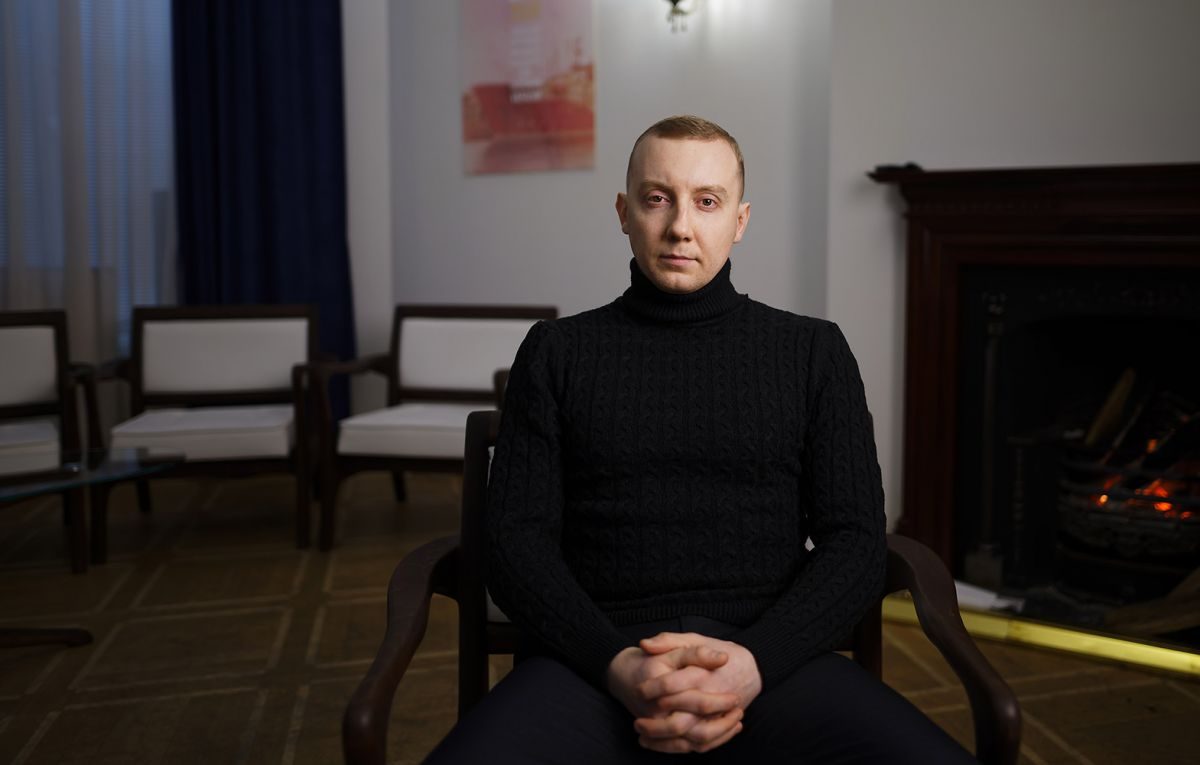
Stanislav Aseyev on the Donetsk prison Izolyatsia, torture of prisoners, possible amnesty for militants and Putin.
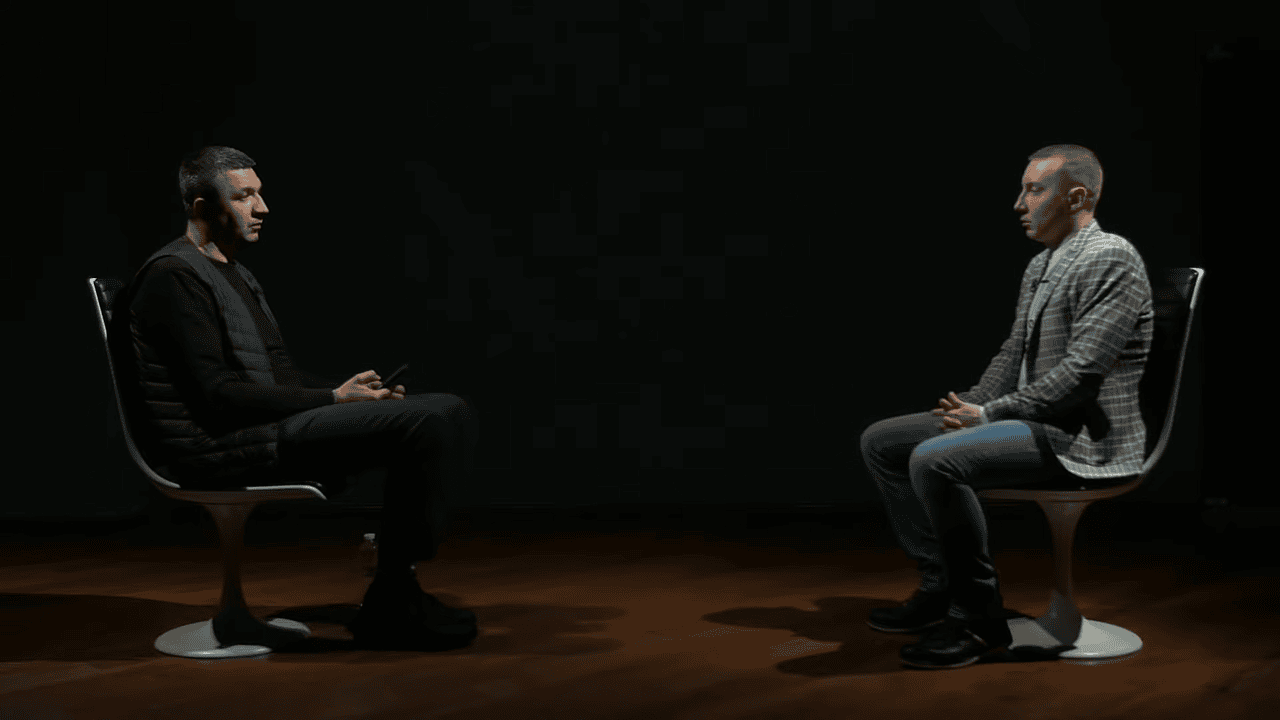
In a new episode of the Antipody program on the Iceland TV channel, journalist and writer Stanislav Aseyev told host Serhiy Ivanov about prisoners and torture in the so-called “DNR”, the conditions of detention in “Izolyatsia”, the amnesty for militants and Putin’s foreign policy position.
Tell us what Izolyatsia is. Be as frank as possible.
It was a mix of a prison, a madhouse and an army. Those three categories. Crazy, because what went on there happened even in the toughest prisons, and the people who sat with me had served 20 years, these were the so-called “critics” from the special regime, and they had never seen anything like it. It is impossible to imagine. For example, one night they broke into our cell, they were just smashing all the cells one after another. And in the morning the man who did it, this so-called “Palych” (Denis Kulikovsky “Palych”, or “Aid”, who ran Izolyatsia in 2015–2018), the commandant of Izolyatsia, I don’t know what to call him, the master of Izolyatsia, brought a sack of expired chocolate candies that they had in their warehouses and handed them out to the cells. How can you explain that?
Maybe he was drunk?
No. He was drunk at night, but this was a sober man bringing all of this in the morning. They have a lot of Conti brand products there from 2014. As I understand it, they just came in and lay around in the warehouses. Of course, it was all spoiled and mostly it was hard to eat, but, for example, you could pour boiling water over those same candies, there were little white worms in them, they float up, you take them out and you can drink it. At least that.
What I’m getting at is this. On the one hand, at night it was simply horror: they beat you with their feet, they drove people under the bunks and made them bark like dogs. And in the morning that same man hands out chocolate candies like these. Of course, this is not a prison and not an army, it is a madhouse. But on the other hand, it is formally an administrative building of a former insulation materials plant. There are eight cells there today. When I was there, there were eight. Two punishment cells, there are basement rooms. Of course, this is somewhat reminiscent of an isolation ward or a prison. But the order that was set up there, I mean when this Kulikovsky “Palych” was in charge, everything had to be laid out almost to the centimeter, so that not a single scrap of pillow stuck out. In short, it really is an army, a madhouse and a prison. That is how you can describe Izolyatsia. In these categories.
Were you tortured?
Not in Izolyatsia. In Izolyatsia I was simply beaten. The torture took place on Shevchenko Street, 26, on the first day, when I was detained.
What exactly?
Electric current, exclusively. Well, it is a set of actions: there is psychological pressure too, and you are simply beaten, nobody even counts that. But the main torture is done with electric current. This is the so-called “tapik”. Two wires come from it. And depending on their imagination, these wires are attached to different parts of the body. I had a light method, as they told me: it was the thumbs, and then they threw one wire onto my ear. In Izolyatsia, and not only in Izolyatsia but also on Shevchenko Street, 26, in this so-called MGB, as a rule they attach the wires to the genitals. That is a completely different matter, of course. But electric current accounts for 95% of all cases of people being tortured.
What struck you most in Izolyatsia? What was shocking in the cell? Of everything that happened there, what was the most terrifying?
As far as I am concerned, it was getting used to what was happening there. When you stop caring about everything. That is, a man is brought in with burns. He has just been tortured, but you have been seeing this for a year and a half already, and… Well, yes, they brought him in. Well, yes, he was tortured. But I know that tomorrow someone else will be tortured too. And then there came a certain period for me when I realized that I no longer felt anything. Not in the sense that the people who torture don’t feel, I could not, for example, torture prisoners or captives, but I don’t feel empathy for those who are already being brought into the cell. And I understood that this was a huge problem, and that it has to pass, and if I am ever released, it will take a lot of time before I start to feel some empathy for other people again.
That is about me. As for other people, the case that struck me was one I had already told about on Svoboda with Shuster. When Sergei, I think I can say it now, Sergei Beshta, was brought to Izolyatsia. It was in 2019, if I am not mistaken. And he came with his son. And they were tortured together. On the same table, together with his son. That is, people were stripped naked, tied up with tape, wires were thrown onto their genitals and they were doused with water. And his psyche was shaken to such a degree that when he was brought to us, to the cell, from the basement, he had sat in the basement for about a week and tried to end his life there, so they brought him to us. By the way, so that we would keep an eye on him, so he wouldn’t do anything to himself. And he seemed outwardly like a normal person, he could talk, that is, he said that he came with his son: “I am such and such, I worked there and there.” But in the evening, at certain times, for several days he did not understand at all where he was.
Evening comes, and as soon as he hears any steps in the corridor, he thinks he is again in the basement with his son, and he sits right on the edge of the bunk and starts saying: “Hold on, hold on, son, hold on.” And no matter what we told him, “Sergei, it’s all over, they won’t touch you, your son is next door in another cell, he is not in the basement either,” he didn’t even see that cell. And then, when we told him in the morning, do you even remember what happened last night? He did not understand what we were talking about. This case, although I had seen a great deal, because I had already been sitting there for more than two years since 2019, is still the only one that struck me, perhaps to the core.
One of the heroines of the documentary “Izolyatsia Concentration Camp” that I made told a story that militants came to Izolyatsia and staged some kind of performances there, a theater. They set out chairs and tortured people in front of them. Is this true?
I did not witness anything like that in my experience, but again, I was told about it, because there was a man there who held a lower status, let’s say, a so-called “lowered” one. I won’t name him. I was told, and later I asked him whether it was true that they really made such a “little girl” out of him. That is, he had to put on a skirt, and when the “deputy minister of the MGB” came to this “Palych”, he sang for them. When I asked him whether it had happened, he said yes, it had.
I said: “I understand there is no real choice, but maybe it would have been better to die?” And from his answer I understood that he was already assessing the situation inadequately, because he told me that when I have my trials, perhaps that deputy minister will remember me and I will get less. I understood that the man had been brought to such a state that he was completely inadequate in assessing the situation. But yes, most likely it did happen, because everyone talked about it. I was not a witness to it personally, but it was common knowledge in Izolyatsia.
Were prisoners of Izolyatsia involved in torturing other prisoners?
They were definitely involved in beatings. As for torture, that is a question, because I did not witness torture itself. But beatings were standard practice, there was a so-called gopnik gang that was very close to the administration. And it was precisely them who were involved.
Were they imprisoned? For what?
Everyone for different things. For example, one person was held on a charge of espionage. Another for illegal possession of weapons. Some of them were so-called “militiamen”, militants. If it was espionage, supposedly for pro-Ukrainian views, but it had nothing to do with that. That is, their charges were different, but, let’s say, they did one and the same thing.
And how were they recruited?
They simply beat people when the doors opened. Just like this so-called “Palych”, Kulikovsky. He took two or three such people with him, not from the administration, but from among the prisoners, the hostages, who were close to him. And with their hands he beat the others.
And what goal were they pursuing?
This Kulikovsky, although he is a pathological sadist, a psychopath and an alcoholic, is not an idiot. He is an excellent psychologist. And understanding that if he does it with the hands of other prisoners, he could, of course, have ordered his own shift of the administration to do it. But he deliberately recruited those people, because each of them would then go back to his own cell, and inside the cell each one would hate the others. Because of what happened at night.
That is, you could not unite and build anything. It was called “reshuffling the cells”. That is, he changed the composition of the cells. You had sat for two or three days, and the door might open and you would be told: “With your things, out.” And you don’t even understand where you are going, but you are simply moved to the next cell, so that you don’t have time to make any contact with the people you had sat with for a day, two or three. In general, so that no resistance could even come up.
I have heard a lot about this man (Kulikovsky — ed.) from other prisoners. Remind me, please, is he from Donetsk?
As far as I know, he is not from Donetsk but from the Donetsk region.
Is he a former law enforcement officer?
Hard to say, but they said yes, he worked in the system at some penal colonies.
Actually, this kind of using prisoners to beat other prisoners is, I would say, an absolutely Gulag methodology. It took root among the old, seasoned guards. This experience was passed on from those who guarded in Soviet times. But among the guards of this concentration camp, were there at least relatively sane ones?
There were. Mostly they had no direct connection to the administration. They actually worked there as guards. But they were part of this MGB system and sometimes they were brought in as a kind of administration. So that they would simply keep an eye on us: open and close the doors, lead us out for walks. And these people, who were from outside, from the side, drawn into this process, as a rule did not take part in the kinds of things Kulikovsky and his closest circle from the administration did. They really played the role of guards: lock up, open the door.
How did they end up there, if they are normal people?
They have to carry out orders. If they were told from above that today you will be the duty shift at the administration, then, of course, they cannot [refuse — ed.].
So their normality consisted in not showing initiative in torture and abuse?
Yes. Some of them treated us, I won’t say all of them, but some of them simply treated people as people, and it was sometimes even shocking, when the doors open in the morning and you are led out for a walk and they say: “Good morning, let’s go out for a walk.”
Under Kulikovsky that was complete nonsense. The doors would open, and he would start cursing everyone and beating them just as you were heading out for a walk. And here the doors simply open and you are told: “Good morning, let’s go out for a walk.” Even this was perceived as something humane. Although that is how it should be, if it were an ordinary prison, a pretrial detention center, like the one I was in, or a camp, for example.
Do you think these people have a chance of mitigating circumstances if they hypothetically end up in the sights of Ukrainian criminal justice?
If a person did not torture anyone and had some military experience on that side, that is one question. That is, you “just” fought. But if you are a pathological sadist and constantly abused people, tortured them, raped them, that is a completely different matter, legally.
But with their guard they created all the conditions for these people to be raped.
No, of course, I am not saying they should be amnestied, but I cannot compare them, again, with Kulikovsky “Palych” and his closest circle. Because they are simply psychopaths and sadists. I think they need to be given the highest penalty we have, life imprisonment.
In Izolyatsia, as you said, there were a great many militants, so-called “militiamen”. Including officers and commanders.
There was even a major general. He was considered one of theirs by the “Emergencies Ministry”, but the colonels, lieutenant colonels and majors were the so-called “militia”.
Did you talk to them?
Certainly.
How did they explain to themselves what had happened?
Here everything depended on their experience in Izolyatsia. Because, for example, the major general was there for only one day. He was not tortured, not even beaten. He ended up there, and his so-called Emergencies Minister Kostrubitsky, as far as I understand, pulled him out and quickly took him out of there to the pretrial detention center. We spent one evening talking with him (the detained major general). The man, of course, was pro-Russian. But the people who were simply, you could say, brought there, there was one so-called lieutenant colonel of the LPR, this is a man thoroughly imbued with pro-Russian views. He hates everything connected with Ukraine. He started a separatist movement back in Odesa, then fought for the so-called LPR, and then he was tortured here very harshly.
He came in with broken fingers, just wrapped with tape. His beloved girlfriend sat next to him. And even with all this, interestingly, he hated all of these so-called LPR and DPR people, and he said, if I put it politely: “I am just a used condom.” He actually said that. “I understand that,” he says. But his attitude toward Ukraine did not change. He believed that it all began with the Maidan, that it was our historic mistake. And if this had not happened, all of this that is happening to him now would not have happened. And when I asked him, well, the Maidan is what it is, you can agree or disagree, but what was done to you here has no relation either to the Maidan, or to the SBU, or to Ukraine. It is being done by your own people.
You wrote a very interesting text in which you say that Putin is the last metaphysician of Europe. Why?
Because Europe today has completely turned into a calculator. They think exclusively in economic categories. Putin does not. Putin and his entire policy are completely irrational from an economic point of view. He constantly loses. Including with Donbas and Crimea, he constantly loses and is ready to lose in order to become a kind of “gatherer of lands”. He sees himself in the categories of a man who must recreate the Soviet Union, number two.
This is certainly not economics. If he thought in economic categories, of course, he would have at least given up Donbas and returned it to us. No, this man really thinks idealistically, and this, by the way, is not only my opinion. I first heard it from a Spanish journalist. She said that perhaps Vladimir Putin, when addressing European politicians, is the only thinking person among European politicians at all. That is, not one who simply counts numbers, but one who builds a certain political system based on some ideal things. In this sense I agree. The other thing is that, of course, these things are aimed at destroying our state altogether. For him the state of Ukraine does not exist. I always say that for Russians it is a “dacha outside the city”, nothing more. For them the state of Ukraine does not exist. That’s all. We must clearly understand this when we negotiate with them. Our authorities do not understand this.
He has the logic of a crusader, I suppose. And what is the Holy Grail of this damned Templar?
Hard to say what the central core is. I think he feeds on the idea of opposing himself to the West. He believes, and this goes back to Soviet times, that the West is a hundred percent enemy of the Russian Federation. The Russian Federation is something unique that contains a special spirituality. How he defines these things for himself, of course, I cannot say.
What is this war for, personally for him?
Formally, from what I have heard of his interviews, I think what primarily worries him is precisely the problem of NATO. He is very afraid that Ukraine will become a member of NATO, and this collar, so to speak, this leash, is used to keep us from that. But this fear comes from certain metaphysical categories: from the Cold War of Soviet times, from this fear that “the West will attack”. And Putin’s fear is really very great.
How do local residents of Donetsk treat Russians? Do they see them as their own?
I can’t speak for locals. I had no such conversations with them. But in Izolyatsia they hate them. The administration of Izolyatsia, when Russians ended up there, simply hated them. Precisely because the option with Crimea did not happen. They did not take them in, as they annexed Crimea. And so it turned out that now, through the Russian Federation, understanding that they are locked in this Izolyatsia, let them be the administration, they are on the other side of the bars, but all the same, they are in the same isolation. When they can no longer go to Ukraine and cannot even leave for Russia, because they are forbidden to, since they are so-called “special services”. And when Russians ended up there, even that “Palych” said to a major from Russia with a Russian passport: “So where is the variant with Crimea? How long can we wait?” So their attitude toward them is very critical.
Did you talk with Russian prisoners?
Yes. They were in my cells too.
Do they understand that they are not at home, or do they think they are at home?
It varied. For example, there was Kolya Samarsky, that is what we called him. He was from some village near Samara. He simply had a revelation when he ended up in Izolyatsia. He came, in fact, “on safari”, as they call such a soldier of fortune. It was 2018, even the administration told him, you do understand, well, okay, 2014, 2015, but why did you show up in 2018, why did you come here? And when he was simply shoved into this Izolyatsia, there they treated him very harshly, and he, of course, had a little revelation and said, well, that is what he told us, that if I get out of here and go back to Samara, I will one hundred percent advertise this Donbas of yours so that nobody comes here. That was a concrete example. But that major, who had a Russian passport, no. Still, despite the fact that he went through it: only Russia and nothing else.
When people talk about amnesty, I understand that it will not work. I understand that when we take certain criteria: whether a person committed grave crimes or did not commit grave crimes, I understand that we are talking about nothing. Nobody knows who did what. And forgive me, if a cannon fires at a populated area and kills 10 people, then the whole calculation of that cannon is the same: both the gunner, and the one who lifts the shells, and the one who pulls that thing. Although the guy who somewhere there with a caliper on a map marks where to hit does not actually pick up a weapon. This was called crimes committed under conditions of uncertainty. I don’t understand how this is even possible at all? Do you believe in any form of amnesty in that territory?
No. We will choke. We will simply choke when tens of thousands of people, who cannot be identified, in terms of what they did all these years. Because even with the administration of Izolyatsia, if we now took them and brought them to justice, they would say: “Excuse me, well, what do these few hundred people say, who have already given testimony over all these years, I did not torture anyone.” That’s it. Where is the evidence? Yes, I opened and closed the doors. And that’s all. Well, I was at Izolyatsia, I did not torture anyone. And what can be said about the militants who simply shot, in quotation marks again. How is that possible? So the measure of responsibility of the Russian Federation must consist in this: before reintegration it takes all these people back to itself, to its own territory. Otherwise we will choke.
We understand that it will not take them back, but will in fact dispose of them.
That is already a different matter, really. At least raise this question unofficially. I understand that from a political point of view it will not look very nice, whoever says it: Zelensky, Kravchuk, I don’t know. But at least start these negotiations unofficially. Excuse me, you created this problem for us, you created these “corps”, you created the “MGB”, in fact modern SS men, you created concentration camps. We will not be able to deal with tens of thousands of people. It will take decades to bring all these cases to anything. Take them back, and then we are ready to take this territory. And there, amnesty will be more or less possible for the political component of the occupation. I don’t know. Those who at least did not commit war crimes on that territory.
In the context of the law on collaborators, which is now being discussed very actively, please give a definition of who a collaborator is?
A person who cooperates with the occupation administration, that is the problem. If today Mr. Reznikov (Oleksiy Reznikov, Deputy Prime Minister, Minister for Temporarily Occupied Territories of Ukraine — ed.) wants to take away this term “collaborators”, he insists on this, it will be a very dangerous precedent. Because we are removing the Russian Federation from this discourse and placing it in the discourse of civil war.
Well, right, if you collaborate, then with whom?
Yes, with someone, with the Russian Federation. If not, then again, it is an internal conflict. I am against this.
Well, let’s say, is a nurse in a hospital a collaborator?
I understand that there is no unambiguous definition of who exactly.
In your subjective opinion.
Specifically about a nurse?
Well, say, a nurse in a military hospital.
You mean in the “DNR”? Well, I think to some extent yes. If she treats those people who then go back and kill our prisoners of war, I don’t think it is a profession that cannot be changed under those realities.
Is one of the accountants of the financial department of Pushilin’s administration a collaborator?
Yes, definitely. But again, the measure of responsibility should be different.
We are just now talking about definitions.
Yes. If you knowingly cooperate with the occupation administration, whether for political opportunism or for military reasons, regardless of whether you are an accountant or a militant, of course, that is a certain form of collaboration. It is just that the measure of responsibility should be different.
And a businessman who pays taxes?
That is a complicated question. Honestly, I don’t know how to answer it.
Then the following question simply arises: this businessman financed the so-called “DNR” army to the tune of three million rubles. Over this whole period. And the nurse was just earning her bread.
Yes. That is exactly how it will somewhere end up.
I am debating with you right now, and my position on this is public and known. That is, I believe that we still need something more... It doesn’t sound popular, but we need more general mechanisms to apply to everyone. If you fall under this definition, let’s say. There is a difference, after all, if you are a repeat offender, if you have committed five open thefts, meaning without breaking in, and when you are a repeat offender for robbery. Five robberies with a machine gun and so on. But in both cases you are still a repeat offender. I am just discussing this, I don’t have a final answer, but again. There is a doctor who gets these people back on their feet, and nobody is holding a gun to his temple. He does it. And there is a merchant who gives money, and with it people are supported who then kill our soldiers and civilians.
I think it is precisely from such considerations, I mean Mr. Reznikov and his circle, that they come out when they want to remove this word. Because they understand that there will be many questions for them if we define it in law somehow. But I fear that if we completely remove the word “collaborator”, then no one will be held responsible at all. That would be the other extreme.

Russian Attacks in Dnipropetrovsk Region: Two Killed, Seven Injured

Defense Forces Strike Four Russian Drone Control Points in Past Day, Including in Berdiansk

Britain Threatens Sanctions on Kremlin-Linked People; Poland Ready to Hand Ukraine Ammunition

Russia says it has completed "planned exercises" in the Black Sea

MVD: Fake Riots With Prop Blood Were Being Prepared Near Presidential Office

Law Enforcers Name Another Klitschko Deputy as Suspect

Berlin Holds Protest Against War in Ukraine; EU Prepares for Possible Russian Halt of Gas Supplies
North Korea Fires Ballistic Missile Over Record Distance in Five Years
Irish Fishermen Force Russia to Postpone Naval Drills

US sanctions in case of invasion of Ukraine could completely destroy Russia's economy, NYT reports
