
Former Economy Minister Tymofiy Milovanov: The State Can Do Everything, But Not at Once
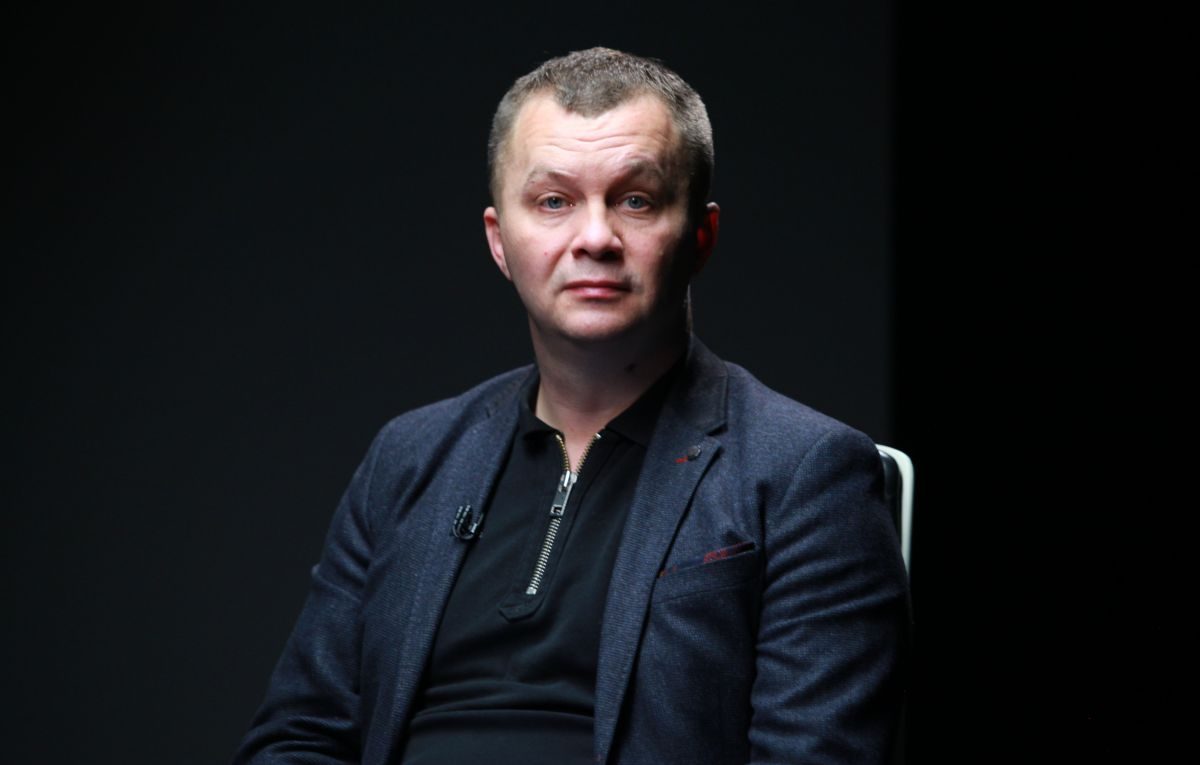
According to him, Ukraine needs 10–20 years to become a European state.
In the new episode of the program “Antipodes” on the Iceland TV channel, former economy minister Tymofiy Milovanov spoke about Ukrainian oligarchs, GDP and the prospects for the development of the Ukrainian economy.
Which of the Ukrainian oligarchs do you know personally?
Of this top trio, Pinchuk, Kolomoisky and Akhmetov, I met several times at “Yalta,” the economic forum, with Pinchuk. I know him, he knows me, but I was never in his office, though we exchanged a few words, especially about the Kyiv School of Economics.
You don’t know Kolomoisky and Akhmetov?
Well, I know about them. I’ve never talked with them. Only Kolomoisky publicly cursed at me.
You didn’t communicate with him?
I never communicated with him.
After he insulted you, did he not offer any apologies?
No, he didn’t. Someone among the deputies conveyed that it was something like, nothing personal, you know, you opened up, we struck back. One of the deputies said that.
I understand, but from his deputies?
I don’t know whether it was exactly from him. Not from those considered his close deputies. Yes, someone passed it along on the way.
In your view, which Ukrainian oligarch is the most adequate? And, if we take these ephemeral categories of the lesser evil, which of them could be called the lesser evil? Who is the most flexible and capable of abiding by the rules of the game once they are finally established?
All three of these top oligarchs behave very differently. Akhmetov constantly tries to build the rules of the game. Well, DTEK, or take Metinvest, or SCM or PUMB. These are companies with corporate governance, with top managers who have an education, and sometimes foreign managers. The empire is being built according to the rules of global business.
Like classic oligarchs did: first they earned money, then better, better, better. He has new companies, UMG for example. They’re all clean, well, very nice people work there. There are holdings. But there is also that whole political story running in parallel. Kolomoisky is the king of conflict. He can keep himself in conflict.
Look how Poroshenko tried to finish him off and failed. Once I asked one of Poroshenko’s close associates when Kolomoisky would finally be gone. This was a person close to Poroshenko, at the moment when Poroshenko had almost maximum power, or was nearly victorious in this fight with Kolomoisky. He said, “Never, you will never defeat him.”
So what was it all for?
I don’t know.
If Poroshenko’s man understood this, and I don’t assume that Poroshenko doesn’t understand it, then is it sport or what?
I don’t know. By the way, many people advise thinking of it as sport. They’re all athletes and it’s a sport. And the third one? Pinchuk. You see, he is moving strongly in this international direction, in art, in creative industries, in education, and so on. Although others also do this. Akhmetov’s group invests a lot in university education, so they’re moving too. In principle, it’s a natural evolution.
But did they acquire their assets in roughly the same way?
Well, I don’t know those details very well, but the points I know are interesting, yes.
The first privatization, and they were luckier than others.
Well, listen, the stormy nineties were harsh.
The phenomenon of oligarchy: are these people the way they are because they like it, or because they had no other chance to survive?
I don’t think it’s a matter of what one likes. I remember, whether in the nineties or at the start of the two-thousands, I spoke with someone who worked for one of the oligarchs. But not all the oligarchs of that time survived, right? And their only desire was, above all, to break out of there and not perish.
So I think it’s not a matter of someone liking it. Because how does it work? At that time, if you said “I’m leaving the game,” everyone else would have eaten you up instantly, right? Or you’d take off and flee the country.
It’s always drama, I see.
In politics too, a little. We have many politicians who…
Want to get out, but can no longer do so.
Yes. They’ve done so much in the process, there are so many loose ends, obligations and enemies, that as soon as they hand over power, this exit from power, this retirement, nominal, political or oligarchic retirement, is a great challenge. That’s why we need to build a capital market.
So when I’m asked what the most important reform is, I say “capital market.” I say “the biggest challenge is education,” but to move forward, one needs to think non-linearly, one must go through the capital market. Because the capital market will begin to create opportunities to step back gradually.
If there’s a transparent capital market, then people who are very influential can gradually step back. Right now they need to keep their business constantly in their hands.
The capital market, put very simply, what is it?
It’s the stock market, for example. It’s when you can invest in a company, and someone manages your money and won’t drop you. And you’ll be given a normal percentage. So if you’ve earned money or you want to step back a bit from direct management, you can create a fund, hand it to managers, and they’ll manage it.
And it’s not even necessary for your assets; they can invest in something else, in the new economy. Then people have a way out. But otherwise a person sits on his kingdom and only steps away from it when others start gnawing at that kingdom.
The function of the capital market is performed by the brotherhood, meaning the criminal gangs.
Yes. And one has to somehow move away from this. Otherwise it’s a war of all against all. Not only oligarchs against society, but oligarchs among oligarchs, medium business against medium business. In other words, all the competition is at the top.
The deputy who explained Kolomoisky’s behavior to you, what answer did you give him?
Well, what answer do I have to this? I look at it and think, “Lord, what a country.” This recently happened with Danyliuk too, this scum crawled out as well. Well, it upsets me. When you ask me how many years, these are examples that it’s still twenty years, not two. You understand, because if powerful people or well-known public figures behave like this, it says something about the level of development of society as a whole.
Do you consider Danyliuk a civilized person?
Danyliuk wants power and is unable to control it.
Listen, by this logic we could justify a drug addict who goes and cuts someone to get heroin.
In America, that would mean the end of a political career.
And in America, does no one ever fight?
People fight, sometimes, yes. But that would be the end of a political career. Look, what was the issue there? The issue was that the person wanted to be head of a law enforcement body, an analytical service and a security service. If a person cannot control himself in a conflict, imagine what he will do when he has 4,000 law enforcement officers.
Do we want such people to run law enforcement bodies or anything at all? Whatever it looks like publicly, a person who loses self-control under pressure. You know, I also wanted to fight, and all I did, I had one thought, was remind him that he took money from Yanukovych, and he started to lunge at me.
I tried to steer the conversation toward “look, let’s be serious, let’s discuss reality, not slogans.” And to remind him that he had worked for Yanukovych back then. He started fighting in response. A person who claims to be the head of any high-level political office will always be under pressure.
Especially security officials, especially law enforcement, especially analysts who influence things. Let’s forget about the security officials. He takes, for example, an analytical report and says, “either we’ll deal with scrap metal or with the land market.” Imagine the pressure. Because it means where the security agencies, courts, investigators, the whole law enforcement machine with the courts, will go in the next two years.
There will constantly be manipulation, provocation, “come on, buddy, let’s go for a walk together,” and whatever else, plus some bribes, temptations and gifts. Well, it’s just not serious.
Do you think the results of the nineties privatization need to be reviewed? Because this message is periodically thrown into the public discourse.
I’m against it. One can punish for what was a violation, or for criminal cases.
Everything has already come out anyway.
Then let’s ask ourselves a structural question.
From an economic point of view?
It won’t give anything, it will only make things worse.
If Metinvest were taken from Akhmetov, what would happen next?
Why take it? If taxes need to be raised, or not, or it’s possible, or not necessary. That’s the mistake when we say the state needs to control. The state has a strong mechanism for control: taxes. And it can always impose taxes on enterprises that were privatized. High ones, if it really wants to. And that would be fairer. Let them work, but let them pay into the state.
Big business very often hires top graduates and invests money. Tell me, is the state an effective manager?
The state can be an effective manager. As they say, I can do everything, but I can’t do everything at once. The same goes for the state. In principle, the state can do everything. It can protect, for example, a specific enterprise, or provide the best managers there. But it cannot do this with a thousand enterprises at the same time.
There is a resource of very smart, very strong people who work in the state, but it is not infinite. And in the private sector there are more such people. Because the profession of a civil servant is not the profession of a businessman; these are different skills. So everyone should do their own job. The state should focus on strategic enterprises, such as Naftogaz and so on. They are important, among other things, for national security.
And yes, it is indeed worth appointing professional state managers there. But overall, it’s not necessary. It’s in the state’s interest to learn how to administer taxes, so that when taxes are collected from these enterprises, they actually go to the state and not somewhere along the way. This is where the point comes in that oligarchs must stop influencing the state.
If a law is adopted raising taxes that negatively affect oligarchs, the oligarchs, of course, will counteract this through parliament. And not only through parliament, but through other services, through the state and through the executive branch.
If we take the macroeconomic situation in Ukraine and try to rate it on a ten-point scale, what would you give it?
I think 9–10.
Please explain.
Let’s start with what the macroeconomic situation is. Because the economic and macroeconomic situations are different things. Many people use the phrase “macroeconomic situation” correctly. I would rate the macroeconomic situation very highly, and the economic one not very highly. These are different things.
The economy is a broader concept. The economy is when we talk, for example, about the business climate, the possibility of opening a company, protecting property rights, making investments. There are many problems here, and we can compare with what was before and with what we want to achieve. There are problems, and here one cannot give either a nine or a ten.
One can talk about what is happening, this is judicial reform, one can talk about, for example, changes in various areas. And this is a plus, an improvement compared to what was before. We’ve done a lot, but we haven’t reached the point where, as a country, one could say we have an ideal economic situation. A lot of work is needed for that.
How much?
I always measure as a professor, I measure it in decades. We need 10–20 years for us to become such a European state.
And what’s the rating now?
Well, I’d give it seven, 6–7 for the economy. And most of the economy includes macroeconomics. Macroeconomics is in good shape, so the rating for the whole economy is also higher. If macroeconomics were in poor shape, we would now have much higher crisis indicators. For example, inflation would be much higher, the exchange rate would constantly change or the hryvnia would be devalued significantly.
All those diseases that occur during a crisis. Bank runs, for example, delays in payments in the banking system. And all these things together create macroeconomic instability. So when people talk about macroeconomics, they talk about macroeconomic stability, meaning that macroeconomic indicators, the budget, the exchange rate, inflation and the situation in the banking system, are stable.
And this is a precondition for a good economic situation. So if something is constantly changing in macroeconomics, the economy will not work at all. But if there is macroeconomic stability, it is only one of the preconditions.
You also need a court system, people need to be competent, the labor market must have appropriate conditions, people must have skills, companies must be ready to hire people, a business climate is needed, an investment climate, access to resources and finance, and so on. So the economy is something broad; macroeconomics is narrower, but macroeconomics is also quite a good understanding.
Recently one of the guests of “Antipodes” said that, despite the fact that Ukraine is the poorest country in Europe, it now lives better than it ever did, so to speak, in modern history. Do you agree with this or not?
I have to answer as an economist. On the one hand, I don’t agree; on the other, I do. The indicators show, they say, that no, we have not reached, for example, the peaks we had. We almost have. But on the other hand, what is measured? GDP is measured. Gross domestic product. This is how much added value is created by people.
But if you and I are resting well, or I made dinner at home, that isn’t counted in GDP. If I’m in a very good mood because I sang with friends, or someone sang for me, and it wasn’t formalized, or it’s in the shadow economy, that also isn’t counted. Here I come to you, you didn’t necessarily pay me, but I did something, added value.
You and I came up with a startup together, but maybe it will never have a price, because it will fall apart, or maybe it will have one someday in the future. This also isn’t counted in gross domestic product. So what is counted? What is counted is what is produced in the formal economy, and how prices, volumes and so on change.
So when we say that GDP was very large in the Soviet Union, we forget that much of it was tanks. As an example. Or some military industry. We built thousands of tanks. And that was part of GDP. Did it help a person live better? No. Because so many tanks were not needed. There were weapons, missiles. Were they needed? Well, GDP looks good. For a specific person, no.
But the people who produced the tanks received wages.
Yes, that’s true. That part exists. But that GDP needed to be adjusted for quality of life. So without adjustment, it’s difficult to compare quality of life. And many people would say that one cannot compare the end of the eighties and the beginning of the nineties, when the Soviet Union collapsed, with what is happening now. Life is entirely different.
So economists always face the challenge of how to measure. The second challenge is that today we count the GDP produced in Ukraine, that is, we don’t count Crimea, and we don’t count the part of Ukraine where the war is going on. But we divide GDP per person, for everyone who is there. We haven’t become fewer in number.
In 2014–2015 we actually lost up to 14% of GDP. There was a massive fall, and it shows up in the charts. But partly this fall happened because resources were effectively taken away.
GDP, for you, has become a clear category. In monetary terms, roughly.
14%, if we have $150–180 billion of GDP, that would be $20–30 billion. That’s enormous money. You can calculate it differently. For example, estimates of losses from all of GDP, or the impact on the economy of the annexation of Crimea and the seizure of part of Donbas, ranged from $7 billion to $150 billion.
Estimates of losses from Nord Stream 2, because there is infrastructure that could have worked and now won’t, also range from $50–80 billion to $120 billion. That is, if we calculate this way, all these losses have occurred not even in modern history but in the most modern history, since 2014, and amount to several hundred billion dollars. That is, two to three GDPs. These are significant sums. Of course, it’s stretched out over time. Estimates also vary.
In general, every economist has their own model. But there is a certain corridor that everyone agrees on: estimates of direct losses, for example from the annexation, specifically the loss of economic capacity, range from $70 billion to $120–150 billion, according to various experts. So how do you calculate GDP per person here?
This is a good indicator, but consider one more question: inequality. Almost nobody talks about this. In the Soviet Union, most people lived not exactly equally, but roughly equally. There were very poor people, but they were mostly not in cities, and this was a great injustice, but they existed. There were also very rich lords, but they hid. These were exceptions. This was not such a class of people. Today inequality has grown significantly.
There are industries, for example IT, where young people receive thousands of dollars. I’ve talked with adult IT specialists too, and today I went into one research institute, one of the first in the world. They were actually the first to produce those optical discs, what used to be called CD-ROMs.
So they produced them ten years earlier than it was done in the USA, and these people still continue to develop their institutes. They carry out some state orders, important, perhaps some of them secret, but their salaries amount to 10, 15, 20 thousand hryvnias. Of course, this is unfair, and this is a great inequality.

Russian Attacks in Dnipropetrovsk Region: Two Killed, Seven Injured

Defense Forces Strike Four Russian Drone Control Points in Past Day, Including in Berdiansk

Britain Threatens Sanctions on Kremlin-Linked People; Poland Ready to Hand Ukraine Ammunition

Russia says it has completed "planned exercises" in the Black Sea

MVD: Fake Riots With Prop Blood Were Being Prepared Near Presidential Office

Law Enforcers Name Another Klitschko Deputy as Suspect

Berlin Holds Protest Against War in Ukraine; EU Prepares for Possible Russian Halt of Gas Supplies
North Korea Fires Ballistic Missile Over Record Distance in Five Years
Irish Fishermen Force Russia to Postpone Naval Drills

US sanctions in case of invasion of Ukraine could completely destroy Russia's economy, NYT reports
