
Former MP Iryna Farion: It Offends Me That 30% of Women Must Be on Electoral Party Lists
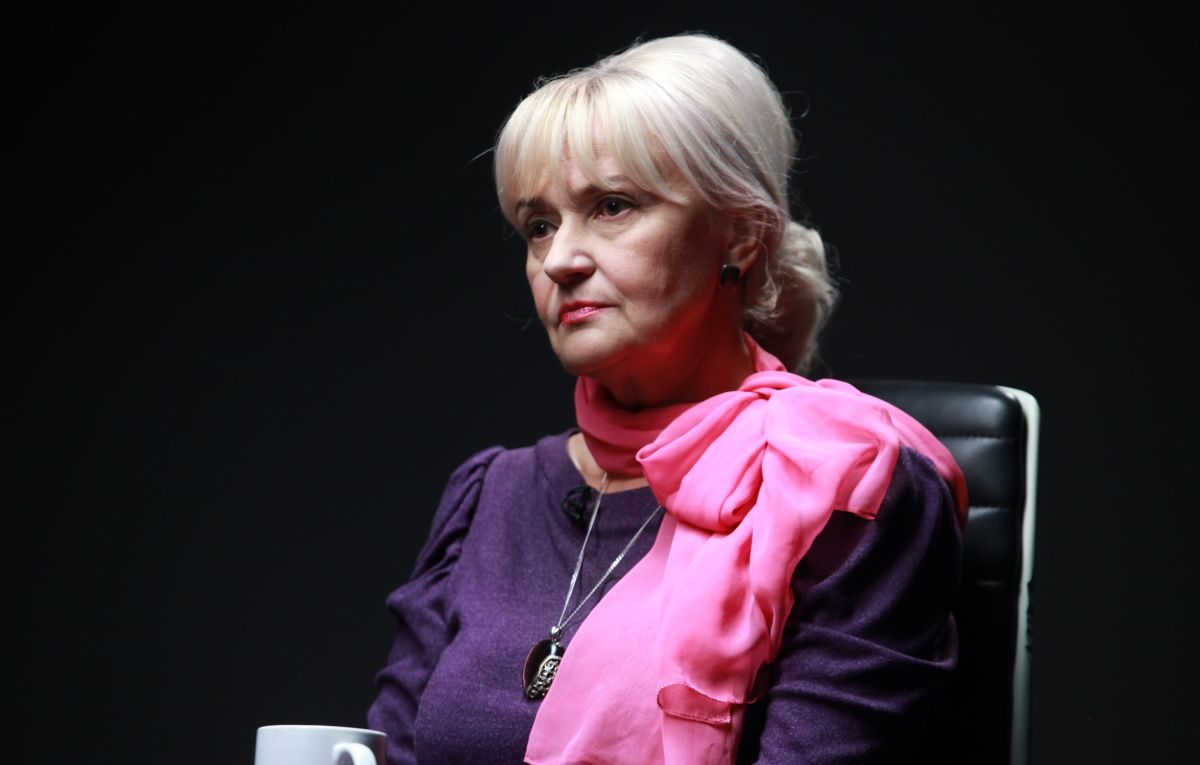
She believes that feminism in the hypertrophied form currently taking place in our country has no natural roots here whatsoever.
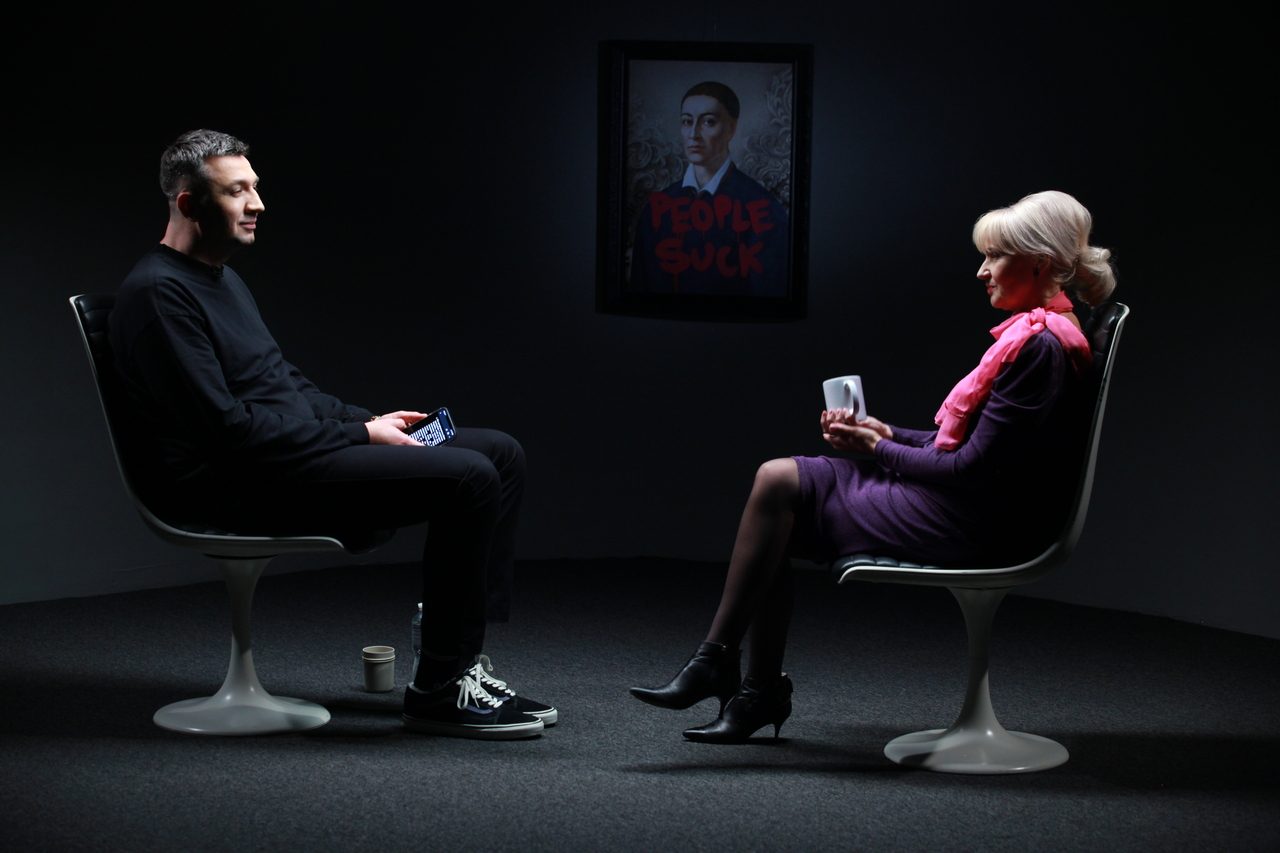
In the new episode of the program “Antypody” on Iceland TV channel, Ukrainian politician and public figure, People's Deputy of the Verkhovna Rada in 2012-2014 and member of the Svoboda party Iryna Farion spoke about her attitude toward Volodymyr Zelensky and Petro Poroshenko, nationalist ideas and Ukrainian feminism.
In your opinion, who is more of a good and who is less of an evil for Ukraine: Poroshenko or Zelensky?
On the topic of the lesser evil, Stus put it very well: “There is no lesser or greater evil.”
But what if there is nothing third…
No, there is always a third. You just will look and not see. You will listen and not hear, you will search for some strange arguments for yourself.
For you, these are completely identical figures.
For me, Poroshenko and Zelensky are completely identical figures.
On what basis?
On a worldview basis.
What's wrong? The main flaw.
The Minsk format.
Zelensky is not thrilled with it.
Oh, good boy. The Minsk format for ORDLO, the revival of Medvedchuk, a completely lost information space, it's a catastrophe. Parasitism on the nationalist idea.
Why exactly parasitism?
Because it's a disguise, it's a travesty; putting on embroidered shirts does not mean being in embroidered shirts. That's why he lost. That's why Zelensky won. Because he lies. That's why people went out of spite, like teenagers, and voted for this clown. It's a nervous breakdown of the nation, which can be motivated by the tragedy the nation went through on the Maidan.
And by the defilement of values that Poroshenko carried out during the Maidan. When the Verkhovna Rada votes for a resolution, my resolution of February 23, 2014, on awarding the title of Hero of Ukraine posthumously to those who fell in the Heavenly Hundred, and he, the one with the letter “Po”, does not sign it for a year, because it's his prerogative, the president awards the titles of Heroes. He doesn't sign for a year, and I understand why: because it's Farion, and Farion is “Svoboda”.
He doesn't sign it for a year, until the relatives of the Heroes of the Heavenly Hundred come to Instytutska after a year and tear it out of him. And then he goes to the administration, comes to them and submits this form.
He didn't sign because it wasn't his initiative?
Yes, it wasn't his initiative, that's one. Second, he had the task of minimizing it to the maximum. And he did minimize it, he brought down the Maidan, he played the hypocrite, he slandered, he did worse than one can imagine, it's worse than Yanukovych. Because Yanukovych is a convict, that's it, that's the bottom, the minus in everything. And this one is a liar.
You understand, when I come to the Verkhovna Rada and go up to him with a chocolate bar, where it's written in Russian, because of the Kivalov-Kolesnichenko law, and I ask him, why are you doing this, why are you implementing Putin's law? This isn't the Kivalov-Kolesnichenko law, this law was written in Moscow. And he looks me in the eyes and says: “This isn't written in Russian, it's in Ukrainian.”
You understand, there is a person who lies to your face. These are simply unfathomable things. Like children learning abroad, one of his sons skis in London with “Russian-speakers”. Next, the most terrifying thing: we are collecting signatures in the Verkhovna Rada to repeal the Kivalov-Kolesnichenko law, because it's the law that forms the spiritual aura of the nation. Putin knew how to destroy the state.
This goes back to Machiavelli, who said: “Do you want to conquer some principality? Without entering that principality with your language, you won't conquer it. Because language is a way of thinking.” Period. Next, what do we do? We repeal the Kivalov-Kolesnichenko law on February 23 at 1 p.m., by the resolution of Viacheslav Kyrylenko. I thank him for this. And they attribute it to me, as if.
Although there would have been my resolution, but I refused it. We will vote for that law, and what does Turchynov do? Turchynov does not sign that law. What do we do next, what's the next path? The next path is to appeal to the Constitutional Court. To appeal to the Constitutional Court, you need to collect the appropriate number of signatures. Well, I go around like in church with a hat, collecting signatures.
Who gives signatures: well, our whole faction, of course, a significant number of people from Batkivshchyna, “Udar”, not a single one. We collect signatures and submit them to the Constitutional Court. Then in the Constitutional Court there is a representative of the Verkhovna Rada, a representative of the government, a representative of the president. The president's representative did not appear at a single court session from 2014 to 2018.
That was, I think, Kniazevych back then, if I'm not mistaken?
Where?
At the Constitutional Court.
I don't remember. He never once showed up. And all the time they asked whether we were proceeding without him, yes, we were. Because even now, when they heard language issues, there was always a representative of the president. That is, it was complete ignoring of it. Next, when did they adopt the language law? They adopted the language law in the period between the first and second rounds of the elections.
It was his only way to jump onto his electoral niche, because he was already losing everything. And he found his electoral niche only in Lviv Oblast and nowhere else. And he will never be able to recreate it, because we may complain, Serhiy, about our people, but our people hate falsehood and hypocrisy.
They can accept anything whatsoever, they can vote for President Yanukovych, here he is, they can vote for that same Zelensky, but they will no longer forgive falsehood. And here the falsehood was off the charts.
And the last nuance: when he comes to Lviv and Lviv is blocked off, I got the impression that in Lviv they proclaimed some kind of LNR, another republic: everything with military equipment. And he walks in under the nationalists' anthem, “We were born of a great hour”, and gathers a crowd of people admitted to him.
It's shocking. Nobody had ever come to Lviv in such a way before. And it's the only territory where he gathered these votes. Because the localization of hypocrisy there is very high.
The repeal of this shameful Kivalov-Kolesnichenko language law, do you remember what times those were? On the 22nd they had just effectively buried the Heroes of the Heavenly Hundred, and on the 23rd the so-called “Russian Spring” was basically underway in the east, and by then it had already gained momentum.
The law was adopted and repealed, and immediately Russian narratives flew at the “tender minds” of the residents of the east: look, now Farion and her company adopted this law. In your opinion, wasn't this somewhat imprudent from a political point of view?
No, absolutely not. There is no such thing, Serhiy, as “from a political point of view” and from some other point of view. There is only one concept: “from the point of view of truth and from the point of view of the strength of the nation”. These are fundamental questions.
Do you acknowledge that with this action you somewhat strengthened the Russian narratives that “now you Russian-speakers will be chased behind the baseboards”?
No. I don't think so. I believe Russian narratives will influence us for as long as we pay attention to them. It's like, for example, why do you care? There's a rule, the surname Petriv. In the genitive case it's correctly Petriva, but since we're still hooked to the Moscow compass, we say that in the nominative it's Petrov, not Petriv. And then I ask them, how do you know that his is Petrov? That is, we constantly compare ourselves to them.
Yes. For me, this constant subconscious opposition to the Muscovites is strange in general. These YouTubers of ours who explain something there in Russian.
It's a mental dependence. It's a defeat. With what motivation did I go to the Verkhovna Rada? I am a self-actualized person. There may be people who did not realize themselves in some other sphere and went into politics, but I am a self-actualized person, and I didn't come to Svoboda, Tiahnybok himself said it, Svoboda came to me. And Svoboda insisted that I go with him.
I said: “Guys, come on, I want to write a dissertation and so on.” But we, successful Ukrainians, have to do this, I don't regret it. Stus: “There is no lesser or greater evil.” So when we are constantly tied to comparisons with Russia, we will never become independent.
The main task I set for myself as a majoritarian deputy who ran in 2012, the first point: repeal the Kivalov-Kolesnichenko law. And I accomplished it. I did accomplish this task. If Turchynov did not sign this resolution on repealing that law, then I went further, through the Constitutional Court.
If you hadn't done it, would anything have changed?
Of course it would have changed.
I mean, did anything change in the East? Many people link precisely the repeal of this law. They start to stir up Russian-speakers.
And who are the Russian-speakers? There is no concept of “Russian-speakers”.
Never ask people in the East who put forward some claims.
Listen, I simply did my job, as a person who believes that without language there is no nation. That was my task number one, and I fulfilled it.
Is Ukraine a matriarchal or patriarchal country?
Well, there's a saying: the people will say as they tie it, that the woman is the neck, and wherever it turns, there the head goes. I stand on the principle that a man and a woman should compete in the desire to please each other. Not oppose each other.
But there is a cult of patriarchy in Ukraine.
No, there is a cult of matriarchy in Ukraine. A woman holds three corners, and a man holds one. Another phraseologism. He wasn't born for nothing. What do men who go to the front fight for, and when do they fight? They fight when they have a rear. When that rear must be protected. If there is trouble in the rear, and if the woman cannot hold those three corners, I don't know if there will be motivation to fight. Because we fight for our children first and foremost.
There are different forms of war. Someone fights on the information front, someone fights with weapons in hand, someone fights with Ukrainian entrepreneurship. But everything we do, we do first and foremost for our children, because there is no greater happiness than children. But there is even more happiness, which is not even happiness, it's a miracle: our grandchildren.
And this trembling that you feel, seeing this little creature before you, you understand that it is the last gift in your life that you can see, so you gather yourself to the maximum to do something for this child. And so that this child does not remain on that land. Because when we say “Glory to Ukraine”, well, glorify it. How? Well, with your deeds.
That's how that man glorified it (points to the portrait of Skovoroda). He said: “When you are a German, be German; when you are a Frenchman, be French; when you are a Rusyn, be a Rusyn.” You understand, this is that nation-centrism in the philosopher who knew the Bible best and said the best about it: that it is the most reliable haven for each of us and the most turbulent sea.
So when there's a fool in front of you, what's the point of saying “you're a fool”, and below there's the phrase: “when there's a fool in front of you, tell him he's a fool so that he doesn't think nobody knows he's a fool”. So, think. You have this contradiction. And he showed it magnificently.
Returning to matriarchy. What threatens a woman in Ukraine the most?
She herself. The greatest threat for each of us is our internal defeats. Defeats at the level of thinking, defeats at the level of people.
That is, so to speak, the subjective side, and what about the social point of view? Well, now there are all sorts of movements, including feminist ones, that fight for women to be equal, to receive equal pay, to have equal rights regarding working conditions, and so on.
You know, for me, any struggle has no gender character. I don't believe a man fights for something different than a woman fights. Here I am sitting in front of you as a lady, let's say. Throughout my entire political life, although I came into politics completely unconsciously, I never felt that I had any obstacles.
And that feminism in the hypertrophied form that is currently taking place in our country has no natural roots here whatsoever. Because Ukrainian emancipation always had a very serious and excellent foundation, which today's movements do not have. And you know what that foundation was? The most natural one. The fact that a woman exists in her own nature and a man exists in his separate nature is the best thing that can exist in the world.
That we are still biologically different, and mentally we also have specifics. So, what is for me the basis of any women's movement, and in Ukraine the women's movement always proceeded on this basis, unlike what we have now, is that I believe what we have now is a perversion. It always had a nationalist foundation.
That is, a woman, I will now name those women, always fought for a national Ukraine, always fought for national-patriotic upbringing. She never fought just for some right to self-realization. She was always first and foremost her Majesty the Ukrainian woman.
Let's start with Sofia Okunevska. Sofia Okunevska wanted to get an education. In the Austro-Hungarian Empire she could not get a medical education. She went to study in Switzerland, finished there and returned to Ukraine. And she fervently influenced her sister-in-law Olha Kobylianska to write not in German, appealing to her: “You are a Rusyn, why are you writing?”
You understand, that is, our feminism at the turn of the 19th and 20th centuries had a Ukrainian face. And what face this has, I don't know. When they write into the law that 30% of women must be on electoral party lists, it offends me. Why 30%? Well then let's divide equally. We will share that way with men, well, no need.
As the brilliant Dontsov said, herding us into a ghetto of men's organizations and a ghetto of women's organizations. We can't do anything without each other. Can we stop being aggressive toward each other? Can we teach ourselves to love each other by giving? For some reason, I have never had problems with this.
And if I had such a problem, well, probably with a man who has a complex about women. And why behave in such a way that he would develop a complex?
Modern Ukrainian feminists take Kobylianska onto their banners, onto their standards.
I think that if Kobylianska were resurrected, she would be shocked by which feminists take her onto their banner. Kobylianska was very tender, very delicate, she very much wanted to have a family, she was in love with one man her entire life, she was not gendered, you understand. She had that nation-centric vertical. She is one of the pillars of classical Ukrainian literature.
So one doesn't interfere with the other?
Of course, yes. Well, that's 30% on the lists, that's for defenders and defenderesses.
Well, why hasn't Ukraine had a woman president until now, and when will it? Is our society, in your opinion, ready for this? Would it accept a woman president?
That's an interesting question. One lady nearly became president. I think that to keep her from becoming president, a huge machine was engaged to push her aside. And they pushed her aside, so to speak. Well, Ukrainians are a bit crafty: they seemingly give full power to a woman at home, but when she wants to climb to the top, what does it mean that she wants, when she is really inwardly ready for this. I cannot give an answer to this question.
Is this more about distrust in women's strength, or some subconscious desire for paternalism? And paternalism is always somehow associated with men. I mean political paternalism. Like how it was, when presidential elections were coming, people were afraid, there was Poroshenko, with his own shortcomings, but he's “daddy”, he'll sort something out, in that sense.
We already had one “daddy” to whom people said: “Daddy, I'm trying.”
Yes, who is now somewhere sorting things out under Moscow.
Our society, frankly, generally chooses something very strange, against which it then starts to fight intensely and in the end saves the country. You understand what is paradoxical about Ukrainian politics? I recall one outstanding Ukrainian figure, Adam Kysil, who in the 17th century said that Ukrainians are a great beast without a head.
What does a great beast without a head mean? A beast is an animal without a head, what does that mean? Without a head. We always have some catastrophic leadership, but our strength lies in the fact that the body is constantly moving, fighting, competing, coming out onto the Maidans, then growing some stupid head again, then cutting that head off again and continuing to fight. And that is the beast without a head.
I would not consider this in an opposition context, man or woman. On the contrary, it seems to me that Ukrainian society is looking for this woman whom it wants to see in the highest echelons of power. But I don't want this woman to be just a woman by a 30% quota.
You want it to be in a competitive struggle.
I want it to be competitive, I want it to be natural, and I want it not to harm our nature, women's nature and men's nature. So that our children do not suffer from the fact that no one can ever replace motherhood for a child. And at the same time I am categorically against it when someone wishes for women's happiness; then I ask, what is that?
Because there is no greater happiness for a man, in my opinion, than being a father, just as there is no greater happiness for a woman than being a mother. Here one should not make this re-emphasis. And one should not set them against each other. Do you know what the first woman officer in the world said? That's just fantastic, it was a Ukrainian, it was Olena Stepaniv.
When she went through World War I as a Sich Rifleman, now these gendered people would call her a “riflewoman”, so what did she later write in her memoirs? She wrote: “I do not believe a woman should fight.” If she was the first woman officer in the world, then today we apparently have over 1,000 women.
In us? 30,000, 15%, it seems.
15%. That is, having passed through all the hell of war, having passed through repression, how many years did she sit there, at least 10.
She died in 1978, I think.
Yes. She drew this conclusion, obviously based on something. A woman's physiology is still different from a man's. Carrying body armor on 50 kilograms of your own weight is somewhat difficult. And the weapon, which is heavy. Maybe there are women who weigh 70, but I somehow believe that a woman is still such a little creature who must have an adequate sphere of self-realization. I don't object and I treat with reverence those women who fight, but we also have other fronts.
I agree. I respect very much those women who fight. I know many of them. Including Olena Bilozerska. But if we take it purely visually, I wouldn't want it to be this way.
I also look at it that way. I have two grandchildren growing up, and I see how my daughter devotes herself to that upbringing process. And imagine, she goes to the army to fight, and who is to raise those children? Her husband? Am I to raise them? That shouldn't be.
Military work in wartime and military work are simply different things.
Yes. But here it should probably be, if you're drawn to it, if you're called to it. Besides Olena Stepaniv there was Halechko, I think that's her surname, and others. I, by the way, want to make separate studies about them. And there was Maria Bachynska, who belonged to the Sich platoon. It was a phenomenon in world history when women went into the Sich Riflemen. And the male riflemen were categorically against Olena Stepaniv going to fight; she had to cut her hair like a boy. She was the first, but she drew this conclusion.

Russian Attacks in Dnipropetrovsk Region: Two Killed, Seven Injured

Defense Forces Strike Four Russian Drone Control Points in Past Day, Including in Berdiansk

Britain Threatens Sanctions on Kremlin-Linked People; Poland Ready to Hand Ukraine Ammunition

Russia says it has completed "planned exercises" in the Black Sea

MVD: Fake Riots With Prop Blood Were Being Prepared Near Presidential Office

Law Enforcers Name Another Klitschko Deputy as Suspect

Berlin Holds Protest Against War in Ukraine; EU Prepares for Possible Russian Halt of Gas Supplies
North Korea Fires Ballistic Missile Over Record Distance in Five Years
Irish Fishermen Force Russia to Postpone Naval Drills

US sanctions in case of invasion of Ukraine could completely destroy Russia's economy, NYT reports
