
Historian Oleksandr Alfyorov: Yaroslav the Wise Awaited the Coming of Christ
He also believes that the secret of Princess Olga lies in her Bulgarian origin.
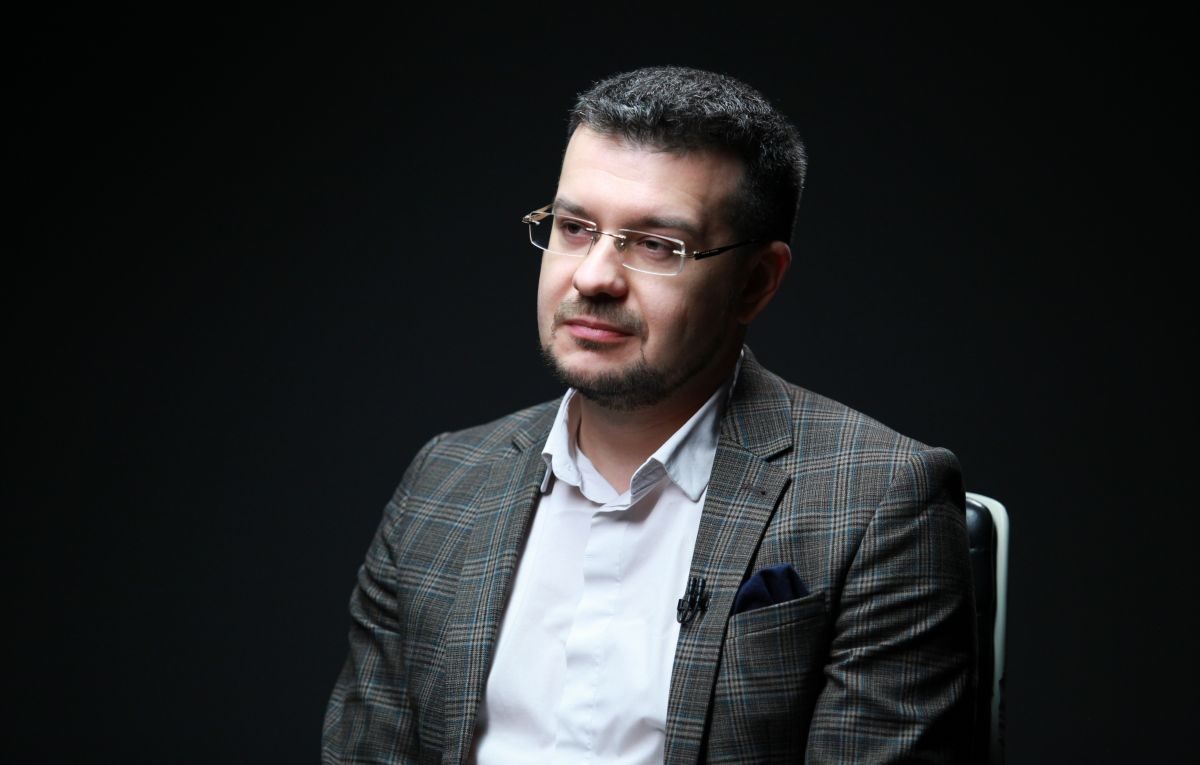
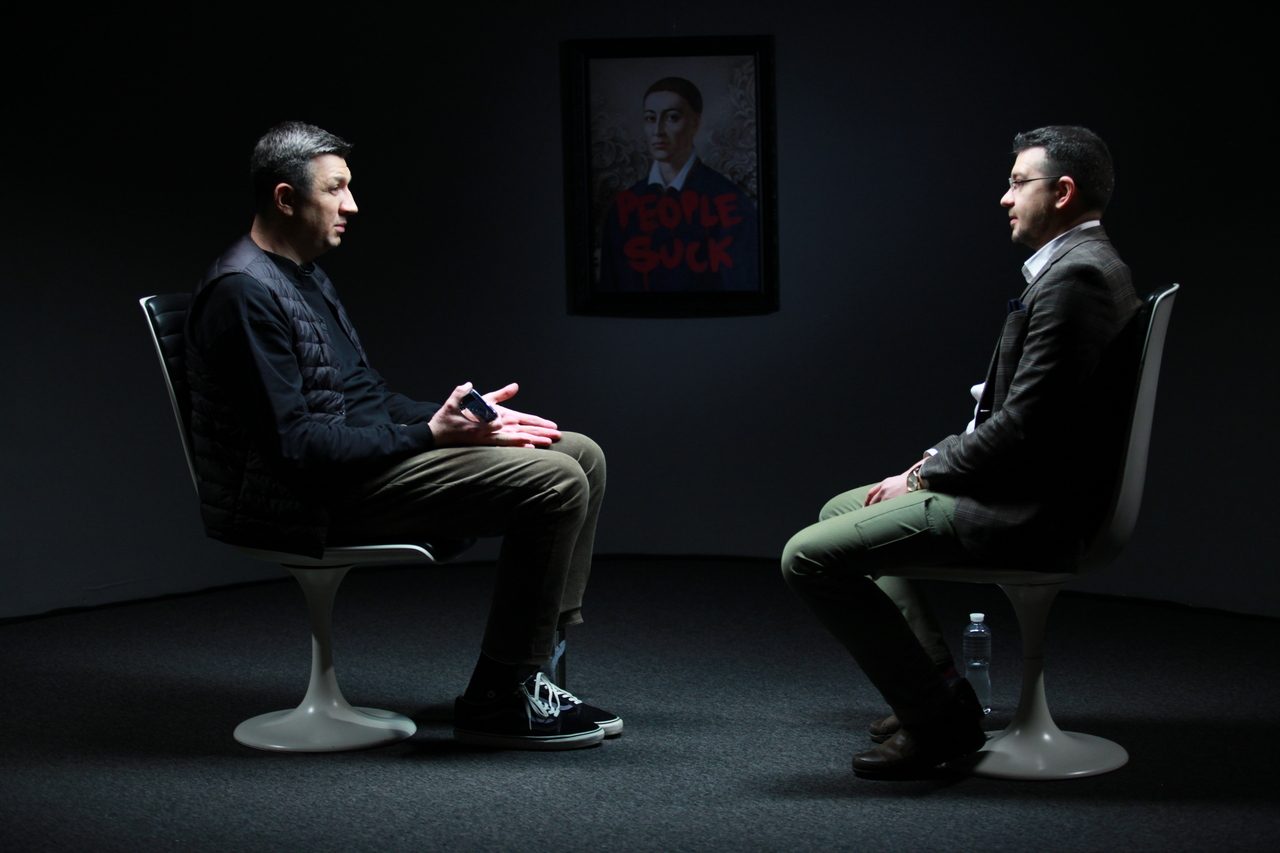
In a new episode of the program 'Antipodes' on Iceland TV channel, Ukrainian historian, radio host, public and political figure Oleksandr Alfyorov spoke about the history of Kyivan Rus, the founding of Moscow, the reign of Yaroslav the Wise and the lives of other princes.
We often talk about Kyivan Rus as the cradle of the Slavs. What kind of state was Kyivan Rus in reality? How large was it, and was it a state at all in the generally accepted sense of the word?
First of all, I want to point out the historical myth that is evident here: the cradle of the Slavs. Haven't you asked yourself which main people became a Slavic people in the 20th century?
Ukrainians.
Certainly, for us it is so. But we remember this mythmaking, when the tanks of the Soviet army rolled toward Berlin and there were Slavic peoples. And the so-called Russian people became the main Slavic people. And this is already the first myth, because Slavs are a huge number of states and peoples. We are talking about the Czech Republic, which emerged from Great Moravia, we talk about Poland, about other Slavic states, Bulgaria, and we also talk about Rus, among others.
And so, for example, the appropriation of Slavdom happened in the 20th century through these moments, when 'Russians' are the main Slavs. Therefore Rus was not really the cradle of the Slavs; it was one of the Slavic states which, being by its nature an empire, ruled other non-Slavic peoples. Which were to the east, which were to the north, which were also to the south.
Because those so-called Polovtsians, who asked our princes for help against the Mongols, were part of our state. There is a very big debate about the term: Kyivan Rus or Rus or Old Rus or Muscovite Rus. There was a state called Rus. In Greek, 'Rosias'. A state that existed from the 9th century and continued its existence. We are the direct successors of this state.
However, in the 18th and 19th centuries they tried to explain why there was the Russian Empire, why that dynasty ruling there was of unclear origin, because these were no longer the Romanovs, certainly not the Rurikids, it was some German dynasty. Plus Catherine II. With her son the history is unclear: who his father was. And that was the explanation of who they actually are.
And such an idea emerged: the Mongols came, Rus was devastated, people moved north, to Novgorod, Vladimir, where the existence of the state continued, while here wastelands remained, some robbers, some nomads, formed something marginal here, which later croaked and said, 'we are from the Hetmanate'. In fact we see that a huge civilizational rupture is already taking place. This is 1240.
The Mongols came to Kyiv and took Kyiv. At the same time Danylo Romanovych sought a crown for himself, to lead a crusade against the Mongols together with European knights. And Alexander Nevsky at the same time fought against the knights on the side of the Horde. Essentially against our allies. And this is the first such gain.
We see that Rus as it had existed was no longer there; those northern and eastern peoples who populated our state had matured mentally. And indeed in the 19th century a game of terms began. How to make it so that Rus is not Kyiv. Because Kyiv was not taken entirely. Although even Alexis Mikhailovich in the 17th century sought to move the capital from Moscow to Kyiv.
By the way, Nicholas II also had such tendencies to move the capital to Kyiv. And so in the 19th century a huge machine was built: there was Kyivan Rus, before it was Novgorod Rus, Rurik came from Novgorod to us. But the Mongols broke this state, and other Rus began to exist: Novgorod, Vladimir, Tver, Muscovite, Ryazan.
Well, at the beginning of the 20th century the term Yellow Rus began to exist, which meant China, Manchuria, which the Russians wanted to seize. So the game with these names led to the fact that we were simply given a small place in this history. But when they learned that Novgorod actually dates from the 930s–940s, they began to construct another state called Drevnyaya Rus.
What is Drevnyaya Rus? Well, there was 'drevnyaya' (old), it became 'novaya' (new). Well, the new one is what Moscow and Saint Petersburg in Leningrad Oblast are. This is New Rus. That is, a continuation. And interestingly, with this term, 'Kyivan Rus', in the 17th century they tried to indicate our place to us.
That is, in itself this somehow distorts the very semantics, a certain semantic sight.
Yes. So you are chronologically here: before you was Novgorod Rus, here Kyivan Rus, then the Mongols. That is, they gave us our own chronological niche. And in this lies the genius of Mykhailo Hrushevsky and other authors, when at the end of the 19th and the beginning of the 20th century they wrote their histories under the title History of Ukraine-Rus. This was an absolute challenge to imperial ideology.
Why did Hrushevsky publish in Lviv? It was a challenge to imperial ideology, that Ukraine is Rus. And even without looking at the political moments with Mykhailo Hrushevsky, some historical squabbles, we are talking about the fact that this man gave us the name Ukraine-Rus.
However, in the 20th century, during the Soviet era, more attention began to be paid to the term Old Rus. And the offensive term 'Kyivan Rus' began, on the contrary, to be supported by Ukrainian patriotic historians in order to rub it in. That is, we armed ourselves with a term which at first was hostile to us, alien.
And this period precisely shows very clearly that today we are losing even in this terminological war, because abroad Rus is 'Russia', that is Russia. 'Rasha'. And when they say Old Russia, European colleagues do not understand; even in this example we are forced to return to the term Kyivan Rus in order to show which state is meant. So it is not very simple with the history of Kyivan Rus as the center of Slavdom.
Prince Volodymyr. A very controversial figure. Some consider him a great statesman, some reproach him for making the wrong choice that he should have made during the Baptism of Rus. Some call him a fratricide. And in general, if we take him as a historical figure, is he a hero or an anti-hero?
Of course, he is a hero. I will say why. But this is a tricky question, because we fall into a very powerful myth. A hero, because we can say many times what he did, that he raped Rogneda, this Polotsk woman, in front of her father and brothers, who were dying.
One can say a lot about that time, but that was the time. Otherwise a ruler could not behave differently. If a ruler of that time showed weakness before his warriors and aristocracy, he would have been a ruler under whom there was a bunch of gray eminences.
He could not afford to say that we are deeply concerned.
So Volodymyr is indeed a hero. A hero of our history. But a huge mythological concept has attached itself to him. Well, look, in Moscow they put up a monument to Vladimir the Great.
Why do they need him?
I ask why they forgot to add the trident to the monument. Look: before him, some 20–30 years before his activity, there was Princess Olga, his grandmother. Who went to Constantinople, where she was received by the Byzantine emperor, embassies, they perceived her as the head of a foreign state. They called her Princess of Rus. She was a Christian, which in principle brought her into the circle of Christian monarchies of Europe at the time.
So, according to the Tale of Bygone Years, she made a tour of the borders, set up pogosts, administrative centers of the territory for collecting tribute. That is, already in Olga's time we clearly see that she had a state, recognized by the Byzantine emperor, the center of the world. Why this attitude toward Volodymyr? Because in Olga's time the ethnic territories of the Muscovite principality were not part of this state.
But under Volodymyr it began to be included. That is why Russians now need to cling to Volodymyr, because their territories appear as part of Rus only from the time of Volodymyr, not from the time of the princes who were before.
That is, this is entirely in the context of their propaganda?
Absolutely. Because if they began to verify Olga the way they do Volodymyr, well, she is equal to the apostles, then they would have to say, where, excuse me, is your place, Moscow or St. Petersburg. These territories are not part of the Rus state.
Olga is considered, well, first of all, she is a saint, and at the same time this story is known to everyone, how she took revenge for her murdered husband. And she is generally considered a model of a Ukrainian woman, so strong, decisive, willful, able to take on male responsibility, and at the same time she is cunning, she is treacherous.
I generally consider cunning and treachery very cool traits. That is, one should not be ashamed of these traits. Why? Because when an enemy comes to you or an enemy commits aggressive acts, then in principle, even by virtue of some biblical canons, you in principle can do whatever you want with him. And that is normal.
But at the same time, how true is all this, how much was she really the way she is now positioned?
Indeed, they say that in foreign states Olga was called cunning. That is, she really resorted to a policy of talks with various parties, but not to fulfilling the obligations that were imposed on her. Olga was cruel. And this is understandable, because such were the conditions of her existence. By the way, in the figure of Olga lies a huge secret, about which we also cannot speak definitively.
Before her, Igor was a prince, whom the Drevlians tore apart between trees. And a woman becomes the ruler of a huge military state. Not some voivode, not some relative, and there were many of them. The Rurikid dynasty between Olga and Sviatoslav went through such an interesting period, when there is the bottleneck effect: there are many relatives, and then suddenly everything leads to Olga and Sviatoslav.
And then further branching comes. Olga had her own grounds to hold this power. And that is why there are a number of questions. Why is there Prince Oleg, who raised Igor, and why next to Oleg is Olga, who has the same name, only feminine. Is she not Oleg's? Two rare names occurring side by side. That is the question. Second. I like to joke, imagine the 19th century, romantic Ukrainian huts, thatched roofs, periwinkle.
A Cossack named Vasyl comes out, his wife Marichka comes out, and some grandmother goes like this: oh, they had a child, what did they name him? And Marichka proudly says: Adelbert. Proper Scandinavian names Igor (Ingvar) and Helga (Olga). And they have a son named Sviatoslav. This is the story of that same Adelbert. What secret lies in that situation. In my opinion, Olga was not just some girl whom they brought from Pskov.
Not from Pskov, but from Pliska, the capital of the Bulgarian Khanate, the Bulgarian state. She was Bulgarian, which is why, for example, the name Volodymyr is there. Volodymyr is the son of Sviatoslav, grandson of Olga, right? The name Volodymyr is present in the dynasty of Bulgarian tsars. As is the name Boris. As are other names. Obviously, Olga was of Bulgarian origin. And that is why Sviatoslav goes to Bulgaria as soon as Olga's uncle dies there. So Sviatoslav has a claim to Bulgaria.
That is why they build Pereiaslav here, modeled on Bulgarian Pereiaslav. We have a very big history. Even in the sources, when they tell us that masters came from Byzantium, it was most often from Bulgaria that they came. Well, no one would come from Constantinople. It is more likely that masters were summoned from Bulgaria to build the church. In Olga there hides a huge kind of secret. Bulgaria is a Black Sea territory.
It was independent for some time, in the time of Rus, until the 12th century, then it was under Byzantine rule. And therefore the masters came from the so-called Byzantium, that is from Bulgaria. And our writing, by the way, the Cyril and Methodius tradition, all of this comes from here. Books from Bulgarian libraries filled our libraries. So there is a secret in Olga. Obviously, it lies in her Bulgarian origin.
Is it true that Yaroslav was so educated? And where is his library?
His library exists, it is there, it has not gone anywhere. Indeed, we have a mention that he ordered libraries to be made at St. Sophia's Monastery. These were institutions where books were collected and copied. To this day it is unknown where Yaroslav the Wise's library is, but we know that at many monasteries, at all monasteries, there were their own libraries.
Christianity is a religion which during the liturgy presupposes the existence of a book. Without a book Christianity does not function. This is reading the Gospel, this is reading liturgical texts. Therefore, when Volodymyr accepted Christianity at the state level, huge centers for copying books arose in our land. And obviously Volodymyr also founded these libraries. Where did these libraries go?
The question concerns the 13th–15th centuries. Darker periods in general for the history of both Europe and Ukraine-Rus. We did not survive these periods. And I always give an example here, when as late as the 20th century they said that Rus was illiterate. Why? Because there are no monuments of writing. That writing was kept only in monasteries. Then they began to find such sticks for writing on wax tablets.
Then they found birch-bark letters in Novgorod, then they began to pay attention to inscriptions, so-called graffiti on the walls of cathedrals. And they understood that writing did exist. Every charter of a principality or clergy was sealed with a seal. And today we have from the time of Kyivan Rus only one charter, Mstyslav's charter, which has survived. This is the 1130s. Only one charter. Which gave us the understanding that there was no writing.
And here, in the present period, we have in our possession more than 10,000 lead seals, which were attached to charters. The charter has rotted away, the seal remained. I will just give an example: these so-called bulls or lead seals are the same as the seal on meters. Such lead ones, we all know very well. That is how documents were sealed at that time.
So, more than 10,000 seals from the 11th to the 12th century. But only one charter has survived from that time. Was Yaroslav literate? We do not know. His son Vsevolod was a prince, he was the father of Vladimir Monomakh. Vladimir Monomakh wrote about his father: the father was very intelligent, he knew five languages. Five languages. And many historians try to find out which languages he knew.
Well, his own Rus language, he knew Greek, because his wife was Greek, obviously; he knew Scandinavian languages. And his princely seal, for example, more than 28 varieties are known. That is, 28 not copies, but varieties. And on all the seals there was always the same inscription in Greek: 'Lord, help your servant Andrei Vsevolod'.
And now imagine that of all these 28 varieties, which in turn had dozens and hundreds of copies, only two varieties have a grammatically correct inscription. On the latest seals during his lifetime this inscription in Greek is so corrupted that it is impossible to read it.
And the question is whether the prince understood that he was Grand Prince of Rus, whether he did not read what was written. Why does the metropolitan sit nearby, not reading that there is an incorrect inscription? Knowledge at that time presupposed that you could speak, but might not be able to write. You could count by addition, but could not subtract or multiply. By the way, people then read aloud.
But still, the positioning of Yaroslav as a person who began to engage in some spiritual spheres, the sphere of education, architectural monuments. Did it correspond to reality? Why did he need it? Was it fashion or, so to speak, markers of prosperity?
It was the expectation of the coming of Christ. Everything we know about Rus and Yaroslav the Wise is nothing other than an attempt to await Christ. And even when we speak, one can immediately recognize an ignorant historian when he says 'Tale of Bygone Years', 'Tale of Temporary Years'. The word 'temporary' cannot be translated. It is an extension, it is a process.
And so 'temporary' is a marker, that is, before the coming of Christ. And everything we say about Yaroslav, for example his urbanization, his construction of the city. Look at Kyiv in Yaroslav's time. The Golden Gate. As you leave through them, immediately there is the Church of St. George, the Church of St. Irene. This is a copy of the exit to Constantinople.
If Constantinople considered itself the Second Rome and was pulling this right of primacy toward itself, then Kyiv was pulling the right of primacy from Jerusalem and Constantinople toward itself. That is, the entire sacred structure of the consciousness of our prince Yaroslav and his court at that time was entirely built around the idea that the coming of Christ would happen.
And indeed this construction began in order to report that we were a pagan people, and now we have become leaders of Christian states, we have baptized huge territories, we have built a new Jerusalem. Kyiv was for a long time called, especially in the 17th century, the New Jerusalem.
So Yaroslav the Wise might not have been able to write or read. But in his consciousness he was carrying out a huge project of forming the sacred space of Rus as a state ready for the coming of Christ, and a state that would be saved, 'salvific'. Because in our ideology of the Christianity of that time, in their idea, Christ was born and for them this was a means to be saved. No, they are not saved. Which peoples then are saved?
And Rus during Yaroslav's time considered itself a saved people. And all its politics, and all its architecture, is nothing other than a demonstration before the Lord that we must be saved.
St. Sophia's Cathedral in Kyiv, one of the most magnificent complexes. For what purpose was all this rebuilt so long and at such cost, and again, is there some history that tells us about the adoption of this decision?
This is a huge question. Because we see the chronicles of Thietmar of Merseburg, an archbishop, who is one of the few who passed on to us the events of the early 11th century, in general for Europe. And he writes that in 1018, these are among his last entries. He himself was not in Kyiv, but he describes in great detail from informants how Yaroslav fought for Kyiv against Boleslav, against Sviatopolk. Down to the details.
Even who took whom captive, who laughed at whom and for what. And Thietmar describes that in Kyiv in 1018 there was a monastery of St. Sophia of Kyiv. On the other hand, we know that we have a date of consecration of St. Sophia of Kyiv. And it is the middle of the 11th century. We have architectural research which shows that it indeed was not the beginning of the 11th century.
At the same time there are graffiti, inscriptions on the walls, dated to the 1020s and 1030s of the 11th century. That is, the question of St. Sophia of Kyiv still lies in a very controversial and politicized plane. Because it was supposedly believed that St. Sophia in Kyiv was built, and then the same masters went to Novgorod to build.
It turns out that in fact St. Sophia of Kyiv was built already in Volodymyr's time, at least founded as a monastic complex. And Yaroslav the Wise only completed the construction of this complex. So it dates to the time of its founding by Volodymyr, and Yaroslav the Wise put the final full stop. Yaroslav often took things that did not belong to him, and claimed that it was his own invention.

Russian Attacks in Dnipropetrovsk Region: Two Killed, Seven Injured

Defense Forces Strike Four Russian Drone Control Points in Past Day, Including in Berdiansk

Britain Threatens Sanctions on Kremlin-Linked People; Poland Ready to Hand Ukraine Ammunition

Russia says it has completed "planned exercises" in the Black Sea

MVD: Fake Riots With Prop Blood Were Being Prepared Near Presidential Office

Law Enforcers Name Another Klitschko Deputy as Suspect

Berlin Holds Protest Against War in Ukraine; EU Prepares for Possible Russian Halt of Gas Supplies
North Korea Fires Ballistic Missile Over Record Distance in Five Years
Irish Fishermen Force Russia to Postpone Naval Drills

US sanctions in case of invasion of Ukraine could completely destroy Russia's economy, NYT reports
