
How Computers Will Steal Our Jobs (and What to Do About It)
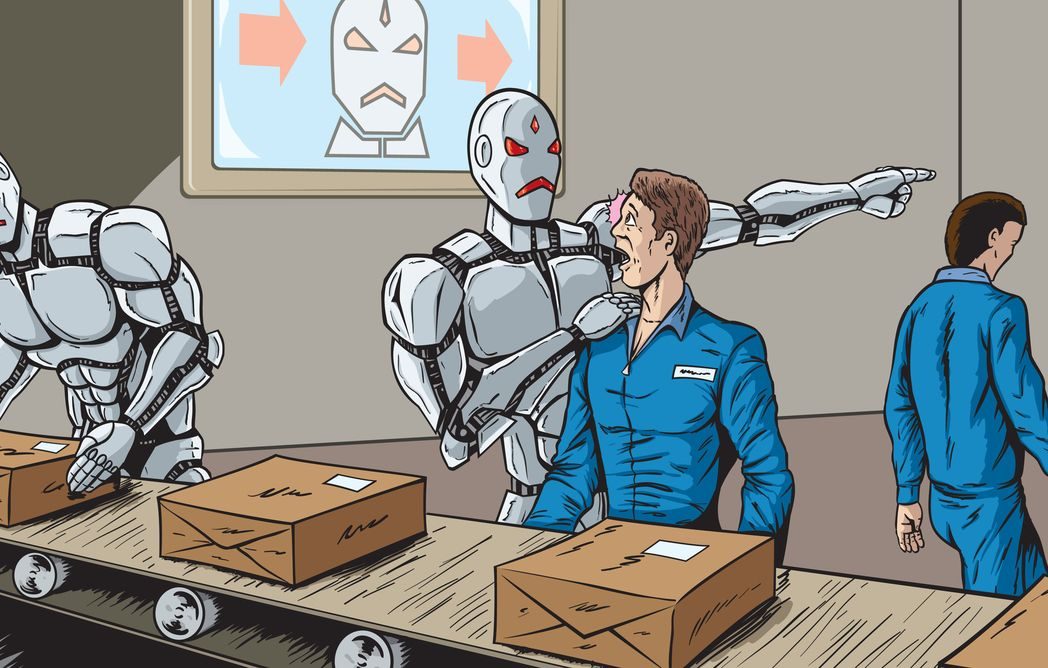
Technological unemployment is inevitable, but there is good news too.
Technological progress will leave people without work. There is no point guessing what year this will happen or speculating about who exactly will be affected (journalists will be unemployed, while lawyers will remain untouchable). Economist Daniel Susskind, whose TED talk on the future of work has been viewed by 1.5 million people, believes it is better to imagine right now a reality in which robots have pushed humans aside. Metropolitan Books has published his new book, “The Future Without Work: Challenges of Automation and How to Respond to Them” (A World Without Work: Technology, Automation, and How We Should Respond). Here we recap the most important points from it.
A Horse’s Fate. In a series of articles written in the early 1980s, American economist and Nobel laureate in economics Wassily Leontief put forward a controversial theory: robots will leave people without work just as machines displaced horses. Critics objected that people, unlike horses, which performed one single function, are multifaceted. And therefore irreplaceable. However, nowadays Leontief’s assumption is becoming ever more plausible. 30% of Americans believe that robots will take their jobs within their lifetimes. It can now be said with confidence that in the 21st century there will not be enough work for everyone.
Progress Hates the “Middle”. In the past, technological progress favored skilled and unskilled workers at different times. For example, during the Industrial Revolution, equipment for factories was made so simple that even a child could operate it (and this is not a metaphor – child labor was not yet illegal). Thus, unskilled workers could displace experienced craftsmen accustomed to working by hand.
During the period of computerization, by contrast, demand for well-educated employees grew along with technological levels. But there was a common belief that progress could not harm anyone: thanks to it, income was rising for all categories of people. However, starting in the 1980s, in parallel with technological development, the layer of professions between the high-paying (for example, management) and low-paying (for example, cleaners and hairdressers) began to disappear. “Middle” clerks, salespeople and secretaries are becoming fewer and fewer.

The Case of the Extinct Elevator Operator. Techno-optimists are wrong in their reasoning when they point out that, according to the census, since 1951 only one profession – elevator operator – has disappeared in the US. This does not mean that most professions are protected from technological unemployment. It only means that the work of an elevator operator consisted of one very straightforward task – operating the elevator – whereas most professions combine many tasks. Doctors do not only make diagnoses, and lawyers do not only appear in court.
As it turns out, technological progress is not inclined toward skilled or unskilled workers: it is inclined toward certain tasks. For example, it is extremely difficult to automate the simple movements characteristic of human hands – the so-called Moravec’s paradox – so for now robots are not competing with hairdressers. But many complex tasks that made up entire layers of professions (for example, reviewing legal documents) have already been automated, and others will sooner or later get their turn.
“Intelligence of the Gaps”. Religious leaders are often criticized for declaring divine everything that science cannot explain, so that God in their conception becomes a “god of the gaps”. People who believe that machines are incapable of replacing humans fall into a similar trap: for them, human intelligence, which robots cannot replicate, becomes “intelligence of the gaps”.
Once, robotics was dominated by the view that machines would need an analogue of the human eye to recognize images and something resembling the human brain to make decisions. But the Deep Blue program, which beat Garry Kasparov at chess, did not reason like Garry Kasparov and did not copy his creativity or his personality – it calculated 330 million moves per second. The program developed by DeepMind, which beats gamers at Atari games, does not behave like a gamer – it analyzes the pattern of pixels on the screen and correlates it with the number of points earned. So it is pointless to cling to the view that creativity, as well as the ability for logic and empathy, will preserve some professions for us in the future.
The Fox and the Army of Hedgehogs. The Greek poet Archilochus wrote the enigmatic phrase: “The fox knows many things, but the hedgehog knows one big thing.” Modern technologies can be compared to such a hedgehog, and the holder of multifunctional intelligence, the human being, to a fox. The AlphaGo program can do one thing: play Go. But it has learned to do this better than any living master, having analyzed 30 million moves from real matches. Moreover, its second iteration, AlphaGo Zero, got rid of the “human” component altogether: it learned to play not real games but against itself, having been given only the rules.
People are used to thinking that without the emergence of strong artificial intelligence (one that copies human qualities) there is no reason for us to fear technological unemployment. But the example of AlphaGo Zero shows that weak artificial intelligence – that is, one tailored to a narrow need – can completely surpass a human in a specific task. In short, we need to fear not the arrival of one clever fox (strong artificial intelligence) but an army of skilled hedgehogs.
Tantalus’s Toil. Or recall another Greek – the mythical Tantalus, whom the gods, for his transgressions, placed in a lake up to his waist, surrounded by fruit-bearing trees. When Tantalus bent down to quench his thirst, the water receded, and when he tried to pick an apple, the branches slipped away from him. More and more real people will suffer Tantalus’s torments: being competent and ready to work, they will be unable to find the work that eludes them. This has already happened to many Americans of working age, one in six of whom has been left without a job.
The culprit is so-called frictional technological unemployment, when new jobs seemingly appear in the economy, but people still cannot fill them. The reason may be a mismatch of skills (an elderly secretary is unlikely to retrain as an IT specialist), a mismatch of identity (a graduate of an engineering university may not want to work at McDonald’s), and a mismatch of geography (an unemployed taxi driver will not move to Silicon Valley even if masses of orders are waiting for him there).
The Stigma of the “Pink Collar”. Someone might object that this is not genuine technological unemployment, since a person can, if they wish, move (retrain, overcome themselves) and get a new job. But in reality many participants in the race drop out – they stop looking for work altogether. American men prefer not to work at all rather than become a “pink collar” – a teacher, nurse, social worker or employee in another field where women have historically predominated.
Technically, jobs serving the rich remain relatively prestigious and in demand. Personal trainers, elite cheesemakers and children’s party planners can quite easily fit into the strange labor ecosystem of London, New York or another metropolis, but the proliferation of such professions divides people not only by economic criteria but also by status: society is now divided into those who are served and those who serve.
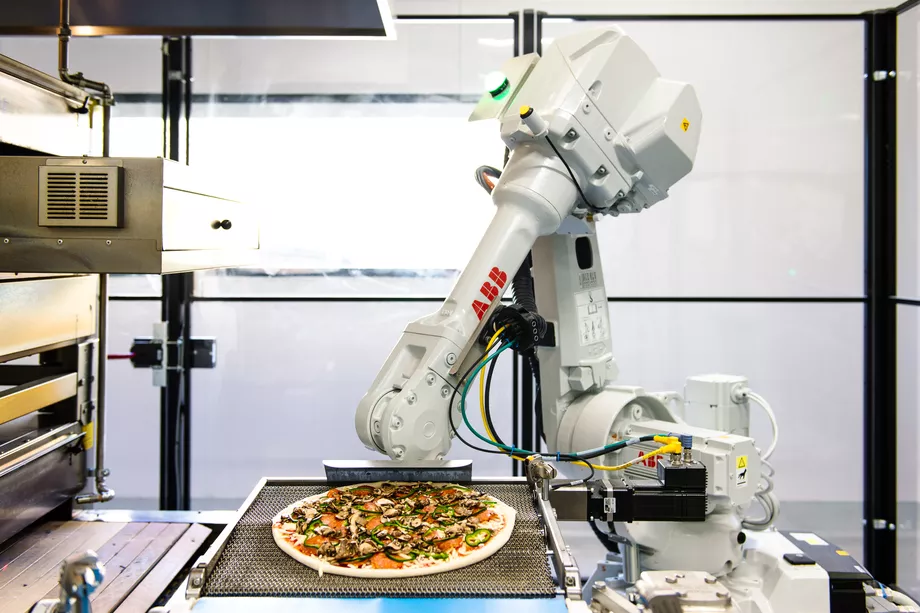
Not a Pie for Everyone. Techno-optimists cite three signs that progress is working in favor of the working population. The first is the “productivity effect”: supposedly, new technology improves the quality of a person’s work. For example, taxi drivers should thank engineers for navigation systems. But will they be as grateful when driverless taxis appear on the streets? The second argument for progress being “harmless” to workers is the “growing pie effect”. It holds that, along with progress, the economy grows, and so do wages. But this is contradicted by the example of Britain’s agricultural sector, where output over the past 150 years has grown fivefold, yet the number of people employed in it has fallen from 3.2 million to 380 thousand.
The third sign is the “changing pie effect”, which shows that new strata appear in the economy alongside technological development: in recent years, for example, the field of SEO. But new industries sometimes employ a tiny number of people: for instance, Instagram had only 13 employees when Facebook bought the company in 2012. New fields of work created in the 21st century provide jobs for just 0.5% of US working-age citizens.
An Invasion of Woodcarvers. From people who do not believe in technological unemployment, one can hear this argument: that in any economy, there will remain professions where living people are in demand. Indeed, many connoisseurs prefer to drink coffee made by a barista rather than from a coffee machine. And handmade furniture remains a status symbol when most household items are produced on an assembly line.
But it is impossible to imagine an economy in which millions of woodcarvers are in demand – or in which farmers who have lost their jobs suddenly all become bartenders in elite cafés. Cutting wages to preserve jobs will not help here either: as Leontief wrote, this “may delay the replacement of people by robots in much the same way that reducing the oat ration delayed the replacement of horses by machines”.
A Second Degree Will Not Save You. A widespread idea holds that a good education can continue to guarantee graduates jobs. But the problem is that universities in practice ignore a simple principle – not teaching students what robots already do better than them. This is most evident in the way we teach and test mathematics (Daniel Susskind teaches mathematics and economics to students at Oxford – Ed.)
Many problems solved at a school desk can simply be photographed and uploaded to an app such as PhotoMath or Socratic to get the answer – and the fact that education is built on such problems is a bad sign. Half of high-paying vacancies in the US require coding skills, yet programming remains a dull school subject, and many of its teachers have no relevant work experience.
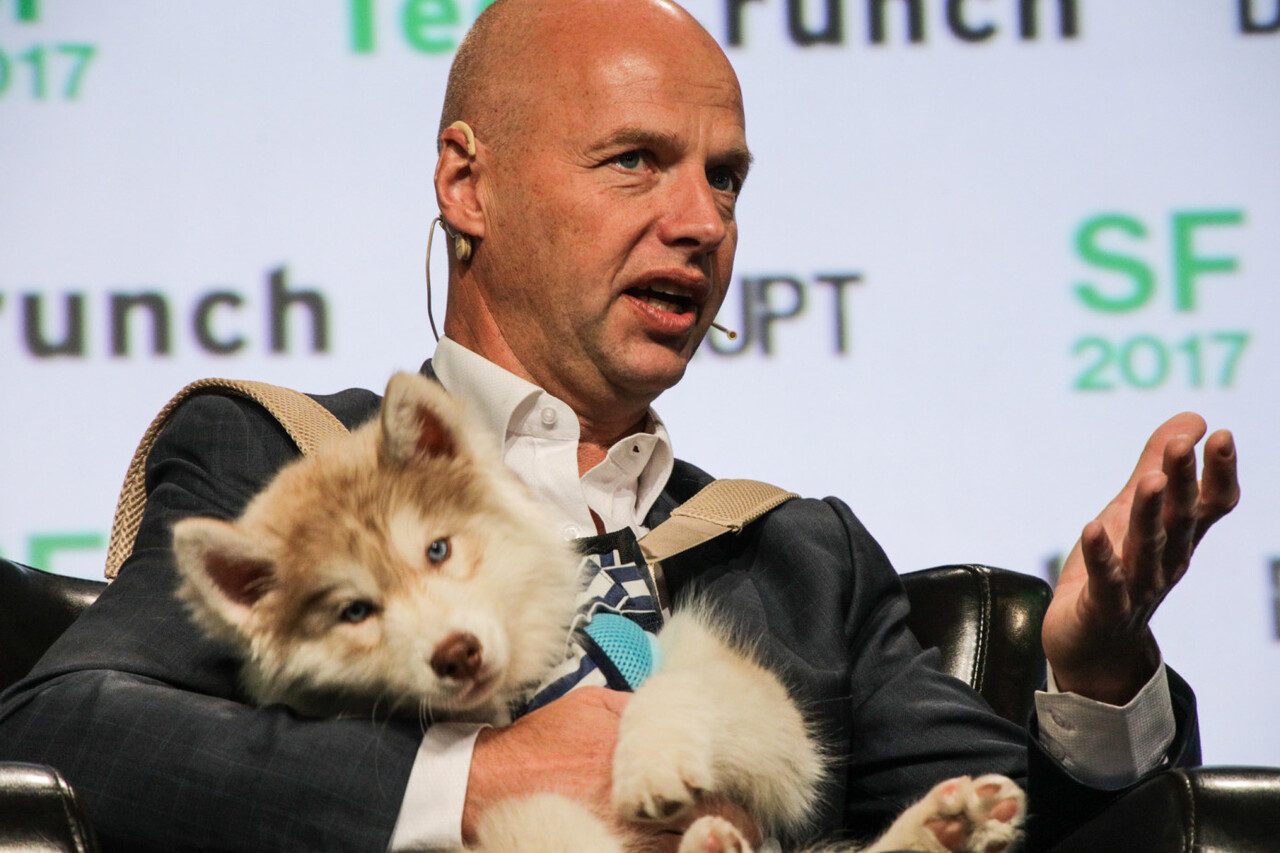
Even Stanford Is No Guarantee. For education to help a person compete with technology, the principle must change not in how many people study, but in how and when they study. When computer science professor Sebastian Thrun first gave his course to 200 students at Stanford University, and then online to 160,000 people who wanted to take it, the best “Stanford student” placed only 413th in the overall ranking. “My God,” Thrun recalled. “For every talented Stanford graduate, there are 412 even more talented students.”
Perhaps the point is that online education is effective in itself. So-called “massive open online courses” are usually completed by only a handful of people, even if thousands sign up, but the very fact that they have their own graduates confirms the imperfection of the traditional university system. In addition, people should finally overcome the harmful stereotype of “eternal students”: those who are willing to master courses online in their free time will find it easier in the future than graduates of elite universities who believe they have acquired enough knowledge.
A “Big State” Instead of Big Brother. As shown above, growing the economy alone will not solve the unemployment problem. A new structure must replace the labor market – let us call it the “Big State”. Instead of monitoring the growth of the “pie”, it must ensure that everyone gets a slice. The main roles of such a regulator would be effective taxation of those who own traditional capital and the redistribution of it among those who have lost the use of their human capital, i.e., have become unneeded as professionals.
There is an opinion that robots should be taxed – those who, in fact, took jobs away from people. Bill Gates was one of the first to voice this idea. But a more transparent and sensible step would be to regulate inheritance taxation. Right now we effectively tax inherited human capital – we levy a percentage on the wages of workers, which are an indirect consequence of their innate talents. In a world with less work, inherited traditional capital should be taxed more heavily.
A Basic but Not Unconditional Income. The number of advocates of unconditional basic income – payments people receive “just like that” – is growing around the world. But in a world of technological unemployment, it would be wiser to introduce a conditional basic income: such payments would impose certain obligations on the recipient. Current social benefits effectively oblige the recipient to find work, but in a world without work such a scheme would be meaningless.
Instead of supporting the labor market, basic income should support the community, and instead of an economic contribution, the recipient will make a social one: for example, by doing volunteer work, intellectual labor or creative work. A world without work will be monstrously polarized between people who own a huge share of traditional capital and people who own no capital at all. Therefore, work that unites people will become not only noble but vitally necessary.
Saving the Drowning Doctor. Someone will ask why it would still be necessary to take part in this “social labor” if the state provides for the needs of the unemployed. The thing is that tragic consequences arise not only from “unpaid” unemployment, as in Germany in the 1930s, where it became one of the reasons for Hitler’s rise to power. “Paid” unemployment can also lead to decline and the loss of a person’s own sense of “self”. In the 1920s, Austrian social psychologist Marie Jahoda studied how unemployed residents of the village of Marienthal, who received benefits, adapted to their new living conditions. It turned out that they not only became apathetic and more aggressive toward one another, but also borrowed fewer books from the library – even though they had more free time at their disposal.
There is a joke about an adult son who went to the beach with his mother. When he starts drowning, the mother shouts: “Save my son, he’s a doctor!” The joke lies not only in the fact that she asks those around her to save a socially useful worker, but also in the fact that even at the moment of danger, the son’s identity is inseparable from his profession. Losing a job threatens people with losing their identity – so when the state is unable to provide citizens with work, it must provide them with leisure that gives their lives meaning.
Marina Moynihan, TK Media

Russian Attacks in Dnipropetrovsk Region: Two Killed, Seven Injured

Defense Forces Strike Four Russian Drone Control Points in Past Day, Including in Berdiansk

Britain Threatens Sanctions on Kremlin-Linked People; Poland Ready to Hand Ukraine Ammunition

Russia says it has completed "planned exercises" in the Black Sea

MVD: Fake Riots With Prop Blood Were Being Prepared Near Presidential Office

Law Enforcers Name Another Klitschko Deputy as Suspect

Berlin Holds Protest Against War in Ukraine; EU Prepares for Possible Russian Halt of Gas Supplies
North Korea Fires Ballistic Missile Over Record Distance in Five Years
Irish Fishermen Force Russia to Postpone Naval Drills

US sanctions in case of invasion of Ukraine could completely destroy Russia's economy, NYT reports
