
How Digital Technologies Helped Zelensky Become President of Ukraine
Chatbots, online tests, ads on Facebook and Instagram, and more.
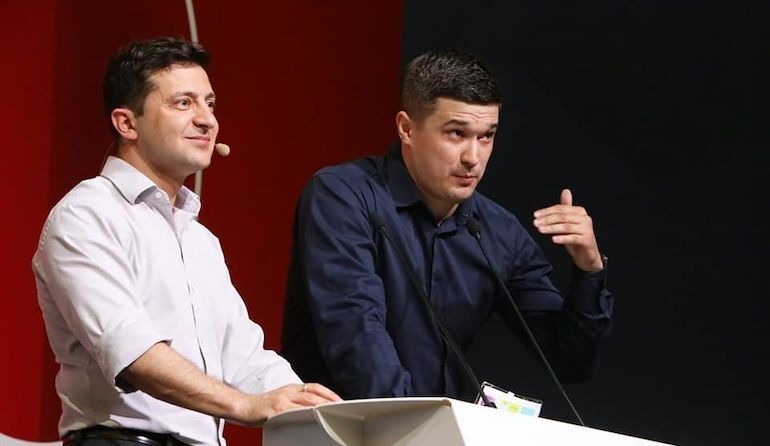
Deputy Prime Minister of Ukraine for Digital Transformation Mykhailo Fedorov headed Volodymyr Zelensky's digital efforts during the presidential campaign. At the Digitalization forum held yesterday at Fedoriv Hub, Fedorov revealed the tools they used.
“We wanted to set some metrics, some KPIs for our work. I can't imagine how to set them in an election campaign. We had no direct influence on the percentage in the vote. But we clearly influenced the number of mentions of ourselves, their tone, and the growth of communities. That's what we began measuring for ourselves, as well as for Petro Poroshenko and Yulia Tymoshenko, receiving daily customized reports.
If we name the entire election campaign with one keyword — it is “engagement”.
What did we do?
We created a website that was visited by 7 million people during the presidential election —a record for a presidential campaign.
We attracted the largest number of volunteers online in European history. Now there are more than 100,000 of them.
We developed the most discussed program in Ukraine's history. Our program, which Volodymyr Zelensky is now implementing, was built from real quotes from people. People visited and took screenshots (“Wow, my comment made it into the program!”).
Through the website we recruited 20,000 volunteer observers to protect votes and 10,000 members of election commissions.
We sent 21 million emails to our audience. The average open rate (the share of emails opened by users) was 30%.
We created the most popular political Telegram channel in the world — more than 180,000 subscribers (after the election there was an outflow, now about 160,000). During the election campaign Ukraine ranked fourth in the world in the rate of new Telegram user growth. Many people, even from the older generation, registered on Telegram to follow our campaign news.
We helped 350,000 people change their polling place. We generated videos with Ruslan Khanumak (“Nepro Vybory”) and so on. Now in the government we are working so that in the future this can be done online.
We developed a chatbot that helps find your polling station (“De dilnytsia?”) — 80,000 people used it. It asked which city you were from, which street, and house number, and then sent you a link to a Google map with a route to your polling station. We didn't know where to vote ourselves — that was our pain — so we made it for ourselves.
We collected all the negativity against Zelensky into the project “Petro Poroshenko's Online Library of Black PR.” We created a bot through which you could send any negativity you saw on the street. The goal was for Poroshenko to be ashamed to look children in the eyes his whole life. It was sincere motivation — he created so much negativity for us.
We developed a chatbot where violations could be reported on election day. In the first round 10,000 messages came in. People photographed the transportation of voters and sent them to us, and we forwarded them to lawyers, who “hammered out” statements and sent complaints to the Interior Ministry website.
We made an online quiz “How well do you know the sitting guarantor?” It was visited by 78,000 people. Questions included: “By how many times did Petro Poroshenko's wealth grow in 2012–18?”, “How long did the Lipetsk factory operate?”, “What does he do when asked questions about Anatoliy Shariy?” Then they made one about us too — it was fun, overall.
We launched 2,000 advertising campaigns on Facebook and Instagram. There was a myth that Trump had very deep targeting and so on, but we pulled all the data we could find and realized our targeting campaign was even better.
We set up a volunteer call center that connected volunteers with people wanting to ask Zelensky a question. We kept collecting requests from people and routed them through a CRM system that I got from Dmytro Dubilet. A person registers, enters the CRM system, gets a login, sees a request, and calls the person from their own phone to answer their question. They knew what to answer because we made a ze-book — a book with electronic search where you can find an answer to any question. There were 500 active volunteers making 10–20 active calls a day.”
In the first round Zelensky received 5.7 million votes (30.24%), and in the second round 13.5 million (73.22%), unseating Petro Poroshenko as president of Ukraine.
TK Media

Russian Attacks in Dnipropetrovsk Region: Two Killed, Seven Injured

Defense Forces Strike Four Russian Drone Control Points in Past Day, Including in Berdiansk

Britain Threatens Sanctions on Kremlin-Linked People; Poland Ready to Hand Ukraine Ammunition

Russia says it has completed "planned exercises" in the Black Sea

MVD: Fake Riots With Prop Blood Were Being Prepared Near Presidential Office

Law Enforcers Name Another Klitschko Deputy as Suspect

Berlin Holds Protest Against War in Ukraine; EU Prepares for Possible Russian Halt of Gas Supplies
North Korea Fires Ballistic Missile Over Record Distance in Five Years
Irish Fishermen Force Russia to Postpone Naval Drills

US sanctions in case of invasion of Ukraine could completely destroy Russia's economy, NYT reports
