
How Diplomas Are Sold in Ukrainian Universities
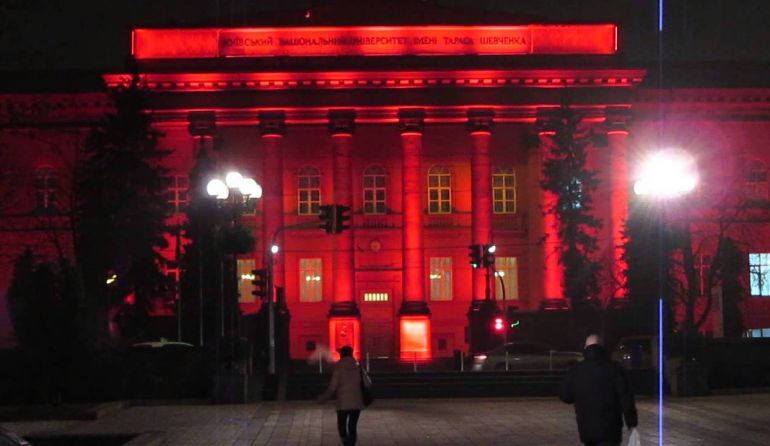
TK Media's editorial team translated an article by Yulia Mendel for Politico, written in 2016, which led Taras Shevchenko National University of Kyiv to sue the journalist.
I did not pay bribes in my own country until the time came to defend my doctoral dissertation. I put $200 on the sixth page of my manuscript before handing it to my supervisor. His colleagues in the department told me about this practice when I complained that my professor had refused to look at my dissertation for more than three weeks. The deadline was approaching.
I watched my esteemed professor of contemporary Ukrainian literature leaf through the pages. My face turned red with shame, but I will never forget what he said when he found what he was looking for: “Now it’s clear. You did a good job.”
My experience defending my dissertation at the best university in Ukraine, Taras Shevchenko National University of Kyiv, a world-renowned institution, was humiliating, but not unique. Although tuition at higher education institutions in Ukraine is very affordable — on average less than $1,000 a year, the hidden costs are high.
An acquaintance, a student from Mariupol, a city in eastern Ukraine, never doubted the necessity of bribes. Her experience had taught her that corruption is the only way to graduate from university. Over the four years she spent writing her doctoral dissertation, an unimaginable amount of money went on bribes. She paid her supervisor $1,000 as a thank-you for mentoring. The same amount went to another professor who edited her work, even though this was part of his duties.
This is the fate of almost every Ukrainian student: Viktoria, a journalism student, knew she would not pass her first-year exam without paying her professor $300. Katya, studying to be a doctor, skimped on food so she could pay $50 for each grade over the semester. And several students from Kharkiv found out that they could simply pay for their diplomas and skip exams altogether.
Robert Orttung, an expert on post-Soviet corruption systems at George Washington University, spent two months travelling across Ukraine with a team of researchers, asking ordinary people where they most often encountered corruption. Education ranked third on their list, after the healthcare system and the police.
“The main reason education is so prone to corruption is that professors and lecturers often earn modest salaries and need more income,” Orttung wrote in an email. “To survive, they have to get money wherever they can, and for the most part this amounts to bribes.”
Both the President of Ukraine (Petro Poroshenko – ed.) and the Prime Minister (Arseniy Yatsenyuk – ed.) consider education reform a success story. Times Higher Education magazine calls Education Minister Serhiy Kvit “perhaps the most successful minister in Ukraine” because more than half of his reform programme was implemented in less than two years.
Last summer parliament passed a new law on higher education to give universities more autonomy, including control over their finances. The idea was to encourage private investment, fundraising and even the creation of a donation system, as well as to dismantle the Soviet top-down model of university governance.
“We need a new post-Soviet model of leadership in which teamwork plays a major role in universities, and more people are involved in decision-making at different levels of management,” — Kvit said in a recent interview. The minister knows what he is talking about, but whether he is able to change the system is another question.
Last December I tried to enter my alma mater without a student ID, and thanks to some old-school tactics and friendly conversation, I managed to slip past the guards and walk through familiar university halls. In the style of North Korean party officials, portraits of university professors hang framed on the walls, most of whom I know from my dissertation defence four years ago.
Almost every university employee is a relative or friend. Once, the head of my institute agreed to hire a woman who had recently given birth and did not want to work, but still wanted to be paid. It was a friendly favour.
It is hard to imagine anyone managing to change the system until the ruling teacher-godfathers are replaced. They will keep their posts until bribes — their main source of income — stop.
The state education apparatus is largely funded from the state budget and is too bloated to thrive by legal means. Ukraine has 664 higher education institutions — 260 more than Germany, although Ukraine’s population is half the size. And this is in addition to the 139 universities that the Ministry of Education closed last year due to licensing problems.
The new education reform law requires all universities and colleges to publish their financial reports online, but according to the independent non-partisan analytical centre CEDOS, only about ten of them have done so.
“Since people are willing to pay for these services, it would be better for everyone if the system could be made more formal and transparent, so that instead of bribes people would pay taxes, and the state could finance services,” Orttung says. — “Of course, few want to pay taxes, because they do not trust the state to provide good services.”
However, according to the National Reform Council, reducing bribery in higher education is not actually a government priority. The Ministry of Education held lectures on civic responsibility and required professors to set up special anti-corruption departments to bring order to their departments. The results speak for themselves: so far the ministry has heard the name of only one corrupt academic. A senior lecturer was accused of accepting a $100 bribe. The punishment was a two-year probation.
When graduates defend their dissertations in the Faculty of Linguistics at Shevchenko University, they, as a group, are obliged to cover the expenses of the academic council — 26 professors who travel from across Ukraine to confirm university degrees in Kyiv. Students must pay for their tickets, taxis, per diems, hotel accommodation in the city centre, as well as graduation lunches and dinners with top-quality alcohol and exclusive service in the university canteen.
Despite her fears, my colleague from Mariupol’s defence was brilliant. Of the 26 professors, only one came to listen to her. Her defence took place before him and a girl with a tape recorder. It was already getting dark, but the lights in the hall, as always, remained off — to save money on electricity bills.
Yulia Mendel
January 2016

Russian Attacks in Dnipropetrovsk Region: Two Killed, Seven Injured

Defense Forces Strike Four Russian Drone Control Points in Past Day, Including in Berdiansk

Britain Threatens Sanctions on Kremlin-Linked People; Poland Ready to Hand Ukraine Ammunition

Russia says it has completed "planned exercises" in the Black Sea

MVD: Fake Riots With Prop Blood Were Being Prepared Near Presidential Office

Law Enforcers Name Another Klitschko Deputy as Suspect

Berlin Holds Protest Against War in Ukraine; EU Prepares for Possible Russian Halt of Gas Supplies
North Korea Fires Ballistic Missile Over Record Distance in Five Years
Irish Fishermen Force Russia to Postpone Naval Drills

US sanctions in case of invasion of Ukraine could completely destroy Russia's economy, NYT reports
