
How Zelensky Revived Kryvbas and Why It Looks Like a Scam
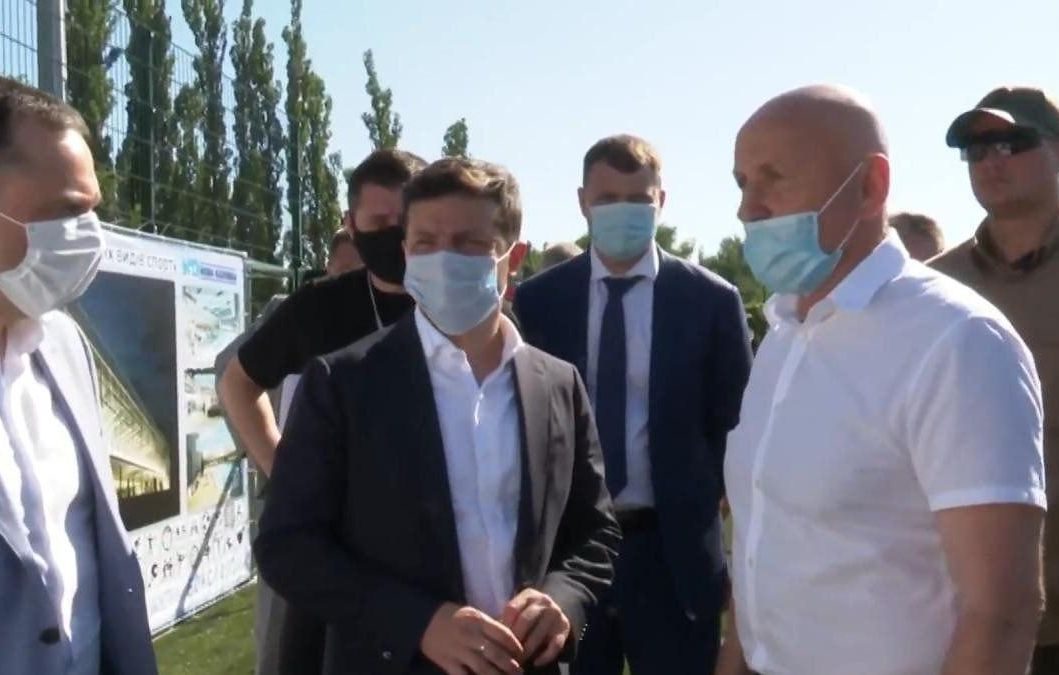
The authorities are replacing clubs and may be illegally using a trademark.
On Friday, a joyful post appeared on the page of Ukrainian President Volodymyr Zelensky that could have been headlined: “Hurray, we have returned FC Kryvbas to our Kryvyi Rih.”
For Ukrainian realities there would be nothing unusual in this, if it were not being done by a man who promised to sweep all “systemic” politicians out of power, but ended up as the main cog in the system himself. The “Revival of Kryvbas” operation as a whole went entirely according to the Soviet model: “The president said ‘we need to’ — the mayoral candidate of Kryvyi Rih replied ‘we will do it.’”
At the end of June the president first stated his intention to bring back “Kryvbas”:
Volodymyr Zelensky
President of Ukraine“Hornyak is a normal club. There was also Kryvbas. Unfortunately, it was closed. I gave this to our Yuriy Koryavchenkov... We gave him the task, and he is now talking with the Federation (of football — UP) so that Kryvbas is returned to Kryvyi Rih. Not even because we are from Kryvbas. It's simply wrong to close clubs.”
Koryavchenkov, aka “Yuzik” — an ordinary actor of “Kvartal 95” with nothing remarkable about him apart from his physique, and a weakly active member of the Verkhovna Rada — coped with the task in a month. In early August it became known that the “normal club Hornyak” was being renamed “Kryvbas.”
If all formalities are observed, the newly formed football club must spend at least one season in amateur leagues before it gains the right to enter professional football — the Second League (third tier of the Ukrainian championship). In Ukrainian realities they more often do not do it this way, but take a ready club that is already playing in amateur leagues and can enter professional football, slap a new brand on it — and off they go. In politics it is exactly the same: before parliamentary elections they get around the threshold for parties by buying an existing one and renaming it — and the Ministry of Justice can no longer stop them from running.
In football this is sometimes harder to do, because clubs need infrastructure — it is not just a matter of renting an office for a party. One could have left “Hornyak” alone and renamed any other club “Kryvbas” (not necessarily from Kryvyi Rih, since changing registration is no obstacle), but where would it train, where would it play? So the authorities chose the only path that would work before the elections: they renamed “Hornyak,” which had the infrastructure, as “Kryvbas” and cheerfully declared that the “legendary club” had returned.
If the renaming happened with the participation of the owners of “Hornyak,” then why is it a scam?
Here's why:
First, a football club is a franchise (or trademark). It cannot be used by just anyone who wants to. If the amateur club “Kyiv” were renamed “Dynamo,” it would not become the very same “Dynamo,” because who are they at all? Even if “Dynamo” by then stopped playing at a professional level (suppose the Surkis brothers ran out of money, the club sank into debt and no one wanted to buy it), legally it could become the real “Dynamo” only by buying the franchise and paying off its debts.
Or, if we fantasize completely, one could rename “Shakhtar” as “Dynamo.” Would that be the real “Dynamo”? Would Dynamo fans support enemies who changed the name? This example is utter nonsense, but the reincarnation of “Kryvbas” on the basis of another city club (and tension always arises between fans of clubs within one city) is, in essence, a very similar case.
One could just as well rename Kryvyi Rih as Paris — the Eiffel Tower would not move into it, and the great history of Paris would have no connection to the “new Paris.”
Volodymyr Zelensky could change his name in his passport to Winston Churchill or Ronald Reagan, but he would become either a joker or an impostor. Likewise, no one can designate their club as another club, whether that club died or not.
That is why Zelensky and Koryavchenkov did not revive “Kryvbas.” They created an impostor “Kryvbas” based on “Hornyak.” At the same time, they destroyed the brand of “Hornyak” itself.
But what if the public is not being told everything and “Hornyak” legally obtained the trademark rights to “Kryvbas”? This would not remove the falsehood from football and moral points of view, but it is still better than arbitrarily using someone else's brand.
This is very, very unlikely. The death of “Kryvbas” in 2013 was caused not merely by the end of funding, but by debts to footballers, coaches and club staff. And these debts amount to $4 million, according to then-president Oleksandr Livshyts.
Moreover, Ihor Kolomoisky was called one of the investors of “Kryvbas” until 2013. And the case of “Kryvbas” became a harbinger of the end of far more prominent and far more significant clubs for Ukrainian football — Dnipro and Lviv's Karpaty. Kolomoisky was the official owner of Dnipro and a co-owner of Karpaty. All three clubs ended not because the money ran out, but because Kolomoisky simply did not want to pay the debts.
The very same Kolomoisky who was Zelensky's partner. The very same Kolomoisky who has considerable influence over the Servant of the People party. The very same Kolomoisky who is under FBI investigation for money laundering through PrivatBank (read via Ukrainian economy), but Ukraine's law enforcement agencies are not interested in him at all, except perhaps NABU, which the president's team has so far failed to bring under its control.
If the name “Kryvbas” can be legally taken by changing, for example, “FC” to “SC” or “MFC,” the club's logo still cannot simply be used. Nevertheless, the “new Kryvbas” will use the traditional logo and try to live off the old brand.
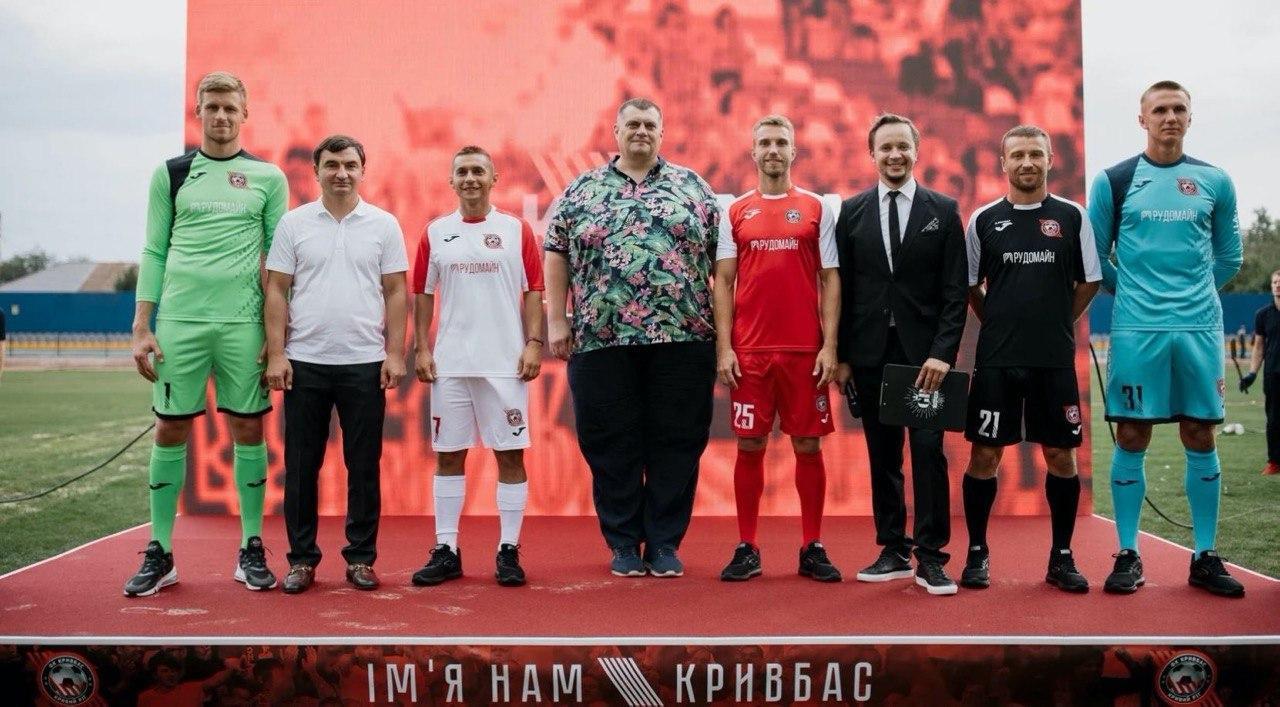
Will Kolomoisky's debts be paid? Not a word about this at all, although this is the most important thing. The probability is extremely low: you cannot take out so much money from the city or state budget without being noticed. Business is unlikely to hand over such money — especially to clean up Kolomoisky's debts.
Apparently, no one plans to pay off anything for a club that died seven years ago, and the people who were not paid back then will get nothing now either. They will be cheated again. This will not stop the new “Kryvbas” from using the logo and name. Simply because the president wanted it. Simply because Yuriy Koryavchenkov needs to build up ratings in Kryvyi Rih.
The new “Kryvbas” is simply a renamed, entirely different club that will use the brand of the old club without paying its debts. In other words: it looks very much like a scam.
There is no doubt that the “revived Kryvbas” will face no problems with Ukrainian football, judicial or law enforcement bodies. Problems could arise only if FIFA notices the scam, recognizes this “Kryvbas” as the legal successor of the old “Kryvbas” and saddles it with the debts. What would happen in that case is clear: there would be neither “Hornyak” nor “Kryvbas” in Kryvyi Rih. But that will come later; for now — local elections.

Russian Attacks in Dnipropetrovsk Region: Two Killed, Seven Injured

Defense Forces Strike Four Russian Drone Control Points in Past Day, Including in Berdiansk

Britain Threatens Sanctions on Kremlin-Linked People; Poland Ready to Hand Ukraine Ammunition

Russia says it has completed "planned exercises" in the Black Sea

MVD: Fake Riots With Prop Blood Were Being Prepared Near Presidential Office

Law Enforcers Name Another Klitschko Deputy as Suspect

Berlin Holds Protest Against War in Ukraine; EU Prepares for Possible Russian Halt of Gas Supplies
North Korea Fires Ballistic Missile Over Record Distance in Five Years
Irish Fishermen Force Russia to Postpone Naval Drills

US sanctions in case of invasion of Ukraine could completely destroy Russia's economy, NYT reports
