
Ihor Novikov: The 'Ukrainegate' Affair Was Inherited from Lutsenko, Shokin and Chaly
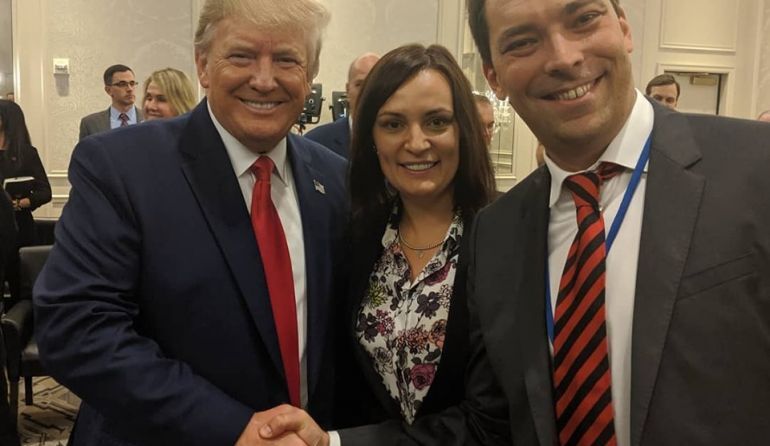
An interview with Ihor Novikov, adviser to the President of Ukraine.
Ihor Novikov is one of the advisers to Ukrainian President Volodymyr Zelensky. Before entering politics, Novikov headed the Ukrainian branch of Singularity University, an American educational organization that conducts research and modeling of the future through the prism of technology and innovation. It was at Singularity University that Novikov met Zelensky, who was taking one of the educational courses during the election campaign.
In early July, Volodymyr Zelensky appointed Ihor Novikov as his freelance adviser. However, as an adviser, Novikov is not responsible for innovation, startups and everything associated with his previous life, but for Ukrainian-American relations. In particular, he is organizing Zelensky's visit to the United States at a not very calm time, amid the start of the impeachment proceedings against Donald Trump and the 'Ukrainegate' scandal in the American press.
About organizing the president's visit to the US, sabotage by Pavlo Klimkin and Valeriy Chaly, the real reasons for Oleksandr Danyliuk's resignation and the difficult legacy of the Poroshenko administration, in an interview with TK.Media
- Before becoming the president's freelance adviser, you were the head of the Ukrainian branch of Singularity University. Tell us about that period: what kind of organization it is, how you got there and what exactly you did?
- In fact, the story is surrounded by all sorts of funny mythology. The university's work is very simple: it studies the main technological spheres and makes forecasts about how these spheres will affect business, society, politics and the world as a whole. I got there somewhat by chance. I was in Kyiv at a lecture by Yvetta Delikatna (she had studied there a couple of years before me), where I heard about this organization. I became incredibly interested. Why? Until then I had looked at the impact of information technology and the internet on society from a behavioral point of view, from the perspective of psychology, and tried to make forecasts, but here it was all served up on a silver platter. I applied, went and studied. I went there looking for ideas for projects and startups, but I remember that by the third day I had already closed the little book and thought that this thing needed to be brought to Ukraine. We negotiated with them for six months, obtained a license and opened in Kyiv.
- As I understand it, this is an American organization, and it is funded from the US?
- It is an American commercial organization, whose origins involved NASA, Google and Deloitte. It became a commercial organization because the NGO model tied it too strongly to corporate training, while the commercial corporation model now allows it to be self-funded.
- Were you dependent on funding from the American organization?
- We had the option under the license to receive funding from them, but we never used it, because there was no need. Everything you see is volunteer-based. The building where we sit, where the branch is located, is mine. Accordingly, we do not have to pay rent. We never paid salaries to lecturers. Motivation varied among everyone who joined this community: some earned money from speaking engagements, some gained connections in the West, some found like-minded people and launched startups. In a way, everything is quite similar to Aspen, only without funding. It is a technological Aspen, but not about money. The only funding we attracted several times was grants from the university itself to cover travel expenses.
- As I understand it, the University's main function is educational and outreach-oriented. Did you not engage in any projects or startups based on the University?
- Our model is quite difficult to explain, but the closest explanation is a global community. There were projects and startups too, but they all arise from the chaos of the community. When 10, 20, 30, or 1,000 extraordinary people gather, united by a single view of the world, naturally something comes out of it. For Singularity University, this unifying foundation was a view of the world through the prism of technology.
"Vova, as it seemed to me, was the only one at that table who truly believed he would be president"
- Did you and Zelensky meet at Singularity University?
- It's an interesting story. Yura Kostiuk, who now holds the post of deputy head of the Presidential Office, and I sometimes even joke about it. Everyone thinks it was some kind of global conspiracy, that someone was carrying suitcases for someone. In fact, Yura, who was my friend on Facebook, at some point simply wrote to me: "Listen, could you tell us about technology and innovation?" I said: "Who is 'us'?" He said: "The Kvartal team, Vova." I said: "Well, okay."
- Who was there besides Zelensky? Zelensky, Kostiuk...
- Yura was there, Masha was there, the president's assistant. I think Shefir was there too. Honestly, I don't even remember. We didn't take photos; this was not communication with the "future administration of the president or the government of Ukraine." It was communication with people I liked, on a topic that was close to me.
Vova, as it seemed to me, was the only one at that table who truly believed he would be president. When we were chatting during the breaks that day, I told him: "What you're doing is very cool, but maybe you shouldn't scatter yourself across presidential elections, and instead go for parliamentary ones. Young people are like this: you can mobilize them once, but the second time they may not turn out. And for the presidential race, you have no chance." You see, my forecast did not come true. I remember the confidence with which he said: "Why not?" He was so persuasive that within just 2-3 days I too believed. Saša Olshansky (Oleksandr Olshansky, one of the first Ukrainian internet entrepreneurs and co-organizer of iForum — ed.) also played a key role; we talked about this topic literally a day after the meeting. He said: "I am 100% sure that Zelensky will be president."
- Why an adviser specifically? Previously, this role was largely ceremonial: they found attractive people, appointed them as advisers, and it was not a fact that they were consulted for the next five years. But you have an office in the Presidential Office where you spend your working days. Tell us in more detail what you do.
- I never had, and perhaps still do not have, ambitions for civil service or politics. I am simply a tireless energizer bunny who, whenever he sees a problem, always wants to help and do something about it. I did not have an office for quite a long time either. All my acquaintances who were, one way or another, connected with civil service kept saying: "You need an office." And I didn't understand. It turns out it's some kind of status thing. When I lived in reception rooms, I felt quite comfortable, but when the stream of meetings and visitors began, I realized I needed my own corner and asked for an office. The first one they offered me was utter trash. The administration building on Bankova is very diverse, let's say: there are Pshonka-style offices, Kuchma-style offices, Kravchuk-style offices, Yanukovych-style offices, and then there's just outright trash. My first office was very reminiscent of an abandoned building in Pripyat where the spirit of Shcherbytsky still lingers. The next one is this office on the fifth floor, where you have been.
- Bohdan got Kuchma's office, Kyrylo Tymoshenko got the former Berezenko office. Who was in this office before you?
Smeshko. So, there is still Soviet-era wiretapping in my office (laughs).
"The story of 'interference in the American elections' was inherited by us"
- After your appointment, you disappeared from the information field. In August, you said in an interview that you were organizing Zelensky's visit to the US. I know that the date of the visit was in question: allegedly the American president invited Zelensky to Washington but did not name a date. How did all of this happen?
There was no official visit yet. There was a visit within the framework of the UN General Assembly, during which the meeting with Trump took place.
- How was the organization carried out? One of the main elements of criticism toward the new administration was neglect of traditional communication channels (embassies, the Foreign Ministry) in favor of informal diplomatic channels (the Presidential Office).
- This was handled by the Presidential Office until the appointment of Vadym Prystaiko as foreign minister, since the previous minister, Klimkin, was quite actively sabotaging the work of the Foreign Ministry. The Foreign Ministry was paralyzed. As for official and unofficial channels, unofficial channels exist everywhere; they existed under Poroshenko and before Poroshenko. There is always informal communication, and there are always points of intersection between different countries.
- You were accused of neglecting official channels and the embassy by Ukraine's former ambassador to the US, Valeriy Chaly. He specifically named you, Yermak and Danyliuk as people involved in organizing the visit, and taunted you, saying: "They promised the most legendary visit in history, so where is this legendary visit?"...
- I would ask that question of Chaly himself.
…After that, you responded to Chaly on Facebook and hinted that the Ukrainian embassy in the US may have sabotaged the work of the Presidential Office in organizing the visit. And Yermak called Chaly "not Ukraine's ambassador to the US, but Poroshenko's ambassador to the US." How did this sabotage manifest?
- In that post I asked Valeriy Chaly a series of questions. For example, in one interview he said that if he had been listened to, the visit would have been organized right after the inauguration. Now we are learning about the situation at that time from various sources, including Congressional hearings. The question is: what was Mr. Chaly going to do to make the visit happen so quickly? And more precisely, what was he going to promise?
And what about Lutsenko's escapades in the US and Shokin's Skype interview? What about the rumors of various lists and evidence? What about the blatant sponsored content here and there? All this filth was inherited by us. I think we will fix the situation by the end of the year, as long as Lutsenko does not learn English too quickly during his London 'business trip'...
- Are you saying that the drawing of Ukraine into the pre-election internal confrontations in the US began under Poroshenko?
Authorship, as I see it, belongs to four people: Poroshenko, Lutsenko, Shokin and Chaly. And to their closest circles. It seems no one has ever explained to them that what 'works' here is punishable by law there.
- The news of the start of impeachment proceedings against Trump caught the Ukrainian delegation already in New York. At that moment, Zelensky was newsmaker No. 1. What was the atmosphere when you walked into, say, the NYT and saw breaking news?
- We have many sources of information, so we learned a little earlier than the breaking news appeared. It was somewhat surreal. There will be something to write memoirs about and to tell the children. But definitely not now.
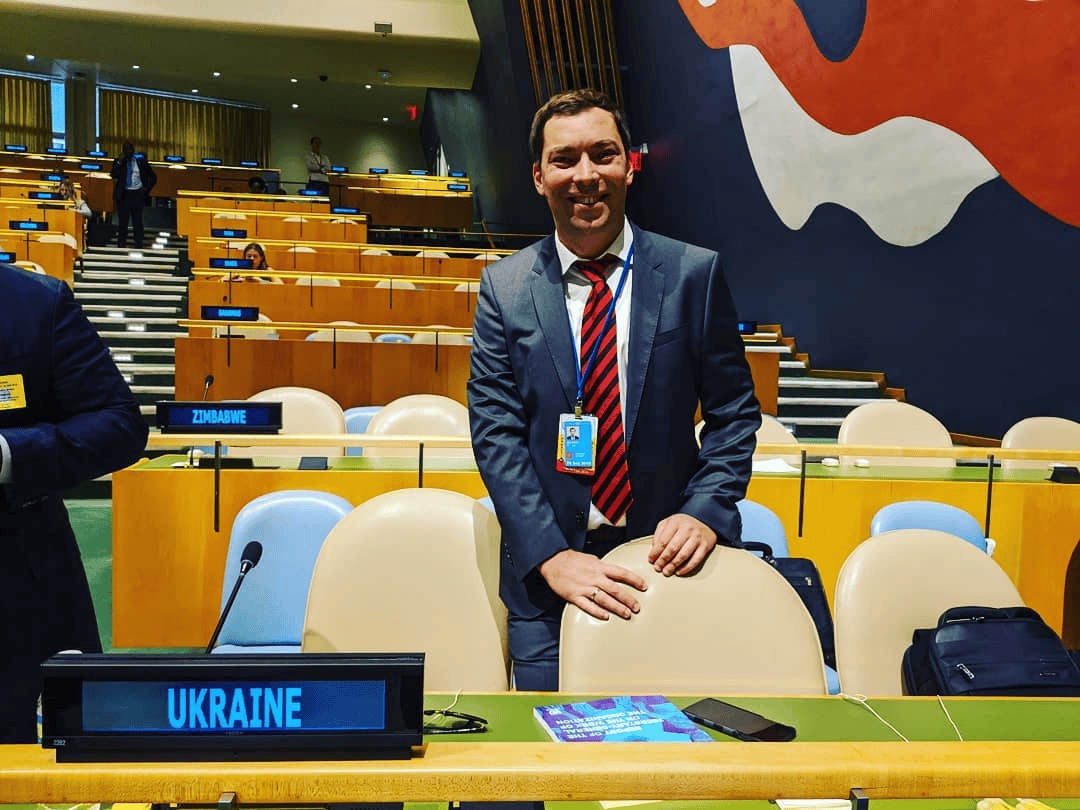
- Looking back, it may seem from the outside that at first the new political team had no clear position on the US elections — non-interference and neutrality — and that it only appeared recently. In the November New Yorker, there is a comment from Yermak that the meeting with Giuliani could have been premature. Can you formulate Ukraine's clear position on the American elections?
- There is mutual respect between partner countries. This mutual respect is based on a number of things, including mutual non-interference in domestic politics. American elections are American elections. Interfering is incorrect, wrong and illegal. Under President Zelensky, Ukraine will not interfere in the domestic politics of the United States.
But there is a nuance. As I said, there are at least four people who violated these rules. That is when this imbalance began. The problem had existed for a long time, but this year several factors coincided: a new president who had not previously been in politics appeared, and there was a complete reboot of power. Many saw this combination of circumstances as a window of opportunity to accelerate and advance their personal agenda, to score points and gain preferences. Various interested parties tried, and continue to try, to drag us into this scandal.
Was Yermak's meeting with Giuliani premature? I think not. The biggest misconception is that everyone thinks this situation started either in July, when the call between the presidents took place, or in May, when Giuliani loudly did not come. But in fact, this situation is a direct continuation of 2016 and the events that followed.
- Lutsenko's meeting with Giuliani.
- The communication of Lutsenko and Shokin with Giuliani. The question for Chaly, which I asked on Facebook: did the ambassador know about these meetings or not? Did he know what was discussed there? It makes for an interesting dilemma, doesn't it? Either the ambassador did not know what the prosecutor general was doing in the US, which means he is unprofessional and did not match his post, or he knew all about it and perhaps even participated in it. Considering that on May 2, then-ambassador Chaly told The Hill how Democratic representatives in 2016 were 'digging for dirt on Trump', one can easily guess about the ambassador's 'awareness', about his unrealized advice to the new president, and about much more.
- Currently, Ukraine has no ambassador to the US. Is an appointment planned?
- There is a candidate, and the candidacy is being agreed upon as of today. The appointment should happen very soon.
- Another person who dealt with Ukrainian-American relations, Oleksandr Danyliuk, was in the president's team from the very beginning of the election campaign, but quickly left it. In the journalistic community there are many versions of the reasons for this: from a conflict with Bohdan, to the claim that Danyliuk was the very whistleblower who leaked details of the Trump-Zelensky conversation to American intelligence. A third version: Danyliuk did not intend to leave anywhere and was bluffing the president with his statement. You worked together. Why did this happen?
- Let's go in order. I love funny conspiracy theories. Danyliuk and Bohdan are difficult people on a personal level, and a certain dissonance has always existed. But I do not think the reason for Danyliuk's departure was his conflict with Bohdan, who brought him into the team in the first place.
As for Danyliuk being a 'whistleblower', I strongly doubt it. If you carefully study Danyliuk's recent interviews and press appearances, it is clear that he is leaking information, and doing so clumsily. And he is not the only one. From my point of view, this is not a wise decision, because using the American press to resolve your own issues is also, to some extent, interference in the domestic affairs of the US. I think the real reason for Danyliuk's departure will surface in the next few months. I am personally curious where Danyliuk will be employed next.
- A few days ago on Facebook, you published a screenshot listing three materials in the American press that cite a source close to the Ukrainian administration. You wrote: "American domestic politics is not the level of a district council in Mukhosransk, even if in the euphoria of great geopolitics you have forgotten about it. Stop playing with fire and exposing the country." Were you addressing Danyliuk?
- Specifically in this case, no. Although, I think one of the 'anonymous sources' heard me.
- And about motivation. Why do all this? You are doing well: a reputation built over years, money, demand. You accept an offer and go into government. You may lose more than you gain. One way or another, you will be associated with the president's team and bear collective responsibility, not only for your own actions and area of work, but also for the entire team, for many different people.
- I am 36, and I will be 37 in January. Ukraine is 28 years old. I do not know how much time I have, but as a futurologist, during the last election cycle I clearly calculated where we are heading and how much time Ukraine has left if our country does not start to change. So the question was: either act, or run away. I chose to act.
Volodymyr Koval,
TK Media

Russian Attacks in Dnipropetrovsk Region: Two Killed, Seven Injured

Defense Forces Strike Four Russian Drone Control Points in Past Day, Including in Berdiansk

Britain Threatens Sanctions on Kremlin-Linked People; Poland Ready to Hand Ukraine Ammunition

Russia says it has completed "planned exercises" in the Black Sea

MVD: Fake Riots With Prop Blood Were Being Prepared Near Presidential Office

Law Enforcers Name Another Klitschko Deputy as Suspect

Berlin Holds Protest Against War in Ukraine; EU Prepares for Possible Russian Halt of Gas Supplies
North Korea Fires Ballistic Missile Over Record Distance in Five Years
Irish Fishermen Force Russia to Postpone Naval Drills

US sanctions in case of invasion of Ukraine could completely destroy Russia's economy, NYT reports
