
Ihor Kravchyshyn: Solomianka District Should Be Viewed as a Single Organism
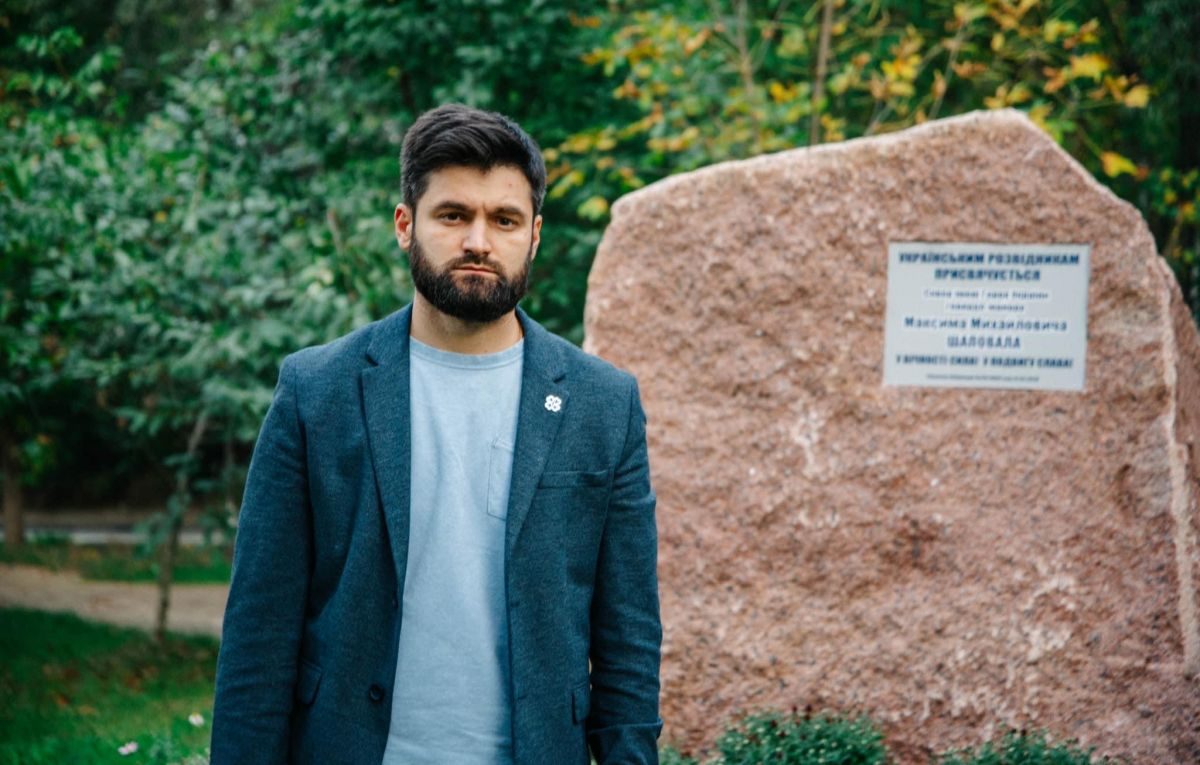
Candidate in the Kyiv City Council elections on his platform.
Ihor Kravchyshyn – No. 4 on the Servant of the People list for Solomianka district in the Kyiv City Council elections on October 25, 2020. Having implemented dozens of projects to develop the district and improve its infrastructure, he is convinced that local authorities are working ineffectively and need to be changed. In his platform, he proposes to "stitch together" the district, which is divided by railway tracks, reconstruct Solomianka Park, carry out school autonomization and audit the work of municipal utilities.
He spoke about all of this in his interview.
- During the parliamentary elections, you headed the campaign headquarters of Roman Hryshchuk, who is now a single-mandate deputy from Solomianka district. But that is not public work. Tell us about yourself. Perhaps residents of Solomianka already know about some things you have done besides that.
- For the past seven years, I have been building a career in the oil and gas industry. I am the Director of Communications at the Gas Transmission System Operator of Ukraine, I support reforms in the gas sector and work to make the industry function transparently.
In general, I have taken the typical path of an active person in Kyiv. I don't like the word "activist"; I am more of an ordinary person who deals with the problems around me. It started at university. My friends and I were not satisfied with the stereotype about students who are only interested in drinking and partying. We created a full-fledged student self-government, developed the university's main resource on social media, and carried out research projects.
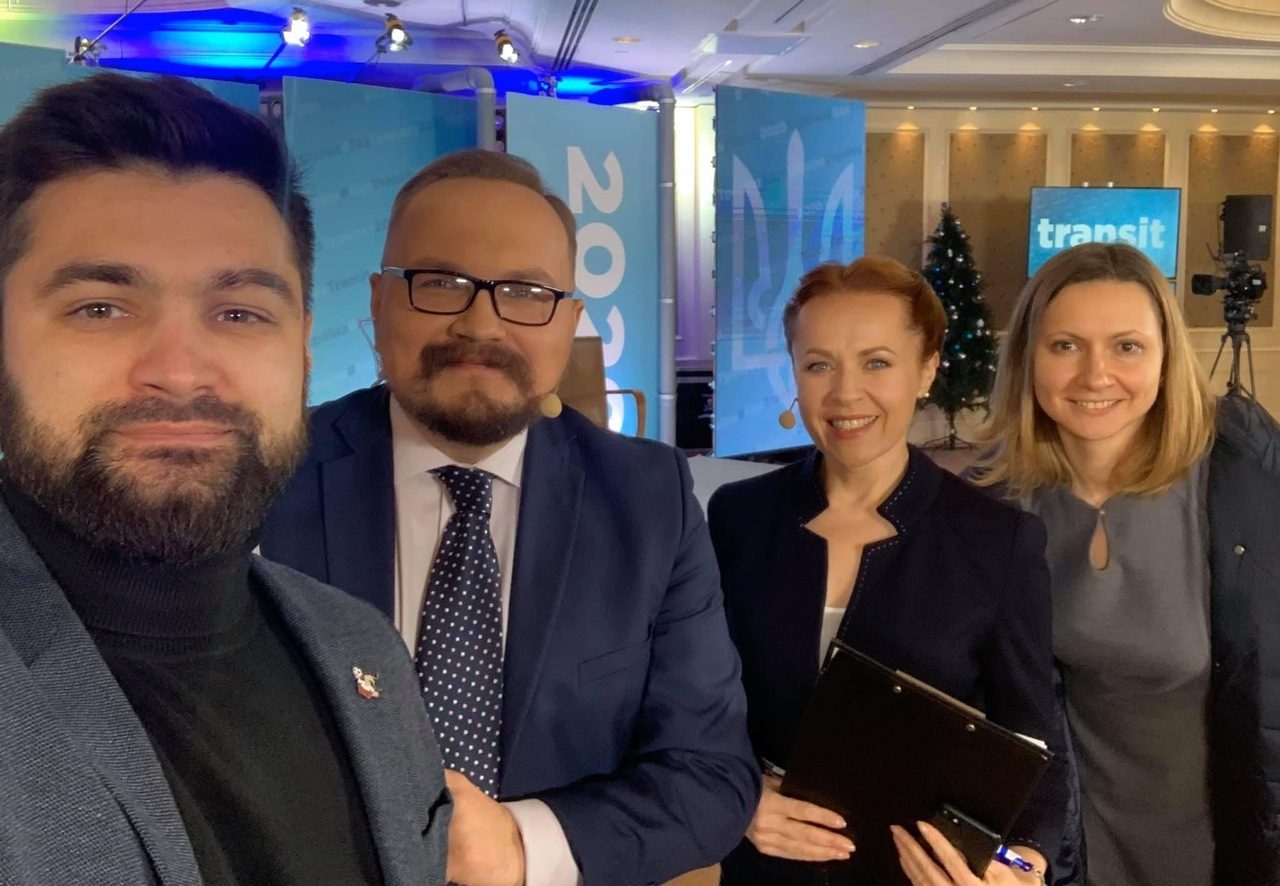
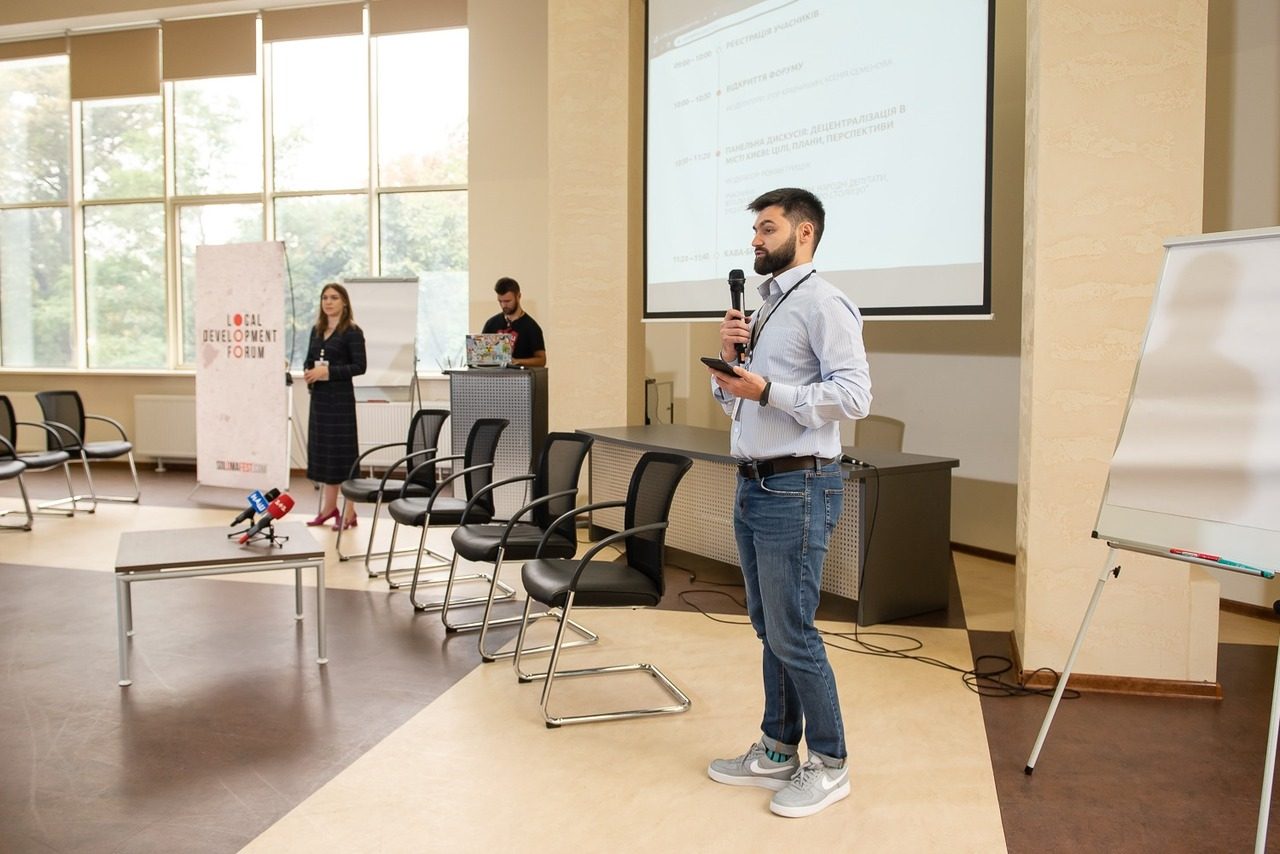
Since then, they have been my team, and I trust them. We have probably been doing projects together in Solomianka for about seven years. For example, to protect the NAU stadium from development, we hold the SolomaFest festival there every year. The last time, about 20,000 people attended.
Besides this, I could not pass by such a tool as the Participatory Budget. This is probably the most impressive urban transformation in recent years; it has fundamentally changed the culture of relations with the city. By participating in the Participatory Budget, I attracted resources for the development of the district: as a result, an engineering laboratory appeared at School No. 159, a new football field and a safe pedestrian crossing. But I clearly separate the issues that take me into local government from the tasks of the Participatory Budget. It should belong to the city community. And I want to further scale successful examples of positive change.
- Why did you need politics for this?
- There was no single clear moment when I decided to become a deputy. I had been doing things in the district for quite a long time without even thinking about it. But when you have tried almost all the tools, be it petitions or the Participatory Budget, and the local authorities keep ignoring you and coming up with excuses, you inevitably start thinking that they need to be changed.
In general, I think this way: if you want systemic change, you have to be where systemic decisions are made.
- So you believe you will be better than those who make these systemic decisions now?
- In fact, that will not be difficult, although I do not set it as a minimum goal. No matter how much we meet with residents, no one even knows the name of their deputy, or what kind of person he is or what he is currently doing. Nevertheless, in Kyiv, plans for major repairs are still adopted and funds for landscaping are still distributed, but residents take no part in this. The representative function of the deputy has been completely lost.
I believe that residents need their own person in the Kyiv City Council. Someone who is understandable, whom you can call directly, and who will ask people before making any important decision.
The program of my team is the result of long work. We included our experience of solving problems in the district, communicating with residents at meetings, and working in the constituency of Deputy Roman Hryshchuk. He solves even those problems of Solomianka residents that lie outside his authority. We have assistants with different expertise: housing and utilities, medicine, education, infrastructure, sports and so on. All these people will continue working with us after the local elections.
- Let's get more specific. What, for example, are you going to do about traffic jams? Are you for drivers or for cyclists?
- Traffic jams are the natural result of a large number of unsuccessful or even absurd systemic decisions. The problem is not with drivers. None of the groups of citizens, whether motorists, cyclists or pedestrians, is satisfied, because the transport strategy does not work at all. Kyiv does not move, Kyiv does not walk. There is no comfortable public transport that runs on time. There is no reasonable traffic management or transport modeling. There is no cycling infrastructure. There is not even simple barrier-free infrastructure for pedestrians.
It seems to me that the debate between the "car-centric" and "people-oriented" approaches is pointless. They say Kyiv is car-centric, but everyone is suffering here, and not least the motorists themselves.
- Many say that Solomianka district is "problematic". Do you agree with this?
- It is important to understand how this district was formed. There are parts of early prewar development, industrial zones around which residential neighborhoods grew, and university campuses around which their own environments formed. They merged in different ways, and for some part a place was found in modern Kyiv, but for another part it was not.
A district is not just a conventional designation on a map; it should be viewed as a single organism. If bars selling cheap alcohol appear somewhere, the crime situation worsens, and business and normal infrastructure do not develop, this indicates that something is wrong with the development of the district as a whole. This means there are imbalances, and certain groups of people are excluded from the city's development and marginalized. This should not be so.
I do not agree that the district is depressed. There are many growth points here and people ready to realize this potential. Solomianka district has the largest concentration of universities in Kyiv, and the student communities that form around them are a powerful generator of change.
- What do you propose to do so that Solomianka follows an optimistic scenario?
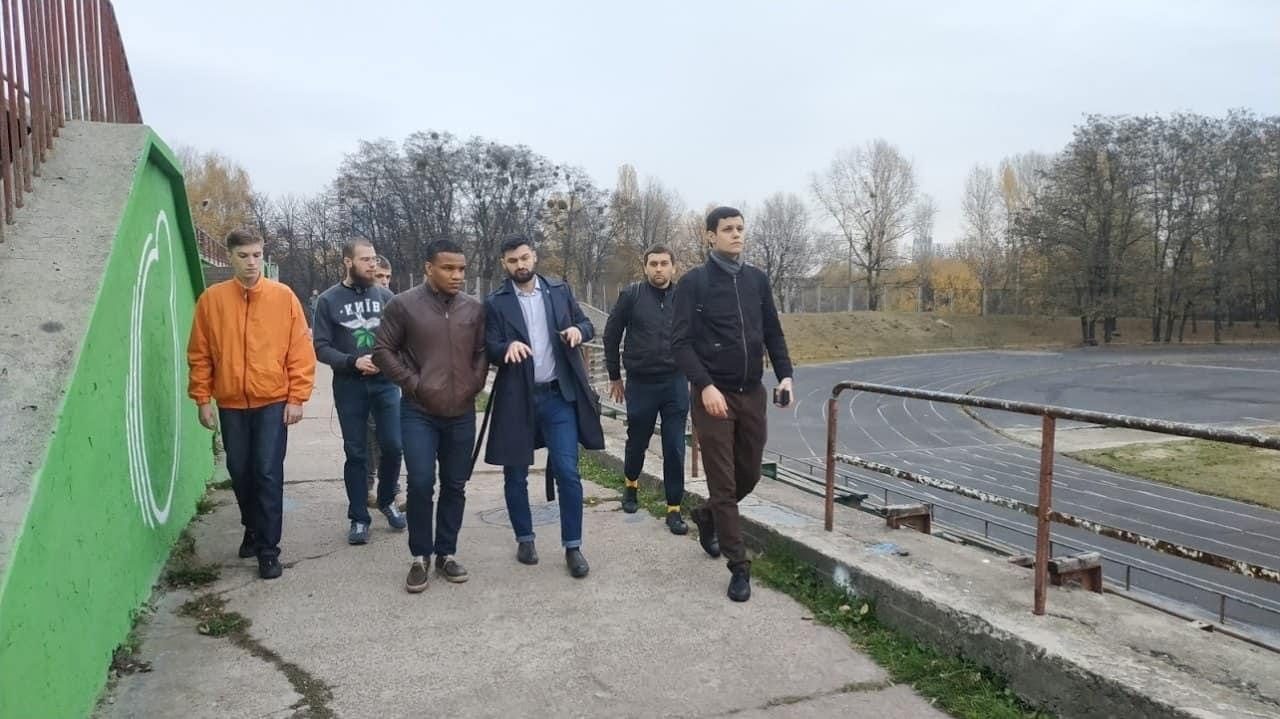
My first major proposal concerns the connectivity of the district. Currently, its parts are connected only through Kardachi. Abroad, the issue of what to do with highways or railway tracks that cut through residential areas is solved with tunnels. In Kyiv, the Suzdal Bridge is now being designed, but I am sure that this is not enough.
Our team has a project on how to join different parts of the district, Otradnyi and Chokolivka, so that one does not have to drive through Kardachi or the Ring Road. The connectivity of the district is very important. It allows, for example, to properly redistribute the load in schools located on opposite sides of the railway tracks and partially solve this problem.
Second, it is necessary to scale successful examples of urban transformation in Solomianka. For example, it would be a good idea to carry out the same kind of reconstruction in the Solomianka Landscape Park as was done in Natalka Park.
Select an Image
- All of this requires huge resources. Do you have any administrative or political decisions that do not require additional budget but could noticeably improve the lives of Kyiv residents?
- For example, an audit and reorganization of the work of municipal utilities. In Kyiv there are currently around 1,900 of them. Every small problem and every small area of activity has its own utility company. An audit is needed, and the number of such enterprises should be reduced many times over, because the city is not an effective manager for them. Moreover, this will reduce the corruption risks that are clearly built into this system.
Next. 60% of the Solomianka district budget goes to education. At the same time, schools and kindergartens are now a constant problem and a headache for parents. If schools are made autonomous in accordance with the law and the superstructure in the form of the District Education Department is eliminated, this will significantly improve the situation. In Desnianskyi district, for example, schools are fully autonomous. The principal bears full responsibility for how high-quality the services provided by the school are and can set priorities independently: repairs, purchase of equipment, additional pay for teachers, classroom modernization.
There is not a single autonomous school in Solomianka district. Because of this, a situation arises where, in a school that needs its windows replaced, a recently built roof is being repaired. Such archaic approaches to managing education should remain in the past.
- Do you already have ready-made solutions that you are prepared to immediately "get started on" if you become a deputy?
- The first thing we agreed on with the team is to include in the existing distribution of budget programs for next year the small problems we have collected and analyzed. They can be solved right away without waiting another year until the new budget is adopted.
Other priorities include the autonomization of schools, changing procurement policy and introducing environmental standards for transport. Our team also has an expert physician, and we expect to change the dispatch mechanism for emergency and urgent medical care for people with heart attacks and strokes. Currently, these are the main causes of mortality, but in normal modern cities help is provided in time. People should not die from heart attacks and strokes because of imperfect emergency routes.
- What will allow you not to get lost after the elections and not turn into the very deputy whose name residents do not know?
- First, I have too many plans to get lost.
Second, and most important, is team responsibility. We already have a representative in parliament and are rightly called the "Hryshchuk team". The Kyiv City Council is a natural stage in the development of our work in the district over the past 2-3 years. If I "disappeared from the radar," I would let the team down and put our completed work at risk. That will not happen. Positive changes must become the norm. Solomianka will be the main district of Kyiv for the next five years.

Russian Attacks in Dnipropetrovsk Region: Two Killed, Seven Injured

Defense Forces Strike Four Russian Drone Control Points in Past Day, Including in Berdiansk

Britain Threatens Sanctions on Kremlin-Linked People; Poland Ready to Hand Ukraine Ammunition

Russia says it has completed "planned exercises" in the Black Sea

MVD: Fake Riots With Prop Blood Were Being Prepared Near Presidential Office

Law Enforcers Name Another Klitschko Deputy as Suspect

Berlin Holds Protest Against War in Ukraine; EU Prepares for Possible Russian Halt of Gas Supplies
North Korea Fires Ballistic Missile Over Record Distance in Five Years
Irish Fishermen Force Russia to Postpone Naval Drills

US sanctions in case of invasion of Ukraine could completely destroy Russia's economy, NYT reports
