
Japan Claims to Have Developed a "Lifetime Vaccine" Against COVID-19
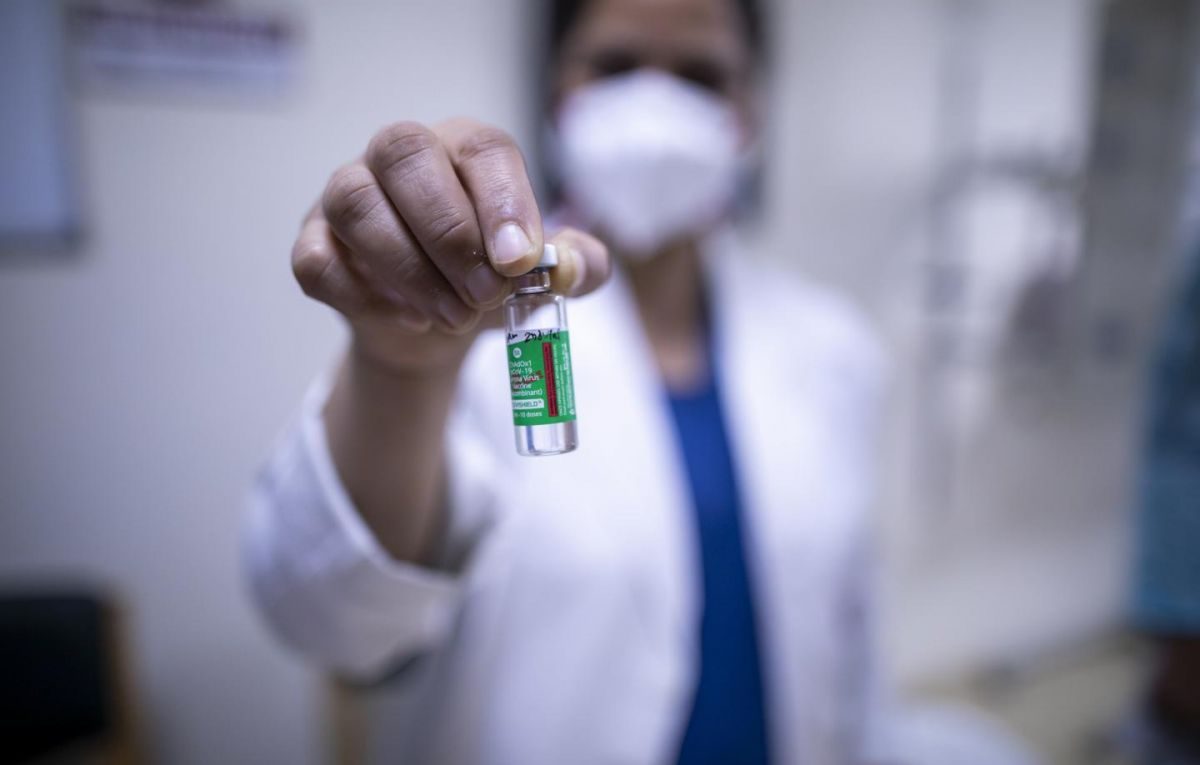
Clinical trials are planned for 2023.
A team of researchers from the Tokyo Institute of Medical Sciences said it has developed a vaccine that will protect against the coronavirus for a lifetime. They decided to change the rules of the game, as the fight against the disease is entering its third year. This is reported by The Japan Times.
Clinical trials of the new drug are planned for 2023. Existing vaccines provide only temporary immunity against the coronavirus, and booster shots are required to maintain their effectiveness.
The researchers believe that a vaccine with lifetime effectiveness would bring huge financial savings and help overcome the coronavirus pandemic more quickly.
To create the new drug, scientists used the smallpox vaccine developed in 1796 by British physician Edward Jenner. It is based on cowpox virus, which is safe for humans.
Shortly after the start of the pandemic, in early 2020, Michinori Kohara asked whether it was possible to develop a vaccine based on the tested and proven smallpox vaccine, which helped the world eradicate a deadly disease.
The cowpox virus used in the vaccine is a subject he had worked on for more than three decades, and Kohara knows firsthand how important a vaccine providing reliable protection for life can be.
Japan has had no smallpox patients since 1956, and government periodic vaccination stopped in the late 1970s.
"It remains the only vaccine that has successfully eliminated an infectious disease, with the last known case being a patient in Somalia in 1977 after a coordinated global vaccination campaign by the World Health Organization," the publication reports.
Michinori Kohara, honorary researcher at the Tokyo Institute of Medical Sciences, said the new drug can produce powerful neutralizing antibodies within a week of vaccination and induce the strongest cellular immunity of all existing vaccines.
In April 2020, Kohara, in cooperation with the National Institute of Infectious Diseases, began developing a recombinant vaccinia virus containing the spike protein of SARS-CoV-2, the virus that causes COVID-19. They chose a non-pathogenic strain of the vaccinia virus variant called DIs, which works as an extremely effective and safe viral vector for delivering the SARS-CoV-2 spike gene.
Although COVID-19 mRNA vaccines developed by Pfizer, BioNTech and Moderna successfully prevent severe disease and death, the level of neutralizing antibodies drops significantly six months after vaccination, making booster shots necessary, especially against the Omicron variant.
The single-component vaccine has already been successfully tested on mice, whose immunity lasted at least 20 months. The drug was also tested on macaques, in which the vaccine formed protection against pneumonia.
Michinori Kohara
honorary researcher at the Tokyo Institute of Medical SciencesI have worked on various vaccine technologies, such as adenovirus and mRNA, but the vaccine using the vaccinia virus vector is the most powerful of all, with minor side effects. The characteristic of this vaccine is that it can induce antibodies and lifelong immunity. A single dose of the vaccine remains effective for more than 20 months, and there is no other vaccine that could achieve such effects.
The pharmaceutical company Nobelpharma will conduct clinical trials of the vaccine. Between 150 and 200 volunteers who have been vaccinated against the coronavirus and have recovered from it will take part in the trials.
If the results are successful, the drug will be approved for use. According to the developers' forecasts, this could happen no earlier than 2024.
One of the biggest obstacles for the vaccine is raising several tens of billions of yen needed for the final clinical trial, as Kohara said Nobelpharma cannot fund it alone.
Although the government allocated more than 100 billion yen to subsidize large-scale clinical trials by domestic drugmakers, there was no plan to subsidize the project's clinical trials, because Nobelpharma and the Tokyo Institute of Medical Sciences have no previous experience commercializing a vaccine.
Kohara hopes that the government will change its mind once the first two phases of clinical trials show effectiveness in humans: "Or we could consider conducting the trial in cooperation with a large drugmaker, as a more promising option."
Another advantage of the vaccine is its ability to be stored at room temperature for a long time, which would be especially useful for developing countries with tropical climates.
Michinori Kohara
honorary researcher at the Tokyo Institute of Medical SciencesThe current situation is such that we will need to be vaccinated every three or six months, and we will need to make new vaccines whenever new variants of concern emerge. So if our vaccine's effectiveness lasted at least one, two or three years, it would mean enormous savings of trillions of yen for social infrastructure as a whole. The vaccine also has high cross-immunity to work against many variants, so these two things alone justify creating this vaccine.

Russian Attacks in Dnipropetrovsk Region: Two Killed, Seven Injured

Defense Forces Strike Four Russian Drone Control Points in Past Day, Including in Berdiansk

Britain Threatens Sanctions on Kremlin-Linked People; Poland Ready to Hand Ukraine Ammunition

Russia says it has completed "planned exercises" in the Black Sea

MVD: Fake Riots With Prop Blood Were Being Prepared Near Presidential Office

Law Enforcers Name Another Klitschko Deputy as Suspect

Berlin Holds Protest Against War in Ukraine; EU Prepares for Possible Russian Halt of Gas Supplies
North Korea Fires Ballistic Missile Over Record Distance in Five Years
Irish Fishermen Force Russia to Postpone Naval Drills

US sanctions in case of invasion of Ukraine could completely destroy Russia's economy, NYT reports
