
Public figure Yosyf Zisels: Ukraine has achieved a great deal in 30 years of independence
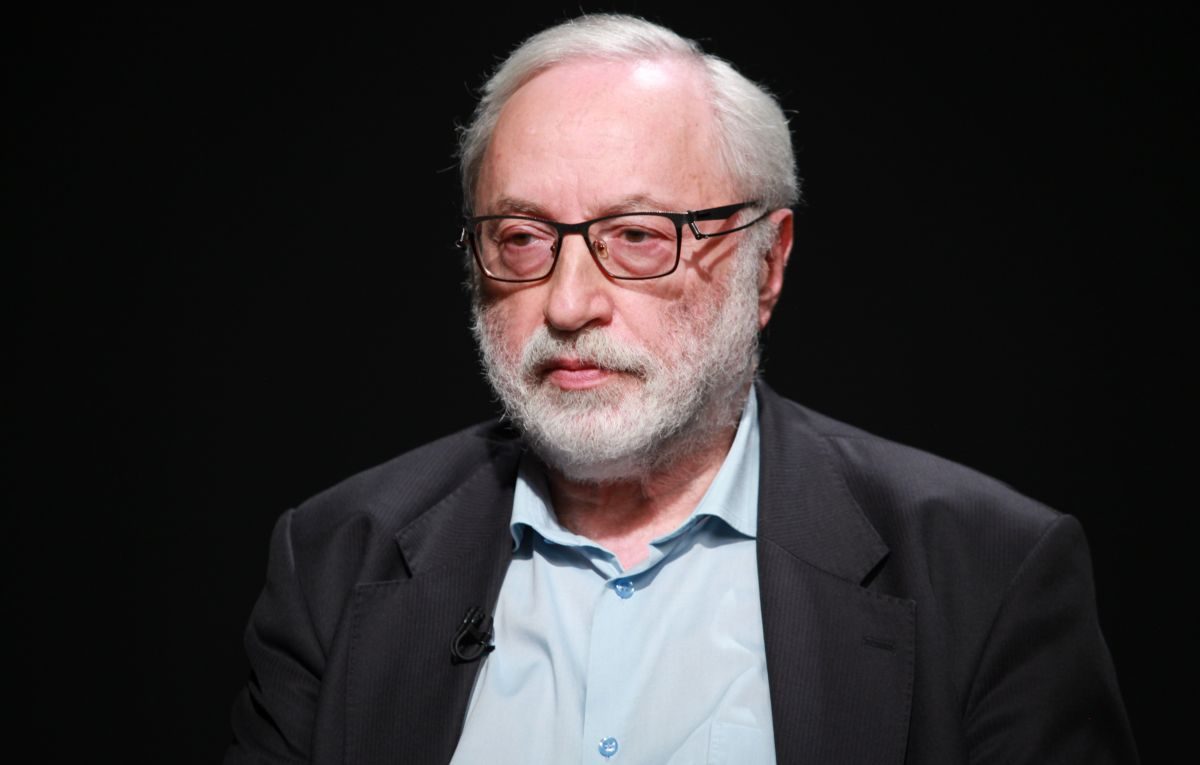
He believes our country has its own path, different from Poland, Romania and other states.
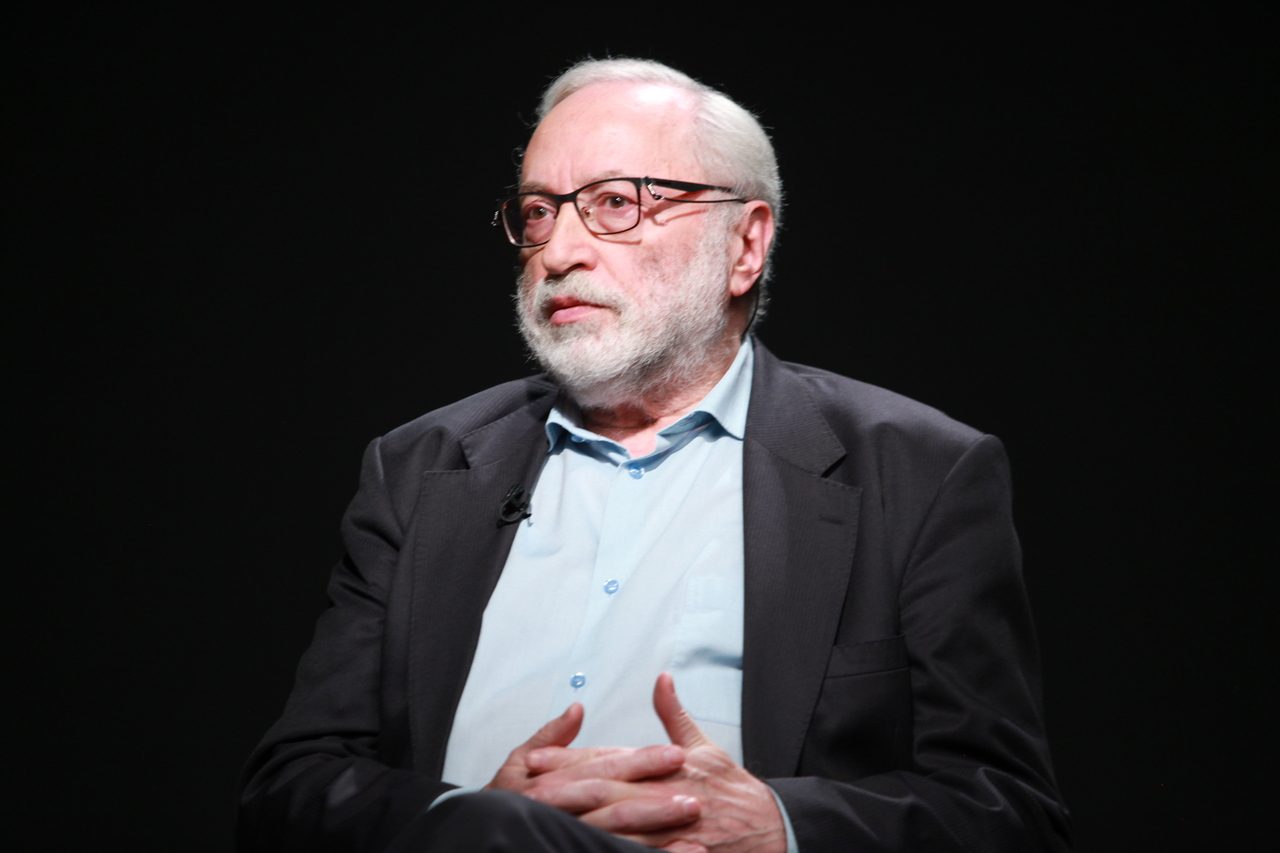
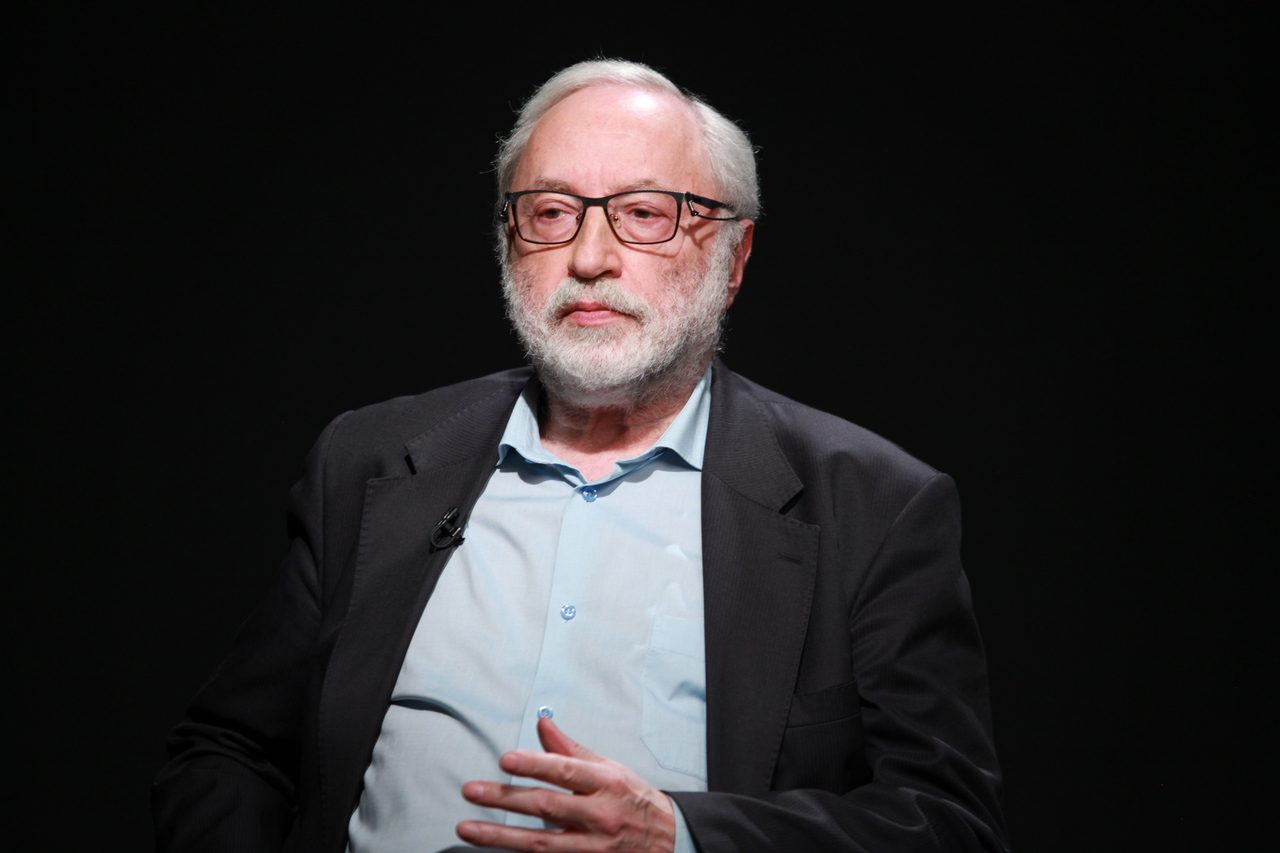
In a new episode of the program “Antipody” on the “Iceland” TV channel, Ukrainian public figure and dissident of Jewish origin Yosyf Zisels spoke about Ukraine's own path, its departure from under the empire, neo-Nazism and nationalism, Babyn Yar and Zelensky.
Why didn't it work out as it did in Poland?
I have no disappointment about this. Back when the Maidan took place in 2004, I came up with this formula: don't get enchanted, and you won't be disappointed. Why did you decide that our fate is to become Poland in 30, 50 or 100 years? Why? Because they are our neighbors? But they are part of a different civilization. Yes, they are Slavs, but Western Slavs, and they are Catholics. So something about their identity is different.
They were also in Europe; they were a powerful empire in the Middle Ages. Then they lost the struggle of various empires: they lost to Prussia, they lost to the Russian Empire. But they remembered, they remembered that they had been a great nation, a great state. And on this drive of memory one can live through those 130 years when they were part of an empire. And then they regained their statehood.
They restored their statehood. We received ours. And without any special effort on our part. Those 5,000 dissidents who did something for this statehood are a drop in the sea. We could not have broken up the Soviet Union and built a state, because there were 50 million people of Eastern identity, raised in the Russian Empire and the Soviet Union.
Who to rely on? Where is the million who were in Poland's Solidarity? We differ significantly from the Poles. I'm not saying we are worse or better, we are different. We have our own trajectory of movement toward our future. This trajectory is determined by our identity. This matrix of ours, which one can somehow judge, because it is impossible to grasp it. It is mental modeling. It's simpler that way.
Matrix is a very important concept in mathematics. That is why I say we are different, we will never be Poles. Besides, we are moving away from the empire, like many other countries, the Baltics, Eastern Europe, others, and not only we are moving away from other empires, from the Turkish, Ottoman Empire, a whole series of countries have moved away, which are trying to find their way into the future.
But our uniqueness is this: for the first time in history, such a large Orthodox Slavic country is breaking away from an empire. Nothing like this has happened before. There were small Orthodox countries in the Balkans, for example Montenegro, Macedonia, Bulgaria, Orthodox Romania, though not Slavic, even Slovenia is Slavic, though it is Catholic.
And we see no examples; we cannot copy mechanically what those peoples do. They have their own path. They found some support in their history. Many of them had statehood.
So there are no patterns of development?
There are, but it's much more complicated. Every identity matrix that formed over hundreds of years gives its own trajectory into the future. This is not a line, it is a kind of bush of possibilities, but it is limited by certain movements that are forbidden to us. We cannot realize them, because they are not set by our identity. What we can do, we do. I believe that Ukraine has achieved a great deal in 30 years.
In my lectures I say, read about the United States thirty years after their founding. That is, at the beginning of the 19th century. What they represented was complete lawlessness. But a state already existed, which had also freed itself from Britain as a former colony. We have covered a very great distance in these 30 years, because we are not the first to walk this path. But we are walking our own path for the first time.
Some things we can borrow, some we cannot. Even something trivial we cannot do. Here we have freed ourselves from a brutal empire. It seems there is an understanding that a brutal empire never lets anyone go peacefully. How Finland extricated itself 100 years ago, with blood, with flesh was torn off, the Kola Peninsula was cut away from it. Many Finns were killed then for their struggle for independence.
Poland — bloodily. The Baltic countries broke free with sacrifices. Even Moldova, Romania, everyone suffers when they break away from an empire; empires simply do not let go. Why didn't we prepare for this? Because we are Slavs, like Russians? Wasn't it our “elder brother”? And we did not believe they would kill us until we became convinced that they were actually doing it. And we moved forward quickly even in this.
Everything must be reached. We are 50 or 40 million, and we must reach everything. In 2014 I said, that's it, war is starting, we are switching Ukraine to wartime footing, three-shift work, a card system for distributing food and goods. Everything for the front, everything for victory. I was brought up on this as a child.
I did not experience the Second World War, or the Great Patriotic War as it was called, but these slogans were in me, from films, from books. Everything for the front, everything for victory. And this was supposed to become a slogan. It did, but for whom? For volunteer battalions. And other millions live as if there is no war.
Was it right of us to give up nuclear weapons?
In the model I am offering you, many steps are determined. They are not a matter of free will. We want to keep weapons — we keep them; we don't want to — we don't.
Were we forced?
Of course. There was pressure on us from the West and from Russia. For the West, the most frightening thing in the collapse of the Soviet Union was uncontrolled nuclear weapons. For us, this collapse was a blessing. Not for everyone, of course. For dissidents it was definitely a blessing.
In one discussion with the KGB, with my “educator” in the KGB after my first term, I said: “Whatever you tell me, Germany will reunite and the Soviet Union will fall apart.” Who was interested that a handful of people thought so, when everyone else did not think so. And the transition to one's own state, to its development, to the unification of a political nation, is a great path. A very long, difficult one.
Some understand this immediately, some later, some never understand. Because there is no unity in this people yet. But there is none, we see it in Belarus too, and in other countries that have left the empire. And even those who have already got into Europe, in Bulgaria, Romania. By the way, Orthodox countries. Already in Europe. So there is no rule that an Orthodox people cannot join the European Union; there is no such prohibition.
We need to transform our system of values with the help of those who are ready to support us. In the West there is civil society, volunteers, certain churches, certain creative unions, these 5-6 million people who already strive for that freedom with responsibility, that European identity. They do not yet possess it, but they already strive for it. This is one of the mechanisms that can and increasingly do make a difference. I am confident that at the third Maidan there will be far more people than there were at that one.
And when will the third Maidan be?
Nobody knows. It is a passionarity phenomenon. I believe the important factor is not economic life. Ukrainians have never lived prosperously. Many lived poorly, barely scraping by, the Holodomor. We cannot be pushed onto the Maidan by purely economic difficulties. No. The state never thought about us. Ukrainians always survived on their own, with friends, with family, worked, planted, grew things, because the state never cared about them.
They have a tremendous adaptive potential for survival, which is why they cannot be destroyed. Because this is a great people. 40 million there, 26 abroad — 60 million. In Israel there are not even nine million, and around it there are 200 million hostile forces. It faces physical annihilation. Ukraine is not threatened with physical annihilation.
When I am asked, why can't we, like Israel, make Ukraine economically strong, I say, perhaps partly jokingly, because we are not threatened with extermination. The threat of extermination mobilizes a people. It forces certain steps that cannot be taken just like that. There is no other way out there.
If you are not strong in wartime, you will be destroyed. If you are not economically strong, you will not be strong militarily. If you have no mineral resources, it means you must develop IT technologies. Your life, your circumstances, your environment force you down this path. And you go, because a people has exactly the same survival instinct as an individual.
Was Kravchuk a mistake?
We had no mistakes, because this is not human behavior. This is a people. 50 million are moving along a certain trajectory. Kravchuk was one part of that trajectory. And who could have been instead of him?
Chornovil.
I voted for Chornovil, he was my comrade. But he was not a comrade for 50 million people raised in the Soviet system, with that propaganda, that lie.
Well, Kravchuk was a secretary, so to speak.
Well, a communist is a communist. And Kuchma was a communist too, even a party secretary at the Yuzhmash plant. But this is what we had to live through. I once joked about this, that in the 1990s we were ruled by communists; I was joking about the 40 years in the desert, from Jewish history, when Moses led people for 40 years through the desert.
And our 40 years in the desert go like this: in the 1990s we are ruled by communists, in the 2000s by former Komsomol members, then former Pioneers, and now, when Zelensky came with his team, the little Octobrists have arrived. We have made it to the final.
Now Ukraine is being portrayed, mostly by various pro-Kremlin forces and opinion makers, as a country where so-called neo-Nazism is raising its head. There are a lot of headlines there. In particular, they blame this on Azov and other of our military formations, plus various public organizations.
But we live here, and we see that in principle this is absolute nonsense. And it is absolute untruth. How to prove or explain to the world that Ukrainian nationalism and Nazism are not identical things?
Everything requires time and effort. Just recently we received the global report on antisemitism. Ukraine is not there at all. This is what we have been doing for the last 30 years: proving that antisemitism in Ukraine is minimal. And even 10 years ago people did not believe us.
I was previously vice president of the World Jewish Congress, and it seems they have made me one again. And I demonstrated with figures, with our research, that antisemitism in Ukraine is minimal. But they live by stereotypes. Their parents taught them so. How can that be, Ukrainians are antisemites? But you see, we managed to overcome it in 30 years. It has disappeared.
Every two years I go to Israel for a forum on antisemitism, on fighting it. Only Western Europe and America feature there. Ukraine is not there. Experts talk to me about Ukraine. Because unlike journalists and politicians, they do not speculate; they know that Ukraine has a minimal level. And this is a completely different antisemitism, which has remained with us as a legacy.
So these are some planned campaigns?
There is also a natural one. There is always a conservative part of society. But it is very small. We know everything in figures. Over two years of the new government, the number of hate-motivated attacks in our country increased slightly. For almost four years there were zero. Not a single attack. Last year there were four. It seems the distance from zero to four is huge. In fact, even four is not many.
Because in Germany, France, Belgium, Great Britain there are dozens of attacks a year. But the number of acts of vandalism motivated by antisemitism has halved. Something grew, something decreased. Although, to be honest, I expected that Zelensky becoming president, as an ethnic Jew, and the fact that he was put in this position, with very great efforts spent by Kolomoisky, would cause some growth, perhaps over time.
It did not scare me, but it seemed that it would grow a little. We have a very strong expert service. The best expert in Eastern Europe is our expert. You can invite him and talk with him. He understands this. I use his research on both xenophobia and antisemitism. The war with Russia has channeled all capacity for xenophobia into an anti-Russian direction.
And since this war, unfortunately, will last a long time, this channeling will exist for a long time. Perhaps it will stop later. But I see that civil society has become very developed over 30 years, one that can prevent very negative phenomena in society, which monitors this, xenophobia, antisemitism. I hope they have influence.
Of course, provocation can happen anywhere. Just before the New Year, we received information, I even wrote letters to the Security Service and the Ministry of Internal Affairs, that a well-known party had passed money to radical groups and, of course, not for pretty eyes, but for certain actions. And we immediately began to worry, write, study, send people in, check this information. It was confirmed.
Then other information came in that a performer was being sought for one such vandalistic act for this money. We checked this too. But nothing came of it in the end. The SBU told me: “We checked, carried out preventive work, everything is fine.” That is, provocation is possible. Someone for money may say something, set something on fire, throw a grenade, or something else.
But this is not what matters to me; what matters to me is the possibility of a chain reaction arising in society, caused by this provocation, that would grow into huge problems. And I believe the probability of such a chain reaction in Ukraine is minimal. A provocation can be thrown in, but so what. That very provocation will die out there. Because society itself will put it out.
Your position on Babyn Yar differs from the position of other representatives of the Jewish community.
Not only mine. Hundreds of people share my position. That is, I hold their position.
There are two points of view on the problem of the Babyn Yar memorial. Could you briefly and clearly explain what the problem is and what, in your opinion, should not be there?
I have been fairly close to the Babyn Yar problem for 30 years, and you ask me to be brief. I will try. There are two important factors in this. I do not consider the Babyn Yar story a separate story that arose by chance. I believe it is a derivative of the civilizational war that Russia is imposing on us. That is, it is a derivative of Russia's hybrid war against Ukraine.
It's just that this comes not only from the front, not only through Western media, not only through the bribing of Western politicians, but also from the rear it enters our culture and our politics of memory. They offer us certain positions that we have already moved away from. I could tell a lot about this; I am quite knowledgeable in this, although I am not a historian.
But I have briefly said that the models of culture and politics of memory that are offered to us from Russia do not suit us, do not suit Ukraine. And in my view, they are part of the information front of the hybrid war.
And second, which also correlates with this: every people deserves to produce its own culture of memory and its own politics of memory. And they want to “help” us. But I do not want us to be “helped”. I want us to do everything ourselves, to go through it, as the Poles did, as the Germans did. And to develop for ourselves the culture of memory that we have. We have our own memory of those centuries that preceded today.
And for our state to transform this culture of memory into a politics of memory. There must be a Ukrainian view of World War II as well, which is being formed by historians, and of the Holocaust, and of Babyn Yar. If it takes more time, such is our fate. Everything takes more time with us.
And the fact that the Jewish community has this point of view and that one, some support one, others don't. So all communities have such points of view. The Ukrainian community is also divided, but it has never been united, just as the Jewish community has never been united. We have different points of view on every problem, as among Ukrainians, as among Belarusians, as among many.
The main argument I hear from representatives or from advocates of your position, I had representatives of “Holos” here, I had Solomiya Bobrovska.
And the main argument on their lips is that Khan, Fridman are Russian oligarchs, and they have no right to invest or put money even into such projects on the territory of Ukraine.
I don't quite agree, because I have been doing this for 30 years. I know much more deeply.
So that's not the right argument?
I never use this argument. I put it differently. Russian money does not scare me. If this were a state Ukrainian project and Russian businessmen sincerely wanted to help the state implement it, and by state I mean not the authorities, but the authorities and civil society, I would even thank them. But control must rest with the state.
I know how this Museum of the History of Polish Jews in Poland was created. The state controlled everything, but there were private sponsors from abroad. There is nothing terrible about that. What upsets me is not that it is Russian money, but that behind these billionaires — I have never called them oligarchs — they have no influence on Putin's policy; he lets them steal, but that does not mean they are oligarchs.
An oligarch is someone who, using his own money, influences the policy of the authorities, the Cabinet, the president, parliament. Using his own money. That is an oligarch. So I find this list of oligarchs that has just been published ridiculous. What influence does Poroshenko have on Zelensky's policy, especially in the last two years? None at all. So how is he an oligarch? He is a businessman, he is a billionaire, but why is he an oligarch? A classic oligarch is influence on policy, on decision-making.
Well, he has his own political force.
Well, please, let him have it. I have already criticized those eastern parties that are built around a leader. But I did not say one very important second thing. There is a Ukrainian project. In 2017 it was commissioned by the Cabinet through the Ministry of Culture, the National Reserve, the Institute of History of Ukraine of the Academy of Sciences. And it exists. It even has a concept developed, which was already made public at the beginning of 2019. A very worthy concept.
Very delicate toward the memory of various ethnic and religious groups, unlike the Russians. The Russians act rudely and cynically, as occupiers do. Even in this project they act, they violate the laws of Ukraine, Ukrainian rules, they buy everyone. The rudeness lies in the fact that Russians are not used to paying attention to criticism from civil society or to laws.
And as for the form there, I don't know, a synagogue, a monument, all that. Is that bad or not?
You asked me to be brief. So, the Russian project has no concept, but the Ukrainian one does. The Ukrainian project already has a restored, reconstructed building, where the office of the Jewish cemetery was, at 44 Melnykova Street, while the Russian one still has no building. With the money they declared 5.5 years ago — $100 million, then $120 million, $150 million. 5.5 years have passed. Where? Where did they vanish?
Pure PR. They have spent $20 million on PR over these years. Why? Perhaps they are not interested in the Memorial and museum? I ask myself this question; why do others not ask? Why, having such money, the ability to buy any specialists, have they not moved forward, while our unfortunate Ukrainian project, in quotation marks “unfortunate”, I respect it very much, I help it, has advanced far beyond the Russian one. And this is what I am talking about.
And what has not been realized in our project? Because I have seen all these installations on the streets and so on.
Installations are PR.
Well, I liked them. And what difference does it make what activates memory? When I look at these stones, I peer in, and I see it is creative.
You see that, but I have been asking the leaders of this project for 5.5 years why Putin in 2016 allowed businessmen close to him to invest $120 or however many millions of dollars he allowed into Ukraine, which he is killing, robbing, raping, annexing — into a cultural project.
What is the logic in this? So he is interested. What does he want to do with this project? First of all, to prove that Ukraine is a feeble country, weak, that it cannot even commemorate its own memory, while we can.
Well, given the experience of building the Revolution of Dignity Museum, I will tell you that we do have problems with this. When in seven years they did not do anything but steal the money.
Yes. And who says there aren't any? But I count on a long road. I don't need a Memorial tomorrow, especially at Putin's expense.
One wants to believe that for people, even for such cynical ones as these billionaires, there are questions, let's say, about tragedy. I heard there that Fridman's relatives were shot there.
I will show you a document that was published in the United States in January 2018. It is a list of 200 people close to Putin, businessmen and officials. Both Fridman and Khan are on this list. For them this project is a means of whitewashing themselves in America's eyes from their closeness to Putin.
They spend crazy money in America. There are whole studies. Fridman is the richest man in Russia; he has $20 billion there. Who counts it there, when there is such money? On the one hand, he pleases Putin, because with this project he shows that Ukraine is weak.
And through this position one can also show what you said, that Ukraine is a neo-Nazi country, that Ukrainians have always killed Jews. Because this is a private project. No one can control the dispositions of a private project.
Well, in your opinion, what are Marina Abramović, Loznitsa, Svyatoslav Vakarchuk, Klitschko doing on this council?
Money. $20 million has already been spent. Of course, I know how to build, not such memorials, I have built synagogues, restored them, repaired cemeteries. If I had $100 million and 5.5 years, believe me, I would already have built both the Memorial and the museum twice.

Russian Attacks in Dnipropetrovsk Region: Two Killed, Seven Injured

Defense Forces Strike Four Russian Drone Control Points in Past Day, Including in Berdiansk

Britain Threatens Sanctions on Kremlin-Linked People; Poland Ready to Hand Ukraine Ammunition

Russia says it has completed "planned exercises" in the Black Sea

MVD: Fake Riots With Prop Blood Were Being Prepared Near Presidential Office

Law Enforcers Name Another Klitschko Deputy as Suspect

Berlin Holds Protest Against War in Ukraine; EU Prepares for Possible Russian Halt of Gas Supplies
North Korea Fires Ballistic Missile Over Record Distance in Five Years
Irish Fishermen Force Russia to Postpone Naval Drills

US sanctions in case of invasion of Ukraine could completely destroy Russia's economy, NYT reports
