
Journalist and blogger Tetyana Danylenko: politicians are either nimble or random people
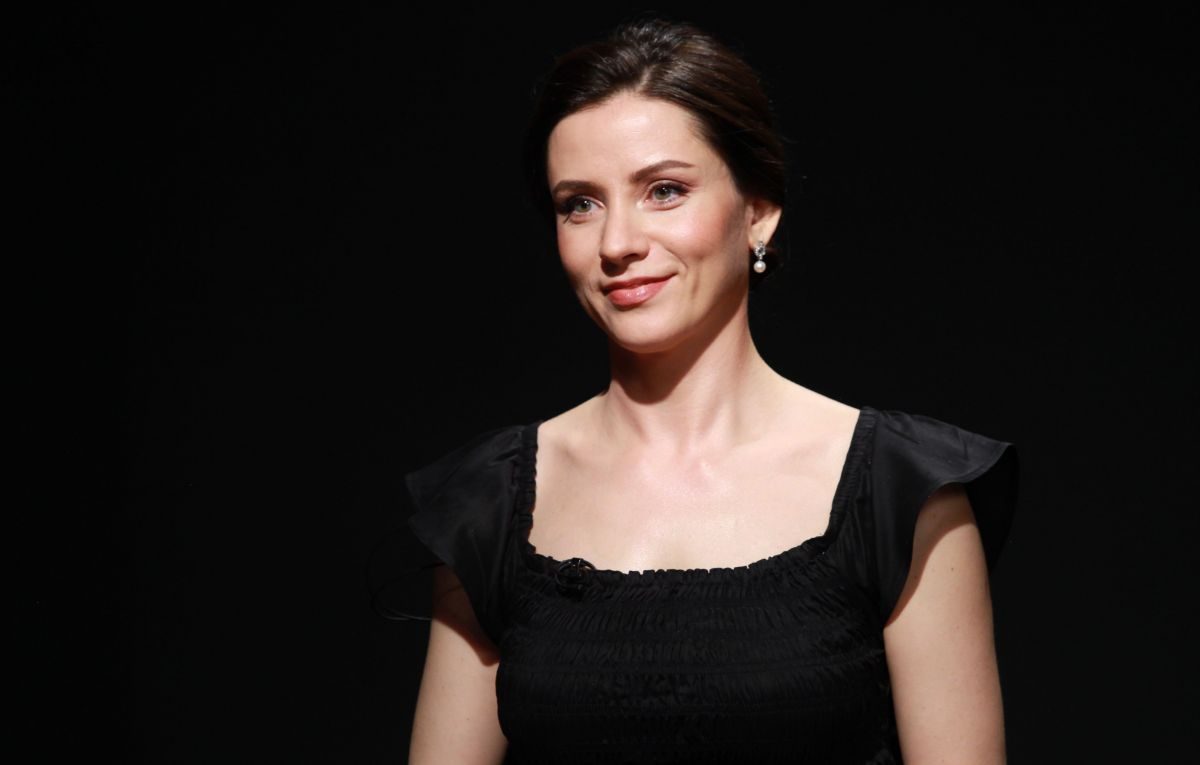
She believes the old ZIK team had no chance against Viktor Medvedchuk after the channel was sold.
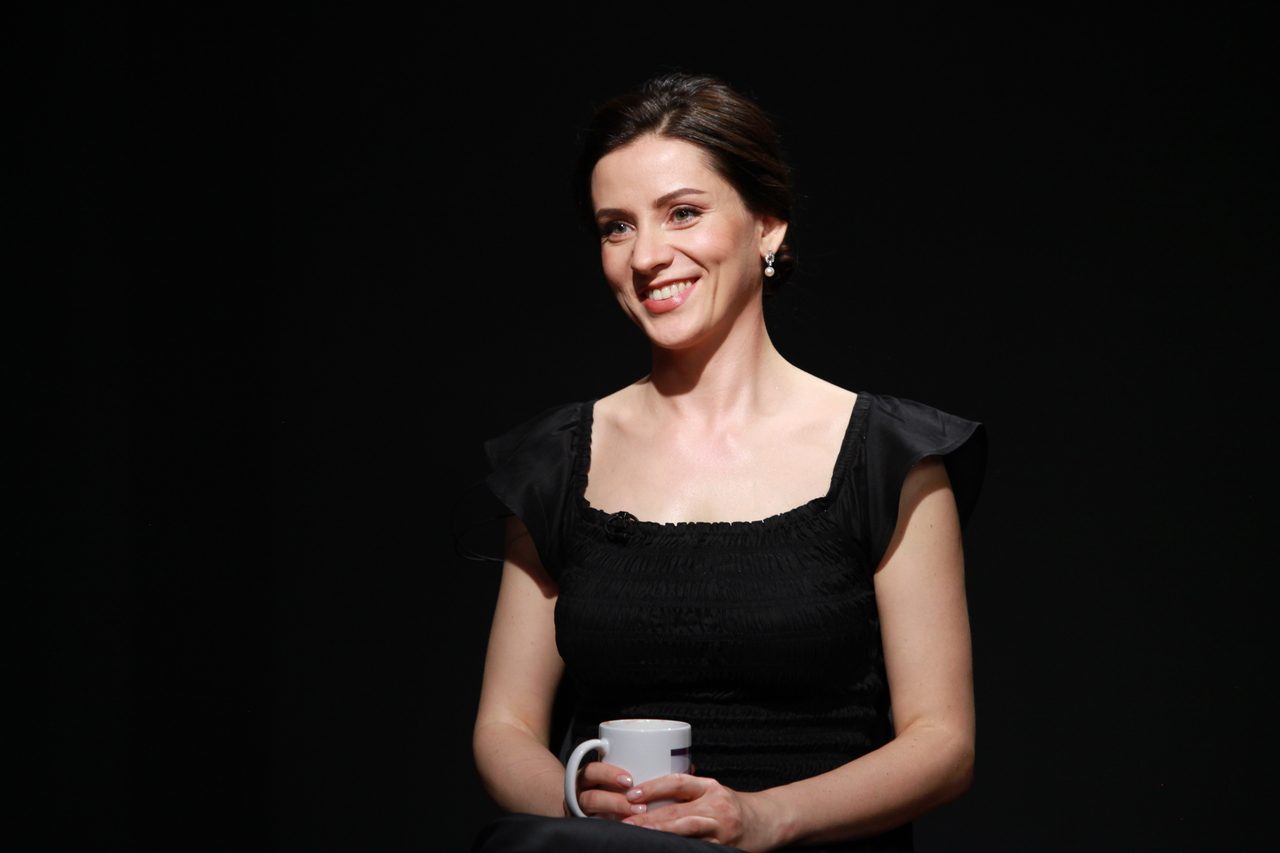
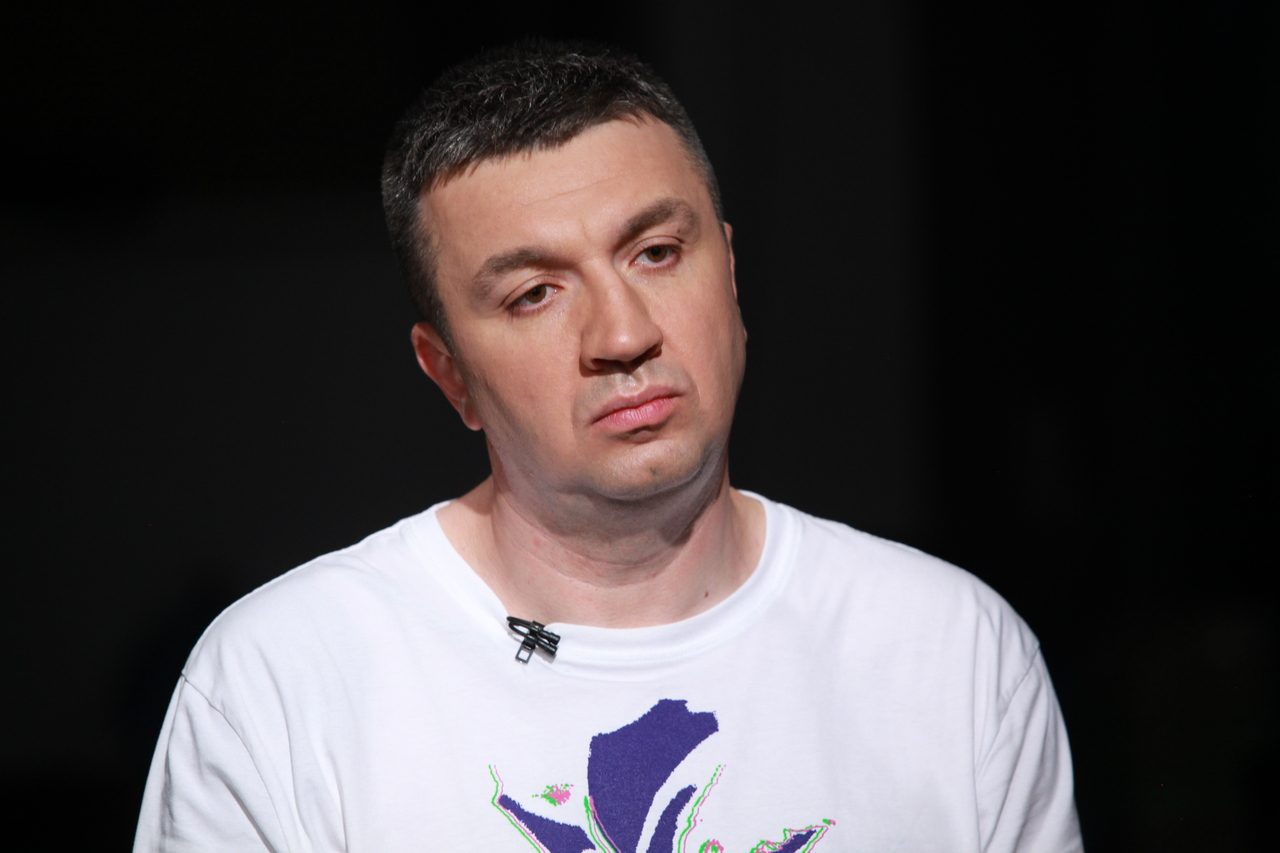
In a new episode of the program “Antypody” on the Islandia channel, Ukrainian TV journalist and YouTube blogger Tetyana Danylenko talked about the Ukrainian media space, her conflict with Roman Skrypin, her attitude toward Dmytro Hordon, Savik Shuster and other colleagues.
Medvedchuk bought ZIK, and this story began when everyone started quitting and left there. Why did they quit, just because of this figure, because of her so-called trail, or did they immediately set some demands?
First, the figure; second, even before any demands were made, all normal, sane people understood they would not survive there, in that environment. And what sense was there in waiting until they drove you out? There were people who supported the concept that one must stay, fight, create trade unions, etc.
It seems even the head of the journalists’ union said this, why should you wait. Many said so. Listen, why? Look at what will happen, show the temnyks, the way it was in Kuchma’s time.
Sorry, maybe precisely because all the strong, intellectual, dignified people left, maybe there was no resistance at all, maybe it was a precedent for him, for Medvedchuk?
Let’s put it this way: when Poroshenko invested money in Channel 5, who was he? He was a founder of the Party of Regions, a member of the SDPU(o), and generally quite a sleazy character who by 2005 already had the reputation of the country’s main corrupt official, after statements by Zinchenko and everyone else. Right? But he didn’t interfere, you say.
No, in 2002 he carried out a political rebranding and invested in the opposition project “Our Ukraine.” By then he had already broken with the Party of Regions and the SDPU(o) and started a completely different political trend. So it can’t be compared, because Medvedchuk, as of 2019, had not started any other political trends.
And the goal with which he bought it was completely obvious to everyone, including the cleaners, camera operators and directors. Look, the only group among all the specialists who really stayed and whose working conditions really improved were the makeup artists, because indeed, a lot of attention was paid to makeup in the renewed ZIK.
And everyone else, including the cleaners, took and left whole departments. And imagine if Vakhtang Kipiani, who was writing a book about Stus, could explain: yes, here I’m writing a book about Stus, and over there I work for Medvedchuk.
This is called a conflict of interest. That’s it. We remove it. I just don’t understand, maybe it was necessary to give him a fight on his territory, or was that impossible?
It was impossible, because he brought in some avatars of his own. Look, my program, which I gnawed out by hook or by crook, the last one, to say goodbye, was just so anti-Medvedchuk, about how Viktor Medvedchuk is aggressively seizing the media space, and that in a year you’d see completely different ratings for Viktor Medvedchuk and his party.
Nobody believed it back then. That in a year they would be in parliament, that they would form a completely different force that others would be forced to reckon with. So I had this program where there were journalists, and they discussed it. The program disappeared about six hours after airing. It was completely wiped from all YouTube.
Because other programs where Medvedchuk was criticized, but that was three years ago, are still on the ZIK channel’s YouTube. But this program disappeared immediately. So counting on being given a chance to fight… Look, Nestor Shufrych and Illia Kyva came into my slot, do you understand?
What is there to talk about, what fight can there be if Illia Kyva becomes your colleague. At that time he wasn’t yet such an odious figure, he was just a funny guy hosting some absolutely amusing show. It was in my slot.
You understand, if Illia Kyva suddenly became your colleague, it means you’re a plant or a beefsteak.
Or a slipper animalcule.
Must a person belong to someone, and doesn’t the prospect of being a single, unattached person scare you?
Look, this is the most uncomfortable position one can take in public life. All the big players in this large information space have someone behind them one way or another. You get beaten, an army of your situational partners appears, and they defend you.
But if you are completely no one’s, equidistant, constantly demonstrating some professional distance, then of course, you’re simply hated by everyone, that’s all.
So what?
You know, sometimes “so what” is probably 90% of the time. There are those 10% when you really think, “Damn, for what?”
I don’t understand why burden myself with extra things. In my life, forgive me, I’ll say it like it is, we’ve known each other for a long time, I’m damn sick of people, there are really so many of them. If I now try to orient myself and recruit my people and such, they’ll squeeze out, they’ll compress everything to the state of a vacuum.
Well, it doesn’t happen that literally. Let’s not take you, let’s take Dmytro Illich Hordon. He always manages to play on the team that is strongest at the moment, while also keeping some distance, staying no one’s. A super comfortable position. I look at it and think, where do they hand out such wisdom so that it’s so comfortable for you.
Since you’ve mentioned Hordon, do you think he is just a respectable mic stand, or is he really such a subtle interviewer?
He’s actually a subtle person. Undoubtedly, on his own.
A mic stand that stands in the right place, the rent for which costs a lot.
No, I don’t think so. I always value others’ success and never devalue it. I simply don’t have that habit. Dmytro Hordon is just a super player who has survived various periods of decline and resurrection, who in the 1990s published a super popular newspaper that was read throughout the entire CIS, and each issue came out in phenomenal print runs. This experience cannot be devalued.
Even though culturally and mentally these people may be alien to me, and I’m not interested in these heroes and so on. But I can’t take away from him that nobody here knows how to conduct these interviews the way he does. To make a person come in and, like a starfish, fully show all their innards.
Because his interviews, which at first glance seem complimentary, with too much show and too little sense, in fact all people reveal themselves quite a lot, more or less, and show themselves as they are.
The media community has been torn to shreds. When did the split happen?
After 2014. That is, there were some internal crisis moments, handshake or no handshake, it was always there.
I was just reading recently a chronicle of the 20th century, the same nonsense. It also coincided with the Maidan, and then with the war.
It started after the Maidan.
Why? What role in this might have been played by the wave of people who “rolled in”?
No, I don’t think the matter is with those who rolled in. I think the whole thing is that, first, in the media community a certain share was replaced by artificially created simulacra, planted by various political players. Plus I think the special services, who split various passionate environments, split the media community too.
Why, if there was a specialist who dealt with squabbling in the volunteer environment, or among volunteers, the same specialist didn’t deal with splits in the journalistic environment. Why not, tell me?
Am I right that we’re talking about a former SBU officer who now works with Poroshenko, whose name is “Latysh.”
“Latysh” is not his name, it’s a position that has such a nickname in the SBU, as far as I know. A call sign. I know he has various personal, very funny nicknames. He’s Viktor Ionasovych, and I know they call him Viktor Ananasovych in that environment.
That’s not bad. I remember how the former SBU head was called, that was much sadder.
Is that true?
That Vasya **anko? Yes. I heard that too, back during the so-called tenure, when it wasn’t so safe to say it.
You know, on the one hand, I think Hromadske had a hand in it, and of course there was a bunch of interested parties who wanted to stretch all this out. On the other hand, when you run into real SBU men, I had the pleasure of talking several times with various investigators on different cases during this time, and I was always struck by the level of their wild incompetence.
And in moments when you talk with various people, and you look, young guys, educated, erudite, they start talking on their specialist topic, and you just have wide eyes because the person has not data but just myths, rumors from websites, from forums, comments from bots and so on. And you just think, damn, is this really the special services?
Because some conditional blogger has the same set of urban legends, scary stories, rumors about who slept with whom, who depends on whom, who works for whom, who took a salary from whom, who took something else. Later I talked with them a few more times, and it was always the same.
I hadn’t had such experience communicating with SBU men before, and when ZIK, by the way, was falling apart, when Medvedchuk bought it, they were also interested, reached out for some contact, and each time I had a cultural shock. They were good, young, pleasant guys, but the level of their awareness completely overturned all my ideas about what a special service could even be like.
Why did this line of division activate specifically in 2014?
Precisely because civil society, however it sounds, you understand, such notions as civil society have been discredited. You say it now, and a person wants to vomit at these words. However it sounds now, civil society posed a great threat to the authorities. The authorities were not interested in being constantly propped up from all sides by some masters of minds and hearts.
And this then created wild instability, and purely psychologically for any leader, and of course there was an interest in simply neutralizing it.
So we’ll build democracy for idiots, I get it.
Well, and then real opinion leaders were replaced by hastily created ones, real heroes were also replaced by hastily created ones and promoted by some methods, real politicians were grown quickly in an incubator. All this fake field was created.
But the representatives of the media community themselves didn’t stay silent for the sake of a word. A year ago in this studio, Roman Skrypin went after you and Khrystyna Bondarenko, your friend and colleague.
Listen, I would have given a reply if you had warned me. Honestly, I don’t remember what he wanted from us. I remember there was some internal claim, but I didn’t quite understand what exactly it consisted of.
There was a claim, I understood it later, because it wasn’t clarified, that Khrystyna, when she interviewed the poet and blogger Dombrovsky, somehow called Skrypin so they would figure it out, and they were in conflict. And you, as I understand it, just got caught in the crossfire, so to speak.
Khrystyna and I always defended Roman in any public spats. Even at moments when it was personally very disadvantageous, and during the breakup of Hromadske, Khrystyna and I still defended Roman anyway, because it seemed to me that the conflict could have been settled in an entirely different way, without bringing it to the general tribunal of the inquisition and without throwing stones.
Roman is such a difficult person in this sense. We defended him when he was leaving Channel 5. We went to Poroshenko and met: “Listen, you may love Roman, not love Roman, he may be disgusting, inadequate, whatever, but he’s not just a face there, he’s the soul of this channel. Without him, you understand, you’ll lose everything.”
And so none of those iconic faces remained. And he (Poroshenko) seemingly agreed, while Roman sat at that moment, simply turned away from all of this. Just a complicated person. I think he is very often emotionally swung from one extreme to another.
Are you angry at him?
I’m not angry at him. I treated him kindly. It’s very upsetting to me that none of those journalists who could conditionally become Ukraine’s Savik Shuster has taken that place, and now Savik Shuster occupies it. Don’t we have our own great journalists who can host the country’s main political show?
Are we some kind of cripples, unable to find even one decent, cool, intelligent guy or woman who would be the main arbiter among all these political squabbles? So why does everyone approaching this status somehow dissolve and become marginalized? It upsets me a lot.
We had several such people who completely discredited themselves somewhere midway along this path, or marginalized themselves, or moved into some strange status, or started doing some crap.
Shuster doesn’t have a reputation. He has an image, and this image is unchanging. He has no reputation as such.
He has a reputation as a person who will always handle things adequately, whatever task stands before him. I have reassessed him many times, and yet I believe he is the most large-scale figure among those who now host major political talk shows.
Is that more of a plus or a minus for our media, for our freedom of speech?
It’s a disgrace that we still import talk show hosts from abroad, it’s a disgrace. It’s such an inferiority complex. With all due respect to Savik, this isn’t a claim against him, it’s a claim against us.
Well, listen, we have people, let’s say, who can just as well make a channel, but for some reason Semenov is the one who makes them. And he churns them out like pencils, all identical. And he does it very well. And ours, no matter how much money you give them, still come out as “Espresso.” Why is that? I don’t know.
Because Semenov, having stolen a huge budget and bought himself several Ferraris, can still create some bright project. We just, let’s not name names, always have an honest, incorruptible one, and he will invariably steal absolutely everything.
What is Ukraine today?
Ukraine today, yesterday and tomorrow is a country with the same set of problems and virtues. If you read thinkers, philosophers, and various theorists of Ukrainian thought from the early 20th century and apply them to the present, it turns out that nothing has changed at all, although the trappings change a lot. Far more signs of statehood, everything, but the problems and virtues are the same.
Problems: an impotent elite, a rotten intelligentsia, “intelligentsia” being a worn-out word, and the stratum of the population that is supposed to be some kind of conscience, an even more worn-out phrase, “the conscience of the nation,” and an inert majority. Here this mixture together cannot, with such colossal resources, build something normal and decent, having absolutely everything for it, absolutely everything.
No country in Europe, except perhaps Germany and France, has such a quantity of human and general resources and natural resources. That is, all of them went to their statehood over a long time, went through various stages of fragmentation and reunification, but only Ukraine is still building in the 21st century. That square thing rolls, and the round one gets carried.
If we take purely metaphorical thinking. I’m telling you: Ukrainian society, what metaphor is it? What comes to mind?
You can’t measure countries by society in general, because society has a head. You know how you assess a fish by its tail, body and fins.
No, what does it associate with?
It’s some amorphous crap, with a very weak head first of all. And from this all the problems come. I’m not a proponent of the theory that some Bandera will appear among us who will lead us and everything will be okay. I’m also not a proponent of leaderless concepts of politics, parties or the state, because nowhere has that worked. There is always a role for personality.
But there must be a critical mass of people capable of, however pompous it sounds, nation-building and state-building. Because society itself, by such general parameters, is basically okay, despite all its degradation. We have something to compare with. Now we look at Russians, we look at Belarusians, and compared with them everything is basically fine with us.
And we will never let any authority, whatever it’s called, cross certain red lines. But with all our virtues, with a huge number of educated people who have proper higher education, technical, roughly speaking, philosophers, historians and so on. Those professions that have long been discredited, because science is considered, so to speak, dead or dying, is profanation.
In fact, a large number of clever people, purely by all the external parameters by which nations are generally assessed, the nation’s development index, everything is generally normal. But for some reason what comes out in the end is always some crap.
Is this some kind of metaphysics?
No, not metaphysics. It’s the repetition of the same patterns over long stretches of historical time.
And what are the roots of these patterns? Is it Orthodox culture, if we can put it that way? Is it this post-Soviet trauma, or rather post-imperial, since it lasted several centuries? What are the roots of this problem?
No, if you read Taras Shevchenko with a fresh head, with a modern head, no longer with the eyes of a Soviet schoolchild persecuted by this Shevchenko, and you read some serious things, then basically it becomes clear that even then subtle people understood everything perfectly well and gave very adequate, very modern, very fresh assessments of what was happening.
That is, these are unclosed gestalts, the repetition of the same behavioral models, which always lead to collapse. In politics it works like this: you have to rely on some more successful experience. You know, like Make America Great Again, or like our “brother Russians,” who rely on the experience of early Soviet times or the late Russian Empire, when there was the early Soviet era, space, hydroelectric dams.
Were there moments in history that we could rely on?
Very long ago, people have forgotten, the memory of generations from those times, when we had examples of successful states, has been completely lost. It’s certainly not the 20th century, and of course not the 19th. It’s 1,000 years ago.
People also squabbled normally back then.
Well, still, you know, there were centuries, 500 years each, of some conditional stability and transmission of political experience, and then it all just went to the dogs. And now relying on that experience is impossible, because it has already been divided up by the Russians, by us, and by anyone who wants to claim that success for themselves.
And relying on it is very stupid, because nobody remembers the algorithms of behavior, and nobody remembers how this was achieved. You understand that history is such an uncertain thing, and taking ready-made recipes from it is no longer quite appropriate.
So the problem is the absence of continuity?
Yes, parents just don’t pass it on to their children. If we take a microcircuit, so to speak, for raising children: if you have a super family, a dad and a mom who love each other, don’t beat each other, don’t drink, and multiply what previous generations achieved, then about 90 percent of the time their child will also definitely multiply what they achieved. And so on and so forth.
And it seems to me that if we extrapolate to macrocircuits, then with us every time there is an absent father, an alcoholic mother, and no matter how smart the child is, they will always repeat scenarios and destructive behavioral models. And always the same ones.
With us there is roughly always the same story, described by all the classics and all the theorists of Ukrainian thought, if one may put it this way: people really love cheap tricks instead of real power, cheap special effects that replace real things.
A real army, real state institutions. They sell very cheaply for some very visual things. The main thing is you can wear an embroidered shirt, everything’s fine, we have a wonderful state.
Politicians, after all, do what there is demand for.
Here it’s both yes and no. It’s a mutual influence of society on politicians and of politicians on society.
On the other hand, a politician is just an ordinary person who got lucky.
It’s just a slice of society, a more cunning, successful, nimble one who got to this piece, or simply a random person who, by an absolutely random principle, ended up in the layer called the elite.

Russian Attacks in Dnipropetrovsk Region: Two Killed, Seven Injured

Defense Forces Strike Four Russian Drone Control Points in Past Day, Including in Berdiansk

Britain Threatens Sanctions on Kremlin-Linked People; Poland Ready to Hand Ukraine Ammunition

Russia says it has completed "planned exercises" in the Black Sea

MVD: Fake Riots With Prop Blood Were Being Prepared Near Presidential Office

Law Enforcers Name Another Klitschko Deputy as Suspect

Berlin Holds Protest Against War in Ukraine; EU Prepares for Possible Russian Halt of Gas Supplies
North Korea Fires Ballistic Missile Over Record Distance in Five Years
Irish Fishermen Force Russia to Postpone Naval Drills

US sanctions in case of invasion of Ukraine could completely destroy Russia's economy, NYT reports
