
Kira Rudyk, Holos party: “Politics has taught me many creepy things...”
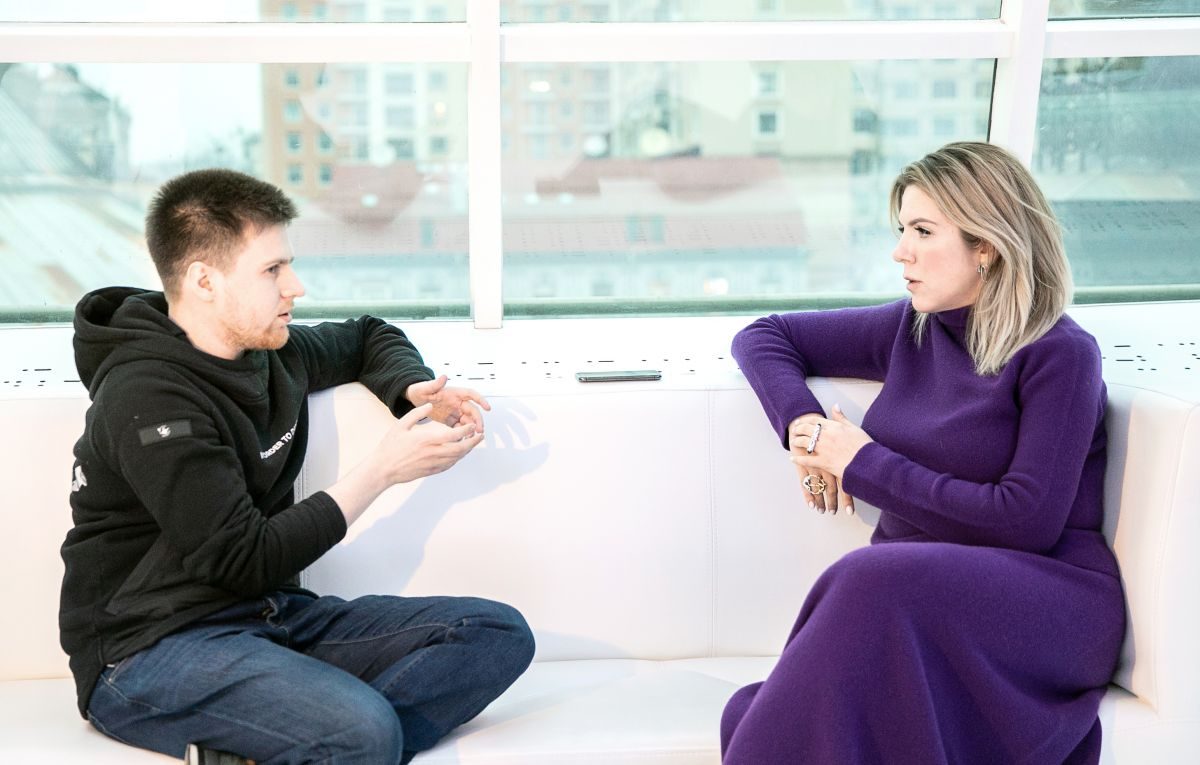
On the new convocation of the Verkhovna Rada, future elections in the capital and speeches by Sviatoslav Vakarchuk.
Kira Rudyk is third on the list of the Holos party. For her, work in the Verkhovna Rada of the 9th convocation is her first political experience. Before that, the 34-year-old graduate of the Kyiv-Mohyla Academy focused her efforts on the IT sector. In particular, she served as chief operating officer of the Ukrainian branch of Ring, the same company that internet giant Amazon acquired in winter 2018 for a billion dollars.
In the new parliament, Kira Rudyk holds the post of deputy head of the committee on digital policy and heads the Kyiv branch of the Holos party. We meet with the lawmaker to talk about Holos in the Verkhovna Rada and find out why Sviatoslav Vakarchuk continues to perform at corporate events and whom he will nominate as a candidate for mayor of the capital.
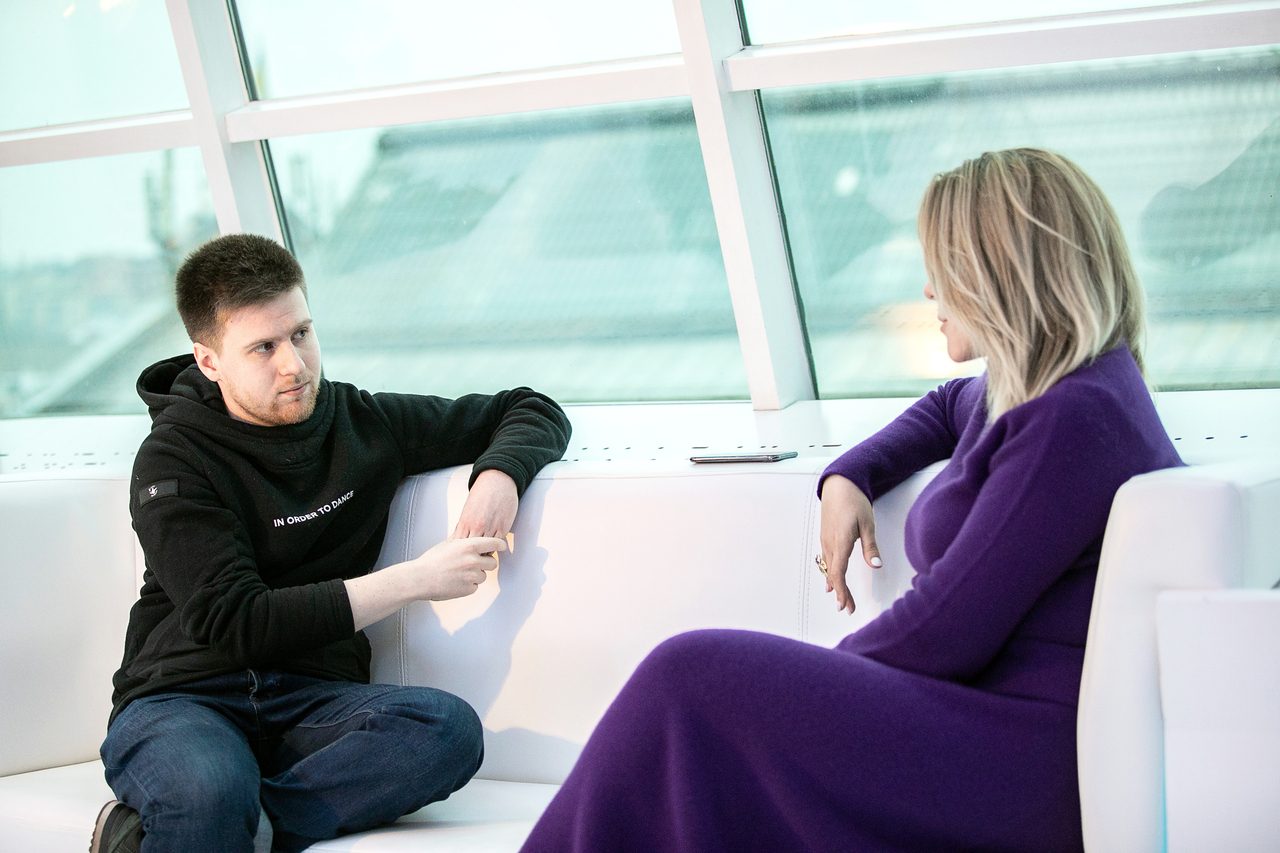
The interview is being recorded on the sixth floor of Pinchuk Art Centre at One Love Coffee. “You can write that we are giving the interview at Viktor Pinchuk’s establishment,” Kira jokes when we meet (in journalistic and political circles, the Holos party is often linked to oligarch Viktor Pinchuk). We promise to do just that.
— You have been a people’s deputy for five months now. I think that is enough time to draw the first conclusions. Who is the easiest to work with in the Verkhovna Rada today?
— With professionals.
— Do you mean only the Holos faction?
— Not only. I mean people who, regardless of political views, are professionals in their field. I know that’s not the answer you want to hear. But it is really so. Experience and expertise, constructiveness and a pragmatic approach are not such common traits in our domestic political establishment.
— Can you name a specific example, who from other parliamentary factions is easy to work with?
— For example, Yehor Chernyev from Servant of the People. We work with him in joint working groups on taxation in the IT sector, as well as on creating British law territories. Then there is Oleksiy Zhmerenetskyi from Servant of the People, who deals with blockchain. I don’t agree with him on everything, but we understand each other and speak “the same language.” I also interact with Yulia Ovchynnikova from the same Servant of the People party on human rights issues. That includes both the ban on fur farms and projects to protect homeless animals.
— And are there examples of partnership and mutual understanding with representatives of European Solidarity or the OPZZh?
— I practically don’t cross paths with OPZZh representatives. Except for the moment when we wrote PTN-PNKh with lipsticks…
— Lipsticks?
— It was a small clash in the Verkhovna Rada. They brought in and hung on the rostrum something like a banner with the words “Stop censorship.” And we wrote PTN-PNKh on it. It is quite strange to hear anything about censorship from representatives of this particular political force.
— Are you hinting at Medvedchuk’s TV channels?
— Among others. And our reaction to such “nonsense” is fully justified. That is why we made this inscription literally with what was at hand. And our opponents, in response, called us bad women…
— As I understand it, the Holos faction agrees with Servant of the People that its representatives should not appear on Medvedchuk’s holding company TV channels?
— We see no point in that. Even if you go there, the party’s representative will be presented in the most unflattering light, regardless of what exactly they say or what position they convey to the audience. So any appearances on such platforms are a bad idea from every point of view.
— Let’s return to your political career. Just a year ago, politics practically did not exist in your life. Did you have any thoughts or plans on this matter?
— Of course not. A year ago I was in business and had a clear development strategy for the business I was running. Politics was not part of it. And now I already understand that these are two completely different worlds. Let me tell you a telling story. As people with a business mindset, in the first months of the new parliament’s work we strove to maintain high efficiency and maximum decision-making speed. This applied to many “newcomers” in politics, especially my colleagues on the committee. It was clear that we needed to keep a “turbo mode,” work on party tasks, go on air, prepare documents, and run from one meeting to the next.
But besides us, representatives of old parties and political forces also worked on the same committee. At some point they came into a committee meeting. They saw how all of us were “charged” to vote and make decisions quickly. And one of them says: “Hello. I declare the committee meeting open. I propose to dedicate the meeting to our guys who are now fighting in the east.” And he says this extremely slowly, with feeling, diction and pauses. It seems awkward to object to such an initiative. So we don’t object. But that is not the end of it. The deputy proposes to honor the memory of the fallen with a minute of silence. We keep sitting. Time passes. And in this theater of the absurd you no longer understand what is happening at all. And there are very many such trifles that knock a normal, adequate person off balance and out of working condition. I am often asked what politics has taught me. Today I confidently answer: “Politics has taught me many creepy things, very creepy ones.”
— Looking back, even at this past year we have talked about, do you regret going into politics?
— No, not yet. Although this decision was hard for me. At the moment when Sviatoslav Vakarchuk offered me to go to parliament with Holos, I was responsible in my position for the lives and well-being of thousands of people, those who worked in the company I built in Ukraine practically from scratch. And I did not manage to “raise” a successor who could replace me as chief operating officer. So the decision to go into politics concerned not only my personal career or ambitions, but also the question of the business’s survival.
— If we talk about results, how serious a limitation is the small size of your team in the Verkhovna Rada for implementing the Holos program?
— The situation should be considered from two points of view. First, how, under limited resources, can anything be done at all. Second, whether the resources really are that limited (we probably do not see the additional opportunities).
Under limited resources, we can keep convincing colleagues of our rightness on the basis of our own expert conclusions and competencies. And opportunities can be “drawn out” by working with large factions, the same Servant of the People, on joint bills in areas where there is consensus. Take the same document on combating “mask shows” in the IT sector, prepared in partnership with Yehor Chernyev. It has every chance of being voted through. The same can be said about bills on homeless animals and many other important documents. And there is also an interesting direction concerning “pushing through” our ideas and positions through amendments… The problem is not the tools that allow us to achieve our goals. The problem is that a team of 20 people has to promptly process huge volumes of information, so the load on each “combat unit” is very high.
— Is Holos coping with such a load, given that in the expert community you are fairly often criticized for a certain helplessness…
— I find such criticism sincerely amusing. You yourself said we have only 20 people in parliament. Our capabilities are limited to public speeches, attempts at some local agreements with the single-party majority so that certain of our initiatives reach the hall. Plus work with the public, to which we provide fairly clear expertise on important bills, based on our own knowledge and competencies. Of course, there is always the option of getting your way by blocking the rostrum. But I am sure that is not what our voters expect of us. We promised them constructiveness. That is what we are doing.
— But how do you convey your position to the public if Holos is one of the most “quiet” parties of the current convocation? You are much less present in the information agenda than European Solidarity or the OPZZh.
— I can counter. Nobody in our team owns any TV channel. So it is completely logical that our presence in the information field is hard to compare with European Solidarity or the OPZZh. Add to this our inability to make TV programs ratings on scandals, brawls, and beating ourselves on the chest shouting “The criminal authorities are strangling business!” We don’t shout and don’t engage in cheap populism. That is simply not us. Perhaps the emergence of a force like Holos indicates the maturing of Ukrainian politics. And over the years, adequacy and efficiency under the dome will grow.
— At present, what else is preventing you from fully fulfilling your obligations to voters?
— Probably the excessive dependence of representatives of other political forces on the so-called “party line.” Even a good idea and an excellent bill can get stuck because people were told to vote a certain way. Even adequate lawmakers sometimes admit to me that they supported or did not support a document because of existing party obligations. Like, I’m not very well versed in this issue, but we were told so I voted; I agree that this law may not be perfect, but that’s how we voted. And that is really bad.
— Does this apply to the projects you are promoting within the work of the committee on digital policy? And overall, does its activity meet your initial expectations?
— Not entirely. First of all, the current functions of the committee differ from my ideas about what it should actually be doing. My line of thinking was as follows. There is the agrarian sector, which brings the country a lot of money. Therefore this sector was placed under a separate specialized ministry. Recently, by export revenue volume, the IT sector has become the second industry in the entire domestic economy. It is logical to assume that a separate parliamentary committee, by analogy with the agrarian ministry, should have concentrated its efforts on developing IT. To set, for example, the task of growing our industry threefold in five years.
However, it turned out that the digital committee does not deal exclusively with the IT sphere and cannot. It covers digital technologies, radio frequencies, telecommunications, and the digitalization declared by the government. IT is a small part of all this. And not even the highest priority. After all, in other areas colossal volumes of unresolved problems have accumulated.
For example, the same radio frequencies. They are as valuable and limited a resource of the state as people or land. Until humanity makes a breakthrough in technology, we have a countable number of radio frequencies. The state controls and distributes them. Meanwhile demand keeps growing. Almost all frequencies have already been sold. Accordingly, the authorities should reclaim those that are not used, set prices and tariffs that correspond to the market. Take into account that, in wartime, this also concerns the security of information transmission. Plan ahead the tasks related to introducing 5G in some foreseeable future. And many more small details. But all of them are extremely important. Even this single direction may warrant an entire committee.
— I would also like to talk about your work as curator of the Kyiv branch of the Holos party. On your Facebook page, recently more and more local issues have been coming up: Ukrbud, the Shuliavskyi overpass, the Kyiv master plan... Are you preparing for the mayoral elections?
— No. I am not preparing for the mayoral elections, I simply head our party branch in the capital. Why? Because, as I said, we are only 20 parliamentarians. The resource is very limited. Each person is assigned certain regions where party cells develop. I “got” Kyiv. And this is a very interesting direction of my political activity. Party building is very much like a startup. And I know how to work with such things.
— Can we speak of ambitions to become the capital’s mayor?
— Recently rumors reached me that my candidacy was being considered for head of the Kyiv City State Administration. At the same time, the rumors do not specify who considered it, where they considered it, and when they considered it… For myself, I do not rule out any possibilities. If my experience, knowledge and skills can work for the common good somewhere, I am ready to use all resources. But in fact, the question of candidates for our party is still not a closed issue.
— In this regard, it would be very interesting to know Holos’s position on the “Pro the Capital” law.
— It contains both generally positive things and categorically harmful and even unconstitutional ones (regarding the so-called prefects, the document is an absolute “not okay”). Therefore Holos’s position maximally correlates with the conclusions of most experts about the impermissibility of adopting it in its current form. But here we face the main problem. Nobody has seen this “current form” with their own eyes. There were more than a thousand amendments to the draft. And the authors had to literally assemble the document piece by piece. It is unclear what they ultimately “assembled” it into.
— Let’s talk about global-level issues. Before the meeting of Ukrainian President Volodymyr Zelensky with the leaders of the Normandy Four in Paris, the Holos party called for Ukraine’s full withdrawal from the Minsk agreements (as a plan that does not lead to resolving the conflict). According to some experts, the party decided to take advantage of the situation and “hype” the topic…
— That is a mistaken view. How can one “hype” a topic that has been the most painful for all conscious Ukrainians for more than five years now? We have spoken about it a lot practically from the first days in parliament. And Holos’s position fully explains our rational view of the situation. And the situation is that there is an opponent, a country with which there is no point in negotiating, because it does not observe any agreements. Nobody, including the negotiators of the Normandy format, has ways to force this opponent to fulfill its obligations. Even sanctions do not change the state of affairs. Over the years that Russia has lived under sanctions pressure, we have not seen any significant movement. By preserving “Minsk” and other formats existing today, we are simply maintaining the status quo, that is, giving Russia the chance to keep occupying our territories.
— Experts say that our exit from the Normandy format or from the Minsk agreements would lead to disapproval from Western partners. Is a possible conflict in relations with the West a normal price for Ukraine?
— Ukraine has long ceased to be a priority for Western partners. And now they are already doing what is more convenient for them. Or what does not require any additional steps from them. The situation in Europe has changed over these years. We receive far less support from our partners. Recall even the latest meeting. It seemed that all four leaders were in different negotiations. They seemingly talked, and then came out and spoke about completely different things, the things that were beneficial to them for local domestic audiences. We must think about an alternative to the Minsk process. We need a new plan, including one developed with the participation of parliament.
— Since we have already started talking about hype, I cannot ignore the question of Holos’s position on land reform. You did not support the relevant bill, which disappointed a considerable part of your sympathizers. Why?
— Even in the first reading, the document was complete nonsense. Now, during preparation for the second reading, we are closely monitoring the transformations of the bill. And there are thousands of them. Accordingly, we need to carefully analyze what we will end up with. So far this is an initiative that does not meet the promises with which the authorities originally came to the people. And the winners are not farmers, for whom they did not even provide adequate credit solutions, but large corporations. In this form we will not support land reform. Our country has already lived through the privatization of the 90s, when they wanted “as best as possible” and it turned out “as always.” We must not allow the same situation with land.
— At the end of our conversation, it makes sense to return to questions our readers sent us from Facebook. Knowing that we would be talking with representatives of the Holos party, they asked about the absence of parliamentary activity specifically from Sviatoslav Vakarchuk. Why did he not head the Holos faction?
— As I told you, our resources are seriously limited. Everyone has to be a “jack of all trades”... That is, you write laws, read documents, speak from the rostrum, work in committees, are responsible for the party’s regional expansion, go on air, and so on. Heading a faction is a very managerial job, implying exhausting work, endless meetings, building a team and so on. And late in the evening they also tell you: “Oh, we will be voting for this, here is the latest version, distribute it among your comrades…” It is not surprising that, given limited resources, we entrusted this function to the most suitable candidate. Sviatoslav Vakarchuk is rather our mouthpiece, the advocate of our program and the main media spokesperson of Holos. Well, and he is, of course, the party leader.
— So Vakarchuk is not suited to the role of manager?
— No, that is not what I said. I said that we are now trying to divide the work, assigning to each position the optimal unit of our small team. That is why Sviatoslav is responsible for conveying our position, while Serhiy Rakhmanin performs managerial functions. And by doing so, incidentally, it allows Vakarchuk not to “drown” in the volume of day-to-day operations.
— What can you say about Vakarchuk’s speeches at corporate events (including the recent scandal over his speech in Minsk)?
— We do not take money from anyone, not from any oligarch. We do not receive strange “additional” salaries in envelopes. Therefore we have no other resources except earning money ourselves. And doing so by means that do not contradict the letter and spirit of the law.
Volodymyr Koval, TK Media

Russian Attacks in Dnipropetrovsk Region: Two Killed, Seven Injured

Defense Forces Strike Four Russian Drone Control Points in Past Day, Including in Berdiansk

Britain Threatens Sanctions on Kremlin-Linked People; Poland Ready to Hand Ukraine Ammunition

Russia says it has completed "planned exercises" in the Black Sea

MVD: Fake Riots With Prop Blood Were Being Prepared Near Presidential Office

Law Enforcers Name Another Klitschko Deputy as Suspect

Berlin Holds Protest Against War in Ukraine; EU Prepares for Possible Russian Halt of Gas Supplies
North Korea Fires Ballistic Missile Over Record Distance in Five Years
Irish Fishermen Force Russia to Postpone Naval Drills

US sanctions in case of invasion of Ukraine could completely destroy Russia's economy, NYT reports
