
Kozak to Take Charge of Ukraine: Why Moscow Is Removing Surkov and What It Means for Kyiv?
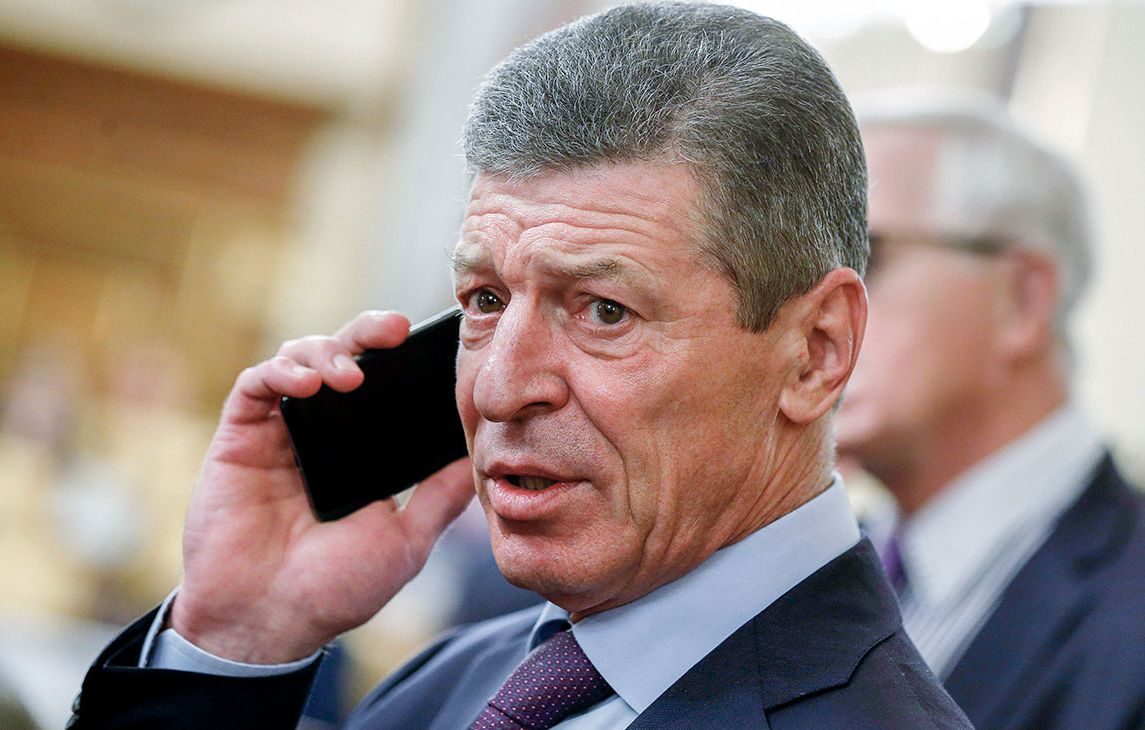
Global concessions from Russia should not be expected.
On January 25, 2020, Russian media reported that Vladislav Surkov had left his post. Surkov was the unofficial curator of the unrecognized republics (and of the entire Ukrainian direction) on the Russian side. This was reported in his Telegram channel by Alexei Chesnakov, a political analyst well known in Russia who is directly affiliated with Surkov.
As of publication, the resignation has not been officially accepted, and there is no corresponding decree from the Russian president. Nevertheless, Chesnakov once again confirmed that Surkov's departure from the post has been decided and is not subject to appeal. As for the official part, it will be announced in the near future.
The reason for the resignation, which Surkov stated through Chesnakov, is a “change of course on Ukraine.” The day before, Putin appointed former Russian Deputy Prime Minister Dmitry Kozak (who in his previous post oversaw Crimea in 2014 and the economic bloc of the “DPR-LPR”) as deputy head of the presidential administration. It can be stated with a high degree of probability that a “rotation” has taken place in Russia on the Ukrainian direction, and now Kozak will oversee it, while Surkov will take some other position.
Unlike Surkov, Kozak is known for a more compromising (but, paradoxically, no less tough) position on the Ukrainian issue. His distinguishing feature is the ability to quickly reach agreements on complex cases. The removal of Surkov and the appointment of Kozak have sparked a great deal of discussion. Many political scientists, journalists and experts have suggested that this signals an imminent change in the Kremlin's line on Ukraine, up to and including global concessions and abandonment of the “republics.” But is that really so?
Who Is Vladislav Surkov
Surkov is one of the most well-known and long-serving figures in Russian politics. He began his administrative career back in 1999, working in the presidential administration. An experienced political technologist and top-level official, Surkov is known as one of the theorists and ideologues of the modern Russian state and its foreign policy. Unlike many of his colleagues, Surkov was never a simple executor of decisions. He worked with meanings and ideas, shaping and setting the agenda in Russia.
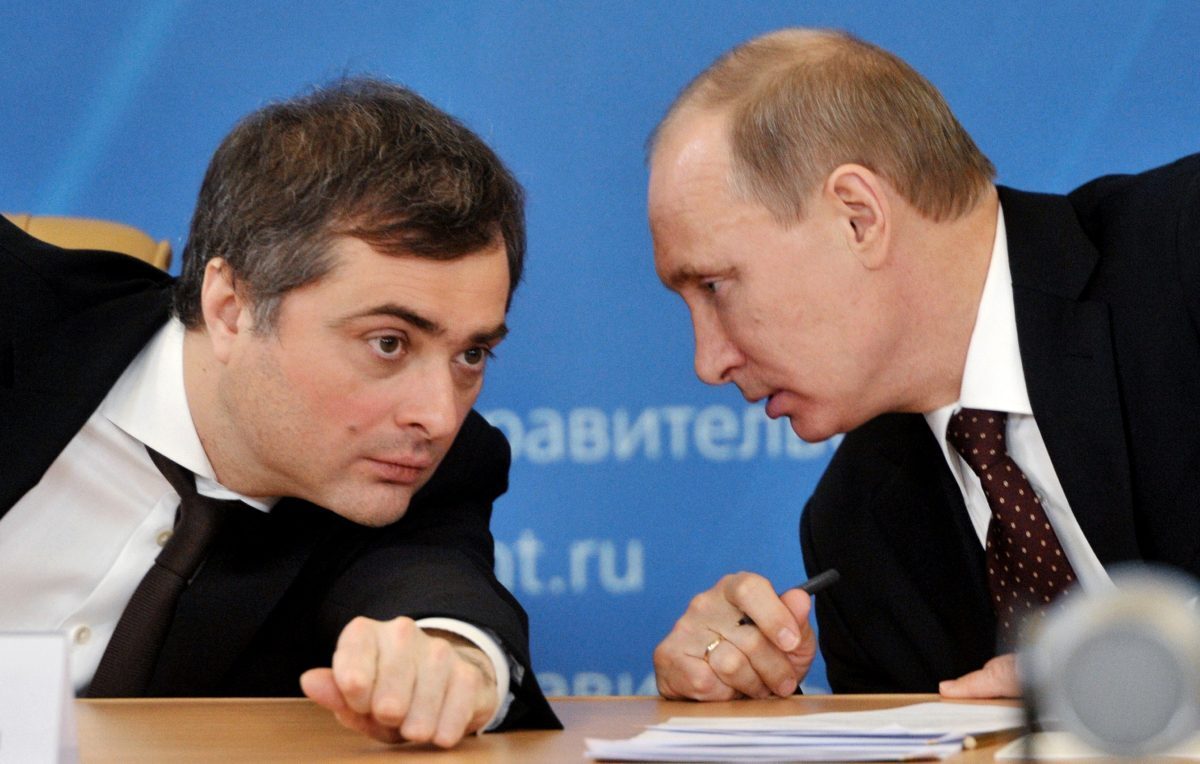
It was Surkov who is the architect of Russia's modern political model, which can be defined as “managed democracy” or “Putinism” (in Surkov's own terminology). Interestingly, the future adviser to the Russian president began his business career in 1987 under his future rival and opponent, Mikhail Khodorkovsky.
He headed the advertising department of the Center for Interbranch Scientific and Technical Programs of the “Youth Initiative Foundation,” and in the 1990s he worked at Khodorkovsky's company Menatep. This did not prevent him from later indirectly playing against his own former boss (the party technology devised by Surkov with the “Rodina” party significantly weakened the Communist Party, one of the main sponsors of which was Khodorkovsky).
It was Surkov who managed to convince Putin of the need to fight the “orange threat” in Russia after 2004 (the first Maidan in Ukraine), which became the pretext for the gradual “tightening of the screws” within the Russian system. Former colleagues recalled that Surkov found routine tasks boring; he thought in categories of ideas, projects and meanings. It is no surprise that such a person became a close aide to President Putin and, with the start of the second Maidan in 2013-2014, began overseeing Ukraine.
Despite his general “patronage” of the Ukrainian direction, in the “DPR-LPR” Surkov dealt mainly with political processes and ideology. Also, at one time Surkov was Russia's special representative on Ukraine, similar to Kurt Volker, who held an equivalent position on the US side. The Russian president's aide was considered one of the key figures in “Minsk-2” and was known as a proponent of absolute uncompromisingness on Ukraine's implementation of the agreements, which often created conflict situations within the negotiation process.
Why He Is Leaving His Post
There are several versions of why the official is leaving the Ukrainian direction: from internal struggle to an attempt by Russia to throw dust in people's eyes, since in fact no one will go anywhere afterward. However, perhaps the main assumption in the domestic media environment is an imminent change in Moscow's policy regarding Donbas.
A softening, serious concessions and even abandonment of the “DPR-LPR” and the return of Donbas to Ukraine, practically on Ukrainian terms, are being predicted. Well, one always wants to believe in the best, but practice shows that such belief can be ruinous. One should not expect any strategic change in Russia's agenda on Donbas.
First, there are no prerequisites for this (economic, political, social and others), and therefore Russia has no reason to change anything fundamentally.
Second, Russia, unlike Ukraine, has far more resources (including time) and a reserve of institutional stability.
Third, Russia engages in state planning at least in the medium term, and perhaps in the long term, which cannot be clearly said of Ukraine. In practice this means a far-reaching “game” by our north-eastern neighbor 10-15 years ahead. Our country can hardly boast of such planning horizons.
Fourth, Ukraine is an object, not a subject, of geopolitical confrontation, and Russia does not yet intend to stop using our country as a tool of this confrontation.
Fifth, the “republics” are already integrated into Russia to such a degree that a 180-degree turn is impossible, and if they were abandoned (a show of weakness), Russia would start being pressed further, for example on the issue of Crimea.
Most likely, the reason for Surkov's departure was his banal unsuitability for the post and the internal apparatus struggle within the presidential administration linked to a “rocking chair.” The point is that Russia's policy toward Ukraine (overseen by Surkov) can hardly be called successful. The minimum program (internal instability, obstruction of Euro-Atlantic integration, systemic crisis) has been fulfilled, and even that with reservations.
But Kyiv refuses to make serious concessions in the context of the Minsk agreements or to change its policy toward Russia. The situation in the “republics” is very difficult because of corruption, poverty, lack of prospects, the uncertain future of a war-ravaged region and a humanitarian catastrophe that is almost upon it, while Russia's efforts to integrate these territories have so far not produced the expected effect.
At the same time, the pro-Russian idea in Ukraine has been almost completely marginalized. The only publicly pro-Russian party, the Opposition Platform — For Life (OPZZh), is mired in scandals and does not enjoy great popularity, formally being the second party in the country only. A new pro-Russian project, according to information from Telegram channels linked to Andrei Bogdan and Kirill Timoshenko, is only at the preparation stage and clearly is “not in time” for the upcoming elections.
Soft power technology (“soft power” — influence through LOMs, cultural initiatives and foundations) is partially used by Russia in Ukraine, but this is clearly not enough for a serious shift in public opinion and the political climate.
All this leads to the conclusion that Surkov simply failed to cope with his task within the Ukrainian direction. This is precisely what became the main reason for his removal and replacement with Dmitry Kozak.
Who Kozak Is and What Ukraine Can Expect from Him
Rumors that Surkov might be replaced by Kozak first appeared in 2019, when the incumbent president Volodymyr Zelensky won the election. This thesis was spread by a number of major Russian Telegram channels (among them “Nezygar,” which is traditionally linked to one of the “Kremlin towers”).
However, at that time the information remained at the level of rumors, and the Russian leader's aide kept his post. At the same time, as later became clear, Surkov had in fact been gradually winding down work on the Ukrainian direction already from January 2018 — most likely recognizing the complete impasse in Russian-Ukrainian relations, which became obvious even to the staunchest skeptics in 2017-2018.
Russian publications, citing sources in the presidential administration, report more: after Poroshenko's defeat, the former curator of the Ukrainian direction stopped any work on our country altogether. Since then, all initiatives have come either from Viktor Medvedchuk or from the Ukrainian president's aide Andriy Yermak and then deputy head of the Russian government Dmitry Kozak.
The communication established between Yermak and Kozak (who, ironically, has a distinctly Ukrainian surname and is himself an ethnic Ukrainian, a native of Kirovohrad Oblast) deserves separate attention. The level of their relationship is an order of magnitude higher than that which Yermak had with Surkov (as both have stated).
It is believed that the “armed thaw” in relations between our country and Russia is connected precisely with the actions of Yermak and Kozak. All issues of bilateral relations with Russia since Zelensky's election, including exchanges, gas negotiations, direct meetings and calls, the Normandy format and negotiations on Minsk, were overseen by Yermak on the Ukrainian side and Kozak on the Russian side.
Kozak himself, like his predecessor, has been in state service since 1999. Like Surkov, he served in the GRU special forces. At one time Kozak dealt with settlement issues in the North Caucasus and also oversaw the 2014 Olympics in Sochi. Today Kozak, like Surkov, is one of the key players in Russia's power architecture and in President Putin's circle.
Nevertheless, there are several important differences between the “old” and “new” curators of Russia's Ukraine policy. Dmitry Kozak, unlike his predecessor, who was used to operating with global ideas and geopolitical concepts, thinks more in the spirit of “realpolitik” here and now. He is guided above all by economic and pragmatic, rather than ideological, interests regarding his country. Despite a tough, even rough negotiating style, he is known as a person capable of quickly resolving complex cases and reaching compromises that sometimes seem unthinkable.
A textbook example: it was Kozak who, in spring-summer 2019, managed to ensure a situational alliance and balance of interests of the US, the EU and Russia in Moldova, which led to a total defeat of the national oligarchy in the person of the major businessman and de facto ruler of the country, Vladimir Plahotniuc. Kozak also significantly strengthened the position of Moldovan President Igor Dodon, who is considered pro-Russian and who had previously performed purely decorative functions in the state.
With Zelensky's coming to power, Kozak systematically took the levers of influence over Ukraine away from Surkov, building his own communications and successfully resolving emerging situations. Incidentally, the Russian leadership learned about large-scale corruption involving money allocated by Russia to the “DPR-LPR” precisely thanks to Kozak. All of this in sum led to his appointment as curator of the Ukrainian direction.
By the end of Poroshenko's term, Russia's policy toward Ukraine had reached an obvious impasse. With Zelensky's coming to power, a “cold thaw” and a cautious unfreezing of contacts began. Today's situation requires new approaches, which the Kremlin believes Kozak can implement.
As already mentioned, Russia's strategic line on Ukraine will remain unchanged. However, a number of tactical concessions and steps “on the ground” are clearly predictable today.
First, this is easing of the humanitarian situation in the form of further exchanges, a reduction in “hate speech” and aggressive rhetoric at the level of the state and media, continued attempts to disengage troops and the opening of new checkpoints on the line of contact, that is, everything that has been happening for the past six months.
Second, regarding “Minsk-2,” steps toward each other should also be expected. The “Minsk format” cannot be abandoned at this point, but it can be expanded and supplemented, and a number of points can be spelled out in more detail and in a more compromising way for both sides.
Third, active negotiations between Ukraine and Russia (both public and non-public) will continue. Most likely, a Normandy meeting will take place.
Fourth, other compromises from Russia can be expected, for example admitting OSCE forces to the border or replacing the heads of the “republics” with completely neutral people (unlikely).
It is important for Russia to show (primarily to its domestic audience) that it does not “give up its own” and goes all the way, while at the same time being a state capable of deals and open to compromise.
It is important for Ukraine (above all for Zelensky) to preserve the image of a peacemaker and communicator, without allowing “capitulation.”
However, neither state intends to change its strategic line toward the other for now, given that Russia has far more resources, strength and experience to continue its policy than our country does. The difference also lies in approaches: Yermak declared commitment to “express diplomacy,” while Kozak, although able to resolve issues promptly, is nonetheless a subject of Russian policy that knows how to play the long game.
Who will outplay whom and whether the sides will find a compromise will be shown in the near future.

Russian Attacks in Dnipropetrovsk Region: Two Killed, Seven Injured

Defense Forces Strike Four Russian Drone Control Points in Past Day, Including in Berdiansk

Britain Threatens Sanctions on Kremlin-Linked People; Poland Ready to Hand Ukraine Ammunition

Russia says it has completed "planned exercises" in the Black Sea

MVD: Fake Riots With Prop Blood Were Being Prepared Near Presidential Office

Law Enforcers Name Another Klitschko Deputy as Suspect

Berlin Holds Protest Against War in Ukraine; EU Prepares for Possible Russian Halt of Gas Supplies
North Korea Fires Ballistic Missile Over Record Distance in Five Years
Irish Fishermen Force Russia to Postpone Naval Drills

US sanctions in case of invasion of Ukraine could completely destroy Russia's economy, NYT reports
