
Public figure Larysa Nitsoi: lack of understanding of our identity prevents us from becoming a conscious society
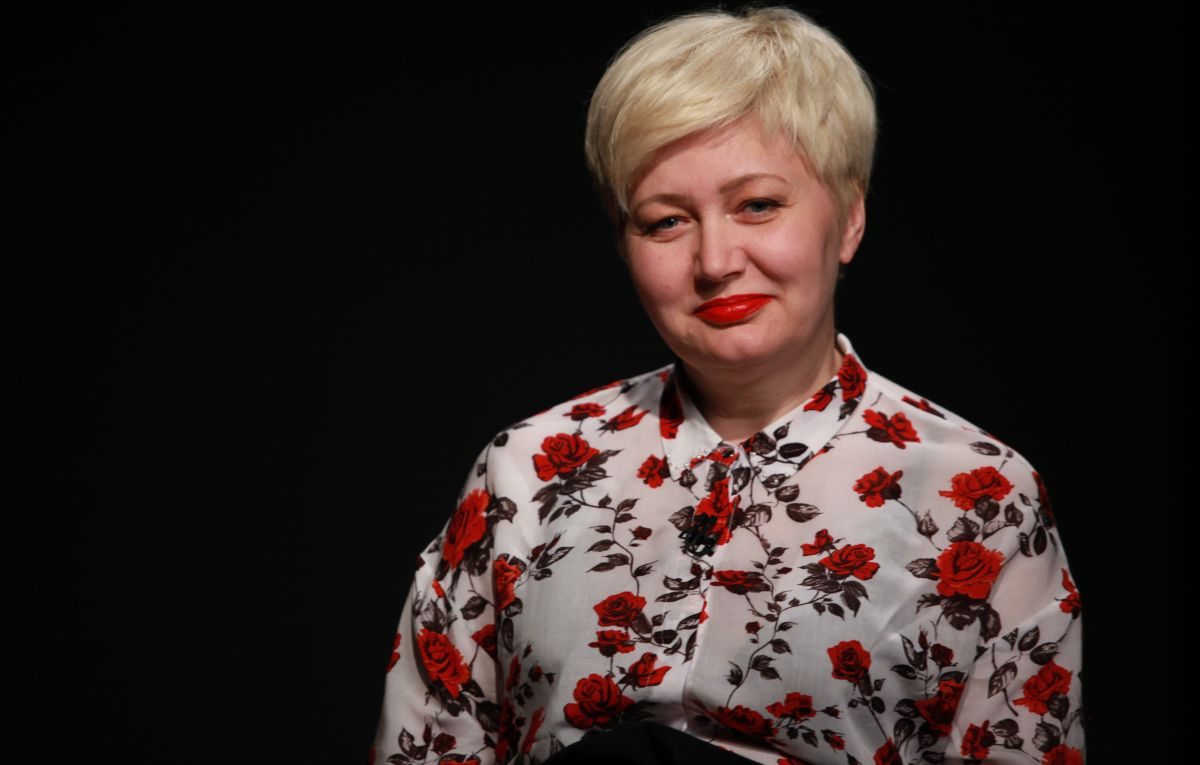
According to Nitsoi, we must raise children in an environment of patriotism and resistance to 'Russification'.
In a new episode of the program 'Antypody' on the Iceland channel, Ukrainian writer, teacher, public figure and member of the National Writers' Union of Ukraine Larysa Nitsoi spoke about Ukrainian self-identity, raising children, multilingualism and 'porokhoboty' (Poroshenko loyalists).
What is the biggest obstacle to us becoming a conscious Ukrainian society?
Identity. Lack of understanding of our identity. Everything comes from that.
But why don't we understand? Are these external factors, or internal ones, or are we just stupid?
They are internal. We are not stupid. Everything is being done so that Ukrainian identity does not exist.
Who is doing it?
The authorities.
Why would the authorities need this?
You have to think. The first reason is that there are people in power who do not need identity, and they were raised in such a spirit that they are now the way we are. I say we are losing this war, and I blame teachers. I am a teacher myself. And I say teachers are to blame. We raise children like that, or more precisely, we don't raise them at all.
And my, let's say, discovery was this: I read a few works by Yevhen Malaniuk, and suddenly, though not really suddenly, as if I already knew, you know how it is, you read and read and didn't perceive it before, and then bam, Malaniuk clicks. He was an aide-de-camp to a general of the Ukrainian People's Republic army, and he was already in emigration and wrote a lot about Ukraine.
And he writes that he is criticized for speaking sharply about Ukraine's enemies. Writing from emigration, 100 years ago, that is in the 1920s, when he emigrated. Further he writes that Ukrainians came to love those locals, the population who stayed in Ukraine, who came to love those who smooth everything over, who do not call things by their names, but speak vaguely and smoothly, the main thing being not to quarrel.
I apply all these words to our time now; it is all as if about us. And what else he says: he laments that they lost Ukraine, the UPR army lost Ukraine, because he says we lost the struggle, since we did not fight for it. We sympathized and directed our views toward the leaders, but the leaders were rotten. The leaders were rotten. And we lost this battle, he writes, ensigns, we lost, lieutenants, we should have taken it all into our own hands instead of nodding at the leaders, although we saw they were like that.
And he actually acknowledges that they lost at their level, because they did not fight for it enough, the way they should have fought for their country during the war. And why do I draw this parallel? I say the same now, 100 years later: we teachers lost this war, we did not raise this authority. Or more precisely, we raised it in such a way that it comes to power and Ukrainian identity means nothing to it.
That 'kakaya raznitsa' ('so what's the difference'), that is precisely because teachers did not raise children so that it would not be 'so what's the difference'. Yes, teachers in our country provide education: one plus one equals two, then comes higher mathematics, the rules on how 'ne' is written with verbs. Fine, but when will you, dear teachers, say that our country has enemies? And one must fight the enemies. But there is nothing like that in education.
But teachers are not allowed to say such things to children. And how do we define our identity, and where will we get the authorities who will build this country as a country of Ukrainians, and that is identity? If we raise our students so that they come to power and say, 'we are a multinational country'.
So Israel is the country of Jews, and its basic law says exactly that it is the national state of the Jewish people. Armenia, whose country is it? Ask any Ukrainian, they will say 'Armenians'. Georgia, whose country is it? Georgians'. France, whose country is it? The French'.
Well, it is not all so straightforward.
Well, we are not getting into this ethnicity right now, but when you ask Ukrainians, 'Ukraine, whose country is it?', they will all say, well, not all, but very often you will hear, 'well, we are a multinational country'. And we do not have this upbringing that 'Ukraine is the country of Ukrainians'. I see it in the children.
In your view, how effective was the method of instilling patriotism that existed in the Soviet Union? Because, let's say, I more or less experienced it normally, I was 15 when it collapsed, and I remember that everyone was a patriot, well, 99%, and about that percentage who were dissidents, we actually just did not know. Everyone was a patriot.
Well, we actually transferred that Soviet patriotism onto Ukraine and became patriots of Ukraine, but we understood what it means to be patriots.
You said this system was effective, but why was it effective?
The very instilling of patriotism was effective. Not that it did not have distortions. Certainly they lied. Well, we are not talking about that now. We are talking about the method, about how love for the homeland was promoted, what films were made, what the cult of books was. Yes, we mock it now, that everyone had the fashion, every apartment had to have a cabinet on whose shelves rows of books gathered dust.
They did not read those books, but it was fashionable. Some did not read, and some did. And it was propaganda. Books about heroes, Soviet ones. Does the method work? It does. We need to do the same: publish more books about Ukrainian heroes and promote reading them. These were effective methods, despite having to sit through boring, tedious political information sessions.
Of course, not everything should be adopted. But the methods of instilling patriotism in the Soviet country were effective, and they should not be discarded; they should be used in modern educational work. Unfortunately, this is not being done.
Do you remember yourself in Soviet times?
Yes.
Were you a patriot of the USSR? And what contributed to that?
Yes. At school we read texts about which country is the most just. I still remember the text about decaying capitalism, imperialism, America, where a poor Black woman could not enter a shop for white people, because there was racial discrimination, and this woman was under that shop, she needed water to feel better, but no one gave her water, they did not let her into the shop, and she died somewhere under the shop.
Such a very 'heart-wrenching' story. And I remember, what scoundrels they are, how bad everything is for them, while our country is so just, how everyone cares for everyone. In a word, I was a patriot, I was proud when there was the Olympics, when our athletes carried that red flag and our anthem played. Goosebumps ran over my skin, finally ours had waited, pride was there for all those images.
Because from school on we were told how proud we should be, what a cool country we have. And we also had news. News that spoke of achievements in our country. Which today, as a rule, is absent. Mostly all our news is: killed, shot, ran over, crashed, overdosed, died, a woman stabbed her children, drowned her children. We are a very depressed nation. We have a lot of post-traumatic syndromes.
We now talk about the PTSD of our soldiers who return from the war, and that they need psychological help. Wonderful, good that we talk about it. How well we do it is another matter, but people talk about it, and there is an understanding that they have post-traumatic syndrome. But we are a nation, a walking nation of constant post-traumatic syndromes that affect our contemporary life.
And humanitarian policy, the task of humanitarian policy, is to work so as to heal, in quotes, these post-traumatic syndromes. Does this mean the whole nation must be sent to hospitals? No, of course not, but there are humanitarian tools, influences, methods; one of them is positive news. We have a sense of inferiority as a whole nation, we know very well that we have this Ukrainian inferiority complex. So that is post-traumatic syndrome.
This is the result of being bullied for years. If a child is constantly bullied at school, they walk around like a hunted animal. You can see it in that child. This is the result of bullying. And we are a whole nation. For centuries we were bullied. That inferiority complex is pure, natural PTSD. How is mass inferiority treated? In the news. We need to show our achievements, not just who stabbed whom. For example, I am interested in what achievements we have in science. And we do have achievements. But we do not talk about them, we talk about accidents and so on.
You were an aide to MP Ihor Hryniv, who was effectively Poroshenko's right hand. Did you maintain relations with him?
At the level of 'hello, hello, how's life'.
Didn't he offer you work for the EU?
Well, no. We actually parted ways a bit over our political views.
With him?
Yes.
Is he offended with you?
No. I think not.
Well, I think an extra fighter of your stature would not hurt. They like to gather people around themselves with clearly expressed nationalist rhetoric, do they not?
I think Petro Oleksiyovych looks at people like me as if we were dust. That is my steady impression, and my observation of high-ranking officials and politicians.
But he has a lot of patriots of various stripes around him.
Exactly. He uses them to achieve his goals. That is why he gathers them around himself.
Don't you think he is a Ukrainian nationalist?
No, of course not.
Then who is he?
Him? A handsome actor. Well trained.
A Ukrainian speaker.
No. He is Russian-speaking.
But he speaks in Ukrainian now.
That does not mean he is a Ukrainian speaker.
And do you have some, excuse me, personal grudge, I see, something like that?
They already accuse me of that, and my husband, by the way, they say you have something personal. Many of my friends will again sit in front of their screens, rewatch this and get angry at me again. Well, because I am saying things against Petro Oleksiyovych. I have nothing personal. I do not know him, I am not personally acquainted with him.
I just imagine the picture: Petya and Vitya are sitting, like you and me, and Vitya says: Petya, you take the patriotic electorate, and I take the electorate oriented toward Russia. And we work, we do not let anyone else onto this field, we work in Ukraine for these two electorates. I won't smear you, and you don't smear me. But we work separately, each for his own electorate.
If you take all those channels, NewsOne, 112 and so on, the policy of these channels was not to attack Petro Oleksiyovych. And even once, on one of the channels, there in the green rooms, while you are invited to all those broadcasts where you will be beaten like a sack, like a boxing bag, you are invited there to be thrashed.
And you sit, waiting until they call you into the studio, and listen to conversations between camera operators, journalists and editors, and they don't even hide it. And one guest comes in and says: 'Oh, you were on one channel, and now on this one. What was the editorial policy there, for example, at NewsOne? Were you pressured a lot there, were you censored a lot?'.
No, you could talk about anything except Petro Oleksiyovych. That is just how journalists talk among themselves. Petro Oleksiyovych's channel does not attack Medvedchuk. Even now. Medvedchuk's channels do not attack Petro Oleksiyovych.
So why go there, please tell me?
Those who ask me this do not have the same attitude toward these channels as I do. Well, I think you consider them their channels, hostile ones, right? But I do not think the channels in Ukraine belong to anyone. They are all Ukrainian channels. This is the public space of Ukraine.
As you yourself say, you are invited like a punching bag to scare the gullible electorate; so what is the benefit in that?
This is the public space of Ukraine. You asked me, and I am explaining.
Ms. Larysa, let's set one rule: if I disagree with something, it does not mean I categorically disagree with you. I am telling you I am simply trying to clarify and find out some details. That is why I am asking you these questions. That's all. Please don't take me as an enemy, if you can.
I am explaining the details. Maybe it is not your personal attitude. I think this is the Ukrainian public space. And if in this Ukrainian public space cockroaches have started somewhere, that does not mean I should not go there and poison those cockroaches with dichlorvos.
What is wrong with the education system in Ukraine? Name the main flaws.
It is the approaches to forming curricula, and in general the approaches to upbringing, which we do not have. Our legislation has even been changed so that the laws no longer contain the word 'upbringing', the process of upbringing. We only have an educational process. We have providers of educational services. But this is very bad, because every country in the world raises its citizens. There is a concept of raising one's own, not 'population' as we have, but citizens.
We raise children, or rather, we don't raise them; we provide educational services and produce a universal workforce. Ukrainians can live anywhere. On the one hand, that is very good, but they do not care about Ukraine. Our children are not raised as citizens who owe something to their homeland. Everyone talks about rights and very little about duties.
And in other countries, take Poland, for example. In Poland everyone is taught from childhood: 'Who are you? You are a Pole, little one'. And in this little verse, children are necessarily taught at the end: 'You owe something to your Poland', and little Poles say: 'I am ready to give my life for Poland'. This idea, this thesis runs vertically through all Polish education. We don't have anything like that.
What's more, when I come to the Ministry of Education, under several education ministers, I am not talking about Tabachnyk, I am talking about our patriotic ministers, like Lilia Hrynevych, for example, everyone considers her a great patriot. I came to her ministry with many proposals, came with activists, we held meetings there attended by the minister and by her deputies Khobzei and Kovtunets.
This whole educational elite, the top brass who attended these meetings, they all steamrolled us, the Ukrainian civic activists who were trying to save Ukrainian education, saying that we don't have such patriotic upbringing, such a vertical as in Polish education, for example. They told us we were making everything up. I gave them concrete examples, showed them their curriculum, where they study the novel by Stefan Żeromski.
Stefan Żeromski describes the struggle of Polish youth against Tsarist Russia, against Russification, against the imposition of the 'Russian world', against the erosion of Polish identity. There was an uprising. He describes it in his novel. It is a mandatory work for Polish children to study. We take the curriculum; these are tables, almost identical, the same in ours and in the Poles' or anyone's. These are tables for the teacher.
The topic is in the first column, the second column is what children should analyze, which questions and topics need to be discussed, and the third column is what children should ultimately know and be able to do. And so I open the Polish curriculum. In this curriculum for teachers, the first column is Stefan Żeromski, and the second column for the teacher is: discuss with the children what Russification is, what Polish identity is; they call it 'tożsamość narodowa'.
Understand the methods of struggle of Polish youth against Russification. Mandatory work, mandatory topics for discussion between teacher and students. I could hardly believe my eyes. I read: 'Russification'. We often share words with neighboring peoples, but they do not always have the same meaning.
I called my Polish colleagues and asked, what is 'Russification' for you? They said, the same as for you. I said, and do you study in class what Russification is and the methods or forms of struggle of Polish youth against Russification? They said yes, we even write essays about it. What's more, I went further. They said we also watch films. I went to the website of the Polish Ministry of Education. There is a list of mandatory films for Polish children to watch.
And there is also this film by Stefan Żeromski. I opened the film to watch it, a wonderful art film, beautifully shot, showing a Polish young gentleman running through the marshes, a youth with a gun, a hunting rifle, servants behind him. He shoots a duck, then something else. His parents tell him, enough. They pull him out of those reeds, wash him, dress him nicely, and send him to study in town. He arrives at the gymnasium and there Russification begins.
The Tsarist governor-general begins to speak in Russian, 'gentlemen students'. And you must watch this film. At meetings with teachers I show excerpts from this film, including these nonverbal and verbal elements in the film. The children watch.
When Russian begins, the actors play their characters so that during the Russian speech one raises an eyebrow, another smirks, snickers to himself, they exchange glances, as if to say, what nonsense he is talking. And such touches run through the entire film. That is, children are taught a contemptuous, specific disdain toward everything Russian.
Children must watch this film, then compare it with the novel they read, then write in an essay what is better or worse about it, and analyze all of it. When I show all this to our teachers, how citizens are raised in Poland, they are simply speechless, because we don't have anything even close to it in our programme.
I set myself the goal of finding out whether Ukrainian identity is studied somewhere in some works, since the Poles have theirs. I went through the entire curriculum. I found it. Well, identity is absent; they replaced it with Ukrainian mentality. And it is Ukrainian mentality that our students study using the example of 'Kaidash's Family'.
So, let's compare: they use a work about struggle, and we use a socio-everyday text. And what is worst? Let's open the curriculum: what should teachers discuss and study with children?
It is a great novel, beyond doubt, but you won't teach struggle using it. It is more about internal discord.
We do not teach struggle. That is the point. The Poles teach struggle, methods and forms of struggle for their identity; we don't teach any struggle at all. And now attention, let's open the curriculum, where it says for children: discuss the basic mental characteristics of our people and adapt them to modern society.
For successful adaptation in modern society. I have a question: in the wonderful work 'Kaidash's Family', what should we successfully adapt to modern society?
So we adapted everything successfully.
Do you understand? It is the task of education to adapt these squabbles. And this is written in black and white in the curriculum.
But I am saying, we adapted.
When I show this to teachers, we think we are raising our children as patriots, but when I show the approaches to curriculum formation abroad, or the Czechs and ours, it is heaven and earth. A question arises for me. Why? We adopt everything from the West.
We adopt everything, we adopt their legislation, we adopt their trends; we have adopted from them beautiful schools with little chairs and desks, wonderful, with cushions, I like that very much. You walk into these cheerful classrooms and see a completely different attitude to education among children.
But I have a question: what about the curricula? Will we, like the Poles, study our identity? Will we teach Ukrainians their identity? This is exactly what we have been discussing at the Ministry of Education for more than a year. But the ministry says we are a multinational country, so we cannot teach about the identity of Ukrainians in Ukraine.
If you compare the ministers who served under Poroshenko and those under Zelensky, are there any differences? Listen, I don't want you to focus on specific figures right now. That is, if someone likes Poroshenko more, someone likes Lilia more, someone likes Shkarlet less. What has changed in these plans you have just told me about?
I care deeply about and worry for patriotic upbringing. I think we don't have it. It never appeared.
So these narratives you are talking about do not exist.
They do not. It keeps dissolving.
Do you think it is simply negligence, or is someone paying off 'kotlety' so that this does not happen?
It is deliberate. It may sound funny, but I have the general impression that somewhere some kind of brain center works specifically to do this to our education, to lay such mines.
So ideological sabotage, which has been described in Russian special services' books for a long time.
It is sabotage. It is not because we are somehow foolish or stupid; it is targeted work against Ukraine and Ukrainians who are growing up and, as I have already said, are not being raised as citizens of their country.
Why does Ukraine not have the right to multilingualism? Why is Ukraine not Switzerland, why can't we have that?
Ukrainians, due to their colonial and genocidal past, have weak linguistic resilience. Peoples who were colonizers have strong linguistic resilience, peoples who did not experience genocide. We, unfortunately, are both at once. Linguistic resilience is a term coined by our Ukrainian linguists 100 years ago, for which they were later shot.
Linguistic resilience is strong and robust among strong peoples. Linguistic resilience is weak among weak peoples who cannot build their country, their economy, and assert their identity. Since we have weak linguistic resilience, linguistic diversity in Ukraine's public space, let's say, will finally finish off the weak resilience of Ukrainian speakers and of the Ukrainian language. Accordingly, it will overcome the Ukrainian worldview, and this will not be Ukraine.
We will never build a successful Ukraine if we do not affirm our identity on our own land. And this happens through language.
Article ten of the constitution. What do you like or dislike about this article?
It is all fine. Well, of course, it would be very good if there were no line about the Russian language, but for that line about the Russian language there is a ruling of the Constitutional Court. That ruling was adopted on 14 December 1999. Deputies appealed to the Constitutional Court, and the Constitutional Court's ruling, I emphasize, is binding across the whole territory of Ukraine, for all people, and is not subject to appeal.
So regardless of whether you are the president or just an ordinary citizen of this country, you must comply with the Constitutional Court's rulings. What did the Constitutional Court say about this article in 1999? It said that the Ukrainian language is the mandatory language for use in Ukraine's public space.
The languages of minorities, including Russian, may be used. Perhaps this 'allows', meaning we won't persecute you for it or kill you, as you did before, but the mandatory language is Ukrainian. The word 'mandatory' is not said of any other language. Only of Ukrainian.

Russian Attacks in Dnipropetrovsk Region: Two Killed, Seven Injured

Defense Forces Strike Four Russian Drone Control Points in Past Day, Including in Berdiansk

Britain Threatens Sanctions on Kremlin-Linked People; Poland Ready to Hand Ukraine Ammunition

Russia says it has completed "planned exercises" in the Black Sea

MVD: Fake Riots With Prop Blood Were Being Prepared Near Presidential Office

Law Enforcers Name Another Klitschko Deputy as Suspect

Berlin Holds Protest Against War in Ukraine; EU Prepares for Possible Russian Halt of Gas Supplies
North Korea Fires Ballistic Missile Over Record Distance in Five Years
Irish Fishermen Force Russia to Postpone Naval Drills

US sanctions in case of invasion of Ukraine could completely destroy Russia's economy, NYT reports
