
Lyudmila Buymister on the energy crisis: questions about Herus's competence
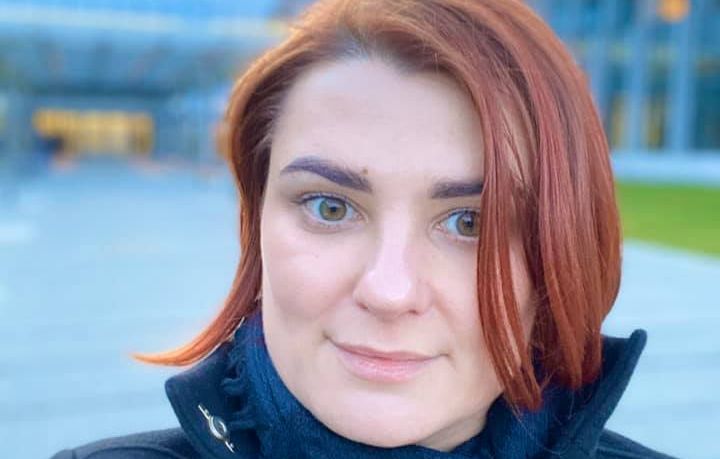
On June 3, TK Media published a conversation recorded inside the Verkhovna Rada by journalist Oleksiy Lipovetsky. In the video, “Servant of the People” MPs Andriy Herus and Andriy Zhupanin, head of the energy and housing committee and a member of that committee, discussed during a parliamentary session how to “f*ck the greens [investors]” and personnel changes in the committee: that day, People's Deputies Inna Sovsun (“Holos”) and Maksym Yefimov (“Dovira”) could become its members, which, judging by everything, did not delight the participants in the conversation.
Neither Herus, nor Zhupanin, nor the “Servant of the People” faction publicly commented on the published conversation. The energy committee chair himself “went into hiding” that day and even refused to appear on air with journalists he had previously agreed to meet: Roman Skrypin, who had earlier announced Herus's appearance, reported that the “16+” program was postponed at the guest's request.
Only “Servant of the People” MP Lyudmila Buymister publicly reacted to the publication: the lawmaker stated that she was ashamed of her colleagues and of the position they demonstrate toward investors.
All of this is happening against the backdrop of a deep crisis between the government and investors in green energy, who have not been paid under the feed-in tariff for almost 4 months. The total debt to “green” producers already stands at 14 billion hryvnias. In the event of international legal proceedings, Ukraine could “end up” owing 10 billion dollars.
About this, as well as the upcoming Kyiv mayoral election and the law “On Digital Assets”, TK Media spoke with Lyudmila Buymister, People's Deputy from “Servant of the People”.
Background: Lyudmila Buymister — 34 years old, MP from “Servant of the People”, born November 5, 1985 in Moscow. Graduated from MGIMO. While still a student, she began working as an assistant to the chief lawyer of the oil company YUKOS, taking part in preparations for the company's merger with Sibneft (M&A). Graduated from the London Business School with a degree in “Corporate Finance: Business Valuation, Risk, Restructuring” (UK). From 2012 to 2018 she served as director and chair of the supervisory board of the Gdańsk Shipyard (Poland), and as a member of the supervisory board of the Hungarian metallurgical plant ISD-Dunaferr. She headed GSG Towers, owned by the Donbas Industrial Union. Since 2018 she has worked as a consultant in alternative energy and sustainable development. In July 2019 she was elected to parliament in single-mandate constituency No. 223 (Shevchenkivskyi District, Kyiv). Married, mother of two children.
“If we go on a two-month vacation without adopting the necessary legislative changes, we may as well not come back to parliament”
— Last week our correspondent managed to film in the Verkhovna Rada the well-known conversation between your colleagues Herus and Zhupanin, who discussed, word for word, how they intend to “f*ck the greens”. You wrote on your page that you are ashamed of your faction colleagues and of the position they demonstrate toward green investors. Can you explain what the committee's position is and what the word “f*ck” means in their interpretation?
— I wouldn't presume to say what it means in their interpretation, but in principle the entire position and policy of the energy committee over the past 9 months quite clearly shows that investors in green generation are not welcome in Ukraine. Moreover, when we managed to reach a very complex agreement under which investors did agree to a voluntary reduction of green tariffs, and I submitted the corresponding bill back in December last year, this bill was, in essence, killed by the committee.
All of this looks like an attempt to bring the situation to an irreparable crisis, since at the same time investors in green generation have not been paid at all for 4 months now. The total debt to “green” producers is already around 14 billion hryvnias. They are simply being pushed out of the market today, and I won't even go into any further development of the industry.
— The conversation we filmed is an example of a classic “backroom deal”. What is the committee's position based on, and whose interests might the People's Deputies be representing?
— To answer that question, one needs to explain a more complex story: how the energy market works today and who the main beneficiaries of the market are in the current situation. First, we have several segments of the so-called markets.
“Green” producers can only sell to the state enterprise Guaranteed Buyer (SE Guaranteed Buyer, — ed.). Just like Energoatom, which sells them 85% of the electricity there. Then this entire volume goes from the Guaranteed Buyer to the so-called day-ahead market (DAM, — ed.) and tries to sell this electricity there.
Day-ahead market – competitive selection of price bids from suppliers and buyers one day before the actual electricity supply, with prices and supply volumes determined for each hour of the coming day.
However, there is also a segment of unscrupulous traders who conclude fictitious contracts and enter the market with underpriced offers at reduced prices, as a result of which this entire volume of supply cannot be sold to the final consumer. When this volume is not sold, it automatically falls onto the balancing market, where under market rules a 45% discount applies, and these same fictitious traders buy electricity from the balancing market at a 50% discount and then sell it to the final consumer. This earns more than 1 million dollars a day, while for the system it generates losses of 3.5 billion hryvnias per month. For May alone, about 3.5 billion hryvnias in additional debts accumulated there. This situation benefits the chain of fictitious traders, at the end of which stands the same final consumer. That final consumer is Centrenergo. They are all known.
— Centrenergo, which, according to journalists' investigation, is now controlled by oligarch Ihor Kolomoisky?
— There have been some changes in the composition of the Board of Directors; I don't know how much this has affected control overall, but recently there was information in the media that 4 billion hryvnias had been drained from Centrenergo.
— Let's clarify for our readers what “green energy” is. Green energy is renewable energy, right?
— Yes, in essence it is energy from the sun, wind and “small hydro”, which is environmentally friendly and does not use water resources as intensively.
— The claims Herus makes are that green energy is sold at too high a tariff. What determines this tariff?
— This tariff is set by law. There are historical reasons why such a tariff was adopted; it has already been reduced several times, and amendments were made to the law “On the Electricity Market”. But if you look at the history of all countries that introduced new technologies, all of them initially had so-called state subsidies for green energy. This is explained by the fact that initially the share of green generation in the energy balance is quite small, while the upfront investment costs in this sector are very high. Today, 10 billion dollars have been invested in our green energy sector and, in essence, apart from one hydroelectric plant and two nuclear units, this is the only generation that has been built on the territory of the country during Ukraine's independence.
— In what year did green investors enter?
— That was 2011–2012, but those were local investors; international investors at that time did not believe in the Ukrainian market, and serious international investors began entering in significant volumes from around 2016.
— Who among the main players is now part of this pool of green investors?
— It's important to distinguish wind and solar here. Today this pool includes Ukrainian companies. DTEK has a 25% stake. There are many small local players in solar generation. There is Scatec (Norway), which represents the interests of a large foreign investor here. In wind energy, it's Vindkraft, which has Swedish roots. NBT.
But even Ukrainian companies are financed mainly with fairly cheap money from international banks. These are the EBRD, JBIC, OPIC — this is a large pool of indirect foreign investors, and the banking sector, which provided loans to state-owned Ukrainian banks, which in turn issued loans to green generation.
Moreover, not only medium-sized businesses but also households are investing in this sector. Many have installed solar panels on their backyard plots and house roofs; this is about 10 or 17% of all generation… 17 thousand households.
Another reason it is so important to prevent a default in green generation is that a default would essentially trigger a collapse of our banking system as a whole, because the loans issued by state banks to green generation exceed these banks' own capital. That is why it is so vital to reach an agreement on terms that will allow investors to service these loans.
— As I understand it, Ukraine also has international obligations to investors. What amounts of compensation could be due in the event of a default in the energy sector?
— Ukraine has international obligations, for example under the Association Agreement. Ukraine also has international and domestic obligations under the energy strategy, under which we must increase the share of green generation. But Ukraine also faces a huge risk under bilateral investment protection agreements: if the conditions under which an investor entered the country are changed not by the investor's will, the investor has the right to demand the return of its entire investment.
That is, we are talking about a maximum risk of 10 billion dollars, which investors could win in court within a few years. And then the rhetoric that we can refuse to enforce these decisions is quite dangerous. We would look exactly like Gazprom, which refused to comply with court decisions until the very end.
— The background is clear. In your publications you say that the government “still does not understand how critical the situation we have found ourselves in is”. What does this criticality consist of?
— The criticality lies in the fact that our entire energy system depends on who runs out of patience first. The first creditor to whom there are overdue obligations and who files a lawsuit will trigger a chain reaction, and like dominoes, the entire Ukrainian energy system will simply collapse and go bankrupt. Private creditors will not just sit and wait while court proceedings drag on; they will file claims and put forward their demands later. Today the debt to green generation is nearly 14 billion hryvnias. Energoatom owes 3 billion hryvnias just for nuclear fuel supplied, and another roughly 6 billion hryvnias for goods and services. This means a repair site de facto, which must be done before the heating season begins. So far Energoatom's contractors are working “on trust”, but this will not last long. And if we do not carry out the repair work, we may even disrupt the heating season.
— How much time do you give the government and parliament to find and implement solutions?
— As for the “greens”, we need to make a decision by the end of this month. Because if we go on a two-month vacation without adopting the necessary legislative changes, then, by and large, we may as well not return to parliament. By that point all irreversible events will have already happened. If we talk about settling the market situation as a whole, that is work that will, of course, require more time. Part of what can be done at the level of regulatory acts has already started to be implemented, but amendments to the law will still be necessary. In principle, we can manage to do this by the end of June, at least to introduce the first changes.
— Are there any prerequisites that they will be introduced?
— The ministry (of energy, — ed.) and the Cabinet of Ministers in principle understand how complex the situation is. I don't fully agree with their decisions, which are partial in nature, but I understand the whole complexity of the field, including the lobbying environment in which they work. But whether parliament understands it — that's a big question for me. It seems to me that parliament still does not understand how urgently these decisions need to be made and how quickly it needs to respond to the situation.
— Is the energy committee the stumbling block? How much is it controlled by Andriy Herus?
— It's hard for me to say. If you analyze the committee's work over the last few months, the committee has in principle made no decisive decisions. The only committee meeting that did take place, which was aimed at discussing anti-crisis measures, did not end with any clear resolutions, and nothing happened after it. So I do think that each deputy who is a committee member will have to assess the criticality of the situation for themselves and make an individual decision on how willing they are to take responsibility for what happens to the market.
— Is the current committee composition capable of taking on this responsibility, or does it need personnel changes?
— You know, I am a business person, so I always judge by results. If over the course of 9 months we watch the situation deteriorate and nothing is done to improve it, then a question arises about the competence of the people who lead this process.
As for the committee itself, there are many professional people in it who deeply understand the industry, who are ready to take responsibility and ready to pull Ukrainian energy out of the crisis. Unfortunately, today they are in the minority. At least, they were until now. I very much hope that something will happen to change the position, first of all, of my faction colleagues.
— We've covered green energy; let's talk about nuclear energy. You have repeatedly pointed out that Ukrainian nuclear power plants are operating in a maneuvering mode. That is exactly what caused the Chornobyl disaster. What is happening now with Ukrainian nuclear energy?
— Today we are seeing the consequences of the thoughtless policy pursued over the past six months, and at the same time a very sad consequence, because the units that were operating at half capacity have now been placed into reserve. This is happening for two reasons.
First and foremost, of course, this is the decline in consumption, caused by the economic crisis and the drop in industrial production that we observe in the country. And also the fact that we simply need to put them in order and then think about how to find solutions for balancing capacity. Let me explain what I mean. Not all energy sources, not all types of generation, produce electricity on the same schedule. The most stable source is the atom; it is baseload generation. The most unstable source is the “greens”: the sun shines — we produce a lot; there's no wind — we stand still and do nothing.
To balance these unpredictable peaks, Ukraine needs either hydropower or coal generation. There is not enough hydropower, because due to a very dry winter our reservoirs are no more than 60% full. We will feel this strongly in the agricultural sector this summer as well. Because of this, we need more coal in the balance to balance the “greens”, or we need to shut down green generation. But again, under today's version of the law, even if we shut down green generation, we will have to pay investors 100% compensation. So, from an economic point of view, shutting down the “greens” is today the most painful scenario for the financial balance of the system.
And Energoatom has another problem. In essence, Energoatom today is a bank financing all the deficits of the country's energy system. First, its tariff includes only operating expenses and does not include, for example, the costs of nuclear fuel disposal, nor the costs of mothballing the nuclear units that will soon begin to be decommissioned. But at the same time Energoatom is not given direct access to the market, i.e., it has responsibility but no right to earn, so all its electricity is simply taken from it at the regulated tariff of 56 kopecks, and then they hope that the Guaranteed Buyer will sell it at the maximum price. The only problem is that the Guaranteed Buyer has no incentive to sell at the maximum price; it has an incentive to sell only the maximum volume, which is why very often even the Guaranteed Buyer itself dumps prices to get rid of the entire volume.
If you are a normal enterprise director, creditors you don't pay are hounding you every day, the trade union comes for wages — you have much more motivation to sell your product as expensively as possible. But if you took it at a fixed price, handed it over at some price, and passed all the losses you generated on to Ukrenergo, and under the law the NEURC requires you to include all this loss, the compensation for all of it, in Ukrenergo's tariff, then what incentive do you have to sell at a higher price? None at all. That is precisely the main problem of the market today.
The largest players do not have access to all market segments. Energoatom and the “greens” do not have access to all market segments. If we talk about competition rules, and if we want to create a competitive market, then all types of generation must have access to all market segments. Energoatom should enter both the DAM and the bilateral contract market. Then they could calmly sell their volume and even stimulate the development of certain sectors of the economy. But again, at a fair price, not a regulated one. If the “greens” enter the market, foreign companies will come in as well, for example those that have policies stating they must use only green electricity. There are quite a lot of such international corporations. They will buy from the “greens” at the green tariff under bilateral contracts. And on the DAM, the “greens” will sell their own electricity themselves and accordingly receive at least the money at the standard DAM price, while the Guaranteed Buyer will only have to compensate them for the difference between the legally established green tariff, which we are about to reduce, and the market price.
And then we will not have such wild distortions, such wild manipulation of prices. Right now we see that since the new market model was introduced, the price constantly jumps up and down depending on whether the two largest coal players enter the market or not.
— Regarding grid balance. Am I right that this issue is directly related to the level of wear of the power transmission grid, which, by your assessment, is 80%, and in some places 100%?
— Physical balance of generation is one question. The grid is a related question, because depending on how modern the networks are, different types of generation can get more stable and higher-quality connections to these networks, plus cheaper connections for consumers. But it does not have such critical significance for the physical balance of generation. What else it affects is the cost of green generation, for example. If our networks are modernized with cheaper connections, the company that builds and generates new wind or solar capacity would not need to build this infrastructure itself. Today, in fact, every project includes the cost of connection in its own cost price. This is another reason why we have such high green tariffs in reality, because neither the state, nor the transmission system operators, nor the electricity distribution system operator provide green generation with connections, transformers, lines, etc.
— What is the threat posed by this level of wear?
— The level of wear of the grid threatens rolling blackouts, and consumers will suffer first. Generating companies will certainly suffer too, because during rolling blackouts generation will be automatically disconnected, as the dispatch center operates that way. If part of the consumers are disconnected, part of the generation will be disconnected automatically. It's clear that in such an unforeseen situation this will lead to physical imbalances.
— How much time is left, and how much attention is the government paying to this problem?
— The regulator (NEURC, — ed.) has noticed this grid problem and decided to implement Ukraine's energy strategy, under which in 2020 we must introduce a stimulating tariff for electricity distribution. But it is being done in a very specific way; it feels like just to report back, since the proposed methodology does not meet international standards at all and in fact devalues the state regional power distribution companies, the 6 oblenergos under the control of the State Property Fund. If they are put up for privatization, under the methodology proposed by the regulator they could be sold for 1 hryvnia, because the return on the existing asset base is destroyed there.
— What position do European partners take on this, given that many foreign investors are part of this group?
— European partners were directly involved, for example, in the negotiation process with the greens. After the legislative changes that had been agreed with the entire market failed to pass, a formal mediation process under the leadership of the Energy Community Secretariat began in December last year. In the course of these negotiations, a lot of mechanisms were worked out, for example changing the operating mechanism of our PSOs (compensation for public service obligations, in essence subsidies to the population and the greens). Mechanisms and forecast scenarios for the balance were proposed. In principle, both Mr. Kopach personally and the entire Energy Community Secretariat are closely following everything that is happening.
They understand what kind of crisis is unfolding in our country, but as partners and diplomats they always express their position of extreme concern. This position has been conveyed… at all levels. Today I know that a report from the IAEA (International Atomic Energy Agency) is also being prepared, because, as I have already said, our energy sector is specific in that 15 nuclear units are located on our territory. Neither our western nor our northern neighbors and partners will simply allow this sector to be destabilized and go bankrupt. In fact it poses a threat to the whole world; it doesn't matter which part of the planet you live in — there will definitely be nowhere to run.
“The condition of the Paton Bridge is causing great concern”
— Let's talk about Kyiv. Judging by your activity as a majoritarian MP, based on news feeds, you rarely comment on Kyiv politics. But over the past week you have become the source of two news stories in the capital. You appealed to the Prosecutor General regarding Hostynnyi Dvir and the Bolshevik factory. And secondly, you asked how much real estate the Holosiivskyi District State Administration had leased out without a tender. Against this backdrop, Davyd Arakhamia stated that a woman might try to run for mayor. Are you preparing for the “Servant of the People” primaries?
— No, definitely not (smiles). If I am preparing for primaries, it is for other ones (laughs).
— Who, in your opinion, as a Kyiv majoritarian MP, could represent “Servant of the People” in these elections?
— It's hard for me to answer that, because the party has decided to rely on a program. So far, not a single candidate running in the primaries has presented their program, so it's better to talk about specifics, about what really needs to be done for Kyiv, rather than about personalities on the principle of like or dislike.
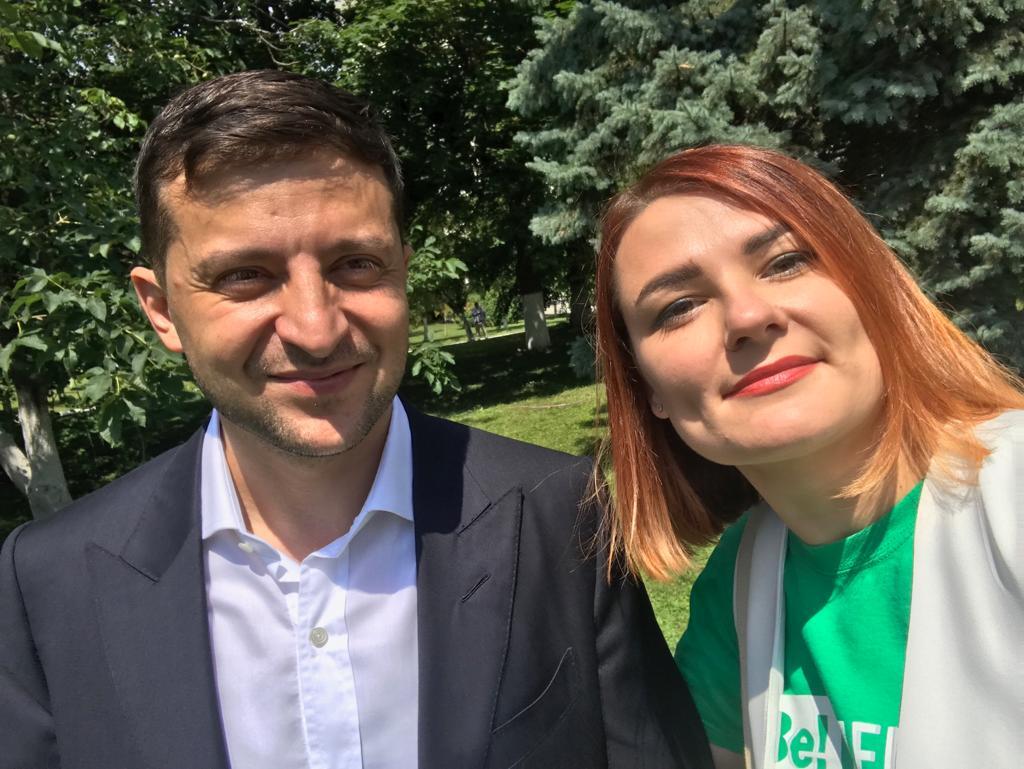
Kyiv has a lot of systemic problems that need to be solved yesterday. There are things that have been done positively, and there are many simply neglected issues that need urgent attention. Of the neglected ones, I can say that, for example, the condition of Kyiv's bridges causes me the greatest concern. Especially since, as someone who was previously close to the metal structures sector, I understand that Kyiv's bridges today are either unfinished, which creates problems for the city's transport infrastructure, or already in such a state that one can expect anything.
— Is that primarily the South Bridge?
— No, primarily the Paton Bridge.
— What is happening with the Paton Bridge?
— Back in 2017 a commission concluded that its condition is critical, but the problem is that we cannot get the 30 million in subsidies from the state budget even to carry out a detailed inspection.
— Where does the difficulty arise?
— The difficulty is that it's something like an architectural monument or “cultural heritage”… In fact, we could have taken the 30 million long ago, conducted an inspection, done initial work restoring the supports, and then at least proceeded with design work for its reconstruction. Today, pothole repairs are being carried out there, and recently, thank God, freight traffic was blocked. As for the Kyrpa Bridge, the situation is basically absurd: the Southern Railway of Ukrzaliznytsia cannot agree on the terms under which to transfer this facility to a municipal enterprise.
— Recently, new heads of district administrations were appointed in Kyiv. Your district is one of the few where the head (Oleh Haryaha, — ed.) has remained unchanged. Have you, as a majoritarian MP, managed to establish cooperation in your district with the head?
— There is cooperation in the district, there is communication. Since people were appointed by the Office of the President, it's hard for me to comment on such a decision. We work with those who are there (laughs).
I assess the work of districts in principle as follows. We have a district that brings the city the largest amount of revenue — more than 7 billion hryvnias per year. At the same time, we get back only 2.2 billion for the district. So although we are a central district... we also have a lot of old buildings and streets that require much greater funding. Within the scope of funding that exists for capital construction there, I have so far not been able to find any schemes.
Housing and utilities leave much to be desired. The entire housing and utilities sector, and everything related to the operation and maintenance of residential buildings, does not work. This system basically does not work in Kyiv, except for those buildings where there are homeowners' associations (OSBBs) and where people manage their own buildings themselves.
“Deflation is much scarier than inflation. Today we need to stimulate inflation, because inflation will encourage people to spend”
— You are advocating the issuance of hryvnias to support the population during quarantine, although the National Bank is not yet enthusiastic about this idea. Tell us what your proposal consists of?
— In fact, issuance is already happening today, it's just happening in a hidden form, in the form of refinancing state banks through the mechanism of domestic government bonds (OVGZ), the very one that caused a big stir at the end of last year and the beginning of this one. But this adds additional debt obligations to the Ukrainian economy. What am I proposing together with our Economic Development Committee?
We propose openly declaring that we want to carry out an emission, as many countries around the world are already doing today. For example, the US announced an emission of 5 trillion dollars over the next 3 years and has already issued 2.2 trillion. The European Central Bank is also conducting an emission, as is the Bank of Japan, and so on. We propose directing the emission into the real sector of the economy, namely dividing the emission program that we can afford, within 10% of Ukraine's GDP. That is already 15 billion dollars. We propose dividing this sum into 3 parts. We propose directing the first part, 5 billion, to helping Ukrainian citizens who have suffered from the quarantine and from all the restrictions imposed.
— To everyone or to specific categories?
— To everyone. That's the essence. This is a universal basic income, a concept proposed by American economists, which consists in the fact that when you give money to people, you don't throw it to the wind, but invest it in consumption, mostly in consumption of domestic products. What will people do with 3,000 hryvnias? They will go to the store, buy groceries, and pay for utilities that they haven't been paying throughout the quarantine, and that they will have to pay after the quarantine ends. Very few people will put this money under their pillow, and even fewer will deposit it in a bank, because people simply don't trust our banking system. And that gets demand going.
— Is this a one-time non-repayable assistance format?
— It's not a one-time payment; it will be paid in installments, roughly like child support. It will be paid in three equal tranches over several months to track the economic effect. For example, a family of 3 will receive 9,000 hryvnias, which is already a fairly significant sum for a large part of our country's population.
The second part is aimed at supporting small and medium-sized businesses. Here we are talking about interest-free loans to small and medium-sized businesses to pay their employees' wages, in effect to maintain employment and existing jobs. Today around 80% of the country's population is employed in small and medium-sized businesses, so we can potentially preserve 80% of existing jobs at the current level of unemployment.
The third area is financing large infrastructure projects and compensating for the liquidity crisis in the energy sector. Everything invested in infrastructure, large construction or energy, every hryvnia circulates through the economy 10–12 times, which means creating new jobs with this money supply that will serve all these industries. Moreover, this is especially relevant in the energy sector, where we have a liquidity deficit of 50 billion hryvnias. So through emission we can cover this deficit.
And here the most key problem is corruption, because we all know. A hryvnia gets thrown in and somewhere it dissolves into the system. To prevent this, there is Chinese experience of issuing a national currency unit in the form of a digital asset or electronic hryvnia, when we can track where it will be used down to the final recipient. Here modern technology helps us avoid corruption.
— What about the risk of inflation?
— That's basically a far-fetched argument. Why is it far-fetched? Because the Ukrainian economy depends very heavily on global trends, and if you look at global trends today, all Western European countries are showing inflation in double digits, which of course affects us. But if we do nothing, as is happening today, we fall into an even worse trend called deflation. And deflation is scarier than inflation.
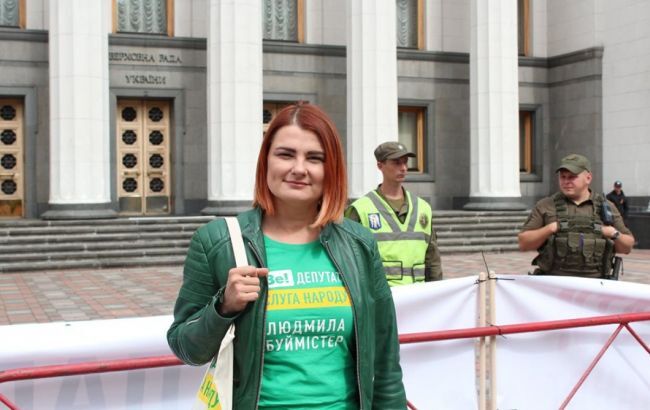
Imagine you have 1,000 dollars in savings; yesterday it was 30,000 hryvnias, today it's already 25,000 hryvnias (give or take). Meanwhile prices in stores haven't fallen; they only keep rising. We have price inflation, but economically we have the opposite, a slowdown, deflation. And we get caught in a scissors effect, where for every dollar you earned and saved, you can buy fewer groceries than you could just yesterday.
And today we need precisely to stimulate inflation, because it is inflation that will encourage our people not to keep money under their pillows, but to spend it, preferably on Ukrainian-made products. And that is exactly what will happen, because today our borders are closed and the movement of goods across the border is significantly restricted physically, so more and more Ukrainian products will be consumed on the domestic market.
— The working group meeting on this issue is supposed to take place as early as Tuesday (the interview was recorded on Monday, June 8, — ed.). What are the chances that the committee will support your initiative?
— The committee already supports this initiative. The working group meeting is intended to open a public discussion on this, first of all with representatives of the National Bank of Ukraine. We have invited a very wide range of experts and economists to this meeting, and it will be very interesting to hear their positions and opinions on what can be improved and how we can make these mechanisms more effective.
— Only the National Bank can decide on an emission, not parliament, so is this meeting just a discussion panel?
— In fact, parliament plays a key role here, because a bill “On Digital Assets” will very soon appear in parliament. And that is precisely the mechanism that will allow us to make the emission protected from corruption.
— Does the faction plan to support it?
— This has not yet been discussed in the faction. So far it is an expert discussion within our committee's working group with the authors of the bill “On Digital Assets”. However, we very much hope that after broad support from the expert community, we will move to discussion within the faction, as well as with other parliamentary factions and groups.
Volodymyr Koval

Russian Attacks in Dnipropetrovsk Region: Two Killed, Seven Injured

Defense Forces Strike Four Russian Drone Control Points in Past Day, Including in Berdiansk

Britain Threatens Sanctions on Kremlin-Linked People; Poland Ready to Hand Ukraine Ammunition

Russia says it has completed "planned exercises" in the Black Sea

MVD: Fake Riots With Prop Blood Were Being Prepared Near Presidential Office

Law Enforcers Name Another Klitschko Deputy as Suspect

Berlin Holds Protest Against War in Ukraine; EU Prepares for Possible Russian Halt of Gas Supplies
North Korea Fires Ballistic Missile Over Record Distance in Five Years
Irish Fishermen Force Russia to Postpone Naval Drills

US sanctions in case of invasion of Ukraine could completely destroy Russia's economy, NYT reports
