
MP Roman Hrishchuk: Law “On the Capital” Will Be Considered Only After the Elections
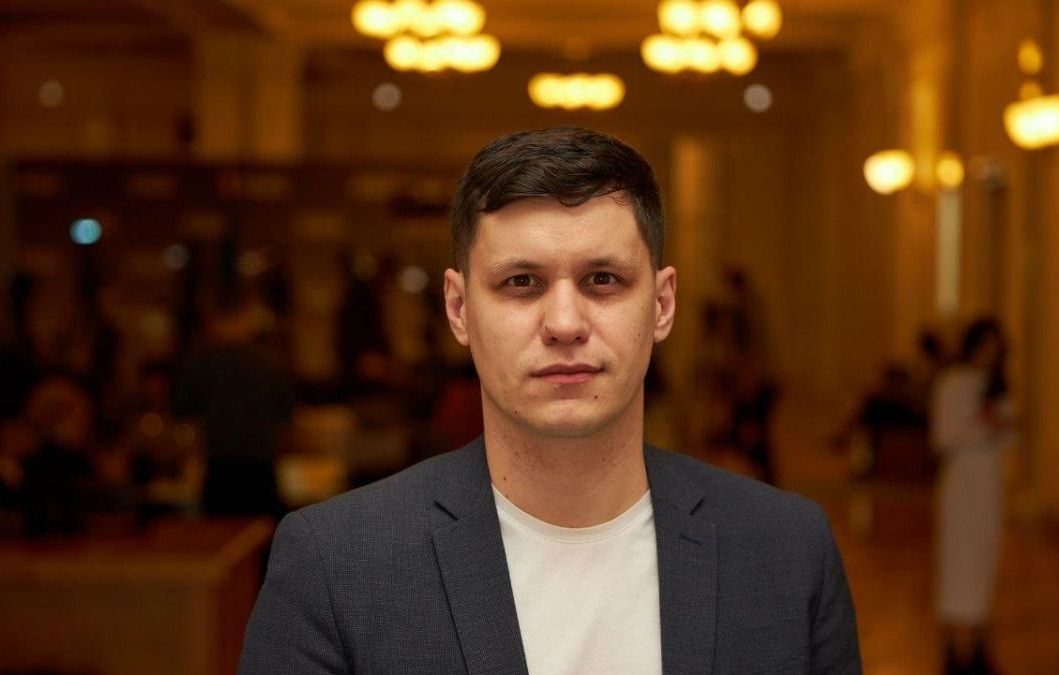
In an interview with TK Media, Servant of the People MP Roman Hrishchuk discusses the Leros tapes, his work as a deputy, and the upcoming Kyiv elections.
Roman Hrishchuk is one of the “new faces” in Ukrainian politics who entered parliament on the wave of the Servant of the People rating. Formerly head of the Mamakhohotala studio and a television actor, Hrishchuk was elected deputy in the 222nd majoritarian constituency in Kyiv (Solomianskyi district). He received more than 40% of the vote, and 28,350 voters supported him.
In the IX convocation of parliament, the deputy works on education issues and also focuses on work in the constituency.
TK Media met with the MP to discuss the results of the IX convocation’s work in parliament, the latest scandals in the Servant of the People faction, and the upcoming local elections in Kyiv.
— Let’s start with the main topic of the day: the new “Leros tapes” about Mykola Tishchenko. Have you listened to them yet?
— I listened to the first and second parts. Probably that is a small part of what exists.
— There are reports that the Servant of the People faction is discussing the question of removing Mykola Tishchenko from his post as deputy faction head after the publication of the Leros tapes. How accurate is this?
— Both from the post of deputy faction head and from the head of the Kyiv branch. These questions were raised even before the tapes, and now they have become relevant again. Some people in the faction and in the Kyiv team have questions for Mykola about how he operates.
— Will the faction’s official position on this be announced? Especially since the tapes were published by Geo Leros, who is himself “in exile.”
— I think a position must exist, at least within the faction. Right now the point is that this needs to be discussed and a decision made. I also have my own thoughts on this. I think I will state my position within the faction. The tapes are only one part of the overall picture.
— If we take the Servant of the People faction in the Verkhovna Rada, it is quite diverse and consists of different interest groups. After a year of work in parliament, which team are you part of? Who is easier and more comfortable for you to work with?
— That’s true, people are absolutely different, with different life experience, different ideologies, and different views on the economy and the humanitarian sphere. That is why centrism was chosen as the main ideology, because it unites people, including from different flanks. Personally, I did not find myself in any of the groups that are loyal to a particular person or united by a shared past in public organizations.
I try to work independently. I have a pro-Ukrainian position, and there are “red lines” that I have stated from the very beginning: the issues of the Ukrainian language, territorial integrity, and freedom of speech. Three “red lines” that I adhere to.
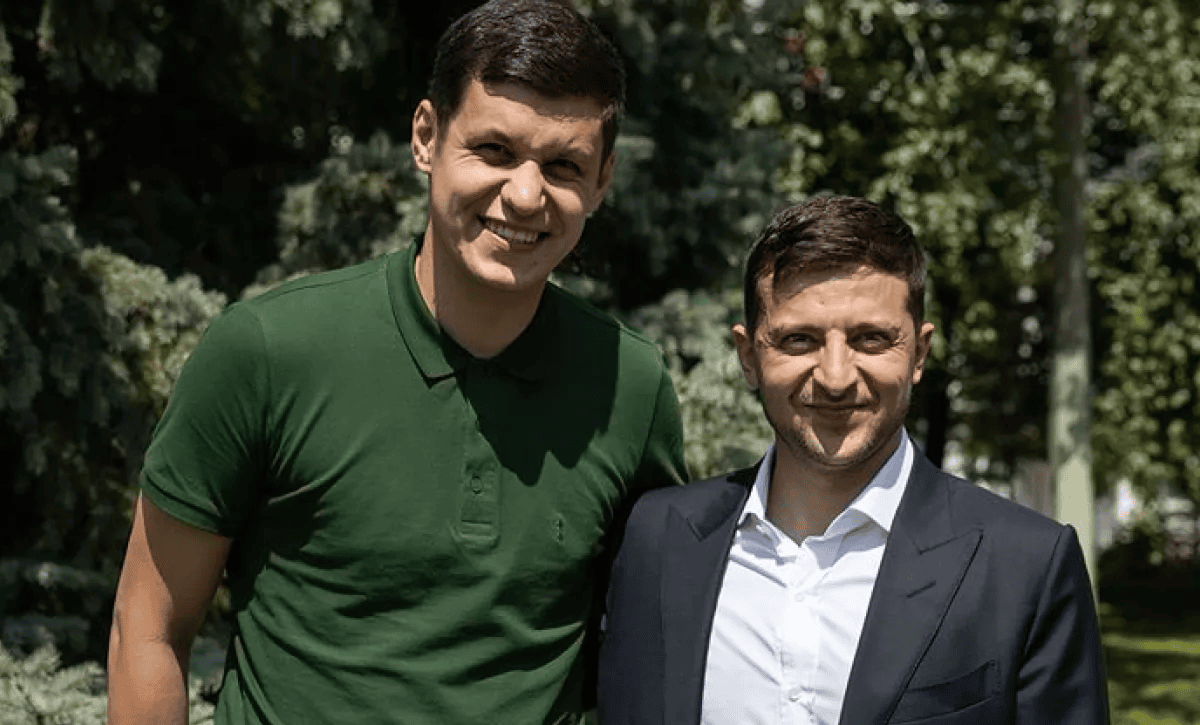
Work in parliament still involves interaction with different groups, alliances, and coalitions. If you look at Kyiv majoritarian deputies, they are completely different people. There is Oleksandr Yurchenko, who got into a much-discussed story. There is, for example, Mykola Tishchenko, and there is Liudmyla Buimister.
And there is Roman Hrishchuk, who tries to stick to his position and not do anything contrary to his values. And that is who I am with: those who share these values.
— You came to the Verkhovna Rada as a person not from politics, as a completely new person. You surely had your own expectations and ideas about working in the Verkhovna Rada. Which of them came true, and which did not?
— I first entered the Verkhovna Rada the day before the swearing-in. I had never been in this building before. It seemed completely different to me. Reality differs greatly from the picture on television.
There are people on the rostrum and people in the lobbies. There is a solution for viewers, and there is reality. An outside observer sees only the tip of the iceberg, a beautiful and polished picture. People from radically different parties with different ideologies, who tear each other apart in the hall, then chat amiably at the buffet and have lunch together. In the Verkhovna Rada you constantly witness this hypocrisy. I, of course, expected it, but it is very hard to get used to. Complete hypocrisy: everyone is friends with everyone and enemies with everyone. Moreover, the most vicious enemies are not between parties but inside them.
— After a year in parliament, have you not become disillusioned with your choice?
— I am often asked this question. Everything goes in a sine wave. Sometimes you are “at the bottom” and think nothing is working out. People think that the authorities can do everything, but very often that is not the case. And there are “peak” moments when there is a result and a sense of uplift from knowing that you didn’t take this step in vain.
— There are also personal moments. When you went into politics, you sacrificed something, for example your involvement in business and the Mamakhohotala studio. You went into the Verkhovna Rada for a salary that is not high, at least by Kyiv standards, for five years. How do you think MPs’ salaries should be increased?
— This is a debatable question and a painful topic. As soon as you say that (MPs’ salaries should be raised, ed.), there will be those who say: “What about teachers? What about everyone else?” It is a vicious circle. High salaries should exist for ministers and officials too, for everyone who has access to making important decisions. We cannot do without this if we do not want to live in populism and intend to develop. All of society needs to accept this. People who manage our money should earn well.
However, there is no direct link and no certainty that high salaries will eliminate corruption. There will certainly be those for whom even high salaries will not be enough. But perhaps at some point a critical mass of people will begin to value their name, reputation, and financial resources from the state more. These people will work in the interests of citizens.
— But not within the framework of this convocation of the Verkhovna Rada?
I don’t think society or deputies will accept this soon. But evolutionarily and gradually, everyone is moving toward it. Remember how many scandals there were with the previous Cabinet over salaries. Although I was sure it was a Cabinet that depended minimally on oligarchs.
— After a year, which of your projects in the Verkhovna Rada are you proud of?
— Deputies elected from party lists have become more deeply involved in legislative work. I worked more in the constituency. As for the committee, I am proud of the adoption of the law on complete general secondary education, which was inherited from the Verkhovna Rada of the previous convocation. We finished and adopted it; it is the basic law on how schools function.
Second, the law on the admission of children from occupied territories and the creation of legislative opportunities to come to Ukraine for preparatory courses with a scholarship and accommodation, so they can integrate and enter on general grounds. I am working on defending the budget for this area.
There is also a change in the principles of university funding: funding is now divided according to a transparent formula. I am also very proud that I defended a clause in the law on the gambling business, according to which money from gambling will go, among other things, to education and science.
That is on the education sphere. And then there is work in the constituency. We have problems with representation of the authorities. People approach you with any questions, even ones that have nothing to do with the work of the Verkhovna Rada, because you were elected, people voted for you, and you must solve their problems.
In five years it is impossible to solve all issues one by one and help everyone. But you can create a system of strong horizontal connections. This is when the community unites and, with the help of the people’s deputy as a tool, achieves its goals: it stops illegal construction, promotes a certain decision. After this, people begin to feel their strength.
The main tools of a people’s deputy are publicity, official appeals, and personal relationships, which, whether you want it or not, you have to build in order to solve issues not only in the official format but also with a personal phone call.
— How many people approach you per day on average? A few? Dozens? Hundreds?
There are appeals to the official email, and we try to direct everyone there. There are personal messages on Facebook and Instagram, there is WhatsApp and Telegram, and there are phone calls. But I ask everyone to write an official appeal to the email so that it can be attached.
As for the numbers... Hundreds would definitely be too much for us. Dozens a day, yes, they come. It is almost impossible to process everything in time, even with assistants. You need to look into it, prepare a quality appeal, send it, wait for a response, and process it. It is a lengthy process.
Over the year we have received more than 1,000 appeals. Some we resolve by calling the authorities responsible for the issue; in other cases we simply need to help draft documents correctly or understand the procedure. In writing, we sent 580 deputy appeals to other bodies.
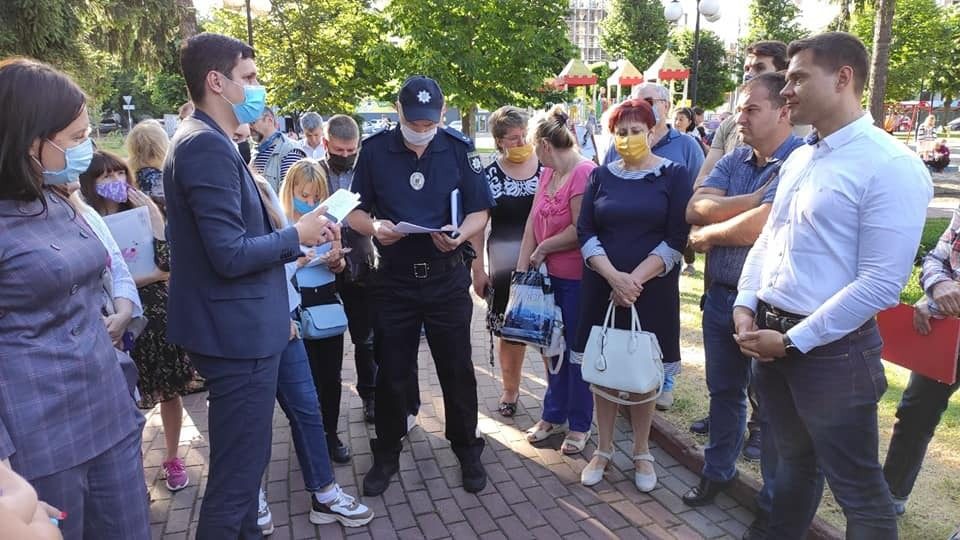
— Still, can you name a few projects in the Solomianskyi district? I know we wrote about the dormitory on Polova Street.
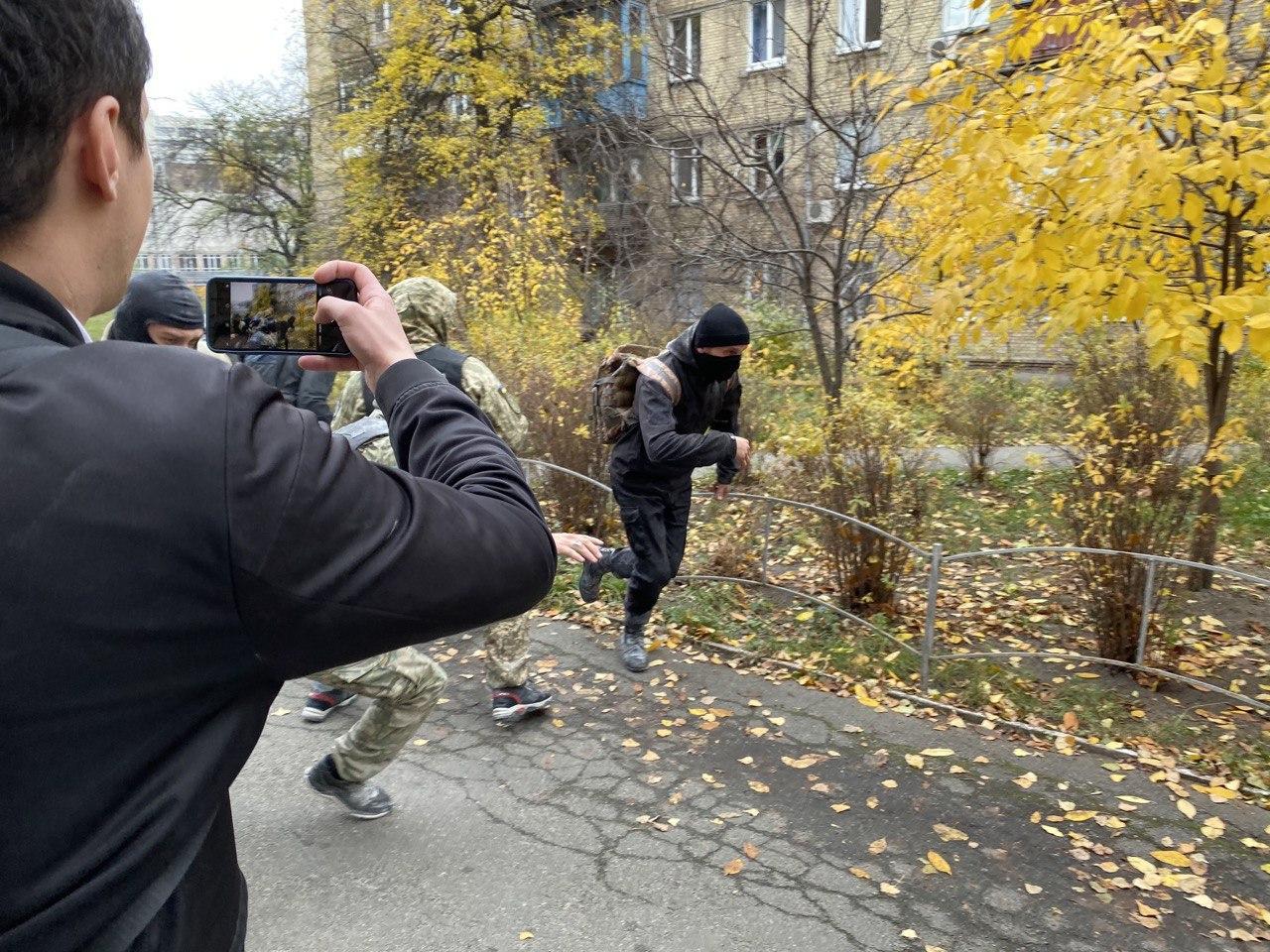
— This project is not fully finished. We did not allow the people to be evicted, but they still live without electricity and gas. Yes, titushky no longer attack them. In the autumn, when 60 titushky seized the dormitory, I had to burst in and drive them out, because the police were inactive.
It was frightening to be in a closed room with aggressive people carrying cold weapons. But the issue has not yet been brought to a conclusion.
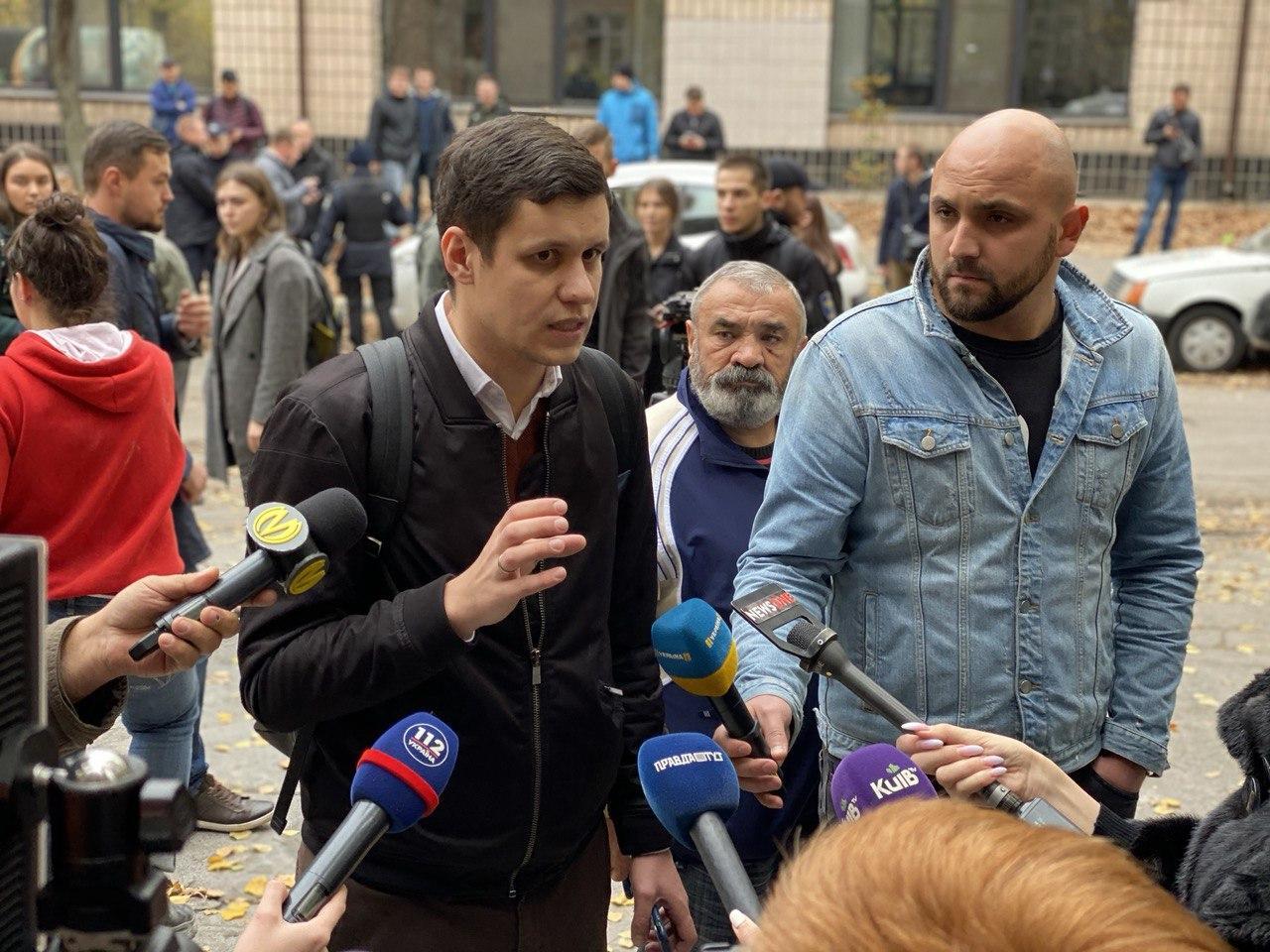
— When it comes to the Kyiv authorities, how does communication with Vitali Klitschko work?
— I have met with him several times. In fact, issues are still resolved by deputy mayors and assistants. They are deeply informed, and it is often easier to turn directly to the person responsible for a specific area.
— How do you assess the faction’s choice of Iryna Vereshchuk as its candidate for mayor of Kyiv?
— At least we had something resembling primaries, which were held publicly, and I see this as a big plus. On the three indicators assessed within the faction, she won. I respect my faction’s choice. In many internal matters, Ira is showing herself very well. I do not know how her image is perceived publicly, but from the inside it becomes clear that what she does works very effectively.
The campaign will be difficult. Even based on my modest experience, I understand how much energy and personal resources it will take to get through it with dignity. So I would like to wish Ira luck and patience.
— Did you take part in forming the Servant of the People list for the Kyiv City Council?
— Within my district quota, I could propose people. Only within this framework did I take part. I did not participate in forming the general list; we only coordinated it. I abstained. For the first time.
— Tell us what this quota was and whom you proposed.
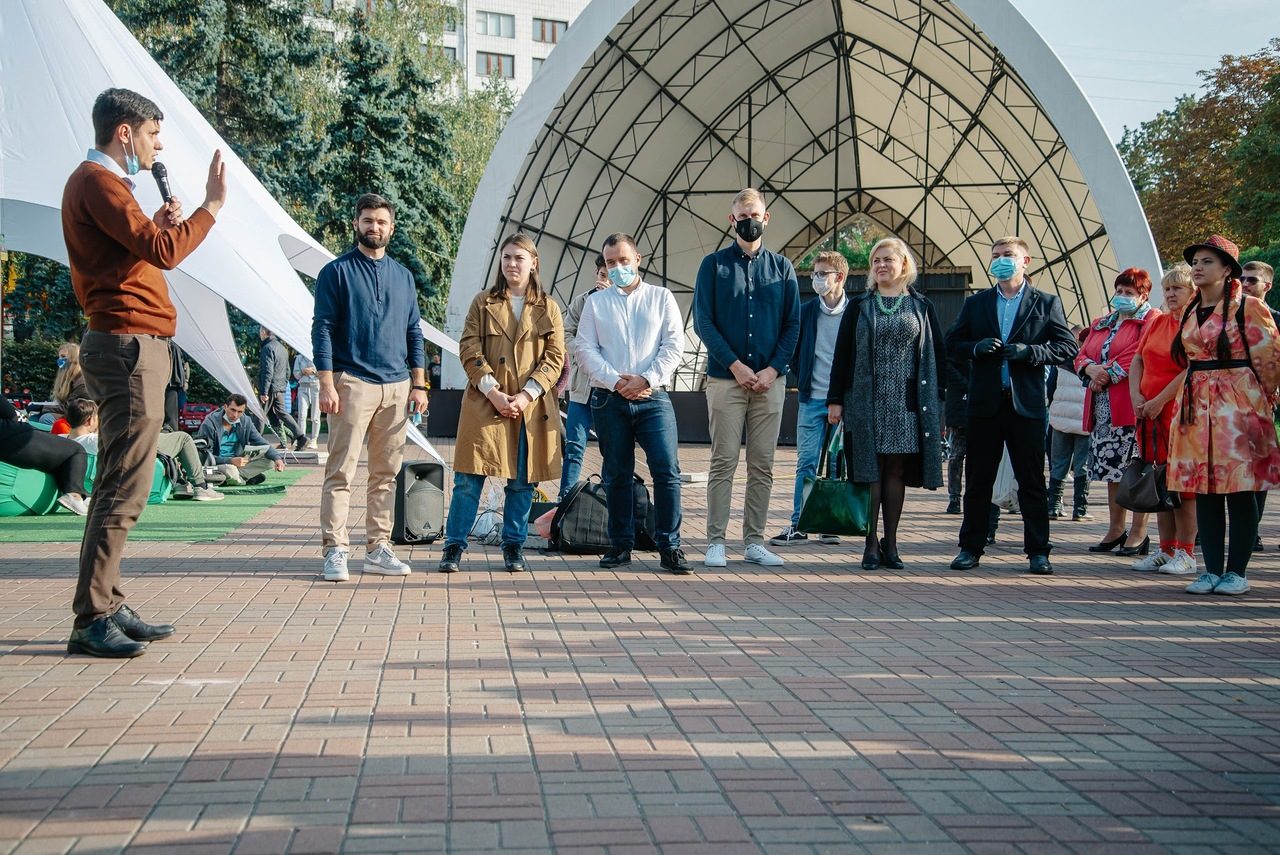
— I am confident in these people, because I vouch for them with my reputation. If any of them gets tarnished or ends up in a compromising story, it will affect me too. These people have worked with me for a year or more, not just appeared before the elections. They are people from the district. Also, I chose them so that they come from different parts of the district and understand its problems. And definitely from different spheres. The main thing is that these people did not have to be looked for somewhere just for the elections. I can indeed call them “Hrishchuk’s team.”
I must be confident in these people in order to put my name behind them. Because if any of them gets tarnished or there are compromising stories, it will affect me. People must work with me for a year, not just appear before the elections. People from the district. Also, I chose people from different parts of the district so they understand the problems. And definitely from different spheres.
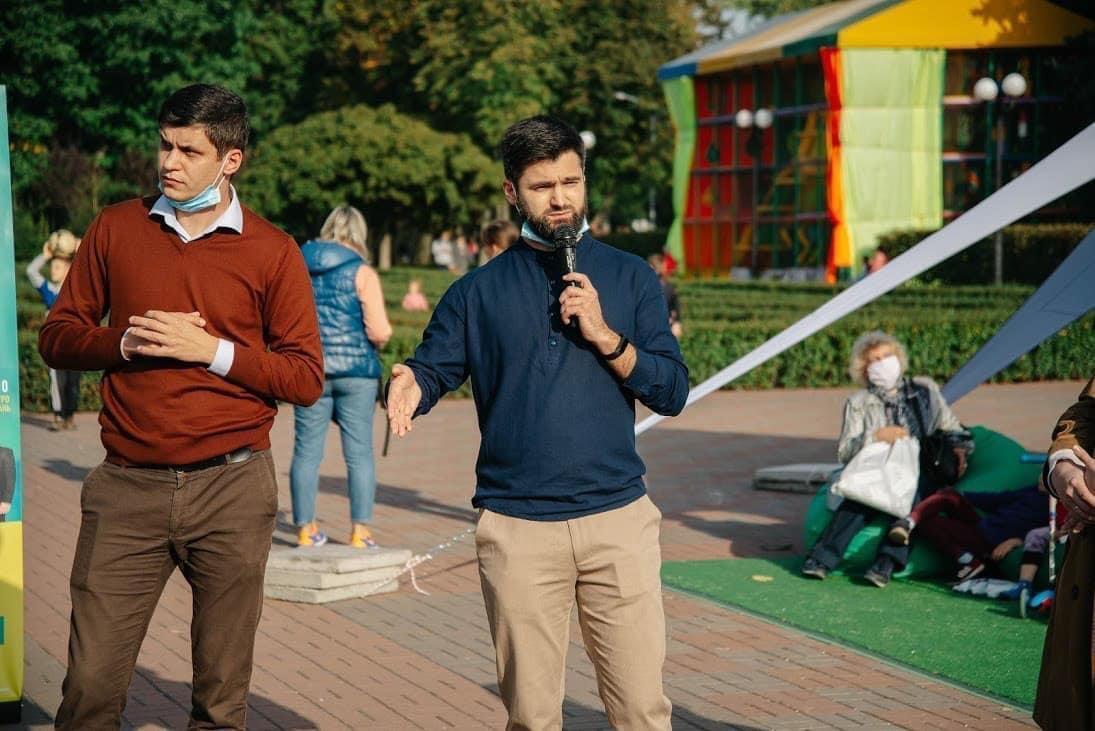
The main candidate of our team is Ihor Kravchyshyn. He is number four on the list. He is a very strong person with a history in the district. He organized the district’s largest festival, SolomaFest, and defended the development of the NAU stadium. The whole team will now work for his victory.
The first number for the district is Kseniya Semenova. A serious expert in education. She has been working with me for a year on schools in the constituency. In parallel, she runs several of her own education projects and has taught at a university for more than 10 years.
There is a student representative, Andriy Yerofeyev. He is a graduate, but he headed the KPI student council and understands the education and student topics very well. I am also a graduate, but I graduated in 2012, while he graduated fairly recently and is still integrated there.
The team also includes Sasha Ustenko, who handles landscaping issues, built a square, knows how to remove illegal garages, and is deeply versed in this area. There is Ira Holovatenko, who deals with the homeowners’ associations (OSBB) topic. I came to her at a school during the elections to understand this issue, and then I took her on as an unpaid assistant. There is Dmytro Horban, a doctor, head of the trauma unit at the district hospital, who is also completing a master’s degree in public administration.
— Under the current electoral system, does it mean that only one of them will get through?
— Nobody may get through, or 3 people may. More than that would require a great deal of effort. It depends not only on the party’s rating: in Kyiv it has to overcome 5% to take part in the distribution of seats. But the specific number of votes for a specific candidate in the district also matters. For example, a representative of a party that does not clear 5% in the district gets 5,000 votes. He does not get through. A representative of a party that gets 5% may stand first on the list and get 4 votes. He gets through. That is why the value of each vote plays an important role. It is all very complicated. In essence, it is important not only to vote for a party but also for a specific candidate.
— Tell us about the draft law on the capital. When is it planned to bring it to second reading?
— Definitely after the elections. This decision has its pros and cons. After the elections, because the Verkhovna Rada has closed for the holidays and will not manage to adopt it earlier. After the elections there is a concern that many will manipulate by claiming that the law is being adopted to separate the posts of head of the Kyiv City State Administration and mayor. And supposedly they want to take some powers away from the mayor who wins. It is clear that this does not correspond to reality. There are questions about the law, but it needs to be adopted. The manipulations are completely baseless. No one is taking anyone’s powers; on the contrary, more will be given to the newly elected mayor.
— Do you plan to engage in politics after the Verkhovna Rada of this convocation?
— This question is also asked often. I ask it of myself too, but I cannot answer it. I do not know when our convocation will end, whether in five years or not. Of course, I would like it to end in five years. So that I can go out to people and say: “Look, I promised such ‘red lines’ and did not cross them, I kept my principles, I promised these projects and implemented them. That is behind me. Thank you, now I will go to work and earn a living.”

Russian Attacks in Dnipropetrovsk Region: Two Killed, Seven Injured

Defense Forces Strike Four Russian Drone Control Points in Past Day, Including in Berdiansk

Britain Threatens Sanctions on Kremlin-Linked People; Poland Ready to Hand Ukraine Ammunition

Russia says it has completed "planned exercises" in the Black Sea

MVD: Fake Riots With Prop Blood Were Being Prepared Near Presidential Office

Law Enforcers Name Another Klitschko Deputy as Suspect

Berlin Holds Protest Against War in Ukraine; EU Prepares for Possible Russian Halt of Gas Supplies
North Korea Fires Ballistic Missile Over Record Distance in Five Years
Irish Fishermen Force Russia to Postpone Naval Drills

US sanctions in case of invasion of Ukraine could completely destroy Russia's economy, NYT reports
