
MP Sviatoslav Yurash: I Am Oriented Toward the President, Yermak Is Very Effective
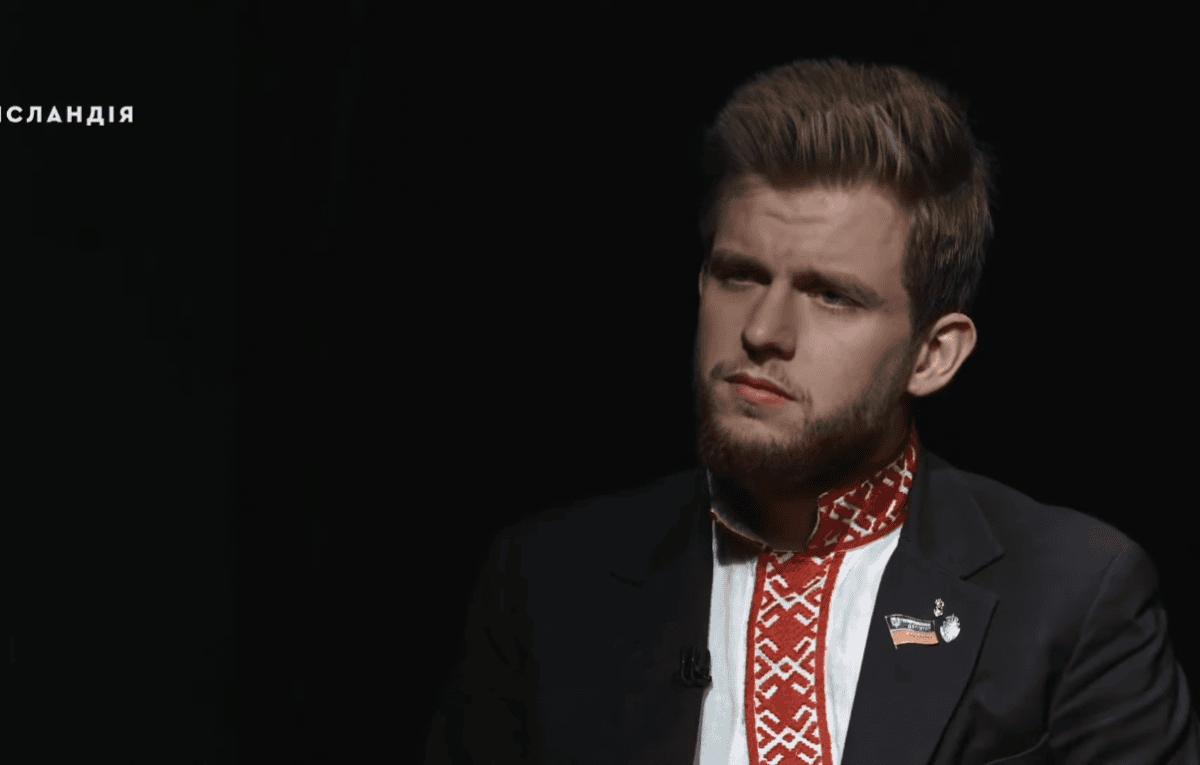
Yurash is confident that a single-party majority exists in parliament, believes in his colleagues and in improvements to the political situation in Ukraine.
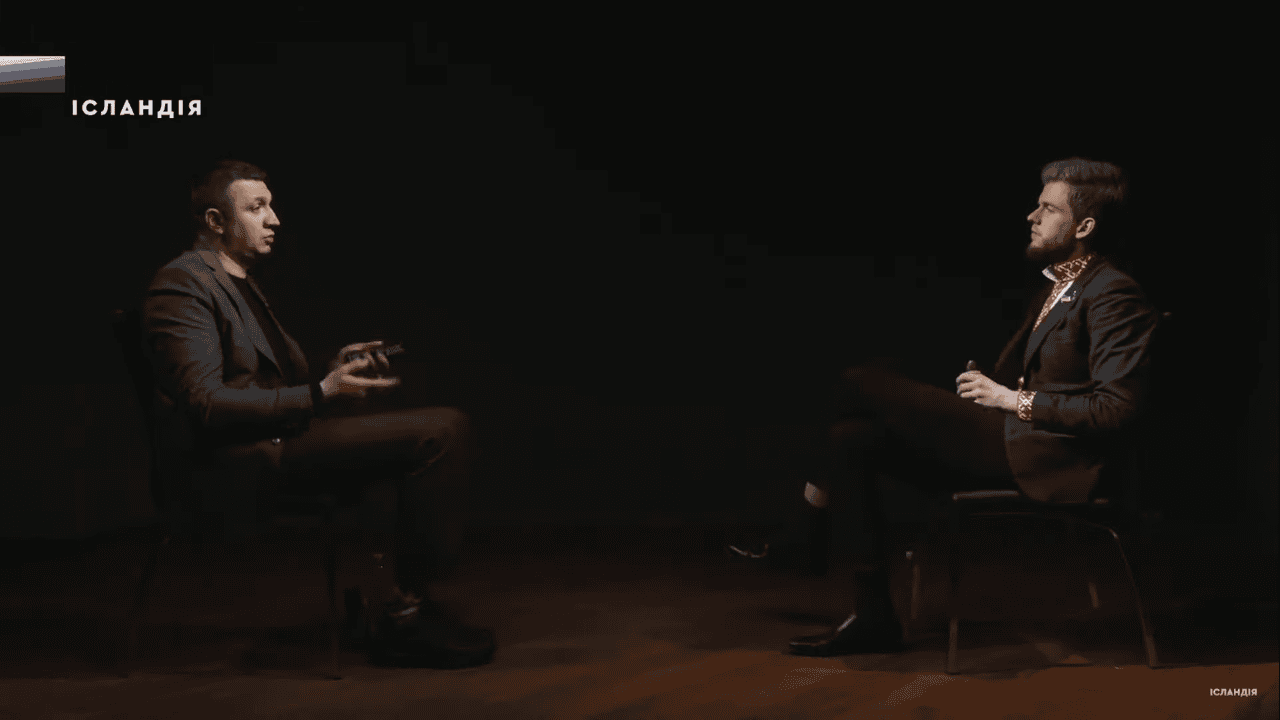
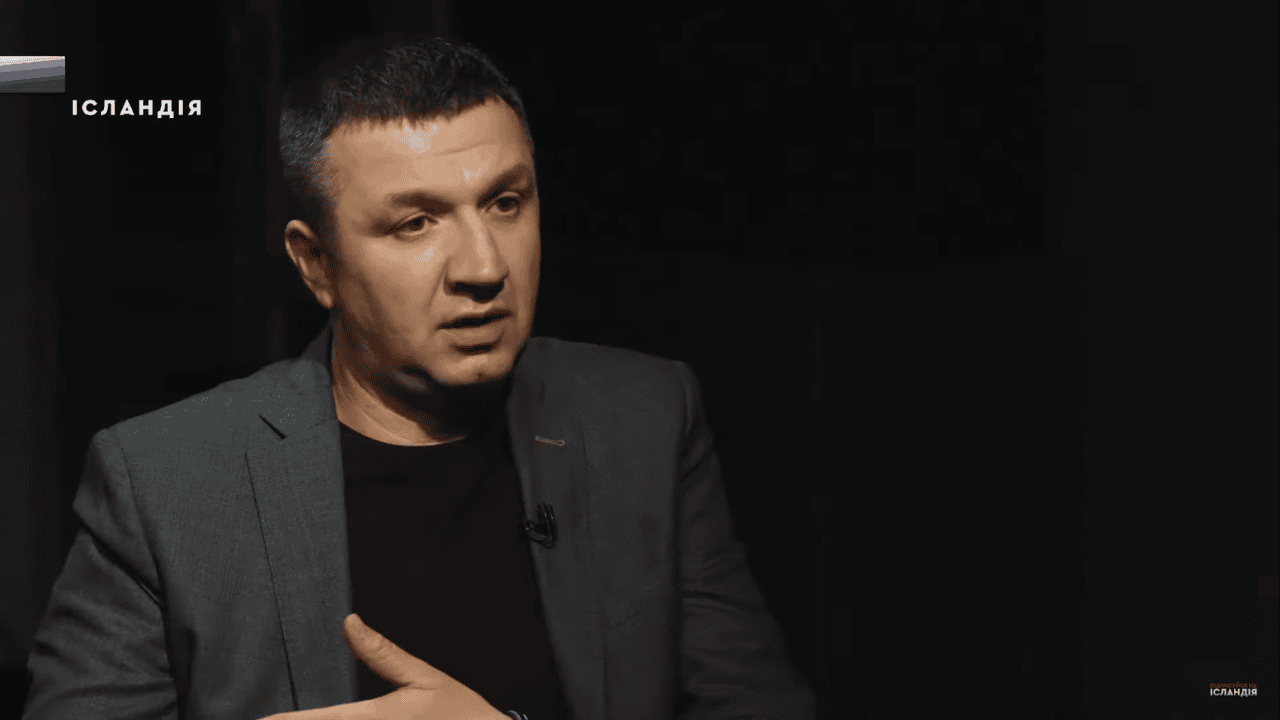
In a new episode of the Antypody program on the Iceland TV channel, Servant of the People MP Sviatoslav Yurash told host Serhiy Ivanov about his work in the Verkhovna Rada, the influence of Office of the President head Andriy Yermak and the case of the Wagner fighters.
What about the single-party majority? Does it exist?
All the problems that arose, and we saw a bunch of votes: for the presidential changes related to the civil service, for the civil service law. We saw that they gathered the majority themselves, despite all the coronaviruses. Every other day I get a message that someone has coronavirus, someone drops out, someone fell ill, and so on. Despite all this, the reality is that in parliament the coalition still has that majority, and it works. The fact that we often have to cooperate with factions really gives optimism that, despite all the usual political trouble in Ukraine, where two Cossacks and three hetmans are at odds, there is still an understanding that in this transformative time we must act together.
And what happened? What positively changed the situation? We remember how the faction was shaken, how “insiders” constantly appeared, including in various media and social networks affiliated with Servant of the People deputies, claiming that there is no single-party majority, that they do not want to vote, that the groups are different. In other words, that's it.
The pessimistic factor is that Ukrainians have gotten used to this. They are used to there always being discord in politics, this political chekharda, a constant game of musical chairs. And one has to look for it and talk about it. Everyone looks for it and exalts it in their news streams. In reality, the situation in parliament was not like that. Of course, all these constant discussions, where on some talk show they talk about early elections of any level, saying everything there is falling apart, drawn from their “wonderful” insiders. All of this is reflected in the hall (of parliament, ed.). And the reason for success is very simple: we understand that this moment is here and now, because Volodymyr Zelensky took the decision to run for president. And we are a faction that, again, is the president's team.
But there was still discord: he (the president, ed.) was forced several times to personally come to the Verkhovna Rada and personally persuade deputies to vote for a series of unpopular, well, on one hand popular, on the other hand unpopular laws. Let's recall the “anti-Kolomoisky” law, the land law and so on.
And I thank the president, who clearly acknowledges and shows that the reality of a parliamentary-presidential republic in Ukraine is confirmed. He constantly has dialogue with various colleagues who have questions about this or that law. He explains and clarifies, and joins the discussion rather than simply delegating to someone. This is a very positive fact, that he sees himself as a member of the team. He is the first member of the team, but a member of the team. And we all work together, and this shows his nature, and that he lives by the rule he constantly talks about: being human. He himself demonstrates this.
So, you think you have a monolithic faction? You have no groups?
Well, we have 15 deputy chairs. Not for nothing...
No, I'm not interested in the deputy chairs. I'm interested in the informal internal groups.
Of course, this story, when you look at the nuances, falls apart, but when it does not fall apart… I just looked at a number of votes and looked at colleagues who vote one way or another. I approached colleagues. Certain colleagues have a detailed and multifaceted position; you understand that their position is thought through, comprehensive, and adopted with all the risks of this issue. And with some you approach, ask, and understand that it fell out of the sky. And you have your own questions in this context. Parliament, our faction, is a cross-section of society, of East and West. The problems that exist here also exist with us. We have the joy of that vertical that was created as Zelensky began all this. And this vertical helps prevent the usual political chekharda in Ukraine, which has been the cause of the stalling of all the reform efforts of the past.
Which oligarchs have influence on the faction or on individual members of it?
Well, all sorts of rumors circulate. But the most righteous rumor, from what I have heard, is this: I see that when the oligarchs lament that they can no longer gather together as they used to. Again, I see that even with the same “anti-Kolomoisky” law, for example, the most understandable banking law, we still saw that the faction gathers votes.
The faction gathers them, but, let's say, Dubinsky registered some astronomical number of amendments there, and not only him. And Buzhansky.
It is their right as deputies to do so. But again, it is your right as a journalist to ask them: why so? Why such attention to this issue?
And what about your right as a colleague?
My right is to ask these colleagues.
Is it clear to you? That they did this in the interests of oligarch Kolomoisky?
That law, in principle, was aimed at one specific story, and the president had the inner will to adopt this decision, so as not to let any of the oligarchs in Ukraine feel that he is a master of the situation. And to show everyone that the Ukrainian people, who chose Mr. Zelensky from all of us, are always the source of power. Our constitution states this in Article 5.
I am only asking about your subjective impression.
My impression is that oligarchic groups always try to influence the parliamentary process, one way or another. That arrangement that existed before, where there was never a normal coalition, but a coalition formed from different factions that allowed them to be a permanent mediator in this dialogue, which they closed with their own interests. Now this does not work, because the situation is held in the hands of Mr. Zelensky, President of Ukraine, who triumphantly received this right in the elections of 2019.
Who are you personally oriented toward?
Toward the president. I repeat this all the time, and I am very glad that in Ukraine the political chekharda, which I repeat constantly because I believe it is the main cause of our problems, is coming to an end. Because there is a vertical that can really take shape, consolidate and work. When there is an opportunity to act, it shows itself in all the activity of the presidential vertical, which appears in all its splendor. And what we really see from people's reactions is that they want action and demand, above all, from the president, who, because of the victory he won, is always the concrete symbol of this hope for change. That is why this vertical is a guideline for me, and the president is the leader in this situation. Without doubt.
And who from the president's office communicates with the faction? Is there a responsible person who constantly deals with this and conveys the president's views? I understand that the president is quite a busy man and cannot constantly come over.
I will tell you more, not just one person. The president organized these groups that we have in the faction so that we could meet with him and ask our questions. I also had these meetings, and I also asked my questions and raised stories. And I was very glad that he always met us halfway, communicated immediately, responded, and assigned people to this direction. He again demonstrated what impressed me about him, which was original: maximum openness and readiness to act. This is what Ukraine needs. We have already had enough of those who governed the country.
Setting that aside, can we find out the name of the president's emissary in the Verkhovna Rada?
No, well, if we are talking about communication with the presidential office, then for each law there are, so to speak, their own emissaries, you understand? Faction leader David Arakhamia constantly communicates, there is constant liaison between the president's position and the faction's position.
Ah, so, through Arakhamia, right?
Well, he is the faction leader. It is his responsibility to always convey the faction's position to the president, and the president's position to the faction. And I am very glad that he does this, because in every case I had, he was a good mediator, that is, when the sides have certain positions. He came to us and sought justice in the situation, as they say.
What is happening with Razumkov?
Razumkov is a person who always clearly and consistently defends the issues of procedure and the legality of all processes. He is a person who unwaveringly emphasizes this position on all airwaves. And he does right, because a country has a future only when there is an understanding that the law must be observed in every case.
Does that mean that procedural issues are more important to Razumkov than issues of cooperation and loyalty to the president?
Razumkov, like me, and like the whole team in general, appeared there through the president. And Razumkov, the speaker of parliament, also understands that the prospects for change in Ukraine lie in cooperation between the president's office and the Verkhovna Rada, not in constant war between these sides. I see this in parliament as well, that this work really exists. And it really manifests itself at every step. In terms of procedure, thankfully there is a procedure, and, you know, it is not something Moses brought down from Mount Sinai; it is a law that can be changed and improved. As for the story with amendments, above all, we changed the process of considering amendments so that we would not have the massacres we had with the land law, when factions simply mocked, submitting thousands of amendments in order to have a negotiating position later. One or another.
Despite the fact that Razumkov is actually no longer a member of your faction now, because he is the head of the Verkhovna Rada and is not entitled to it, he is still a person who came with you. Who came as one of you. And a person who came, well, let's be frank, on Zelensky's ratings. Well, you all came on his ratings. Why does no one except Razumkov make videos about himself? In other words, he does not promote himself politically?
They do. My colleagues there have a Telegram channel now.
And they read rap, I saw it.
One does rap, another makes videos there in Volyn. That is, as a deputy in parliament you get the opportunity to start working on various projects or issues. And in this context of media presence and PR, everyone wants this, because they understand that politicians either die or survive through their interaction with the media. That is why everyone makes videos. And Mr. Razumkov has political ambitions. That is right. Those who enter this field must have these political ambitions; then they have, as they say, motivation to act, so that later they can tell potential future voters what they have done.
But he does not vote for the NSDC decision (the decision on imposing sanctions against People's Deputy Taras Kozak and closing his channels, ed.). Unpopular decisions which, of course, somewhat intersect with his interests, let's say, among the Russian-speaking audience.
I think, in fact, this position is dictated by something else: his respect for fundamental freedoms, the fundamental freedom of speech.
So you think the NSDC decision is a violation of fundamental freedoms?
No, I am just interpreting. I have not talked with him about this story, so I cannot be his spokesman now. Let him articulate his position himself. And whether information about this NSDC session was manipulated once again, because everyone who feels like it manipulates there. But if we are talking about Mr. Razumkov, his position is exactly the kind that allows all factions in parliament, despite constant opposition and wars over various issues, to understand that he performs his work as a mediator ideally. And honor and praise to him, because in previous convocations the speakers did not have such fame. And Mr. Razumkov manages it. That comes at a high price.
Does the head of the President's Office, Andriy Yermak, have influence on the faction?
The head of the president's office cannot but have influence on the faction, and, accordingly, is the person who creates that vertical that I praised at the beginning of our discussion.
So Yermak created the vertical that exists now?
Yermak is definitely working to make the vertical I spoke about a reality. Today we did not have chaos from decisions, interference by all bodies, and so on. We saw precisely a clear position that respects the institutions and their processes, and at the same time could communicate one view or another. I worked with Mr. Yermak, met with him, and talked about various issues. And I saw openness to dialogue, a desire to help and to interact.
How effective is he, in your opinion?
Very effective. Judging by all the issues I raised, and what we agreed on with him, and what was then done, I have a good opinion of him. I understand why the president chose him.
Three virtues for which he could have been chosen, in your opinion.
That is not something that can be listed. I would have to be friends with him for many years to list them. I am simply saying: for me, his effectiveness on this matter is defined by three things. First, approach, because sometimes the approach kills the essence; sometimes the way various figures carry out requests that were made, or questions that arose, but the way they did it removed any desire to work with them in the future. Second, whether there is effectiveness. And third, whether there is feedback afterwards. All these things were present, and so I have a very good position. And all the hysteria that was raised about Yermak, every time I saw it through the prism that the president somehow changed this decision. And then, when I interacted with Yermak, I understood why he made that decision.
Who is more powerful as head of the President's Office, Bohdan or Yermak?
You know, it is not for me to assess this, but for the president, who chooses who heads his office.
You have worked with both.
I communicated with both. Of course, I communicated with Bohdan already during the campaign. More than I crossed paths with Yermak at that time. But again, for me the president's decision is his assessment of effectiveness; his decision was to adopt exactly that position. And I understand that not one of Bohdan's ideas was useless; Bohdan represented and defended his position colorfully. This did not always, and not in all circles, create love for him. I understand why this is needed in many processes in Ukraine, you know, such toughness. But I understand that it creates a great many opponents.
If you were president, whom would you keep, Bohdan or Yermak?
You understand, I form my team from a different environment and from different people.
Well, if there are two.
It is the good fortune of the president's office that these questions are not regulated there. And in essence, anyone can be the head. There are no criteria written there the way they are written in ministries or even in the deputy context; not so much is written, though at least a minimum age is specified.
Well, look, each of us has our own subjective opinion about any fact of reality. For example, I think Radiohead is better than Oleg Vynnyk. Many will disagree with me. But I am giving an assessment; it is my opinion. So I am asking, who is better: Radiohead or Oleg Vynnyk, who is better: Bohdan or Yermak, in your opinion?
I deliberately avoid answering this question.
Okay, which one of this pair is Radiohead? Who is Thom Yorke?
Nobody.
Are there people in the president's circle that you do not like? Who is the weakest link in the president's circle? Not in the closest circle, but in general, in that whole vertical you are telling me about. Whom would you dismiss?
Again, this is the president's decision to gather this entire vertical. And afterwards, interacting with the links of this vertical, I can tell the same president my position. Both the pluses and minuses of certain people. I see that the president changes people, the Cabinet changes; this is a reflection of people's effectiveness. And also the heads or players in the president's office. So I understand that the president has full right to his opinion, which we must respect and work with those he recruits for all these positions.
So, if a person is openly weak, you are an educated person, you already have some experience. Let's be frank: you studied abroad and so on. If you see some absolutely stupid creature, of whom there are very many in the civil service, the president's office, a ministry, anywhere.
This is not a problem of weakness, it is a problem of openness. That is, those players who are difficult are arrogant. That is, people who are, as they say, hard to approach. And you see in them the certainty that they are eternal. We are changing there, you know...
Give names.
Well, you know, it is a thankless task. You still have to work with them. You understand, in every circle there is its own Humphrey (a character from the British satirical series “Yes, Minister” — ed.), and you have to work with him. Insulting him on a channel that has a silver YouTube button is a thankless task.
In a few days a film by Bellingcat about the private military company Wagner will appear, which is now being widely hyped on social media and online. Gordon is already predicting something there for us. Some political experts forecast the exposure of treason by people from the president's inner circle. Could it break up the party or the faction if it turns out that someone from the president's office is involved in leaking information to the Russians?
There are two things here. First, I am sure that the president himself will be glad to receive the full set of facts around this whole story from that side as well. If we are talking about deputies and parliament, then my colleague is launching a temporary investigative commission on national security. And precisely the question of various players who try to violate them, so this will be the parliamentary side of all this.
And do you believe in state treason on the part of those people who were there?
No, I do not believe it. I understand that over all these one and a half years, various opposition forces interpreted a lot as state treason. And of course, when you later ask about the facts, about the essence, you understand that it was blown up and pulled out of thin air. But I also understand that in our country, over all these years, these 29, a lot of people have gathered. And various figures constantly claim there are certain players in the special services. Or that famous interpreter of Groysman.
But at the president's meeting there was a rather limited number of people.
That is what I am saying: the president above all will be glad to understand that a full body of facts has been reported about various people around him.
If these turn out to be the highest state officials, what fate awaits them?
We will wait for the film and see the facts. You understand, over these years I have seen a lot of stories that are simply inflated out of nothing. And then, when you learn the facts, you realize that someone is looking for a sensation, someone is looking for a reason to get this or that button on YouTube. That is their right. This is the essence of free media. But when we talk about state treason at the highest levels of power, you have to see all the facts before accusing anyone, or seeing such a threat in someone prematurely. Some of my colleagues do this, but again, my position is: let us see the facts. Then our bodies will react. The president has no interest in having all the interaction and all the planning of the state constantly under the magnifying glass of our northern neighbors.

Russian Attacks in Dnipropetrovsk Region: Two Killed, Seven Injured

Defense Forces Strike Four Russian Drone Control Points in Past Day, Including in Berdiansk

Britain Threatens Sanctions on Kremlin-Linked People; Poland Ready to Hand Ukraine Ammunition

Russia says it has completed "planned exercises" in the Black Sea

MVD: Fake Riots With Prop Blood Were Being Prepared Near Presidential Office

Law Enforcers Name Another Klitschko Deputy as Suspect

Berlin Holds Protest Against War in Ukraine; EU Prepares for Possible Russian Halt of Gas Supplies
North Korea Fires Ballistic Missile Over Record Distance in Five Years
Irish Fishermen Force Russia to Postpone Naval Drills

US sanctions in case of invasion of Ukraine could completely destroy Russia's economy, NYT reports
