
NATO's Jubilee Summit in London Passed Amid Conflicts. Why Is Everyone Talking About a Crisis in the Alliance, and Is It True That NATO Is Falling Apart?
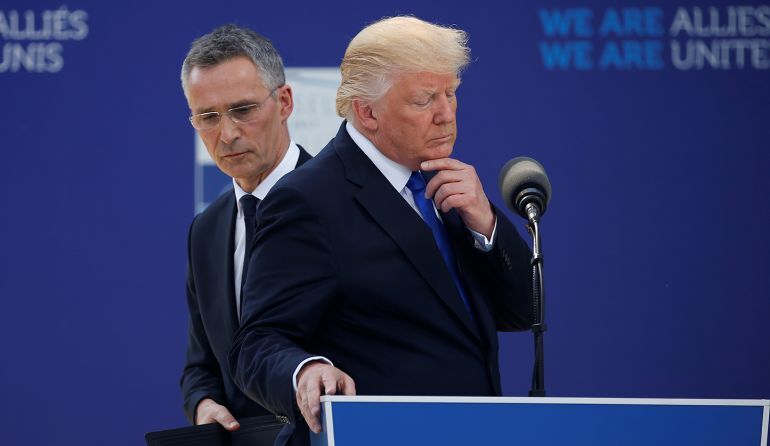
On the crisis of the Alliance's own function and its search for a new role in the world.
On December 3-4, a summit of NATO member states was held in London. This time it was special, as it was timed to the 70th anniversary of NATO's founding. At the summit, heads of member states discussed a whole range of issues related to international security and global challenges. However, after the summit, many media outlets and analysts again began talking about how the event demonstrated a crisis in relations among Alliance countries, and within the organization itself.
Discussions about a NATO crisis have been especially active over the past 3 years, although problems in the organization existed before as well. Why are anxious voices about a “NATO crisis” increasingly heard, and what did the London summit really show for understanding the situation? Let's figure it out.
What is NATO?
Let's be honest: many people do not know what NATO is or when this organization was created. We hear about NATO from our political leaders only in general terms, when it comes to Ukraine joining or about our allies who supposedly will protect us from Russian aggression. In any case, few people have real knowledge of NATO, its values, principles and the structure of the Alliance. 55% of Ukrainians believe that they know too little about NATO, and only 11% believe they are well informed about the Alliance. Even about the essence of NATO, people think quite differently: 30% are sure it is an “aggressive imperialist bloc,” 37% believe it is a “defensive union,” and 18% — a “peacekeeping organization.” At the same time, very few people know about the Alliance's structure and decision-making mechanism, only 19%.
So let's clarify this point.
NATO (full name – North Atlantic Treaty Organization) is a military-political bloc uniting most of the countries of Europe, as well as the US, Canada and Turkey. The organization was founded in 1949 on the initiative of the US. Its main goal and purpose of creation was countering the “Soviet threat” in Europe, that is, the fight against the USSR and its influence. This was precisely the time when the “Cold War” began between the US and the USSR, and Europe was divided into spheres of influence (Western Europe was within the zone of interest and under the US “security umbrella,” while Eastern Europe was part of the Soviet socialist bloc). The treaty, signed by 12 countries, created a collective security system. In other words, all parties that signed the NATO agreement were obliged to defend each other in case of attack. This is how the famous Article 5 of the NATO Charter appeared, which states: “An attack on one Alliance member is considered an attack on all”.
NATO became a key element in containing the Soviet Union in Europe, and also helped member countries come closer together on the basis of common principles (roughly speaking, “one for all, and all for one”), values (liberalism, freedom, democracy, justice, trust) and an enemy that had to be dealt with (the Soviet Union and the Warsaw Pact countries). After 1949, the Alliance expanded several times, taking in more and more members in order to widen its zone of control and influence, drawing key European states into its camp. Here are all the waves of NATO expansion that took place after its founding:
1. 1952 – Greece and Turkey;
2. 1955 – Federal Republic of Germany;
3. 1982 – Spain;
4. 1990 – East Germany merged with West Germany, and they became a NATO member as a single state;
5. 1999 – Hungary, Poland, Czech Republic;
6. 2004 – Bulgaria, Latvia, Lithuania, Romania, Estonia, Slovakia, Slovenia;
7. 2009 – Croatia and Albania;
8. 2017 – Montenegro.
The main political body of NATO is the North Atlantic Council. This body makes all key decisions related to the organization's activities, its strategic goals and objectives, and also decides on the Alliance's participation in various military or humanitarian operations. The Council has the right to create new auxiliary bodies and committees if necessary. In addition, there is also the NATO Parliamentary Assembly, which functions as a platform for discussing various security initiatives with the participation of legislators from member countries (in other words, members of parliaments).
What is the problem with NATO?
In fact, the “crisis” that is often talked about recently is related precisely to an attempt to rethink NATO's role and function in the world after the end of the “Cold War” in 1991. The point is that when the Soviet Union ceased to exist and the Warsaw Pact collapsed, the meaning that underlay the creation and maintenance of the Alliance in 1949 disappeared along with them. A logical question was asked: if there was no longer an enemy, then whom should NATO deter?
Russia, although it remains, in the eyes of some Europeans and Americans, a threat, is not such a threat as the USSR was. It is connected to the global economy, actively cooperates with the West on many issues of common interest, and no longer poses the military threat to Western Europe and the US that the aggressive Soviet Union did, the Soviet Union that was closed off from everyone by an “iron dome” and dreamed of “world revolution.”
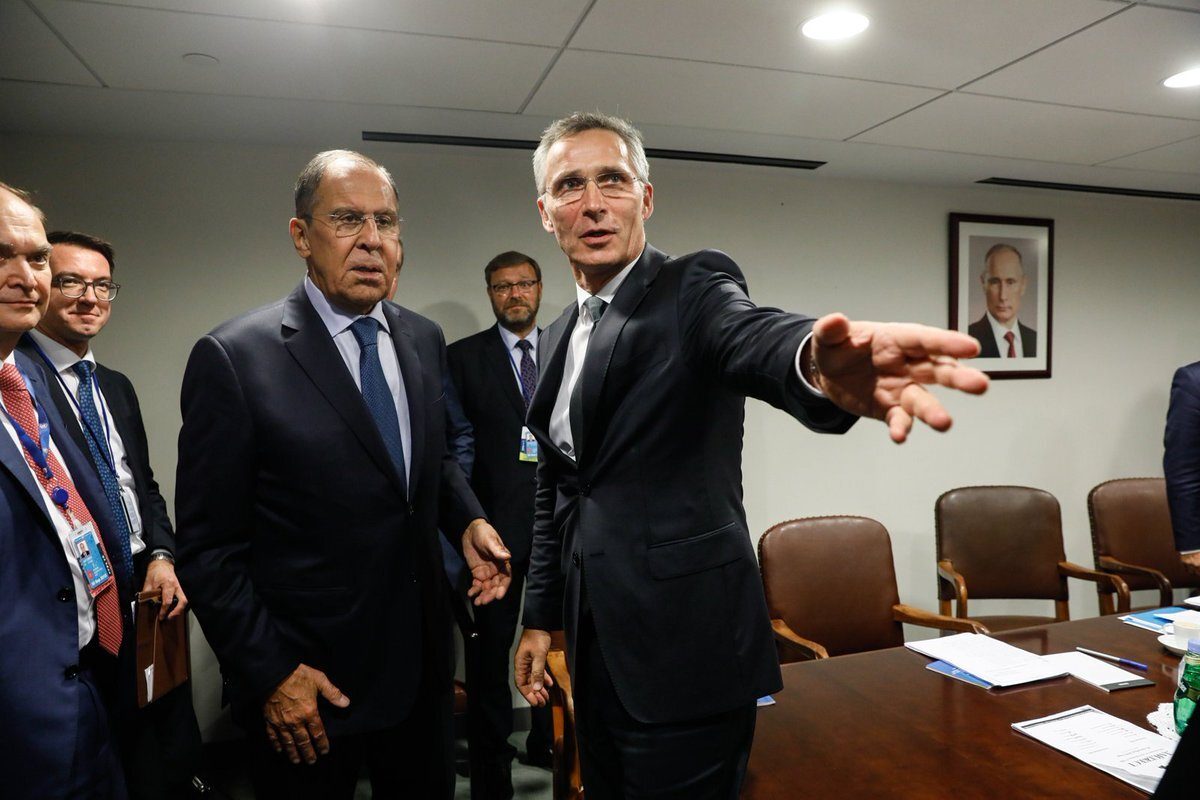
Accordingly, after 1991 attempts began to rethink the role of NATO in the world and the region, to devise new functions for the Alliance that would be relevant and keep the organization afloat. This is what the structural crisis of NATO consists of, since to this day no clear new vision for the Alliance and its functions in the world has been agreed upon. There are many ideas, initiatives, plans and concepts regarding the future of NATO, but a single position among member states has never taken shape. And after the large-scale expansion of NATO eastward after 1999, countries of the former socialist camp joined the Alliance with their own interests, opinions, views and positions, which made the organization even more cosmopolitan, multifaceted and complex.
One of the attempts to pull the Alliance out of the trap of the “old order” and avoid its gradual irrelevance to the modern world and its challenges was NATO's participation in various international military operations, which did not happen during the “Cold War.” As early as 1991, NATO took part in an international operation against Iraq under the auspices of the UN, aimed at expelling Saddam Hussein's Iraqi forces from Kuwait, which they had occupied. NATO took part in bombing the countries of former Yugoslavia in the 1990s, when the country was disintegrating, giving rise to various bloody conflicts on an ethno-religious basis. The Alliance also became a participant in the “longest war” of the 21st century, the operation in Afghanistan, which began after the terrorist attacks of September 11, 2001, and continues to this day.
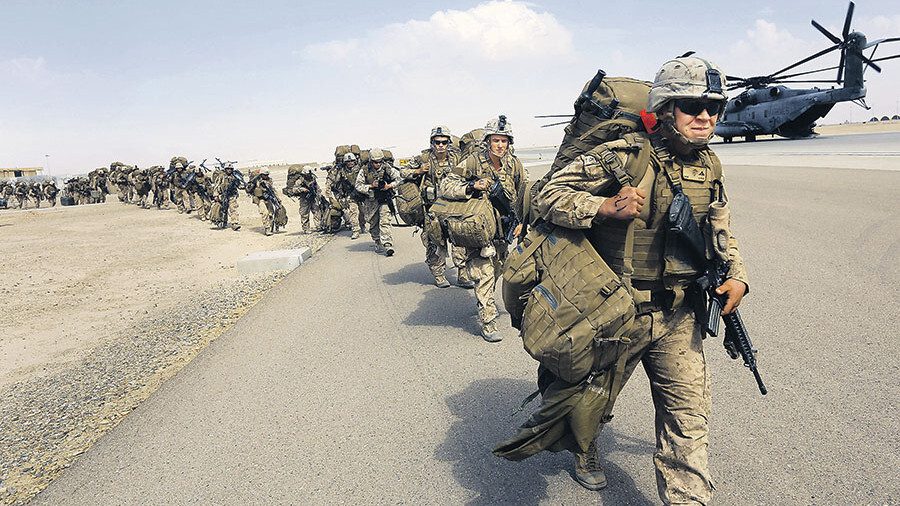
However, these operations still did not answer the key question: what is the meaning of NATO for the world and Europe, and who is the main enemy? Today, many different opinions have formed on this matter, and each state pulls the blanket toward itself, which gives rise to various kinds of conflicts and disputes between them.
For example, the US sees NATO as a platform for preserving its own political interests and influence in Europe, whereas France and Germany see the Alliance as a multi-profile military-political organization that will engage in humanitarian, rescue and peacekeeping operations and, incidentally, help fight international terrorism. Moreover, there is a separate part of the European elites who consider NATO a superfluous structure. They advocate for creating, within the framework of the European Union, its own united EU armed forces. This means that NATO will either become irrelevant for them or can closely cooperate with the new European army. In Washington, this idea is rejected as “unnecessary.” Supposedly, why create a European army that would duplicate NATO's functions, better use the Alliance, in which Americans have the greatest weight.
Eastern European NATO members (Poland, Hungary, the Baltic states, Romania) feel more acutely than all others the still-smoldering military-political threat from present-day Russia, especially after the annexation of Crimea and the occupation of Donbas in 2014. Accordingly, they advocate strengthening the Alliance and returning to its original purposes: countering Russia and containing it on the eastern borders of the EU.
Part of the Western European and American elites and analysts believe, that NATO does not need to spend a lot of money on deterring the Russian Federation (it is still part of Europe and will someday join it). By their logic, the main enemy of today's Western liberal-democratic world is China. Thus, NATO needs to be reformatted and “sharpened” for confrontation with the PRC, just as the Alliance once contained the USSR.
In general, such political and ideological diversity has inevitably generated numerous contradictions in the organization, which form the basis of today's discourse about the “NATO crisis”. In addition, after 1991 the world changed dramatically. There is no longer a single Western bloc of capitalist states united by opposition to the “communist red threat.” The so-called West is heterogeneous, and among these countries there is a return to nationalist, right-conservative ideas and economic mercantilism, when national interests are placed above collective values and common principles.
France under Emmanuel Macron is trying to win leadership in Europe against the backdrop of weakening Germany, where a change of ruling elites is taking place (the era of Angela Merkel is ending, and a period of struggle for power between generations of new political leaders is beginning). Great Britain has gotten stuck in its own crisis, related to searching for its place in the world after the country's exit from the European Union in 2020. Italy is going through an acute political crisis, where governments often change, trying to change the political system that led to the discrediting of old politicians, economic problems and the rise in popularity of various populists and adventurers. Spain this year went through two snap parliamentary elections, and barely managed to form a ruling coalition, fragile, unstable and extremely volatile against the backdrop of the constitutional crisis around Catalonia. Belgium and the Netherlands are experiencing the rise of new, young populist parties, many of which in their rhetoric appeal to old national wounds: separatist sentiments, nationalism, anti-immigration talk and historical greatness. Turkey has become disillusioned with NATO, facing criticism of its domestic policy from allies, and has begun drifting toward China and Russia. And the US, after Donald Trump came to power, demonstrates blatant contempt for the Alliance's values, thereby undermining trust in itself as a reliable ally.
All these contradictions accumulate every year like a snowball, and are reflected at every NATO summit in the form of various personal conflicts between leaders, lack of unity on certain issues, divergences in the vision of the organization's future, and a crisis of trust within the Alliance. At the core of everything, to sum up, is the crisis of NATO's self-identification and the search for the organization's place in the world. In fact, the summit in London was no exception.
How did the summit in London proceed?
It was a jubilee. This was the 30th official meeting of heads of NATO member states, dedicated to the 70th anniversary of the Alliance. The summit was held at the colorful English hotel complex “The Grove,” a former medieval residence of the Earls of Clarendon in Hertfordshire county in southeast England. The venue was chosen not by accident. This area is very close to London, which is convenient from the standpoint of logistics and infrastructure. In addition, it is a historic area, known in Britain, where many films were also shot, for example all parts of “Harry Potter” and “Star Wars.” Many wealthy aristocratic families live here, and the headquarters of large British corporations are located here. And finally, southeast England is the traditional stronghold of British Conservatives, who are now in power and want to win a majority in the upcoming parliamentary elections on December 12.
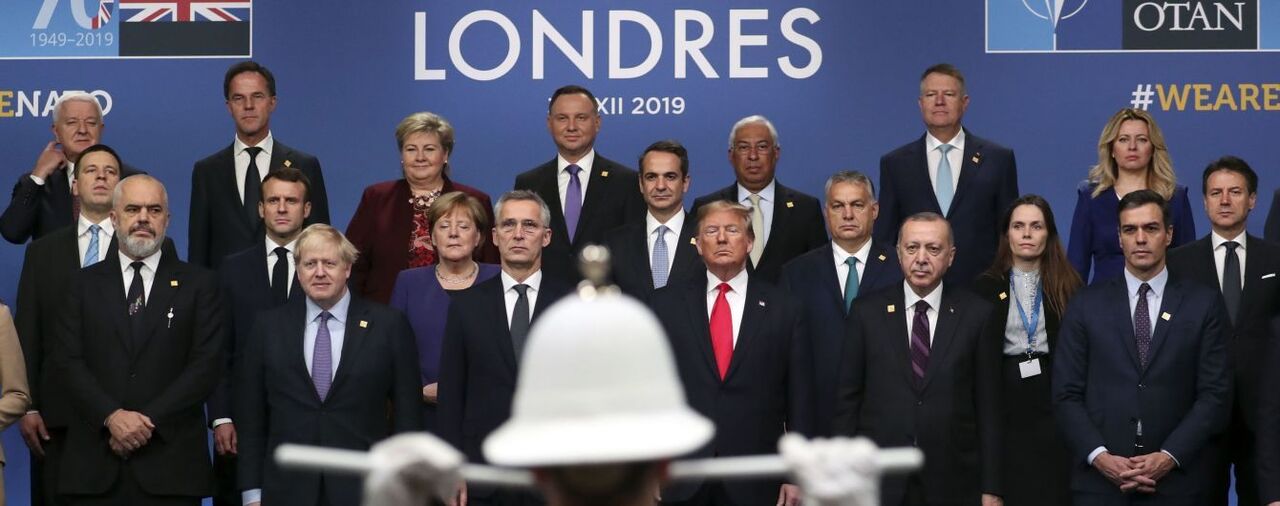
At the summit were present the heads of all 29 NATO member states, including US President Donald Trump, French President Emmanuel Macron, Canadian Prime Minister Justin Trudeau, British Prime Minister Boris Johnson, German Chancellor Angela Merkel, Polish President Andrzej Duda. The formal welcoming part took place at Buckingham Palace, where participants were received by Queen Elizabeth II.
Were only NATO member countries involved there?
No. The specially invited guest was Prime Minister of North Macedonia Zoran Zaev.
This country is currently at the stage of joining NATO, which may happen as early as next year, 2020. The Macedonians opened the way to membership in the Alliance after they resolved last year their dispute with Greece over the country's name.
The Greeks blocked Macedonia's accession to NATO, arguing that their name, Macedonia, encroaches on Greek history and on the historical region that is also called Macedonia. The dispute was not resolved for many years, until last year Macedonia agreed to change its name to North Macedonia.
What happened at the summit in London?
In fact, everything described above happened. The leaders of the countries again argued about various problems, trying to defend their own interests, and these contradictions again spilled out into public, demonstrating further division of unity in NATO. Therefore, many international observers noted a “crisis at the NATO summit,” watching what was happening in London and what world leaders were saying to each other.
A shadow was cast over the London summit even before the event itself began, in effect predetermining its tone and atmosphere. A week before the summit, French President Emmanuel Macron made a loud and scandalous statement about the “brain death of NATO,” meaning precisely the problem I described above: the lack of new ideas, the undefined role of the Alliance in the world, its blurred functions and the absence of unity among member countries. This caused indignation among other member countries, which criticized Macron's statements. The bluntest response came from Turkish President Recep Tayyip Erdogan, who advised the French leader to see a doctor and suggested that it was Macron whose “brain had died.” This further worsened the already problematic relations between Turkey and its European NATO allies.
Besides, internal political processes in Great Britain itself became a further “fly in the ointment.” Not only is the country in a state of pre-election fever, but also a scandal erupted around the royal family. One of Queen Elizabeth II's sons, Prince Andrew, found himself at the center of a scandal when information surfaced about his close friendship with American billionaire pedophile Jeffrey Epstein, arrested for trafficking people and sexual slavery at the end of July and who mysteriously died in a prison cell in early August. Journalists found out that Prince Andrew had repeatedly visited various Epstein locations, where various orgies involving underage girls took place. The prince himself denied everything, and then decided to give a public interview, in which he completely failed, making his affairs even worse. After this, the queen banned him from taking part in official events, and at the summit in London many noticed his absence.

During the summit itself, many problems occurred that further underscored the crisis of trust within NATO. Unlike many previous meetings, at this one there was no sense of unity and shared values and ideas. Rather, on the contrary, disunity, hypocrisy, anxiety and a toxic atmosphere prevailed. US President Donald Trump criticized French President Emmanuel Macron, with whom they clashed over several disputed issues: the repatriation of foreign fighters of the “Islamic State” from Syria, attitudes toward Russia and Macron's critical remarks about NATO. Their bilateral meeting “on the sidelines” of the summit was extremely tense, and the joint press conference for journalists was cool; Trump taunted Macron, mildly criticizing his domestic policy and comments, while the French leader in response openly allowed himself to correct the American president when he made errors in figures when speaking about the number of foreign IS fighters in Syria.
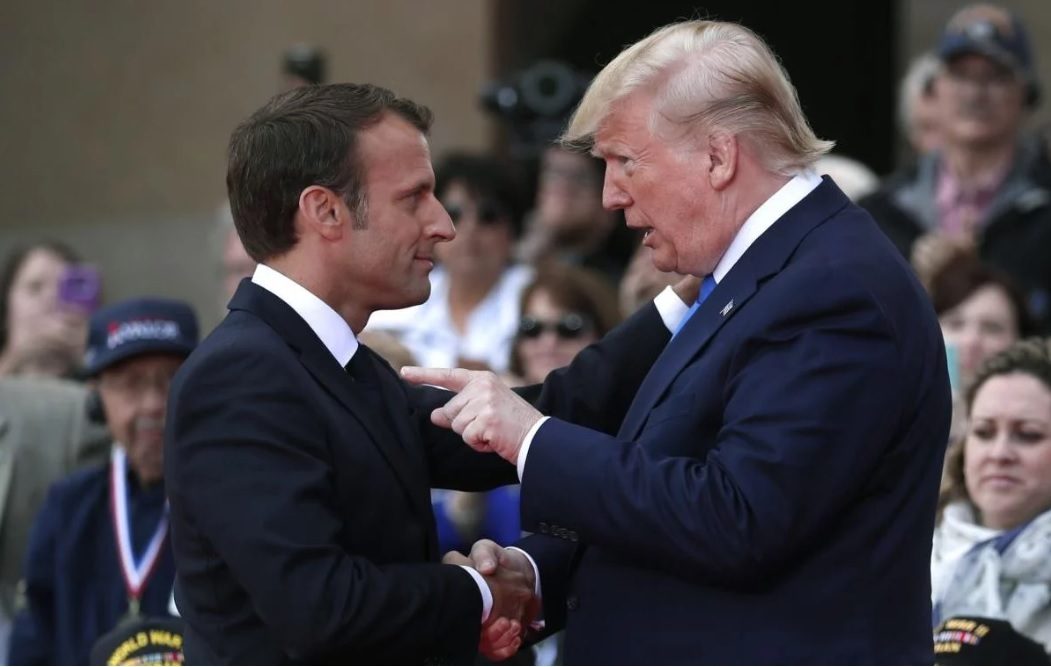
It was at this meeting in London that many outside observers first heard the seemingly incredible phrase “US sanctions against France.” Donald Trump publicly threatened to impose trade restrictions on French goods in response to Paris's intention to levy a digital tax on large American corporations such as “Apple” and “Google,” which in the EU are accused of violating monopoly legislation. Understandably, when it comes to mutual sanctions and punitive measures, there can be no talk of friendship within the transatlantic alliance.
A major problem at the meeting became the issue of Turkey. President Erdogan unexpectedly blocked approval at the summit of the Alliance's new, updated plans to strengthen the protection of the Baltic states and Poland against the possible threat from Russia. The plan envisaged sending additional NATO troops to these countries, modernizing defense infrastructure and allocating additional funds for programs to strengthen the protection of Eastern Europe from potential threats from the Russian Federation. Ankara blocked these plans, demanding concessions from NATO on issues of interest to it. In particular, Erdogan demanded that the Alliance recognize the Syrian Kurdish militarized formations as a terrorist organization.
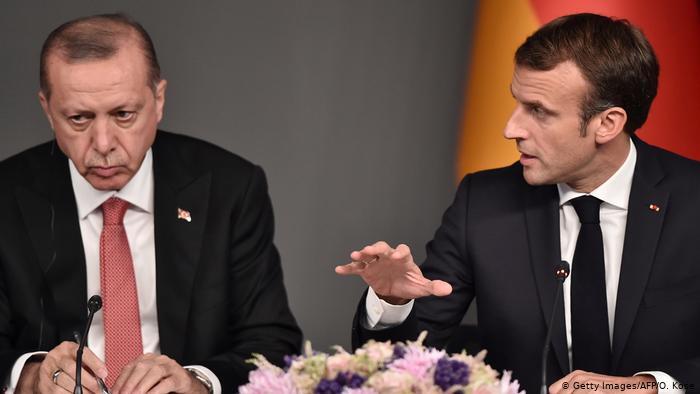
The point is that in October Turkey carried out a military invasion of northeastern Syria against local armed Kurdish groups supported by the US. However, this operation was criticized in the West, including Turkey's NATO allies, and Erdogan considers this “betrayal” on their part, since the Kurds attacked Turkey's borders, and under the NATO Charter allies must help each other. Only after several meetings with Erdogan during the London summit was it possible to convince him to unblock NATO's plans for the Baltics. True, what the Turkish leader received in return is still unknown. Erdogan's blatant blackmail provoked criticism also from the US president, who even stated that since Ankara had begun buying weapons from Russia (referring to the purchase this summer of Russian S-400 air defense systems), then let it buy planes from China and Russia, rather than from the US and NATO countries.
The atmosphere at the London meeting was overall negative. A video that appeared online showing the leaders of Canada, France, the Netherlands and Britain discussing Donald Trump's antics in the corridors, joking about his speech, left an unpleasant aftertaste for everyone present. The US president once again demonstrated that what brings him personal political benefit matters more to him, when, right in the middle of a press conference with the Canadian prime minister, he suddenly began commenting on domestic politics, lashing out with criticism at his political opponents in Washington from the Democratic Party.
Trump once again reminded allies that the US “spends a disproportionately large amount of money on the Alliance,” again casting doubt on Washington's readiness to support NATO and demonstrating his “mercantile approach” (unlike the value-based and trust-based one that has always existed in NATO) to the question of the Alliance's future. Donald Trump is known for his skepticism regarding NATO, and sometimes even raised the question of the US withdrawing from the Alliance, which undermined trust in him on the part of allies, prompting them to seek alternative ways of keeping NATO afloat, but without the US.
Donald Trump also complicated his relations with Britain, when during the summit he undertook to comment on the political situation in that country, despite having promised before arriving not to interfere in the upcoming parliamentary elections. At the same meeting with Stoltenberg, Trump stated that he is a “Brexit fan” and praised British Prime Minister Boris Johnson. This caused a negative reaction from journalists and the British political opposition, who accused Trump of playing in favor of the government.
Another issue that overshadowed the London summit was the case of the tragic death of 19-year-old Briton Harry Dunn, who was struck by a car in August driven by an employee of the American embassy, diplomat Anne Sacoolas. Immediately after the tragedy, she left the scene of the accident and left Britain for the US, using diplomatic immunity before any criminal case was brought against her. Since then, Britain has been seeking Sacoolas's extradition from the US and her prosecution. Many did not like the fact that Trump was received at Buckingham Palace, despite Washington not helping the investigation. This became another blow to British-American relations at the summit.
There was also no unity among allies on the issue of China. The US actively promoted the idea of increasing pressure on China and reducing trade with it. Of course, far from all European countries share the opinion of the States and Donald Trump. Although EU countries acknowledge that China may pose a threat to them, from their point of view this threat does not go beyond ideological and geoeconomic competition. Thus, why reduce cooperation with Beijing if it can bring benefit and prosperity? Therefore, at the summit there was a clear contrast between Trump's sharp anti-Chinese statements and the more moderate, softer rhetoric of all the others.
Because of such an abundance of internal problems and the crisis of trust, and also remembering the experience of previous summits, the organizers did not even call this event a “summit,” but only a “meeting”. For outside viewers this may not matter, but for NATO it is a huge difference. If it is not a summit, then it does not require publishing a final communiqué and signing it by all leaders. Considering that at past gatherings it was precisely Donald Trump who often refused to sign the final declaration if he disliked something in it, this year they simply decided to remove it altogether.
And what now?
The London gathering demonstrated that the crisis of NATO's institutions and the so far fruitless search for the Alliance's new role in the world increasingly undermine the internal unity of member countries. In turn, this leads to a decline in the level of trust between them, weakening of multilateral cooperation, and a change in approaches to assessing the success and effectiveness of the Alliance, when the measure of NATO's strength becomes not the power of its members or the strength of its ideological base, which binds everyone with one idea and concept, but some dry figures (such as the amounts of financial contributions to the common budget), statistics (such as how many inflatable boats with refugees NATO intercepted in the Mediterranean Sea) and declarative statements that are rarely implemented in practice.
This threatens NATO with gradual marginalization in international relations and the transformation of this bloc into an ordinary consultative-informational forum, a club of common interests, where everyone will gather once a year to discuss interesting topics on the global agenda.
Will NATO really fall apart?
This is unlikely. The problems that exist among allies are not critical enough to bring the situation to the collapse of the Alliance. Moreover, despite the crisis of its own function, NATO still performs some tasks that unite at least Europe: fighting terrorism, containing refugee flows in the Mediterranean, protecting borders, humanitarian interventions, assisting international organizations, and others.
Besides, it is not advantageous for NATO member states to disband, since the organization, despite all its problems, is not completely helpless. It is capable of defending itself and has quite impressive forces and resources, which to this day is a deterrent factor for Russia itself. Yes, of course, the crisis of trust and the split within the Alliance have indeed weakened its capabilities, worsened the system of responding to threats and led to a loss of interest in this project, at least on the part of some states. But the collapse of NATO or the expulsion of its members (for example, Turkey) for “bad behavior” is for now too harsh a scenario, for which there are no grounds.
And what does all this mean for Ukraine?
The crisis within NATO directly affects Ukraine's foreign policy course, one of the main pillars of which today is the country's aspiration to join the Alliance. However, the abundance of problems that exist in NATO today, and because of which they are not yet ready to accept new members (especially if it concerns such a “sensitive” issue for all sides as Ukraine), call into question Ukraine's unconditional desire to join NATO at any cost.
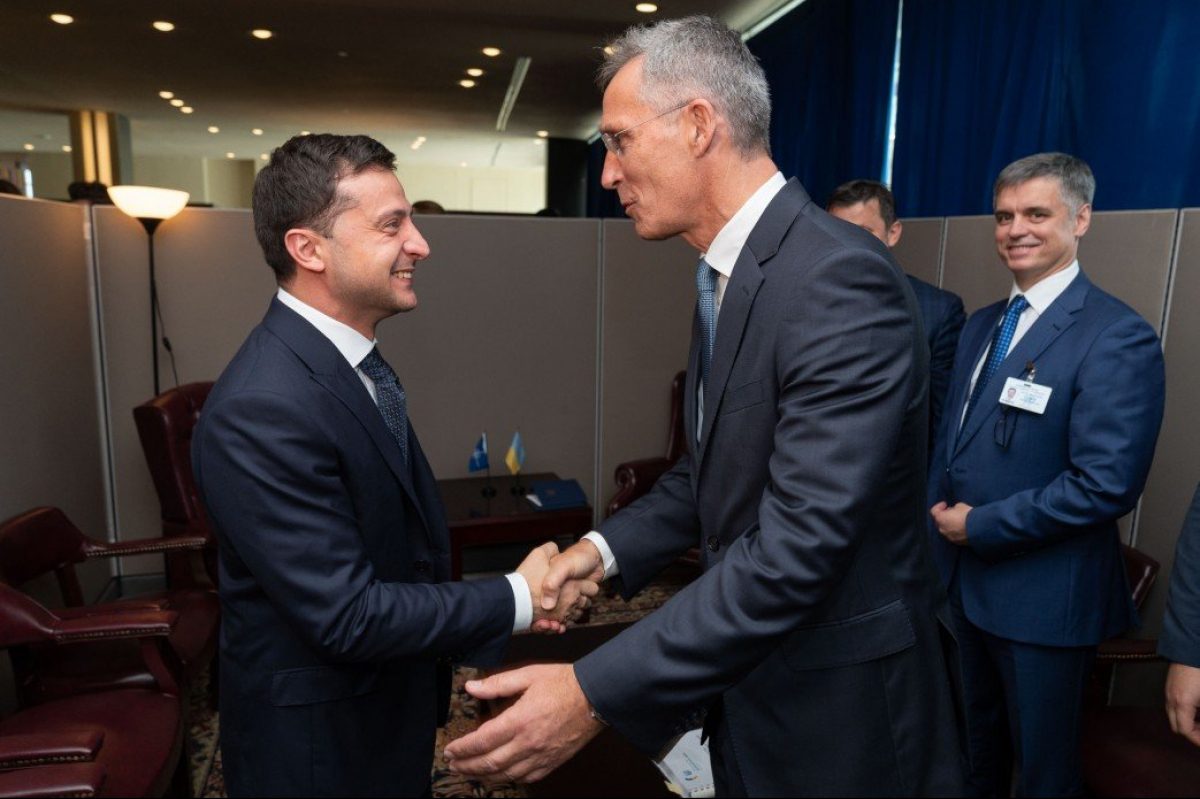
Indeed, if the question of rethinking the Alliance's role in the world is never resolved, this could lead to such a sharp weakening of NATO that the organization will be unable to protect Ukraine's interests (even today many have doubts on this score). And in such a case, this overturns most of Ukraine's foreign policy discourse, which holds that NATO can save Ukraine from Russian aggression and protect it in case of new misfortunes. It is worth recalling that, according to sociology, most Ukrainians who want Ukraine to join NATO cite as the main argument for such a decision the claim that NATO is capable of ensuring the security of the country and its borders. However, if these internal squabbles within the Alliance continue, then faith in NATO's ability to ensure this security will decline.
Thus, it is very important to follow what is happening in NATO and in relations among member countries, in order to understand the overall situation and adjust one's national interests taking into account the rapidly changing global and regional situations.

Russian Attacks in Dnipropetrovsk Region: Two Killed, Seven Injured

Defense Forces Strike Four Russian Drone Control Points in Past Day, Including in Berdiansk

Britain Threatens Sanctions on Kremlin-Linked People; Poland Ready to Hand Ukraine Ammunition

Russia says it has completed "planned exercises" in the Black Sea

MVD: Fake Riots With Prop Blood Were Being Prepared Near Presidential Office

Law Enforcers Name Another Klitschko Deputy as Suspect

Berlin Holds Protest Against War in Ukraine; EU Prepares for Possible Russian Halt of Gas Supplies
North Korea Fires Ballistic Missile Over Record Distance in Five Years
Irish Fishermen Force Russia to Postpone Naval Drills

US sanctions in case of invasion of Ukraine could completely destroy Russia's economy, NYT reports
