
"Neither Fish Nor Fowl". Results of Volodymyr Groysman's Premiership
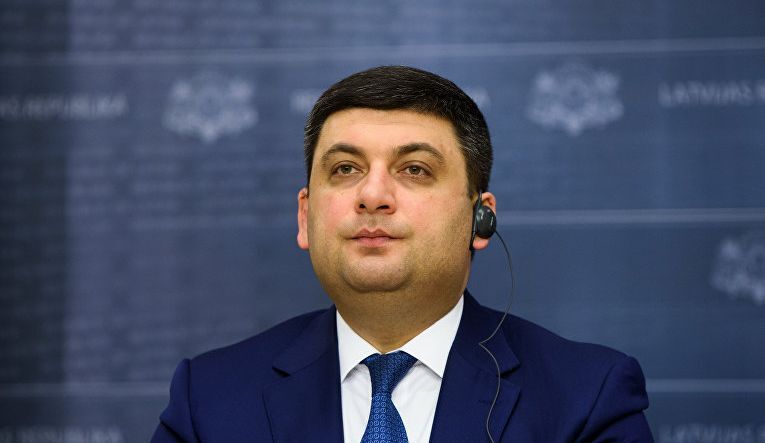
Does he have a political future?
In the winter of 2016, another crisis erupted in Ukraine's political establishment. On February 16, 2016, the Verkhovna Rada of Ukraine, after hearing the report of then Prime Minister Arseniy Yatsenyuk on the government's activities in 2015, adopted a resolution declaring the government's work unsatisfactory by 247 votes. A few hours earlier, President Petro Poroshenko had called on Yatsenyuk to resign. However, only 194 deputies voted for the government's resignation, while at least 226 were needed, so Yatsenyuk could not be removed from office.
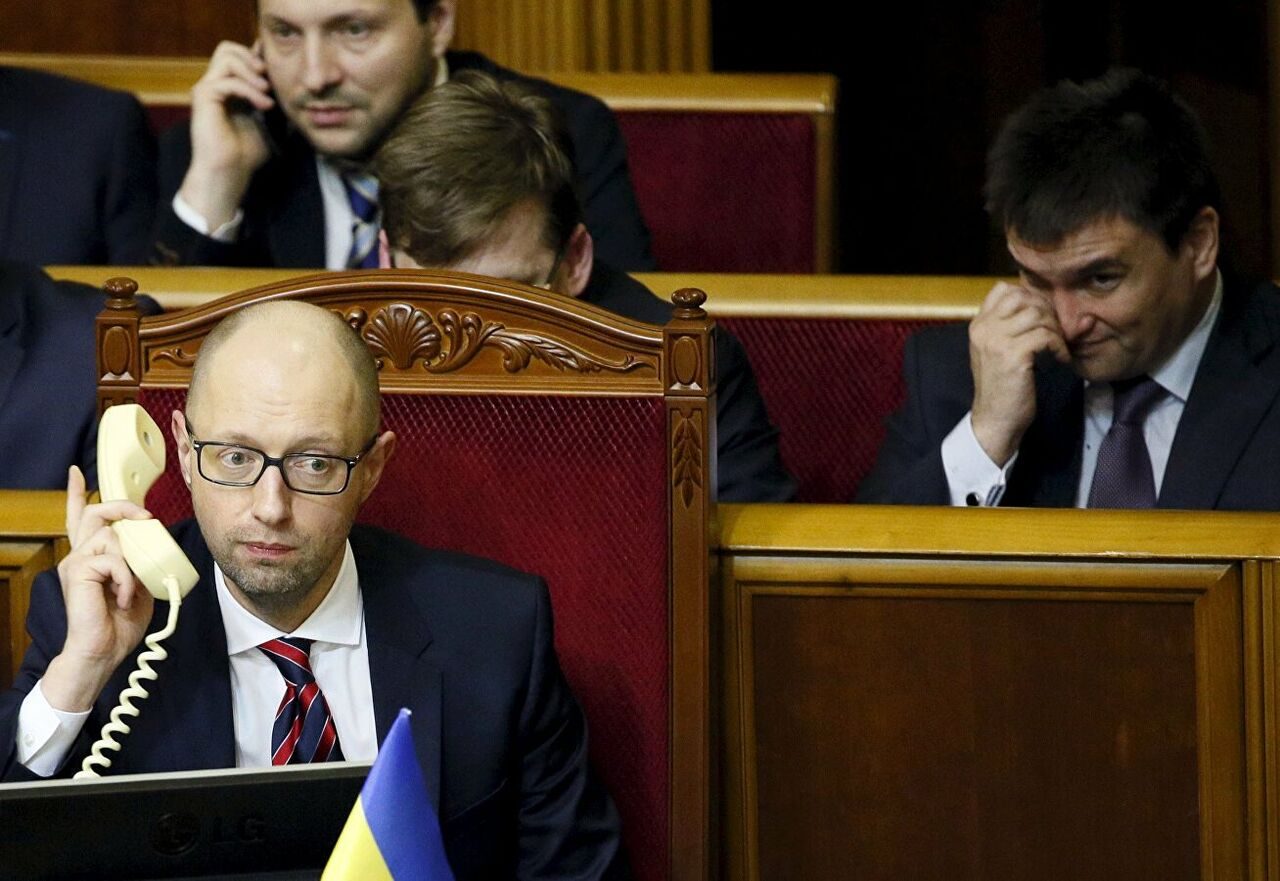
On April 10, 2016, Arseniy Yatsenyuk announced that he was voluntarily stepping down from the post of prime minister on his own initiative. On April 14, the Verkhovna Rada of Ukraine accepted the resignation of Prime Minister Arseniy Yatsenyuk with a single resolution and appointed Volodymyr Groysman, who had previously served as speaker of parliament, in his place. The same day, a new cabinet was approved.
Groysman's appointment eased parliamentary tensions and made it possible to defuse the emerging political crisis. Under Groysman, the decentralization reform also expanded widely, and modest but real GDP growth began, while the overall economic situation relatively stabilized. The vast majority of experts assess Groysman's work as neutral or even cautiously positive, which in itself is nonsense, since almost all the figures of the Poroshenko era provoke persistent antipathy in the expert community. Paradoxically, even ordinary Ukrainians, who as a rule view their own authorities very negatively, rate Groysman quite reservedly and do not express clear antipathy toward him – though nor do they express sympathy.
It is foolish to deny that the economic situation was stabilized under Groysman. Put simply, the prevailing assessment of Groysman's activity, both among experts and ordinary Ukrainians, is that he was a "normal prime minister". However, the problem is that Ukraine needs not just a "normal" prime minister but a breakthrough one, who could bring the economy to a new level, ensuring consistently high rates of national development. On August 29, 2019, Groysman's government will officially hand over its powers. A new prime minister will be appointed soon and a new cabinet formed.
So who was Volodymyr Groysman: an experienced but underappreciated reformer, or a talented master at throwing dust in people's eyes by simulating vigorous activity?
Decentralization, infrastructure and political career: what Groysman did as Ukraine's prime minister
Groysman became Ukraine's prime minister on April 14, 2016. He held this post for more than three years, which is something of a record: for a Ukrainian prime minister, that is a more than solid term. In his first speech as prime minister, Volodymyr Borisovich emotionally promised to "show how to govern the state". However, whether he actually did so is a big question.
The question of government and cabinet effectiveness is always emotional rather than rational. The point is that political players and the parties they lead come to power with good programs and right slogans, but implementation, as a rule, suffers badly. This is proven by the electoral activity of Ukrainians: not once have citizens of Ukraine voted for a sitting president and the ruling party twice in a row. The exception, Leonid Kuchma, only confirms the general rule.
How, then, can the effectiveness of the government's work really be assessed, and can Groysman's government be considered successful? Probably, everything is known by comparison. It cannot be denied that under Groysman Ukraine began to show stable economic growth of 2-3%. The problem is that this growth remains within the statistical margin of error, especially when compared with the decline of 2014-2015. However, the global GDP indicator grows faster than Ukrainian figures, and despite our growth, we still lag behind the global economy.
International investors have repeatedly named the reasons why it is unprofitable to invest money in Ukraine. These are corruption at the highest levels of power, monopolization of key industrial markets, pliable legislation and courts dependent on political conjuncture. The Groysman government was unable to solve any of these problems.
The effectiveness of the government's economic activity is usually assessed by three main indicators. These are the level of GDP, the level of inflation, and job creation (or the unemployment rate). A failure in at least one of these figures in any developed country always leads to the government's resignation – but not in Ukraine. Yes, GDP growth began under Groysman, but it was not enough to emerge from the crisis. Yes, the inflation rate stopped rising, but this was done, as a rule, at the expense of IMF loans. Yes, the unemployment rate fell, but primarily because millions of Ukrainians left to work in European countries.
Political scientist and coordinator of the CHESNO public movement in Kharkiv region Ruslan Zernytskyi believes that Groysman did not fully cope with his duties and did not use all possible tools for governing the country.
Ruslan Zernytskyi
political scientist, coordinator of the CHESNO public movement in Kharkiv region"Perhaps the main criterion for assessing the cabinet's activity can be called the fulfillment of annual plans of priority government actions, which are prepared and approved by its own representatives. During Groysman's time in office, these plans were fulfilled at most 55%, which is hard to call a success. The cabinet also failed in implementing the Association Agreement between Ukraine and the EU. Judging by their own reports, in 2018 only 52% of the tasks planned for that year were completed. If such rates continue in the future, this will delay Ukraine's prospects of joining the EU for a long time"
Also, according to Zernytskyi, Groysman used budget money for self-promotion as a political figure ahead of the parliamentary elections.
"Since summer 2018, the cabinet has actively used budget money, that is, money from our taxes, to advertise the 'Groysman Government'. The advertising was labeled as 'social', although representatives of the National Council on Television and Radio Broadcasting classified it as political. In 2019 alone, almost 36 million hryvnias were spent from the budget on creating a positive image of the prime minister. Using budget money for self-promotion before elections — this is a farce!".
According to the expert, in the last year of his term, Groysman became deeply involved in political activity instead of his prime ministerial duties. Most of his efforts were devoted to the desire to distance himself from the "toxic" President Poroshenko. All of this was done at the expense of Ukrainian citizens' taxes. As a result, Groysman received 2.4% in the elections, having "poured" tens of millions of hryvnias of budget money into his election campaign.
Nevertheless, despite his failure in the parliamentary elections, Groysman does have a political future, says political scientist Kostiantyn Bondarenko.
Kostiantyn Bondarenko
political scientist"I consider Volodymyr Groysman a talented administrator and manager, whose misfortune lies in one thing: he had to be prime minister of a non-independent state. At the same time, he spent most of his energy trying to become an independent player in a non-independent state — independent of Poroshenko, of the oligarchs, and even of public opinion. Groysman, without a doubt, is a person with fairly progressive views, not a supporter of revolutionary approaches, a market-oriented person, a supporter of compromises, with an inner core, with well-developed intuition (which sometimes compensates for a lack of education), active and energetic. But he had to manage under a double pressure — on the one hand, the IMF demanding cuts to benefits and higher tariffs, and on the other hand — the Presidential Administration demanding the creation of an illusion of social well-being before the presidential elections. Groysman managed to pass between the drops and did not accumulate as much negativity as his predecessor. I think Groysman will still have his say in politics in the future"
Groysman is often credited with the decentralization reform. Decentralization was Volodymyr Borisovich's "idée fixe", which he promoted back when he was mayor of Vinnytsia. According to experts' estimates, Ukraine largely owes the decentralization reform to Groysman, which made it possible to increase the revenue of local budgets 2-4 times. However, this reform is still far from complete, says political scientist Andriy Zolotarov.
In his view, there is no need to speak of any clear result of Groysman's work.
Andriy Zolotarov
political scientist"A good mayor turned out to be a mediocre prime minister. If we look for positives, Groysman came to understand that we need to earn money rather than borrow it. He managed to keep the situation within bounds, but there is no need to talk about any development or effective reforms. There is not even a strategy for getting out of the crisis. Credit should be given in decentralization — he understood these processes better than Poroshenko. Unlike Yatsenyuk, Groysman left a positive impression of himself: he understood the problems of local communities, he could listen and communicate. In many ways, the decentralization reform is Groysman's achievement. However, this reform is far from complete. Groysman's political future exists"
He is in agreement with analyst at the organization "Democracy Observatory", Candidate of Political Sciences Anton Avksentyev. The expert highly values Groysman's achievements in the decentralization reform, while speaking rather reservedly about the rest of his activity. He also believes that Volodymyr Borisovich has prospects for a political future in Ukraine.
Anton Avksentyev
analyst at the organization "Democracy Observatory", Candidate of Political Sciences"I would call Groysman's key achievement the decentralization reform, thanks to which local budgets grew by approximately 4 times. At the same time, the government of Groysman's reforms in the pension, educational and medical spheres can rather be classed as failures than achievements… In my view, Volodymyr Groysman remains a fairly promising politician, and the result of the personal party project ('Ukrainian Strategy') in the 2019 parliamentary elections, which gives the right to state funding, makes Groysman attractive to sponsors and franchise seekers in local elections. Notably, in the July poll by the 'Rating' sociological service, 6% of respondents said they were completely satisfied with the activity of the Prime Minister, and another 22%(!) said 'rather satisfied' (for comparison, for the Verkhovna Rada these figures are 2% and 5% respectively), so it is quite possible to assume that Groysman will find his place in the 'post-Poroshenko' political era"
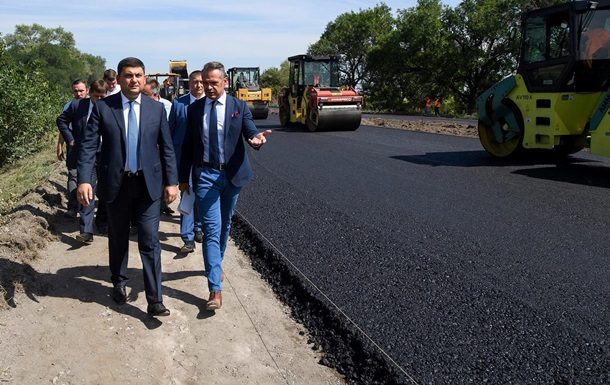
Another achievement of the Groysman era is often cited as large-scale road repair. According to the prime minister of Ukraine himself, more than 1,000 kilometers of state-level roads and about 3,000 kilometers at the local level have been repaired. However, in practice this repair was often of poor quality, and contractors winning road repair tenders were often accused of corruption and "schemes".
In the World Competitiveness Index of countries, Ukraine ranked 83rd out of 140 as of 2019. For comparison, under Yatsenyuk our country was in 79th place. For the quality of government institutions, Ukraine holds 110th position, and the implementation of the Association Agreement with the EU as of the beginning of 2019 stood at 52% of all tasks that were to be completed by that time. Thus, one can state unsatisfactory performance of the government — and this can be stated based on the government's own reports. Volodymyr Groysman honestly admits that his government fulfills at best half of the tasks before it. Whether one can speak of any effective work of the cabinet at all is a rhetorical question.
Groysman's premiership as the "stabilizer": conclusions and further prospects
On August 29, 2019, Volodymyr Groysman will officially hand over his powers as prime minister, though he will temporarily remain acting prime minister until a new government is approved. During Groysman's premiership, Ukraine did not make an economic breakthrough and did not return to the pre-crisis indicators of the "golden" year 2013. However, Groysman accomplished his basic task of stabilizing the economic situation, says political scientist and director of the Ukrainian Institute for Policy Analysis and Management Ruslan Bortnik.
According to the political scientist, Groysman did what experts expected of him – he implemented in Ukraine a quasi-Azarov "stabilizer".
Ruslan Bortnik
political scientist, director of the Ukrainian Institute for Policy Analysis and Management"He stabilized the economic situation in the country, but at the same time, Groysman and his government did not create any particular progress or breakthrough for Ukraine. Groysman is a new interpretation of Azarov, this is a government of stabilization, but not of any progress and recovery… The Groysman government was not independent, it did not report to parliament… This government did not carry out any substantial, structural reforms… All of this was left half-done. This government became mired in corruption scandals and lost all responsibility before Ukrainians. It was a government of such a 'stabilizer', which was fully dependent on Poroshenko and in which Groysman's ratings died. I am sure that if Groysman had distanced himself from Poroshenko earlier, his party and he himself would have been quite competitive in the elections", — the expert summarizes.
Summing up all of the above, it can be concluded that Groysman turned out to be a fairly weak prime minister. Yes, he managed to bring the economic situation into relative order, preventing Ukraine from falling into an economic abyss. Nevertheless, no surge or breakthrough, so necessary for our country, was achieved by Ukraine under Groysman. Perhaps the most accurate, though colloquial, assessment of Groysman's work is the old Russian proverb – "neither fish nor fowl". Groysman does not have strong toxicity among Ukrainians, unlike many of his predecessors, but he also lacks the political charisma so necessary for a successful political career. Under Groysman things did not get worse, but they did not get better either. In essence, Groysman turned out to be an absolutely mediocre and ordinary prime minister – and that would be fine, but Ukraine needed and still needs a different prime minister – a fanatical reformer, innovator and technocrat who can carry out an economic breakthrough. Groysman failed to accomplish the task of an economic surge, the fight against corruption, large-scale reconstruction of infrastructure and attracting foreign investment. Unlike Yatsenyuk or Azarov, he did not accumulate a lot of negativity on his persona – but he also never earned any positive assessments whatsoever.
Volodymyr Groysman will remain in Ukrainian history as a "transitional prime minister" who did nothing that was unequivocally good or one hundred percent bad. Whether he has a political future will be shown by the coming years. For now, it can be confidently stated that he was neither the worst nor certainly the best prime minister of Ukraine.

Russian Attacks in Dnipropetrovsk Region: Two Killed, Seven Injured

Defense Forces Strike Four Russian Drone Control Points in Past Day, Including in Berdiansk

Britain Threatens Sanctions on Kremlin-Linked People; Poland Ready to Hand Ukraine Ammunition

Russia says it has completed "planned exercises" in the Black Sea

MVD: Fake Riots With Prop Blood Were Being Prepared Near Presidential Office

Law Enforcers Name Another Klitschko Deputy as Suspect

Berlin Holds Protest Against War in Ukraine; EU Prepares for Possible Russian Halt of Gas Supplies
North Korea Fires Ballistic Missile Over Record Distance in Five Years
Irish Fishermen Force Russia to Postpone Naval Drills

US sanctions in case of invasion of Ukraine could completely destroy Russia's economy, NYT reports
