
(Not) a Deadly Blow to Lukashenko. EU Imposes Sectoral Sanctions on Belarus for the First Time. What Happens Next and What Does Ukraine Have to Do with It?
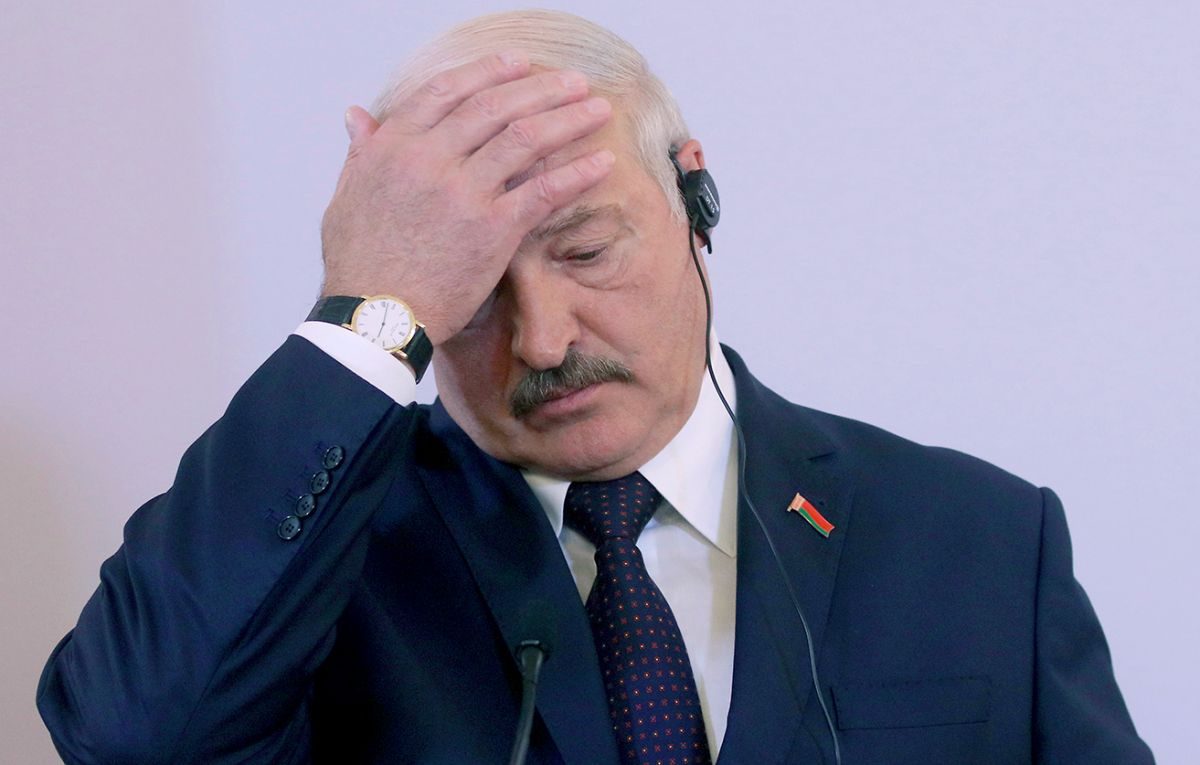
Analyst Ilya Kusa on the EU sanctions against Belarus in detail.
On June 24, the European Union decided to impose a new package of sanctions against Belarus. This time, EU countries for the first time imposed sectoral restrictions rather than the usual personal ones. This means that entire sectors of the Belarusian economy have ended up on the “blacklists.” Brussels has made such a decision for the first time since the start of the political crisis in Minsk in August 2020.
The new sanctions have brought with them new comments, questions, observations, cheers and shouts pouring in from everywhere. The jubilant Belarusian political opposition is enthusiastically celebrating, counting down the days to the “collapse of the regime” of Alexander Lukashenko. Pro-government forces indifferently shrug their shoulders, saying that they don’t care at all and that the sanctions are an external conspiracy. And outside observers are going through the sanctions lists and trying to understand what is happening and how it will affect other countries.
There is a need to consider this issue in detail and seriously. To analyze the sanctions, review their lists, read the EU statements and assess what this turn in the confrontation between Belarus and the West means. And finally: what in all this concerns Ukraine?
What sanctions were imposed against Belarus?
The formal reason for the new sanctions is stated as follows: “the increase in gross human rights violations in Belarus and the violent suppression of civil society, the democratic opposition and journalists, as well as the forced landing of a Ryanair aircraft in Minsk on May 23, 2021, and the subsequent detention of journalist Roman Protasevich and Sofia Sapega”.
It is striking that the May incident with the Ryanair aircraft is given, as it were, a secondary role in this decision. As if in addition to the problem of systematic human rights violations. This is strange, given that the story of the aircraft landing in Minsk became the main reason for the sharp escalation of confrontation between the EU and Belarus over the past 2 months. It can be assumed that without this incident, the EU might not have introduced sectoral sanctions at all. And even if it had made such a decision, they could have been milder.
The sanctions themselves cover four sectors of the Belarusian economy: financial, energy, military-industrial and chemical. In each of them, an area is affected that has significant weight in the structure of Belarusian foreign trade and the national economy. Let me go through the list.
In the financial sector, the EU imposed restrictions on banks. In particular, the official Brussels limited access to its capital market and the cooperation of its development banks with Belarus. Issuing loans and credits with maturities longer than 90 days was banned. Insurance and reinsurance of Belarusian state bodies were prohibited, and some technical assistance to Belarus funded by the European Investment Bank was frozen. Restrictions were introduced on cooperation with multilateral development banks of which the Republic of Belarus is a member.
In energy, the sanctions affected the export of petroleum products. In particular, the official Brussels restricted oil trade, effectively banning new contracts for the purchase, import or supply of petroleum products from Belarus, as well as providing technical, brokerage or financial support to this sector. However, it is stated that the list of specific product categories that will end up on the “blacklist” will be formulated later.
The military sector was affected only partially, as telecommunications technologies, equipment and software that could be used for military purposes were targeted. The transfer, supply or sale of technologies and software for tracking people online, intercepting traffic and wiretapping phones was also banned. In short, all the “toys” that the security forces use to pressure opposition media and social media accounts. But the most interesting thing is the ban on trade in dual-use goods. In other words, the EU has decided to exert pressure not only on Belarusian enterprises that trade in military products, but also on the intermediaries through which trade was carried out for many years.
Finally, in the chemical industry, sanctions hit potash fertilizers. EU countries are introducing a ban on imports and purchases of potassium carbonate (also called “potash”) from Belarus. It is used to make products such as liquid soap, paints, agricultural fertilizers, photographic film developers, additives for construction mortar, certain types of glass, etc.
Why did the EU introduce these sanctions at all?
It should be said right away that this package of sectoral sanctions was announced back in May after the incident with the Ryanair aircraft. And now, a month later, the announcement has turned into a real decision. So after what happened in the skies over Belarus, EU countries could not fail to introduce new sanctions. Otherwise they would look weak, indifferent and inconsistent in their foreign policy of defending democracy, human rights and all the quasi-democratic structures.
Moreover, the political moment was not chosen by chance. The sanctions were introduced after the visit to Europe of US President Joe Biden and his talks with Vladimir Putin and NATO allies. The situation in Belarus was one of the topics of discussion both at the NATO summit and in the “US-EU” format, as well as during Biden’s conversation with Putin. We do not know exactly what the leaders may have agreed on regarding Belarus. However, if you look at the final statements of Western leaders, it is clear that they decided to act in concert and increase pressure on Minsk, rather than the opposite. True, in this offensive combination the US clearly wants to lead rather than follow, which, obviously, France and Germany do not like very much.
Finally, recent international events have created a convenient political backdrop for this decision by the EU. The Biden-Putin summit demonstrated the US desire to stabilize the Russian direction so that it would be easier to redirect its resources to containing China. It is not about becoming friends with Putin. It is rather about bringing order to their confrontation, creating some rules, and making the conflict predictable and understandable. For this, Biden needs a temporary freeze of conflict points between the West and Russia, where both sides can reach at least some kind of agreement. Belarus is one of the areas where this is possible. European allies of the US understand this and want the same thing. Perhaps even more than the United States, since Russia is an important business and trade partner for Europe.
To stabilize relations with Russia, Europe needs to get conflict situations with it out of a deadlock, force them to move somewhere, so that in the end they can reach compromise agreements. And for this, one cannot stand still; one must either raise the stakes or retreat. In Brussels, not without encouragement from the White House, they decided to move forward gently but firmly, pressuring Belarus and Russia, forcing them to sit down at the negotiating table and to close the issue with Lukashenko as soon as possible.
So the sectoral sanctions were introduced for three reasons: the need for the EU to respond to the Ryanair aircraft incident, the desire to reach a compromise with Russia by raising the stakes, and the transformation of US foreign policy.
So, does this mean the Belarusian economy is being wiped out?
Not at all. As is often the case, the EU’s new sanctions contain their own “pitfalls” that allow us to look at this situation from a different angle and analyze it more deeply. Let me try to explain with examples.
Sanctions against the Belarusian “oil business” are certainly the most painful, but only in the long run. The share of oil and petroleum product exports makes up about 17.6% of the Belarusian economy, which amounts to more than $1 billion that Minsk earned from exporting oil to the European market. But the introduction of sanctions against this sector does not mean that Belarus will immediately lose this money or stop pumping oil to Europe.
The point is that these EU sanctions do not apply to existing contracts that have already been concluded between Belarus and European buyers. The statement of the EU Council wrote this in Article 2f, paragraph 5: “The restrictions in paragraphs 1 and 2 shall not apply to the performance of contracts concluded before June 25, 2021, or to ancillary contracts necessary for the performance of such agreements”. Moreover, if you look at the wording in the statement, it is clear that the EU, although it banned the direct import of petroleum products from Belarus, says nothing about indirect purchases of Belarusian petroleum products. In other words, it is not allowed to transport from Belarus, but, judging by the decision, it is possible to do so from third countries through intermediaries, so to speak, for example through Britain, Russia, the Netherlands or Ukraine, as was done for many years before.
There are also nuances with the banks. The EU has restricted cooperation with Belarusian state structures of the European Bank for Reconstruction and Development (EBRD) and the International Bank for Reconstruction and Development (IBRD), but only regarding the issuance of new loans or grants to Minsk. Old ones remain in force. Financial assistance to private companies is not subject to restrictions. In addition, the restrictions on the EBRD and IBRD do not apply to all areas of cooperation with Belarusian state structures. The latter can still claim European money if they show that they need it for humanitarian projects, environmental protection, nuclear safety or to maintain liquidity.
The situation with sanctions on potash fertilizers is similar. They also do not affect existing contracts, whether 6-month, 12-month or 18-month ones. This means that fertilizer supplies from Belarus to the EU will continue at least until the beginning of 2022. By the way, regarding fertilizers the EU acted in the same way as with petroleum products: it banned direct purchases but not indirect ones. This opens up opportunities for re-exporting products through Russia itself and under Russian control. Only Moscow benefits from this, especially if it manages to reshape Belarusian enterprises to suit itself. And the EU ban applies only to potassium carbonate, not to other fertilizers, some of which account for a large share of Belarus’s exports to Europe. For example, sanctions have hit potassium chloride with a K2O content below 40% and above 62%, whereas the main product of the Belarusian enterprise “Belaruskali” is potassium with a K2O content of 40% to 60%.
As you can see, the EU sanctions have a delayed effect and are limited in scope. The wording has been chosen so as to leave room for maneuvering and space for political bargaining and agreements. Of course, they will create some difficulties for certain Belarusian state enterprises and some businessmen from Lukashenko’s inner circle. But in their current form they will not become a deadly blow either for them, or for the Belarusian economy, or for the security apparatus, or for Alexander Lukashenko himself.
So what is the point of the sanctions then?
Sectoral sanctions are an unambiguous political signal from the European Union to the Belarusian leadership. The EU has chosen to raise the stakes and confront Alexander Lukashenko’s inner circle. The features of the sanctions regime that I described above show that the restrictions will actually begin to take effect only from 2022.
Thus, the EU is sending Belarus a clear message: you have six months to make political concessions, ease pressure on the opposition and bring pro-Western Belarusian activists into the process of power transition that Lukashenko launched at the end of last year. In other words, for the EU, sanctions serve as a “stick” with which they strike the Belarusian authorities, showing that further sanctions pressure will lead to a decline in living standards and growing social tension. And that always ends badly.
Moreover, the sectoral sanctions are also a signal for Russia, which is in no hurry to rescue Lukashenko. For Moscow, the most important thing is not saving the current elites, but their transformation. By and large, Russia, like the EU, is interested in a transition of political power in Minsk. But the transition must be one that takes into account the interests of the Kremlin and allows political forces loyal to it to enter the system. So for Russia, the EU sanctions against Belarus pose no threats at the tactical level; on the contrary, they create favorable ground for pressuring Lukashenko, for political bargaining with his inner circle, and for gradually drawing the country into dependence on its supplies.
In short, the EU sanctions were not introduced so that Lukashenko’s regime would collapse in Belarus and some kind of democracy would take hold there. They do not have such a goal or such strength. They merely reinforce the EU’s formidable rhetoric, serving as a tool of political pressure on Minsk to make Lukashenko more amenable in bargaining with the West.
Moreover, sanctions worded in this way kill two birds with one stone: they express a tougher EU position on Belarus, which was insisted upon by the Eastern European “hawks” Poland and Lithuania, and at the same time they do not “burn bridges” or sever all ties with Belarusian structures, allowing dialogue to be maintained.
Should Ukraine join the sanctions?
This question opens a field of open debate. It can be answered in different ways. There is no single “correct” answer; for each person, the “right” answer will be the one that matches their ideals, convictions, prejudices and worldview. Should Ukraine do the same as the EU? It depends on how you perceive the situation around Belarus.
As I see it, Ukraine has two main options:
- We introduce the same sanctions and show solidarity with the EU.
- We do not join the sanctions and do nothing.
The choice between these options depends on what is more important for Ukraine (and for the person who wants to reflect and make a choice): values and solidarity with the EU, or preserving commercial interests and the stability of some sectors of its economy? This is the classic “values vs. interests” dilemma, when the question arises of whether one can sacrifice specific economic, financial, business and other interests for the sake of some higher goal that corresponds to an ideal perception of our international position.
In this case, I am a supporter of the second option. I do not believe that Ukraine should rush to join the EU’s sectoral sanctions and repeat after Brussels or Washington. We can have a politically solidary position with the West. We can and must condemn the incident with the forced landing of the Ryanair aircraft, since it concerns the safety of airspace. We can criticize Lukashenko for human rights violations. But we have different relations with the official Minsk, a different geography, a different history and different interests regarding Belarus, so there is no reason to copy other people’s actions and decisions.
Joining these sanctions would give us nothing and would only harm the Ukrainian economy and could create serious discomfort for domestic enterprises and the government.
Half of the A-95 gasoline in Ukraine comes from Belarus. Together, Russia and Belarus control 36% of the Ukrainian petroleum products market. 42% of all diesel and gasoline imported into Ukraine comes specifically from Belarus. Potash fertilizers account for 10% of our market, which is also quite a lot. Belarus as a whole is the sixth largest importing country into Ukraine, amounting to $3 billion. Diversifying imported products could free us from this dependence, but alternative supplies are more expensive, and they need to be negotiated, which will take some time.
If Ukraine introduces the same sectoral sanctions as the EU, this could hit us ourselves: the people who work in these industries, the “Big Construction” project announced by Volodymyr Zelensky in 2019, and individual businessmen who act as intermediaries for supplies of Belarusian goods through Ukraine. We could simply hand these flows over to Russia, which will now try to exploit the sanctions pressure on Minsk in order to strengthen its influence over Belarus and tie it to its economy. It turns out that we lose not only economically and financially, but also geopolitically, allowing Russia, as our competitor, to take over the flows that the EU is now cutting off with sanctions.
Ukraine should not repeat the path of Western states in relation to Belarus. We must have our own foreign policy. In my opinion, it consists not in the role of a “chained dog,” a “extra,” or a “helper” to the EU, but rather in the role of an intermediary between the West and Belarus, an intermediary alternative to Russia, one with whom both Brussels and Minsk are ready to talk. But for this, one must not burn bridges in communication with the Belarusian authorities, however bad we may consider them. After all, in the end the political crisis in Belarus is not developing in our favor, and today any scenario of its development will play into the hands of Russia, and not at all into Ukraine’s. Accordingly, Ukraine’s state interests dictate a cautious, balanced and cool-headed policy in this direction.

Russian Attacks in Dnipropetrovsk Region: Two Killed, Seven Injured

Defense Forces Strike Four Russian Drone Control Points in Past Day, Including in Berdiansk

Britain Threatens Sanctions on Kremlin-Linked People; Poland Ready to Hand Ukraine Ammunition

Russia says it has completed "planned exercises" in the Black Sea

MVD: Fake Riots With Prop Blood Were Being Prepared Near Presidential Office

Law Enforcers Name Another Klitschko Deputy as Suspect

Berlin Holds Protest Against War in Ukraine; EU Prepares for Possible Russian Halt of Gas Supplies
North Korea Fires Ballistic Missile Over Record Distance in Five Years
Irish Fishermen Force Russia to Postpone Naval Drills

US sanctions in case of invasion of Ukraine could completely destroy Russia's economy, NYT reports
