
Sultan of Oman Qaboos bin Said Dies. What Kind of Ruler Was He? How Will His Death Affect the Middle East?
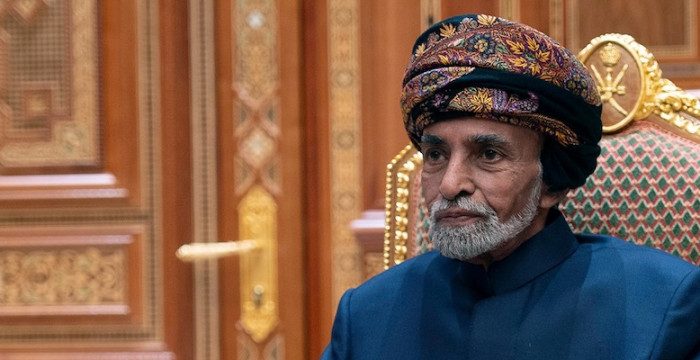
Everything you need to know about the death of the ruler of Oman, who governed the country for half a century.
Today, January 11, Sultan Qaboos bin Said Al Said, ruler of the Middle Eastern state of Oman, died after a long illness. He was 79 years old. For the region, this man was a giant, a heavyweight of regional politics, respected by almost everyone in the Middle East regardless of political or ideological affiliation. The death of Sultan Qaboos is a very important event for the Middle East and, in a sense, a fundamental symbolic shift. One of the last architects of the modern Middle East has passed away.
TK Media asked Ilya Kusa, an expert in international politics and a specialist on the Middle East, to explain what kind of ruler Qaboos bin Said was, how his death will affect the Middle East and who became the next sultan of the state.
Who was Qaboos bin Said?
Sultan Qaboos came to power in 1970 in a bloodless coup in which he overthrew his own father, Said bin Taimur. The coup was fully supported by Britain, whose intelligence services (MI6) took an active part in organizing and preparing the rebellion.
At that time, 29-year-old Qaboos bin Said was under house arrest by order of his father, who did not trust his son. The country was in a very deplorable state. Said bin Taimur's rule proved catastrophically unsuccessful: riots and uprisings broke out everywhere, tensions between tribes intensified, poverty and unemployment grew, and the region was haunted by the ghosts of communism and pan-Arabism, generously supported by the left-wing nationalist governments of Egypt, Syria, Iraq and Libya.
Under Sultan Said, Oman became self-isolated, turning into an archaic and backward country, preoccupied with its own problems, with bone-weary, ineffective social and political institutions and an extremely weak economy. Most of the revenue from oil exports (the main source of wealth for Oman) went either to financing numerous punitive operations to suppress uprisings or into the pockets of Sultan Said bin Taimur's entourage.
The British Empire, by then collapsing under the pressure of the last waves of decolonization, could not afford to lose Oman forever. A socialist revolution could have engulfed it, which would most likely have triggered a "domino effect" in neighboring countries, where the thrones of rulers were already shaking: Saudi Arabia, the UAE, Bahrain, Qatar and Kuwait. To prevent catastrophe, the British, who for several years had been toying with the idea of replacing Sultan Said with someone more nimble, contacted Qaboos, who was confined to his house. Communication was maintained through audio messages recorded on cassette tape disguised as musical compositions, which were delivered to the young prince, who loved music and art.
Qaboos bin Said had close ties with the British, who brought him to power. From the age of 16 he studied in Britain, graduated from the Sandhurst military academy and served in the British 1st Battalion in Germany (the Cameronians regiment). In 1966 he returned to Oman, where his father placed him under house arrest. Qaboos devoted all his time under confinement to studying Islam and the history of his country, which later greatly helped him communicate with the population and build a balanced cultural and humanitarian policy.
With the help of the British, who bribed some Arab units of the Omani army, Qaboos easily seized the royal palace Al Alam in the city of Salalah. His father Said bin Taimur and several bodyguards opened fire and tried to escape, seriously wounding one of the local sheikhs in the process. They managed to flee through a network of underground tunnels, but were quickly caught up by forces loyal to Qaboos and arrested. The British forced the sultan to abdicate in favor of his son, after which they flew him by special plane to Britain, where he lived out the rest of his days in a luxurious suite at the Dorchester, an elite hotel in London.
Right after coming to power, Sultan Qaboos set about the deep modernization of a country battered by wars. When Sultan Qaboos began his reign, Oman did not have a single secondary school and had only one hospital. There were only 10 km of paved roads in the entire country. Sultan Qaboos immediately redirected petrodollar flows to building infrastructure, modernizing production, and financing education and medicine, opening new schools and universities. Slavery was abolished. A merciless fight against corruption also began. The authorities laid asphalt roads and brought in electricity. A huge amount of money was spent on rebranding the state, which stopped being called the "medieval pit." By 1980, Oman had 28 hospitals, more than 300 schools and 12,000 kilometers of new roads. Qaboos also introduced the national currency, the Omani rial, replacing Maria Theresa thalers and Indian rupees.
The kingdom's internal problems were resolved through the sultan's incredible talent for negotiation and his social initiatives for unification. He renamed the country from the "Sultanate of Muscat and Oman" to the "Sultanate of Oman," essentially reinventing it and emphasizing the political unity of the state. Many clan and tribal groups were integrated into the political decision-making process, which put an end to inter-tribal feuds. A parliament was created, empowered to represent different groups and review draft laws. A broad amnesty was offered to participants in the uprisings.
The strongest rebellions in the Dhofar region were suppressed by the sultan's forces with British support. Qaboos allocated 400 million pounds sterling to modernize the national army and even built a navy that protected Omani oil exports. After a series of military defeats, the Dhofar rebels lost the support of their patrons in the USSR and China, and thanks to Sultan Qaboos's diplomacy, his government managed to reduce their influence, as well as that of regional players including Egypt. The final nail in the coffin of the Dhofar rebellion was driven in by support from Iran, which sent troops to Oman in 1973 to help suppress the uprising. King Hussein of Jordan also sent a limited contingent.
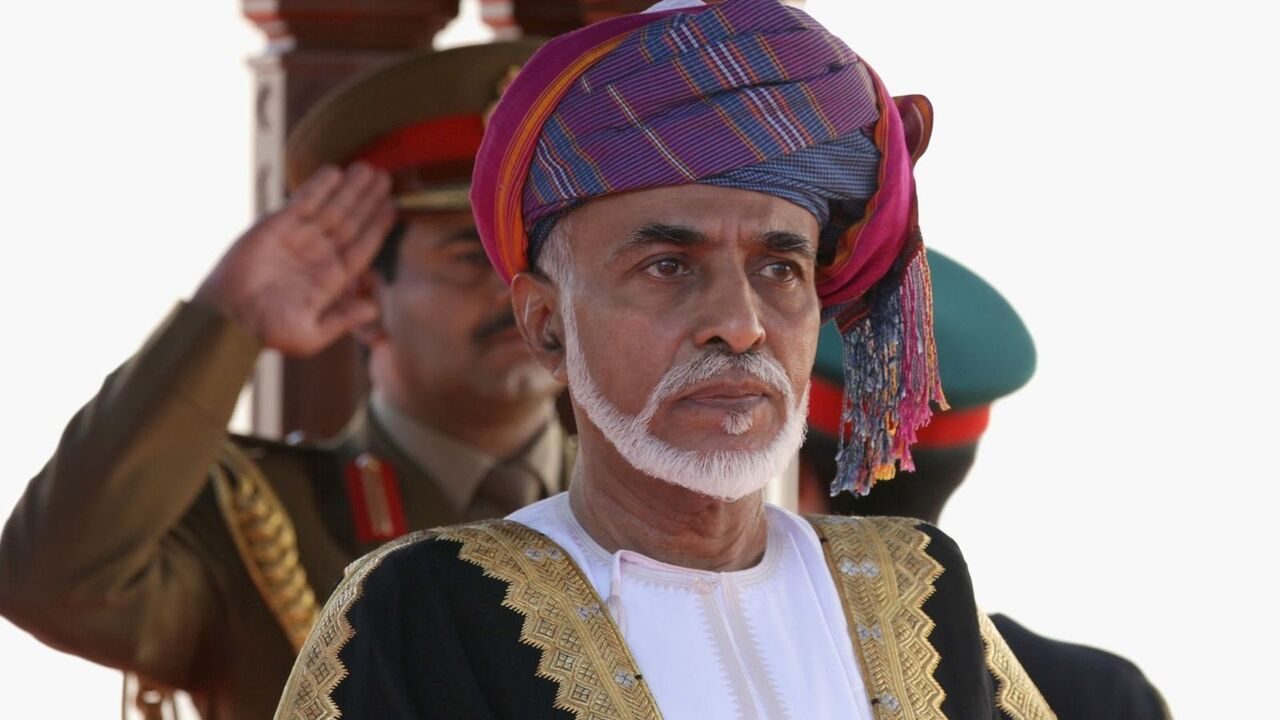
What was Sultan Qaboos's role in the region? Why was he respected?
Sultan Qaboos was one of the most effective and talented negotiators. Under him, Oman adopted political neutrality and became one of the most important mediators in regional processes. Accordingly, the country played one of the key diplomatic roles in the Middle East as a kind of neutral territory where negotiations were held, even between implacable enemies, something like the "Arab Switzerland."
Sultan Qaboos bin Said organized mediated negotiations between Israel and Palestine, Iran and the US, Iran and Saudi Arabia, the Emirates and Qatar, and Egypt and Israel. Oman was the main mediator that brought the US and Iran together, which made it possible to ultimately conclude the famous 2015 "nuclear agreement" between the US and six international mediators (Russia, China, France, Germany, the US and Britain). Earlier, in 2011, Sultan Qaboos helped free American mountaineers from Iranian custody, paying $1 million for them. In 2017 Oman did not take the side of either party during the Saudi-Qatari standoff. Instead, the sultan repeatedly tried to reconcile the two states, acting as arbitrator and mediator between them until late 2019, when the first informal peace contacts between Doha and Riyadh emerged.
In 2018, Sultan Qaboos invited Israeli Prime Minister Benjamin Netanyahu to visit him, the first time in history despite the countries having no diplomatic relations. The purpose of the visit was to discuss the Israeli-Palestinian conflict.
To this day, Oman remains one of the main negotiating venues on the situation in Yemen, the dialogue within the Saudi Arabia-US-Iran triangle, and the Saudi-Qatari and Emirati-Qatari conflicts. The last peacekeeping mission of Sultan Qaboos bin Said was a diplomatic breakthrough in talks between the Yemeni Houthis and Saudi Arabia at the end of 2018, when, for the first time in the history of the conflict, the first ceasefire agreements for Yemen were signed in Stockholm.
What did Sultan Qaboos die of?
He had been ill with cancer since 2015 and began treatment in Belgium. In December 2019 it was first reported that his tumor was incurable and that he had only a short time left to live. The sultan returned to Oman, wishing to die in his native country.
Who will become the new sultan? How does this happen?
Usually, the next sultan of Oman is the ruler's son or his full brother. However, Qaboos had neither children nor brothers. In such cases, under Article 6 of Oman's Constitution, the ruling dynasty must itself choose a new ruler from among the family members. If the royal family council cannot agree on a candidate, it is obliged to open a sealed letter in which the sultan writes who his successor will be in the event of his death. Until that moment, the letter is not opened. It is opened in the presence of the minister of defense, the national security council and representatives of the Supreme Court, with the participation of family members.
The late sultan's main favorites and contenders for the throne were considered to be his closest relatives, three cousins: Deputy Prime Minister for International Cooperation Asad bin Tarik, former commander of the Omani Navy Shihab bin Tarik, and Minister of Culture and National Heritage Haitham bin Tarik.
This time the family opened the letter, which named Haitham bin Tariq Al Said, 65, minister of culture and former foreign minister of Oman. He was immediately proclaimed the new sultan.
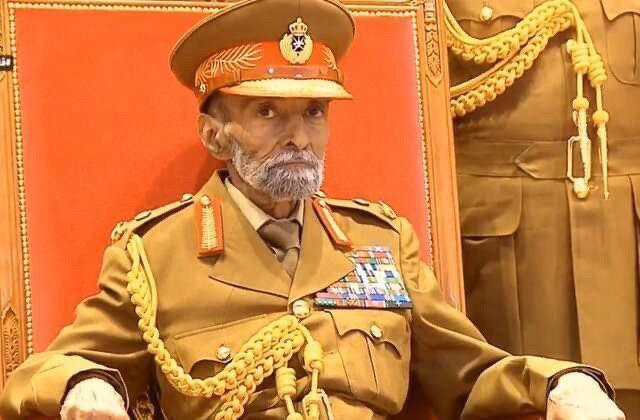
And what about Oman? What kind of country is it?
Oman is a remarkable country with more ties to the civilizations of the Indian Ocean than to the Middle East itself. The country's geography determined its fate. The natural buffers in western Oman, in the form of deserts separating it from the other countries of the Arabian Peninsula, made trade and ties between Oman and the other Arab monarchies difficult. However, its proximity to the Indian Ocean and the monsoon currents contributed to the development of the Omani fleet and international trade.
Oman is divided into two main historical and geographical regions: the conservative, not very friendly and rough desert west (inland areas), once called the Imamate of Oman, and the cosmopolitan, multifaceted and freedom-loving coastal east, once called the Sultanate of Muscat. This split into two different Omans, which often fought each other, was the main problem for the state and the formation of a political nation here. Sultan Qaboos bin Said was the first to overcome this problem and unite the two parts into one.
Today Oman is one of the most stable states in the Middle East. Its geopolitical position, equidistant from all centers of gravity, allows it to maintain neutrality and play a historic role as a mediator in regional affairs. GDP per capita in the country grew by more than 1,300% over the 1960s-1980s and today stands at nearly $48,000. Most of the government's revenue comes from oil and gas exports, which go to Europe and Asian countries. Meanwhile, under Oman's reform plan for 2020-2025 within its "Vision 2040" strategy, the country plans to diversify the economy and move away from total dependence on energy exports. Industry and agriculture are the main sectors of the economy after energy, but tourism is the fastest-growing.
Oman's labor market relies on millions of foreign immigrant workers. And although since 1999 the country has continued its policy of gradual "Omanization" of the economy, it has so far failed to get rid of its dependence on foreign labor. On the other hand, thanks to the employment of migrants, Oman maintains influence over many countries of Southern and Eastern Africa and Southeast Asia. Every year, migrants send up to $30 billion home to these countries.
Oman has a powerful investment policy based on very pleasant and comfortable living conditions, ease of doing business, low taxes, preferential terms for foreigners and a stable judicial system operating on the basis of British law. In addition, the existence of, for example, a free trade zone with the US further strengthens investors' confidence in Oman.
Tourism is one of the largest sectors of Oman's economy. The country receives up to 5 million tourists a year. Oman's visa regime is liberal and open. 69 countries can obtain an electronic visa to enter Oman for up to 30 days in just a couple of hours. Dozens of cultural and traditional festivals take place in the country, and there are many medieval sites, some of which are listed as UNESCO World Heritage Sites.
And what are relations between Ukraine and Oman like?
Minimal. Political contacts between Oman and Ukraine are at a low level. Ukraine does not even have its own embassy in Muscat; its representative functions are carried out through the Ukrainian embassy in Saudi Arabia. Only this year did the President of Ukraine make a visit (though rather strange and semi-official) to Oman, where he met with the prime minister and invited Omani investors to Ukraine.
In trade and economic cooperation, Oman is also not a significant partner for Ukraine. In 2018, trade turnover between Oman and Ukraine amounted to just $66 million. Most of it was exports of goods from Ukraine (fats, oils, ferrous metals). Imports from Oman account for only 0.012% of Ukraine's total imports.
Ilya Kusa

Russian Attacks in Dnipropetrovsk Region: Two Killed, Seven Injured

Defense Forces Strike Four Russian Drone Control Points in Past Day, Including in Berdiansk

Britain Threatens Sanctions on Kremlin-Linked People; Poland Ready to Hand Ukraine Ammunition

Russia says it has completed "planned exercises" in the Black Sea

MVD: Fake Riots With Prop Blood Were Being Prepared Near Presidential Office

Law Enforcers Name Another Klitschko Deputy as Suspect

Berlin Holds Protest Against War in Ukraine; EU Prepares for Possible Russian Halt of Gas Supplies
North Korea Fires Ballistic Missile Over Record Distance in Five Years
Irish Fishermen Force Russia to Postpone Naval Drills

US sanctions in case of invasion of Ukraine could completely destroy Russia's economy, NYT reports
