On the Situation with the Hryvnia Exchange Rate
Analysis of domestic government bond (OVDP) circulation indicators as of the beginning of the year and as of September 27
I was nevertheless asked to explain what the OVDP circulation indicators as of the beginning of the year and as of September 27 show.
So, let's try to figure it out. First, let's look at the data in the first column, which shows the public debt management policy of the Ministry of Finance.
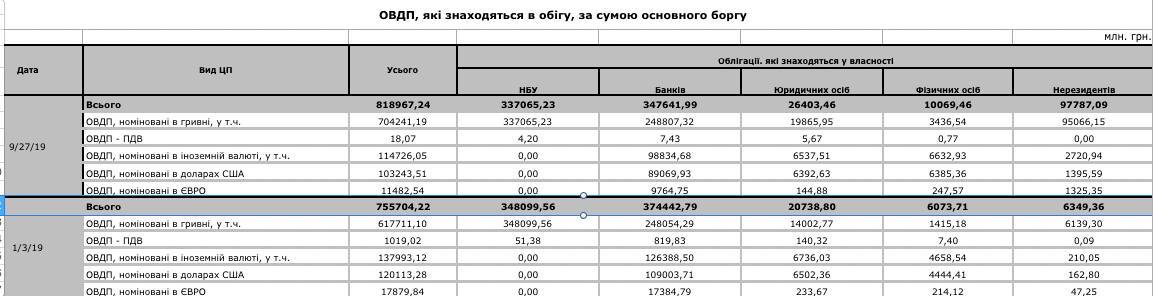
Indeed, compared with the beginning of the year, the Ministry of Finance increased its total OVDP debt by 63 billion 283 million hryvnias. At the same time, the amount of OVDP debt denominated in hryvnias grew by 85 billion 530 million hryvnias. Meanwhile, OVDP in foreign currencies decreased by 23 billion 267 million hryvnias. What does this mean?
With a stable hryvnia exchange rate against foreign currencies, not to mention a strengthening of the hryvnia, the costs of servicing public debt will rise significantly.
Because the interest rate on OVDP in foreign currencies is 6-7% per year, while in hryvnias it is 16-18% per year. The Ministry of Finance may be replacing foreign-currency public debt with national-currency debt only if it proceeds from the assumption that the hryvnia exchange rate will fall by at least 15-20% going forward. Only in that case can its actions be considered justified. But the leadership of the National Bank will do everything to prevent this. Because, despite all the fine talk about inflation targeting, they understand perfectly well that with an economy structured mainly around raw materials, a significant drop in the hryvnia exchange rate will inevitably lead to an inflation spike. And then it will be hard to puff up cheeks and talk about monetary methods of gradually reducing inflation. It is clear that Ms. Markarova pays interest on OVDP not from her own pocket but from the state's pocket, so she can afford not to worry much about rising debt servicing costs. But citizens have reason to think about this. Because, as should be reminded, the state budget holds citizens' money. There is no other money there. And it is their money that officials dispose of.
Now let's look at how the total volume of OVDP is distributed. The National Bank reduced its OVDP portfolio by 11 billion 34 million hryvnias. This indicates that the National Bank was able to reduce the volume of hryvnias it issued by that amount. At least, these data completely refute the claims of some incompetent fools from the political environment that the National Bank issues hryvnias and finances the government's activities. In fact, everything is exactly the opposite.
Commercial banks also reduced the volume of OVDP in their asset portfolios, by 26 billion 801 million hryvnias. At the same time, the volume of OVDP in hryvnias in their portfolios even increased slightly, by 753 million hryvnias. But the volume of OVDP in foreign currencies decreased by 27 billion 554 million hryvnias. The reason for this is trivial. During this year the government was redeeming previously issued OVDP in foreign currencies but did not issue new ones, although banks were interested in them to balance their asset portfolios. And they were ready to buy them at a yield lower than the government offered this year on Eurobonds (bonds in foreign currency issued for placement on external financial markets). I once again stress that such actions by the Ministry of Finance make sense only if a decline of the hryvnia exchange rate by 15-20% is expected within the next 365-730 days. Or someone is profiting from this among the powers that be, or has other hidden intentions that contradict state interests. But that is already a completely different story.
And now let's look at who bought up our hryvnia-denominated OVDP at absurdly high yields. These were non-residents. The data in the last column show that, compared with the beginning of the year, they increased their hryvnia OVDP portfolios by 91 billion 438 million hryvnias. That means they brought foreign currency into Ukraine, sold it on the domestic market, and then bought OVDP in hryvnias. This is precisely what led to a significant strengthening of the hryvnia against foreign currencies. What is the reason for such an abnormal situation, and what are the potential risks to the stability of the hryvnia and the country's financial system? The reason for such a significant increase in the volume of hryvnia OVDP bought by non-residents is linked to the absurd, doctrinaire interest rate policy of the National Bank, which has led industrial, agricultural, transport and construction enterprises to be forced to completely abandon hryvnia loans. And this situation has been going on for the fifth year in a row, preventing the real sector from increasing output. This is what limits the acceleration of growth in the Ukrainian economy. I have had to write about this countless times. By the way, I can remind you that back in 2016 I wrote that it was precisely the National Bank's monetary policy, and not Poroshenko's mistakes, that would bury his hopes of being re-elected President of Ukraine. The ultra-high interest rate policy produced by the National Bank forces the government to orient itself to the NBU key rate as the base level of yield on hryvnia-denominated OVDP. The negatives of this policy of the National Bank and the Ministry of Finance are linked to two main factors. If foreign currency is brought into the country by investors for long-term investment, then the risks of rapid withdrawal of foreign currency from the country are very small. And there can be almost no significant pressure on the hryvnia exchange rate. A completely different situation arises when foreign currency is brought in by financial speculators to buy OVDP. In the event of any destabilization on external or domestic markets, they will start selling OVDP, even at a significant discount, and buying foreign currency for further withdrawal from the country. Considering that such bonds have been bought for more than 3.5 billion dollars, the pressure on the hryvnia exchange rate could be very significant. Moreover, practically only the National Bank will be able to buy these OVDP, and it will also have to sell foreign currency from its own reserves. In addition, the panicked withdrawal of funds by non-residents will inevitably generate pressure on the hryvnia exchange rate from Ukrainian business and the population. They too will start buying up foreign currency. But in addition to the inevitable collapse of the hryvnia exchange rate under such circumstances, another problem arises. This time for the government.
A very large volume of OVDP with yields significantly above the nominal rate will remain on the market. That means the Ministry of Finance will not be able to return to the domestic borrowing market for a long time. But the need to finance the budget deficit and meet debt obligations will require either declaring a default or the National Bank issuing hryvnias. Both the first and the second option will provoke a new collapse of the hryvnia exchange rate.
There is, however, one more option. It is related to the sale of state land in very large volumes to non-residents, which in turn will inevitably lead to a decline in its value. Although such actions by the Ze team may provoke a socio-political explosion that will bury not only them but also Ukrainian statehood.

Russian Attacks in Dnipropetrovsk Region: Two Killed, Seven Injured
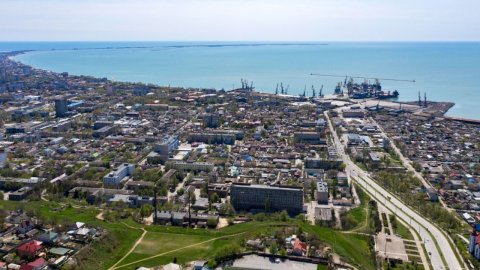
Defense Forces Strike Four Russian Drone Control Points in Past Day, Including in Berdiansk
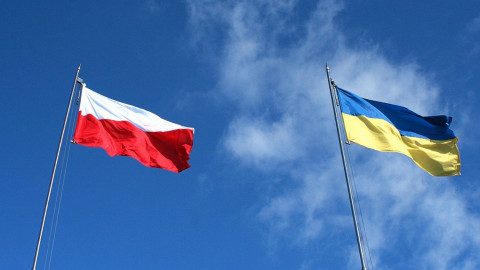
Britain Threatens Sanctions on Kremlin-Linked People; Poland Ready to Hand Ukraine Ammunition
Russia says it has completed "planned exercises" in the Black Sea
MVD: Fake Riots With Prop Blood Were Being Prepared Near Presidential Office

Law Enforcers Name Another Klitschko Deputy as Suspect

Berlin Holds Protest Against War in Ukraine; EU Prepares for Possible Russian Halt of Gas Supplies
North Korea Fires Ballistic Missile Over Record Distance in Five Years
Irish Fishermen Force Russia to Postpone Naval Drills

US sanctions in case of invasion of Ukraine could completely destroy Russia's economy, NYT reports