
Once Upon a Time in Hollywood: A Completely Different Tarantino
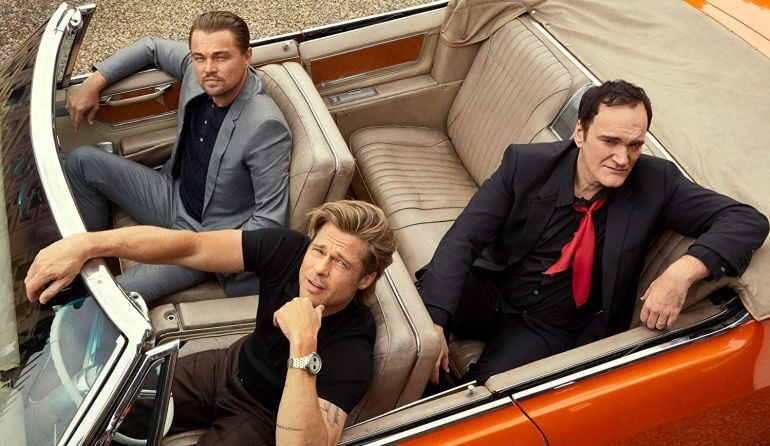
The most anticipated film of the summer.
On the night of August 9, 1969, actress Sharon Tate, wife of director Roman Polanski, and three of her friends were brutally murdered. They became victims of Charles Manson's “Family,” a commune whose leader, in brief, considered himself an embodiment of Jesus and Satan, creating a new religion.
Understanding the historical context is not strictly necessary, but it is still important when watching Quentin Tarantino's new film. In “Once Upon a Time in Hollywood,” reality intertwines with fiction, and the real stars of American cinema live alongside characters born in the director's imagination. From the very start of work on the project, Tarantino positioned it as a story about Tate and the tragedy that befell her. But it turned out that Sharon is pushed into the background by her neighbors: Rick Dalton and Cliff Booth.
Not long ago, Dalton (Leonardo DiCaprio) could not keep up with leading roles in successful films, and posters with his character from the series “Bounty Law” hung in every other apartment. But the peak of fame has passed. Ambitious newcomers are forcing Rick to switch from good-guy roles to villains, and this deeply depresses the actor. The prospect of moving to Italy and starring in spaghetti westerns doesn't thrill him either; Dalton is convinced he deserves more. Not much is missing, for example a couple of lucky connections at a pool party at the house next door, where director of “Rosemary's Baby” Roman Polanski has moved in.
Cliff Booth (Brad Pitt) is Dalton's stunt double on set, his driver, handyman and best friend. Cliff drives Rick to a fancy house in the Hollywood Hills, while he himself returns to a shabby trailer where he lives in the company of a dog. Hollywood is Booth's home, but he is a stranger in it. Partly because he constantly hides behind Dalton's back, and partly because of his bad reputation. Cliff didn't just fight Bruce Lee; rumor has it he did something much more terrible.
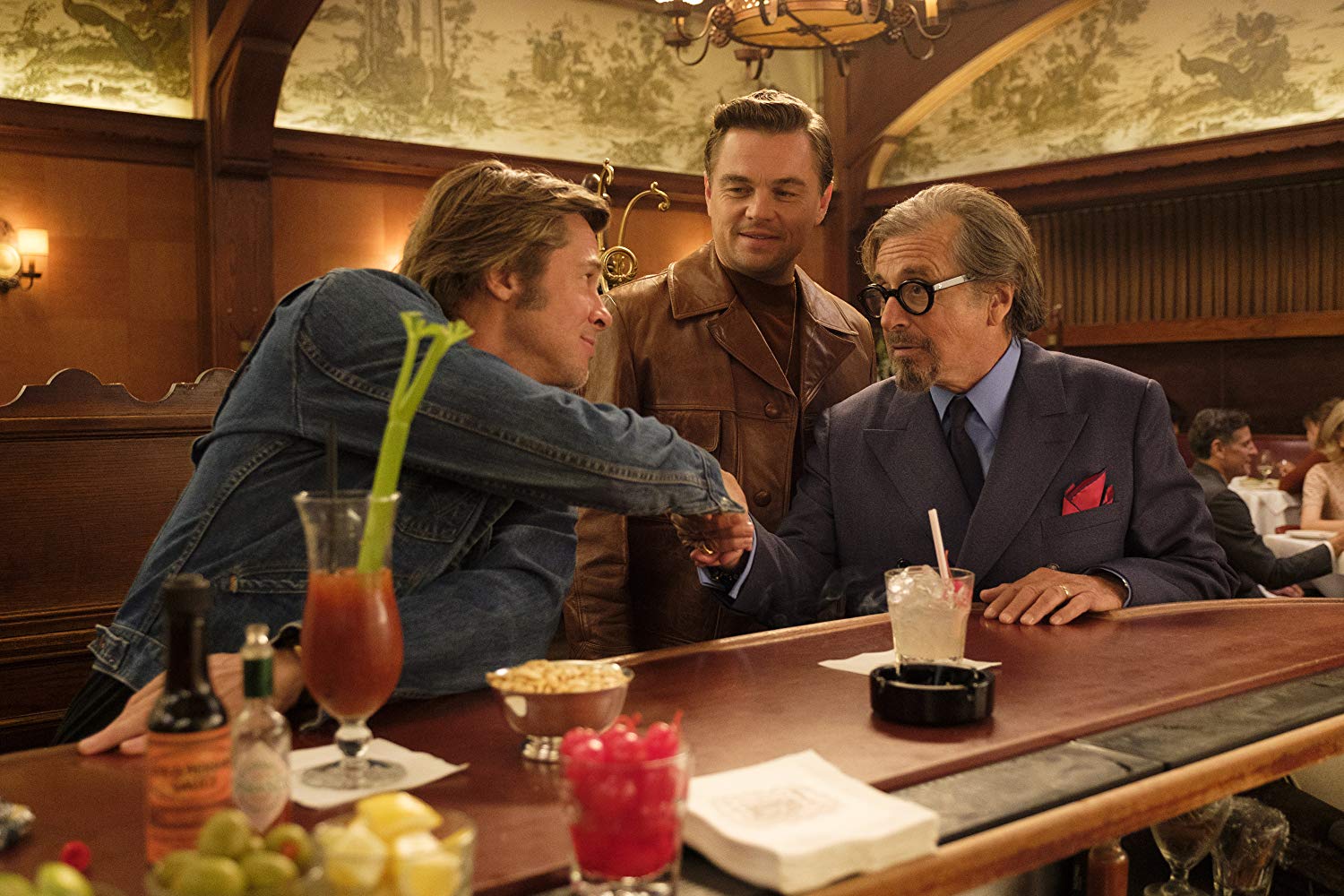
In spring 2018, Tarantino promised he would return to theaters “with the most amazing duo of stars since Robert Redford and Paul Newman.” The statement sounded like a banal attempt to generate hype, but Quentin did not exaggerate. DiCaprio and Pitt are top-tier actors not so much because of their contract sums (in 2019, no one matched Dwayne Johnson in this regard). On screen they do what Tarantino adores them for: they turn into completely different people. It won't take long to forget that on screen are the symbols of Leo's and Brad's generation. No, they remain symbols, but of a completely different era: the sixties are ending, and along with them the cinema in which Rick Dalton felt indispensable and Cliff Booth was riding high while his friend was being handed hefty checks.
While Sharon Tate (Margot Robbie) floats through Hollywood in dance rhythm, radiating cheerfulness, naivety and sincere love for her craft, two men go through a personal drama. The old guard tries to find its place in a new world overrun by “dirty hippies,” and tears mixed with alcohol won't help here. DiCaprio, of course, won't get a second Oscar; he has to settle for compliments from an eight-year-old girl and applause from the hall. However, his Rick is a character no less complex than Hugh Glass, who brought Leonardo the statuette. A screen macho and a boozer who has lost confidence in himself, trying to find a foothold in a changing world, DiCaprio is equally convincing, burning Nazis with a flamethrower and sobbing over his career going downhill. Pitt has it easier: his Cliff skillfully hides problems behind a squint and a can of beer, but he too will face a disconcerting reality in which manly cowboys show their weakness before a flock of aggressively minded girls.
Digging into the images is also interesting because “Once Upon a Time in Hollywood” is a film with only minimally outlined plot. Rather, it is a set of scenes (some absolutely wonderful) from which portraits of the main characters emerge, but nothing more. Tarantino, naturally, will tie the threads into one knot, and it will be quite spectacular, but the main thing is not the denouement itself, but the symbolism of everything happening.
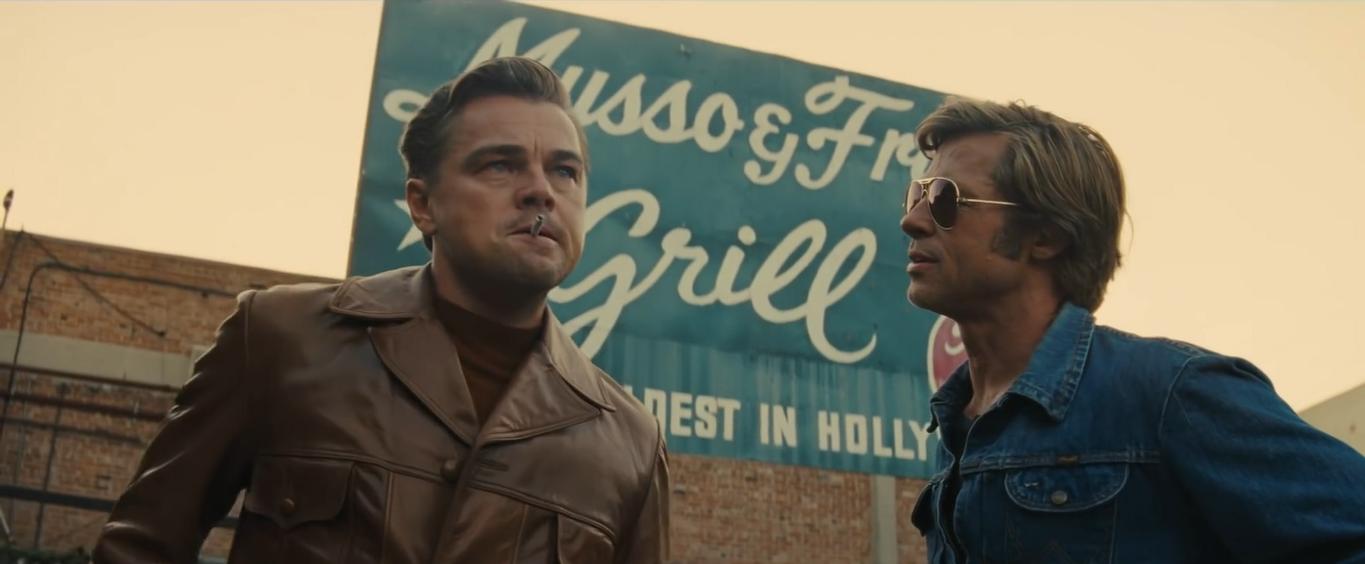
Quentin has said that Los Angeles of 1969 is a place meaningful to him. According to Tarantino, who was then 6 years old, that year and that city shaped him. “Once Upon a Time in Hollywood” is a declaration of love for Los Angeles and a tribute to the cinema of the 60s, which left a clear mark on his entire career. Perhaps that is why the director, in his ninth film, shows himself far more as a romantic and bon vivant than as a sharp-tongued provocateur striving to turn every dialogue into an anecdote.
For only a few minutes, the melancholic director will give way to the good old Quentin. That will be enough to shock viewers and finally blur the line between reality and creation. But still, “Once Upon a Time in Hollywood” is the most humanistic of Tarantino's works, in which death is necessary solely so that art does not die, and life is not nearly as bad as it seems.
Tate, Lee, Manson: the presence of real people emphasizes that this time Quentin was not only fantasizing. But “Once Upon a Time…” in the title clearly signals the fairy-tale nature of the story. After all, what else could the world around a six-year-old boy seem like, if not an amazing fairy tale?
Yuri Shevchenko

Russian Attacks in Dnipropetrovsk Region: Two Killed, Seven Injured

Defense Forces Strike Four Russian Drone Control Points in Past Day, Including in Berdiansk

Britain Threatens Sanctions on Kremlin-Linked People; Poland Ready to Hand Ukraine Ammunition

Russia says it has completed "planned exercises" in the Black Sea

MVD: Fake Riots With Prop Blood Were Being Prepared Near Presidential Office

Law Enforcers Name Another Klitschko Deputy as Suspect

Berlin Holds Protest Against War in Ukraine; EU Prepares for Possible Russian Halt of Gas Supplies
North Korea Fires Ballistic Missile Over Record Distance in Five Years
Irish Fishermen Force Russia to Postpone Naval Drills

US sanctions in case of invasion of Ukraine could completely destroy Russia's economy, NYT reports
