
Rapper Palindrome: When I Look at Medvedchuk's Face, I Imagine Hell; Opposition in Russia Is Fake
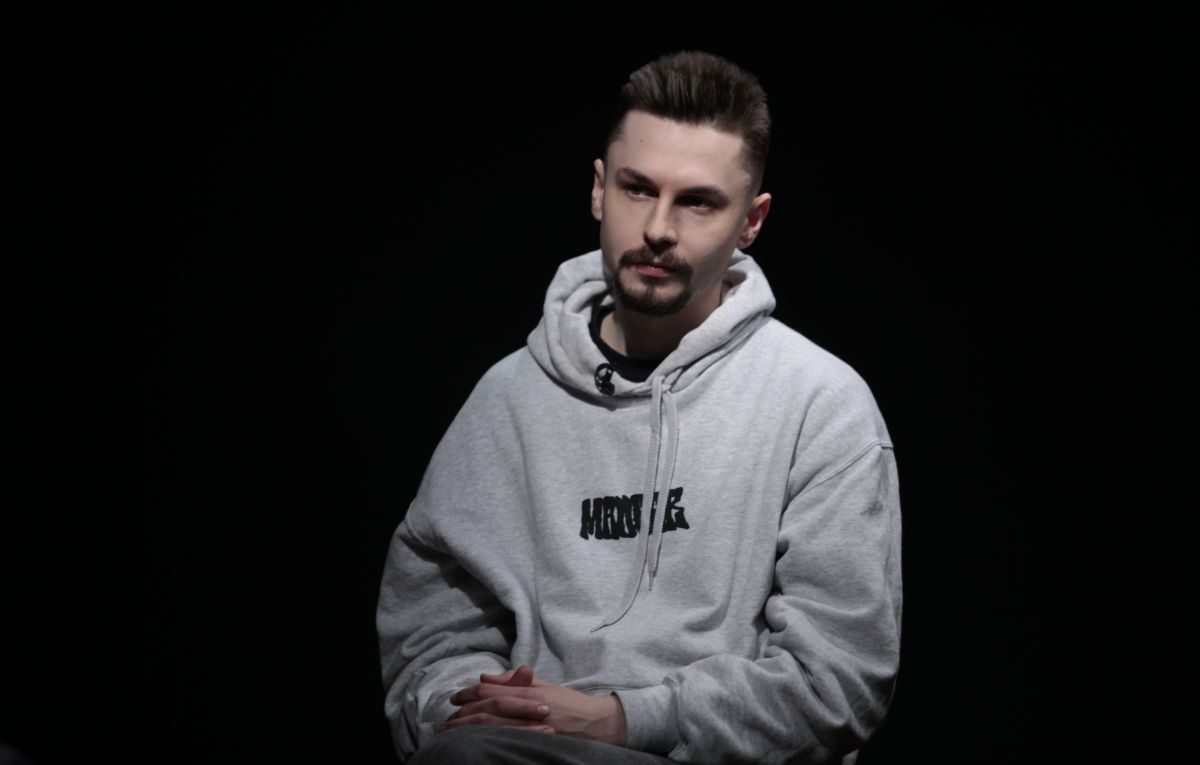
About the real Lviv, Kyiv, “poniatia,” Russian rap, Huskey, “Kasta” and politics.
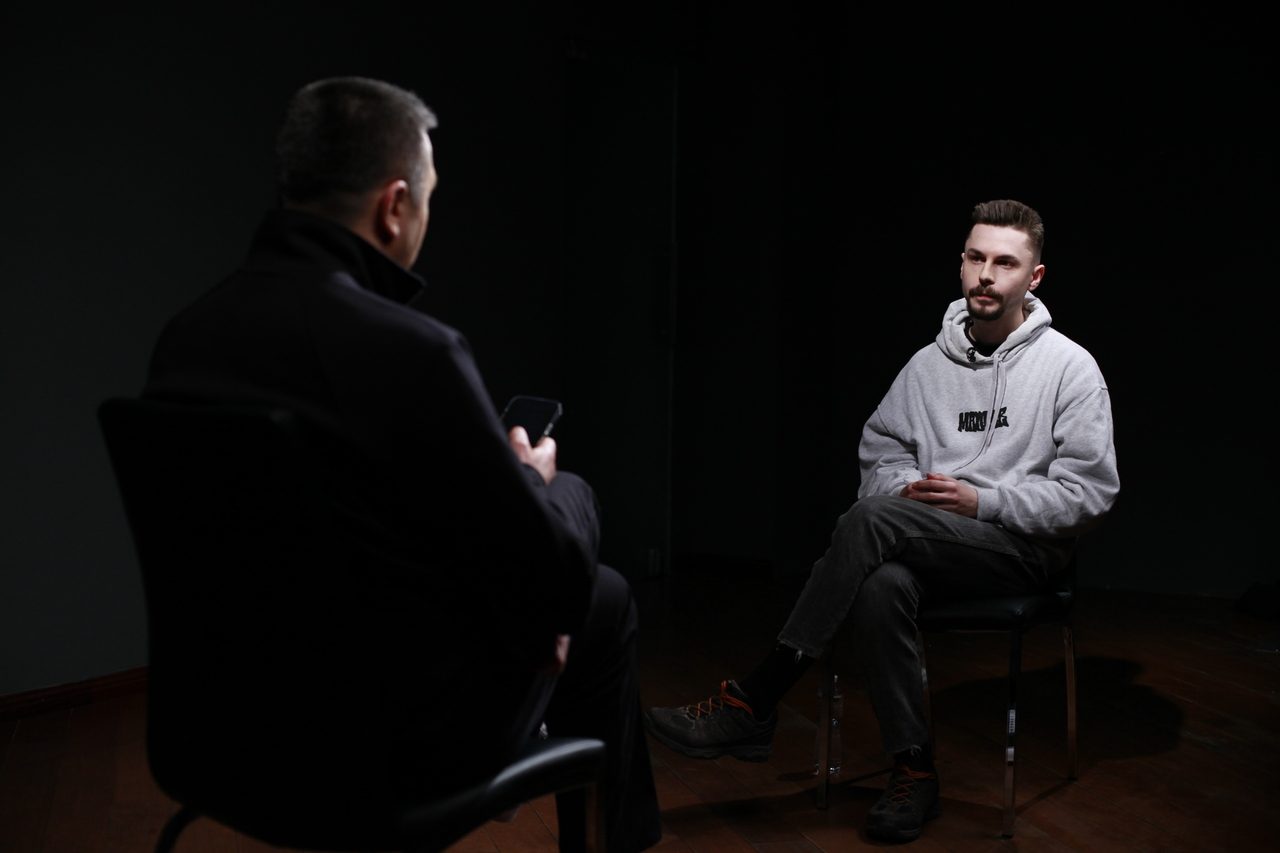
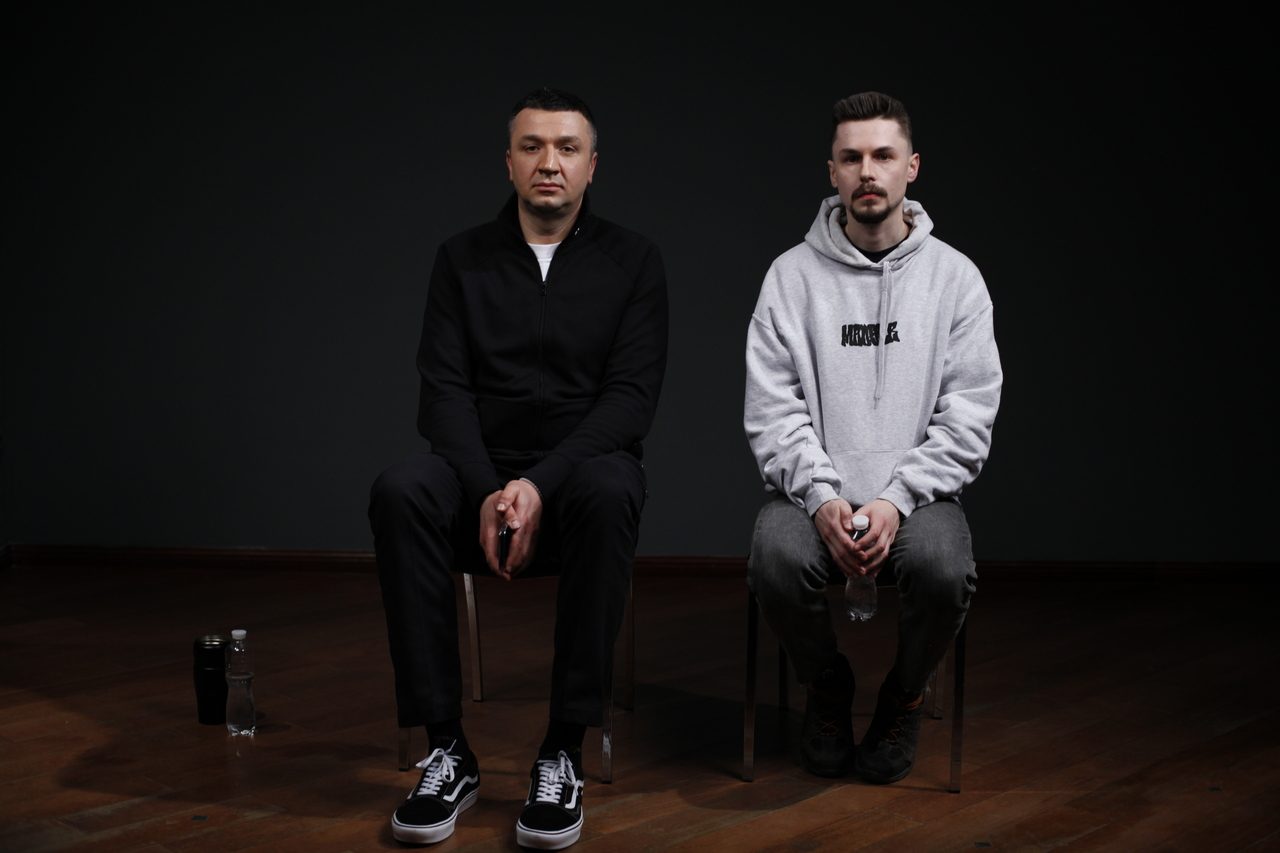
In a new episode of the Antipody program on Iceland TV channel, Lviv singer, rapper and composer Palindrome, also known as Stepan Burban and Kashlyayuchy Ed, talked about the real Lviv and his attitude toward the capital, the underground, the best new Ukrainian performers, Russian rap, collaborations of Ukrainians in Russia and, of course, politics.
When a Lviv resident comes to Kyiv, what does he feel?
Discomfort.
What does it consist of?
I'm not used to being surrounded by such high-rises; sometimes some of them seem plastic to me. In Lviv there are fewer of them so far, but I feel from afar that it's catching up with me. Movement, everything is very fast; in Lviv everything is slow. In Lviv I walk at 11 a.m. across Rynok Square, watching how people drink their coffee calmly, looking off somewhere into the void. I myself love to watch like that; it somehow resonates in me and I feel some harmony and calm. Here there is a slideshow of people, I don't manage to orient myself.
And the people, the language?
When I was in Kyiv for the first time, it was probably around 2012, I bought cigarettes at a kiosk. And when I bought them, I spoke Ukrainian and kind of apologized to the saleswoman for speaking Ukrainian to her, because she spoke to me in Russian very confidently, and I behaved rather timidly. I remember that. Later, with this habit, I came to Kyiv on subsequent visits, and it didn't leave me for a very long time. That feeling as if I'm not at home somewhere. And until recently it trailed me like a train, like ballast, and then somehow dissolved. Now everything is calm in that respect.
Has it gotten better?
Well, I see fewer Russian-speaking people, though maybe that's just my experience. And this fear has disappeared or been minimized.
Did you feel uncomfortable because you felt like an outsider, or because you felt like a provincial?
I don't know; it's like something that's supposed to be instilled at school or somewhere, that I should feel at home in any corner of my country. And it works somewhere at the subconscious level. I didn't feel that, and it's not connected to some peripheral component, but rather, I don't know, to some outcast status or a similar feeling.
In Ukraine for a long time, in some circles that set certain worldview trends in society, it was considered that Ukrainian is the language of the village, the language of peasants and of people from more lumpenized social strata. On the other hand, Lviv certainly doesn't resemble a village.
Well, this whole story goes back to the 30s or whenever. Did Stalin come to power in '22 or '23?
In '24 Lenin died.
Exactly. A phenomenon appeared called socialist realism, which probably benefited from turning the Ukrainian into a sort of agrarian uncle, you know, who holds a pig under his arm, with sour cream from dumplings here, and some kind of hapless figure next to a Russian person who speaks the language of Bulgakov or whoever. Then shows like this appeared, which later took root here during the years of Independence. I mean Shtepsel and Tarapunka.
Well yes. Hapless caricature “Khokhols.”
Yes. A “khokhol” who always asks some unsuccessful questions, they're clumsy, inappropriate, and a short little intellectual answers him in such crystal-clear Russian, such an answer that pleases the people sitting and watching all this. It was useful to those people who wanted to suppress all of this somewhere, and so that, through this cosmopolitanism, a single cultural code that the Soviet Union tried to impose on the whole map, was advantageous, and it basically remained so now. And what to do about it? It probably must, it definitely must somehow disappear.
I was recently thinking about dyed hair. At some point you want to dye your head green. And you look at yourself: one day you like it, the second day it's okay, the third day it starts to get on your nerves a bit and, accordingly, you wait until this green hair grows out to the level where your own, black, appears again. It seems to me that with all this ballast, which for a very long time someone tried to stuff into people's heads, we need to wait a bit, and it naturally dissolves somehow. And it will sprout up. If someone keeps sowing, something else will sprout.
Well, we don't sow here, rather we sow over with other things, mostly buckwheat. I mean they sow over when it's needed for someone among the politicians. Because genuinely meaningful things are, as a rule, inconvenient, uncomfortable.
They need to be understood a bit.
Just at the level of metaphor. Of a completely free metaphor, what is Kyiv for you?
Probably an endless metro. When the metro runs and doesn't stop, that is, I stand in front of this metro and the wind blows at me, and from it I get goosebumps, those unpleasant little bumps.
And Ukraine?
I don't know. Some kind of minibus, Etalon. I can't get off it, but in principle I don't want to, because I ride somewhere at the back; I always like to sit at the back and gaze out the window. When I gaze, a lot of ideas about my creative work are born. And I sit there, and in front of me two thugs are finishing some beer from a plastic bottle. It stinks terribly, but I sit, listen to music and watch them, drawing inspiration, basically. Then some simple women are riding with bags, somewhere to their gardens. Near the driver are young people filming something on TikTok. And in principle I ride and observe all of this. I understand that it's not a perfect picture, but I don't get off, because I look, I collect some impressions, gazing at the fields, at the plastic high-rises. Kiosks, and near them some specific contingent. Something like that.
You're from Lviv. In our imagination, for people who don't live there, Lviv is this postcard city with a measured rhythm of life. It's associated mostly with coffee, coffee shops, pampushky, Rynok Square, cathedrals, beauty, coziness and so on. That's, I'd say, a tourist pattern. So what is Lviv really like? What does a person need to know who doesn't fit this tourist pattern?
It so happened that Lviv was once called the cultural capital of Ukraine and basically still is. But in certain periods Lviv went through a kind of stagnation in this respect, because the level of the cultural capital reached the point where the cultural capital turned into the capital of some consumerist trend. I mean restaurants, hookah bars and so on. People began to confuse the concept of cultural capital with the idea of smoking hookah. Maybe someone started seeing it as an artistic act too. And somehow it all got mixed up. Up to a certain point, people put up with it. The people who are engaged in culture in Lviv. But eventually there was some turning point, I remember.
I now live with Uliana, she's my partner, a girl, a beloved person, who has been organizing cultural events in Lviv since 2010. There's a cultural agency called “Escape Line.” And at one point, about three years ago, an incident happened in Lviv that was perhaps decisive for Lviv in cultural terms. Markiyan Ivashchyshyn refused Dzyha, that is, he sold it to a corporation like Fest. And they began running Dzyha anew, and Markiyan stepped away from the business. Artists here, including Lyana Matsko, understood that the city had lost one such place where culture was always produced and new meanings were generated.
And they staged such an action, a funeral of culture in Lviv. People, artists, performers marched with banners. It looked like a satirical artistic act. It was really a funeral. There stood a memorial plaque, a bottle of Stolichnaya vodka and two roses or carnations. And all this basically affected the people around. It was like a seed, you could say, in the consciousness of those who thought that Lviv had to go through something in order to generate something new. Then the authorities, I think, got interested in all this or for the first time paid attention to Lviv artists. Before that they had always ignored them. And this launched the creation of the Lviv municipal arts center, which now functions.
If someone needs to be told about Lviv in cultural terms, I'd take them there. I don't want it to smell of any inferiority complex now, when you compare something, for example, Skryabin with The Cure, Lviv with a little Berlin. But it really smells of a freedom, which I felt myself when I was in Berlin for the first time. And it was as if I'd been spun like a top. I couldn't leave for several weeks after my trip to Berlin. And there it really gives off something new for Lviv. Something not with embroidered shirts, varenyky and hookah. There new meanings are being made, and I hope they will continue to be made. And the authorities will support this. It turns out that, I observe from the side, it's a rather decent union in principle.
Just recalling Dzyha again, it's like closing the Cabaret Voltaire in Zurich. This news stunned me a bit. Is Lviv a safe city?
Safe in what sense?
For people. In the sense that you can live there peacefully, that you won't be robbed, that you won't be killed.
Do we have such cities at all?
You're in one of them now, for example.
Lviv, in the center of the city, is swept and clean. But when you go into any residential district, which I come from myself, the picture is a bit different.
And which district is that?
It's the airport district, surprisingly. It's a sort of transit zone for all people going to the city center from the sleeping districts. Dried-out, dirty, not washed by rain for a very long time. I lived there, got into strange situations, was shaped. For a long time I was in a company of people where I just nodded when everyone nodded. I was comfortable. But then, when I realized something wasn't right and I had to get out of there, it was somehow even sad at heart that I had to leave all of this behind. But I did leave, and I'm basically happy that something new opened up for me.
I saw various things there. Someone had their nose broken, someone was robbed. Overall the environment I had was like this: there are rappers, there are thugs, there are people somehow connected with crime, even because this criminal romance is present in the residential districts. There are always such apologists of this so-called culture. I had been somewhat involved in it before too. And basically, listening to all of this, I understood that Lviv, well, it's not really safe.
And I don't know whether the situation has changed now. I don't live in the sleeping districts. People are angry, people are embittered. And it's noticeable when you come out of your entrance in a good mood and someone comes toward you, looks at you with such a gaze as if you're somehow to blame. And your mood sometimes falls. People don't smile.
In Donbas there existed such an unwritten moral code, which was called “poniatia.” It's mostly a subcultural thing whose roots go back to the prison tradition. Does something like that exist in Lviv? Is there even such a term as “poniatia” there?
I think if there are prisons, then this whole culture exists too. “Poniatia” is like “who are you in life?” Well, I had it too, and I witnessed it. I generally think that a child who starts walking on its own legs and realizing who it is, and identifying itself, goes to school, and immediately falls a priori into this nest of vipers, where everything is “by poniatia.”
I first asked you what Lviv is really like, because from this Lviv pastoral where you sit, this legendary guide in a hat with a mustache greets you, and someone nearby is cooking some dish, aspic. And I wouldn't want us to sink to such patterns. And since you are a person who works in urban art, that is, your texts and your music are tied to the city, to urban culture. And even if you compare your hip-hop period, your hip-hop output, with what you do now, this music seems to me even more urban. So I want you, so to speak, to take off the rose-colored glasses that frightened Kyivans and other people wear and to say, basically, what Lviv smells like.
Well, actually sometimes it smells of crap, and similar things. That's what I was trying to say; maybe I didn't formulate my thoughts well. I mean inside it's just like you say. You arrive, here's aspic for you to eat, they pour coffee on top, and immediately they shove andrut into your mouth. You drive a little further away, and there the pictures are completely different. There is violence, and people, I don't know, some grannies, for whom your appearance makes you look like a drug addict.
In one of your interviews you said you listen to Delfin. Do you like Russian rap at all?
It just so happened in my life that I first heard Russian rap in 2008 and listened to it for a long time.
What exactly did you listen to?
I listened to Yugi, there was a group called Yug. I listened to Zloy Dukh. Well, it's very, very old-school hardcore rap, which basically was the end of that phase of their rap in terms of adequacy. That is, then commerce began, and all of this was somehow leveled out, this genuine thought that we now have in Ukrainian rap. Back then I listened to this. It shaped my musical taste in rap and in general. Then, with the arrival of the 2010s, it gradually disappeared somewhere, because I realized I was working with Ukrainian rap. I find it more interesting to listen to, conditionally speaking, the group Misto 44, there was such a group from the city of Smila. Chipset is such a legendary figure for Ukrainian rap. First of all, a very cool poet. If you haven't listened, listen.
The same goes for DLF Squad. That is, I found all these people in Ukrainian rap. One way or another, sometimes I feel like having a look at what's going on in rap to understand the general trend. It's probably bad that sometimes I want to share this, because it seems to me that people who came to me in the last year see in me some kind of figure who is a thought leader in the sphere of Ukrainian music and Ukrainian culture.
And when I conditionally show the works of people who have now effectively occupied the entire information space, I basically support them, let them in: come on in. And for many years, if you listen to the work of Glava 94, I always mock (joke about — ed.) this Russian regime and want it to leave here. That is, I contradict myself. Sometimes I get stuck on this, and I have to fight it. But now I don't listen to Russian music. There was even a case when I recalled, in a squabble, when I posted the Kazakh performer Maslo Chernogo Tmina and in a complimentary way mentioned the rapper Khaski. I don't know whether it's worth explaining who that is?
Well, this is a rapper who first took part in various opposition movements in Moscow, then he was shut down, and then somehow ended up in occupied Donbas, and by his presence effectively legitimized the Russian invasion. To a certain extent. For a certain part of his supporters.
So by complimenting his audio-visual art in some way, I a priori supported him as a mental idiot (fool — ed.). That is, I supported his entire position, this trip to Donbas, his dealings with Prilepin. That hurt me a lot back then. And at some point I felt ashamed. Because I don't listen to him.
So is “The Last Dance” about this situation?
In a sense, yes. I felt ashamed; this fire that happened is so large-scale, but it's not worth what's going on with me here. Because I don't listen to this guy. I just said it was done talentedly. And that's it, and I didn't mean anything more. I really liked a comment that goes roughly like this: “He shat himself, but instead of wiping, he smeared it over the walls.” Later I thought about it: “Some cognitive processes got started in me.” I thought: “Basically, yes, I did shit myself somewhere.”
But I thought that, kind of, I smeared it over the walls, but I'm painting. This is some artistic act of mine. But in the end I thought that I'm painting with shit. And why would I get involved in all these conflicts. These squabbles on Facebook are not for me. I don't want to take part in them anymore. Because they suck energy. And in general, it seems to me that when you get into a squabble on Facebook, you become some tiny part of a rusty chariot that barely moves. And I don't know, it's sad.
I think it's rather not a chariot, it's probably those Stolypin cars, where the remnants eat each other. That's what it looks like to me personally. Again, I don't think you were wrong about anything; these questions you have to decide yourself: whether you were wrong or not. I can express my subjective attitude toward what you did, or toward the fact you covered in your posts. To say: I don't agree with you... But excuse me, to go beat you, kill you, and then also rape your corpse just to show how wrong you were. And this is very characteristic of us Ukrainians, because we will finish off to the last. Then eight more generations must be cut down so that all of this is imprinted in genetic memory.
And do you know what it looks like? For some reason it appeared to me as a certain picture, as an etude. When seven people beat someone in an alley, kicking them, and they're barely breathing there. A person passes by, looks, goes over there, and trying awkwardly to push through that whole crowd trampling the person, with the tip of his shoe kicks (hit — ed.), then he feels some kind of orgasm, some satisfaction that he has done his mission, and he simply leaves. And he's never again interested in the fate of this person who was beaten. Somehow it reminded me of this. And on the other hand, there was huge support from adequate people in this squabble. And that somehow comforted me.
Should an artist, in general, be politically conscious?
It all depends on the time you live in. In general, I don't like the formulation: someone has to. It seems to me it's a matter for each person, but if you see what is happening in your country, the seventh year of war, and explaining this in some media spaces, as... I don't know. Well, music is something different, it's something that unites people. And it's hypocritical to go somewhere and collect money from people who are in fact complicit in the deaths of your brothers and sisters. Well, these are banal, somewhat pompous words from a textbook, but somehow that's how it looks in my head.
This is a kind of hypocrisy that basically deserves a couple of good punches to the jaw. And if it doesn't hurt you, you don't feel inside this impulse that you need to do this, because there's no other way. This is your position, because there is no other way. There's a war, and it's impossible not to talk about it. And to go to the Muscovites, give them concerts and create for them such an illusory situation, as if everything is okay, thereby not letting them grasp that “no, dudes, here they're shooting, and we have a war, and people are dying.”
As far as I'm concerned, this is some kind of blasphemy. And a person, modern, intelligent and enlightened, shouldn't do this, because it lowers her to some primitive state. I feel inside that I want to say something about what's happening now. And in particular about Ukrainian artists who have flooded their electorate's playlists. 90% are people who, as we already said at the beginning, consider everything Ukrainian a priori mine, native, but that's not so. It's just such a veil, so pretty, and behind this veil, a stinking, festering face. So this needs to be shown to people. I want to do this.
And would you collab with Russians?
Why?
I don't know. Let's say, the latest album by the Russian rappers Kasta, with hits featuring Dorn and Alyona Alyona. Is this okay or not okay? I understand the logic of people who agreed to this collab, supposedly they knew: there's an anti-Putin video. Well, they're opposition now, so it's normal. Where is the line here? Or do you just need to keep away from it all?
Personally, when I try to formulate some metaphorical images of Russia, for some reason it's always such a hazy space, so blurred, as if it's all happening in some surreal dream. That is, the opposition in such an authoritarian country may simply be an element of a script. Like, come on, are you going to complain about the authorities now? We have an opposition, everything's fine, we have, as in all European countries, people who fight for something, and so on.
It seems to me that this is something fake. Maybe it's in my head, but I'm used to perceiving everything produced there as something fake. In terms of the idea, in terms of the thought they present. Regarding Kasta, regarding features, when there are players of such a large scale, Alyona is already a player of large scale in Ukrainian show business, with Jamala, features and so on. So she's already part of this big game. I think Ukrainian show business, as it is now, is in such a state, simply waiting out the war and returning back.
Back to Moscow for Yolki again.
Yes. So for them it's okay. They do business, earn money. How much money Olga Polyakova will earn in Ukraine and how much she will earn in Russia. That's clear. So it seems to me these collaborations don't let the separation be completed, don't create the rift that should in principle exist after such executions against us by Russia. I wouldn't do this, because my context is completely different, my context is local. Even if there were no war with Russia, Russia would be my friend, I couldn't go there, because they simply wouldn't understand me. What I sing about. I sing about things that are understandable in Stryi and in Novoyavorivsk, and well, in Kyiv and in big cities of Ukraine generally, I think, too.
Because the people who join, I see their geolocation, it's very varied. But Russia... Once I came across a resource called The Flow, an elite resource where Russian rap and more is posted. And there my music was posted too. Someone sent me links, I went in and read the comments. And basically, as it was when I had just started rapping, how they reacted to our music, so they still react. That is, the language seems funny to them, they don't accept it: “How can you rap in this language?” And something like that. And these people, they just cut themselves off, they don't carry any value, because you understand, you and they are completely different poles.
Are you interested in politics at all?
Well, at a very everyday level, probably.
Which Ukrainian politician causes you the greatest disgust?
The greatest disgust is caused by Mr. Medvedchuk. Is he still a Ukrainian politician?
Well, the semantics here are very blurry. I don't know whether he's a politician, or whether he's Ukrainian…
I just, when I look at this man's face, when he gives some comments or interviews, I imagine hell. His physiognomy is so tinged with some kind of demonism. I don't know why. In general, he used to look different; I have the impression he's pulled up his face a bit, but these might be my guesses. Mr. Medvedchuk infuriates me literally with everything, both his past and his present. And if he has any future, that probably depresses me too.
Which traits should Ukrainians better lose and leave in the past?
Complexes, in the sense of “foreign is always better.” Always making these comparisons. It just pisses me off.
Is it complexes or inferiority?
They're somehow connected. The inferiority complex, we already know where it all comes from, where the root is. I think a certain amount of time is needed. Young people now seem quite progressive, and it seems to me that over the years all this will pass. There will be, I hope, such a reference, like somewhere in Europe they'll say: “Oh, that looks like a little Lviv.” Somewhere, say, in London, they'll say. Or Kyiv, Odesa.
We constantly compare with something far away from us. It's all so glittering on the TV screen, it lures so, and we just don't notice some things that we have of value. And as history shows, there are many such sad losses. And I want people to finally learn to value what they have here. That is, their heroes. And usually, what we have as heroes is such a suffering figure, who somehow endured some pain for the sake of their Ukraine, fought against the Soviet power and all kinds of similar filth.
And why don't we have living heroes? I'm not talking about the ATO soldiers, who are now doing, probably, some titanic work, risking their lives. I'm talking more in a cultural sense, about singers or artists, for example. Why do they start to be valued when they die? It's always been strange to me. Probably it's human nature. Because I myself realized that I had a grandmother or mother when they died. Before that I didn't understand that I had them.
I think it's like some ancient, probably even pagan things, that a dead person is somehow more important than a living one. There's some mental flaw in us like that.
In general, you can refer to many things, to some Middle Ages, the past. To Japan, where death is basically like brushing your teeth in the morning. And in general, authentic Ukrainian ragul probably no longer fits into the context of Ukraine, because it, despite all the troubles, is contemporary, new and fashionable. And it's fashionable to speak Ukrainian, sing, and paint some meanings connected with our history. To interpret this in a new way. That's why all this ragulism, I want it not to loom in front of my eyes, it annoys me a bit now.

Russian Attacks in Dnipropetrovsk Region: Two Killed, Seven Injured

Defense Forces Strike Four Russian Drone Control Points in Past Day, Including in Berdiansk

Britain Threatens Sanctions on Kremlin-Linked People; Poland Ready to Hand Ukraine Ammunition

Russia says it has completed "planned exercises" in the Black Sea

MVD: Fake Riots With Prop Blood Were Being Prepared Near Presidential Office

Law Enforcers Name Another Klitschko Deputy as Suspect

Berlin Holds Protest Against War in Ukraine; EU Prepares for Possible Russian Halt of Gas Supplies
North Korea Fires Ballistic Missile Over Record Distance in Five Years
Irish Fishermen Force Russia to Postpone Naval Drills

US sanctions in case of invasion of Ukraine could completely destroy Russia's economy, NYT reports
