
“People with dignity are offended by Zelensky. He should have apologized”. Interview with Irma Vitovska
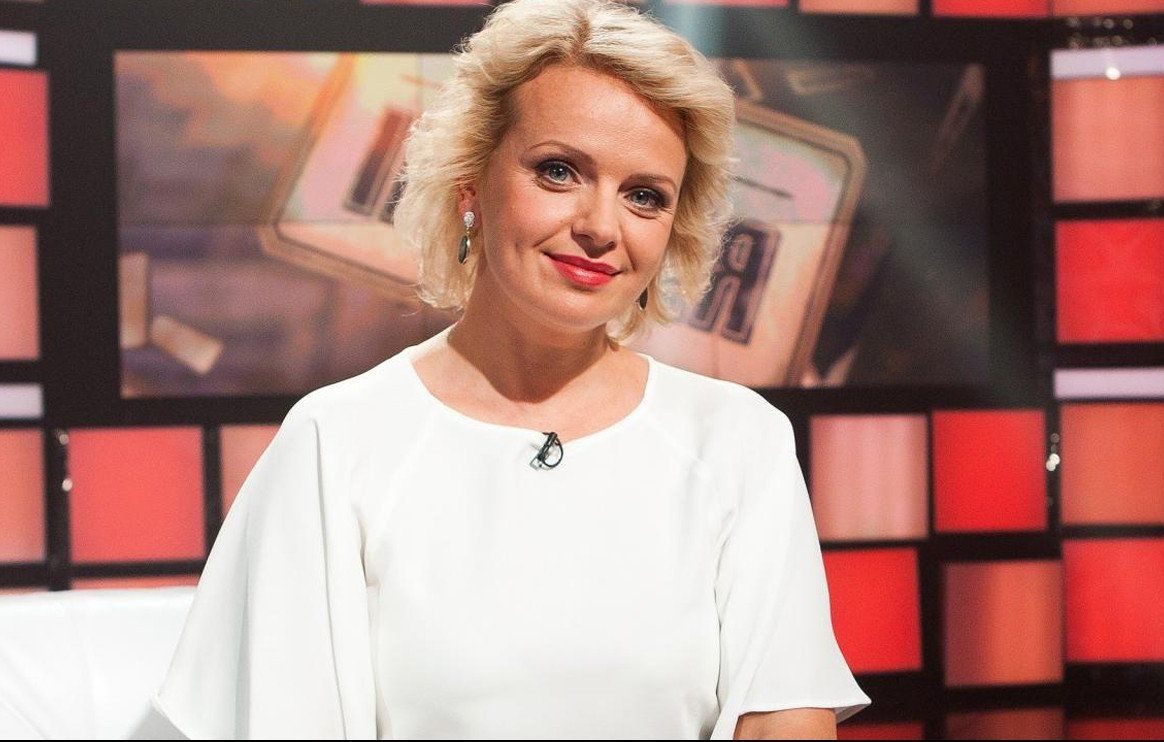
On “My Thoughts Are Quiet,” the difference between Zelensky and Holoborodko, support for Poroshenko and Medvedchuk’s nationality.
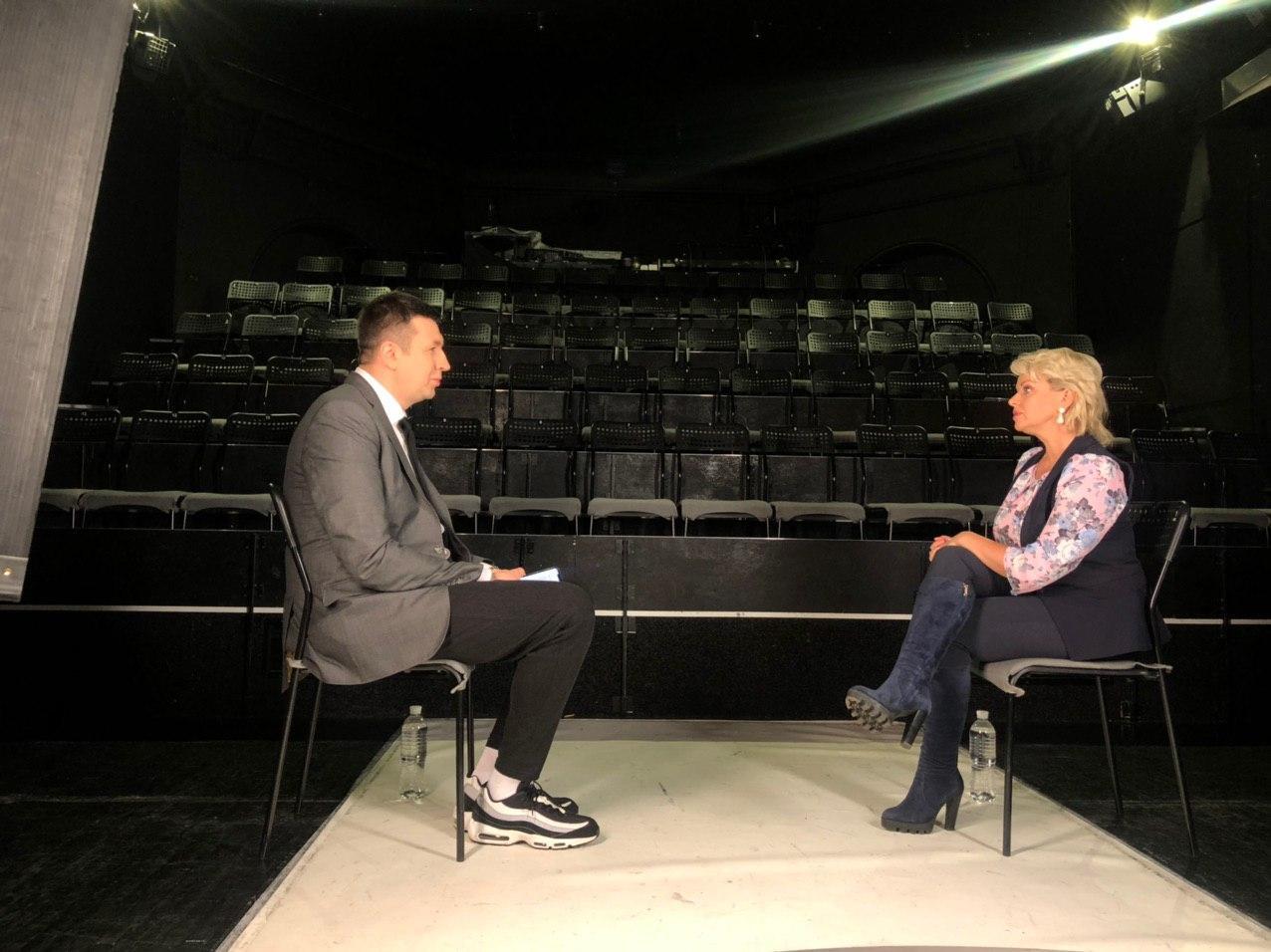
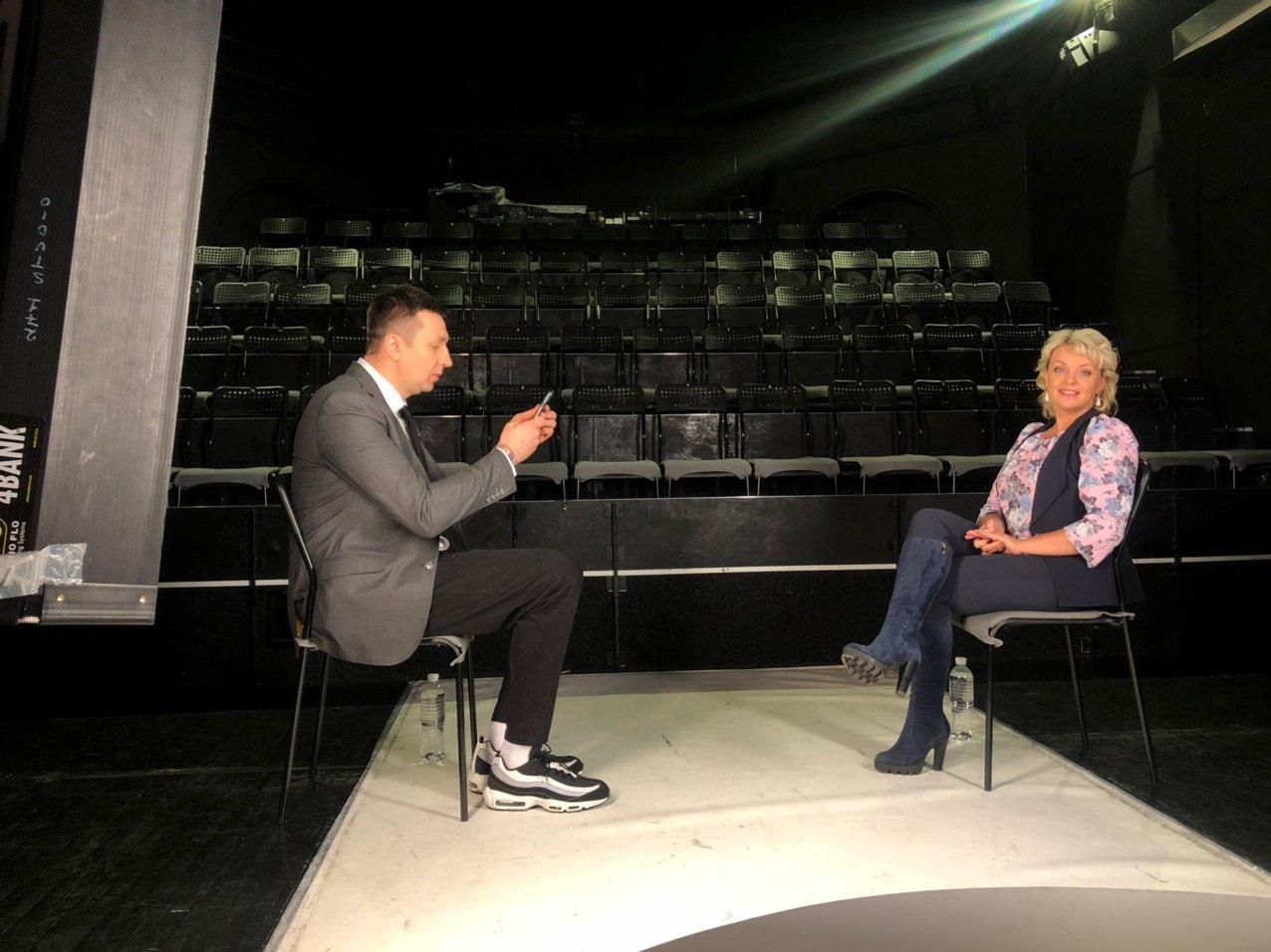
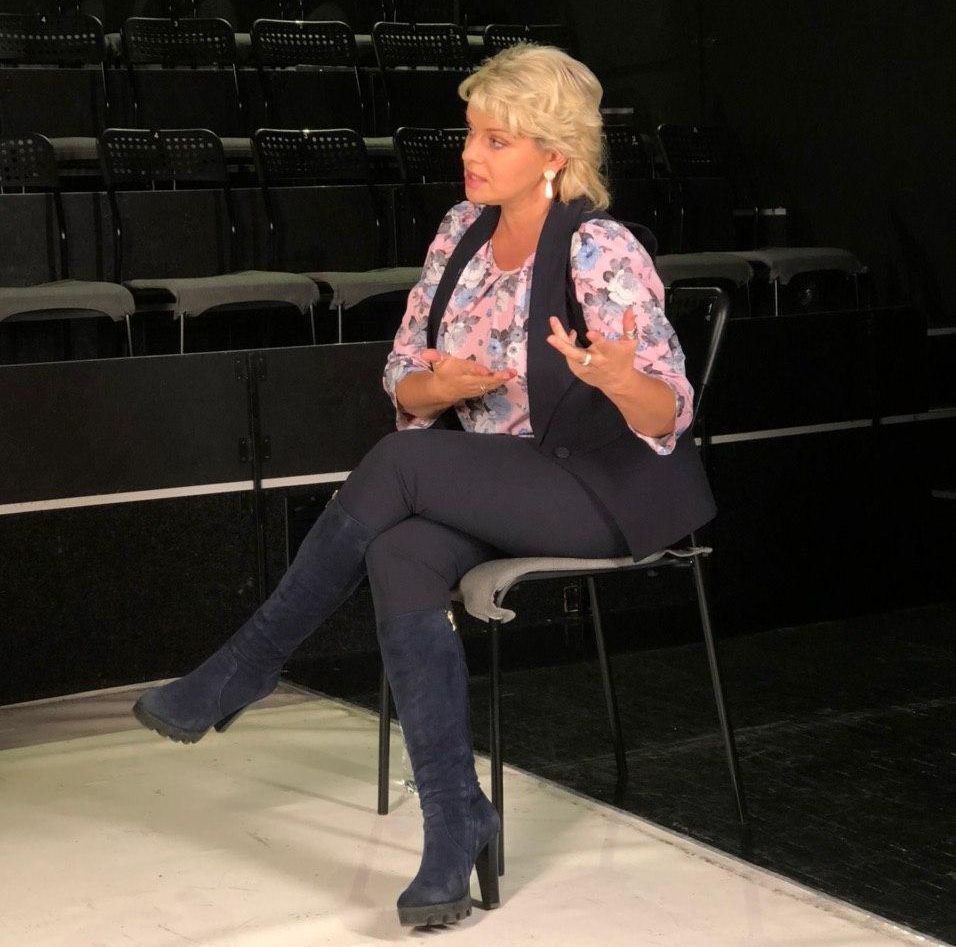
The new guest of the show “Antipodes” on the Iceland TV channel is Ukrainian actress and producer Irma Vitovska, who plays one of the lead roles in the film “My Thoughts Are Quiet.”
“Antipodes” is an author’s program by journalist Serhiy Ivanov, former host of the political talk show “The Right to Power” on the 1+1 channel.
As part of a partnership project between TK Media and the Iceland channel, we publish a text version of the conversation.
— What is the main meaning of the film “My Thoughts Are Quiet” for you?
— I agree with Antonio [Lukich] that the film is about whether we believe that a miracle can happen in our lives. At the beginning of the picture he uses a medieval scene with monks as a metaphor, which then does not appear in the film. The scene begins at an unfinished church that they are building, where they take a relic, because for a church to be consecrated, a relic was needed back then. And it ends in the temple that our hero comes to.
Here, between two shores, is our hero, between the Motherland and that dream of a miracle which, he thinks, will change everything. And where is this miracle? It turns out it is here. And the umbilical cord of the mother, his own mother, is that umbilical cord between the Motherland and his mother, and likewise between his past, his childhood, and his growing up today.
I really love paintings, I really love works that raise many open questions for reflection. Despite the fact that this is the debut of a fairly young person, but quite a grown-up one inside, in his own head, in his view of life, of people, of philosophy, I think we succeeded. I think the answer to the question of who can tell a story in our country is important here too.
— Why should people watch this film? I have now figured out what I would tell my compatriots from Donbas: because I am a person who, due to certain circumstances, state policy and so on, was cut off from my Motherland for a long time and related to it roughly the same way the main character of your film relates to his mother. But in the end everything fell into place at a certain point. That very angelic hint, I heard it, saw it, understood it. I cannot say it was easy, it was painful, but it set me on the right path.
And why must all Ukrainians watch this film?
— I think it is very honest. In our country comedy has become a certain template, an attraction, a film that entertains and gives a good mood. They competed in quality, there were very many of them on the market, enough were released, and they are successful. For the viewer, Ukrainian comedies have settled into that path. And here we tried to change the impression a little that comedies only entertain. In fact, we present it as a comedy, although I agree that there is also tragicomedy and lyrical drama with elements of comedy. For me, comedy is the most difficult genre, because making people from different social strata laugh, and laugh at absurd things, not obvious ones, when the heroes do not provoke laughter but the situation simply unfolds.
— So when the pants don’t fall down?
— Yes. I call it “a cream pie in the face.” At the beginning of the century there were black-and-white films, a pie in the face, and the whole hall laughs. Although a “pie” can be different. There are times when it is really nicely thrown, and I laugh. That is about creative work.
As for the message, as a citizen I would advise Ukrainians to support the cinema that at some point built the image of the state. The film received a Crystal Globe. There are only 15 category “A” festivals in the world. Ukraine has already been represented at 14 of them during this long period of Ukrainian cinema’s renaissance. Since 2015 the state has begun investing money in cinema, and we see this result. From some festivals Ukraine brought back very prestigious awards. For example, “Atlantis” won the “Venice Lion.”
And this boy (Antonio Lukich) received the special jury prize, the Crystal Globe. It is the same as winning the Olympics. In category “A” you cannot simply take and go yourself. You are put on international stands, you are watched by connoisseurs and experts, and they decide which film of which country they want to see.
— The day before yesterday I went to “Stalkers.” It is a brilliant performance, with a lot of memes in the good sense of the word. Your heroine says: “Inaction is the most terrible sin.” What is the most terrible sin for you?
— Inaction. Baba Pris is such a sacred character for me. Such roles are very rare in your life. There will be more passing, unsuccessful ones, and I am not ashamed of them, everyone sees them. But there are works like the Olympics, for which you have to train, and which set you on fire, and you work every day on your own. You won’t need a coach.
And for me this role of Baba Pris is a confessional story. I completely advocate for her in everything. It is such a personal story; I look at the world with her eyes. The other thing is that my methods of achieving things are not the same as this woman’s, but who knows, if I were in her circumstances. And there are roles where your personal life collides with your hero, as in “My Thoughts...”
When I first read the script, I cried. I read it from my own story, from my mother’s story.
— Why is inaction the most terrible sin?
— Because any movement is movement. I don’t like stagnation.
— Doesn’t it follow from this logic that the enemy is a lesser evil than a traitor who consciously watches and does nothing?
— I believe that a traitor is a greater evil than an enemy.
— Your most successful works are very painful. Do you believe that pain cleanses?
— Yes, absolutely. All the works that are landmarks, and there are not that many of them for me, but I believe there will be more. But they will not be permanent. They cleanse me at the start of creation, and then they cleanse you.
— If we compare Ukrainian society at the start of 2014 with its current state, how have we changed? In what ways have we become better, and in what ways worse?
— I have gained a lot of friends, and very few have disappeared. Probably we are growing up. We saw how many people suddenly became active in various directions. We have built up a mass for the country’s breakthrough.
— Is there no critical mass?
— Critical, no. But will the political and business elite bet on this mass? If they bet on it, a minority, but enough for a breakthrough, the country will run very far. If not, we will move into some stagnation, and part of this active mass will be forced to leave the country. Because time is gold.
Take these guys, now about cinema, Antonio for example. I am convinced he would succeed in any Eastern European country, I see how he is perceived there. But will Ukraine succeed without people like Antonio? Can we afford to lose a director who could bring very great fame to this country.
And so it goes across the board, in sports, in musicians, and in the visual arts.
— The state’s attitude that people can be thrown around reminds me very much of the Russian “they will give birth again.”
— Russia cherishes its artists. It is aggressive in its cultural expansion. We need to learn from this. They also have a lot of attractions and a lot of entertainment, but look how they lobby their cultural and artistic elite.
Of course, when ideology devours everything, everything suffers. But Ukraine needs support for those meaningful stories that work on a person, on their growth, on their inner world. Not only those that provide them with leisure.
— I analyzed the expenses and revenues of Ukrainian cinema. Why does Ukrainian cinema devoted to serious topics usually fail at the box office? “Kruty”: 52 million UAH budget, 7 million in box office. “The Secret Diary of Symon Petliura,” in which you appeared: 47 million budget, 2.5 million in box office. Even “Cyborgs”: 43 million spent, 23 million collected.
Why doesn’t the viewer go to such films? Why did lightweight comedies, say “The Crazy Wedding,” with a budget of 10 million, collect 50 million? Or “Dzidzio. Contrabass”: 5 spent, 22 collected.
— The answer: television. Stars formed on television are very attractive for cinema. You see, many films use not professional actors, but people from show business.
— You are a very well-known person. You appeared in “Petliura.” Why did it fail?
— Perhaps Oles Yanchuk’s cinematic language is such that young people will no longer perceive it. Not because it is bad, but because time has passed. But the film, we monitored it, was wonderfully received by the older generation, which grew up on this aesthetic. But the older generation doesn’t go to the cinema with us. We have lost the tradition.
Next. We had a lot of failures that we presented as a brilliant breakthrough of Ukrainian cinema. The trailers are wonderful, but you come to the cinema and there is disappointment. And of course there were political speculations: if a film had certain flaws, those flaws had to be pulled out, and viewers were pushed even further away from cinema. Let’s be honest.
Whether it’s “The Guide” or “The One Who Passed Through Fire.” There was so much criticism. I think it was mostly commissioned, political, meant to kill the picture. There are questions for them, of course, but they spun these questions from 1 to 100 degrees. And this works on our average citizen, who listens, no longer has trust, and does not want to go.
And beyond that, of course, there were openly bad and weak films.
I agree with Pylyp Illienko, who said that it is impossible to master everything at once when cinema was, say, not in the priority zone.
— Don’t such failures point to ineffective management, or generally to corruption? Wouldn’t it have been better to make 3-4 truly cool films?
— Who will shoot them?
— Antonio.
— Antonio emerged now thanks to state policy. This is a new wave that grew because cinema appeared.
— And why shoot a film that is very patriotic in content but “kitsch”?
— I also agree with you, and it is also very painful. But the state gave everyone equal opportunities to start, and now it is time to raise the bar.
— Why drown things out with quantity?
— That is not a question for me. We need to draw conclusions. I agree that these five years were a laboratory in which everyone got equal opportunities. Whoever survived, survived. We saw which systemic mistakes there were, who is capable and who is not, but going forward we need to raise the quality bar.
I regret that the films that are propagandistic, and Ukraine needs its own propaganda, it needs historical myths, did not get made.
— Don’t you think that the openly bad film “Kruty” negates the story of a great feat of which the Ukrainian people should be proud for many hundreds of years?
— Yes, it negates the story, because “Kruty” is the Sparta we could have been. Let’s hope someone among the young will shoot this story.
— At least at the level of “Cyborgs”?
— At least that. There, every character is revealed, every hero is transformed before your eyes, complete, with a story and a biography.
— What is your relationship with Nyshchuk, former Minister of Culture? How do you assess his tenure?
— Friendly. A lot was achieved, and a lot was not. I don’t know why not. Probably it doesn’t depend on one person alone; it is a team story.
— How do you feel about the fact that he appeared in almost all the films supported by the State Film Agency?
— Not in all, and there is no need to. Where did he appear? In “Cyborgs,” “Miracle”... What else? I don’t think he demanded a role for himself. I think the teams invited him.
— There is no conflict of interest in this?
— I don’t think Yevhen demanded a role for himself. I think he agreed because he was offered them. The questions are for those who offered. Maybe they needed him, I don’t know.
— In 2015 the series “The Last Muscovite” aired on 1+1, and you played a saleswoman in it. The series was stuffed with low-grade folksy kitsch: Ukrainians are depicted there as caricature khokhols, Little Russians, rahuls, who are not interested in anything at all. To me, that is humiliation. Why did you agree to appear in it?
— Perhaps it is partly my fault, although I won’t make excuses. Unconsciously. I didn’t really read the full script, only my scenes in the café. After Maidan it was finally a Ukrainian-language story, and I said: “Okay.” Well, sitcom and sitcom.
When I saw it on set, I began to draw conclusions and refused. I apologized and said: my friends, I won’t go into the second season. I know the channel was offended because of this. Later we came there with one project, but we were told that I would no longer appear on this channel, because I did not praise “The Muscovite” and left it.
— Who is a “malorossian”?
— For me, it is militant ignorance.
— Shufrych, a malorossian?
— Yes.
— Medvedchuk?
— He consciously chose a different nation that is close to him.
— A conscious traitor?
— I don’t know if he is a traitor. I think he gravitates toward the Russian mentality. There are malorossians who seem to acknowledge that they are Ukrainians but gravitate toward nothing. It is all the same to them. And there are those who consciously chose a different worldview history.
For example, at school I had a period when I wanted to be Russian, because it seemed to me that their culture was better. That was a moment of emotional attachment. But I was lucky, I discovered Ukrainianness, because my love of history led God to bring me to Ukraine. I am very grateful to my history teacher, to my own brains, and to random people who threw books my way.
— Did you watch “Servant of the People”?
— I watched it when the hype started. All of it, no.
— How do you see it from an artistic point of view?
— Let’s be honest, the acting work is good. They work honestly in the genre and in the demand they are serving. I just don’t understand why it is in Russian, if this is Ukraine.
— Is this product malorossian or not?
— I think so.
— To what extent, in your opinion, is Zelensky a Holoborodko?
— No, I think Holoborodko was an image for us, and Zelensky is a completely different story. If he succeeded in business, he proved himself. You can’t say his head doesn’t work. But without knowledge, of who I am, where I am from, what this country is and how diverse it is, it is very hard for a president to work.
You won’t build anything where there is a lot of dust on top, when there is a lot of ground underneath. You call a surveyor before building a house, you study the soil, and you see where the water level is.
— Do you consider Zelensky and his government a threat to the Ukrainian state?
— Intentionally and personally, no, but their actions, perhaps, yes.
— Why?
— Because of this ignorance. Or he himself doesn’t decide everything; there are influences there, right? And I think the influences are different.
— What are they doing wrong?
— I don’t like the rejection of this identity, what happened on New Year’s. Although I like the messages of some reforms.
Second, one cannot welcome an aggressor. I think that is unacceptable toward the corpses your country has produced.
— Why is peace at any price unacceptable?
— Because we have already been through this 100 years ago. What comes after this peace? Ukrainian identity does not suit the Russian empire (not the Russian people).
— So any peace with Russia will bring repressions, the Holodomor and so on?
— It will be a different form, but of course it will be the destruction of identity. They need to dissolve us and create a bigger Russian demographic story.
— How will the “Zelensky” project end, in your opinion?
— I don’t know. I don’t know. I think there was a romantic impulse and a desire to change something. But how can I take on such a responsible mission if my baggage includes works that don’t speak very well of me as a professional?
— As a professional?
— Yes. Not as a person.
If you used certain things that terribly hit Ukrainianness, then you can apologize, right? The crown won’t fall, will it? This is what is lacking for those who could go into cooperation. They can’t swallow those insults. The old ones, about “whore” and so on.
So without this apology, to sit in the chair and pretend it didn’t happen... But it did happen, it lies there, it remains. When you have messed things up there, it stinks anyway.
Actually, that is the mistake. People who have dignity make up most of the offended. So where will those who are now going to carry out reforms go without them? They are not offended at this Volodymyr Zelensky who came to power today, but at that other one... Enough of that. There are things that are not for sale, my friends. There are moral things, and the concept of honor has not died anywhere.
— You spoke at Poroshenko’s event. I have no doubt you did it sincerely. But did you get paid at all?
— No.
— Do you regret it?
— I said I would not name the surname, because I don’t know how to campaign. Although I can say why I chose: for me, what has happened with the State Film Agency is a breakthrough. I am a person from the early 90s; I had not seen Ukrainian cinema before. My films appeared in my life when I was 40.
In the humanitarian sector, grants began to rain down: a cultural fund was created, the Ukrainian Institute was established. I understand that he (Poroshenko, ed. TK Media) did not do this personally, but it happened under that government.
— In 2017 you unobtrusively polled people on Facebook about whether they would watch a possible continuation of the series “Lesya + Roma,” and you tagged your partner Dmytro Lalenkov. It seems to me, judging by Facebook, that he is a calibrated ‘vatnik.’ Do you maintain relations?
— We congratulate each other on birthdays.
— So did you talk about this?
— No. We finished in 2008, and each went our own way, although we crossed paths occasionally.
Lalenkov is a wonderful actor. But when we were filming, I was already Ukrainian-conscious. By the way, thanks in part to me, Dmytro started speaking Ukrainian, let’s not hide it.
Maybe over these 10 years he was swept off somewhere into his own story, but that is his choice. I can’t raise my partners.
— How do you feel about actors who stayed in the occupied territories and now serve in those theaters?
— There are so many reasons why a person didn’t leave, so I wouldn’t say whether it is betrayal or not.
— But one can refuse to work for the enemy.
— But what is a person supposed to live there for, what is the reason to support a sick mother? Usually there is some attachment that explains why they didn’t leave. Someone is stronger, someone is weaker.
It is a crime of Ukraine’s political authorities that this region was not integrated into Ukrainian culture.
— If you worked in Donetsk, would you have stayed there?
— No, because I am strong. But I cannot blame weak people who don’t know what I know, or who have not opened up.

Russian Attacks in Dnipropetrovsk Region: Two Killed, Seven Injured

Defense Forces Strike Four Russian Drone Control Points in Past Day, Including in Berdiansk

Britain Threatens Sanctions on Kremlin-Linked People; Poland Ready to Hand Ukraine Ammunition

Russia says it has completed "planned exercises" in the Black Sea

MVD: Fake Riots With Prop Blood Were Being Prepared Near Presidential Office

Law Enforcers Name Another Klitschko Deputy as Suspect

Berlin Holds Protest Against War in Ukraine; EU Prepares for Possible Russian Halt of Gas Supplies
North Korea Fires Ballistic Missile Over Record Distance in Five Years
Irish Fishermen Force Russia to Postpone Naval Drills

US sanctions in case of invasion of Ukraine could completely destroy Russia's economy, NYT reports
