
The “Permanent Temporary Worker”: Current Position and Future Prospects of Arsen Avakov
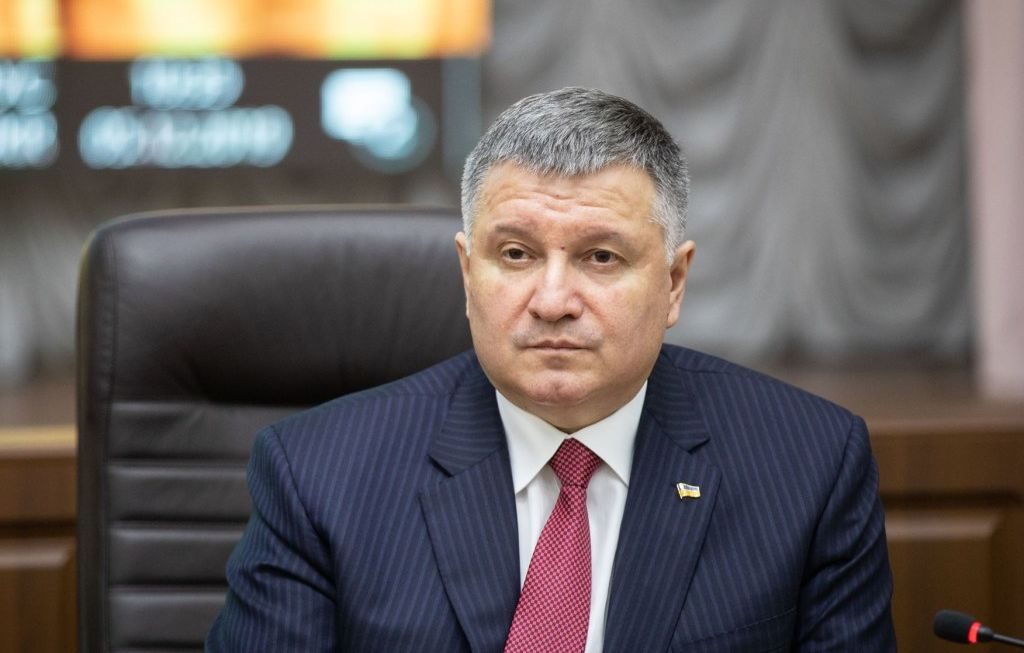
The Interior Minister will soon mark the sixth anniversary of his time in office.
The writer Albert J. Nock once said: “There is nothing more permanent than the temporary.” Indeed, history knows many examples when “temporary governments” and their “temporary measures” lingered for years, or even decades. In a certain sense, Ukraine can also be placed among such cases: having “temporarily tightened its belt” in 2014, our country still remains in a systemic crisis of the entire state model, and most of the population does not quite understand where we are heading.
The times of Maidan are long gone, and the “Maidan cohort” in state administration, having discredited itself through corruption and the failure of reforms, has practically disappeared from the political field, giving way to “new faces.” However, in the top echelons of Ukrainian politics there is a man who, without fail, since the first day after the protests in central Kyiv ended and the Yanukovych regime was dismantled, remains in his ministerial seat.
In the nearly six years that have passed since the overthrow of the “Regionnaire” authorities, this man, occupying one of the key posts in the state, has weathered a number of crises, accusations and attacks against him. Nevertheless, he has managed not only to survive but also to noticeably expand his influence, building communication with a number of important players both inside Ukraine and abroad, and also bringing under his control the formal and, as many experts believe, part of the informal security bloc of the country. We are talking about the post of Interior Minister, which Arsen Avakov has held continuously since February 22, 2014.
With the arrival to power of Zelensky and his team, who campaigned on slogans of “new faces” and total renewal of the entire political elite at all levels, rumors persistently circulated that Avakov would be “asked to leave.” In essence, he is the only “Maidan” minister, and one who also manages such a difficult ministry, and he has indeed accumulated a great deal of negativity around himself over these years. Nevertheless, almost half a year has now passed since the formation of the new Cabinet, and Avakov is still there.
Some time ago, the media and expert circles began to speak of the possibility that he could become a candidate for prime minister after the practically inevitable resignation of Honcharuk. In the last few days, talk has picked up again that the head of the Interior Ministry may soon be replaced. So what place does Avakov occupy in today's structure of Ukrainian power, and what are his further political prospects?
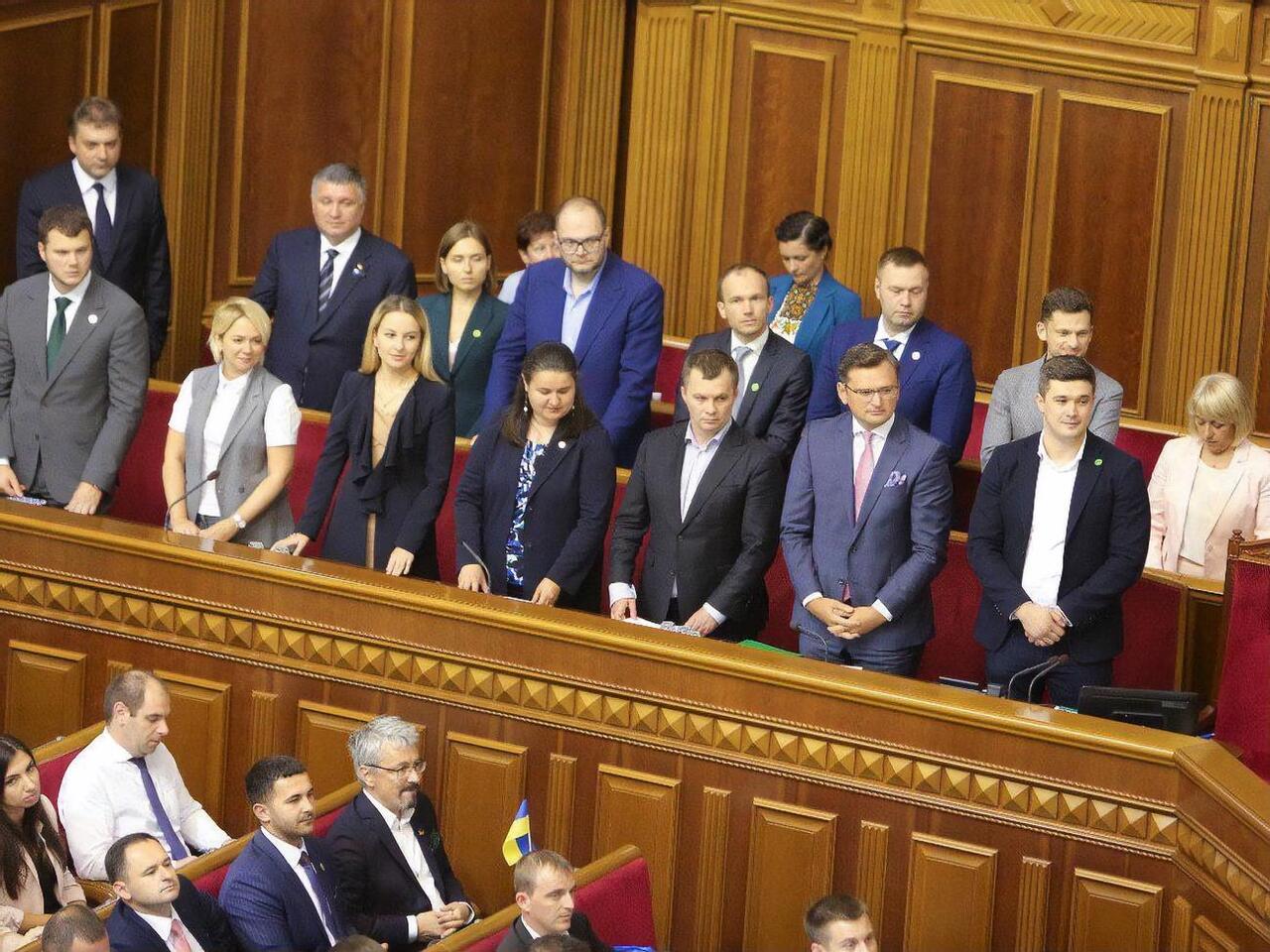
From refugee to minister: how Avakov took over the Interior Ministry and what he did in that post
Arsen Avakov's position has not always been secure. In 2011 he was forced to leave Ukraine due to criminal prosecution, as the future minister himself said, “for political motives.” Only at the end of 2012, after the parliamentary elections, did he return, becoming a People's Deputy of the 7th convocation. Avakov actively supported Maidan, handling the protest's infrastructure: he ensured food supplies, monitored the barricades and was one of the curators of the tent camp. After the removal on February 21, 2014 of former Interior Minister Vitaly Zakharchenko from his post, Avakov took his chair the very next day, becoming acting minister. Five days later, on February 27, he officially headed the Interior Ministry. The corresponding decision was made by the “Maidan Council” and later supported by the government.
In his post, already in the first months as minister he carried out a number of major personnel reshuffles, dismissed up to 20 thousand personnel from what was then still the militia in connection with the policy of lustration, and was one of the main driving forces behind police reform. Avakov ensured the smooth conduct of the 2014 presidential election, revived the National Guard, and became one of the key players in the “People's Front” party (formally he was a member of the “military council,” since by law he could not join the party).
By 2017, having “survived” the Yatsenyuk government and remained in the Groysman government, Avakov concentrated in his hands the maximum number of the state's security agencies. The National Police, State Border Guard Service, State Emergency Service, National Guard, and State Migration Service are all directly subordinate to the Interior Minister. In fact, he was practically the main alternative center of power under the Poroshenko regime, which, according to adviser and long-time Avakov partner Anton Gerashchenko, meant that the president and the Interior Minister were in a state of conflict almost all the time.
Poroshenko was also interested in concentrating power, but the Interior Minister did not want to share it with the already former guarantor. Avakov, in addition to controlling the security bloc, had enormous influence over the second-largest party in parliament, “People's Front,” and, according to many media outlets and experts both inside Ukraine and abroad, maintained stable communication with some far-right street groups and movements. Above all, we are talking about the “National Corps” party and its youth wing “National Druzhyny,” whose military unit, the Azov regiment, is part of the National Guard and subordinate to Avakov.
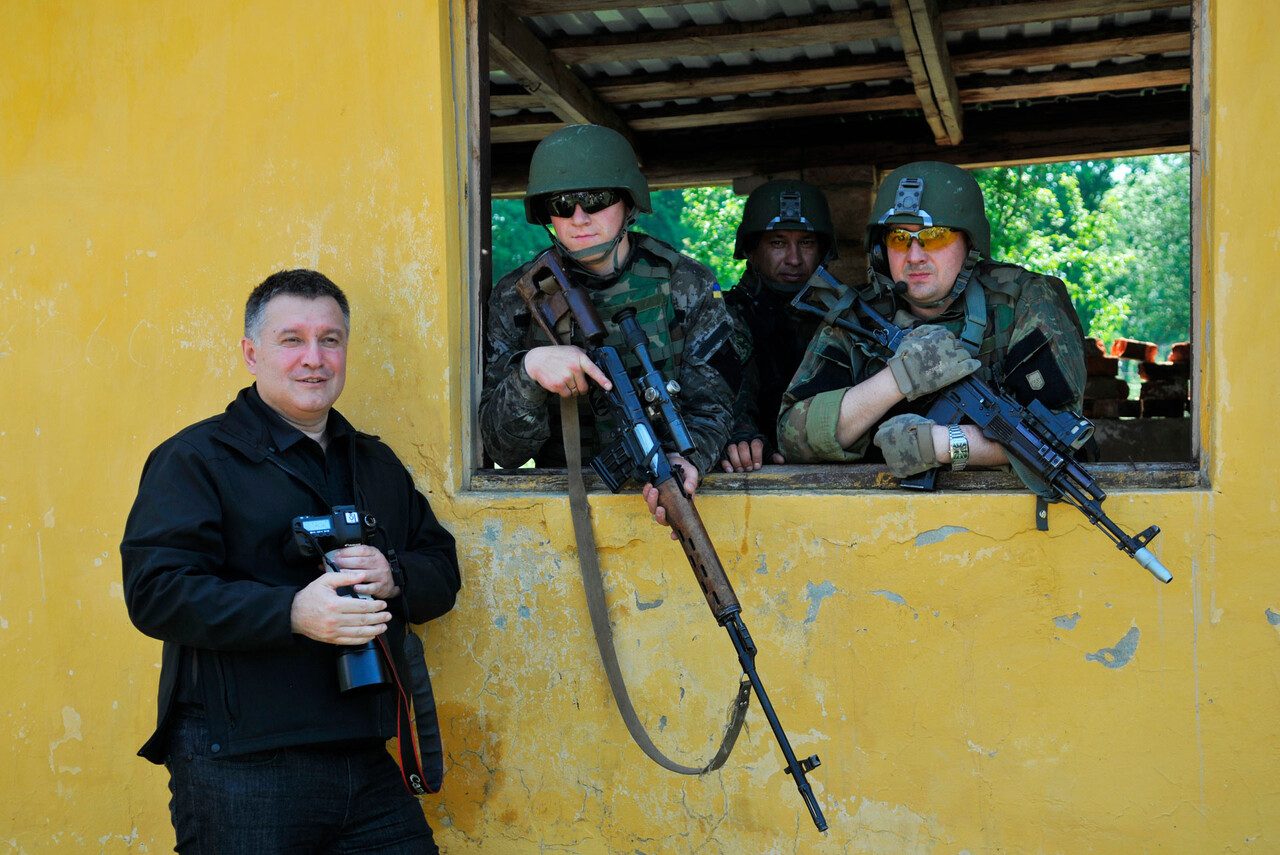
The current position of the Interior Minister
In 2019 Avakov intensified his political activity. He managed to establish contact with representatives of the American political establishment (part of the Democrats and personally former US Ambassador to Ukraine Marie Yovanovitch), as a result of which by spring 2019 Avakov had taken on the role of “arbiter” and “guarantor” of honest and transparent elections. Notably, it was his uncompromising stance on observing order and legality during the expression of citizens' will (which, however, was dictated primarily by personal interests, not altruism) that became a safeguard against large-scale falsifications (“the grid”) and helped Volodymyr Zelensky win.
Nevertheless, after the current president came to power, Avakov's position seemed less than favorable. He was one of the main “pillars” of the post-Maidan regime, and a significant part of the population associated him precisely with the previous government. The minister was the only person who managed to keep his post in the government, starting from February 2014.
At the same time, Avakov was trailed by a string of unpleasant stories related both to corruption (from the proverbial “Avakov backpacks” to accusations by grant-funded activists of creating a shadow business) and to his professional qualities (regular screw-ups of the new police). All the above-mentioned claims against the minister seemed to put an end to his then 5.5-year tenure at the Interior Ministry. However, after the formation of the Honcharuk government, Avakov… once again kept his post.
According to information from Telegram channels close to the Presidential Office, as well as publications by some media outlets, this decision came hard for the Zelensky team. Avakov was (again) left “temporarily” and under the “personal responsibility” of President Zelensky. Most likely there were 3 main reasons why the controversial minister did not leave his post.
- Zelensky's and his team's fear of the street. It was Avakov who was, and to this day remains, the only guarantor of at least conditional order on the streets. He controls both the security bloc and part of the radical groups. As long as the president and his team maintain an “armed neutrality” with the minister, the head of state has implicit guarantees that a mob of armed nationalists will not come to overthrow him for real.
- Substantial compromising material in Avakov's possession. Senior officers who had previously worked in the Interior Ministry admitted to journalists off the record that “Arsen has a file on everyone”. Avakov can be called “Ukraine's Lord Varys,” whose “little birds” in the form of subordinates have, over the years of the minister's tenure, gathered a lot of compromising material on all more or less significant players in government. Given that the only truly new face at that time was, in essence, Zelensky himself, his circle was clearly interested in persuading the president to postpone the dismissal of the Interior Minister.
- The Kolomoisky factor. Scandalous billionaire Ihor Kolomoisky and the head of the Interior Ministry have for many years been linked by both political and business interests. Journalists have more than once recorded the oligarch's motorcade arriving at the Interior Ministry building and staying there for at least several hours. Kolomoisky himself, in his characteristic manner, stated that Avakov is his “old friend,” whom he often visits to “talk about life.” It is logical to assume that the businessman, who has a certain influence on the president, could have advised at the right moment not to touch Avakov.
Thus, even despite street protests, the minister once again remained in office. During this time, according to journalists, he managed to build solid communication with Zelensky's aide Serhiy Shefir, which added to his authority at Bankova. He also made a mark in the resonant “Sheremet case,” which shook society and in which the president was even drawn in. Deputies close to the minister (in particular Denys Monastyrsky) say in interviews that “his time has not yet run out” and that the case of the murder of the Belarusian journalist is under the personal control of the Interior Minister, which can be interpreted as meaning that for now Avakov is not going anywhere.
At the same time, relations with Western partners, judging by everything, have deteriorated, as evidenced by a number of “anti-Avakov” publications and investigations in grant-funded media affiliated with the Democratic elite of the US. Be that as it may, as of late January 2020 Avakov remains in his seat, being one of the most influential “heavyweights” in Ukrainian politics. It is quite likely that in less than a month he will mark the sixth anniversary of his tenure as Interior Minister.
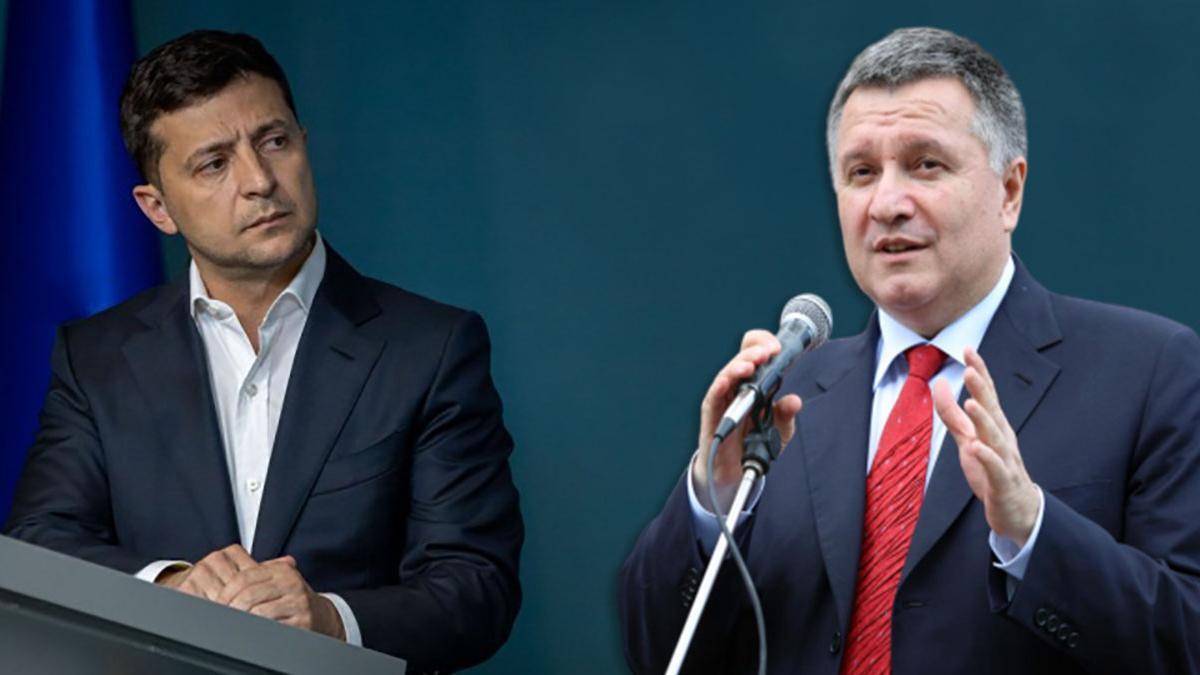
Ambitions are there: Avakov's further options and prospects
That the current Interior Minister has no shortage of ambition is an obvious fact, easily confirmed by Avakov's constantly growing influence inside Ukraine. In addition to the already mentioned communication with the president via Shefir, this is also evidenced by the “Avakov group,” a journalistic label for a number of deputies who entered parliament and are close to the minister (the same Denys Monastyrsky, who heads the relevant law enforcement committee, or former Avakov adviser Ilya Kyva). Avakov also has his own quota in the State Bureau of Investigation. The minister has also found a way to the heads of the Specialized Anti-Corruption Prosecutor's Office: it has more than once been seen transferring high-profile cases under the jurisdiction of the Interior Ministry, where they subsequently were quietly “leaked.”
Under Avakov's control remain the security agencies and some radical groups. All of this together makes it possible to “stir up” the situation on the streets if necessary. A textbook example is protests over the land market involving the “National Corps” and its leader Andriy Biletsky. After police dispersed the demonstrators, many memes on the theme “he gathered them himself, he dispersed them himself” appeared on social media. The expert community, however, treated the incident more seriously, seeing in this situation a signal from the Interior Minister to the Presidential Office and personally to Zelensky.
The president's team surely understands Avakov's level of influence and potential danger. It is no coincidence that one of the first bills submitted by Zelensky was an attempt to bring the National Guard under his own direct control. However, the bill was not only not put to a vote, it was not even considered by the relevant committee led by that same deputy Monastyrsky. Despite all this, Zelensky understands that Avakov is still needed (above all as a safeguard against mass protests) and that he has to be reckoned with.
In the context of all the above, it is logical to assume that the minister clearly does not intend to “retire.” He has concentrated a great deal of power in his hands and continues to build up influence and authority. Most likely, he will remain Interior Minister for some time yet (from several months to a year), but after that he will either stay in the government as a “grey cardinal,” retaining power even in a lower post, or “move up” to prime minister. Given his experience, connections, and capacity for intrigue and multi-step maneuvers, this could create de facto dual power in Ukraine, and absolutely not in Zelensky's favor.
At this stage, however, Avakov remains a confident player in Ukrainian politics. Yet he became such largely against the backdrop of total incompetence and inexperience of the “new faces” and the “young generation,” which once again points to a serious personnel shortage as a critical problem of the Ukrainian state apparatus. Given the minister's “seasoned” nature, grip and foresight, and the foreseeable demand in the near future for a “strong hand” and “tough managers,” one can confidently assume that Avakov will find a place in the coming political realities.
Nikita Trachuk, TK Media

Russian Attacks in Dnipropetrovsk Region: Two Killed, Seven Injured

Defense Forces Strike Four Russian Drone Control Points in Past Day, Including in Berdiansk

Britain Threatens Sanctions on Kremlin-Linked People; Poland Ready to Hand Ukraine Ammunition

Russia says it has completed "planned exercises" in the Black Sea

MVD: Fake Riots With Prop Blood Were Being Prepared Near Presidential Office

Law Enforcers Name Another Klitschko Deputy as Suspect

Berlin Holds Protest Against War in Ukraine; EU Prepares for Possible Russian Halt of Gas Supplies
North Korea Fires Ballistic Missile Over Record Distance in Five Years
Irish Fishermen Force Russia to Postpone Naval Drills

US sanctions in case of invasion of Ukraine could completely destroy Russia's economy, NYT reports
