
Putin's Script for Xi Jinping. How Hong Kong Becomes the Second Crimea
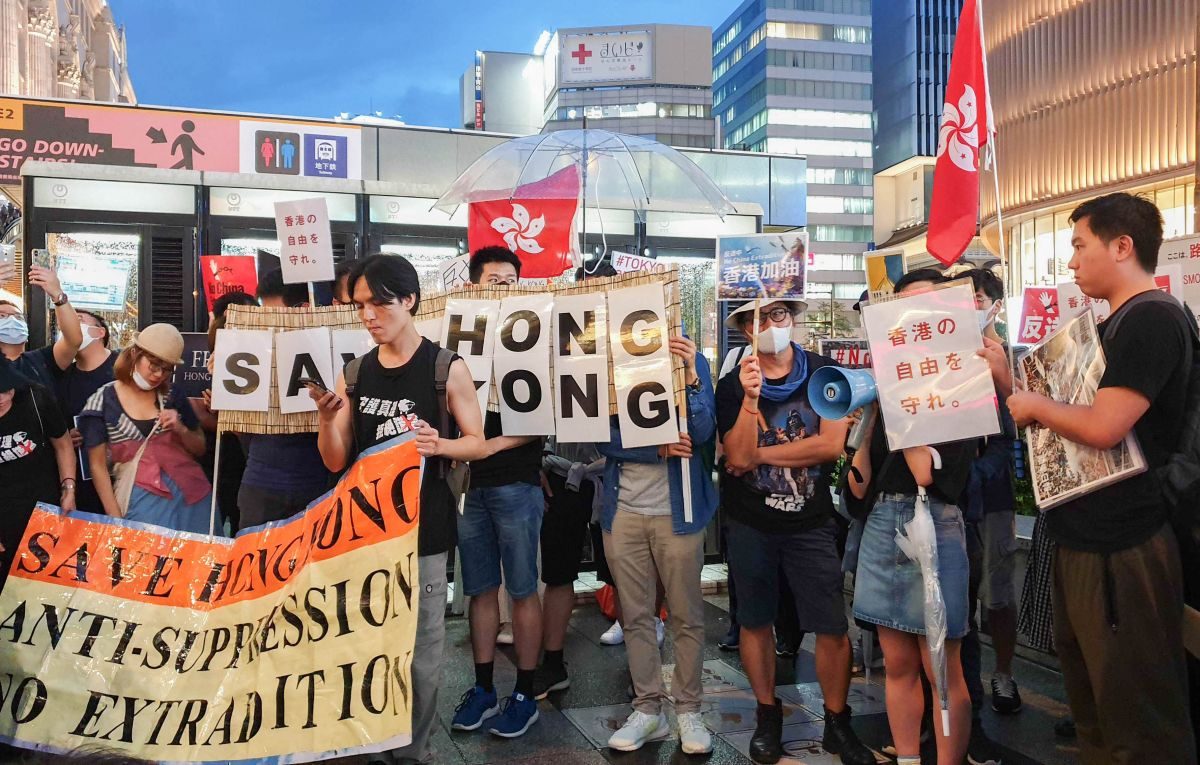
First Hong Kong, then Taiwan?
Some fear that the parallels with Russia's 2014 annexation of Crimea from Ukraine mean that a much more assertive China is emerging.
Soon after China confirmed its readiness to bypass Hong Kong's legislature to introduce a new national security law, media magnate and democracy activist Jimmy Lai wrote on Twitter that his home — a former British colony seeking to escape the heavy hand of mainland rule — had become “the Berlin of the last Cold War.” Unfortunately for Lai and other liberals in the territory, he is probably wrong. If there is any parallel to draw, it is much more like Russia's recent decision to annex Crimea from Ukraine.
As with President Vladimir Putin's move carried out amid political instability in Kyiv and during the 2014 Winter Olympics in Sochi, Xi Jinping's step is both opportunistic in timing and strategic in its goal.
COVID-19 has further weakened the formidable supporters of the democratic protest in Hong Kong, reducing the risk of mass resistance to a movement that would have brought about the full unification of China under Beijing's control. Like Putin, Xi made this decision knowing it could poison relations with the West for years to come.
The text of the national security law has not yet been drafted. Officials have tried to assure the business community that Hong Kong will keep its freedoms, and softer wording in the law could minimize restrictions from abroad. But given how Chinese diplomats are trolling the US over the unrest following the death of George Floyd, Xi does not seem particularly worried about anything.
The situation in Hong Kong, of course, differs from Crimea and Berlin, not least because China's sovereignty is indisputable. Moreover, the People's Republic has refrained from sending additional troops to Hong Kong (a garrison of the People's Liberation Army was already there before the protests began).
China had become less patient and more categorical in its relations with the rest of the world even before Xi came to power in 2012. As a result, the Trump administration labeled Beijing a “strategic competitor” in its first national security strategy in 2017, and the following year began a trade war. Nevertheless, Beijing's change of approach on Hong Kong marks a shift that worries China's neighbors and Europe — all of whom have found themselves at the center of rapidly growing great-power rivalry. They have seen this scenario before — with Russia. And it does not end with Beijing bowing before a triumphant West.
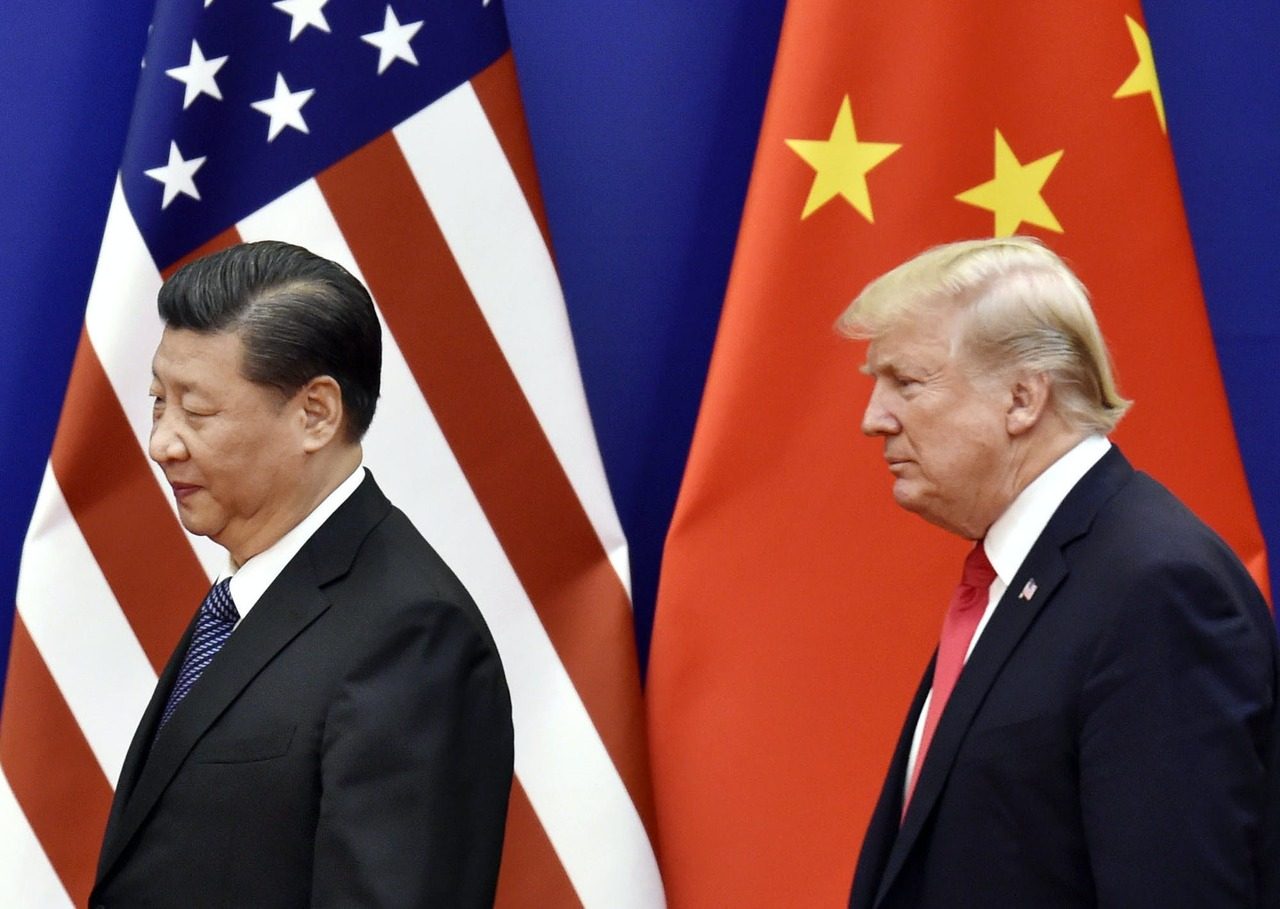
“China, at least in Europe, has until now been considered a more responsible and predictable player than Russia,” — says Bruno Macaes, former Portuguese Secretary of State for European Affairs and author of two books on China's rise, including “The Dawn of Eurasia: On the Trail of the New World Order.” Xi's decision to ignore Western complaints about Hong Kong, combined with aggressive diplomacy since the spread of Covid-19 this year, suggests the differences are disappearing. “This is a kind of Crimea moment for China,” — says Macaes.
The similarity lies in China's approach, Lai is convinced. He hopes the US will recognize the changes in Beijing and mobilize to counter any encroachment on Hong Kong's self-government with the same resolve it showed in 1948, when Stalin sought to bring the Allied-occupied Berlin under Soviet control.
If the US and other international superpowers fail to stand up to Xi over Hong Kong, Taiwan and other American interests in Asia will soon fall under Beijing's domination, Lai says in a phone interview from Hong Kong, where he is chief executive of media conglomerate Next Digital Ltd., which owns the Apple Daily newspaper. President Harry Truman ordered aircraft to counter the Soviet blockade of West Berlin, drawing a clear red line against further Soviet expansion in Europe.
Lai believes that, as in the old Cold War, the new confrontation between the US and China is a clash of opposing values. He says Hong Kong's liberals are natural allies of the US in this struggle and could become a beachhead for spreading their shared values among mainland China, including in an uprising against the rule of the Communist Party. The party, by contrast, could “take advantage of this opportunity to attack Taiwan — if they thought the US was not strong enough to stand up to China,” Lai says. “US hegemony in Asia will be completely discredited.”
The difficulty for Lai and other Western-oriented liberals in Hong Kong is that, as in Ukraine, the threat of US military action that ultimately forced Stalin to abandon his blockade of Berlin is not credible today. There are no American troops in Hong Kong, and there will be no Seventh Cavalry. Most likely, the US will impose sanctions and restrict visas for some Chinese officials — doing the same thing it did with Russia after Putin annexed Crimea.
These measures hurt the Russian economy and formalized increasingly hostile relations with the West, but they did not persuade Putin to change his policy. This experience fuels concern in Europe about how events will unfold in China. Given the global pandemic and strained transatlantic ties, Trump will find it far harder to coordinate an international response than Obama did six years ago.
If Xi fails to dissuade Beijing from imposing laws on Hong Kong, the West will again be powerless to stop it and will be forced to back away from mutually costly sanctions, believes Jean-Maurice Ripert, former French ambassador to China. “The risk is that a situation like Crimea could arise,” — he says.
For Xi and China's leadership, imposing their will on the world's largest offshore financial center was a political necessity. Like previous generations of Communist leaders in Beijing, on the question of the ruling party's legitimacy, Xi has bet on delivering the promise of “national rejuvenation” after what the party calls a century of humiliation at the hands of Western powers. That period began with the First Opium War of 1839–42, when defeated China was forced to cede Hong Kong to Britain. An entire wing of the National Museum in Beijing is devoted to telling the story of these colonial humiliations and the Communist Party's heroic success in restoring power since 1949. This permanent exhibition, opened in 2011 and updated since then to reflect achievements after Xi came to power in 2012, is called “The Road to Rejuvenation.”
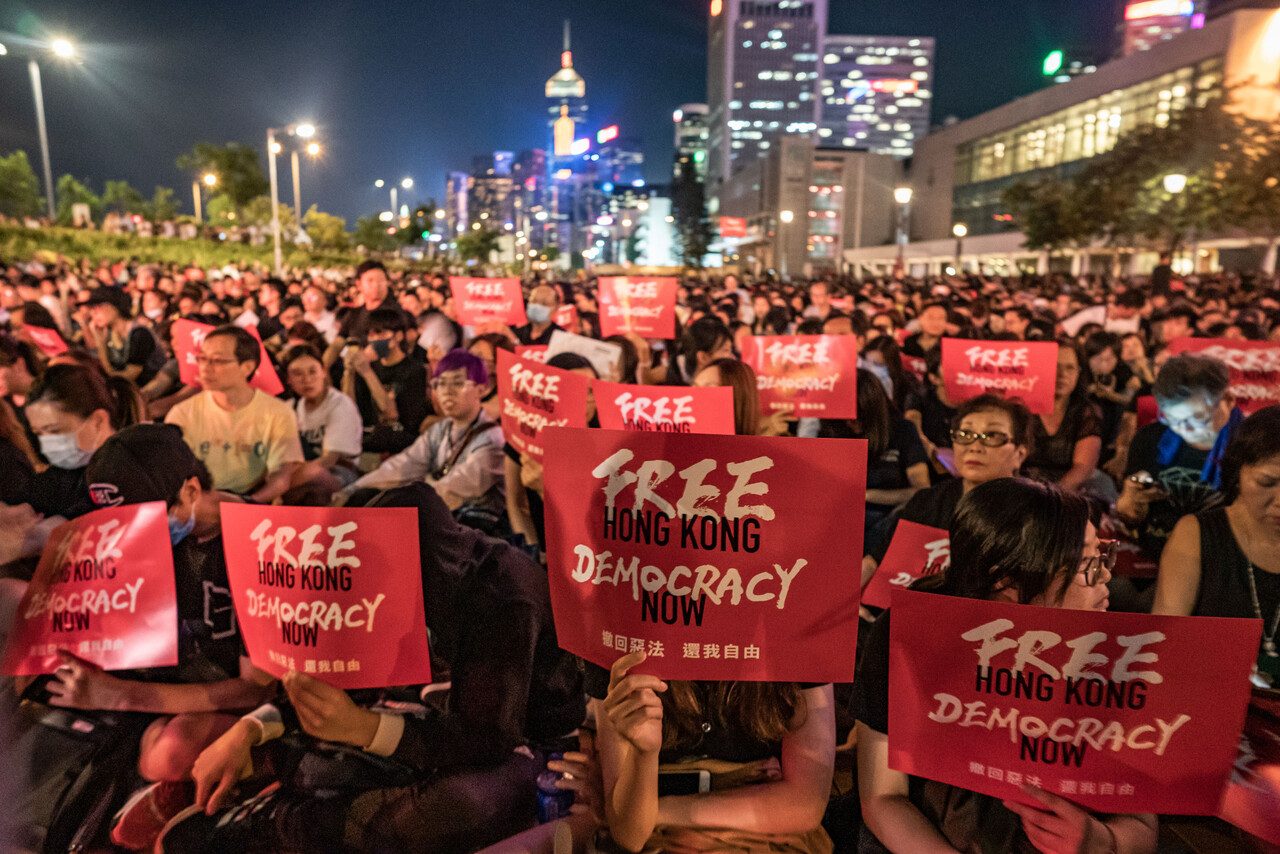
Any alleged threat to the party's claims over Hong Kong is seen as a direct challenge to these national goals, and this helps explain Beijing's insistence that last year's pro-democracy protests in Hong Kong were sponsored by foreign forces. “Regardless of the shouts, blows and barking of the US government, no one in the world can change Hong Kong's status as part of China,” — says Gao Zhikai, former Chinese diplomat and interpreter for Deng Xiaoping, the leader who negotiated with Britain the island's return.
The final 1997 agreement with Britain provided for Hong Kong to adopt laws banning treason, secession, sedition, foreign interference and subversion against the central government — which has never happened due to disputes between supporters and opponents of Beijing's involvement in creating a legal framework in the region. “No one should pretend to be surprised that China has legitimacy and power,” — says Gao.
The question of the Communist Party's authority is a particular problem for Xi, who has made displays of strength the defining feature of his rule. These include the creation of mass “re-education camps” for the country's Muslim Uyghur minority in the far western region of Xinjiang, as well as military support for newly created administrative units on islands in two archipelagos in the South China Sea.
But when mass protests began in Hong Kong in 2014 and last year, Xi was unable to stop them, even when they turned violent, and protesters openly questioned the party's power over the city. Public dissatisfaction with the government over its failure to contain COVID-19 and the sharp economic slowdown have only increased Trump's enthusiasm for applying political pressure on China. In the first quarter, 130 million people lost their jobs or were otherwise left worse off.
Daniel Russel, former US assistant secretary of state for East Asian and Pacific affairs, believes that Xi's pursuit of the popular domestic mission of reunifying the homeland is one of several echoes of Russia's 2014 attack on Crimea. “Muscling in on sovereign power at a moment of weakness at home” — is another. Putin had been struggling with low approval ratings since returning to power two years earlier and could not afford to appear weak after losing the fight to keep pro-Russian President Viktor Yanukovych in power in neighboring Ukraine. He also blamed the US for organizing the democratic protests in Kyiv that led to the fall of Yanukovych's regime.
According to Russel, now vice president for international security and diplomacy at the Asia Society Policy Institute in New York, another such echo is that “as in Crimea, no country is able to challenge such a move.” Congress and the Trump administration are considering only the sanctions option.
Of course, there are huge differences between Crimea and Hong Kong. First, Putin had to annex the Black Sea peninsula, and the vast majority of governments around the world still consider it part of Ukraine. China's sovereignty over Hong Kong was settled in 1984. The later agreement with Britain, which created the island's Basic Law, guaranteed that China would observe the “one country, two systems” formula for 50 years, until 2047. And many in Hong Kong oppose the upcoming changes.
The territory itself is also far less pleased about being absorbed by a larger neighbor than most ethnic Russians in Crimea. And the economic stakes are much higher, given Hong Kong's status as a global financial center that has long served as a gateway for foreign investment and for returning recycled capital to China. This helps explain why the government in Beijing has so far hesitated to crack down hard on Hong Kong's pro-democracy movement: doing so could undermine perceptions of the independence of the judiciary, which has made the island attractive to foreign banks and companies. However, as Hong Kong's economic weight relative to the mainland declines, and the Trump administration is already trying to reduce economic engagement between China and the US, Xi seems to have concluded that by playing hard he may lose less on the international stage than he gains at home.
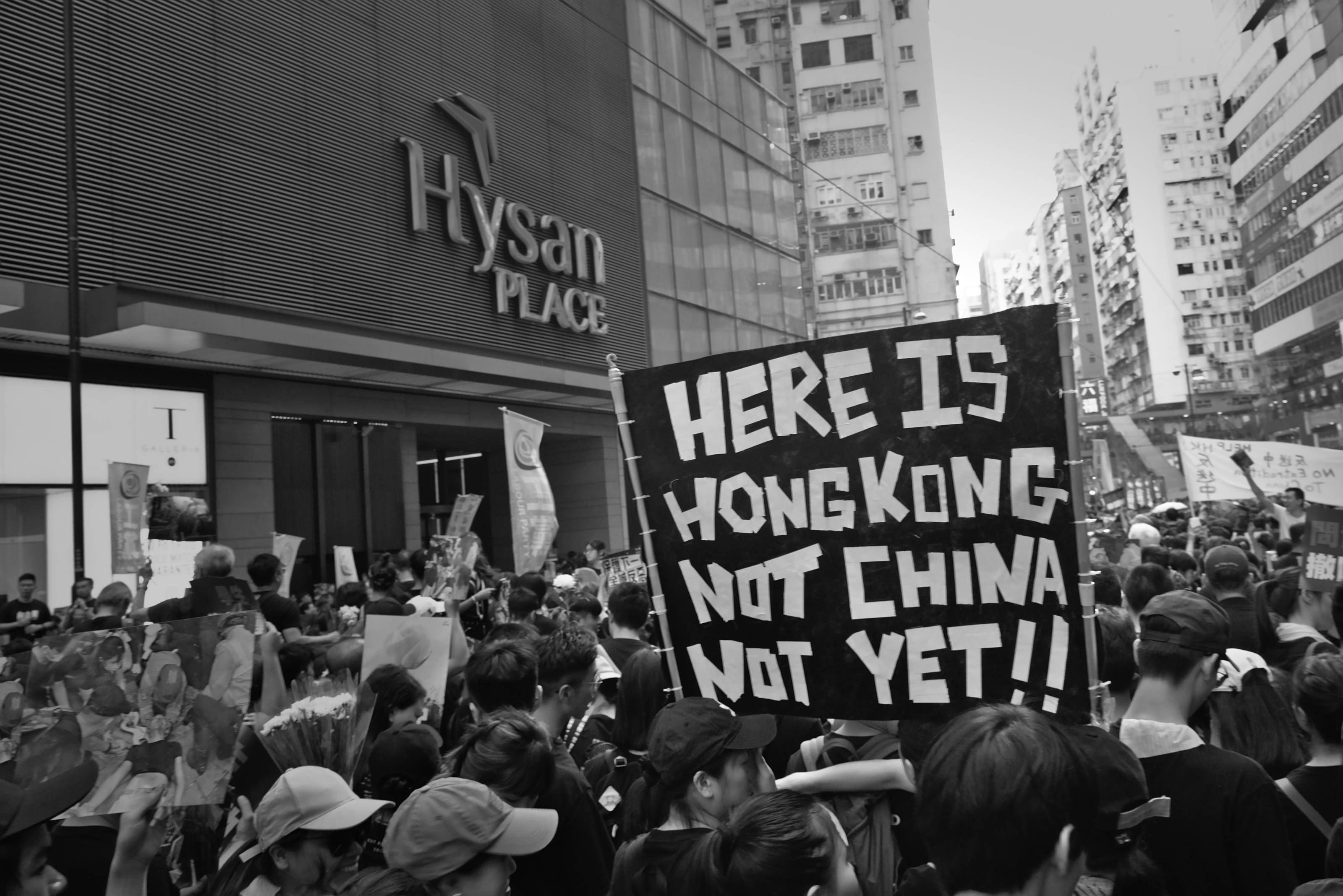
“They used to prioritize economic growth and avoided any conflicts with the West until the mid-2010s,” — says Vasily Kashin, senior research fellow at the Institute of Far Eastern Studies of the Russian Academy of Sciences. Although he is skeptical of the Crimea analogy, Kashin says the authorities in Beijing now “are demonstrating that they are ready to act decisively; this was inevitable, because the US decided to rapidly increase its influence, trying to stop China's rise, and China had to respond.”
According to Kashin's unsentimental view of Hong Kong's plight, the city has already served the US — not as a beachhead or ally, but as a discredit to China's “one country, two systems” policy. Photos of Hong Kong police clashing with protesters last year worsened Taiwan's opinion of Beijing so much that in January President Tsai Ing-wen, who looked like a lame duck, was re-elected for another term.
If the seizure of Crimea was a failure for the US, signaling its inability to prevent the first annexation of territory in Europe since World War II and marking the end of the old world order, China's attempt to impose its will on Hong Kong — is a clear US victory, Kashin is convinced. “This could be used to shape public opinion against China in Taiwan and elsewhere,” — he says.
Lai, in turn, does not give up hope. In his view, Crimea was indeed a completely different case, but only because Russia — with a gross domestic product less than one-tenth the size of the US in current dollar terms — was not significant enough for the US administration or public. Moreover, with Barack Obama in the White House, the US also had a president who was “too much of a gentleman” to do everything possible to stop Putin.
China now is America's “sworn enemy,” and its economy has either already surpassed the American economy or will soon overtake it, depending on the estimates. Moreover, American society is unhappy about the deaths and unemployment caused by COVID-19, which the current US president has called the “Chinese virus.” “Maybe with Trump things will be different,” — says Lai. — Trump is also playing hard.”
Material by Mark Champion and Peter Martin for Bloomberg,
Translation and adaptation by Vasily Obaraz

Russian Attacks in Dnipropetrovsk Region: Two Killed, Seven Injured

Defense Forces Strike Four Russian Drone Control Points in Past Day, Including in Berdiansk

Britain Threatens Sanctions on Kremlin-Linked People; Poland Ready to Hand Ukraine Ammunition

Russia says it has completed "planned exercises" in the Black Sea

MVD: Fake Riots With Prop Blood Were Being Prepared Near Presidential Office

Law Enforcers Name Another Klitschko Deputy as Suspect

Berlin Holds Protest Against War in Ukraine; EU Prepares for Possible Russian Halt of Gas Supplies
North Korea Fires Ballistic Missile Over Record Distance in Five Years
Irish Fishermen Force Russia to Postpone Naval Drills

US sanctions in case of invasion of Ukraine could completely destroy Russia's economy, NYT reports
