
Rapper Vova from Lviv: I Would Ban Music in Russian
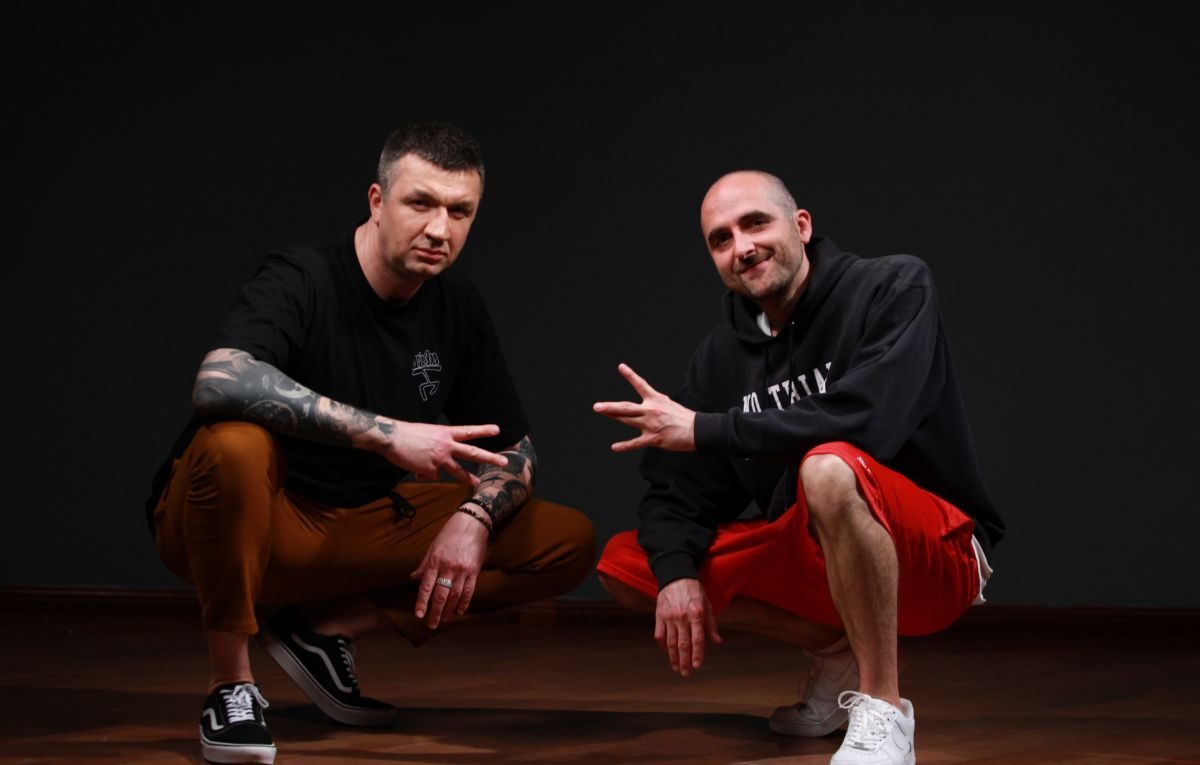
Ukrainian performer says he does not feel at home in Ukraine.
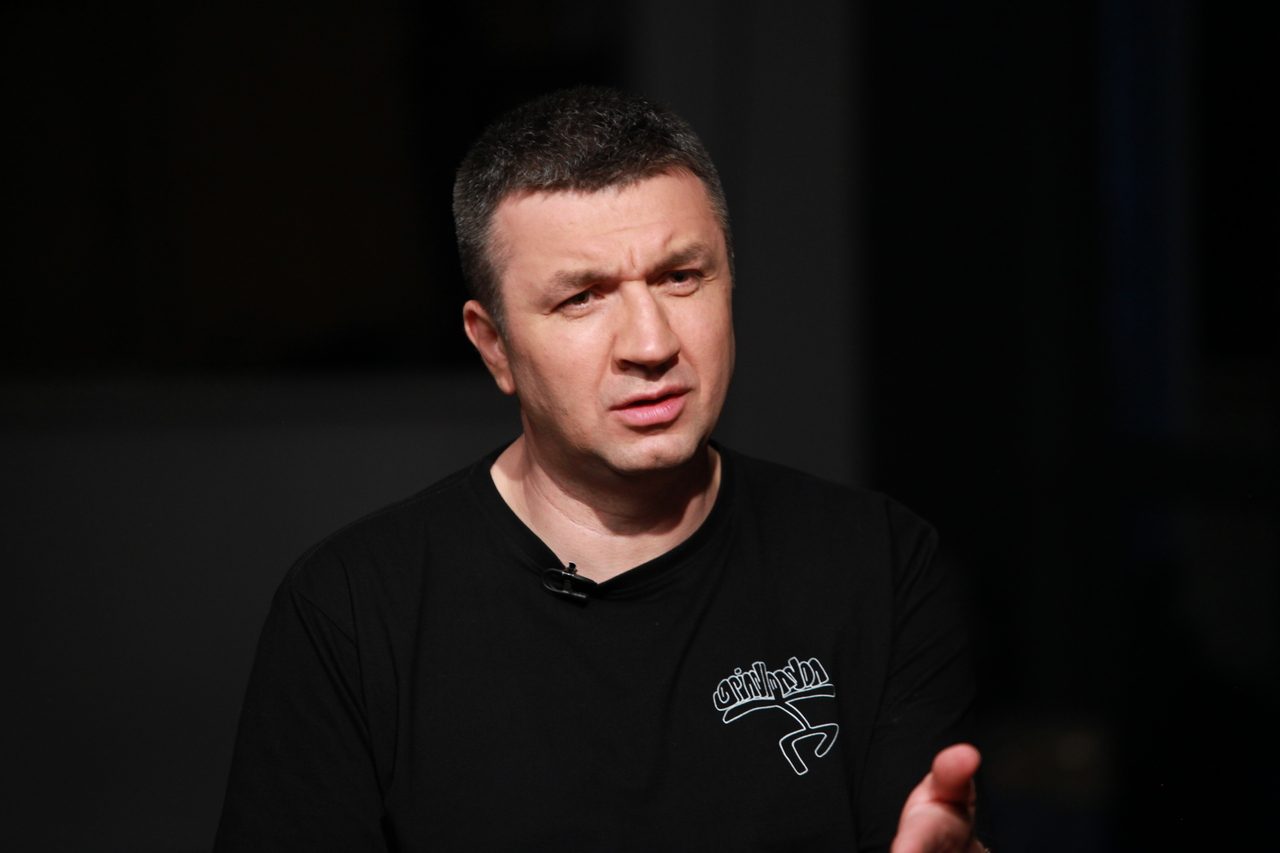
In a new episode of the show “Antipody” on the Iceland TV channel, Ukrainian performer Vova from Lviv (VOVAZILVOVA), who works in the rap style, talked about making music in Russian and Ukrainian, returning from the US, the Ukrainian national idea and his attitude toward President Volodymyr Zelensky.
What is the Ukrainian national idea?
You know, I was getting ready for your interview. We had arranged it earlier, but it didn't work out. Since then I've watched more than one of your interviews, and some thoughts kept flashing through my head about how it would look, some visualizations of questions and answers.
So, about what I was saying. I wanted to say that all my answers today will, broadly speaking, fall into two categories. One category is Ukrainians and the good of Ukrainians in the current situation, at this time, with the existing war with Russia. The other category is people, humanity and the greater good of humanity. In my opinion, that is the national idea.
You see, there were a few questions: whether it exists, if it does, what it is. It seems to me there is no single one, because if there were, things would probably look different. Probably there are different ones for different people. You know how they say that truth is each person’s own, or that each person has their own truth. It seems to me it would be cool if the Ukrainian idea were spiritual evolution, the evolution of consciousness.
When you know that there is energy in every person, which someone calls the soul, someone calls Ki, someone calls Qi, and there are various other names: spirit. I believe that everything around us was created from this energy, and I believe it is the same energy that, broadly speaking, is God. And so for me, I choose to believe that we are all one whole.
Based on the idea that when you do something bad to someone, you do it to yourself; when you do good to someone, you do good to yourself; when you do bad to yourself, you do bad to someone; when you do good to yourself, you do good to someone. I think it would be cool if the national thought were about becoming better than we are, through what we do.
Because this concept may seem very abstract, becoming better than we are. There’s a saying: for all that is good, against all that is bad. But it seems to me that this simply means doing your work as well as you possibly can. And doing it so that it does no harm to anyone, and that it is for the good, that it benefits people. That’s how I see it.
You lived in America, how many years in total did you live there?
Six.
Six years. You just left. Were you in America?
Yes.
Are you going to emigrate? I mean permanently. Or have you already got citizenship?
No, I haven't. Right now my wife and I live in two countries. We started living this way in 2019.
Why did you come back?
My wife missed Ukraine very much and wanted to spend time here. Los Angeles relaxed me a bit, and I dozed off a bit. My nephew in Lviv is 12 now, and two years ago, when he was 10, he listened to Russian rap while playing games on the computer. And in the annual reports on the most popular songs on Ukrainian YouTube, it’s exclusively Russian-language music. Those are the main reasons.
Do you want to do something about this?
Yes. I realized in 2019 that if I still hadn’t done what I had planned to do in America, and these problems still exist in Ukraine, when even my nephew in Lviv listens to Russian rap, then I can either do nothing about it, or complain about it, or make rap in Ukrainian. And I thought I had to make rap in Ukrainian.
What were you doing in LA?
If I describe it nicely, I was making one of my biggest dreams come true: living in America. When I was in sixth grade and started listening to rap and playing basketball, ICTV showed NBA Action, a weekly half-hour digest, and NBA Jam likewise, and one game a week. Well, that was it, I got hooked, I started playing basketball, started listening to rap, and ever since then I wanted to go to America, like, you know, the promised land.
Well, from what I've seen in America many times, I haven’t come across free housing, services or support; I mean, you need to have money.
I was listening to rap and playing basketball, I was in sixth grade, I didn’t think about free housing, I didn’t have such concepts in my head.
You say you were realizing your childhood dream, and I’m asking now. What did you do to be able to realize your dream?
My wife and I set up a small business, and it fed us. It’s not something I’d like to share, not that I’d mind, these are more everyday, routine kinds of things.
Didn’t they get in the way of enjoying life and realizing your dream?
Enjoying life and realizing a dream didn’t get in the way. I think a person either gets in their own way or doesn’t. You can explain everything by, again, returning to the point that this happened to me, which puts me in the position of a victim.
What can I do about some external circumstances? Something happens to me, and that’s it, damn. Or it happens for me, for my growth, for my development, so that I become better than I was. Some things I managed to use to my advantage, some I didn’t.
Returning to my favorite phrase: where is America now?
In America. These two months while I was away, my wife and I decided to finally celebrate, to organize a honeymoon for ourselves, and we drove across America by car, making a loop. We flew into New York, rented a car and drove to Los Angeles through the southern states, stopping in different cities and places we had never been.
And after Los Angeles we went up a mountain and drove back to New York through the northern states. America is really very diverse, each state is really very different from the next. But it’s still there. Partly. Partly it is, of course, in our heads, in memories and ideas that most people formed from films, clips and some shows. From this cultural product and the cultural expansion that the States carried out so successfully for decades.
And what’s happening there now? Well, what was happening, more precisely. The BLM movement. Let’s say, openly left-wing narratives taking root in society. That is, America has always been, for us, a country of brutal capitalism.
Did you make money? You did. Well done. Now all of this is somehow starting to take on hybrid forms and gravitate toward this kind of quasi-socialist hodgepodge. Is something like that happening? Do you feel this labile state? Gender?
You know, I think there are a lot of good things in what’s happening. I’m for gender equality, but when they make restrooms or changing rooms for people, children who haven’t yet decided their gender or who consider themselves a different gender, or when boys who consider themselves girls, I honestly don’t know whether such cases exist or whether these are just the moments Republicans and conservatives use to scare other people…
When a boy who doesn’t feel like a boy is put on a swim team or some other sport, and he has physiological advantages over girls, I think that’s wrong. But how it should be, I don’t know.
I think the movement of Black Americans for equal rights is right, but when certain individuals and groups take advantage of it and start looting and staging pogroms, I think that’s wrong. But what to do about it, I also don’t know.
So the processes happening in America, on the one hand, reflect processes happening in the whole world, and on the other hand, they shape, inspire or influence. Somehow what is happening with the Black population in America resonates with me very much, it echoes what is happening with the Ukrainian-speaking population here.
There was serfdom, if I don’t start saying something silly, like for everyone, probably for Ukrainian speakers and Russian speakers in those territories. But I often feel not at home in Ukraine. Because of the Russian language. And I’m sure that Black Americans often feel not at home in their own home in America, because of the attitude toward them in many, or not many, I don’t want to generalize, through an attitude that is still present.
An interesting thought. Is it a sense of discomfort, like being an outcast in your own country, or what?
Something like that. Until I was 16, I hadn’t talked about this before, I spoke two languages in Lviv: Russian and Ukrainian. It so happened that my mom was from a Russian-speaking family and my dad from a Ukrainian-speaking one. All of mom’s family spoke Russian, some of them were from Dnipro, and grandpa, mom’s dad, was from Mordovia. In short, they spoke Russian. And I spoke Russian with all of them.
I had a grandmother, an aunt, I had two older brothers, Serhiy and Sanya, cousins. And on dad’s side the whole family spoke Ukrainian, they were from the town of Sokal in Lviv Oblast. I spoke Russian with mom and Ukrainian with dad. At school and in public places I spoke Ukrainian, but my company until the end of school was Russian-speaking.
A Russian-speaking company in Lviv?
Yes. No, sorry. The friends were, like me, bilingual, some were Ukrainian-speaking and some Russian-speaking, but when we got together, there were three girls from a Russian, damn, how to put it correctly, not from a Russian school, well, like a Ukrainian school where all teaching was in Russian, School 84 in Lviv.
There were three of these girls in our company, and you know, if you want to impress girls or for some other reasons, it’s very hard to understand now, but in the company we spoke Russian. We never had any problems with it at all.
Apart from slaps on the back of the head from my dad and the dad of another friend of mine, whose family was in exactly the same situation: mom from a Russian-speaking family, dad from a Ukrainian-speaking one, and he speaks Ukrainian with his dad and Russian with his mom. And we only got things from our parents like: what language are you speaking? Speak Chinese if you don’t want Ukrainian, but don’t speak Russian. But that’s all. That was on an everyday level, kind of jokingly.
When I came to Kyiv to enroll at the University of Culture and saw how much Russian is spoken here, I was so blown away that I switched to Ukrainian with my grandmother, the babtsia, and with my older cousin brothers, whom I had always looked up to as older brothers and to whom I had spoken Russian all my life, and I didn’t understand how to speak Ukrainian with them. I just switched to Ukrainian with everyone.
And you know, many friends are still Russian-speaking. But somehow after America and after the start of the war, after Crimea was taken, as is so popular to recall now, there are gestalts, closed, not closed. It feels like it’s an unclosed gestalt. I’ve already talked with a psychotherapist about it. And I wanted to change psychotherapists, because the psychotherapist is also Russian-speaking.
And I tried to come to terms with myself: Vova, the language question, like many questions, belongs to the category of those questions a person has at this level of development. So they don’t understand some cause-and-effect relationships. About the war happening in the east. Including because so many people here speak Russian. They are not stupid because of this, they are not bad, they are not dim.
More precisely, perhaps they are dim. They don’t understand some things, like children. Like children who do some nonsense not because they want to, well, sometimes they want to do some mischief, test you or push boundaries to see how far they can go, but mostly they do it out of not understanding. I feel I offended many people, I apologize to everyone, but that’s how it is.
I pictured that Russian-speaking school in Sykhiv, and things that are so totally incompatible with Lviv for me. I imagine: Lviv, and even more so Sykhiv, and here “Turgenev women”.
You understand, I came to Kyiv, and it just coincided in time. I had just finished school in Lviv in 2000 and went to study in Kyiv. And around then Bilozir, a composer in Lviv, was killed, and in Kyiv people asked me if I had heard that in Lviv they beat people for speaking Russian. Well, I had never seen anything like that in my life. And I personally had no problems with it. But, probably, people live in different realities.
We have so-called national minorities. These are Russians, Armenians, Roma, Hungarians and many others. Should we leave those loopholes in the quotas, or leave only Ukrainian and English and that’s it?
What does that mean? Ban music in Russian? Yes. I would ban it. I would ban music in Russian. Well, how can you ban it, in the end you can’t ban it in any way. The biggest social network hasn’t been banned, people sit with VPNs, or can simply have an app on their phone, and it opens.
I mean, how can you ban music? But if it were possible, I would ban it. I know that ideally it should happen differently, like a competitive market, all those things. But Ukrainian music has for ages been in a losing position relative to Russian-language music, both Russian and Ukrainian-language Russian music. I see nothing wrong with evening out the scales a bit right now.
I’ll ask a line from your track: “Why are the commies still in power?”
This is probably some strange mix of softness and kindness or something. Somehow the years of imperial Russia didn’t pass without a trace, and under the Soviet Union the common good was put first, not the personal.
By the way, I had a situation today, I wonder whether it’s worth telling about it or not. I’m buying vegetables at a small makeshift market, a few tents stand there. In short, an aunt weighed me twice. I went home and reweighed, I have a super cool kitchen food processor at home, it has electronic scales inside, I weigh everything right away when I cook.
I took apricots, and while I reached for a bag, I noticed one was already standing on the side, and it hadn’t been there before. I took my apricot, but I remembered it was 348 grams when she weighed it the first time. Then she put dill in for me. I say, show me a big bunch of dill, and show me how much 50 grams would be. She puts it on, I see, it seems to me it’s 75, and before that she said 200 hryvnias per kilogram, she takes it off and says 20 hryvnias.
I say, was there 100 grams there? She says so. Well, I didn’t want to tell her, but put more on, let me check now. And I was almost sure I had seen 75. I say, okay, I’ll also take some broccoli from her. She picks three broccoli, puts them on, I manage to see it’s 33, she takes some off and says 35. I say, but it was 33 just now, come on, put it on again.
She puts it on, it shows 33.30. She says 33.30. And I didn’t say anything to her, paid, came home and reweighed the dill. The dill turned out to be 75 grams, not 100. The apricots turned out to be 310, not 348. I later weighed another one, it weighs about 340 grams. And with the broccoli, well, I sort of caught her. I know I won’t go buy anything from her anymore, but she doesn’t know that, she doesn’t know I won’t come back because she is dishonest with her customers.
I think maybe I should have told her, politely. I could have done it in different ways, I could have kicked up a fuss, I already imagined various options, you know how after a fight you don’t wave your fists, but after this one my head runs through various options of how it could have been resolved.
I imagined standing there and kicking up a fuss: “Don’t buy from that one, she cheats everyone!” Or the same thing but calmly: this aunt is cheating, look carefully at the scales. Or I imagined going up to her and saying, you know, I’ll tell you something, and you don’t shout, and I won’t shout either, but I want to tell you, I know you’ve cheated me several times, and I won’t come to you anymore.
I’ll tell all my acquaintances in this district. I’ll make sure nobody comes to you. But I didn’t do any of this. It seems to me we Ukrainians have this kind of nonsense. You have to step out of your comfort zone, you have to have some domestic conflict, and it’s better not to have one. And in this there’s something of ours, and when I say ours, I say ours, not yours, and it’s in me too, and this story has just illustrated it. We’ve put up with things a bit. It upsets me a lot.
The situation with Russia is like this multiplied by ten. For me this is the Stockholm syndrome. We were squeezed for so long, so inspiringly, and people still don’t realize that you can simply start speaking your country’s language, and in the long run this will lead to a situation where the war, in the form it currently takes, will simply become impossible.
“Everyone around me is a sucker, even that sucker who claims he isn’t a sucker.” Is this a hint at Zelensky?
Yes.
How do you feel about Zelensky? Do you know each other, by the way?
No.
And how do you feel about him?
I think it was wrong of him to run for president at such a time.
But is it worse or better than you thought back then?
I wanted there to be a situation where, back in 2019, I didn’t like that he was running, but I wanted to be wrong. I’m one of those people who, if I turned out to be wrong, would be the first to apologize, in any format: publicly, in a song, in rhyme. But it seems to me I wasn’t wrong.
I can’t say he is the greatest evil. The greatest evil is, of course, the president of the neighboring country. And there are some things that are changing for the better. I saw that apparently this year, again, I don’t know whether these are leaks and PR or just clumsy PR, some information, some news, that we’re really supposed to go fully paperless, the end of bureaucracy, everything in the Diia app, no certificates.
That was literally last week, and it was probably the first time I thought: good job. And then I saw a post by a friend of mine in Lviv, who was at some press conference about this Diia app, where they were advertising and promoting how you can nicely update your driver’s license right in the Diia app.
To update your driver’s license in the Diia app, you have to go and get one certificate, another one, scan them and enter the scanned copies into this app. That’s why, in this song you’re quoting, I have the lines that “we must pray for his conscience, we don’t give a damn about ourselves and our motherland.” Since he is already the president of the country whose citizen he still is, a lot of things depend on him.
You say we need to pray, so we must strive for him to be better. The reason I ask is that quite a lot of people want him to be even worse than he is, because then they would turn out to be right. For you personally, is it better to be wrong?
Definitely. On the scales: I’m right, but this country is worse off; or I’m wrong, but this country is better off. Of course, I choose that I’m wrong.
“One of my presidents is a clown, the other president is a bull. Each of them wanted my vote, but got my middle finger.” Who did you vote for?
If I’m honest, my other president is a bull, I meant Trump. But I never made that clear anywhere, so everyone thought I meant the other one. I didn’t vote for anyone. I admit I’m partly to blame. We were in Los Angeles, and the nearest polling station was 400 or 500 miles away, in San Francisco.
I think if there had been a candidate I believed in, like I believed in Yushchenko in 2004, I wouldn’t have backed down, I would have gathered a crew, we would have organized some other movement in parallel, we would have gone straight to hustle, I would have rallied people, and we would have gone and voted as a crew and hustled.
But it was a stalemate. I think Poroshenko was the lesser evil in that situation. But at the same time I think all changes are for the better, even if it’s about things getting better not quickly, but somewhere in the long run. I’d like to believe that, and believing it, as you believe, so it will be for you, I choose to believe this and keep believing it.

Russian Attacks in Dnipropetrovsk Region: Two Killed, Seven Injured

Defense Forces Strike Four Russian Drone Control Points in Past Day, Including in Berdiansk

Britain Threatens Sanctions on Kremlin-Linked People; Poland Ready to Hand Ukraine Ammunition

Russia says it has completed "planned exercises" in the Black Sea

MVD: Fake Riots With Prop Blood Were Being Prepared Near Presidential Office

Law Enforcers Name Another Klitschko Deputy as Suspect

Berlin Holds Protest Against War in Ukraine; EU Prepares for Possible Russian Halt of Gas Supplies
North Korea Fires Ballistic Missile Over Record Distance in Five Years
Irish Fishermen Force Russia to Postpone Naval Drills

US sanctions in case of invasion of Ukraine could completely destroy Russia's economy, NYT reports
