
Journalist Roman Tsymbaliuk: Russia Has Always Applied Economic Pressure on Ukraine in Various Spheres
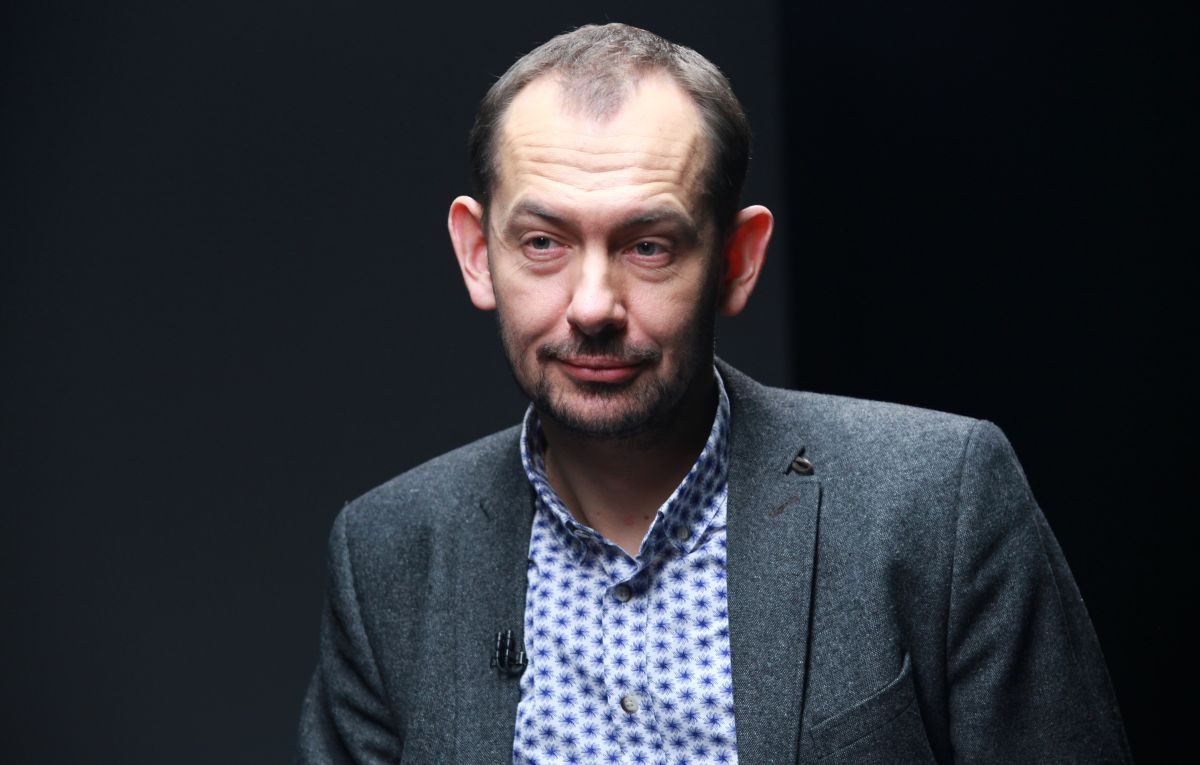
He believes that nothing is going to change regarding the territories of Crimea and Donbas occupied since 2014.
On a new episode of the Antipodes program on the Iceland TV channel, Ukrainian journalist Roman Tsymbaliuk spoke about attitudes toward Ukrainians in Russia, the future of Crimea and Donbas, and the changes after 2014.
Right now there is an unprecedented campaign by Russian media against Zelensky. It seems to me that even Poroshenko was never dragged through the mud the way they are dragging Zelensky. Am I wrong or not?
You're wrong. In fact, it's the same. You see, it's not about the personality. It's about the geopolitical setup. It's that we Ukrainians chose this man, and he was not appointed by Vladimir Putin. Actually, you can dig even deeper. Look, for example, at the fate of Viktor Fedorovych Yanukovych.
Now he's remembered as this pitch-black figure, that's the only color associated with him. But during his first four years, were they singing him dithyrambs from the Kremlin? No, they pressured him as hard as they could. Well, they just weren't shooting yet. But they pressured him economically. People here consider him a pro-Russian president.
I'm not talking about Yanukovych here, I'm talking about a pro-Russian approach. Gas wars, gas pressure, they banned chocolate, dairy wars.
Now I understand what made Poroshenko support the Maidan.
I think it was actually his civic position, I think so. And the factory, they shut it down, if I'm not mistaken, for good in 2015. I mean that economic pressure on Ukraine in various spheres has been applied essentially all the time.
Russia needs its own Gauleiter, not a president.
That's why they're going after Zelensky so hard now. You understand, when they say on state television that he should be physically destroyed. Well, in my view, that's too much. In general, everything there is overdone. Psychological pressure on the state as a whole and on citizens, and the president is not God, he's also a citizen.
And how do ordinary people treat Zelensky?
I think, not at all. They remember him as an actor, and now they're being told that he's a Nazi. I especially enjoy when they're told that we're an antisemitic state. I think, who the hell knows what other evidence you need.
I get the impression that Russians were in despair after Zelensky's election, that they still hoped this smiling guy would quickly become Putin's obedient puppet, and that the seasoned chekist Putin would tame him instantly. Are there such moments?
I don't think so. No, they perhaps counted on chaos in the top echelons of power, and that calculation partly came true, we're still somewhat shaken by it. But in fact, almost, the “deep” state worked. I'm just saying that the state's interest exists, it has been preserved.
At the initial stage, it seemed to them that they would make Ukraine, or convince it, so there would be no war, to start a direct dialogue and bring this to a phase somewhere between Transnistria and Nagorno-Karabakh. That is, in Transnistria they have these negotiations with Tiraspol, that's one element, and there has been no war there for many years. And the Karabakh element goes on constantly, as some here say: “shooting.” Well, with tanks they're “shooting,” as happens.
And so they had this calculation, and basically they continue to do it, “shooting.” But the position of the Ukrainian state, well, it's steel. Look at what the new defense minister says about them, the law on transitional justice in the occupied territories. And how many words from the mouths of our officials like NATO, Alliance. So the concept of foreign policy is actually very clear.
In fact, the foreign policy of Zelensky and Poroshenko doesn't differ at all, that's the main thing. Honestly, I don't see any differences. You know, they say we had an international coalition there, and now supposedly it's gone. I've heard that from various people, but actually, look, Germany's position is the same, it hasn't changed either, regarding Nord Stream 2 as well as regarding Donbas. It hasn't changed.
So thinking that someone will solve our problems is pointless, and the fact remains a fact.
Well, let's say, Merkel's behavior, we saw it differently. And she effectively worked in Russia's favor.
You see, over there it's more complicated.
So nothing ever happens simply, I understand that.
No, I mean that they have a coalition government, and Merkel's coalition partners, now everyone is going on vacation, that was their condition. These are Germans, they act the way they agree to.
Well, I hope, I sincerely hope, that we won't see Ms. Merkel as a highly paid manager at Gazprom.
I've already ordered the beer, we can still bet a bottle of cognac.
Well, I'll treat you without a bet anyway.
The condition is: after she hands over her office keys, she becomes Germany's best pensioner, and we count six months.
And I bet she'll get a job in something connected with Russia.
Coming back to Ukraine, our bet won't affect Ukraine's fate in any way. The question is that Nord Stream 2 will operate at 50% capacity through us, and they'll stop pumping gas. And there's no need to tear your hair out over this, just adapt to it and that's all.
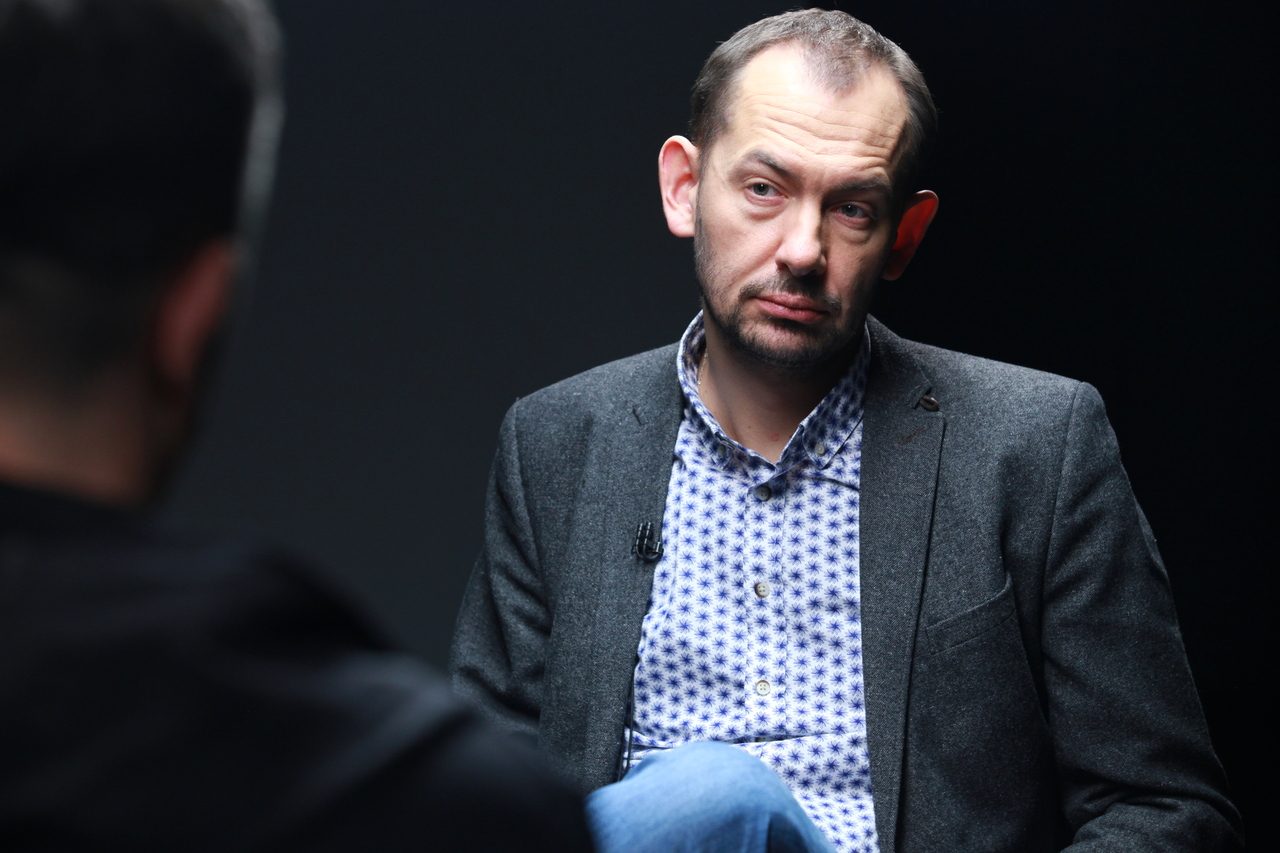
How effectively is our government fighting internal enemies? Shouldn't we, in your opinion, in wartime, use the methods of Russian security forces and simply round up everyone indiscriminately so they don't hinder us from developing in the right direction?
Point number one, nobody is preventing us from developing in the right direction, nobody. All these pro-Russian politicians are also very diverse, and there's nothing special to invent with these people. We take Ukraine's Criminal Code, all these articles are there. We just need to apply what's written there about separatism and treason, and someone has to go to prison.
I still, for example, can't understand why the people involved in organizing the Russian referendums on the territory of Donbas, which has been liberated, didn't go to jail. That's all. And when you say round up everyone, why round up everyone, this is a free state.
I'm not saying everyone. I mean all the separatists who had anything to do with the referendum. Take, for example, this bloodsucker nicknamed Struk. This bloodsucker armed people and spoke at all those pro-Russian rallies, the so-called Russian Spring in Luhansk, in the village of Yuvileine. And all of this was recorded by Denys Kazansky, by me included, and other journalists.
And this is obvious. He's not being pursued, he's not being shut down, he lives calmly in territory under control, his daughters light up in Kyiv clubs. Then he just becomes mayor of Kremenna in Luhansk region, where he has a brewery.
Let's call the SBU right now. Let's ask these questions.
There's already a whole pile of statements lying there.
Well, two more of ours will be added.
The only question I can ask the SBU right now is: “Have you been f**king around over there?” Well, that's it. But there won't be an answer. You understand, everything here gets handed over to our gold-loving Themis.
Volodymyr Zelensky promises us judicial reform, we'll see what comes of it. But the fact remains that people who committed such crimes against the state, if they're not punished, there will just be a second season. And I don't want a second season.
So the question was whether we shouldn't…
We should. We can order a guillotine from Paris.
I hear you.
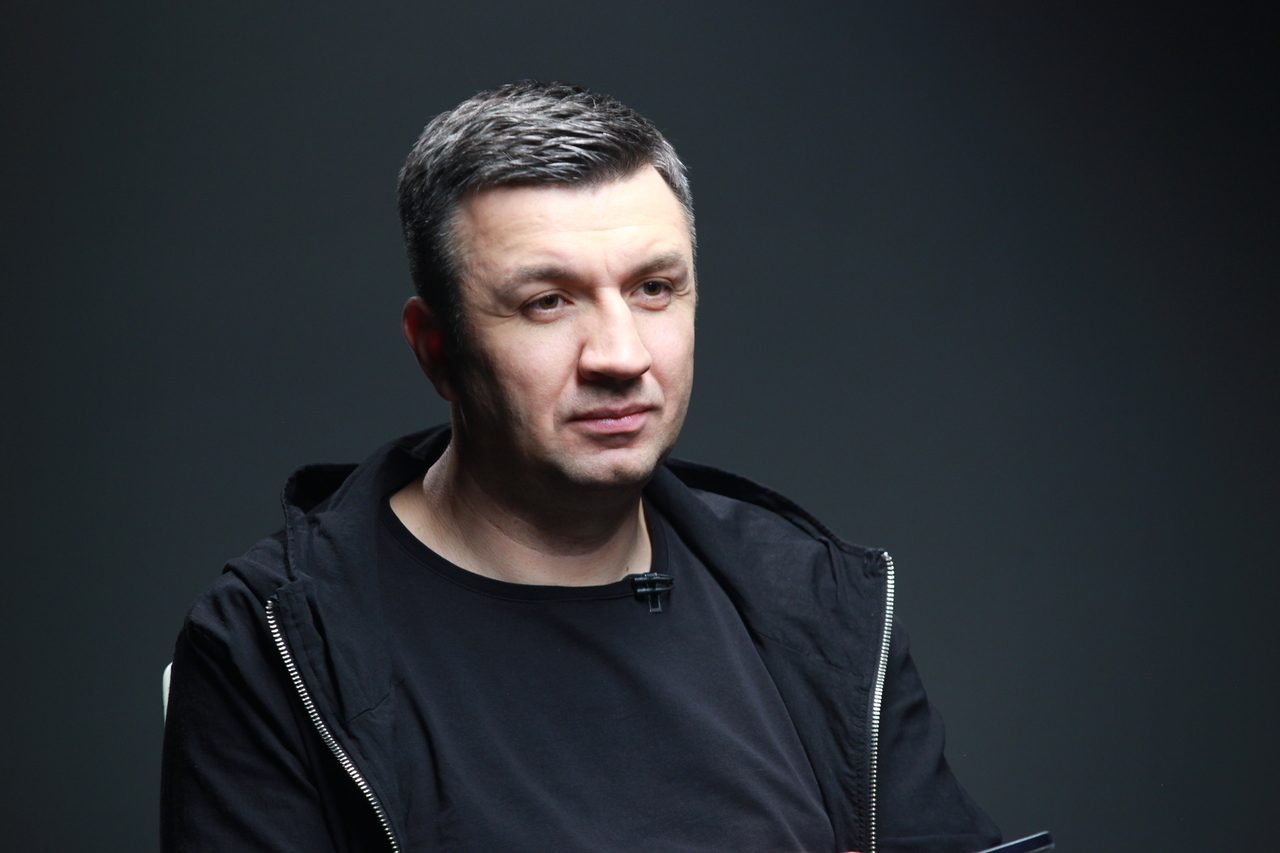
How do your neighbors treat you?
So far they say hello. They know I'm a “Bandera.”
How many years have you lived there?
13 years.
Did you feel a change in attitude toward you after 2014?
Of course. Most of it started to be noticed in 2014. Many people started crossing to the other side of the street. And then it happened that, while living in Russia, informal communication with Russians decreases every year, and with foreigners it increases. Because outside of work they know what we can say, and we know what they might answer. What's the point, if these aren't working meetings but, say, formal ones.
So you feel some kind of tension?
I don't know whether it's worth using the word tension, but you see, if you do journalism, anyway, a conversation at a round table will get, let's say, to bilateral relations. I have enough patience to go around some corners, but still.
You know, it's not so much these round tables that interest me, but ordinary people. People know you're a Ukrainian journalist, they saw how you asked Putin sharp questions, unpleasant questions that obviously rattled him, how Putin bounced in his chair there. All of that was visible.
And by the way, respect to you for that, because it really was fine. Of course, we have a bunch of journalists here who say, well, I'd ask this, and I'd ask that. Come on, go ask then. I really have great respect for that. So people know who you are.
Have they ever tried to understand you, for example, why you consider Bandera a hero? Did they come up to you like, “Well, Roma, let's talk, okay, well, this one's a Nazi, explain it to us”? Something like that, does it happen?
There were such moments for me. For example, I remember that before the war we worked very closely on the gas topic, and accordingly I knew all the specialized correspondents who write about it, about Gazprom and so on. I remember that with the Russian gas society we flew to Berlin on a charter to present the South Stream project.
And I remember they asked something about Stepan Andriyovych there. And I told them, listen, if you don't understand the question, then here's your homework: think about two questions. If he's a Nazi and a great scoundrel, then why did he spend the whole war in a German concentration camp? And if the UPA operated in the west of our country and, as they say here, engaged in killing civilians, why did those very civilians put up a monument to them after 1991?
Is there any logic? It's a historical fact that he was in a concentration camp. They tell me, “That was a concentration camp for elite people.” Well, wait, if that's so, then the term collaborator doesn't apply to him. Actually, we understand that for them history consists of factors of Russian foreign policy, a justification for their foreign policy. That's what they do.
So it's very simple, they do the editing: we cut this out, this moment from Stepan Andriyovych's biography. And on the contrary, they emphasize or simply make things up.
Do they really run around with these St. George ribbons on May 9?
Yes.
So they sincerely, by their conviction, put all this on themselves, all this junk?
Yes. They even wanted to dress my son in one at kindergarten. I said, “Guys, we don't need that.”
Did they coordinate it with you?
We had a scandal about this. Our family takes this position: first, you know this child is a foreigner, and second, when asked about the St. George ribbon, they say, “So that we remember.” I say, “The St. George ribbon appeared in this kind of circulation after Putin's election victory. That's the 2000s.” And the question arises: did Putin defeat the Nazis and Hitler, or someone else?
So you see, this can be compared in technique to processes like the Orange Revolution or the “white-blue ribbon movement.” That is, when you put something on your clothes, and there are many examples of this in history, you associate yourself with some theme, some movement. That's your position. In their version, it accordingly means victory in the Great Patriotic War.
I remember I had such a conversation with journalists, not ordinary citizens. They said, “How can that be, grandmothers definitely want to wear them, it's their memory.” I tell them, “Well, first of all, you scoundrels, with these ribbons they killed and are killing citizens of Ukraine,” so it's no longer an attribute of the Second World War or the Great Patriotic War. That's the first and main question.
And second, as I said, nobody walked around like that in 1946. Or in 1947, or in 1990, or in 1995 and 1999 either. Nobody used it. And now this “pobeda” is a bracket of foreign policy legitimizing Putin's foreign course. It just needs to be emphasized, and that's all.
Well, in 1946 they had other tasks. They had to haul all the samovars off somewhere up north.
The question is something else. For the first 20 years they didn't celebrate victory in that form. Then the veterans started to die and pass into the other world. And they started molding something out of it, some ideological construct. People tell me, “In Ukraine they don't celebrate May 9.” I tell them, “Scoundrels, what are you, the creators? Do you have a patent on how to properly celebrate May 9?” Here, the day before is the Day of Remembrance and Mourning.
And most importantly, every May 9, regardless of who heads our state, all the protocol events take place. But they want it differently, they want it to be like in Russia, for all of us to march, preferably under the tricolor. Again, if they weren't shooting at us, I would be completely indifferent about it. But this serves as a pretext for waging war against us.
How do Ukrainians in Moscow generally get treated? Is there a format, for example, like toward younger brothers?
First of all, when you walk down the street, you don't visually stand out.
Depending on who, from a Tajik to a Dagestani…
Well, we won't be measuring skulls here. You're a person of Slavic appearance, and basically you blend into this crowd. But when you talk, if you know the language more or less, because they sense it from your pronunciation. I can already tell Donetsk people from Kyivans. Moreover, the Donetsk dialect can be confused with Rostov's.
That's true. It's true, because in Rostov, in Rostov region, they speak roughly the same way as in Luhansk, with the shokanye and hekanye sounds.
There are even such shades of sounds. I usually don't make mistakes, but right now I can't even put together those key sounds. And when you talk with someone, it's clear that topics for discussion can arise. And someone may call you a khokhol. They can't call me a khokhol. Although I see people with Ukrainian citizenship who even worked at some jobs there, we won't specify which, who were addressed this way: “khokhol.” Well, khokhol, it's supposedly offensive, well, what's so bad about it?
And why, say, can't Russians address a Chechen as: “Hey you there, ‘Chech,’ or again, ‘black,’ or ‘khach,’ but they can call a Ukrainian a ‘khokhol’? Why can't Ukrainians position themselves in Russia like Chechens do?
Because we're not a “proud Chechen people.” They have a completely different psychology, and in this case they differ strongly from Russians. I'm confident that Russians are simply afraid of Chechens. It's a physical fear. And this fear is justified by the events of the First and Second Chechen wars.
And if they were more afraid of us, and we were a factor of some hidden threat?
We'll come to that too. I remember the words of my friend from Lviv, Denys. We all thought all his life that he was Russian-speaking, and he was Russian-speaking until 2014. And until 2014 he used to say this phrase: “In reality, the scariest are us, we are Banderites, but we speak Russian, and nobody knows who we are.” I think anyone would admit that Chechens are tough warriors.
Yes, that's true. Well, Ukrainians are tough warriors too. And that has already been proven.
Yes. Well, I told you I don't think we'll be looking for a fraternal people in the Russian Federation now. No. With all due respect, I'm saying this regardless of where these people fought.
Moreover, they previously fought on one side, sorry, Russians.
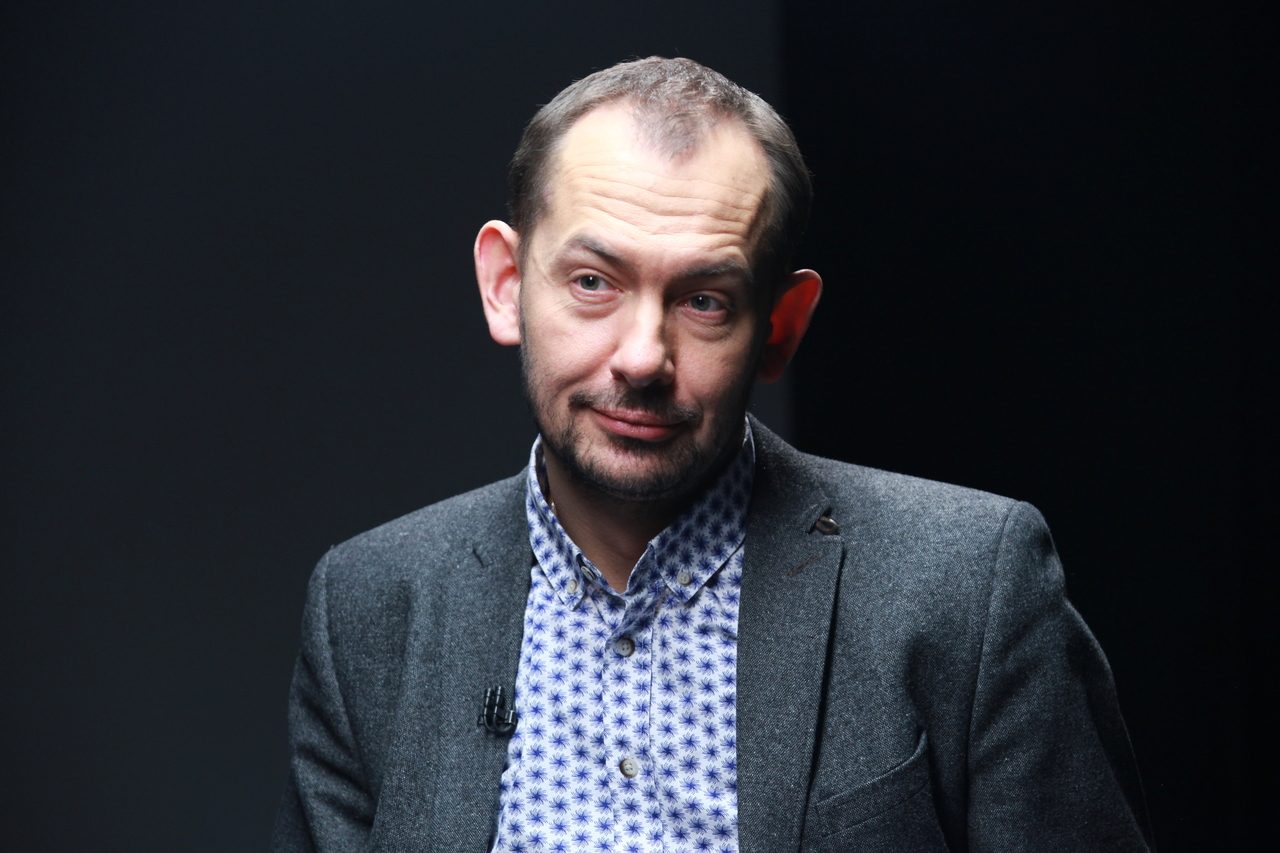
What is the Russian opposition? Does it exist at all today or not? Who among those people is the most level-headed?
I have no good news for Ukrainians regarding part of Russia. You see, these questions are supposed to push us toward the conclusion that something might happen and it will become easier for us. There is no opposition there. Period.
Are there politicians there who view Ukraine not from the standpoint of a Russian chauvinist?
I think that some changes are actually possible due to people who are now conditionally mid-level managers and the middle tier of this Russian leadership, who in principle could raise questions, because if they come to power after some time, say in 15 years, they could simply minimize losses from this. Several questions could simply be set aside. Even Crimea.
Say, let's agree we don't fight. That could be possible even without moving the front line. I think that in Ukraine they would say: look, we will never recognize the occupation of Crimea and Donbas, but if there's a way not to fight, then okay. Am I drawing the right conclusion, or am I wrong?
If you're asking me, I will never be able to accept that Crimea and part of Donbas are not ours. I think that if Russia doesn't support them, meaning if they publicly distance themselves and say they're not fighting there, we need to go in and take control, and that's it. No, we must take back what is ours.
You understand, this is actually a very damned precedent. Since they didn't fight for Crimea, then at the start they blundered on Donbas, when it was necessary to be a bit more active there. And then when they started fighting, there were already Grads and everything you could want.
Let me rephrase what I mean. Basically, I told you right away that there won't be some fairy-tale story. Even on the condition that the government changes someday and other people come. They're unlikely to change this Russian interest, the way they see it. But they'll be able to reduce the level of tension. No more and no less, that's what I meant.
Imagine, please, the situation in Israel, which temporarily withdrew from some of its territories when circumstances arose and does not return them. Can you imagine such a thing?
First, we're not Israel. Second, I'm talking about the fact that, of course, there are occupied territories, and they are held exclusively by the Russian ruble, by the Russian bayonet, or Grad, whatever you like. To liberate this territory, what must happen, what condition must be ensured?
Well, that there's no Russian bayonet there.
Right, that the Russian Federation doesn't interfere. Can you imagine them saying: “Fine, we said we're not there, here you go, do what you want”?
Not now, but later…
I don't believe it. I said that the most we can count on is reducing the level of tension on the line of contact. That's all.
So, if we're absolutely pragmatic and tell the truth, then we should leave Crimea and Donbas. I would say, inwardly say goodbye to them. Yes or no?
No. Why? Wait. First, the Ukrainian state will never give up the occupied territories. Second, right now we don't have the capacity to liberate them by military means. Third, this window of opportunity, a historic window of opportunity, will appear, I don't know. I don't know when. The Germans waited 40 years. Drawing parallels with the Germans isn't worth it, because the Germans burned a lot of people in ovens before they were divided.
And fourth, once again I repeat that right now, in the course they are following, one can only count on reducing the level of tension on the line of contact. That's all. It doesn't mean they'll leave from there, you understand. Why are they shooting at Ukrainians, well, why right now? The front line hasn't moved for many years. Why is what political scientists call a low-intensity conflict happening?
This way they exert their political pressure on Zelensky, before that on Poroshenko, and on Biden. As if to say: we're here, you have to negotiate with us, we're trading in war, and so on and so forth. For now, I simply don't see them leaving from there. Today it's one way, tomorrow it'll be different. But in the medium-term perspective, as I see it, I don't think there will be any changes.
Moreover, if we're talking about liberating occupied territories, there is no political-diplomatic path at all. There is only the military path. And diplomatic measures are needed to create conditions in the world so that Ukraine is supported and given aid, so that ultimately this leads to a concrete step, and to increase the chances of Ukrainian soldiers surviving on the line of contact.
That's it. Why do you say we said goodbye? Well, listen, right now we can't change this. But it's our business how we treat it. I'm not going to say goodbye to this. I'm just telling you that our state leaders constantly talk about territories. The territory was occupied in 2014, and nothing has changed in this time. And for now it isn't going to change.

Russian Attacks in Dnipropetrovsk Region: Two Killed, Seven Injured

Defense Forces Strike Four Russian Drone Control Points in Past Day, Including in Berdiansk

Britain Threatens Sanctions on Kremlin-Linked People; Poland Ready to Hand Ukraine Ammunition

Russia says it has completed "planned exercises" in the Black Sea

MVD: Fake Riots With Prop Blood Were Being Prepared Near Presidential Office

Law Enforcers Name Another Klitschko Deputy as Suspect

Berlin Holds Protest Against War in Ukraine; EU Prepares for Possible Russian Halt of Gas Supplies
North Korea Fires Ballistic Missile Over Record Distance in Five Years
Irish Fishermen Force Russia to Postpone Naval Drills

US sanctions in case of invasion of Ukraine could completely destroy Russia's economy, NYT reports
