
Rumors, Riots and Conspiracy Theories: How Concerned Citizens Barricaded Themselves Against Epidemics
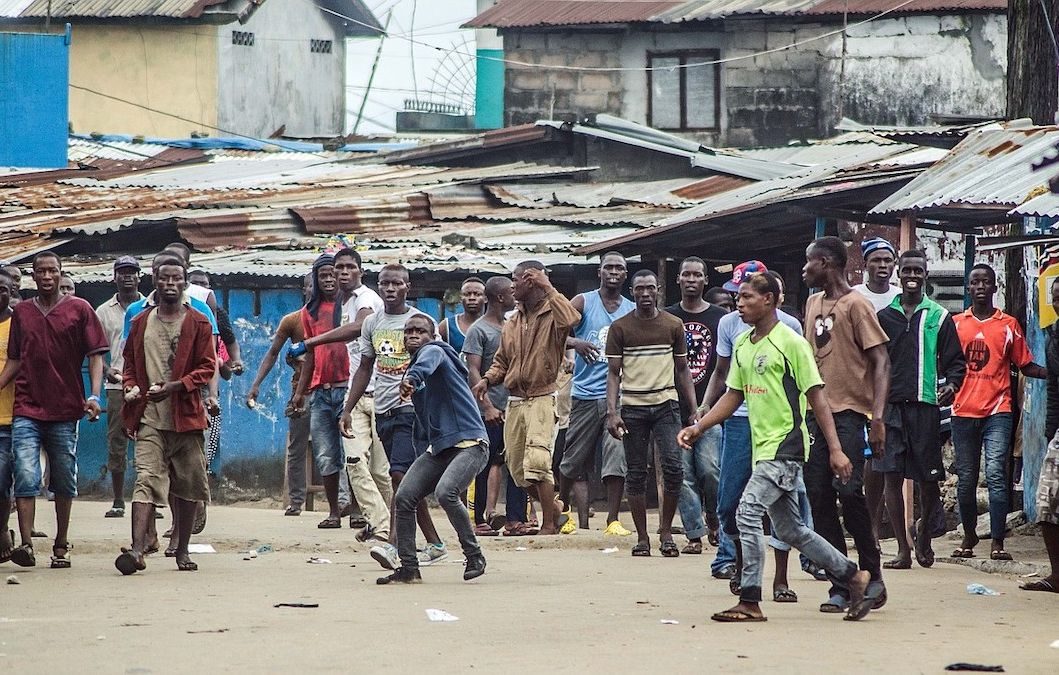
A familiar practice in the Middle Ages and in third-world countries.
On February 20, a plane carrying citizens evacuated from China at the height of the Covid-19 coronavirus epidemic was due to return to Ukraine. The aircraft was to be disinfected for two days, and all passengers and pilots were to be held in quarantine for 14 days. This is normal practice, but some Ukrainians decided not to allow their compatriots to return. Residents of the village of Shklo (Lviv region) protested against organizing quarantine at a local sanatorium, while residents of the village of Konopkivka (Ternopil region) went as far as building barricades to prevent evacuees from being housed there. Deputies of the Ternopil Regional Council appealed to the President to prevent the Ukrainians from China from being accepted at a local sanatorium. In another town in Lviv region, residents held "drills" ahead of a possible hospitalization, for some reason also with tires.
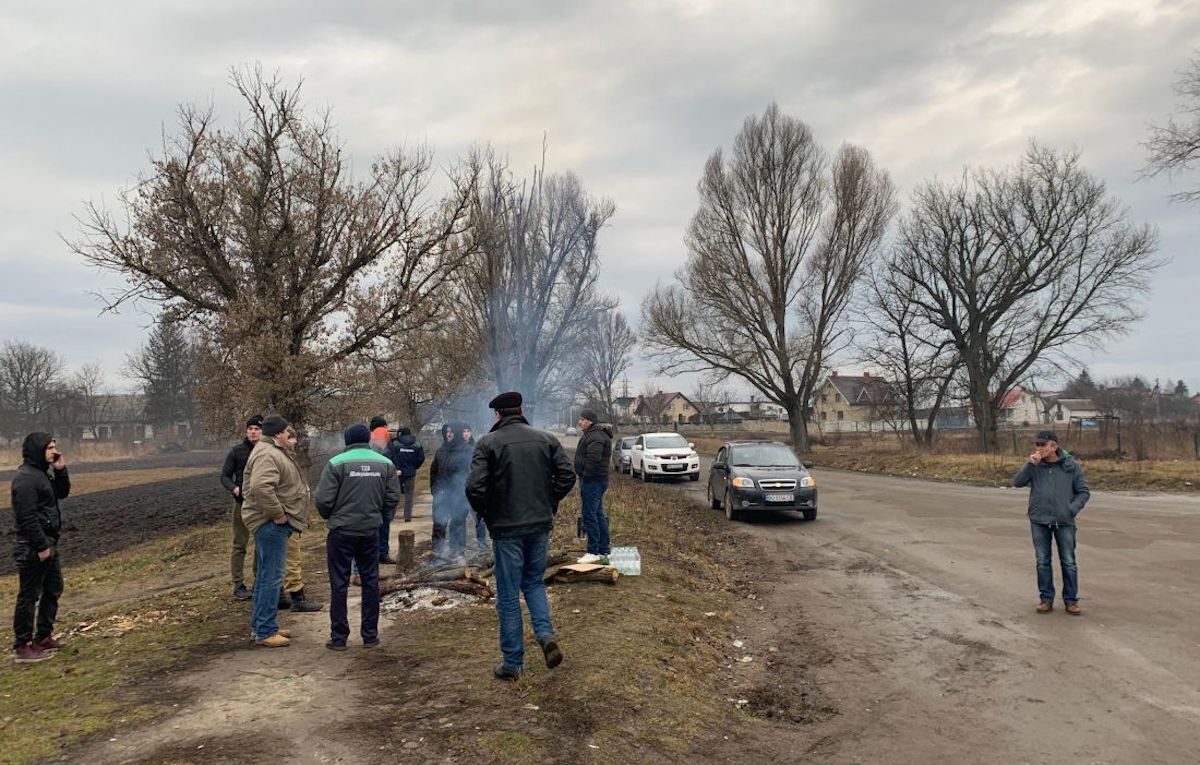
The logic of "let no one in, let no one out" and "every man for himself" during an epidemic is normal... if we are talking about the Dark Ages or people with no understanding of hygiene and healthcare. When people react to quarantine measures as if a zombie apocalypse were raging in Wuhan, it brings to mind not the most glorious examples, and certainly not countries worth emulating when facing social problems.
In August 2014, local residents in Liberia staged a raid on a hospital in a suburb of Monrovia. They had heard rumors that Ebola patients from other districts were being brought there. Ebola is less contagious than influenza, but contact with patients must be strictly controlled. Some of the attackers thought that driving out the patients would solve the problem in the region, while others did not believe the disease was real at all. Amid the chaos, 20 patients escaped, and someone took mattresses and sheets stained with blood from the quarantine center, through which infection can indeed be transmitted. "This is one of the most idiotic acts I have ever encountered," commented a local police officer.
One would think that since then, everyone would have been convinced of the reality of Ebola and of the reality of treating it. Yet even in 2019, some residents of Congo still explained the fever with conspiracy theories. In May, a group of armed men killed an employee of the quarantine center in the village of Musahiro, where local residents with medical training work. Earlier, in the city of Butembo, a WHO worker from Cameroon was killed, as Congolese believed he had "brought" the disease with him. "The rebels demand that all foreigners leave the country: according to them, there is no Ebola in Butembo," the bewildered mayor commented on the situation. In early 2019, attacks on hospitals were occurring almost weekly: another clinic in Butembo was simply set on fire.
In Congo, the situation was aggravated by civil war. Local doctor Rigo Muhayangabo, who had worked for many years with Medecins Sans Frontieres, said that part of the population believes Ebola is staged: the government supposedly created this virus (or the myth about it) to postpone elections. Others believe it is used to extract money from philanthropists. "When people see the level of funds involved, the level of logistics and the number of specialists attracted, they understand there is money to be made here, and they perceive this as the root cause," he says.
In August 2014, in Guinea (West Africa), young men armed with knives and clubs built barricades. The country was not at war. There were simply rumors that Red Cross representatives were infecting locals with Ebola. In the south of the country, the number of infections did indeed grow, but only because residents of Liberia and Sierra Leone were illegally crossing the border. However, health workers were blamed, who supposedly "sprayed" the virus at the market. Reuters quotes a local elder: "The Red Cross wants to kill us. They infect the water with the virus and poison the village with it. When they take people to hospitals, they give them medicine that contains Ebola."
Another popular theory held that clinics were in fact centers where healthy Guineans were harvested for their organs. This supposedly explained why funerals were held without relatives present. When local officials and police tried to organize a convoy for the Red Cross, in one village they were met with a barrage of stones and a crowd with machetes. International SOS employees were beaten when they were adding "poison" (disinfectant) to a well. In some African regions, things reached the point of sheer absurdity: medical workers took off their badges and did not show themselves on the streets with the symbols of health organizations.
Even democratic nations sometimes could not cope with the aggression that citizens direct at potential carriers of disease. In 1878, New Orleans fell victim to yellow fever. Sentries were posted in neighboring towns, tasked with shooting any outsider who tried to enter the city. Armed men patrolled along the Tombigbee River with orders to sink any vessel heading from Alabama. The Quarantine Act of 1878 was meant to put an end to the spread of the disease through contact with sailors and refugees from Cuba, so those who were not allowed into the city sometimes moved on, to Indiana and Ohio. But there they were met with "gun barricades."
Or a "gun quarantine": when residents of one city began to leave their homes en masse and seek refuge in neighboring settlements, locals used gunfire to force them to turn back. Yet people were driven to extreme measures by circumstances: the fever epidemic was not brought under control until the 1900s. Local authorities did not help either: in the southern United States, they delayed sounding the alarm until residents began an exodus en masse. Sailors also often refused to sit out quarantine. A cheerful crew of such men from New York instantly tore down the barriers erected around the maritime quarantine on Staten Island: "They gave three cheers and entered the city," an eyewitness wrote. When it comes to viral diseases, saving the drowning is not only the job of the drowning themselves, but at times it seemed that an entire state was eager to drown, dragging its neighbors down with it.
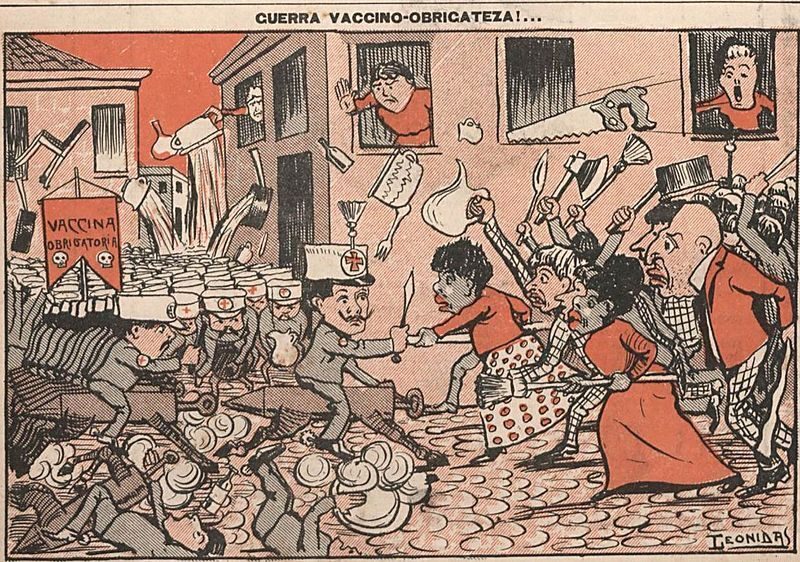
The yellow fever vaccine was invented only in 1937, but smallpox vaccinations existed a century earlier. Yet not everyone wanted to be vaccinated. In Brazil in 1904, epidemics of both of the aforementioned diseases were raging, and on top of that, bubonic plague. Health workers had to break into homes and forcibly vaccinate residents of Rio de Janeiro against smallpox. Among women, rumors circulated that vaccinations were administered to the genitals (or that one had to, at minimum, undress for vaccination). Conservative citizens were shocked and vowed not to allow such disgrace. Anti-government riots reached such a scale that the city was declared under siege, and the authorities postponed mass vaccination. 30 people died, not from smallpox or plague, but as a result of armed clashes.
But surely over the course of more than a century, people in South America have become more sensible about healthcare, right? Not all of them. In 2009, during the general panic over swine flu, a group of Argentines attacked a bus traveling from Chile. Residents of Mendoza province had heard that a man with a high temperature was on board and would be hospitalized upon arrival. Stones flew at the bus windows, and protesters clashed with police. Some time later, it turned out that the man's test for H1N1 was negative. But even if he had been sick, attacking an isolated means of transport is a dubious way to avoid infection.
Or let us look at countries that refused to accept their own citizens flying in from Asia. Recently, Samoa turned back eight passengers arriving from Fiji via Singapore, a country with a high risk of Covid-19 coronavirus infection. Authorities require that Samoans undergo the standard 14-day quarantine, but the catch is that they do not intend to provide it in Samoa. As a result, the people will undergo quarantine... in a hotel in Fiji. "If a state prohibits its citizens from entering, it is a violation of international human rights. People have the right to return to their homeland. This is a principle declared by the UN and enshrined in the International Covenant on Civil and Political Rights," comments Jorge Contesse of the Center for Transnational Law (USA). Samoa ratified this covenant in 2008. The USSR did so in 1973 (as a consequence, Ukraine recognizes its jurisdiction).
Who else should not be emulated? Pakistan, whose 800 citizens got stuck in Wuhan in February. Because the country does not want to accept its students who are in China, many of them have been locked in hostels for almost a month. Unofficially, several reasons are cited: Pakistan's friendly ties with China, which force both sides to pretend that Wuhan is coping perfectly well with the epidemic, and the inability of Pakistan's healthcare system to provide quarantine. For reference, Pakistan and Afghanistan are the last countries on the planet that have not yet defeated polio.
Calling on residents of regions to help neighbors who simply need unobstructed passage into quarantine is a pointless endeavor. Let qualified specialists help; for everyone else, it is enough not to get in the way.
Marina Moynihan, TK Media

Russian Attacks in Dnipropetrovsk Region: Two Killed, Seven Injured

Defense Forces Strike Four Russian Drone Control Points in Past Day, Including in Berdiansk

Britain Threatens Sanctions on Kremlin-Linked People; Poland Ready to Hand Ukraine Ammunition

Russia says it has completed "planned exercises" in the Black Sea

MVD: Fake Riots With Prop Blood Were Being Prepared Near Presidential Office

Law Enforcers Name Another Klitschko Deputy as Suspect

Berlin Holds Protest Against War in Ukraine; EU Prepares for Possible Russian Halt of Gas Supplies
North Korea Fires Ballistic Missile Over Record Distance in Five Years
Irish Fishermen Force Russia to Postpone Naval Drills

US sanctions in case of invasion of Ukraine could completely destroy Russia's economy, NYT reports
