
Russian Government Resigns: What Putin's Constitutional Changes Mean
Everything you need to know about the upcoming reshuffles by Russian President Vladimir Putin.
In a single day, on January 15, Russia saw a series of unexpected and large-scale political changes. In his annual address to the Federal Assembly (which had been moved up from spring to January), Russian President Vladimir Putin announced a package of constitutional amendments, a referendum to approve them, and dismissed the government of Dmitry Medvedev.
Many Ukrainian observers reacted to the event with mixed emotions. Few in Ukraine understood what had happened or what Putin meant by announcing all these wonderful transformations. Moreover, Ukraine's information space was flooded with numerous domestic political reports in connection with the scandal around the “Honcharuk tapes”.
Putin's address to the Federal Assembly opened a qualitatively new chapter in Russia's recent history, draws a line under the process of preparing for a transfer of power, and launches irreversible processes to transform the institutional foundation of the Russian Federation, which has not changed since the late 1990s.
For Ukraine, this matters not only because Russia is our enemy and adversary, but also in the context of global trends and a rapidly changing international environment, which is forcing ruling elites to take such initiatives in the global race for dominant positions in the next era.
What Putin said in his address to the Federal Assembly
The address by the President of the Russian Federation to the Federal Assembly is an annual speech by the head of state to parliament, to both of its chambers: the State Duma and the Federation Council. The address is not just a speech but also a programmatic political document that expresses the president's will and vision for the coming years and his strategic course for the development of the state.
This is not a uniquely Russian tradition. Similar events are held in the United States (the annual State of the Union address by the US president to Congress), in the United Kingdom (the monarch's King's Speech), in Belarus (the president's address to the Belarusian people and the National Assembly of the Republic), and in the Philippines (the president's address to the nation). The first address to the Federal Assembly of the Russian Federation in its current form was delivered by President Boris Yeltsin in February 1994. The institution of heads of state addressing parliaments also exists in Ukraine.
Half of Vladimir Putin's speech was devoted to demographics and migration policy in Russia. It is no secret that Russia suffers from the same ailments that have struck the other countries of Eastern Europe: falling birth rates, mass emigration, a shrinking Slavic share of the population, and the outflow of labor. For the first time in recent years, the Russian president publicly acknowledged these problems and spoke at length about the need to address them.
As measures to stabilize the demographic situation, Putin proposed increasing and expanding material assistance payments to mothers upon the birth of children, and paying social benefits to large families living below the subsistence minimum until their children reach the age of 7. He also announced an additional “injection” of $800 million into education.
The second half of Putin's speech was devoted to constitutional changes, which caused a public and political stir and were followed by the immediate resignation of Dmitry Medvedev's government.
What the package of constitutional amendments includes
This is a set of changes to the Constitution of the Russian Federation proposed by Vladimir Putin as part of changes to the country's political system aimed at launching a power transition: building a system “after Putin” in 2024, when his term of office ends. Putin's package of amendments looks as follows.
- Strengthening the role of the State Duma.
- Strengthening the role of the Constitutional Court.
- Limiting the powers of the president.
- Enshrining the constitutional role of the State Council.
- Increasing the political weight of governors.
- Expanding the powers of the Federation Council.
- Raising the requirements for presidential candidates in Russia.
Strengthening the role of the State Duma. The lower house of the Russian parliament will for the first time gain the ability to take part in forming the government, in particular to approve and agree on candidates for prime minister and members of the Cabinet. This will significantly increase the political weight of the ruling party and create room for developing party-building, and the new prime minister will depend on a larger number of elites than now, when the president decides everything and only consults with parliament.
Strengthening the role of the Constitutional Court. According to Putin's initiatives, the Constitution of the Russian Federation will take precedence over norms of international law “in those matters where they contradict fundamental constitutional norms”. In practice, this will mean that any decisions of the European Court of Human Rights and other international and regional organizations could be ignored by Russia on the grounds of “non-compliance with the Constitution”. Moreover, any international treaty can now be challenged in the Constitutional Court even after it has been ratified by parliament, but before it is signed by the president. Such a strengthening of the Constitutional Court is an obvious compensation for the increased powers of parliament and a potential safeguard against the possible ambitions of a president who succeeds Putin, should he want to play an independent game, including on the foreign stage.
Limiting the powers of the president. One of the most interesting innovations announced by Putin is the limit on how long a president may stay in office. The next president will be able to remain in office for no more than two terms in total (the word “consecutive” will be removed), which means there will be no new Vladimir Putin for 20+ years with a six-year break. In addition, the president will lose the ability to independently appoint and approve the prime minister, ministers and deputy ministers, as is currently the case. He will have to consult with the State Duma (the ruling party) and the Federation Council (which will have influence over the selection of candidates for security agencies). These restrictions on the president are Putin's preemptive strike, so that his successor does not become a second Putin, but is placed within strict institutional limits, where he will have to maneuver between different centers of gravity (the State Duma, the Federation Council, the State Council, the Constitutional Court).
Enshrining the constitutional role of the State Council. The State Council is a new institution that Putin plans to introduce into the new political configuration of power. This body was created back in 2000 and mainly included governors of Russian regions, some members of the government (at the president's discretion), heads of state banks and representatives of major state-owned capital. However, over the past 17 years this body was merely advisory, an ordinary platform where governors could talk with the Russian president (a kind of compensation to the regions for the fight against their autonomy, which Putin began in 2000). Judging by everything, it is precisely to the State Council (currently headed by Putin) that the president of Russia will move after the end of his presidential term in 2024. In other words, his initiative regarding the State Council allows us to assume with confidence that after 2024 he does not intend to remain president of Russia and will look for a successor. The post of head of the State Council, whose powers are being strengthened after the amendments to the Constitution, will become a behind-the-scenes shadow position for Putin, so that he can continue to coordinate Russian politics, preserving his legacy and the previous strategic course in the new political reality. Indeed, the political weight of the State Council and the breadth of its powers is the main intrigue of the entire constitutional reform.
Increasing the political weight of governors. Here everything is simple. The governors of Russian regions sit on the State Council, which Putin heads. With the strengthening of the role and powers of the State Council (over which no one will be able to exert influence), and its transformation into a de facto political superstructure for inter-institutional coordination, the weight and votes of the governors will increase, as will control over them by the head of the State Council.
Expanding the powers of the Federation Council. Under Putin's proposed amendments, the Federation Council (which includes representatives of the regions) and the speaker of the Federation Council will gain the ability to agree on candidates for heads of security agencies and regional prosecutors. In addition, it is proposed to give the Federation Council the right to initiate (in agreement with the president) the removal of judges of the Constitutional and Supreme Courts from their posts. Such powers would create certain limits for the highest national courts (drawing a line under their independence) and reinforce the coordinating role of the same State Council (which includes the governors of the regions represented in the Federation Council).
Raising the requirements for presidential candidates in Russia. In his speech, Putin stressed that requirements for candidates will be tightened. Now, a citizen of Russia who has lived in the country for 25 years and has no citizenship other than Russian, or residence permits in other countries, may become president of the Russian Federation. In principle, these changes consolidate the repatriation of Russian elites, which began in 2014 after the sharpening of the global confrontation between Russia and the West. In addition, the tightening of requirements cuts off representatives of the pro-Western liberal opposition from access to top government posts, namely those who have had or still have residence permits in other countries or received grants from Western organizations.
What the resignation of the entire government means
The resignation of Dmitry Medvedev's Cabinet is an attempt to clear the political field for a new generation of Russian politicians, a potential successor to Putin (Medvedev, judging by everything, is no longer one of them), and to shed the political toxicity of the government, since Medvedev and several of his ministers remain the most unpopular leaders in Russia. In May 2018, according to sociological polls, most Russians were disappointed by Medvedev's reappointment as prime minister.
The fact that Dmitry Medvedev was given a separate post of deputy chairman of the Russian Security Council (not to be confused with the secretary of the Security Council, which is Nikolai Patrushev), which is headed by Putin, suggests that the president has decided to keep his junior partner on a “short leash” and not let him go free. In addition, this behind-the-scenes post, on the one hand, does not diminish the reputation of the former prime minister and ex-president, but also allows him to be placed in a niche that is “safe” in political terms.
Who is the new prime minister of Russia
Mikhail Mishustin is the former head of the Federal Tax Service. He is little known outside narrow political elite circles. However, those who know him note that the new head of government is a strong and effective manager, a technocrat, an apparatchik. He is equidistant from all centers of power in Russia.
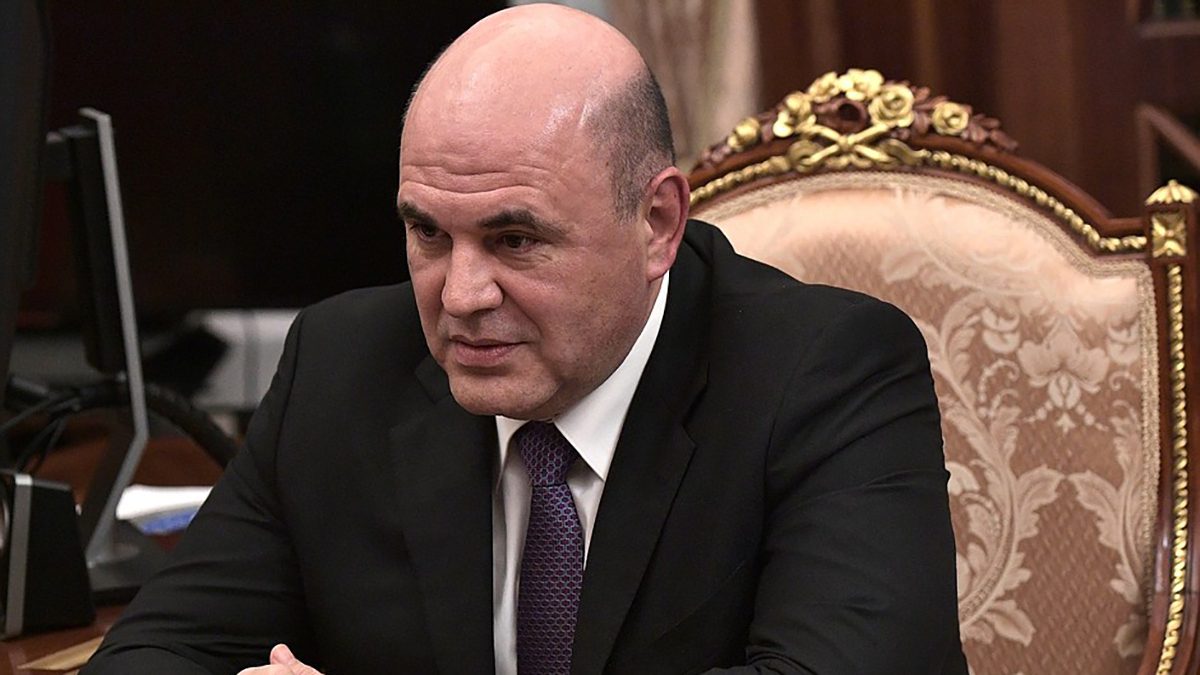
Mishustin does not come from the “Ozero” cooperative (a dacha consumer cooperative in Karelia founded by Putin and his friends in 1996, after which they all entered government), is not from the “St. Petersburg team” (Putin's close circle of friends when he was deputy mayor of St. Petersburg), does not belong to the security wing of the Russian establishment (FSB, GRU, prosecutor's office, army), and is not connected to the president through his counterintelligence past. Mishustin is 12 years younger than Putin and represents precisely the next generation of Russian politicians.
During his tenure as head of the Federal Tax Service, starting in 2010, he managed to achieve considerable success, which showed him to be a very capable manager and reformer. Under conditions of increasing tax burden in 2010-2019, businesses and citizens on the whole remain satisfied with their interaction with the state tax services.
Tax Service offices in Russia were indeed transformed under Mishustin: an electronic queue appeared, information processing sped up, the system for filing declarations was improved, and digital technologies were introduced (of which Mishustin himself is a fan). All of this ensured an average annual increase in tax collection of 17%.
As prime minister, Mikhail Mishustin will have to bring order to the spending items of the federal budget, in particular those related to national projects, which have never been properly implemented at the regional level (theft, corruption, laziness, and inefficiency of local authorities). In recent years, the Accounts Chamber of Russia, headed by Alexei Kudrin, has often criticized the Cabinet and parliament for the failures of national projects in the regions and for the misuse of state funds. Now Mishustin will be prime minister, an ideological ally of Kudrin.
For Russia's domestic politics, Mishustin's appointment is a way to shed the toxicity of Medvedev-era Cabinet and optimize the work of state institutions before the launch of the constitutional process and after the start of the transfer of political power from Vladimir Putin.
For external elites, Mishustin is a typical liberal reformer, not noted for any outrageous schemes, scandalous decisions or provocative actions. He has extensive contacts with international donors, especially in the IT sector: he spent more than 15 years working in a large business connected with digitalization and computer technology.
Why Kadyrov resigned
Chechen leader Ramzan Kadyrov wrote an official statement about temporarily leaving his leadership post “due to incapacity to work”, temporarily appointing Chechen government chairman Muslim Khuchiev as acting head in his place.
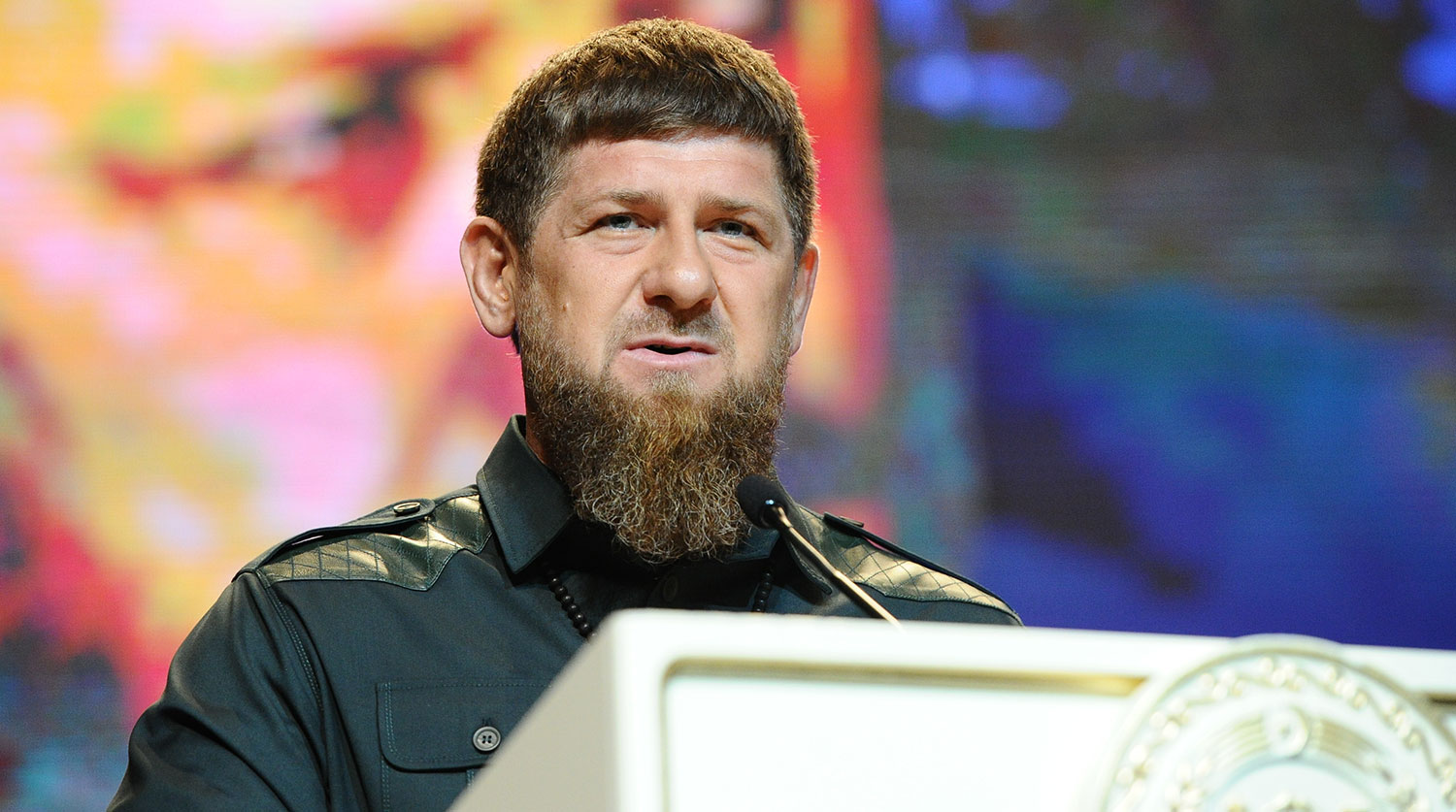
This does not mean Kadyrov's full resignation, but it may indicate that he will move to another post together with Vladimir Putin's gradual departure from the post of President of Russia.
After all, Putin cannot afford to complete the power transition while leaving Kadyrov in his place, fearing his excessive strengthening. There are rumors that Kadyrov could be offered the post of presidential plenipotentiary abroad, in order to keep control over him and at the same time not leave him in Chechnya.
What all this means for Russian foreign policy in the coming years
After a long time, Vladimir Putin has returned to domestic politics, in order to finally deal with the question of succession to his power and ensure a smooth political transition with the aim of preserving his legacy and future. This will have far-reaching consequences for Russian foreign policy. In a sense, the international environment itself influenced the Russian president's intentions to launch the constitutional process.
A radical correction of Russia's legal system by giving priority to the Constitution over international norms is truly a revolutionary step, aimed at breaking Russia out of the postwar framework of the old world order and its institutions, which global players have increasingly been ignoring in recent times.
For example, the same European Court of Human Rights, UN General Assembly resolutions, declarations of the UN Human Rights Council or the Council of Europe. Russia will officially reject all of this in favor of national laws.
President Putin's initiatives make it clear that Russia is preparing to enter a “global deal” with the West. It urgently needs to reach fundamental interim agreements with Europeans and Americans on the future contours of the global security architecture. But to do this, it must consolidate resources and reduce the toxicity of its image for Western partners. This can be achieved by removing unpopular, old politicians and appointing technocrats and gray apparatchiks, who will focus on internal transformations and stabilizing Russia's political system.
On the international stage, Russia will continue to demonstrate constructiveness and readiness to solve global problems in coordination with the West, thawing old conflicts and getting involved in new ones in order to expand geopolitical platforms for future global bargaining with Europe and the United States.
The most striking examples of Russia's strengthening through such policy are its intervention in Syria in 2015-2018, the achievement of a truce in Libya in early 2020, the revival of negotiations over Donbas at the end of 2019, and consensus on the crisis in Moldova in June 2019.
For Ukraine, Russia's transformation means the start of a race to see who first adapts to a rapidly changing international environment, which will determine the primacy of one side or the other, as well as its power in the new world system. It is important for Ukraine to start working on creating its own functionality in the world, based on which it is necessary to carry out its own reform of political and social institutions. Otherwise, the strengthening of Russia will weaken our position and lead to a gradual defeat in the confrontation with Moscow.

Russian Attacks in Dnipropetrovsk Region: Two Killed, Seven Injured

Defense Forces Strike Four Russian Drone Control Points in Past Day, Including in Berdiansk

Britain Threatens Sanctions on Kremlin-Linked People; Poland Ready to Hand Ukraine Ammunition

Russia says it has completed "planned exercises" in the Black Sea

MVD: Fake Riots With Prop Blood Were Being Prepared Near Presidential Office

Law Enforcers Name Another Klitschko Deputy as Suspect

Berlin Holds Protest Against War in Ukraine; EU Prepares for Possible Russian Halt of Gas Supplies
North Korea Fires Ballistic Missile Over Record Distance in Five Years
Irish Fishermen Force Russia to Postpone Naval Drills

US sanctions in case of invasion of Ukraine could completely destroy Russia's economy, NYT reports
