
Russians Against Russia: Why Russian Volunteers Fight for Ukraine
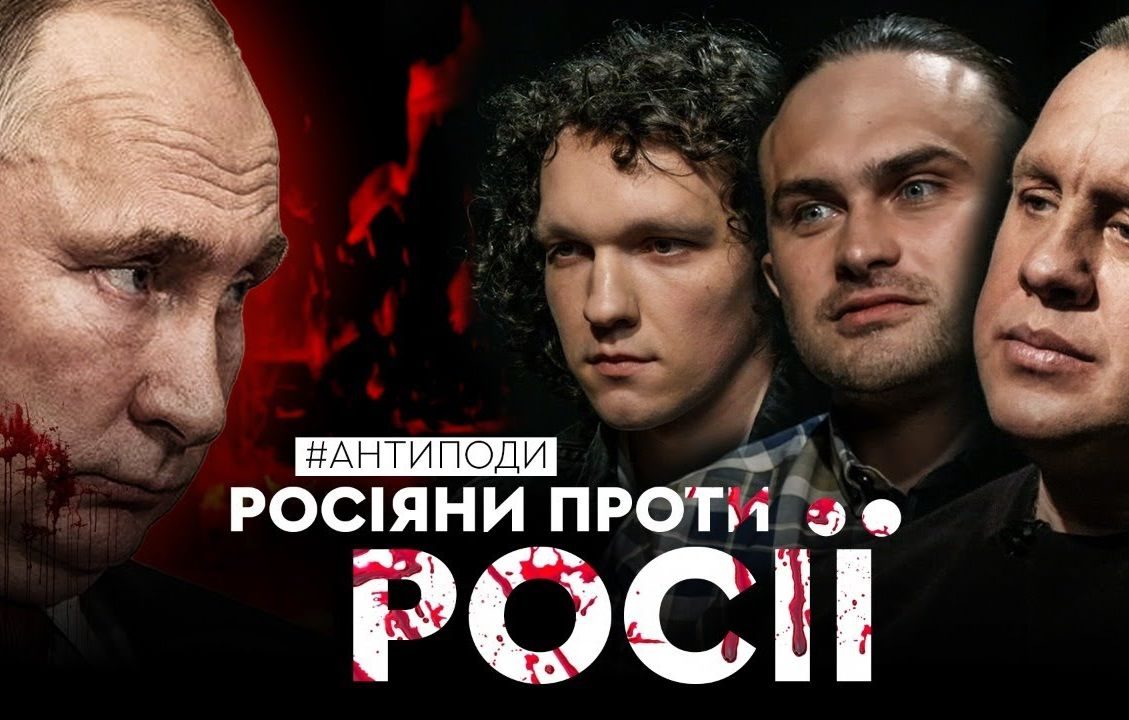
Interview with Russian citizens who supported the Maidan and fought against the aggressor country.
In a new episode of the program “Antipody” on the Iceland TV channel, citizens of the Russian Federation who fought on Ukraine’s side talked about their decision, political views and attitude toward their homeland.
Artem Shyrobokov, call sign “Yesenin”, Azov regiment
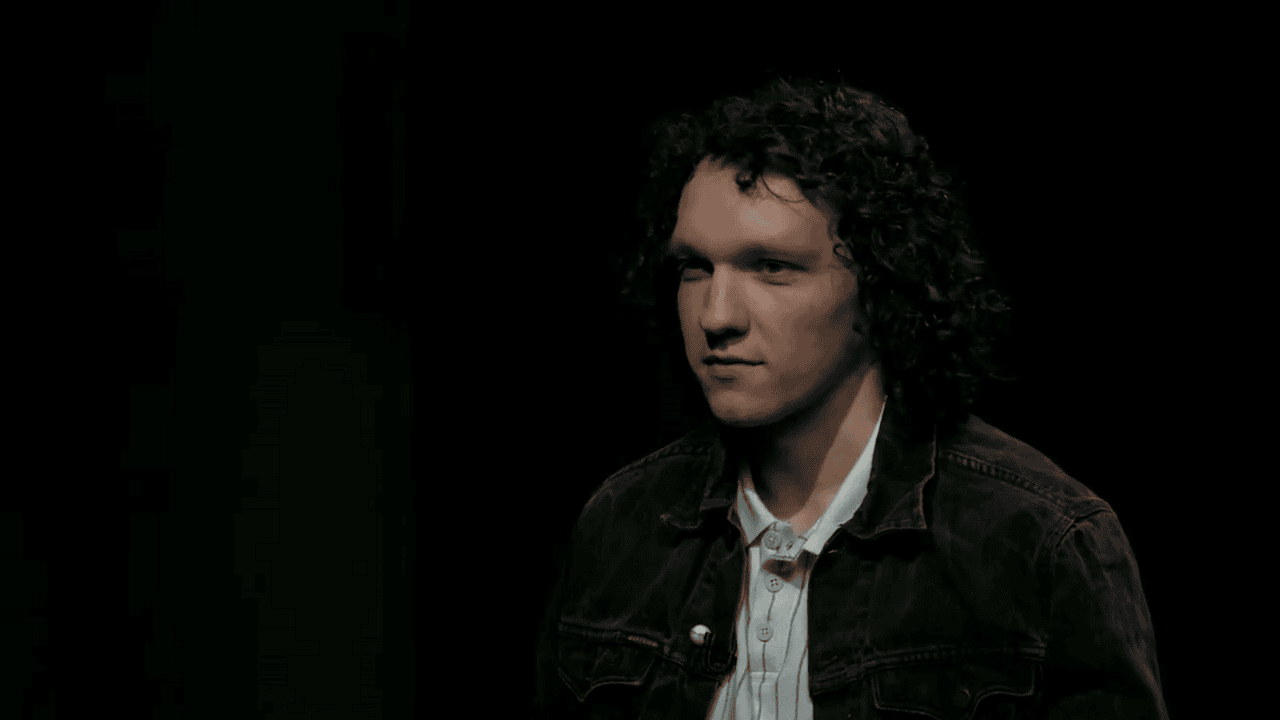
Why Yesenin?
This call sign appeared on the Maidan. They were signing me up for the organization “Patriot of Ukraine.” I had a small volume in my hands, and I was suddenly asked for a call sign. I had to come up with one urgently, and I had a Yesenin book. That’s how it stuck.
Did you carry a volume of Yesenin with you on the Maidan?
Yes, I took it with me on the road from Russia. I read it from time to time and flipped through it on the Maidan.
Do you like it?
Yes, very much. Now, of course, less, I’ve gotten a bit tired of it. I’m reading something else now.
Where did you live in Russia?
In Samara. Samara Oblast.
What is Samara? What kind of city is it?
It’s in the Volga region, a city on the bank of the Volga with a huge embankment. Not bad, I like the city.
Is it developed? How do people live there?
It’s a city of a million people, with 1.2 million residents. Quite big.
And what did you do there?
I was an ordinary student. I studied at the International Market Institute. At the same time I studied at a technical college. I tried to get a secondary specialized education. But in the end I finished neither and came here.
And how did you decide to come here, and why?
Young, hot-headed, with a keen sense of justice. I watched the events and I cared about what was happening on the Maidan. Still, I felt I had to go, but I couldn’t choose the moment. I thought I’d set off now and by the time I got there everything would be over and I’d be too late.
When the shootings began and people were dying on the Maidan, I realized I had to go. In the end I arrived near the end of all the events, the hot clashes. It was already the final phase of the Maidan, and the anti-terrorist operation (ATO) had begun; there were no Crimean events yet, so there was no talk of war. And at that time I had already decided to join the Azov regiment.
Do you have any relatives in Ukraine?
In Ukraine, no. Only acquaintances.
So you are a Russian, and all your relatives are in Russia?
Yes.
We remember how Russian media covered the events on the Maidan, and the Russian internet too, very powerfully tried to discredit the Maidan. But why did you decide? After all, it wasn’t so popular in Russia to support the pro-Ukrainian Maidan.
I had a completely different information space. I didn’t follow the pro-government news, which somehow tried to smear the actions on the Maidan.
And were you part of any subcultures?
Yes, I used to go to football sometimes.
Ah, so you were from the football crowd?
Something like that, yes.
And before that, as far as I understand, you already had connections in Ukraine?
Very distant. It was acquaintances at the level of: “I want to come to the Maidan now, can you meet me? Yes, of course.” At that level. I was opposition-minded toward the Russian authorities even before the events on the Maidan, so I didn’t trust Russian media.
What did you find most offensive or outrageous in the actions of the Russian authorities?
That Russophobic rule. They don’t let Russians themselves or nationalist public organizations develop at all. That is, they have some kind of catch for any manifestation of nationalism. So I didn’t like it, and I went to various opposition rallies. I spoke out against such things. And, of course, the standard things: corruption.
What are you doing now?
Graphic designer. I work at a cosmetics company.
This is completely unrelated to military affairs.
No, though sometimes people ask me to make some design for them, for a volunteer company or organization connected with the ATO.
What do people in Russia think about Ukrainians?
There are different circles of acquaintances. There are people I knew from university and from school.
Archetypal perception by Russians, at the everyday level. Because we are trying to research this, and we want to understand how all this happened, how the war began, and how many people supported Putin’s utterly savage stunt.
I understand that all this has some everyday causes, conditions, or factors that were carefully and for a long time instilled. So here is a simple question, because I know that among many of my former Russian acquaintances there was the opinion that Ukrainians are “amusing little Khokhols” who will dance and prance around on the Maidan and so on. A slightly condescending attitude. What did you observe?
Unfortunately, I can’t confirm that, because before the Maidan no such questions about Ukrainians came up in my circle. That is, there were some people from Ukraine, and they were treated on an equal level. Maybe I just had a non-Ukrainophobic environment.
Well, I mean not ethnic features, but features of residents of another country. No, there wasn’t? Well, that’s good.
When you saw what was happening on the Maidan, how did you perceive it? What exactly was happening on the Maidan, and what was the struggle about?
People protested against the usurpation of power, against violence directed at them. That is, it was a peaceful protest that turned into a riot with violence, which started on the side of the authorities. I perceived it as people refusing to endure it, refusing to put up with it, not wanting to be doormats, and simply deciding to take this power down, and I decided to take part in it.
Were you aware that one of the main trends of the Maidan was anti-Russian? Not in the sense of against ethnic Russians, but that Yanukovych took money and effectively tried to put the country under Russia. And that is exactly what initially outraged people.
And if you remember, on the Maidan a photo of Putin with derogatory captions hung on the Christmas tree. So the Maidan was, among other things, largely anti-Russian.
No, on the contrary, it inspired me. That is, people are fighting against a pro-Russian government here, in their own country, not in Russia, in Ukraine. In my view, that’s cool. I didn’t perceive it as if it were against me, against Russia, because I never identified myself with the Russian government, with present-day Russia.
Did you feel any segregation on the Maidan, or any non-acceptance because you were Russian?
No. Everyone treated me with respect. I spoke Russian, I said I was from Russia. The only question I was asked was: “Are you sure you want to join? Then you’ll have problems in Russia.” In general I did not encounter manifestations of Russophobia on the Maidan. Neither before nor after.
You joined the organization “Patriot of Ukraine.”
Conditionally. Somewhere they wrote it down on a piece of paper.
And then the little black men appeared, as we remember, in spring 2014. How did you end up there?
I moved from the Kyiv City State Administration (KMDA) to “Kazatsky,” which later became the mobilization center of Azov. And in the first group, when people were being sent out, I went to the East.
Where did you fight?
Marinka, Shyrokyne, Ilovaisk, Mariupol.
Ilovaisk, which moment?
Before the withdrawal. That is, I wasn’t there during any very intense events.
Does Mariupol refer to the liberation of Mariupol?
Yes.
Marinka and Shyrokyne, those are roughly the years 2015–2016, respectively?
Marinka, 2014.
Did you ever have moral questions about having to shoot, possibly kill your compatriots, of whom there were very many there?
In general, here there is no division by who has what citizenship. In my view, it would be much worse if I put up with coming here and fighting some nominal militiaman, a resident of Donetsk with a Ukrainian passport. That is, it seems to me that would be worse.
But in general I perceived it this way: I went to war and I meet a person from the opposite flank who simply agreed to a conflict with me. That is, he decided either to shoot someone or to be killed. And I did the same. So I had no moral questions about this at all.
Pavlo Chirkin, call sign “Orlyk”, Azov regiment
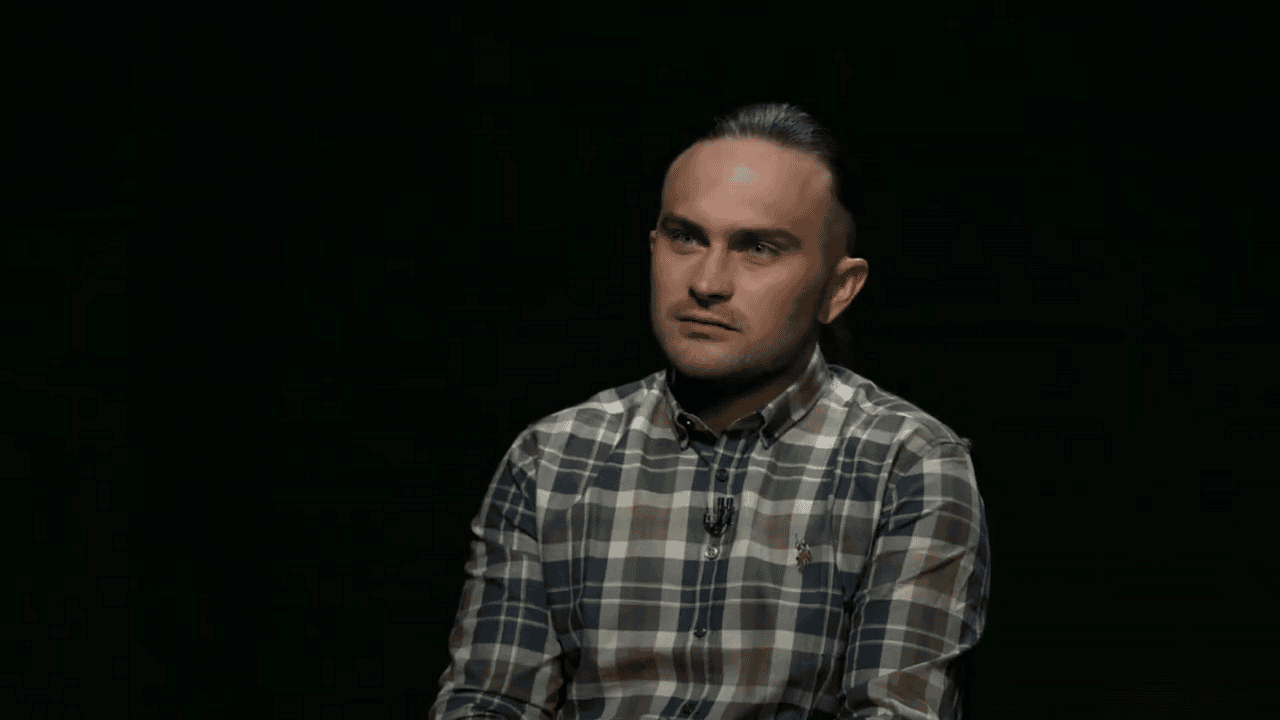
Your background in Russia, as far as I know about you, is absolutely atypical for Azov fighters, who are usually portrayed as right-wing radicals. And very often from Kremlin mass media and from separatists we hear words like “neo-Nazism” and so on.
When I learned about your biography, I was surprised to find that you were the leader of a music band with an anti-fascist orientation. Is it true? Please tell us who you were.
I played guitar. It was absolutely short-lived. We literally played for half a year, and the group broke up for natural reasons.
Where did you live?
The city of Oryol. That was the 2010s. It was like that. All the youth at that time were on one side or another. It’s just a pity that it had nothing to do with real politics. That is, it doesn’t affect adult politics at all.
Well, right? Were you a left-wing activist?
I positioned myself as an anarchist in my youth, I guess.
And you had a band. What did you play, anarcho-punk?
Punk hardcore.
That’s a very atypical story for Azov. Then, as far as I know, you were attacked by skinheads?
Yes, there was violence on the streets in those years. There were victims too.
And who attacked you?
Well, radical right-wing youth. Precisely opponents at that time. Mostly in those years they were football hooligans. But I wasn’t interested in football, I was interested in music.
So you weren’t from the football environment?
No. Absolutely not. There aren’t many antifascist clubs of any kind in the post-Soviet space. And football didn’t interest me at all as a game. And not many of them are interested in it as a game either.
Please tell us about the city where you lived.
Oryol is a well-known city. It’s a provincial town. I like it, it even appears in my dreams. I would like, of course, to go back. Probably, as with provincial places, when you’ve been there a long time you want to escape the provinces, you want to go somewhere to the capital, where there’s more activity, but over time you want to return there.
Because it’s my small homeland, it made you, it made me the way I am. There are many creative people there. There is, probably, its own special atmosphere.
What did you do there?
I worked and I served. I did my military service exclusively, and I studied at two educational institutions, but without success. Fun and partying were probably more to my liking.
In which troops did you serve?
Communications. I served near Moscow, and I served in Volgograd.
Where did you work?
I worked at factories and also in construction. I was always looking for side jobs. So there was never a specific profession I dedicated myself to.
What kind of family are you from? Where are your relatives?
My father was an engineer. He was an engineer even in Soviet times. Mom worked in trade. I can’t say we were really well-off, but we weren’t poor.
Do you keep in touch?
I’ve already been orphaned.
Sorry.
It’s fine.
And do you have any relatives left?
Yes, of course.
Who are they, the closest ones?
A brother.
Do you communicate with him?
Yes.
How does he feel about what you do?
There was no negativity at all.
Does he understand you?
Yes. We have full understanding with each other. Maybe, of course, out of worry he doesn’t support it, maybe he was shocked at first by my act. Well, I didn’t publicize that I was going to war.
I simply came from Moscow at that time, saying I was going back to work now. About half a year later I called from Kyiv. I made up a story that I had gone to earn money in Poland, laying internet cable there.
How did Ukraine come into your field of view? Do you have relatives here, perhaps? Have you ever been to Ukraine?
I went there as a tourist. I visited Ukraine, specifically Kyiv. From my impressions, Ukraine and Russia are unequivocally different countries. I liked Ukraine already when I simply visited as a civilian, around 2010.
I especially liked Kyiv. I got the impression, probably after Moscow, of a good, cultured capital. As for the people themselves: there’s always someone to ask on the street how to get somewhere. A grandmother will drop her bags and start telling you, and will walk you to the crossroads.
So you already have a positive perception of Ukraine. When did you decide to go to Ukraine, so to speak, to do something, and why?
To be frank, I have a friend, a close childhood friend. He was very upset about all the events of the Maidan, and he made the proposal to go to war. That was in 2014. The proposal came from him. We made a little secret of what we were doing, we gathered documents and money, and set off. And so it happened. That’s what we did.
And why?
Well, how to put it. I think the reason is, you know, like enemies burned down your native house, and we started to take revenge, it’s gone. I think people probably divide themselves into those who at one moment will answer “yes, I’m ready to go to war,” and those who will say “need to think it over, prepare.”
That’s understandable, but you are a citizen of the country that attacked. I think I don’t need to explain this to you.
In my understanding, in my moral norms, it is natural that if you want social changes, changes for the better, regardless of what movements you adhere to, what views or parties, I consider the regime that exists now in Russia criminal.
It is criminal not only toward Ukraine or some other republics, it is directly criminal toward its own citizens. I find it hard to believe that something like Mahatma Gandhi’s story will work, that we will all change this without physical force.
Such regimes don’t surrender so easily. For me it was a natural thought that if you want something, some changes, then you have to take up arms. Not take up arms, but be ready to actually go into conflict.
Did I understand correctly that in Ukraine you are fighting against a regime that you consider criminal? Yes? So you are fighting only for Ukraine, or for Russia as well?
For Russia. For Ukraine and for Russia. Because this war will end there. Perhaps at 25 I had more hazy notions, I thought the time had come, and now changes would begin everywhere. But it turned out like Transnistria. Yes, I’m not only fighting for Ukraine here. And for Russia here too.
Leonid Chemodanov, call sign “Zeleny,” Right Sector
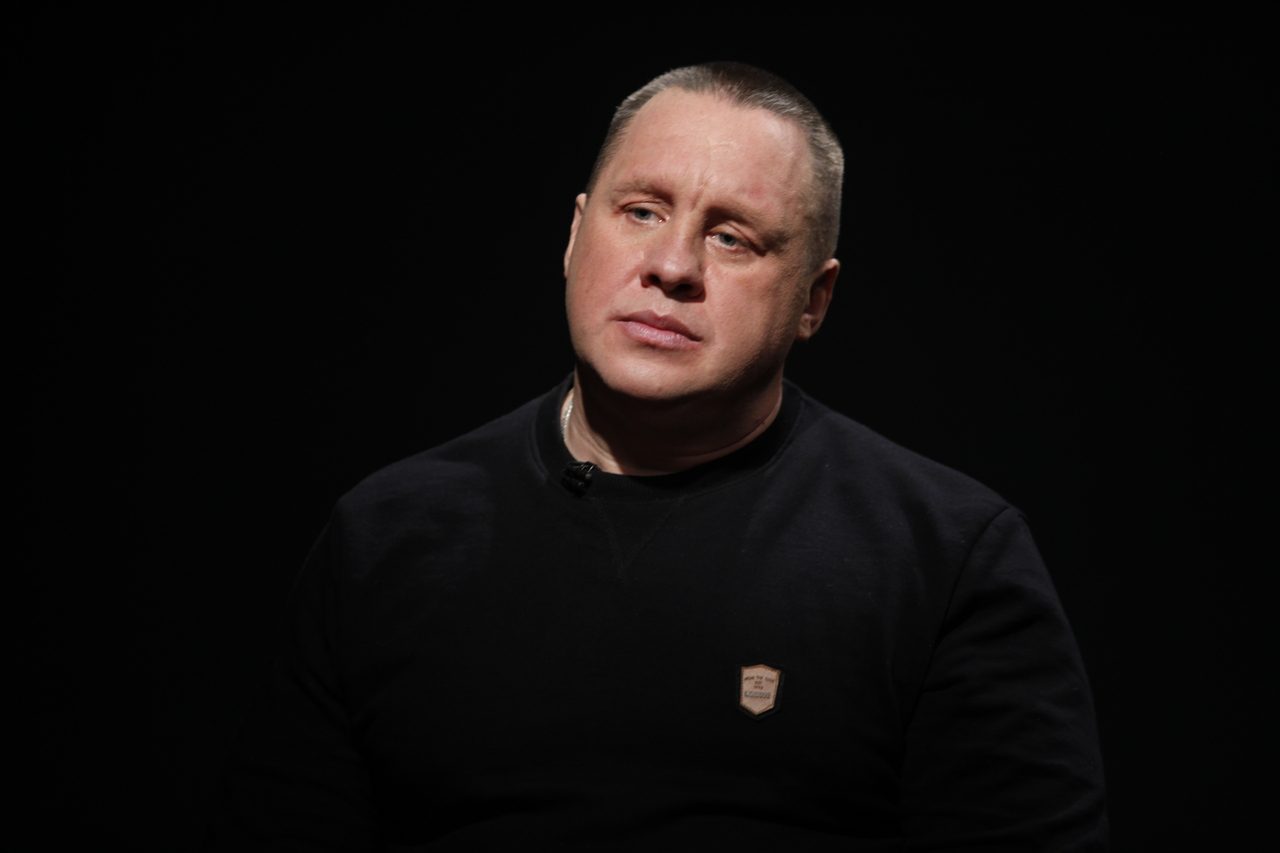
What do Ukrainians need to know about Russia, because you understand that in both Russia and Ukraine there are quite a lot of people who consider themselves descendants of one people, perhaps.
Sometimes I find it funny to hear this. I’ve heard some people say, sorry for the expression, that some x**lo will come and everyone will run after the x**lo. And I think, well, live there a while, feel what it’s like, walk around Moscow and St. Petersburg in the evening, where it’s impossible to walk without a passport.
You need to have a passport with you. It’s like a curfew, although there is no curfew there. If you forgot your passport, back then it was 500 rubles. They say: “Aha, no documents, we’re going to the station.” And “to the station” means at least three to five hours, or even until morning, and with homeless people too.
So you are ready to hand over money. No passport, nothing to confirm you are you. Well, they check not so much to see whether you have a passport, but to rob you, roughly speaking. Get into the police, and you can already rob people. That’s not normal.
People in Russia are interested in this. The deep Russia is of interest, not Moscow. Acquaintances told me the same, and Russians even, and foreigners who worked in Russia, they said that, and I myself had the experience about 20 years ago of traveling through Pskov Oblast.
I was traveling to Latvia through Rostov, I remember Oryol, Volgograd, going in the direction of the Baltics. I was, frankly, unpleasantly struck, because it left such an oppressive impression on me. There are also many problems in Ukraine, but, frankly, I didn’t see anything like that even in Donbas. These abandoned villages.
So what did this deep people live on, four years after you left there? What did they live on, these ordinary people?
Well, propaganda. Ready, like fools, to eat tree bark just to say that America is to blame for everything. Or that the same Ukrainians are to blame for everything. Nonsense. We see that Putin’s gang, which seized power, is robbing us, and they know they’re robbing us. They can lie on TV all they want, but people can see how they live.
And at the same time they somehow believe that Ukraine is to blame for them living badly. And there’s also propaganda that we are a fraternal people and Russia can teach Ukraine. Sort out your own problems first, why are you poking your nose in? I just can’t understand this.
There are people here too who believe that because pensions and wages are a little higher there, although prices are significantly higher, and at the same time they think people there live better. I don’t understand such people.
Russia is not Moscow?
Definitely not Moscow and not Petersburg. There, even if, let’s say, someone has their own opinion, they keep it to themselves. Nobody will do it openly there. Because there power matters enormously. That is, fear of power. The police there are not there to protect you, but to keep you in fear. So, roughly speaking, you are a serf, know your place.
Why did you decide to fight? You could have not fought.
How is that not fighting? After all, I’m a man.
Were you in the army?
Yes.
2014, war, you are a citizen of Russia, you are ethnically Russian. How did you see this for yourself? Did you understand that this was an invasion by Russia?
Yes, I understood. I always regarded the Putin regime as hostile to the people. And especially when I lived in Ukraine, I understood, you know, everyone has their own truth, and when you look at both truths, you understand where the truth lies.
And the truth is simple. A neighbor is simply stronger than you and wants to rob you, while I live here, I want to live here, I want to raise children here, to marry here, so that my son grows up. And an enemy attacked me. Yes, I was born on the territory of Russia, but Russia is a real enemy, no matter how it says we are a fraternal people, while robbing you. What kind of fraternal people is that? I’m simply in such a situation, so to speak. Although I am a former citizen of Russia, I am still not a citizen of Ukraine.
2014, and you decided to go to war.
Yes. But there was a whole problem getting in. I came to the military enlistment office, and there they immediately turned me away. They said: “We don’t have laws allowing a foreigner to fight.” Then I found acquaintances through television and the internet, and joined “Right Sector.”
Did you know anything about “Right Sector” before this?
No. Before the war, no.
And where did you live, in what city?
In Zhytomyr.
And how did you perceive the Maidan?
I perceived it excellently. I didn’t take part in the Maidan, but I supported it morally. Only, I didn’t believe anything would come of the Maidan. I thought people would sit there, sit, and then they’d be dispersed, as in Russia. And thank God, the revolution happened.
Only, it didn’t go entirely according to the scenario the people wanted, but nevertheless, this may be the first step toward freedom. Toward human freedom. So that we can express our points of view to each other and defend our points of view.
And you found “Right Sector.” How were you received there?
Well, many there spoke Russian. And from Luhansk region. 60–70% spoke Russian. They joked about me, “moskal,” “katsap,” well, as a joke. That was at the base, but then, when we got to Pisky, we started taking part in battles together, and there were no more such jokes.
You were raised in such a Soviet system of values. That is, from childhood they stuffed us with thoughts, information, and fakes about the terrible Banderites who killed and cut up people there, about the UPA.
So all those things that are in fact the cornerstones of the ideology of “Right Sector.” Could you even imagine that you would one day become a Banderite?
I’m glad that I’m a Banderite. I really consider myself a Banderite, in the good sense of the word, not in the Soviet sense, where Bandera fought for the Germans. Well, that’s nonsense. Bandera fought for his country. Just like me. Roughly speaking, it turns out I really am a Banderite.
I love Ukraine, I live here, I want to live here. I fought, and if now a full-scale war begins, I’ll go again. Again, it will be unclear where I should go, but still, with God’s help, I think I’m not the only one.
Something tells me that volunteer battalions won’t be avoided.
It won’t be avoided in any way. Look. In the Soviet Union, however good or bad it was, when the war began they immediately recognized volunteers on par with regular troops. So that’s normal. Roughly speaking, the family was not deprived.
Why did all this stop? Because there was no support from anyone. Not financial, but simply human support from the authorities for volunteers was absent. And moreover, after the war they began to say that volunteers are good and the Armed Forces of Ukraine are bad, and vice versa. Well, that’s nonsense. Both of them fought for Ukraine.
Did you ever have moral doubts or any other questions in connection with having to kill Russians?
No. Never. What do you mean?
You fought, you took part in battles, you obviously destroyed enemies, and these enemies are in fact your former compatriots and people of your nation. Did you never have some moral dilemma about this?
I’m not killing peaceful people. This is an enemy. If, let’s say, not I kill him, then he kills me. This is an enemy, and I believe that whoever came here with a gun should fertilize Ukrainian soil. You know, Russia is such a country that you can’t reach agreement with. It’s like with a bandit: until you hit him in the teeth, if he’s robbing you, he won’t understand.
So if a war starts, let it be worse for us, or easier there, I don’t know, but one has to hold out to the last. So that, if they’ve already taken Crimea, Donetsk and Luhansk, they don’t want to take something else next. Appetite comes with eating. They’ll want more and more. Odesa, something else.
It’s a real bandit, and when you’re being robbed, you have to fight back. Don’t shout “help,” but defend yourself. That is, when your house is on fire, the first one who must put out your own house is you. Don’t hope that Europe or America will help. Thank God, that one will help, but what if, because of some of its own political thinking, it refuses?

Russian Attacks in Dnipropetrovsk Region: Two Killed, Seven Injured

Defense Forces Strike Four Russian Drone Control Points in Past Day, Including in Berdiansk

Britain Threatens Sanctions on Kremlin-Linked People; Poland Ready to Hand Ukraine Ammunition

Russia says it has completed "planned exercises" in the Black Sea

MVD: Fake Riots With Prop Blood Were Being Prepared Near Presidential Office

Law Enforcers Name Another Klitschko Deputy as Suspect

Berlin Holds Protest Against War in Ukraine; EU Prepares for Possible Russian Halt of Gas Supplies
North Korea Fires Ballistic Missile Over Record Distance in Five Years
Irish Fishermen Force Russia to Postpone Naval Drills

US sanctions in case of invasion of Ukraine could completely destroy Russia's economy, NYT reports
