
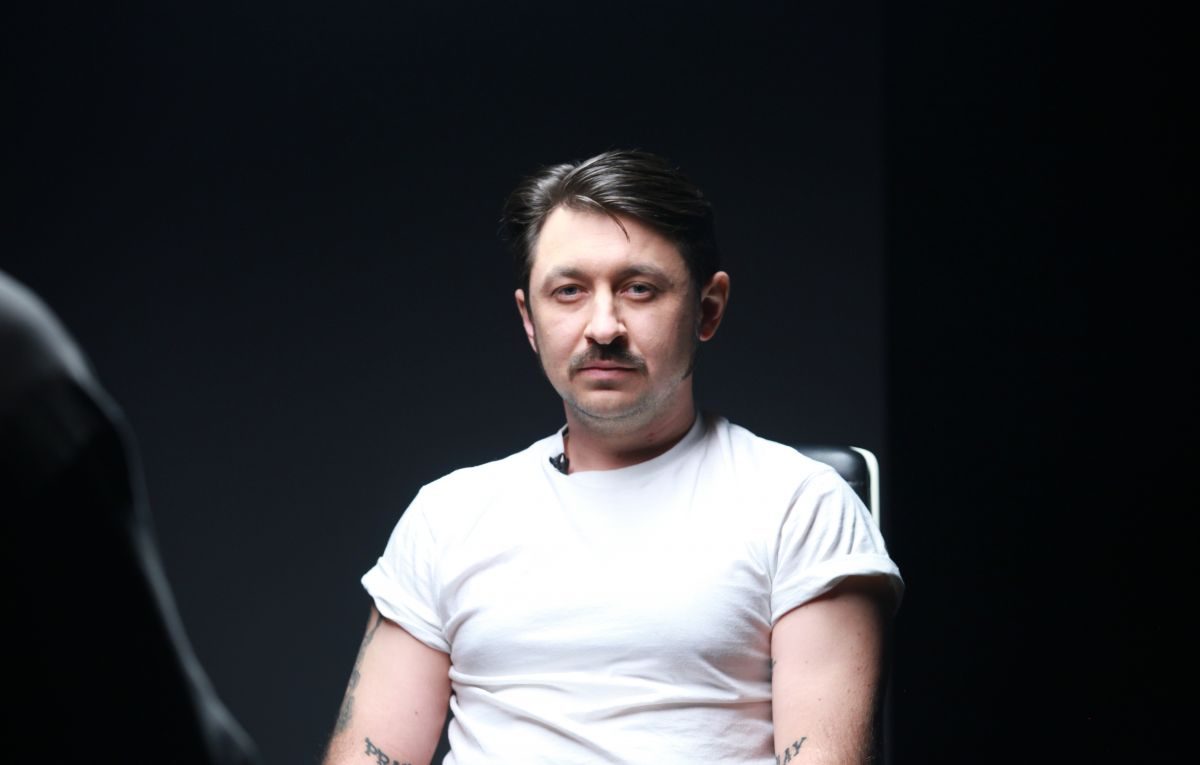
Musician and singer Sasha Bul: Ukraine is going through a teenage transitional age
He also believes musicians would do better to honestly admit they travel to Russia to earn money than to justify themselves by trying to reconcile peoples.
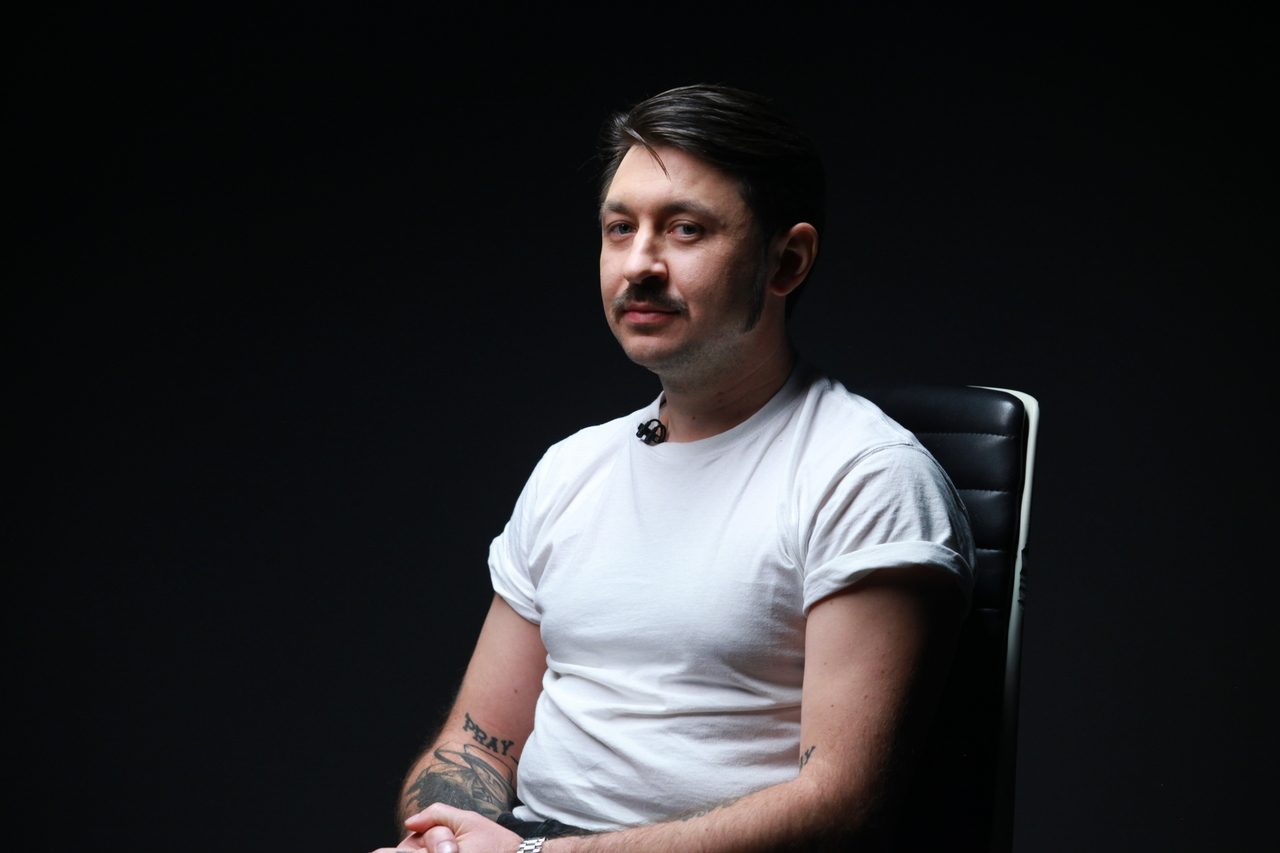
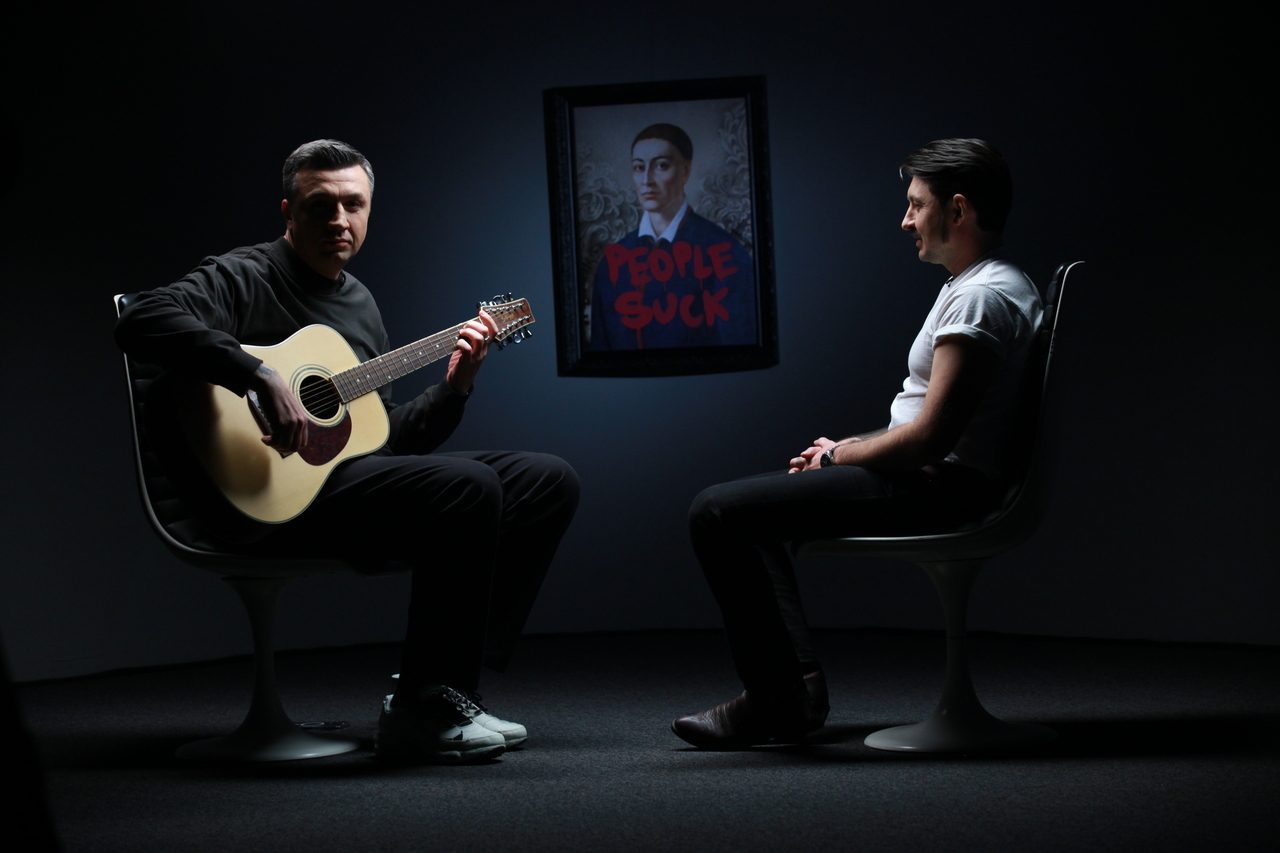
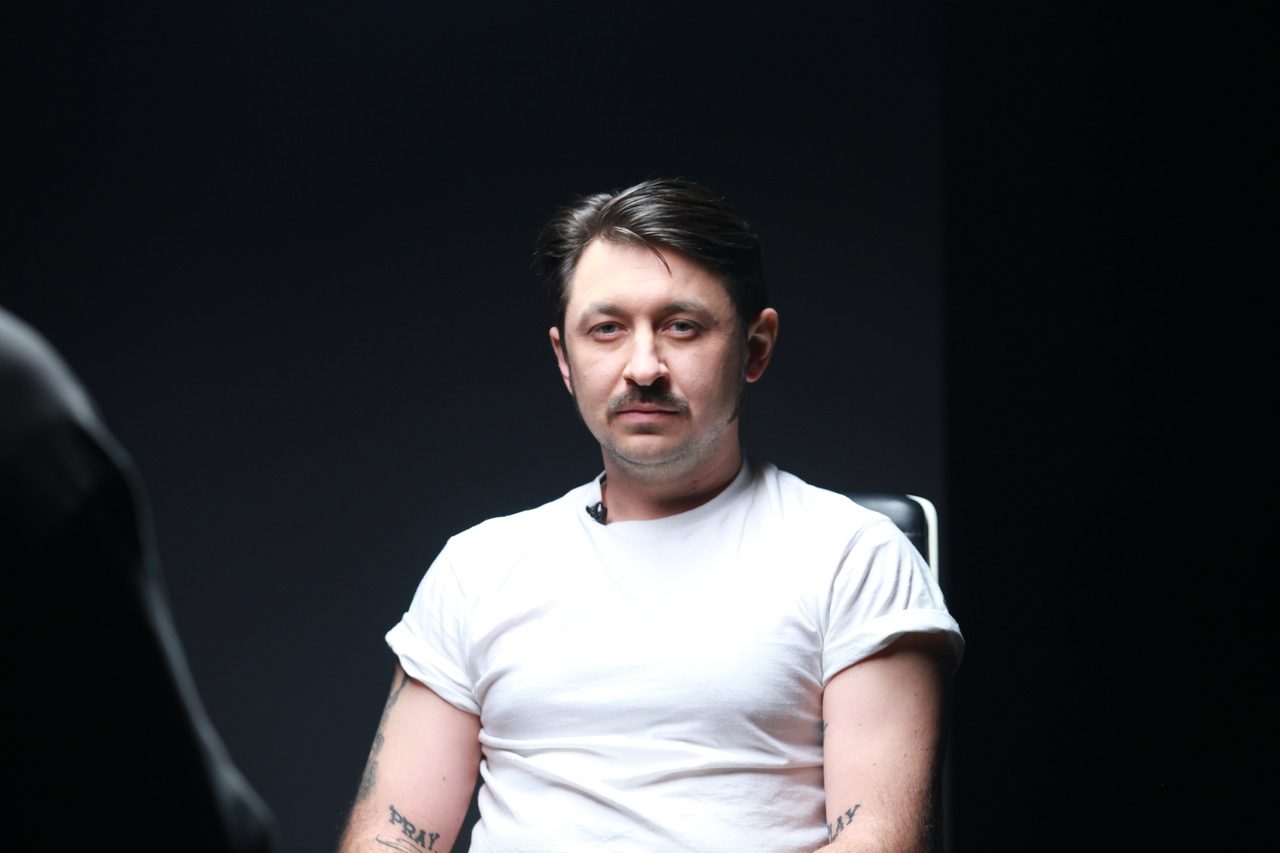
In a new episode of the program “Antypody” on Iceland TV, Ukrainian musician and singer Sasha Bul spoke about Poles’ biased attitude toward Ukrainians, life in different Ukrainian cities and his attitude toward media earnings in Russia.
Didn’t you ever feel such a biased attitude toward Ukrainians in Poland?
Toward Ukrainians? I did, of course. It’s constantly felt.
I had a really unpleasant experience at the border with a female border guard. She refused to speak English with me and addressed me in Russian, and I said I didn’t want to talk to her in Russian.
At the same time, I’ll say the situation got worse with the arrival of Law and Justice, the party that is in power now.
Is that more right-wing?
Yes. They’re kind of conservatives, kind of Catholics, kind of right-wingers.
And what have we done to them?
Well, the “Volhynia massacre.” And there seems to be no such agenda against Ukrainians, at least the way I see it from their side. It seems to me that at some point they somehow, subliminally, between the lines, said: “Being a right-wing jerk is OK.” That was it, and nothing more needed to be done.
I see. So they legitimized that model of behavior.
Yes, they allowed a few stunts for which the screws really should have been tightened hard. And they said: “Well, people wanted it, people did it.” And that greatly worsened the situation. Because if in 2014–2015, I remember, I’d come and hear texts along the lines of “Damn, you’re from Ukraine, everyone’s hopes are on you, come on, stand like a mountain,” that Ukraine is again the shield of Europe.
There were such pompous texts: “I cared so much for you, we even collected money for the Maidan.” And then at some point I arrive and ask the club owner, can I leave my car under the club or park it in the parking lot? He says: “Dude, with Ukrainian plates, why do you need that? Do you want to find a brick in your cabin in the morning?”
And then it so happened that, clearly, Russia got in there too, and I, for example, noticed that when you go into Żabka, a kind of Biedronka-like supermarket found everywhere in Poland, there’s yellow press lying at the checkout. I repeatedly noticed that the front pages of this yellow press carried some blatant anti-Ukrainian nonsense. Some more revisions of the “Volhynia massacre” events, some scandalous article about a drunk Ukrainian migrant worker who ran over a Polish child with his car.
And it somehow started appearing regularly, and a very unpleasant message emerged. Of course, certain categories of the population picked it up. Plus, one should probably also understand that some of our compatriots contributed to this. Yes, the number of Ukrainian migrant workers there increased, and we understand that these are not always very pleasant people.
I myself met people there who came to my concerts, and, damn, I was ashamed for them. After the concert you talk to him, and he says: “I came because I saw you’re from Ukraine, and no artist from Ukraine has ever come to our little town.” I don’t know you, I listen to Dzidzio, but I just saw you’re from Ukraine, so I thought I’d go see a fellow countryman. And how did you learn Polish like that?
I say, well, I just talked with people. I’ve been living here for six years already, I can’t say a damn thing. I met such guys regularly. Because he lives in some closed environment, a kind of Ukrainian ghetto. He drinks vodka, works. And it’s clear that they create some negative image.
Well, on the other hand, I’ve also seen Poles vomiting in the center of Kraków or Gdańsk.
You’re proving that a Ukrainian musician can be successful without going to Russia. For many people, that’s nonsense.
And now there’s this Sasha Vareniza, who apparently has to write a post saying you can’t get anywhere without Moscow.
Sasha Vareniza. Something familiar. Ah, that’s the guy who writes those lengthy posts about music.
Yes. I don’t know, for some reason he’s considered such an expert, and many people listen to his opinion. Maybe I don’t understand something.
Well, screw him. Does your empathy allow you to understand people who tour Russia? All musicians are a bit cosmopolitan, the whole world is ours, after all.
Yes, it does. But here’s the thing. I’m more irritated not by those who went there, because they have such beliefs and for them it’s OK. I’m more irritated by those who then try to wriggle out, and they usually do it not very skillfully. I think that if some of them said straight out, I’m earning cash there, I’ve worked for years on this audience.
I’ve written hits for them for years, I’ve toured there with concerts for years, I have a fan base there, and I want to go there to earn the money I made before the war started, which cut off my cash flow. But nobody says that. Everyone starts saying: “Friends, well, what are you doing? We’re going to make peace between peoples. This is the language of love.”
“We play for simple people who never picked up a weapon.”
Yes. “Politicians divided us, so what are simple people to blame for?” And when I hear this, I really boil over. It drives me nuts. I can’t find any justification for this. These are finished scum, absolutely. A person who says this is finished scum and deserves nothing good.
Well, that’s the story of the band Ginger, who were in my interview. They talked about all of this. They messed up repeatedly here. Let’s put it this way, I didn’t interfere, they’re adults, let them control themselves, know when to shit and when not to. Then they still get hammered. I think they gave an interview to MetalHammer and recalled this interview, our interview with them.
Now they’ve sent me word that they released a video alluding to our interview, like some cop is interrogating her. She’s dressed just like in that interview. I’m fine with it. I really like that they’re getting hammered, because it’s right. They should be hammered. If only they hadn’t also fucking ripped off the riff from “I’m Broken” by Pantera, because it’s exactly one-to-one.
Friends, well, here you’ve, of course, screwed up with plagiarism. That was unnecessary. But overall, I don’t know, maybe this will make them think about something, and something maybe somewhere… Though no.
Look, under what conditions could you hypothetically perform in Russia? Say tomorrow Nergal says, well, guys, we have a tour: Moscow — Saint Petersburg — Novosibirsk — Tyumen.
This question has already come up. I said there would be problems. Either I’d have to find someone to replace me, or think of something else.
There will be problems. Phrase it correctly, because your words will now be dissected here by our ultra-patriots. The problem, I understand, is with the performances.
Yes. We’ll just have to think about how to make it work. Not in the sense that there will be problems with me going there. No. It’s my absolutely well-known decision, I don’t want to go there. It’s just that we’d have to figure out how to do it if the band decides to go and they decide to play there. I won’t go, period. This will need to be resolved somehow.
Who raped the collective musical taste of Ukrainians? How did it happen that if you look at the charts of Apple Music or Google Music, people listen to such cringe crap?
Partly, probably, the so-called Iron Curtain behind which we were. I just noticed that, for example, Czechs have musical tastes many times better than Poles, and Poles have better musical tastes than Ukrainians. It seems that the less dense this Iron Curtain was, the better the musical taste. Because more forbidden cultural product got through back then.
And it was more diverse.
Yes, so accordingly, for a long time they fed us this crap, and whole generations grew up on it. And you can still hear it even now. Come on, some kids are 14 years old, and they knock back their first “Revo” and put on Meladze. Well, where does that come from?
At Meladze’s “Atlas” concert, did you see what was going on there?
Yes.
Well, OK, they got fed up with him, I don’t know, and pulled him out as a meme.
Even Zibrov has already turned into a meme. And with Meladze, it seems to me, it’s unfortunately just the handing down of some crappy family traditions. That is, people don’t even think it’s not OK, well, because it’s always been that way in the family, and it never triggered at some point that, probably, this is kind of lousy.
How do we get rid of this? Or should generations just pass away?
Well, that’s a passive way, like just waiting until they croak. But probably one needs to make some effort to speed up this process. What I’m doing is also a kind of minimal effort, but it speeds things up. Of course, I don’t have such a wide audience to influence things globally. I’m not a pop artist, after all. They don’t show me on TV.
And it’s my own choice. I’m not saying now that they don’t show me, but I’d like to. No, I wouldn’t like to. I had the opportunity to go on all sorts of “The Voice of the Country.” But then haters would start writing on YouTube: the guy’s just jealous he doesn’t have as big an audience as someone else. No, I consciously chose the path I took. And I believe you can’t have everything at once. You choose certain roads.
I chose mine and I’m absolutely satisfied with it, because even with the song that Corey Taylor sang, which my manager wrote a while back, my manager who handles my concerts in Ukraine, your namesake, Serhiy. He says, they came to me from the national selection for Eurovision. They want you to try yourself there. Are you interested? I say, well, I don’t know. I got kind of confused.
I say, well, OK, you can send them a few of my demos. And among all the ideas, by the way, was the song “How Come,” which Corey Taylor ended up singing. Then he calls me back and says, listen, they liked this song, and a producer from TV will contact you. I was so surprised, because it has quite a misanthropic text. I thought either they just didn’t listen to it, or they don’t know English.
Because it’s hard for me to imagine a song with such lyrics playing at such a music contest, for housewives, Eurovision. But then people from television really did contact me and said, we liked it, you need to come to Kyiv for filming. And then some kind of inner trigger went off in me and I thought, damn, no. This isn’t my story, I’m jumping off it. I don’t know why I got into it.
I called back that lady from television and said, sorry, listen, I kind of screwed up, I don’t want to come to you, I take my words back and don’t want any national selection for Eurovision, this isn’t my story. And with that our conversation ended. Then this demo ended up on Me And That Man and was sung by Corey Taylor.
And if it had got into Eurovision, maybe I’d have played a few fat corporate gigs afterward, but I wouldn’t have sung this song for Corey Taylor.
Well, I would have acted like you, actually. Because Corey is a really cool guy. As they say, no argument there.
What’s happening with our country on the level of feelings? What process would you compare it to?
I think it’s like a teenager’s transitional age.
Such a nasty puberty.
Yes. Like: you all owe me, you stupid adults, you don’t understand me. I’ll stick a sign on my room’s door saying “It’s my room, my rules.” And you know, it manifests at all levels, sometimes even at high, interstate levels. And at the elementary level too, like: according to the Constitution it’s a violation of rights, I won’t show you my vaccination certificate.
Well, it’s really like a guy who’s 14 or 15 years old, and everyone owes him, everything he does is extremely important, everyone must respect and honor it. I’m not saying it’s bad. I think one just needs to understand that the metamorphoses our society and our state are going through are an organic process. We are young.
Well, he’s already 30, time to wise up. Though, on the other hand, men grow up later.
There you go, a somewhat infantile man at 30.
Last year I was in Bukovina and was struck by the number of Russian-speaking people, in Chernivtsi, I mean. I wasn’t in the villages. Looking at the city itself, which is actually beautiful but utterly neglected, and talking with all sorts of different people, among whom are very close people to me, my friends, I never, in all the few days I was there, lost the feeling that this city, even this place, all of it, is kind of disappearing.
It’s like it’s dissolving into some foreign, more aggressive and uncompromising identities. How right am I?
Absolutely right. You just voiced what I would have answered if you had asked, for example, how I see Chernivtsi now.
Why is that?
I think there are several reasons. The first is simple: geography. We’re kind of behind the scenes of everything, and that plays very much into the hands of all sorts of local feudal lords who push their own interests there. And if you ask most Chernivtsi residents why everything is so bad, why there’s no basic asphalt on the roads, why there are no tiles on the sidewalks, just potholes, why there’s garbage, why there’s no proper public transport, they’ll tell you: well, because they’re fighting among themselves, and the city is declining. And that’s really how it was for a long time.
And then there’s more. Now there may be some improvements. But overall, it’s the wars of local feudal lords, who sort things out among themselves and try to divide spheres of influence. Accordingly, they take turns getting into power. When one group gets in, the others block their work to make them look bad: look, they haven’t changed a damn thing, now our guys will come and do it. Since they got in there.
And then these start: let’s tighten the screws on them now, so they can’t push through any reforms, so to speak. That’s how their competitions go. That’s one reason. And since all of this is at the back of beyond, one can do it and nobody pays much attention. Two, the Chernivtsi residents themselves are to blame. They let themselves be sat on. And everyone’s like, well, OK. And no protests happen. Everyone’s satisfied, so to speak.
And why is it that for a person, the most optimal development of their career, their path, is simply to go somewhere to work abroad? Why does a person so easily give up their homeland? You, reading literature, from Faulkner to contemporary representatives of this Western canon, know perfectly well how important the land is to them and what was done for that land.
Why is our land, which has been watered with no less blood and suffered no less, so easily abandoned?
One should understand that it wasn’t stupid guys who got into the heads of many people. Professionals dug around a bit there. I take my hat off to them. If it persists in people’s heads from generation to generation like that, then they’re not stupid guys. That’s one. Two, one should also understand, I think, that it depends on the region. If we’re specifically talking about Bukovinians, there are also historical moments that influenced this.
One should understand that over the last 100 years the flag on the town hall alone changed four times, so it was a bit shaky. And when this happens constantly, local people get used to thinking: well, whatever, a Romanian king, then a Romanian king; an emperor, then an emperor; the Soviets, well, then the Soviets; we’ll sort it out somehow. Ukraine, and now Ukraine, what will change? We lived as we lived, and so we live. And that’s possible.
Plus, this is a region of hustlers. Come on, the city-forming enterprise in Chernivtsi, in the big picture, is the Kalynivskyi Market. I understand my fellow countrywomen may take offense, but, sorry, that’s how it is. This is a buy-and-sell city. It’s not a city where people say, let’s produce something here, let’s build something. No. It’s been like this since time immemorial.
And these lands, if you go back to some princely times, were lands along which merchants traveled from the Black Sea region to the Galician princes, dragging their goods, and along the way some Berladnyks and other robbers held them up. They ferried them across rivers, across the Prut, across the Dniester. Some were ferried across, others were stripped.
So this historical raiding probably left its own influence, and that’s why, perhaps, people don’t care much about land. It seems to me that somewhere there in Polissia, I myself am a Polishchuk by origin, this attachment to land is a bit deeper.
You were born in Zhytomyr.
Yes, I was born in Zhytomyr, but I never lived there. Such an interesting phenomenon. I returned there later, as an adult, as a musician, with a concert.
Did you feel anything?
Nothing good.
I ask because my ancestors, my father’s father, rest his soul, he was from the Zhytomyr region.
I feel sentiment toward Polissia, toward the Zhytomyr region. I constantly stayed at my grandmother’s. They’re from the town of Chudniv, a district center, and I stayed there every summer. That town holds a great sentiment for me. The same goes for the village of Topory in Ruzhyn district, where my mother’s parents are from. I have great sentiments for these places too.
Whenever I drive through somewhere, it’s always in my heart. But Zhytomyr itself, no. Because it’s hideous, well, come on, sorry, Zhytomyr residents. When I returned there, they took me for a walk, the concert organizers led me around. There’s a bridge over the Teteriv, a river where I learned to swim. And on that bridge stand those pear vendors: you pay five rubles, a karaoke or something.
Just like at the Khreshchatyk metro station.
So it’s clear nothing could have gotten to me there.
Which, by the way, surprises me a lot. Right opposite the Kyiv City State Administration, the mayor, damn it, open your eyes and look out the window. Just some swindlers stand there, hustlers. They simply earn on fools. And there’s that football, the crossbar.
Were you in Donbas?
I was.
As far as I remember, you toured there in 2013–2014. Which cities were you in?
I was in both Luhansk and Donetsk with concerts. In Luhansk I played at a club called Chillout Donbas, and in Donetsk I played at Hangzhubas. I played there on Valentine’s Day. It was my first tour, so everything was on a minimal budget. On the road it was me and my manager at the time, who has now become a district council deputy.
Not bad either.
So we got stuck on a bus in some settlement, as Poles say, zadupie, or as they say across the ocean, in the middle of nowhere. Yes, between Luhansk and Donetsk. It was Valentine’s Day, we were late for the concert, and the bus we were traveling in broke down. Standing, of course, since there were no seats. It was very cold, I remember, just freezing, damn.
And we’re just standing in some crap hole, with these slag heaps, and it’s very cold. At some point the driver said we’d wait for the second bus, which would come now to take us away. Some little vans came, like Gazelles, picked us up, drove us around, and we arrived in Donetsk three hours late. Everyone was already drunk, well, it was Valentine’s Day.
As you’re telling this, I remember our inglorious tour in the town of Molodohvardiisk, when everyone waited for the bus and then went to sleep in the stairwells.
What impression did this land make on you? You have a very good line in a song: “The meek have no truth.” I used to use this phrase a lot, even before the war. The meek without truth?
Donetsk, I’ll tell you honestly, the center seemed quite sensible and pleasant to me. You can see there was money, and there was some movement and life. Luhansk, though, is pure gloom. I remember one phrase that stuck with me because it’s so cinematic. We walk to this Chillout Donbas and the darkness is just like in a crap hole.
It’s February, it gets dark early, and all this snow is black, already old, it’s been lying there, with mud on it, everything is so sad. And I say, why is there no lighting anywhere, why is it so dark, you could break a leg. And the guy says: “So why the hell install lamps if they’ll smash them anyway?” And then everything just dropped inside me. Well, OK, they probably know something.
You said it so that I have the impression I know that guy.
In Luhansk everything was really very sad. But there was also a bit of a ray of light. At the concert there was one guy, whom I only later learned about by chance from the internet, who had ended up in some separatists’ basement. He was tortured, and he had psychological problems after that. He came to the concert with his son.
He spoke very pure Ukrainian, purer than mine, because I’m in a very mixed linguistic environment, and he is a person who specifically learned Ukrainian among the Russian-speaking population. He started asking about Chernivtsi, and then he said, you know how I envy your activists. They’d know what it’s like to be a pro-Ukrainian activist here, in Luhansk.
How hard it is, and how scared I am for myself and for my son. I remembered it then, so interestingly, that such a boy had come. Later, when I saw him on the internet and read the whole story of what happened to him, I thought, damn, he was right to be afraid, and indeed, some activists should be like them, pro-Ukrainian activists in the Luhansk region.

Russian Attacks in Dnipropetrovsk Region: Two Killed, Seven Injured

Defense Forces Strike Four Russian Drone Control Points in Past Day, Including in Berdiansk

Britain Threatens Sanctions on Kremlin-Linked People; Poland Ready to Hand Ukraine Ammunition

Russia says it has completed "planned exercises" in the Black Sea

MVD: Fake Riots With Prop Blood Were Being Prepared Near Presidential Office

Law Enforcers Name Another Klitschko Deputy as Suspect

Berlin Holds Protest Against War in Ukraine; EU Prepares for Possible Russian Halt of Gas Supplies
North Korea Fires Ballistic Missile Over Record Distance in Five Years
Irish Fishermen Force Russia to Postpone Naval Drills

US sanctions in case of invasion of Ukraine could completely destroy Russia's economy, NYT reports
