
Like SpaceX, but in Aviation. Colorado Startup to Soon Unveil Supersonic Jet
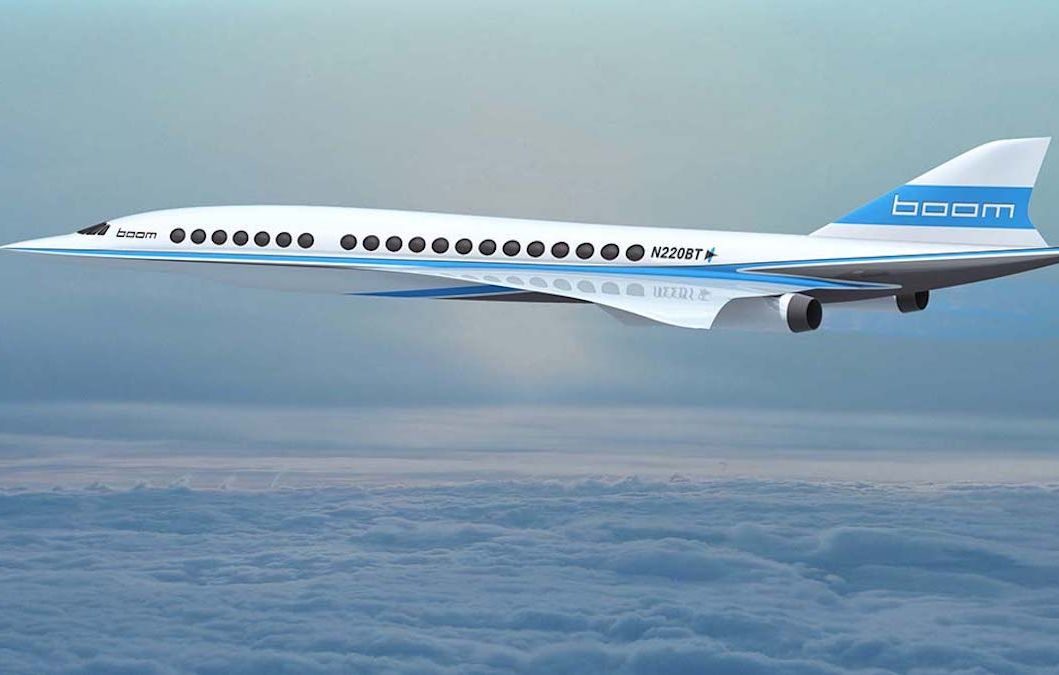
The creators aim to cut flight times in half.
In just over a month, on October 7, Boom Supersonic will unveil its single-seat XB-1 test aircraft, whose flights are expected to begin in 2021. It could open a new era of supersonic travel and revolutionize aviation.
We have been here before. In the 1960s, the Anglo-French alliance of Britain and France developed a supersonic airliner. The Concorde began flying in 1969 and entered commercial service seven years later. But in 2003, its story came to an end.
The Concorde was created in the "era of optimism." It was fast and reliable, and together with the Moon landing it marked the peak of human technological achievement. But by the time it entered service, cynicism had replaced the era of optimism. The Concorde was retired not because something newer had been invented, but because it was cheaper to use planes that were worse than it. It made no sense to let a handful of people cross the Atlantic in a couple of hours if the "jumbo jets" developed at the same time cost less to operate.
Two decades after the end of the Concorde, a new generation of entrepreneurs does not want to wait for a new era of optimism and is trying to start it themselves. One of them is Boom Supersonic and its founder Blake Scholl. Scholl calls himself an "objectivist" (a follower of Ayn Rand's teachings) and previously worked at Groupon and Amazon. During his talks, Scholl mentioned SpaceX several times, making it clear that Elon Musk's space company is a role model for Boom.
"When SpaceX was just starting out, it sounded like a joke that a startup could build a rocket. But a few years later they were landing rockets vertically on a platform," says Scholl, who wants to achieve for travel what SpaceX achieved for the space industry.
The single-seat XB-1, 21 meters long, was designed to prove that a supersonic aircraft can be built far more efficiently and cheaply than in the 1960s. The XB-1 will use various carbon fiber composites for its fuselage, which should help it withstand heat and loads during supersonic flight. Boom Supersonic says the aircraft will be able to withstand temperatures above 150 degrees Celsius.
The Concorde had no onboard computer and had a movable nose, which pilots had to lower to see the ground. The XB-1 abandoned this in favor of cameras on the nose and landing gear, which should reduce complexity. The aircraft's design has been refined to increase its fineness ratio, making it narrower and more pointed to reduce drag at high speeds.
If the XB-1 proves successful, Boom will begin building its full-size Overture supersonic airliner. It is an aircraft designed to seat fewer than a hundred people, all in business class. At the same fares as today's business class, one could fly, for example, from Tokyo to Seattle in four and a half hours (such a flight currently takes 9 hours).
***
Everyone still looks back at the Concorde. One of the biggest problems that led to the end of the aircraft was emissions: a huge amount of gas and highly toxic substances. Nevertheless, Boom promises that its test program will be fully carbon-neutral and that its aircraft will set new benchmarks for environmentally friendly flight.
"One of the main reasons the Concorde was expensive to operate was its enormous fuel consumption. But 50 years have passed, and that is now completely irrelevant." The XB-1 and Overture plan to use alternative fuels rather than kerosene blends. Scholl also says the company, together with partners, is trying to develop aviation fuel by capturing air.
Direct Air Capture — a system that takes carbon dioxide from the air and recombines it to create hydrocarbons. They still require burning and release carbon back into the atmosphere, but developers hope that if it becomes possible to capture more CO2 than was used, this will become an efficient alternative to current fuels.
Boom promises its aircraft will use less fuel through a combination of efficient materials and improved engines. The company recently announced a partnership with Rolls-Royce to develop an engine for Overture.
Scholl expects the development of Overture to cost just $6 billion. For comparison, the development of the Boeing 787 Dreamliner cost $32 billion. If 2,000 Overture aircraft are sold at $200 million each, revenue could reach up to $400 billion. The ambitious goal is to capture the business travel market. If the project succeeds, today's traditional long-haul business class, which differs from economy only in comfort, will become obsolete.
***
2020 hit the aviation industry very hard, but Overture may turn this to its advantage. "Before we fly and carry our first passengers, a few more years will pass. By then, the coronavirus will be a distant nightmare." According to Scholl, Overture is being developed as the "first airplane after the pandemic" — you will spend less time in the air, and Boom also plans to work on airflow in the cabin.
Scholl is not too concerned about video conferences replacing business trips, because, in his view, they cannot replace human interaction. He cites statistics showing that private flights, although down compared with 2019, remain popular during the pandemic. He expects that over the next decade, healthcare and economic crises will be left behind, demand for flights will return, and Overture aircraft will be ready to meet it.
Text by Engadget.com
Translation and adaptation by Evgeny Blazhko

Russian Attacks in Dnipropetrovsk Region: Two Killed, Seven Injured

Defense Forces Strike Four Russian Drone Control Points in Past Day, Including in Berdiansk

Britain Threatens Sanctions on Kremlin-Linked People; Poland Ready to Hand Ukraine Ammunition

Russia says it has completed "planned exercises" in the Black Sea

MVD: Fake Riots With Prop Blood Were Being Prepared Near Presidential Office

Law Enforcers Name Another Klitschko Deputy as Suspect

Berlin Holds Protest Against War in Ukraine; EU Prepares for Possible Russian Halt of Gas Supplies
North Korea Fires Ballistic Missile Over Record Distance in Five Years
Irish Fishermen Force Russia to Postpone Naval Drills

US sanctions in case of invasion of Ukraine could completely destroy Russia's economy, NYT reports
