
"Sports Netflix" Is Coming to Ukraine and the World. Why This Will Be Serious
Traditional broadcasters will not be hit right away, but they will suffer.
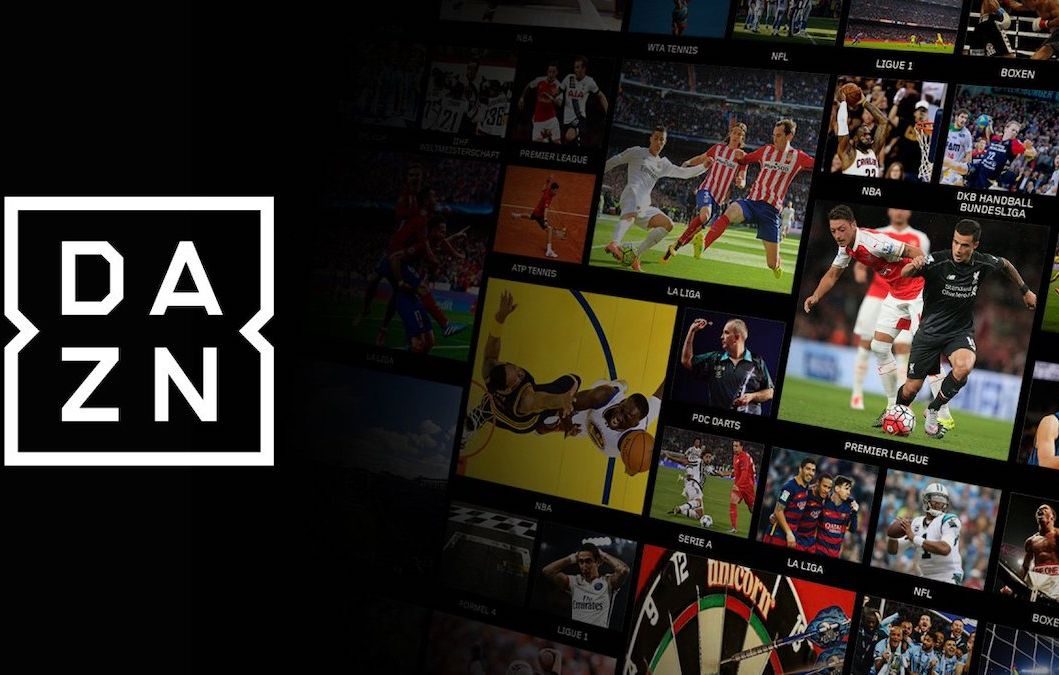
DAZN, the first sports streaming service, is going global and will become available for viewing in more than 200 countries around the world. In Ukraine — too.
DAZN's global expansion (pronounced “dazon”) is scheduled for May 2 and will kick off with a fight by Mexican boxer Canelo Alvarez (his opponent will be determined later). The fight itself will not generate much interest in Ukraine, but the streaming service will soon be able to change the sports broadcasting market worldwide, including ours.
So what is DAZN?
DAZN — a service that requires no cable operators or satellite dishes to connect, only access to a high-speed internet connection. If your TV supports Smart TV, you can do without extra set-top boxes. You can also watch on a computer through a browser or on small devices (smartphones and tablets) via an app.
DAZN's founder — billionaire Leonard (Leonid) Blavatnik, who was born in Ukraine.
It is distributed on the same model as Netflix: a monthly subscription, with no Pay-Per-View (purchasing the right to watch individual content). However, the price starts at $20 a month — much more expensive than Netflix, but cheaper than sports broadcasters in the wealthiest markets.
DAZN shows only sports and has taken a leading position in the niche. Essentially, in the sports niche it has no global competitors at all, except Eurosport Player, whose terrible functionality keeps it from being more than just an add-on to the Eurosport TV channels. But of course, it is now quite common worldwide for exclusive sports rights to be bought by a local streaming service — for example, in Ukraine Megogo showed the Spanish, German and French championships this way last season (this season the company continues to show the same tournaments but has shared the rights with the Football 1/2/3 channels).
DAZN currently operates in nine markets with different languages — Austria, Brazil, Canada, Germany, Italy, Japan, Spain, Switzerland, the US.
Each country has its own “dazon”: somewhere it shows the Champions League and Europa League, somewhere — the English Premier League, and somewhere — Formula 1 car racing. It depends on which territory bought which rights.
Why will DAZN's global expansion change the sports broadcasting market?
Broadcasting Canelo Alvarez's fight through a single broadcaster for the whole world — is the first swallow. More of this will follow. Much more. This means viewers will have exactly three choices:
- subscribe to DAZN
- look for pirated streams of the same DAZN
- not watch the event
Given that there will be one broadcaster everywhere, this could greatly complicate the work of pirates, who are used to catching broadcasts from dozens of sources.
Selling sports rights for each of more than 200 territories separately — is a very labor-intensive process for each league or sports association. Most often they delegate this work to an intermediary company, which then resells to each country separately. But what if rights for all territories of the world could be sold at once, to a single broadcaster whose access would be available to billions of people?
It is unlikely that UEFA and FIFA will go for this anytime soon with the World Cup, European Championship and Champions League (but they will eventually), but don't be surprised if very soon the English Premier League, Spanish La Liga and Italian Serie A sell DAZN the rights to the whole world at once. Unless, of course, the Premier League dares to make its own global streaming expansion.
The trend of “selling in one go” is already emerging. Eurosport bought the rights to the Olympic Games for half the world (though it has to share them with local broadcasters), and it also broadcasts Grand Slam tennis tournaments to most of the planet. Or a closer example: a year ago Setanta bought Premier League rights for several territories at once, including Ukraine. Leagues find it convenient to sell to many countries at once.
But Eurosport, Setanta or anyone else can hardly become truly global, because it is an incredibly difficult process: first obtain licenses in each country, then agree with dozens or hundreds of cable, satellite or internet operators in each one, whose pricing policies may differ from the broadcaster's.
What does DAZN need? Only to ensure its servers work worldwide. This is a much easier process.
Moreover, the Premier League has calculated that one global broadcaster can help earn three times more money than hundreds of smaller ones, while the price for subscribers will on average be lower.
Is this good?
Not for everyone. Viewers from countries with poor markets, which include Ukraine, could lose a lot. Here's why:
- For poor countries, the cost of sports broadcasts will rise sharply
If for residents of rich countries, like Britain, who now pay big money for access to Sky and BT, the price may drop significantly, then for Ukraine it will rather rise.
Netflix, with its $10/month subscription, dealt a powerful blow to cable companies in the US, but in Ukraine the same $10 is a large sum. Paying $5 for the OllTV sports package, Ukrainian viewers now get almost all the best sports content. $10 from DAZN will make the price unaffordable for many.
Another nuance that will lead to higher prices: there will be more sports broadcasters, so paying to watch more than just one or two tournaments will also require paying more.
- Not everyone will get their own localization
Right now all countries, even the poorest, can watch sports broadcasts in their own language with their own commentators. It is unlikely DAZN will be able to offer this in 200+ countries at once — only where it will have the greatest revenue, while the rest will most likely have to make do with only the international English-language version — some may like that, but not the majority.
- Local broadcasters will suffer
Don't be surprised if one day there is nothing left on the Football TV channels except the Ukrainian football championship. The rest of the content will be on DAZN, Amazon and the personal streaming services of UEFA and the Premier League.
What will be available to watch on DAZN in Ukraine?
So far, only live boxing broadcasts, classic fights and boxing programs have been announced. Clearly not the reason people here will rush to subscribe.
But in the coming years the content will expand. And most likely it will start with foreign football championships and other sports leagues.
Eventually, in about ten years, streaming services will begin to dominate not only the series niche but also sports. The Champions League, World Cup and European Championship will be exclusive there. Whether on DAZN or on the own services of UEFA or FIFA — it doesn't matter, but global players will leave local broadcasters with practically nothing.
Evgeny Blazhko, TK Media

Russian Attacks in Dnipropetrovsk Region: Two Killed, Seven Injured

Defense Forces Strike Four Russian Drone Control Points in Past Day, Including in Berdiansk

Britain Threatens Sanctions on Kremlin-Linked People; Poland Ready to Hand Ukraine Ammunition

Russia says it has completed "planned exercises" in the Black Sea

MVD: Fake Riots With Prop Blood Were Being Prepared Near Presidential Office

Law Enforcers Name Another Klitschko Deputy as Suspect

Berlin Holds Protest Against War in Ukraine; EU Prepares for Possible Russian Halt of Gas Supplies
North Korea Fires Ballistic Missile Over Record Distance in Five Years
Irish Fishermen Force Russia to Postpone Naval Drills

US sanctions in case of invasion of Ukraine could completely destroy Russia's economy, NYT reports
