
Sviatoslav Yurash: The Church Is the Guardian of Marriage, the State Has Devalued This Institution
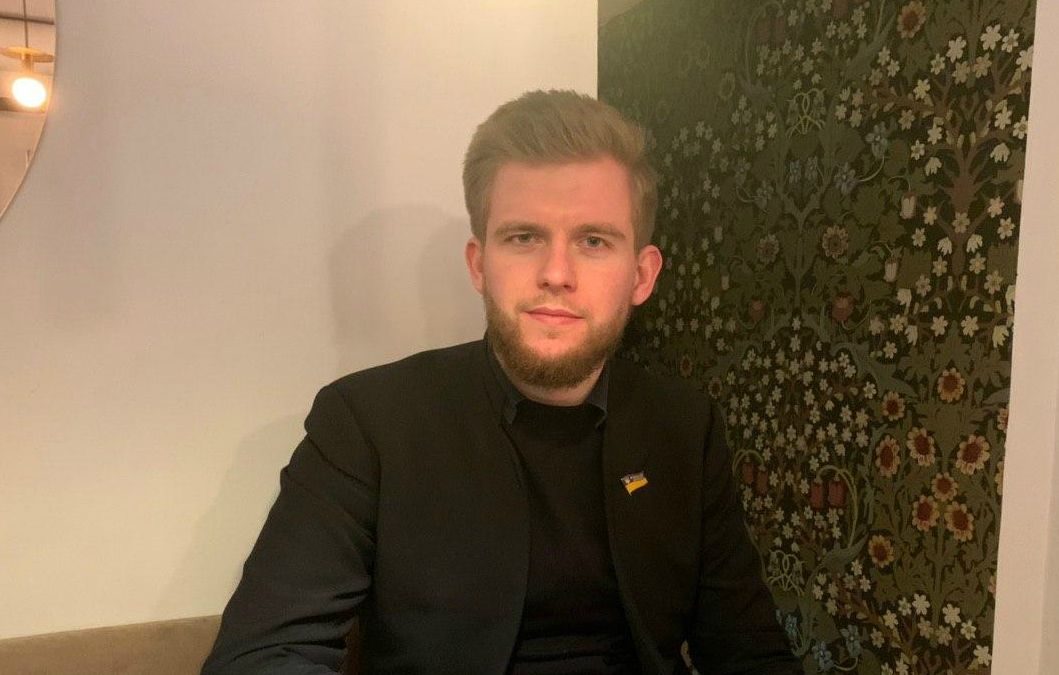
On divorce, the Church's role in the state, Equality Marches, Bogdan Yaremenko and envelope salaries.
On Friday, January 17, People's Deputy Sviatoslav Yurash of the Servant of the People party announced the creation of the inter-factional association «Values, Dignity, Family», which includes more than 300 members of the Verkhovna Rada. The association's stated goal is to protect «eternal values», the institution of the family and promote conservative ideas.
Co-chairs of the association became People's Deputy Oleg Voloshin from the Opposition Platform, deputy Sergei Taruta from Batkivshchyna, Mykhailo Bondar, representative of European Solidarity, as well as Iryna Konstankevych («For the Future»), Oleksandr Kovalev («Trust») and Oksana Savchuk.
Yurash's statement drew considerable criticism on social media, and the initiative of the People's Deputies began to be compared to Russian «skrepy».
Sviatoslav Yurash is the youngest deputy in the history of the Ukrainian parliament; at the time of his election he was 23 years old. He is number 27 on the list of the Servant of the People party.
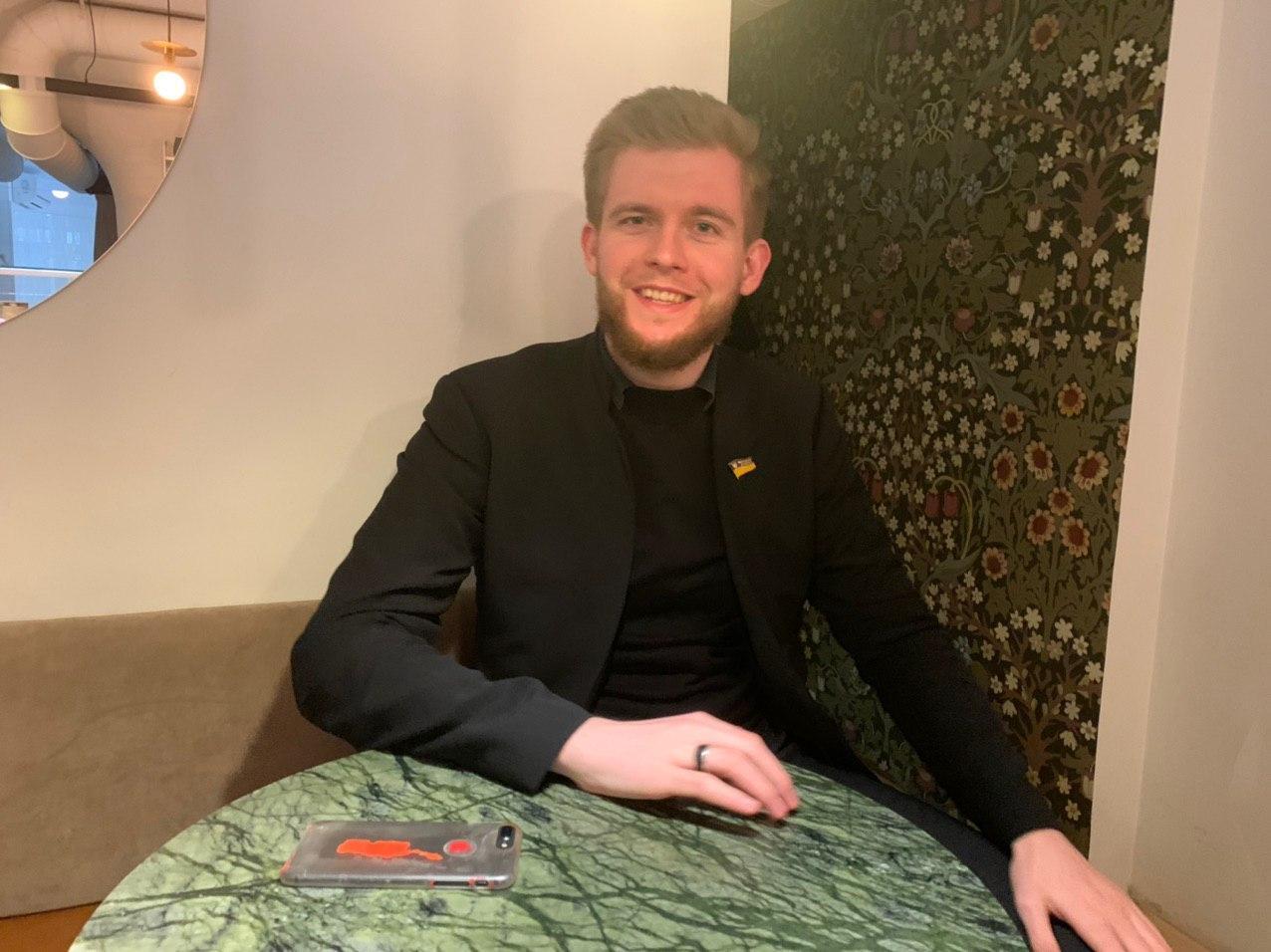
TK Media met with Sviatoslav on Sunday, January 19, to find out what the deputies of this association will do.
— Volodymyr Koval (hereinafter VK): Let's sort this out. You are 23 years old, you are the youngest People's Deputy in the history of the Ukrainian parliament. Looking at your life story, you have always been a person of revolutionary views. You moved in civic activist circles, took courses at Western universities, were among people with liberal values, and were on the Maidan from the first days. All the more surprising to many were your statements on Friday, when you announced the creation of an inter-factional association for conservative traditional values in defense of the family. How did you come to this?
— We should use the correct wording — for eternal values. And the name «Value, Dignity of the Person» is a compromise and unifying one, so that all factions and groups in parliament can join.
— VK: How did you come to this? You were not a person of conservative views.
— The story is very simple. For me, in my teenage years, as a native of Lviv, it was very important to rebel against reality, a very conservative reality in Lviv. I rebelled in every sense of the word. Later, life helped me and showed that this empty approach, which relativism and deconstructivism offer you, is not worthy of being the only approach to life. And precisely with how I found and built my family, precisely with how I saw a certain emptiness in many people that I had before, I chose the path of speaking loudly about conservative values in parliament, because there really is a lot of meaning, a certain history, in which they have all been tested.
The West has a great and generous conservative tradition. And the very opportunity to hear these thinkers showed me that the triumph of liberalism, which is so often shown in our country, is not the only option. There is a very articulated, reasoned approach to conservatism, which explains specifically why it is better to choose this approach to life. Overall, and politically as well.
— VK: Did your recently becoming a father influence your views?
— Undoubtedly. It showed that having a child is a fundamental thing that shows you what you live for. So that after you something becomes better, so that a child has the opportunity to live a completely different life than you did, and can absorb all that baggage of mistakes and victories. And to build their life on those victories, and not make those mistakes. The child was one more step on this path toward living by what I preach.
— VK: More than 300 deputies from different factions joined the association. Who was the initiator, who started the movement?
— The history comes from me, but, again, there were a few different people who wanted to start this in parallel, and we held a dialogue with them to combine our efforts.
If I'm not mistaken, there were efforts from one of the deputies of «For the Future» and one of the deputies of the OPZZh.
— VK: Oleg Voloshin?
— He too. Oleg Voloshin was one of those people who tried to revive one of the previous inter-factional associations in parliament. The very fact that all these sides were ready to engage in dialogue and join efforts showed me that parliament can work together on a family agenda.
— VK: Did you expect so much hate directed at you after announcing the creation of the association?
— Yes. That is why I actually labeled it very precisely as a coming out, in the sense that for my circle it is more controversial that you call yourself conservative than when you say you are a liberal. First, that I am conservative, which I never hid and said at moments of my evolution in that direction, and second, that parliament, the representative body of our people, is conservative, and that, again, we have a large family agenda. And that this became a shock for many sides. But again, the reason for all this is that you started it, the fact that I am so young. Everyone is used to people of my age group, with my background, usually being on their side, and that I am not on their side surprises them. These people are sure that there is only one option for progress, and this option must be accepted by everyone. I don't think so, precisely on the basis of what I absorbed from Western conservative discourse, which shows that it is more complex than certain Ukrainian liberal sides make it out to be.
— VK: All party projects in our country are personalist. Representatives of the Servant of the People, when the party went into elections, voiced the idea that it was a libertarian party. Libertarianism does not fit well with conservative values. Don't you feel some contradiction here?
— First, a person who declared libertarianism joined our association. For us, for Ukraine, libertarianism means first and foremost the economic aspect. There are many theses in the economic agenda. So I am also a supporter of this libertarian line. Second, if we talk specifically about our party, there are constantly various theses and statements about ideology, but the simple truth is that our party is modeled on the principle of the Democrats and Republicans. These parties are national, meaning they have conservative and liberal sides. Among conservatives there are the «blue dogs», conservatives of the Democratic Party, and «the Squad», those most left-wing congressmen. And this is normal for the new Ukrainian reality, in which there is such a national party. In our parliament there have been examples of purely ideological parties, and they, unfortunately, show the ineffectiveness of this approach. They were in one force, and now they mean nothing in our parliament.
— VK: Almost all representatives joined your association, except the «Holos» party. You wrote that they would present their co-chair, but Yurchyshyn stated that everyone refused.
— I was just talking about this topic before the end of the elections. In fact, I told him that we would be creating something that would include everyone. It will be something without restrictions. In the sense that if you adhere to the family agenda, you can join and help us work on it. This is not a group of ideal people. We are not ideal, we are people who are ready to acknowledge our imperfection.
As for «Holos», the last time I spoke with a representative of «Holos» they told me they would have a co-chair, and I informed Yurchyshyn. He made a post about it publicly, saying who it was. And I gladly reflected on their comments and adjusted them according to the situation. There are conservative people in «Holos», but they are not the majority there. This is a liberal party, and it is their full right to define their vector and approach. I am just very surprised whether Lviv Oblast, which gave over 23% of its votes to this party, knows about this vector. But that is their right.
— VK: It is interesting to map your views on the main markers. Specifically, what is included in the concept of «family values»? For example, LGBT, same-sex marriage: yes or no?
— No. A very simple explanation. The Church determined the entire history of the evolution of marriage and what it is. It was the «determiner» of what is called marriage and who enters into it. Through various reforms, including Soviet ones, the state became the central distributor of marriage as a concept, and devalued marriage in many respects and created a reality with a wild level of divorce. That is why I turn to the Church for advice on what marriage is. First, it is the guardian of this concept. Second, marriage as a concept appeared primarily so that there would be an opportunity to watch over and care for children.
It seems organic to me that the Church defined this as something distinct, because only a man and a woman can create this new life. And because they created it, they can bear a special responsibility for it.
— VK: Adoption of children by same-sex couples, I take it, is also a no?
— For me it is clear that a child should have «feminine» and «masculine», which are given to them precisely by a father and a mother. And it is wonderful that it turns out this way. I would like it to happen this way more often.
— VK: Can an LGBT deputy become a member of your association?
- Gay conservatives are quite a normal story for the West. In our association there is no absolute unity of all views, and there is diversity. And I would not be surprised if...
First, I do not know a single parliamentarian who is openly gay. Second, perhaps there are already people in this association with a completely different orientation. And I will only be glad that people of different orientations support the conservative agenda. To be honest, just yesterday my friends from Poland came to visit, and my friend introduced me to his boyfriend, and they told me that they hold conservative views. In terms of their relationship that is one story, but overall their views on life are conservative. And I am very glad that representatives of all orientations can be conservatives. In the West this is normal; in Ukraine, for some reason, it is considered savagery.
— VK: Legalization of prostitution?
— Not exactly. We lean toward the option that is effective. Right now we have pimps in police caps. To change this, we are looking at the models being tested around the world. The most effective is the Swedish model, which is promoted by a certain section of the feminist movement. I have spoken with many co-chairs, and we are in solidarity with them on this topic. I do not yet have consensus, but I think this is one of the first issues we will work on in parliament.
— VK: Tell us what it consists of
— The Swedish model has a very simple format. According to it, not the prostitute herself is punished, but the client of the prostitute. We fight not against the supply but against the demand, and in this way it hits the source that generates the problem, namely men's demand for a cheap and unacceptable format of relations, namely human trafficking, which is a defect of prostitution.
— VK: At the same time, you understand that prostitution as a phenomenon has existed and always will exist?
— Just like many other things, unfortunately. Murder has existed, exists and will exist. Our question is what we do: do we stimulate it to grow, or do we fight to reduce it. We know that Ukraine is known as a sex tourism destination, that is, an approach with strange fines, which does not work with prostitution; it needs to be changed.
— VK: I heard about a girl from Kharkiv living in the US who sold her virginity, herself offering it to an escort agency, and sold it to a citizen of Germany for a million euros? This story is not about human trafficking: everything happens by mutual consent.
— Germany is a very good case of why one should think about the Swedish model. Germany legalized prostitution.
In fact, many politicians from all sides of the ideological spectrum, both right and left, criticize the situation in Germany, because it has given rise to an industry that stimulates what is happening here. Namely, human trafficking happens, people come to Germany to get work, and in fact they sell themselves as labor. This is a sad phenomenon, and Germany itself is thinking about changing its approach. Germany understands that full legalization should not exist. It simply does not work.
The story with the Kharkiv woman is a drop in the sea of violent involvement in this business and thousands of broken lives.
— VK: Is Bohdan Yaremenko joining your association?
— No. First, because his views are different. Second, because the formation of the association happened after this scandal, so, naturally, [his participation was impossible].
— VK: According to the Swedish model you are proposing, should he be the one punished in the Yaremenko story? If the crime had been completed.
— There are quite a lot of deputies who will support the Swedish model, that is first. And second, yes, the punishment would fall on the client, the one who orders prostitutes. But the law has no retroactive force, and I hope these stories teach people something.
— VK: Legalization of soft drugs?
— This phenomenon is quite complex, as a whole body of research shows. Unfortunately, as in many other areas, simple bans do not work. Is marijuana worse than alcohol or cigarettes? It is hard to say, and if so, is the harm physical, mental or social? That is why I actually lean toward a regulatory approach as a more effective method of fighting soft drugs. With hard drugs, such as heroin, the question is closed; it is a one-way street, so a ban must apply. However, with that same marijuana, especially medical, we must work very seriously and carefully on the experience of countries that have successfully brought the use of certain drugs under control. Unlike Ukraine, by the way, where, despite the ban, the «black market» for precisely soft drugs flourishes.
— VK: Have you ever used soft drugs?
— No. I have never used drugs, never smoked, and I stopped drinking at 13.
— VK: At 13?
— That is a somewhat strange statement, but unfortunately Ukraine has almost the highest level of alcoholism among young people in Europe. I last drank alcohol precisely at thirteen; since then I do not drink at all.
— Polina Brazhnikova (hereinafter PB): In your statement you said that your association is already preparing its office, from which, as I understand it, you are getting ready for truly serious activity. What bills do you plan to initiate within your association?
— For this it is necessary to coordinate positions with all co-chairs of the association and inform all members before announcing certain steps. From what I have already said, about the Swedish model and about constructive interaction with Equal Opportunities on this topic. With our message, with the fact that we are uniting parliament, it is not strange for us to work with our opponents in some respects from the inter-factional association «Equal Opportunities». On the contrary, it should be clear to us why it is important to find points of contact. After all, our parliament, our party, our president constantly has exactly this message: let's unite, let's work together. It is just that this conservative message must be properly assembled and compressed.
— PB: I understand that you cannot speak for everyone, but what specific actions and initiatives do you want to undertake?
— I'm telling you, the first question is the story of prostitution reform. The Swedish model in this situation seems a fairly sensible approach. But we will still work on this topic. Second, if we talk in more detail about supporting the family. After all, in Ukraine we currently have a wild level of divorce and a wild level of orphans. This situation is unacceptable. I have colleagues, like Ms. Lys from our party, who has a bill on families. We will consider this issue and work on it.
— VK: Listen, well, how can one fight divorce? You are not going to ban it.
— We will not fight divorce. We will understand that in our own country the main causes of divorce are economic factors, and we need to somehow minimize them. The main thing is that people have more motivation to stay together, rather than separating due to some factors, and that is all. There is no point fighting them; we just need to make sure they stay together.
— VK: You said that earlier the question of marriage was a question for the Church. Now this question has been monopolized by the state. Do you think the Church's role should grow in matters of marriage?
— Church weddings are also the norm in Ukraine, just as state marriage is. This gives an understanding that Ukraine is quite a conservative country, just that this conservatism is not articulated. It is not that the Church's role should grow. Here it is important to know that the Constitution makes very clear that the State and the Church are separated from one another. The State is secular, and that is right.
If we talk about marriage, the Church is a very important social institution. It influences people so that they stay together in marriage. It is important for us to help in this sense. The Church acts like a psychologist, a place people go to for help. The Church performs numerous social functions, and the state should not interfere in this regard.
— VK: Are you religious?
— I am quite a religious person, yes. When I was young I abandoned faith in God, and now I am gradually rebuilding that faith anew. For me, the notion of faith in God is something very big and concrete.
— VK: I ask because we have known each other for more than a year. Once, to the same question, you said you were an agnostic or an atheist.
— I once rebelled against the Lviv reality. For me now, restoring this faith is not a leap but rather a restoration.
— VK: Which church are you a parishioner of?
— The Orthodox Church of Ukraine. Moreover, I understand that after receiving the Tomos, our canonical Church is now a place that has general Orthodox canonicity.
— VK: Speaking about the role of the Church, Sergei Sivokho, adviser to the Secretary of the National Security and Defense Council, recently said that the Church could become an effective mediator in resolving the conflict in Donbas. How do you view this?
— Now, when we think about such a difficult thing as peace in the East, we need to look for allies on all sides. If we talk about the church path, it seems strange to me. Of the steps I know of, this is first and foremost the Berlin round of the Normandy negotiations. There, a clearer understanding of this concept will already be outlined.
— PB: You say that the goal of your inter-factional association will be the protection of the eternal values of Ukrainian society. However, if we look at trends, for example the frequency of Equality Marches, the values of Ukrainian society are changing.
— Freedom of assembly in Ukraine is the law, and it is reality, fortunately. We have no significant problem on this issue. Hare Krishnas march here, and communities with orientations other than traditional ones. This is one of the options of our existence, first of all.
However, one must remember that in five-million-strong Kyiv, first of all, there is enormous attention to this (Equality March, ed.). However, this parade is not what shows that our values have changed.
— PB: But parades take place not only in Kyiv.
— Undoubtedly. And the scale of these events shows me that society's values remain unchanged.
I draw conclusions from certain polls that have been conducted on this topic. Ukraine and its Constitution recognize marriage as being between a man and a woman. Polls on this topic show it very clearly. The polls concerned not only Kyiv but all of Ukraine. Many people in Kyiv are mistaken when they think their environment is all of Ukraine. Kyiv is a certain bubble, like many capitals around the world. The country may have a different opinion. That is why there were these numerous political shocks in the West, in Britain and America.
— VK: Let's talk about parliamentary work. What is this story about a ban on interviews for Servant deputies? I'll explain: we invite you for an interview, and you easily agree. Some of your colleagues too, without problems. Other colleagues from the Servant of the People say they are kind of for it, but there is a ban from the media office, and it is necessary to coordinate which channel and publication, and get approval from Yevgenia Kravchuk. Is this true?
— No, of course not. Look, I told you about my position on soft drugs. Many media will take this headline and run with it. But there is an important nuance here. One must understand the simple reality that many deputies, and I too, have work in their areas besides communicating with the media. Many of them, with their work and trips, cannot speak with the media. But there is a fundamental problem: the media only want to tear out what they consider needed and present it as some story. Some colleagues are shocked by the methods that operate in the media. And I understand them, frankly speaking.
— At the same time, there is certainly a ban on going to the channels of the holding of Viktor Medvedchuk (ZIK, NewsOne, 112, which belong to Medvedchuk's associate Taras Kozak, ed.)
— With my interviews I precisely show that it is not as it is painted.
— VK: Well, how so? There was a conflict that became public in the «Sluga Speakers» chat, of which you are also a member, between Heo Leros and Iryna Vereshchuk. When Maksym Buzhansky reacted, there was a clash with Heo Leros. This showed that such a ban exists and several deputies violated it: Iryna Vereshchuk, Maksym Buzhansky and other colleagues.
— As for Medvedchuk. If we talk about his channels, there are constantly people from our side there. This shows that if this ban exists, it does not work.
— VK: Specifically, do you normally relate to the fact that your colleagues can go to Medvedchuk's channels?
— I did not take part in these debates specifically. I believe it is much better to present your point of view than not to. Although I understand that these channels are often criticized as pro-Russian channels that gather crowds against one side and pressure another point of view.
— VK: The latest scandal that happened last week was the recording of a wiretapped meeting with Prime Minister Honcharuk. After which Honcharuk wrote a resignation statement and submitted it to the president, although he should have submitted it to parliament. The president did not accept the statement. Is this recording reason enough to change the prime minister?
— My position is that Honcharuk has too little time in office yet to talk about his results. I have questions about certain salaries and whether they are deserved. But if we are talking specifically about the Honcharuk story, I do not think now is the time to chase him off or throw him out. Moreover, I understand whose interests his work is suppressing, and I would not want to give happiness to those interests.
— Whose?
— If we talk about Mr. Akhmetov, he is not in an ideal situation right now. For example, but this is not the only story. There are corruption schemes at every step. And I understand that all these schemes have worked throughout Ukraine's history. And here, unexpectedly, there are problems with these schemes. Of course, everyone wants to remove the one who is getting in the way, and that is Mr. Honcharuk.
— Land reform. It started very quickly and passed the first reading, after which a conflict began with other factions over amendments. When is the second reading planned?
— I hope it will be as soon as possible. I was convinced that Zelensky has guts, when in his program presented back in February, unlike other candidates, there was a land market. If we talk about our party program, it envisions creating a land market. And this memorandum that we all signed means an understanding that this promise must be implemented. But I am not on the agrarian committee, so I hope it happens as soon as possible.
— Tell us about the new head of the committee on international policy.
— I know Mr. Merezhko well, since the presidential campaign. I have an extremely good opinion of him, both in terms of openness and communication, and in terms of how he seeks consensus and how he can argue his point of view through his vast experience in international law. This allows him to set emphases in this field: expertly and professionally.
— Did you take part in the intra-factional contest for the committee chair?
— I also applied. I did it for one simple reason: for 5 years I served as secretary of the Public Council under this committee, when Yaremenko headed it. So I understood quite well the realities of this committee, the apparatus that runs it, and the agenda that may be there.
— I discussed the idea of creating your inter-factional association with several public representatives, and there is an opinion that the creation of the association is preparing the ground for promoting you to the post of Minister of Culture or Education. Do you have such ambitions?
— Already after the presidential elections, when the question «where to go next?» came up, I understood that because of my age and diverse experience, it would be wrong for me to go into executive power. Deputy work consists first and foremost of communication: with experts, the public and the people. This is the position from which I approach with my toolkit. Moreover, I believe a ministerial post should require higher education, which I have not completed, and neither have you.
— Are you aware of your colleagues in the faction receiving salaries in envelopes?
— No, this story is just another speculation. There are already not only stories about this, but also about temnyky (secret instructions) and about everything else. All of this marches in step with other stories that have one simple goal: to break the moment we have. To say that they are the same as the others. Like, give us back power, you know us, but at least we know how to manage all this. All these forces are trying to blow up every spark that appears against us, and they are trying to get a new election where they could take stronger positions.
Volodymyr Koval, Polina Brazhnikova

Russian Attacks in Dnipropetrovsk Region: Two Killed, Seven Injured

Defense Forces Strike Four Russian Drone Control Points in Past Day, Including in Berdiansk

Britain Threatens Sanctions on Kremlin-Linked People; Poland Ready to Hand Ukraine Ammunition

Russia says it has completed "planned exercises" in the Black Sea

MVD: Fake Riots With Prop Blood Were Being Prepared Near Presidential Office

Law Enforcers Name Another Klitschko Deputy as Suspect

Berlin Holds Protest Against War in Ukraine; EU Prepares for Possible Russian Halt of Gas Supplies
North Korea Fires Ballistic Missile Over Record Distance in Five Years
Irish Fishermen Force Russia to Postpone Naval Drills

US sanctions in case of invasion of Ukraine could completely destroy Russia's economy, NYT reports
