
“The Guy Who Did Favors”: The Story of Frank Sheeran, the Hitman Behind Martin Scorsese’s The Irishman
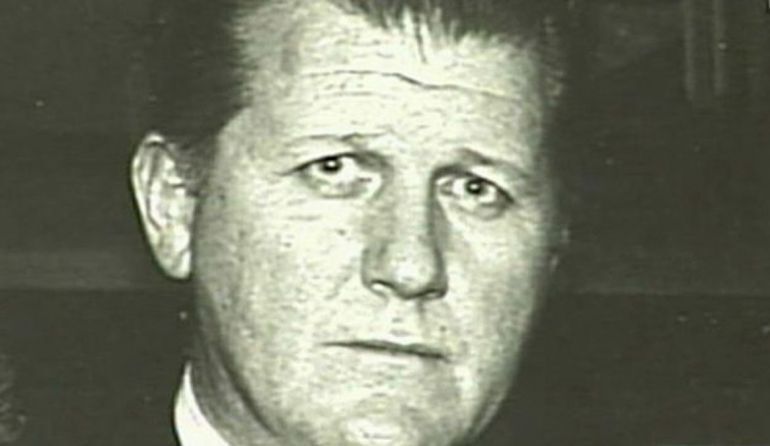
No spoilers! Well, what spoilers could there be if the film is based on real events?
On November 27, streaming service Netflix premiered “The Irishman,” the new film by director Martin Scorsese. The film runs three and a half hours and tells the story of the mafia and unions, closely intertwined in America in the 1960s and 1970s. A significant part of the film's events take place in Detroit — today a city synonymous with “depression,” but at the time one of the fastest-developing cities in the US. The lead roles were played by Robert De Niro, Al Pacino and Joe Pesci.
The film is based on real events, and its screenplay is drawn from the book “I Heard You Paint Houses” by writer Charles Brandt, published in 2004. Charles Brandt interviewed Frank Sheeran for five years, and in one of those sessions, shortly before his death, “The Irishman” confessed to him the murder of Jimmy Hoffa — the legendary American union leader who mysteriously disappeared in late July 1975. Hoffa's family begged Sheeran to tell them what had happened to Hoffa over the decades, promising to keep the answer secret, but Sheeran's answer was always the same: a suggestion to contact his lawyer. Frank Sheeran made his “deathbed confession” after a priest absolved him of his sins and gave the go-ahead for burial in a Catholic cemetery.
Scorsese's new film has many distinguishing features. First, the film was fully financed by online cinema Netflix, which invested 175 million dollars in production — Hollywood studios refused to put money into Scorsese's new project, doubting the investment would pay off. Second, since the screenplay covers different periods of time, the film was shot using computer technologies for visually rejuvenating the characters. How well they managed to rejuvenate the 76-year-old De Niro — judge for yourselves. Third, and no less important, the film comes out amid a broad cultural debate that unfolded at Scorsese's own prompting: “what can be considered a good film today?” In one interview the director called Marvel films “as far from cinema as Earth is from Alpha Centauri,” after which Hollywood split in two. Later Scorsese published an op-ed in The New York Times in which he argued his position: he wrote that such films, made for quick consumption, lack “the aesthetics of the art of cinema.” And fourth, for the first time in a long while, Martin Scorsese made a film without Leonardo DiCaprio.
“The Irishman — is an epitaph to the director, the genre, the style, the actors and the characters of ‘mafia’ cinema of the 90s. It is the last thing that could be made on this subject, with these guys, about those days,” — says producer Vladimir Petrov.
Despite its length, the director advises watching the film in one sitting. “The essence of this film lies in the accumulation of details. In the end a cumulative effect arises, which you can feel only if you watch the film from beginning to end in one sitting,” explains Martin Scorsese.
The TK Media editorial team watched “The Irishman,” read the book “I Heard You Paint Houses,” and retells the story of Frank Sheeran's life and the murder of union leader Jimmy Hoffa, around which the work is built.
From truck driver to one of the most dangerous criminals in the US. Who was Frank Sheeran?
In the 1980s Rudy Giuliani, today known to Ukrainian readers as “Donald Trump’s personal lawyer,” but at the time the federal prosecutor for New York State, called Frank Sheeran one of the two most dangerous criminals in the US who were not Italian, on a list of 50 people. Frank Sheeran's life began in 1920 in a family of Irish Catholics. Sheeran's father was Irish, and his mother Swedish. Frank was raised in a family of strict morals. Frank's father professionally boxed, and this passion became part of raising his son: for every misdeed the father would hurl boxing gloves at Frank and spar with him. Still, calling it sparring was hard: according to the rules, Frank had no right to hit back at his father, while the father could go all out, according to Sheeran, hitting him with hooks and uppercuts as punishment for misdeeds.
The “upbringing” ended at age 17, when Sheeran began to realize he possessed considerable strength. That day the school principal summoned him to reprimand him for a misdeed, and as soon as Frank walked into the office, the principal swatted him on the back of the head. In response Sheeran broke the principal's jaw with a single punch. After Frank came home, his furious father again tossed him the boxing gloves. Frank declared that that was enough — he never put on his father's gloves again.
After trying various odd jobs, at the age of 21, in 1941, Frank volunteered for the war, where he served until demobilization in 1945. During the war Frank Sheeran logged 411 “combat days” against a norm of 80 and distinguished himself through particular coolness toward the enemy. General Patton called the division in which Frank Sheeran fought the “division of killers” for the number of punitive operations it carried out. Charles Brandt, author of the book “I Heard You Paint Houses,” claims that memories of the war were harder to pull out of Frank than the confession to the murder of Jimmy Hoffa.
“Back then I learned not to get close to everyone. You just make friends and then the guy dies. Some 19-year-old kid arrives as a replacement and, look, he's already gone. It really gets to your psyche. Diggsy and I were friends, and then he died. So what now? Make another friend just to lose him right away?” Sheeran recalled in conversations with Charles Brandt.
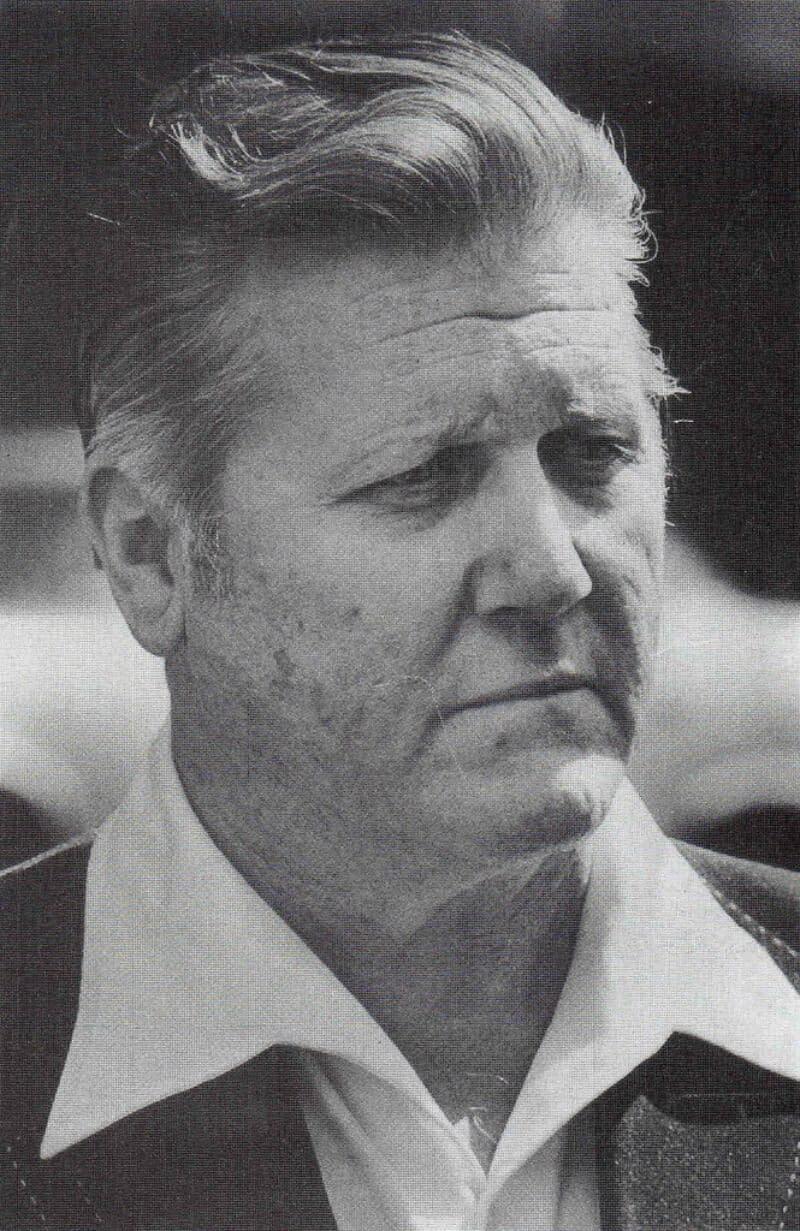
After returning from the war, Frank tries many jobs but doesn't stay anywhere. Meanwhile he is tormented by post-traumatic stress and memories of the deeds he committed in Europe. Frank's mother makes efforts and pulls strings to get Sheeran hired by the police. But fate had other plans for him: Sheeran did not become a cop.
Around that time Frank marries Irish woman Mary Ledday; they meet at a boxing bout between Frank and a kangaroo (one of Sheeran's side jobs). They have three daughters in the marriage. In his second marriage Frank had a daughter, Connie. In total Sheeran had four daughters from two marriages.
Soon Sheeran gets a job as the driver of a refrigerated truck delivering meat to restaurants. Frank works for the company for over 10 years and has extra income. First, he pilfers products from his company and sells them to the same clients at a lower price. Second, he works as a debt collector and helps recover problem debts for loan sharks, such as “Skinny Razor” — the owner of one of the establishments to which Sheeran sells products. Far from it, one day Sheeran overplays his hand and sells off all the products. After arriving at the warehouse and removing the seal from the trailer, the truck is found empty. Sheeran is charged with theft, but there is no evidence against him. Investigators want him to give up his accomplices, but he refuses, while at the same time warning witnesses not to testify against him. In the end the court closes the case for lack of evidence. “Skinny Razor” takes Sheeran to a restaurant to celebrate, where he introduces him to Russell Bufalino. It turns out they had met before: Russell Bufalino, an elderly Italian man, once helped Sheeran fix his truck when it broke down on the road, and then left without introducing himself.
Russell Bufalino was the head of the Bufalino family, one of the most influential mafia bosses, whose opinion all US mafia bosses took into account. Bufalino's influence was so great that, according to one version heard in the Senate, the CIA may have used Bufalino's services in preparing an attempt on Fidel Castro's life.
Despite the collapse of the case in court, relations in the company were soured and management asks Sheeran to write a resignation letter (there were no official grounds for dismissal). Sheeran agrees, if he is paid 25,000 dollars. Frank continues to work for the company, but management hires a private detective to follow him. Ultimately, one of Sheeran's accomplices is caught stealing. He agrees to quit if his colleague's case is not sent to court.
Some time later Russell Bufalino finds Sheeran and says that he did the right thing by not letting the guy be put behind bars. Over time Russell grows close to Frank, and they even start to be friends with each other's families. What they have in common is memories of Sicily: Russell was born in Catania, and Sheeran fought there. Besides, during the war Frank learned Italian.
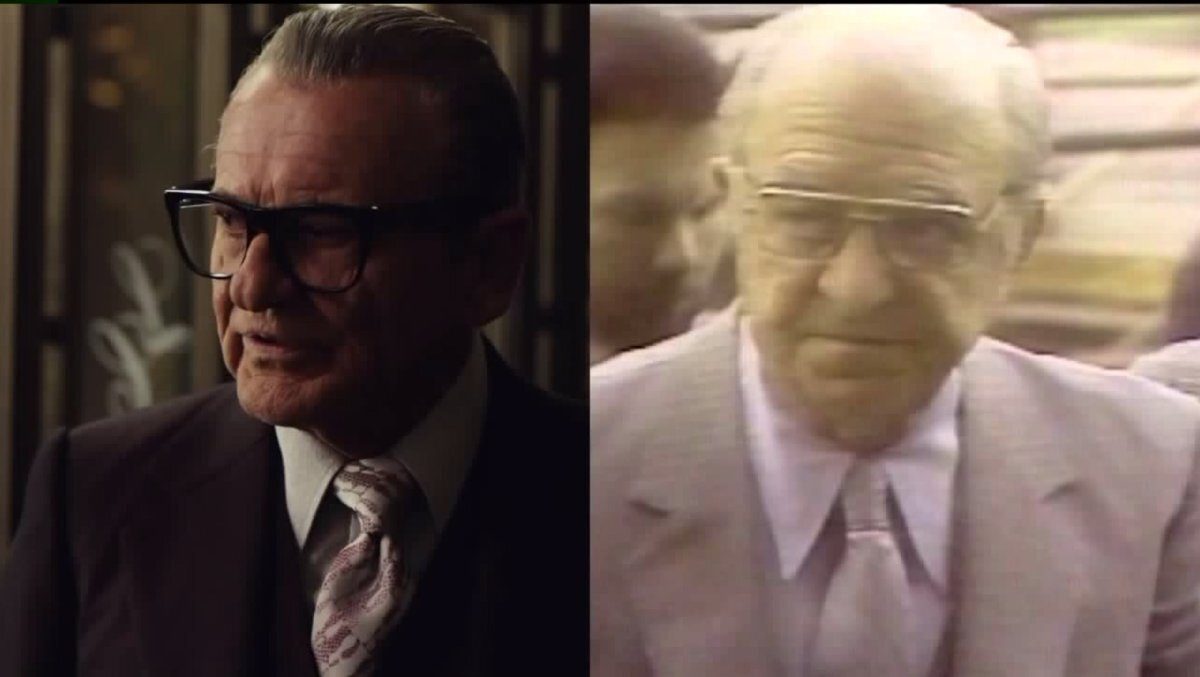
Frank begins spending time with Russell and carrying out various assignments for him. By “assignments” people generally meant “sending someone to Australia.” Sheeran did not take money from Russell, but he knew that if he helped the Bufalino family, they would help him in return if needed. And so it happened: Russell Bufalino repeatedly stood up for Frank before the “senior comrades” when he was in danger. Once Sheeran took a contract to set fire to a laundry, a share in which belonged to Russell's close friend Bruno Angelo. However, Sheeran did not know this. Frank was spotted near the laundry and was invited to an audience with Angelo and Russell. Realizing what he had got himself into, Sheeran had no choice but to kill “the Whisperer” — the nickname of the client who ordered the arson and misled Sheeran.
In all, Sheeran had about 30 murders to his name. Later Russell Bufalino introduces Frank to Jimmy Hoffa — the leader of the truckers' union. Jimmy's first words, according to Sheeran, were: “I heard you paint walls?” (I heard you kill people). Sheeran replied: “I can do carpentry too” (to knock together a coffin and get rid of a body). Jimmy Hoffa grew very close to Sheeran, even making him head of one of the union's locals. At that point Hoffa did not know that one of Sheeran's assignments would be him.
Russell Bufalino died of old age in 1994 at a nursing home at the age of 90. As Frank Sheeran said, of all the mafia bosses he had to deal with, Russell Bufalino most resembled the image created by Marlon Brando in “The Godfather.”
Frank Sheeran died in 2003 at a nursing home in Philadelphia from cancer.
Jimmy Hoffa. Union leader, idol of millions, partner of the mafia
Jimmy Hoffa is one of the most controversial figures in 20th-century American politics. He is a legendary union leader and fighter for workers' rights, yet Hoffa is remembered in history for charges of ties to the mafia and corruption. From 1955 to 1965 Jimmy Hoffa's popularity was hardly inferior to Elvis Presley's, and from 1965 to 1975 he could even rival The Beatles.
Hoffa began his career by becoming a member of the Detroit chapter of the Teamsters union, later turning that organization into one of the largest movements in America. He considerably expanded the union's geography, increasing the number of locals across states, and with his negotiating skills he secured better conditions for union workers, which in turn only increased the number of members.
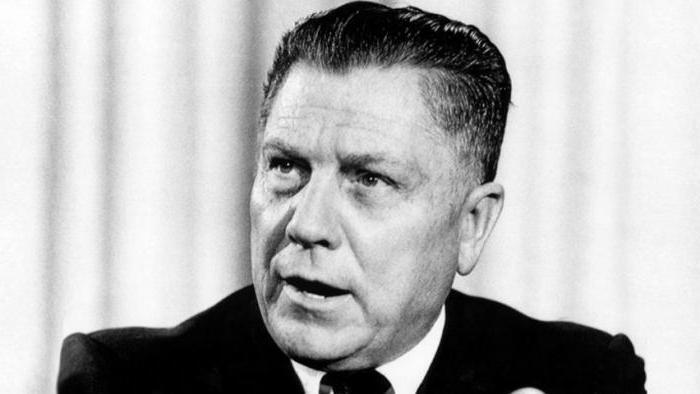
However, the number of corruption charges kept growing; moreover, rumors began to spread that under cover of the truckers' union the mafia was running drug trafficking. In 1957 the Senate set up a committee to investigate the unions' activities. It was headed by Robert Kennedy, younger brother of the future president John Kennedy. The standoff between Jimmy Hoffa and Bobby Kennedy would last more than 10 years, but this time Hoffa was lucky enough to avoid prison.
Behind bars would go union president David Beck. David Beck pleaded the Fifth more than 140 times under oath, refusing to testify, but the court found him guilty of racketeering and embezzlement of union funds. This gave Hoffa the opportunity to take his post.
In 1960 John Kennedy became President of the United States. Soon he appointed his brother Robert Attorney General. Robert Kennedy intended to get even and made Jimmy Hoffa his target. The Attorney General created a special unit to investigate the union's activities and Hoffa personally.
In November 1963 Lee Harvey Oswald killed John Kennedy. Jimmy Hoffa did not hide his joy. While all of America in mourning lowered its flags, Jimmy Hoffa ordered a flag raised. Moreover, Hoffa even fired a worker who dared to lower it.
Still, criminal cases against Hoffa reached their logical conclusion. In 1964 the court handed down a guilty verdict, sentencing Hoffa to 15 years in prison. He began serving his sentence only in 1967, after losing an appeal, and did not serve it in full: Hoffa was pardoned by Richard Nixon. However, with one condition: a ban on holding any union office for the term set by the court sentence.
After Hoffa's pardon, the union began to support Richard Nixon. Hoffa was not satisfied with the ban and tried to challenge it, suing the White House, but lost. Besides, journalists say, Hoffa ran into another obstacle: he was no longer welcome in the union. The union leadership and representatives of the criminal world were content with the existing order of things. They did not want new upheavals. And they certainly did not want to see Jimmy Hoffa in union leadership.
Hoffa returns to Detroit, to where everything for him had begun, to start participating in union life again.
A mysterious disappearance. Who killed Jimmy Hoffa?
On July 30, 1975 he vanished under mysterious circumstances. He was last seen in the parking lot of an establishment in the Detroit suburb of Bloomfield Township. Hoffa called his wife and said he had been set up. According to his wife, he was nervous. She never saw him again. Hoffa's car was found unlocked in the parking lot. In 1982 Hoffa was officially declared dead.
One eyewitness said he saw Hoffa in the back seat of a maroon Mercury leaving the parking lot, with another passenger alongside him. The car's owner said he had lent the car that day to Chuckie O’Brien, who considered Hoffa his adoptive father. The latter did not deny that he was driving the Mercury that day, but he claims he did not see Hoffa. A dog that sniffed Hoffa's clothes was said to smell his scent on the back seat and in the trunk. A hair was found on the seatback. However, O’Brien insisted he had nothing to do with Hoffa's disappearance. A DNA analysis conducted in 2001 confirmed that the hair did belong to Jimmy Hoffa.
Frank Sheeran confessed to the murder of Jimmy Hoffa to Charles Brandt, the writer who was working on a book about him, shortly before his death. Jimmy Hoffa considered Frank Sheeran a member of his family and trusted him unconditionally at a time when he trusted no one. Hoffa's son, James, commenting on the version about Chuckie O’Brien's car, said his father would have gotten into it only with Frank Sheeran. According to Sheeran, he drove Hoffa to a house on the outskirts of Detroit and killed him with two shots to the back of the head. Still, law enforcement does not believe this version. The case of Jimmy Hoffa's disappearance remains unsolved.
Frank Sheeran died in 2003 at a nursing home in Philadelphia from cancer. His confession was recorded on video.
Where to watch the film “The Irishman”?
You can watch the film on the online cinema Netflix website. The film is available in Russian.

Russian Attacks in Dnipropetrovsk Region: Two Killed, Seven Injured

Defense Forces Strike Four Russian Drone Control Points in Past Day, Including in Berdiansk

Britain Threatens Sanctions on Kremlin-Linked People; Poland Ready to Hand Ukraine Ammunition

Russia says it has completed "planned exercises" in the Black Sea

MVD: Fake Riots With Prop Blood Were Being Prepared Near Presidential Office

Law Enforcers Name Another Klitschko Deputy as Suspect

Berlin Holds Protest Against War in Ukraine; EU Prepares for Possible Russian Halt of Gas Supplies
North Korea Fires Ballistic Missile Over Record Distance in Five Years
Irish Fishermen Force Russia to Postpone Naval Drills

US sanctions in case of invasion of Ukraine could completely destroy Russia's economy, NYT reports
