
Tymoshenko’s Blood, $100,000 per Vote and Radical Protests: What Is Going On Around the Land Market Vote
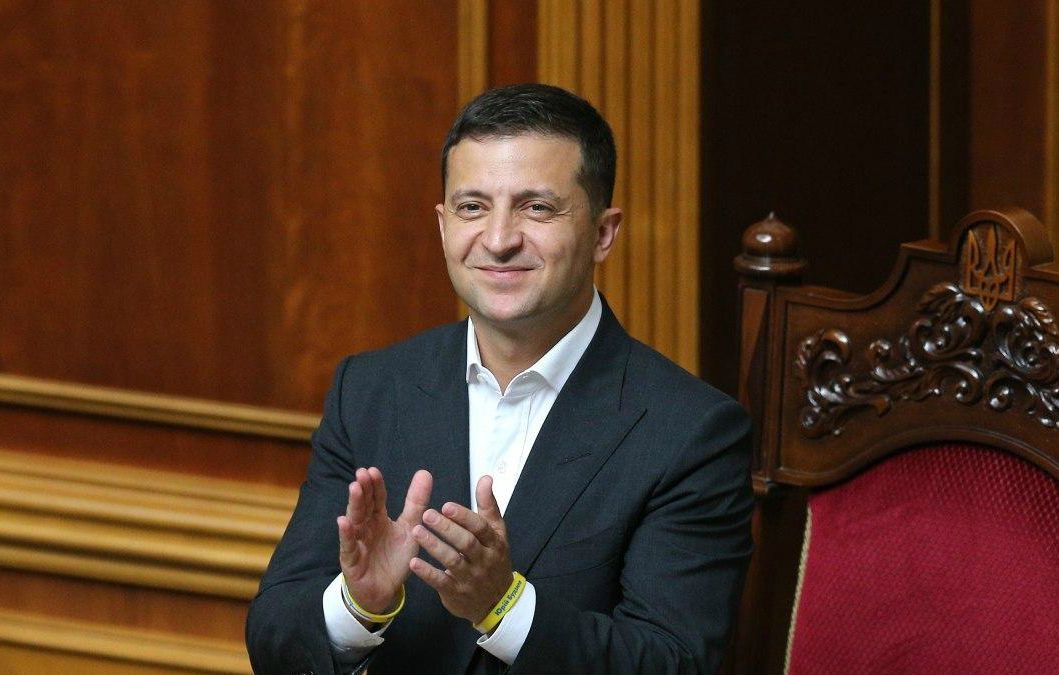
And what all this threatens Zelensky and the people of Ukraine.
On February 6, the Ukrainian parliament began considering bill 2178-10 “On Amending Certain Legislative Acts of Ukraine Concerning the Circulation of Agricultural Land”. Simply put, it is about the land market. It should be noted that this is already the second reading of the bill: it passed the first reading in November 2019. Then 240 votes “for” were found; the Verkhovna Rada session was accompanied by scandals in the media and street protests, and deputies “buried” the law with more than 4,000 amendments.
The start of the second reading became even more “heated”: inside parliament, opposition members blocked the rostrum, several deputies brawled, rallies continued under the Rada building, and Yulia Tymoshenko quite literally shed blood over the land. Amid general discussion and whipping up of hysteria, it is hard to calmly and adequately figure out what happened in parliament yesterday, and to forecast further developments. Nevertheless, let us try.
Author’s Column
The material is published in the Opinions section. The author’s views may not coincide with the editorial position.
Land Reform in the Verkhovna Rada: Timeline of Events
The morning in parliament began with a visit from President Zelensky. He held a closed meeting with the faction, during which he urged the fastest possible consideration of the bill. Members of Servant of the People later told the media that the head of state strongly insisted on adopting land reform immediately, the same day. In other words, he was openly hinting at “turbo mode”.
One can understand the president.
First, he is under the influence of his entourage, most of whose members are beneficiaries of opening the land market. This is needed in order to buy up Ukrainian chernozems while they are cheap (which is exactly why the law contains no established minimum price for land), and later resell them at a higher price.
Second, Zelensky is being pressured by foreign partners and international financial organizations, above all the IMF. Ukraine has already lived for more than a year without tranches from the Fund, and although serious economic shocks have so far been avoided (for three reasons: the domestic government bond pyramid (OVGZ), favorable conditions on external markets, and transfers from abroad by “zarobitchany”), the budget deficit in the country is huge. Simply put, quick money is urgently needed, and that is what the IMF is offering.
Third, more and more experts, as well as Telegram channels with sources in the Servant of the People faction and in the Office of the President, are saying that the head of state is in a certain kind of information vacuum, however absurd that may sound in 2020 for a man with a smartphone. As a result, Zelensky simply cannot (or does not want to) learn the public’s opinion about the land market model he is pushing through, or calculate the possible risks and consequences for Ukraine.
Deputies from the single-party majority said the discussion during the session was lengthy, and the president behaved emotionally and did not always want to hear arguments against. Despite a number of wavering lawmakers, an internal vote showed that there are votes for the land market.
Zelensky insisted that the law be adopted already on February 6 or 7. But then parliamentary speaker Dmytro Razumkov entered the game. He said that, given the number of amendments (more than 4,000) submitted by people’s deputies to the law, its consideration would take no less than two weeks.
Judging by everything, the aim was to achieve such a pace by merging similar amendments and voting on them “en masse”. However, this would inevitably give the opposition a reason to accuse the “servants of the people” of violating the rules of procedure by appealing to the Constitutional Court. The latter is even capable of removing the bill from consideration, which is clearly not in the interests of Zelensky and his party.
It is logical to assume that Razumkov simply refused to take on responsibility for “forcing” the law through in “turbo mode” (which could have extremely negatively affected his further political career) and decided to strictly follow the letter of the law, considering all amendments in accordance with the rules of procedure. After this “soft demarche”, Telegram channels close to the Presidential Office began writing about a “cooling” of relations between Zelensky and Razumkov, who, as they believe in the Presidential Office, supposedly launched his own political game.
At the same time, deputies from “OPZZh” began blocking the rostrum. Servants of the People tried to prevent them. In the meantime, the speaker’s seat was taken by Yulia Tymoshenko, who grabbed Razumkov’s microphone so sharply that she cut her finger until it bled. As a result, consideration of land reform began only in the second half of the day. The speaker had to publicly promise to consider each amendment separately. This somewhat calmed the opposition.
While verbal battles were taking place in the parliament building (there were also physical scuffles between deputies during the blocking of the rostrum), protest rallies began in Kyiv. Representatives of the Batkivshchyna and OPZZh parties spoke out against the sale of land. Nationalists from Svoboda and the National Corps also took to the streets.
The main argument “against” was the unwillingness to allow the sale of Ukrainian land to foreign capital. By the way, formally, the text of the law prohibits the sale of our chernozems to foreigners. According to opponents, there are dozens of ways to circumvent this ban: from registering a Ukrainian front company on Ukrainian territory to buying or obtaining Ukrainian citizenship through a simplified procedure.
Moreover, according to various estimates, directly or indirectly (through domestic agricultural holdings) foreigners already own approximately 3 million hectares of Ukrainian land.
The rallies this time were peaceful (last time there were scuffles with police). After the plenary session was recessed, people dispersed quickly and in an organized manner. At the same time, screenshots about recruiting crowds and rates for participating in anti-land protests began circulating online.
It is impossible to confirm or refute the authenticity of this information, however, “protest business” has been operating in Ukrainian politics for many years, and paying at least some participants in one action or another is entirely in line with Ukrainian traditions.
Initially, Servant of the People faction leader Davyd Arakhamia stated that parliament would work all day and, if necessary, all night. Nevertheless, the Rada subsequently voted to end the session at 19:30 and continue it the next day.
This is linked to the failure of “turbo mode” and the readiness of deputies to consider all amendments to bill 2178-10. In total, during the February 6 session, about 180 amendments were considered. Similar work continued on February 7. According to various estimates, at this pace considering all 4,000+ amendments will take deputies from several weeks to two months.
The Future of the Land Market in Ukraine: Will It Be Adopted or Not?
Analyzing everything happening around the consideration of bill 2178-10, one can conclude that, for now, the opposition parties are in an undoubted tactical advantage. According to various sociological estimates, up to 70-80% of Ukrainians consider the land market model proposed by the “servants” unacceptable. That is, an absolute majority.
Among the main risks is the fact that the single-party majority is proposing the Latin American option of launching the market, which will become not a market but a plain sell-off and the final redistribution of the last valuable asset remaining at Ukraine’s disposal.
By playing on people’s desire to change the proposed model, or even to extend the moratorium altogether, opposition parties (“OPZZh”, “European Solidarity” and especially “Batkivshchyna”) will only increase their ratings.
At the same time, Servant of the People and President Zelensky personally will lose, as he once again has taken on full responsibility for the consequences of land reform, personally coming to parliament to persuade deputies to vote “for”. The winners also include the “undecided” and “wavering”, such as the Holos party, as well as individual deputies and deputy groups.
According to information from some political consultants and technologists close to individual deputies and the voting process, rates for a single vote in favor of the land market reached $100,000 and higher. Of course, no one can officially verify information that votes for bill 2178-10 are being bought, nor confirm the very fact of the existence of mechanisms for illegal “payment” of votes. Nevertheless, the practice of bribing deputies is widely known; the media, experts and former government officials have repeatedly written and spoken about it throughout all the years of independence.
Time today is working against Servant of the People. In the weeks or even months needed to consider all amendments, it is possible to persuade or buy off the “wavering” more than once. The opposition will get a wonderful reason to organize protests and “rock” the situation, raising stakes in bargaining with the government.
It is logical to expect a peak in protest activity (up to large-scale rallies and disruption of the vote in parliament) at the end of the consideration of all amendments and the final vote. The president and his party will continue to lose ratings, including because of failure to keep their promises (putting the land question to a referendum).
However, there is information that parliament is now devising mechanisms to speed up the adoption of land reform. In particular, an option of withdrawing amendments by the deputies who submitted them is being considered.
Will the law “On Amending Certain Legislative Acts of Ukraine Concerning the Circulation of Agricultural Land” ultimately be adopted? Probably, yes. The pressure from the president and part of his team is too great, and Western partners are pressing Zelensky even harder. Also, there are many players inside the country interested in launching the market.
Nevertheless, all sociological surveys show persistent antipathy of the Ukrainian people toward this initiative. For Zelensky, for whom his ratings are critically important, this could become a serious argument. One should also not forget the protest activity of opposition parties, which will use the drawn-out adoption process, the indecisiveness of certain “servants of the people” and public sentiment for their own purposes.
Opening the land market is undoubtedly a necessary reform. Only 5 countries in the world do not have their own land market. However, “turbo mode” is contraindicated here. First of all, it is necessary to study the existing legal norms and the “loopholes” in laws that allow land to be disposed of. Separately, the problem of a unified cadastre should be resolved. It is necessary to find out how Ukrainian land is used: what is grown on it and how, and why, with the best chernozems in the world, we import such basic items as garlic and potatoes.
Audit the largest agricultural holdings. Study how ordinary villagers live, how much they spend, how much they earn and which crops are the most profitable. Examine in detail foreign experience of the land market, its achievements and mistakes. Answer the question of what interest Western partners and financial institutions have in our land market. Finally, determine which political forces are using this topic and what their benefit is. And only after all this should the question be put to a referendum and the land market launched.

Russian Attacks in Dnipropetrovsk Region: Two Killed, Seven Injured

Defense Forces Strike Four Russian Drone Control Points in Past Day, Including in Berdiansk

Britain Threatens Sanctions on Kremlin-Linked People; Poland Ready to Hand Ukraine Ammunition

Russia says it has completed "planned exercises" in the Black Sea

MVD: Fake Riots With Prop Blood Were Being Prepared Near Presidential Office

Law Enforcers Name Another Klitschko Deputy as Suspect

Berlin Holds Protest Against War in Ukraine; EU Prepares for Possible Russian Halt of Gas Supplies
North Korea Fires Ballistic Missile Over Record Distance in Five Years
Irish Fishermen Force Russia to Postpone Naval Drills

US sanctions in case of invasion of Ukraine could completely destroy Russia's economy, NYT reports
