
UK Election: Johnson Wins Majority, Opposition Routed and Border with Ireland. What Happened and How Will It Affect All of Europe?
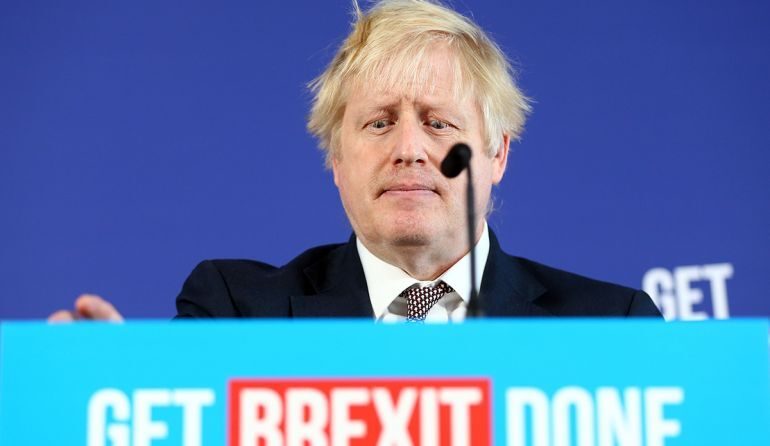
What the election results mean for Britain and the EU, why tensions between London and Ireland are growing and when Brexit will end.
On December 12, 2019, the UK held long-awaited early parliamentary elections, in which the ruling Conservative Party won a convincing victory, gaining a single-party majority in parliament that it had lost after the previous 2017 elections. The main opposition Labour Party suffered a crushing defeat, while the Liberal Democrats, once considered the “surprise of the year” over the summer, hit their lowest point. Scottish and Northern Irish nationalists also achieved success.
The UK elections can undoubtedly be considered not just the event of the year for Foggy Albion but the event of the decade. The elections were not just about which political party would be in power for the next five years, but also about what course Britain would take, whose ideological platform would win and what would become of the long-suffering Brexit process – Britain’s exit from the European Union, which has dragged on for almost three years. When talking about Brexit, few understand what this process is and why it matters for Britain, Europe and Ukraine.
Let’s figure it out and break it down: both the elections themselves and the overall picture of the treacherous Brexit, which pops up in the news almost every week.
What is the problem with Brexit?
In 2016, Britons voted in a referendum to leave the European Union. The vote was called by the then Conservative government led by David Cameron. He used the referendum as blackmail to strengthen his negotiating position with the EU, with which he was at that time arguing over the terms of mutual trade, Britain’s place in the Union and the principles of functioning of European institutions.
Cameron did not believe that Britons would support leaving the EU by a majority vote, and was convinced that this would not happen.
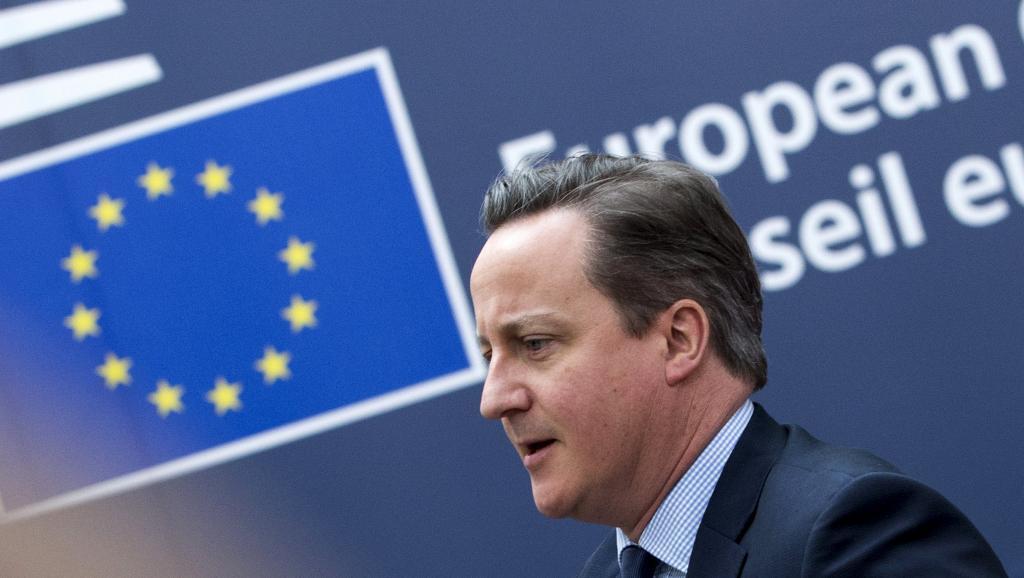
When 52% of citizens of the UK nevertheless decided to leave the Union (Brexit), several acute questions arose at once:
- How to do it? (no one from the EU had left before);
- Who would do it? (Cameron resigned immediately after the referendum results were announced)
- What would the relationship between Britain and the EU be after Brexit? (on what terms trade and business would take place, what would happen with visas, what would be the status of EU citizens in Britain and Britons in the EU?)
The first question was answered by the EU itself, or rather, Article 50 of the 2009 Treaty of Lisbon, under the provisions of which the EU functions. Britain activated the article, under which an EU member state begins the procedure for leaving the EU, which means: it changes its legislation, halts the effect of EU acts and withdraws from European institutions, organizations and financial structures. Britain carried out all this work over the course of 2016–2017.
The answer to the second question also did not take long. After the resignation of Prime Minister David Cameron, the Conservative Party chose a new leader (who automatically became head of the Cabinet) – Theresa May, who was then Home Secretary. The burden of responsibility for the procedure, terms, timelines and main provisions of Brexit – Britain’s exit from the European Union – fell on her shoulders. Accordingly, her government had to enter into official negotiations with the EU on the terms of their “divorce.” They began on March 29, 2017, and continued until the end of 2018.
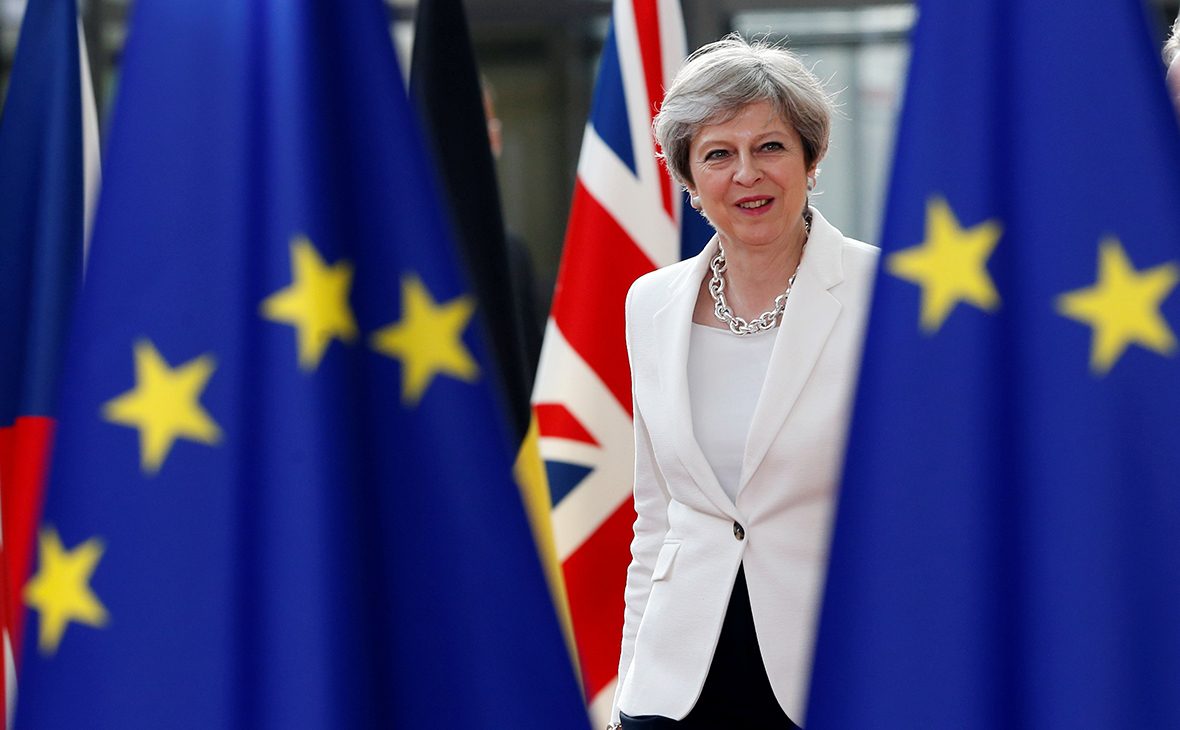
The third question became the stumbling block or, if you like, the apple of discord, which led to the acute political crisis in Britain and dragged out the entire Brexit process. The point is that before formally leaving the EU, Britain had to agree on the terms on which it would leave the Union and the format of future relations with it (trade barriers, tariffs, privileges, citizens’ status, visa regime, migration control, etc.). To this end, negotiations were held between the EU and Britain in 2017–2019, which were supposed to end with the conclusion of a Brexit agreement. It would regulate all of the above-mentioned aspects of the parties’ relations.
The draft agreement was agreed in late November 2018 after almost two years of British-European negotiations. However, it was not approved in Britain itself. It turned out to be unacceptable to almost all political forces, which were equally dissatisfied with its terms.
For Britain’s main opposition party – the Labour Party – the agreement was “too harsh,” since it did not provide for the preservation of many links with the EU. Moreover, during the referendum the opposition campaigned to remain in the EU rather than leave it, and even less to break off trade and economic ties with it.
For Scottish and Northern Irish nationalists, this agreement was a symbol of “universal evil,” since both Scotland and Northern Ireland mostly voted against the country leaving the EU in the 2016 referendum. The trade and tariff terms also did not suit regions that would lose money as a result.
Even within the ruling Conservative Party there was no unity over the draft agreement. Part of the Conservatives (the right wing) considered the agreement “too soft” – supposedly, preserving ties with the EU in any sector or field is some kind of incomplete Brexit, so let’s cut everything. Another part of the Conservatives (the centrist wing) supported Theresa May and her government, and therefore the agreement itself, believing it to be the best that London and Brussels could agree on. And a third part of the Conservatives (the moderate wing) actually opposed a hard break with the EU and considered the agreement too “harsh.” They said the terms should have been softened, for example by remaining in the EU customs union or the single market.
The lack of unity in parliament over Theresa May’s draft agreement led to the effective paralysis of the government bodies. Parliament could neither vote for the agreement nor propose anything alternative. The draft agreement was rejected three times in parliament and in the end was shelved for some time. And Theresa May, after everyone turned against her, including her allies and ministers, resigned in May 2019.
It was precisely the rejection of the agreement by political forces, the lack of an alternative and the split in British society over the protracted Brexit that formed the basis of the current “Brexit problem” that everyone is so fiercely discussing.
Besides the terms of the agreement on trade, finance, the economy and tariffs, one more issue became especially acute in the negotiations – the future of Northern Ireland.
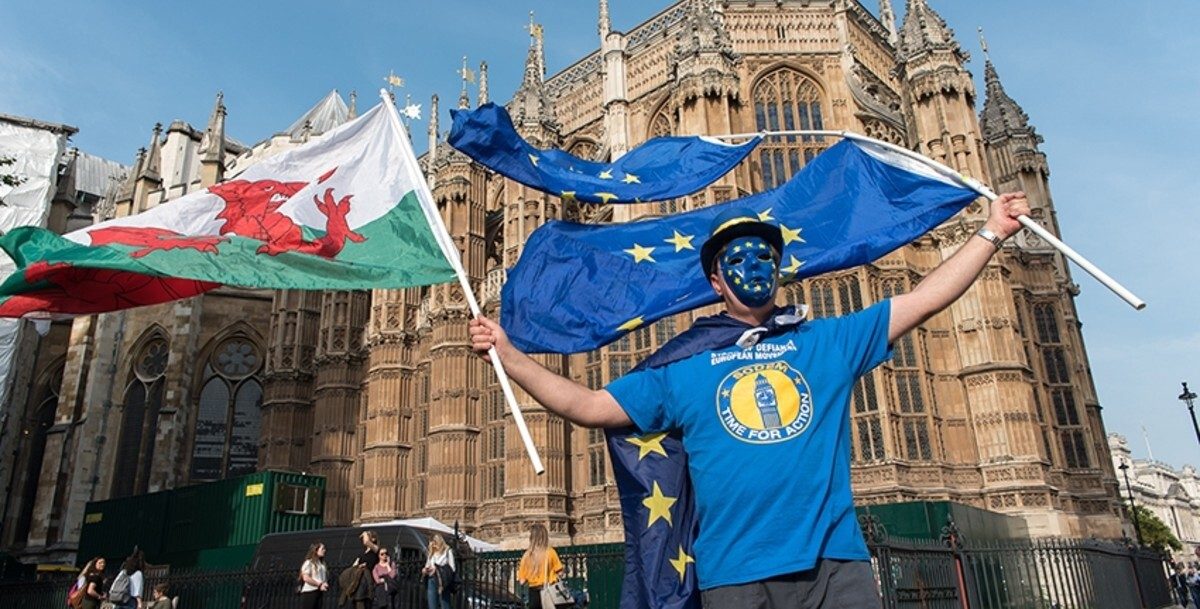
The point is that since Britain was a member of the EU, practically all trade between the Kingdom and other countries was tariff-free, that is, not inspected and no taxes were levied on it. Moreover, the border between Northern Ireland (a region of Britain) and Ireland (a neighboring country) was open, and people could travel back and forth without any problems (many families lived on both sides of the border). Now Brexit means that Britain will no longer be part of the EU customs union, and therefore a physical border must return between the two Irelands: migration control, armed border guards, checkpoints, cargo inspections and all the other delights of a third country outside the Union.
Naturally, most residents of Northern Ireland were outraged by such prospects, and therefore did not vote to leave the EU and did not support Theresa May’s draft agreement. This led to an acute political crisis in Northern Ireland and the collapse in January 2017 of the coalition government of unionists (Northern Irish Protestants, supporters of the union with London and Brexit) and nationalists (Catholics, opponents of both Brexit and the union with London). Since then, the regional government of Northern Ireland has still not returned to work.
Moreover, the situation is complicated by the fact that the open and transparent border between the two Irelands is one of the conditions of the 1999 peace agreement, which ended the armed conflict between Britain and Northern Irish nationalists that had lasted, with interruptions, for almost 100 years. Thus, if the border closes again, this could undermine the peace agreement, which has held on a fragile balance of forces all these years, and thaw the conflict in Northern Ireland.
Why does this matter at all?
Great Britain is one of the key EU member states, the sixth-largest economy in the world, one of the most developed countries in the world and 14th in the global Human Development Index ranking, and a member of the G7 and G20 clubs. Britain, Germany and France together make up the entire industrial, economic and political power of the EU. In the regional configuration of Europe, London informally oversaw relations with the countries of Northern Europe (Scandinavia, the Baltics and Poland) and was responsible for security in the Baltic and North Seas. Britain is also one of the key allies of the United States and for many decades has been a bridge between the US and the EU.
The political stability of the United Kingdom and its integrity are one of the most important issues for European security and the entire regional architecture of the continent. Brexit has brought to the surface many issues that have gaped on the body of Britain in the form of old, healed but still aching wounds: the relationship between the center and the regions, the future model of socio-economic development, social injustice, the gap between generations, as well as between rich and poor, Scotland’s independence, the reunification of Ireland, the mental and cultural detachment of the ruling class from the people, the crisis of the left movement, the rise of right-wing populism, etc. All these problems, as the resolution of the Brexit issue drags on, have only intensified, and in the worst case could lead to the collapse of the existing political system in Britain and the social contract on which it stood, and even to the country’s likely breakup in the strategic perspective.
In addition, the economic consequences of Brexit could in themselves be extremely harsh for the stability and economic success of both Britain and the European Union. 47% of Britain’s exports go to trade with EU member states, while more than half of all imports are also products from the EU. Each year, Britain contributes more than €10 billion to the EU budget, which makes it, Germany and France the main donors of the Union. Obviously, the departure of such a country from the EU will be a blow to the Union and will radically change the balance of power and political alignments on the continent.
So, in order to know what will happen to Britain and the EU, one needs to follow the Brexit process, because it is not about one referendum, but about the future of an entire state and the stability of the European Union.
Why did early elections take place in Britain?
New elections for the leader of the Conservative Party after the resignation of Theresa May brought to power the former mayor of London and one of the supporters of Brexit, Boris Johnson. He promised to quickly leave the EU and even stated that he would do so regardless of whether a draft agreement was agreed or not. However, he failed to do so.
An attempt to freeze negotiations with the EU and leave the Union without an agreement was defeated in parliament. Opposition parties (Labour, the Liberal Democrats, the Greens, the Scots) were forced to unite into an impressive coalition and adopt a series of decisions that prohibited the prime minister from carrying out the country’s exit from the EU without any agreement.
When Johnson tried to do this by sending parliament on recess under a false pretext, he was accused of deception, and the Supreme Court overturned the decision to suspend parliament’s work.
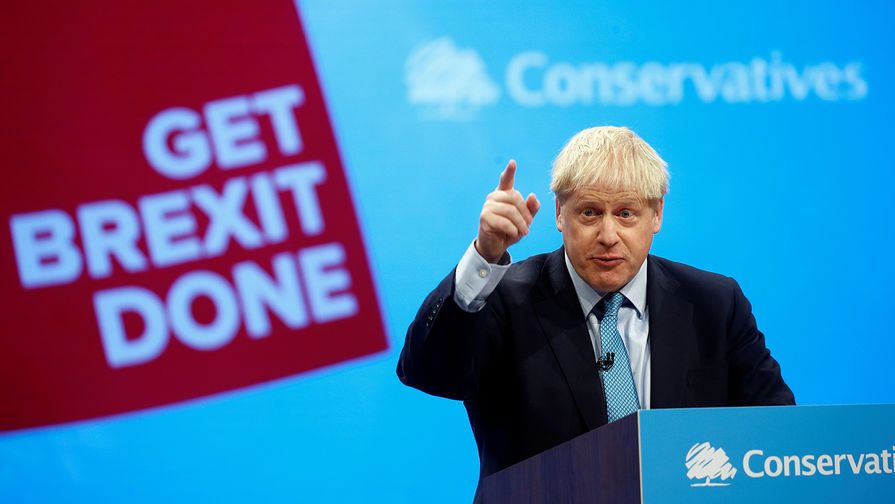
Having reached a dead end, Johnson decided that there was nothing left to do but call early elections in order to reset parliament and obtain a single-party majority, which the Conservatives had lost in the 2017 elections. And so we come to the elections themselves on December 12.
What are the final results?
The results did not differ much from the exit polls. The Conservative Party led by Prime Minister Boris Johnson won a convincing victory. The opposition Labour Party lost many seats and suffered a crushing defeat. The Scottish National Party won all the constituencies in its region of Scotland and emerged as the triumphant winner of the elections. Supporters of the prime minister lost ground in Northern Ireland, and the nationalists won. The Liberal Democrats hit the lowest point of all – they were utterly routed, and even their leader failed to win in her home constituency.
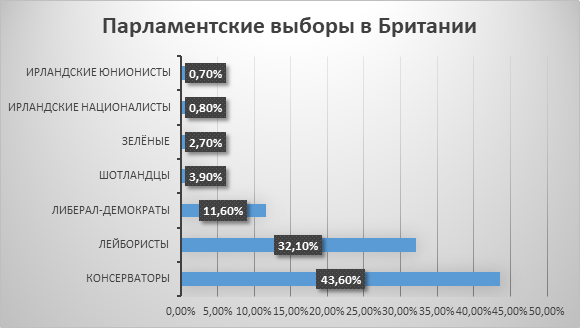
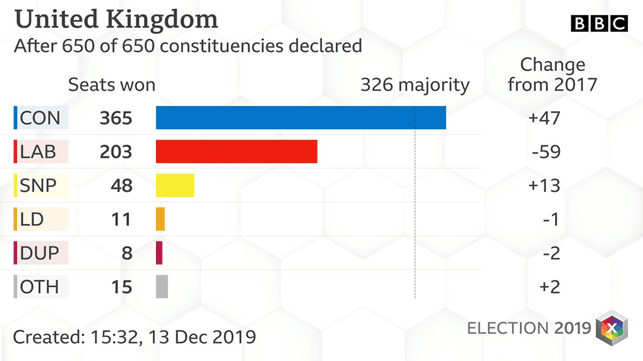
Distribution of seats in parliament after the elections: blue – the Conservative Party; red – the Labour Party; yellow – the Scottish National Party; orange – the Liberal Democrats; purple – the Democratic Unionist Party of Northern Ireland; grey – other parties. In the column on the right – a comparison with the number of seats after the 2017 elections.
And what do they mean? What is sensational about them?
First, the Conservative Party won a stunning victory, despite all the scandals, disputes and ambiguities surrounding them. These parliamentary elections became a kind of fundamental shift in political life not only in Britain but in the whole world, a shift that is yet to be studied.
Indeed, in essence, the Conservatives’ victory demonstrated that everything Boris Johnson did as prime minister and all the scandals surrounding him (deceiving Queen Elizabeth II when he asked for parliament’s work to be suspended, vulgar and rude statements, sex scandals during his time as mayor of London, etc.) are now normal, and there is no need to worry about this further, since society votes for him and supports him anyway. In a sense, the British elections resembled the elections in Ukraine, when a bright, media-savvy character, almost a showman, a political freak with an ambiguous reputation, defeated a classic, grey bureaucrat who had lived in this system for decades. And the falsifications, fakes, information dumps, lies and deception that the Conservatives often resorted to in their very “dirty” election campaign were, in fact, not noticed by the electorate. People are tired of politics and of the sluggish Brexit, which still cannot end.
Second, the Conservatives’ victory was the largest since 1987. They gained a single-party majority and will no longer depend on any party in parliament. This gives Boris Johnson carte blanche on all decisions regarding Brexit, internal reforms, government spending and even the role of parliament in a system that he openly despises. It opens up opportunities for him both to change the rules of the political game in principle (to subordinate parliament to the executive branch, weaken the role of the monarchy, cut the functions of the House of Commons) and to take revenge on all those who, in his view, “interfered” with his plans, starting from the end of summer (the Supreme Court, TV channels, activists, the opposition).
Third, the Labour Party did not just lose; it lost its traditional left strongholds in northern England and got its worst electoral result since 1935. These industrial working-class districts had been voting for Labour solidly for more than 50–70 years, but this time, divided by the Brexit question, they went over to the Conservatives or to the far-right Brexit Party of Nigel Farage.
The reason for this is simple: Labour’s electorate turned out to be split. The industrial areas of northern England, while supporting Labour, voted for Brexit, being dissatisfied with the influx of migrants into Britain and with what they see as the unfair rules of the EU. In contrast, the electorate in the urban areas of southern England, on the other hand, opposed Brexit. Labour was forced to choose and take a clear position. They tried to shift the focus of the election campaign from the Brexit question to related topics in the style of “What to do after the country leaves the EU?” The electorate did not understand the message, and we all know the result: the traditional left-wing voter went over to the Conservative right, which, in their logic, seemed “clearer,” and which kept repeating the same thing endlessly: “Let’s finally finish Brexit.”
In addition, Labour’s defeat was also influenced by additional factors such as the high negative rating of its leader Jeremy Corbyn (whom opponents called a “Stalinist,” a “commie” and a “Putin fan”), the sharp rise of the party’s left wing, which scared off big business and capital, Corbyn’s feud with Scottish nationalist leader Nicola Sturgeon, and scandals over Corbyn’s “anti-Semitism.”
The election result means that the Labour Party faces a reckoning as early as next year at its autumn congress. Most likely, Jeremy Corbyn will resign, and a struggle for his successor will begin.
Fourth, these elections confirmed the complete rout of the Liberal Democrats – a party that over the summer was still considered the main alternative to the two main players, the Conservatives and Labour. But the Liberal Democrats’ leader, being at the peak of popularity, quickly squandered it, fell out with all allies in the opposition and greatly overestimated the party’s own capabilities in the elections. The outcome: a complete rout, which will most likely sweep away the party’s current leadership and force it to seriously think about its future strategy. Moreover, precisely because the Liberal Democrats refused to cooperate with other opposition forces against the Conservatives, the latter managed to win in the “marginal constituencies.”
Fifth, for the first time in the history of the region within Britain, nationalists won in Northern Ireland. This became possible thanks to an agreement between Irish nationalists and Labour that they would not put forward candidates against each other in constituencies where their common enemy – the Democratic Unionist Party (supporters of the Conservatives and Brexit) – had high chances of winning. Ultimately, the unionists lost two seats in parliament, while the nationalists, in total (three parties: Sinn Féin, the Alliance and the Social Democratic and Labour Party), gained a majority over them.
Sixth, over the next five years Britain will be governed by right-wing political forces – the Conservative Party and the Brexit Party of Nigel Farage behind it. And this means another five years of harsh neoliberalism, a further shift to the right in social and migration policy, and closer ties with the US, especially now that Donald Trump, who is ideologically close to Johnson and Farage, is in power in the White House. Given this political configuration, Britain will most likely officially leave the EU on January 31, 2020, as the current deadline prescribes. Then a political crisis will begin over the terms of Britain’s economic agreement with the EU, which Boris Johnson considers unimportant, and he may even leave the Union without agreeing such a deal if he considers its terms unacceptable for his party. In that case, Britain is in for five very unstable years.
What does Ukraine have to do with it?
For Ukraine, Britain is its 10th trading partner and one of the important political allies in the confrontation with Russia. Trade turnover between the two countries amounts to about $2 billion – not much, but not little either, given the overall volume of Ukraine’s trade. The domestic political situation in the United Kingdom is important for Ukraine in order to understand whether this country can be relied on in the future in the context of the fight against the Russian Federation, especially on issues of anti-Russian sanctions, the occupied Donbas and the annexed Crimea.
Moreover, the likely economic consequences of Britain’s exit from the EU, although they will not affect Ukraine’s economy and trade, could significantly complicate life for Europeans. And any weakening of the EU (ideological, financial, economic, political), toward which Ukraine has been striving all these years, will negatively affect our positions in the European Union and the ability of Brussels to support Ukraine in its confrontation with Russia, as it becomes increasingly entangled in this story. There is a risk that as a result of Brexit, the European Union may sink even deeper into its own problems and spend several more years clearing up the consequences of Britain’s departure. Thus, Brussels will not be able to allocate additional resources to support Ukraine, which will result in the country’s weakening in the medium term.

Russian Attacks in Dnipropetrovsk Region: Two Killed, Seven Injured

Defense Forces Strike Four Russian Drone Control Points in Past Day, Including in Berdiansk

Britain Threatens Sanctions on Kremlin-Linked People; Poland Ready to Hand Ukraine Ammunition

Russia says it has completed "planned exercises" in the Black Sea

MVD: Fake Riots With Prop Blood Were Being Prepared Near Presidential Office

Law Enforcers Name Another Klitschko Deputy as Suspect

Berlin Holds Protest Against War in Ukraine; EU Prepares for Possible Russian Halt of Gas Supplies
North Korea Fires Ballistic Missile Over Record Distance in Five Years
Irish Fishermen Force Russia to Postpone Naval Drills

US sanctions in case of invasion of Ukraine could completely destroy Russia's economy, NYT reports
