
Ukraine Can't Survive Several Months of Strict Quarantine: Interview with Ukrainian Presidential Adviser Ihor Novikov
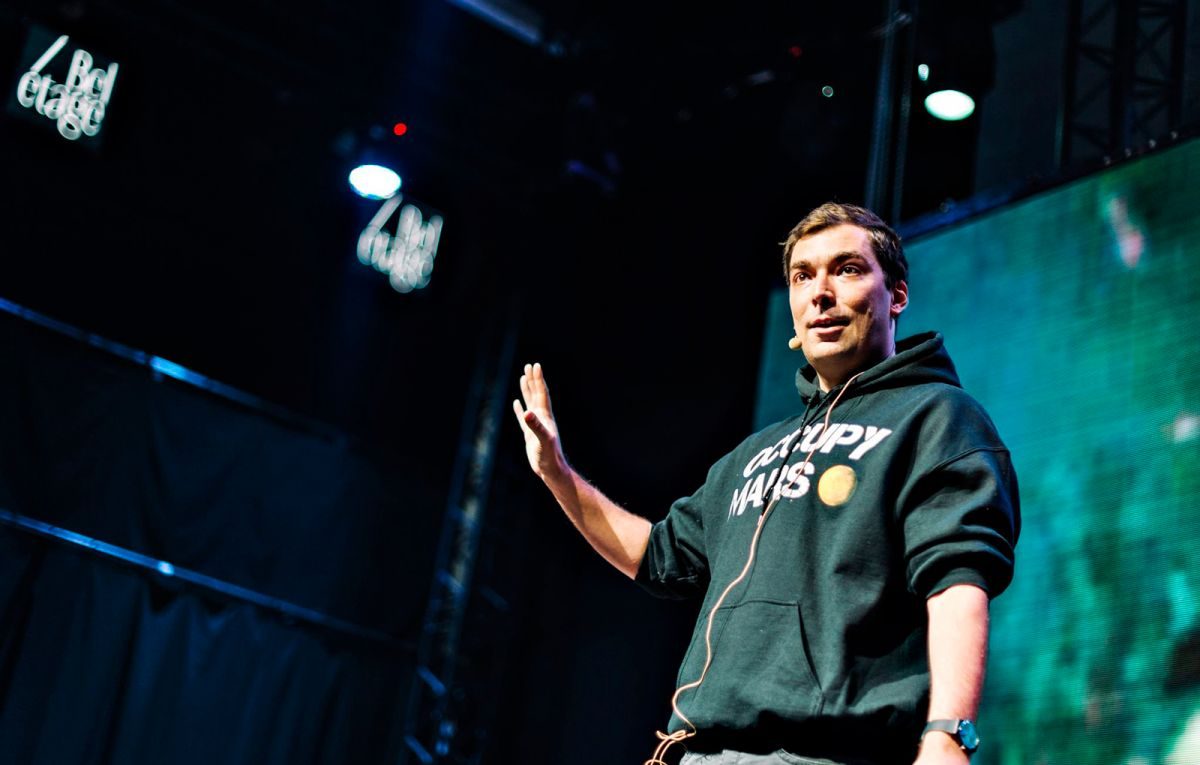
About Yermak's tapes, the staff crisis in Zelensky's team and the future after the pandemic.
The world economy is entering a zone of uncertainty, governments in different countries are running social experiments on their populations, and Ukraine is on the verge of, possibly, its greatest crisis since the 2013-2014 revolution and the subsequent loss of territory. And who better to talk to about these topics than a futurologist?
TK Media spoke with futurologist and Ukrainian presidential adviser Ihor Novikov.
- What are you working on right now in the Office of the President?
- The same thing as before. I am an freelance adviser to the President.
- Earlier you were heavily involved in Ukrainian-American relations and worked closely with Andriy Yermak. Are you still working as a team?
- Earlier, when Andriy was the President's assistant and responsible only for the international portfolio, we really needed to closely coordinate our actions on Ukrainian-American relations. Now Andriy is head of the Office, and on the American track there is a relative lull due to the coronavirus pandemic, so each of us is busy with our own work.
- How do you assess the Office of the President's reaction to the scandal over Geo Leros's tapes?
- I think the President reacted absolutely correctly. Anyone has the right to comment on leaks, accusations or compromising material, but the President cannot stoop to the level of kitchen gossip. I am sure there will be a reaction.
- You mentioned the coronavirus. How long, in your estimate, will the pandemic last in the world, and how long could the outbreak last in Ukraine? Quarantine has been introduced until April 24, but even in the Cabinet of Ministers (Avakov) they forecast an extension.
- The coronavirus caught everyone by surprise, and so I cannot say that any country can serve as an ideal example of a response that would allow an accurate forecast to be made. Especially if we consider only those countries that are comparable to Ukraine in terms of economic condition, availability of resources and infrastructure for fighting the pandemic, and also in terms of political stability.
At present, the world simply has not accumulated enough data and experience (for example, no one today can even name a more or less accurate figure for the number of infected people), and accordingly, all countries are, as they say, experimenting on the fly.
In the next 10-15 days, provided mass testing is carried out, we will more or less see the real situation in Ukraine, and accordingly, we will be able to forecast the further development of events based on the dynamics.
One thing I can say for sure: Ukraine cannot afford many months of strict quarantine, either economically or politically. And so, despite the high probability that quarantine will be extended after April 24, restrictions should be improved but at the same time significantly eased.
In my opinion, the only reliable key to quickly restarting the country's life is a few weeks of strict quarantine, followed by mass testing, competent measures to localize outbreaks within the country and tough screening at the border. And the turning point is now, since according to many forecasts, it will take 9-12 months before the situation stabilizes.
- You are talking about mass testing, but the Ministry of Health has taken a different path: selective testing of people showing symptoms
- This is a forced measure, since there are not enough tests at the moment. But with the right concentration of effort, it is temporary.
- In the fight against the pandemic, the authorities have bet on oligarchs and big business, openly asking for their help and assigning “curators” to the regions. How justified is this strategy in the long term, and what will these services cost the Office in the future?
- I would frame the question about the “cost of services in the future” a little differently: how much will the collapse of Ukraine cost oligarchs and big business?
You cannot be the top guy in the village if the village has burned down, and that is exactly the case here, because practically none of our major players is truly multinational, capable of surviving without Ukraine.
As I see it, the most important factor here is preserving the agency of the Office of the President. Partners, however deep the symbiosis, must not forget that there is a clear line between the state and business. If business wants to become the state, it must stop being business. And vice versa.
By the way, since we have started talking about business, it is worth mentioning not only the giants. I think the key factor for Ukraine's future right now is support for small and medium-sized businesses, not only from the state or large players, but also from Ukrainians themselves.
Buy Ukrainian, support your own! The chain reaction in the global economy will last from 2 to 4 years, and during all this time other countries will, as they say, be looking out for themselves. This is already noticeable now.
How much of Ukrainian we preserve in Ukraine will greatly determine our place in the new reality.
- In half a year the country has already had a third health minister and a third finance minister, and the changes are happening right in the middle of the pandemic. One of the mayors recently said that locally they are simply starting to stop getting to know them, since a new one will come soon anyway. What is the staffing problem in Zelensky's team? Why does the Office of the President repeatedly make mistakes and then rush to fix them?
- The staffing problem now lies not with Zelensky's team but with Ukraine as a whole. On the one hand, hard times reveal people's true nature, which greatly limits the choice… On the other, unfortunately, this is not a situation in which it makes sense to rely exclusively on young, desperate reformers, because a crisis leaves no room for error.
It sounds absurd, but finding a candidate, for example for the post of minister, is already quite a difficult task in itself, because as a society we expect to see a person with experience, no ties to various influence groups, no corruption baggage, but at the same time someone resistant to temptations within the system…
Add to this another aggravation among various influence groups in parliament, many of which operate on the principle of “the worse things are for everyone, the better for us.”
And finally, as the cherry on top, add the sleaze: smearing someone with crap, knocking them down and offering “our own person” has become our favorite sport these days.
For example, take the energy sector. The situation there is critical now, and the future of the entire country depends, no less and no more, on choosing the right candidate. Imagine a quarantine with no electricity and no internet on top of that. How would it end?
- Israeli historian Yuval Noah Harari has expressed concern in his column for the FT that temporary measures taken by the authorities will remain on a permanent basis, and that citizens will have less and less freedom and private life. A striking example: Kyiv is already buying cameras with facial recognition and remote temperature measurement to fight the coronavirus, but they will not disappear after the pandemic. Do you share this view?
- The Kyiv cameras are not the only example. Recently Google began analyzing data on users' movements to assess the effectiveness of self-isolation measures in different countries, which, naturally, caused a wave of discontent among supporters of digital privacy.
Measures may be temporary, but technologies and infrastructure are here for the long haul, which means the temptation to establish digital autocracies around the world will grow significantly, especially if we take into account the fact that the coronavirus is not the only challenge of the coming years. I think we will see things like social rating systems (modeled on the Chinese experience) in quite unexpected corners of the planet.
As for the final consensus in individual countries, it will depend on the level of education of the population and political stability.
- Ukraine has a problem of unequal access to education. Quarantine will only intensify it: most schools and universities are unable to move the learning process online, and the “All-Ukrainian Online School” on TV, with one lesson a day, looks more like a PR show. What solutions do you see to this problem at the national level?
- I disagree with you about the “All-Ukrainian Online School”: this is precisely a good example of a quick reaction. What did you expect, Coursera turnkey with content within a couple of weeks? Another matter is that this is a temporary solution, and the problem is not going away.
To some extent, the events now unfolding carry a certain positive side: the fear of change will disappear, and that means we will have a chance to build a new education system essentially from a clean slate.
If we talk about tools, of course we need to fully use the potential of online learning. I in no way belittle the importance of socializing students, the role of teachers or the need for practical classes, but it is high time to start building full-fledged digital education. Ukraine has everything it needs for this now.
We also should not forget about updating the content, the educational programs themselves. Today there is a whole range of disciplines and subjects that would certainly not hurt, both in schools and at universities. Personally, I would propose adding forecasting, behavioral sciences, courses on technology development, storytelling and content work.
And, of course, a proper career guidance system is important. Everyone should choose their place in the labor market or the future direction of their entrepreneurial activity consciously, understanding all the trends and dynamics.
- During the war, ammunition sellers make money; during the pandemic, mask sellers do. Only the lazy aren't dealing in masks anymore, and even that is yesterday's news. Which areas should entrepreneurs focus on now to be on top in six months?
- If you are interested in specific areas, in my view they are education, medicine, e-commerce, technology implementation, last-mile logistics, import substitution, agriculture and, of course, content.
To place your bets correctly, I would recommend studying the forecasts in detail regarding how Ukraine and the world will emerge from this crisis. And when.
- On your page you write that Ukraine is the most adaptable to global changes and resilient to crises. Is it because of the revolutions and the war, or because of the mentality?
- Stability is like a drug. Anyone who has worked on corporate transformation will confirm this for you. As soon as you start changing something, you are immediately attacked by the immune system in the form of accountants, lawyers and managers who have spent years learning how things are supposed to be done. The best is the enemy of the good. Those lazybones came up with that. And now tell me, where is this mythical stability for us? What do we have to lose? That is why we are not afraid of change. We simply (and probably, fortunately, given the circumstances) have not had time to grow fat. In the global community, we are like an eternal student: hungry, stubborn and ambitious. And you know, that is even good.
Volodymyr Koval

Russian Attacks in Dnipropetrovsk Region: Two Killed, Seven Injured

Defense Forces Strike Four Russian Drone Control Points in Past Day, Including in Berdiansk

Britain Threatens Sanctions on Kremlin-Linked People; Poland Ready to Hand Ukraine Ammunition

Russia says it has completed "planned exercises" in the Black Sea

MVD: Fake Riots With Prop Blood Were Being Prepared Near Presidential Office

Law Enforcers Name Another Klitschko Deputy as Suspect

Berlin Holds Protest Against War in Ukraine; EU Prepares for Possible Russian Halt of Gas Supplies
North Korea Fires Ballistic Missile Over Record Distance in Five Years
Irish Fishermen Force Russia to Postpone Naval Drills

US sanctions in case of invasion of Ukraine could completely destroy Russia's economy, NYT reports
