
US Citizen Dies in Egyptian Prison After Hunger Strike. Washington Urged to Sanction Egypt, but White House Silent. What Is Happening?
How it all began, why the US is inactive, and other details of the much-discussed event.
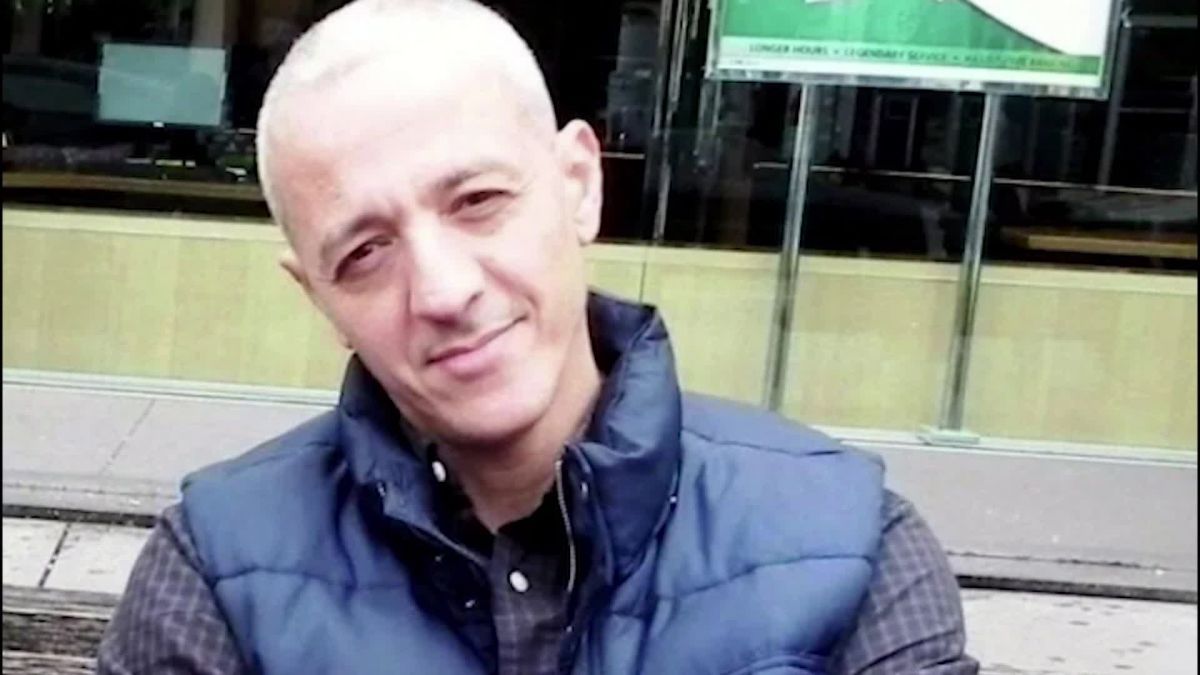
On January 16, 2020, Mustafa Kassem, a US citizen of Egyptian origin who had been arrested in Cairo back in 2013, died in an Egyptian prison after 16 months of hunger strike. The official cause of death was acute heart failure.
His heart could not withstand the dry hunger strike that lasted for the last week, and his body was exhausted after more than 500 days of partial starvation, which he had declared in protest against his sentence in September 2018. According to doctors, he felt unwell and was taken to a local hospital, where he died. In addition to the hunger strike, diabetes, which he had suffered from before, added to the strain on Kassem's condition.
Kassem's death triggered a strong reaction from the American public and part of the political establishment, who now demand that Egypt be punished for American citizens dying in its prisons. In addition, liberal activists and human rights advocates are calling on Washington to impose sanctions on its Egyptian ally in the Middle East if it does not release other Americans languishing in Egyptian prisons and hand them over to the United States.
Who Mustafa Kassem was
Mustafa Kassem, a 54-year-old Egyptian American, was from Cairo. He, his wife and their two children lived in the small American town of Bethpage (only 16,000 residents) near New York, and Kassem worked as a taxi driver and sold auto parts. Most of his relatives remained in Cairo, so he often visited them. His arrest in 2013 happened during one of these visits.
What he was imprisoned for
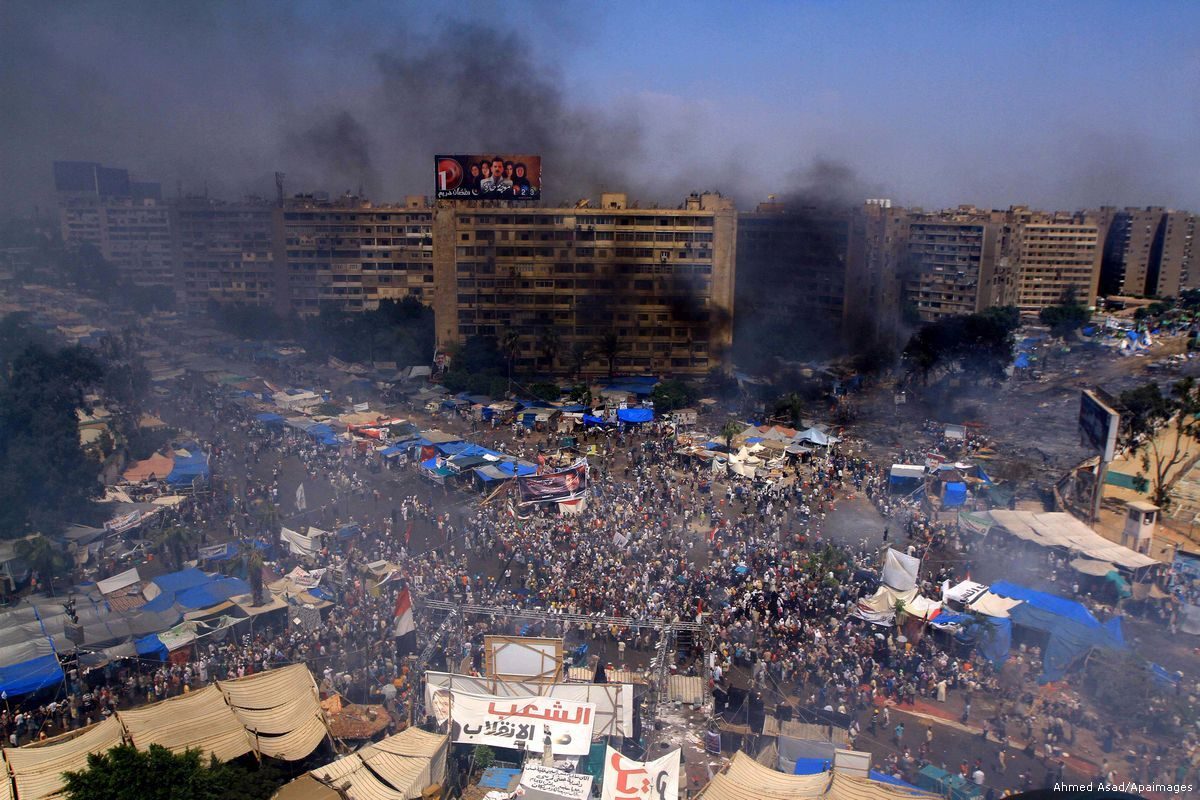
Mustafa Kassem and his cousin were detained by Egyptian security forces on August 14, 2013, near Rabaa al-Adawiya Square in central Cairo, during the bloody dispersal by the military of a sit-in by members of the local Islamist movement, in which between 600 and 1,500 people were killed.
Authorities accused Kassem of 'espionage and participation in mass riots and anti-government demonstrations aimed at overthrowing the legitimate constitutional order.' Kassem rejected all of it, and his lawyer argued that he had simply left home for the nearby shopping center located on that very square, to withdraw money from an ATM and buy groceries. The cousin of Kassem, who was released after detention unlike Mustafa, confirmed this version as well.
Despite the arrest, formal charges against Kassem were not rushed. He was held in pretrial detention for about five years. Only on September 9, 2018, the Cairo Criminal Court sentenced the American to 15 years in prison. He was tried in one of the largest and most high-profile court cases in Egypt, over the mass protests at Rabaa al-Adawiya Square. 739 people were tried at once, including Mustafa Kassem. At that time, 75 were sentenced to death, including leaders of Egypt's Islamist movement, the Muslim Brotherhood.
After the court's sentence in September 2018, Mustafa Kassem went on a hunger strike demanding his release. He did not admit guilt, and wrote an official letter to US President Donald Trump and Vice President Mike Pence asking them to influence the Egyptian government and secure his release from prison.
What was happening in Egypt
In 2011, a revolution overthrew President Hosni Mubarak, who had held office for almost 30 years. He was succeeded in the country's first democratic elections by President Mohamed Morsi, a candidate from the Islamist party Muslim Brotherhood, which was popular among some Egyptians. His rule proved unsuccessful: reforms were failed and hasty, and a sharp course toward Islamizing the secular regions of Egypt caused rejection and discontent among the urban population. Very soon, new protests against the new president broke out across the country.
Amid another wave of mass unrest in the capital, Egypt's military leadership backed the protests and carried out a military coup, ousting Mohamed Morsi from the presidency and arresting him. Immediately afterward, protests by his supporters and opponents began, clashes between them broke out in major cities, and anarchy and unrest took hold. The military promptly declared members of the Muslim Brotherhood terrorists, blamed them for the chaos on the streets, and began forcibly suppressing their demonstrations.
The sit-in at Rabaa al-Adawiya Square, near the mosque of the same name, which was the center of Muslim Brotherhood rallies, became one of the largest actions in support of the ousted president Morsi. After several warnings, the military carried out an operation to disperse the protest, which became the deadliest killing of people in Egypt's modern history. Mustafa Kassem also fell victim to the dispersal in the heat of the moment; he was arrested, beaten and sent to pretrial detention.
After the suppression of the protests and the arrest of Muslim Brotherhood leaders, the new president of Egypt became the then defense minister who led the coup, General Abdel Fattah al-Sisi, who continues to rule the country with the support of external partners, including the United States, Saudi Arabia and the Emirates.
How many more Americans are in Egyptian prisons
No one knows the exact number. More precisely, the official figure is not publicly announced. Some US State Department officials say in private conversations that there are 'several' prisoners. In the words of Democratic Senator Chris Murphy of Connecticut, six US citizens are in Egyptian prisons. And if one believes the report of the US human rights organization Human Rights Watch, about 20 of the more than 60,000 political prisoners in Egypt are US citizens.
In July 2019, US Secretary of State Mike Pompeo in a reply letter to the Working Group on Egypt of the Carnegie Endowment acknowledged the presence of US citizens in Egyptian prisons, noting that 'the safety and health of American citizens around the world, including those in prison, remains my top priority.'
Previously, at least four cases similar to Mustafa Kassem's detention had been recorded. In 2017, the Donald Trump administration managed to negotiate with the Egyptian government the release of Aya Hijazi, an American-Egyptian human rights activist and employee of a charity organization, who had been arrested for allegedly supporting the Muslim Brotherhood. In 2018, was released — another American prisoner, 27-year-old Ahmad Etiwy, who had spent five years in an Egyptian prison. He too was detained at Rabaa al-Adawiya Square in August 2013, and he was sentenced in the same case as Kassem in September 2018.
Two more Americans arrested by Egyptians in 2013-2014, whose cases are known, have never gotten out of prison. Limo driver from New York Khaled Hassan was arrested in 2013 under the same circumstances as Kassem. During his time in prison, according to reports by human rights organizations, he was repeatedly beaten and raped, and subjected to torture with an electric stun gun. Egyptian authorities suspect Hassan of participating in anti-government demonstrations on the side of the Muslim Brotherhood. He denies the charges. Last year he attempted suicide in his cell. And in 2019, was arrested a teacher from Pennsylvania, also of Egyptian origin, Reem Mohamed Desouky.
Is death in prison a common occurrence in Egypt?
Egypt's prisons and the conditions of detention there have for many years been the subject of criticism from a significant part of the liberal Western public and human rights organizations. In the past month, five people, including Mustafa Kassem, have died in Egyptian prisons. According to human rights advocates, Egyptian authorities torture prisoners, deny them medical care and deliberately drive cases to death.
One of the most notorious is the closed maximum-security prison Tora, located in a southern suburb of Cairo. Mustafa Kassem was held there. All members of the Muslim Brotherhood and their leaders are also held there. After the recent high-profile and resonant death of former president Mohamed Morsi, official Cairo was forced to open the prison to UN inspectors under international pressure. Morsi also died of a heart attack amid rapidly deteriorating health in prison. According to his lawyers and relatives, he seriously undermined his health because of inadequate treatment by the prison administration, as well as denial of medical care. The Egyptian authorities reject all of this, noting that the former president already had heart problems.
Why the Donald Trump administration is silent about this
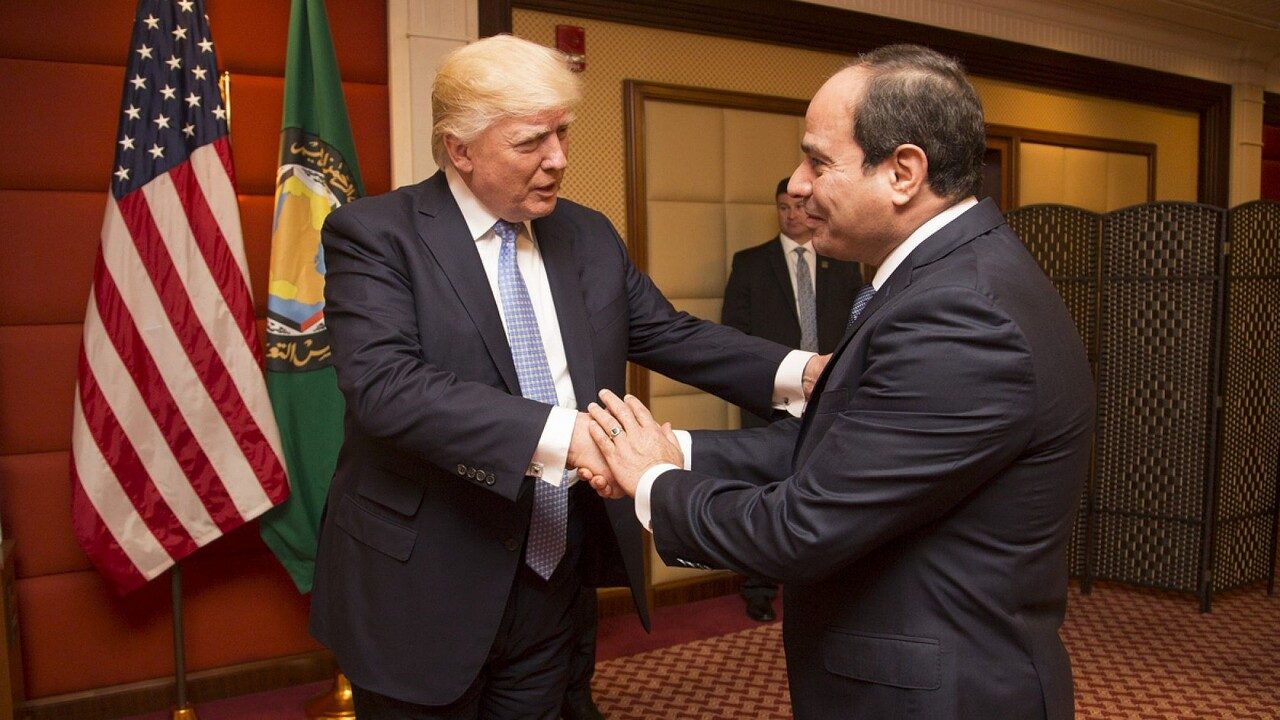
Because they do not want to spoil relations with Egypt. This country is a US ally in the Middle East and has strategic relations with the United States. US President Donald Trump has good personal relations with Egyptian President Abdel Fattah al-Sisi. Once, he jokingly called him 'my favorite dictator.'
Egypt is one of the largest recipients of American foreign financial aid. Each year Washington allocates the country $1.2 billion in military and technical assistance. Between 1948 and 2011, the United States gave Egypt financial aid alone totaling $71 billion. And after the peace treaty between Egypt and Israel was signed in 1979, Cairo received another $19 billion in military aid from Washington and another $30 billion for economic projects.
In addition, Egypt has important geostrategic significance for American policy at the junction of the Middle East and Africa. Egyptians actively cooperate with Americans on counterterrorism and regional security. They play a key role in countering various extremist groups in the Sinai Peninsula, as well as smugglers from the Palestinian Gaza Strip, which is very important for ensuring Israel's border security. Finally, Egypt is an important and attractive client for many American arms companies, often buying weapons and ammunition from them, in particular an entire squadron of F-16 aircraft. True, the Egyptians do not shy away from cooperating with other countries on defense purchases, which sometimes annoys the White House.
Egypt is an ally of Israel. Over the past few years, after the discovery of new gas fields off its coast, the two countries have developed a common energy interest: developing gas fields and jointly exporting gas to Europe, building the relevant infrastructure with US support. Clearly, given such large-scale regional projects, Americans have no particular interest in spoiling relations with Cairo over one or several prisoners.
All these interests often prevail over human rights violations in Egypt in the political calculations of the Trump administration. Only under strong international or domestic pressure does Washington agree to raise the question of releasing particular citizens from prison. Attempts to free Mustafa Kassem did indeed happen. If one believes the words of Vice President Mike Pence, he personally raised this issue with President Sisi several times. But for some reason, the case never moved forward.
To be fair, it should be noted that such cynical cooperation between Egypt and the US within the framework of 'Realpolitik' was also characteristic of the previous administration of Barack Obama. After a brief period in the summer of 2013, when Obama's team pretended not to support and condemned the military coup in Egypt, they ultimately unfroze military aid to Egypt and recognized President Abdel Fattah al-Sisi. And only a couple of weeks after the coup, then US Secretary of State John Kerry even came to the defense of the Egyptian military and stated that 'in a way, they are restoring democracy.'
Of course, there were also individual American politicians who criticized Egypt and its leadership and actively called for the release of American political prisoners. Among such 'hawks' were Republican senators John McCain and Marco Rubio. Back in Obama's time, they tried to freeze military and economic aid to Egypt in response to the 2013 military coup and mass arrests of opposition figures and activists. However, Rubio and McCain were 'white crows' among other Republicans on the issue of US-Egypt relations.
How the US could 'punish' Egypt if it wanted to
If the death of Mustafa Kassem generates sufficient public and political resonance and increases pressure on the Trump administration, the US has several levers of influence over Cairo that it could use.
The first and most obvious is freezing military and economic aid, starting with small packages of $185 million (for Egypt's internal security forces) and ending with the $1.2 billion military and technical support program, as Barack Obama once did, though only briefly.
The second is personal sanctions under the global Magnitsky Act, a special law that allows the US to impose sanctions on specific individuals for human rights violations. Such sanctions currently target political leaders of Venezuela, Syria, Cuba, Russia, China, North Korea and Iran. These sanctions involve freezing the accounts and assets of these individuals in the US and banning them from entering the country.
The third is public support for international investigations involving the UN and human rights advocates who wish to inspect Egyptian prisons and study the treatment of prisoners. The US could play a key role in pressuring Cairo to open access to these facilities, thereby forcing Egyptians to 'play by the rules.'
So far, the US reaction to Mustafa Kassem's death has been restrained. Secretary of State Mike Pompeo expressed concern over this tragedy and said he would work with Egyptian leadership on the issue. Democratic Congressman Patrick Leahy blamed for the death Kassem's death the Egyptian president and called for sanctions against Cairo. However, other politicians have so far said nothing and prefer not to raise the issue publicly.

Russian Attacks in Dnipropetrovsk Region: Two Killed, Seven Injured

Defense Forces Strike Four Russian Drone Control Points in Past Day, Including in Berdiansk

Britain Threatens Sanctions on Kremlin-Linked People; Poland Ready to Hand Ukraine Ammunition

Russia says it has completed "planned exercises" in the Black Sea

MVD: Fake Riots With Prop Blood Were Being Prepared Near Presidential Office

Law Enforcers Name Another Klitschko Deputy as Suspect

Berlin Holds Protest Against War in Ukraine; EU Prepares for Possible Russian Halt of Gas Supplies
North Korea Fires Ballistic Missile Over Record Distance in Five Years
Irish Fishermen Force Russia to Postpone Naval Drills

US sanctions in case of invasion of Ukraine could completely destroy Russia's economy, NYT reports
