
ATO Veteran Valeriy Markus: While Russia Flexes Its Muscles, a Full-Scale Invasion Will Definitely Not Happen
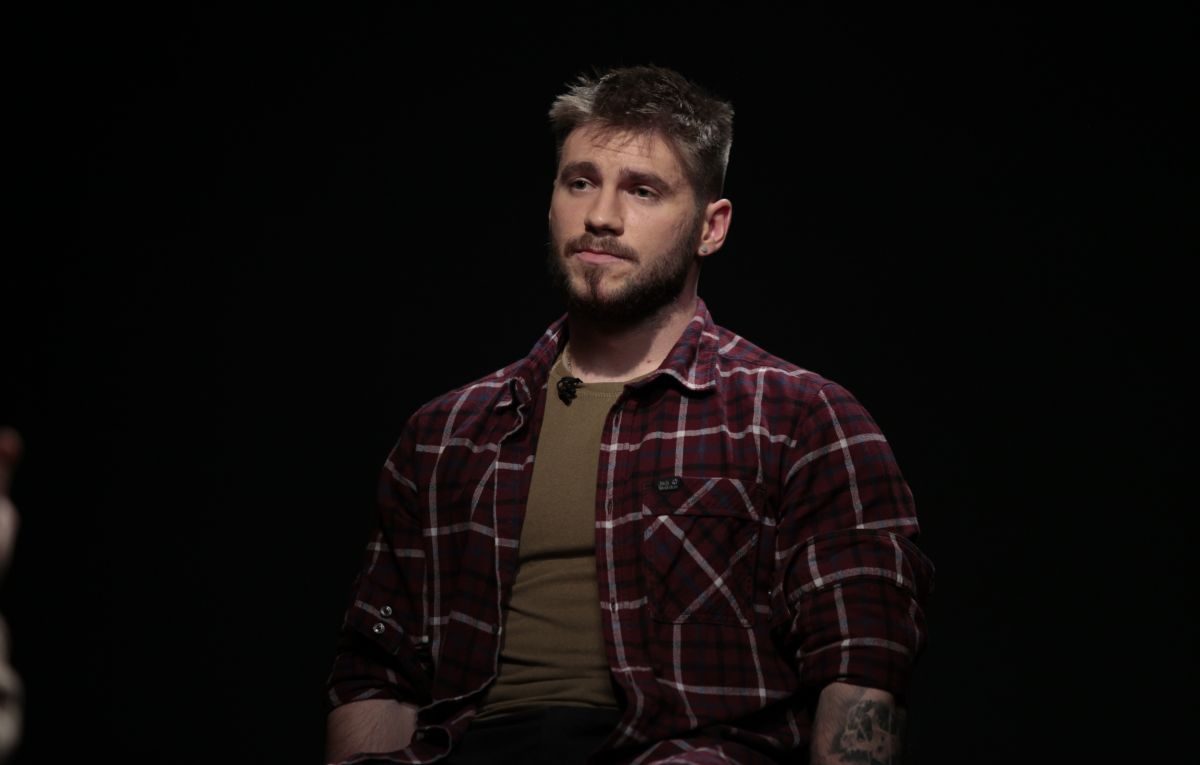
In his view, Ukrainization can only be rational.
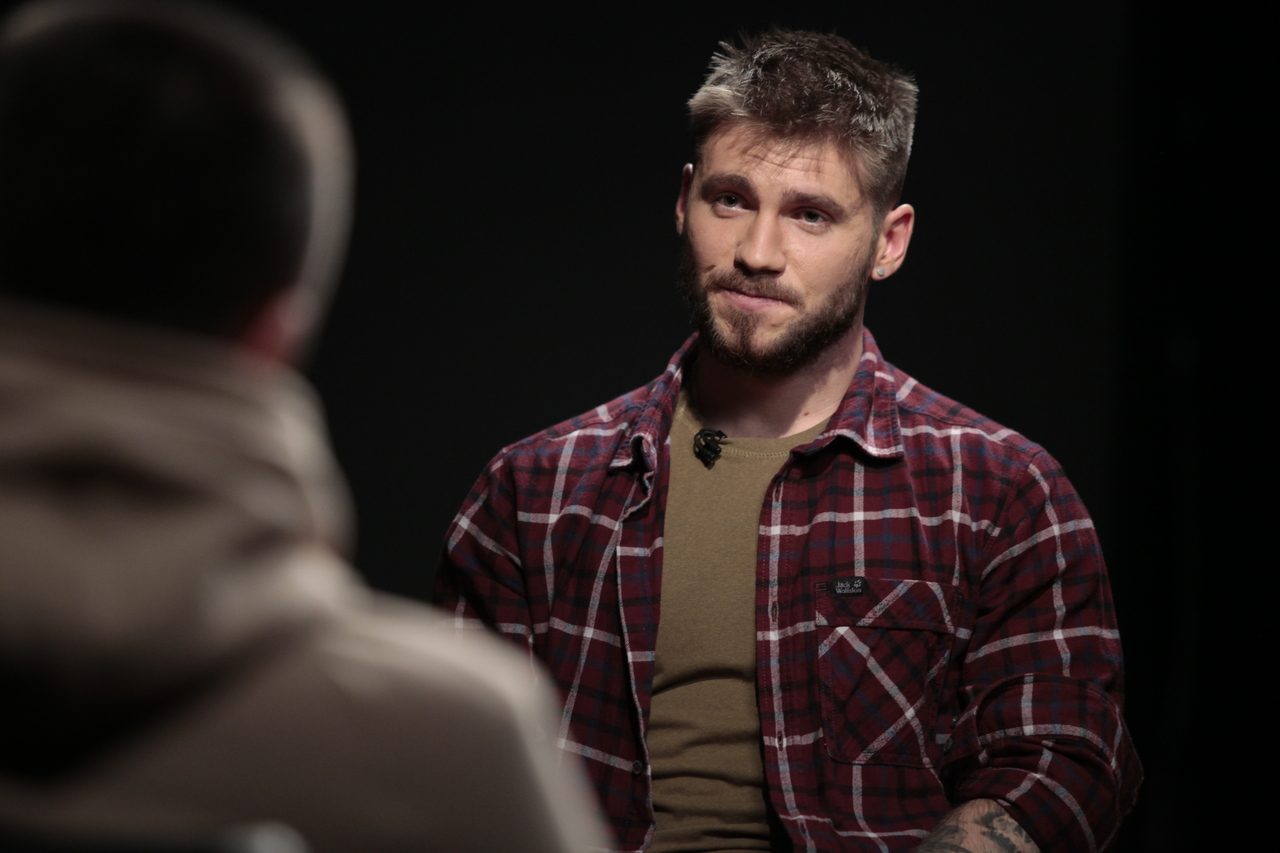
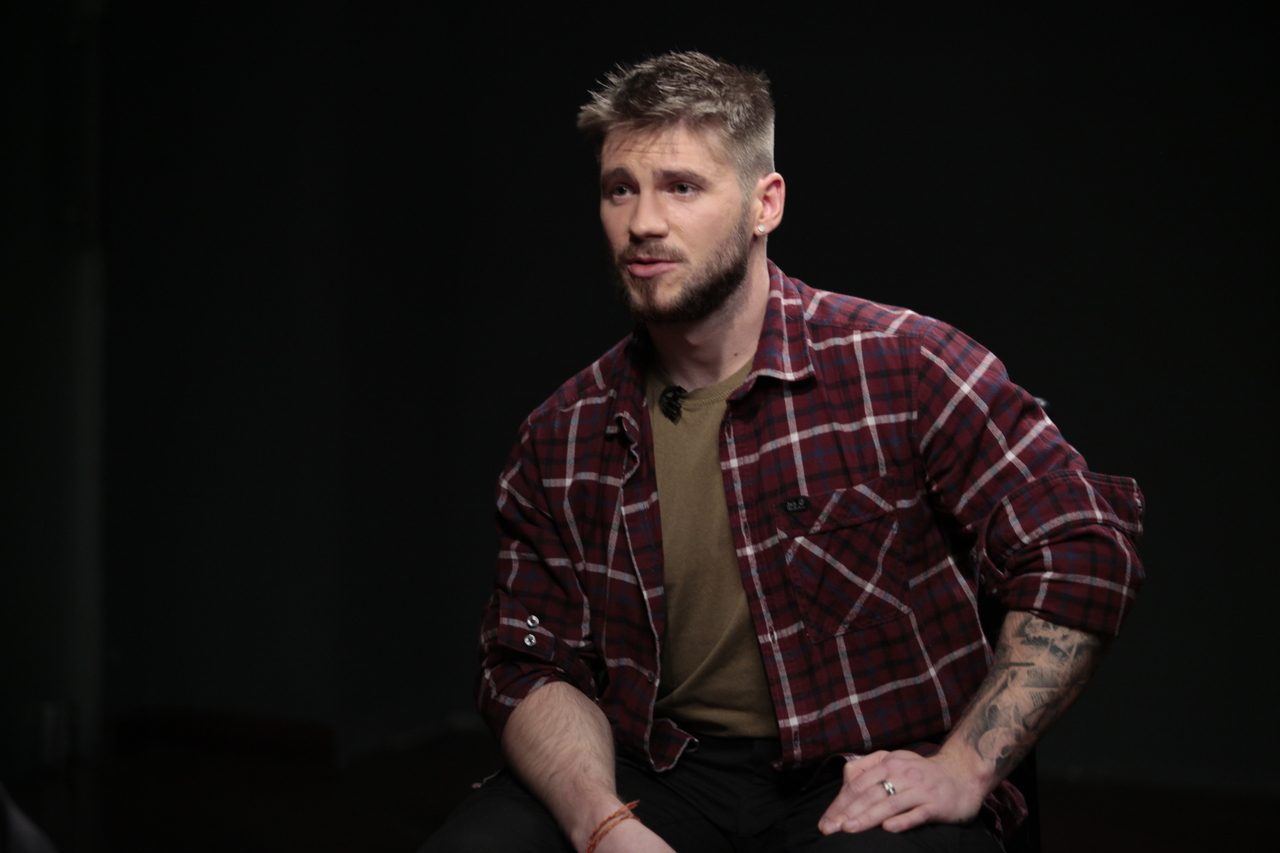
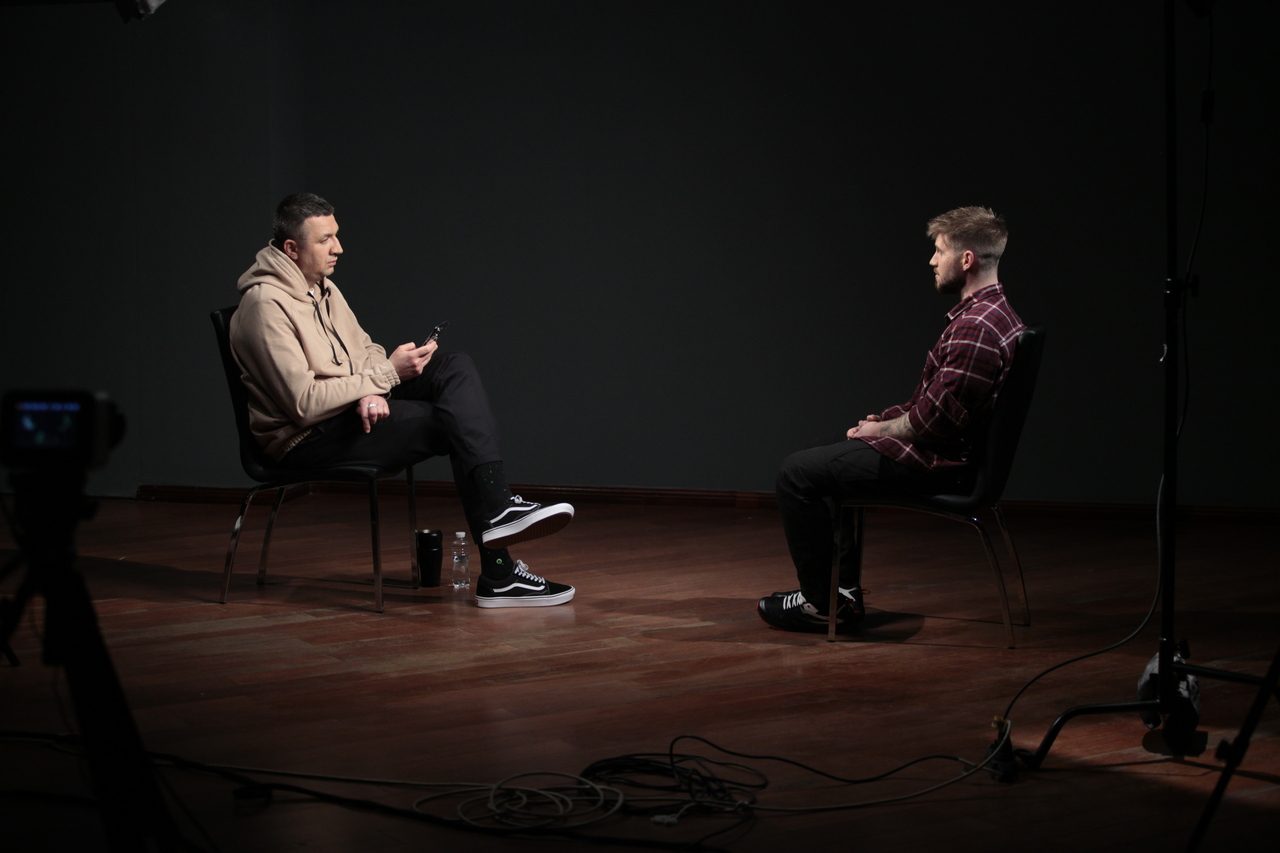
In the new episode of the Antipody program on the Iceland TV channel, ATO veteran, writer and blogger Valeriy Markus (Ananyev) spoke about the war and a possible Russian invasion, his attitude toward Interior Minister Arsen Avakov, and total Ukrainization.
Your phrase from the interview from the year before last, that “the Ukrainian language is sexy,” became a meme. A year and a half later, how do you assess the state of the adaptation of the Ukrainian language in our society: better, worse, or are there positive trends?
There is a positive trend. It is very small. It is like a wheel that moves with a strong screech, but fortunately it moves. But there remains fear because it is developing so slowly and so weakly. No institutions are emerging around it. All of this could easily and quickly collapse, and the impact of these years would be wiped out. That is why I still feel fear.
What should the authorities and the state have done, but did not do, so that the Ukrainian language would develop and not remain in the dire state it is still in today?
This question runs into many aspects of life in our society and our state. It concerns the media market, deputies and legislation. It is a very multifaceted issue. For example, the media market. Our entire media market worked for Russia: films, series, music, even people I respect very much, like Khlyvniuk (Boombox). This is by no means a stone thrown at his garden, but before the war he went to Russia and performed there, and he became popular there. He had Russian-language songs. Again, this is by no means a stone thrown at his garden. I deeply respect him and their work now. It is just that there was such a moment in his past.
And back then no one saw anything wrong with it, because there was money there and a bigger market. Because everything we had worked for that market, we did not form an advertising market, and many things that are quite powerful in Russia never took shape here. And when the war began, when contacts were cut off as completely as possible, the process will move much faster. But there is a hole there, it leaks, and many people cannot understand whether to go there or here. And many are really being sucked into that hole. Our own media market and advertising market are not emerging at all, or money appears but very slowly.
And at any opportunity, even this comrade who was on the “Golos” list, who owns some halls, whose concerts this year are 80% Russians. Supposedly, if you look at his public activity, he is Ukraine-centric, yet at the first opportunity he invites a whole crew of Russian artists here. And many of ours are not principled, and at the first chance they rush over there. That means our own music market, where people would want to work, is not emerging. There is no such money here. Here you perform and earn $10,000; there you perform and earn $50,000.
So people here take this and think, what difference does it make where you earn money for your embroidered shirt.
As for deputies: why don't we have a law that deputies should pass an exam in the Ukrainian language? Why isn't there one? First, it would immediately weed out a large part of Russian agents, because they simply can't be bothered to learn Ukrainian. Many don't know it.
I disagree with you here. I think highly professional Russian agents know the Ukrainian language much better.
And Avakov doesn’t know it.
Well, I don’t consider Avakov a Russian agent. It seems to me it is a different hypostasis.
I am speaking in principle, about people who do harm. There would be fewer of them.
I agree with your assessment. I simply don’t understand how people who don’t speak Ukrainian can sit in the country’s parliament. For example, when some conditional Buzhansky, there is such a deputy, starts talking as if he has nuts in his mouth or, excuse me, someone’s testicles, and says something. Dude, are you such an idiot that you cannot learn the language of the country where you were born and have lived your whole life?
I agree that, of course, there will be highly qualified agents of Russia…
No, I mean that a person is probably demonstrating some inadequate cognitive level if he cannot master it. When he says, “I don’t want to.” Well, if you don’t want to, then don’t be a deputy.
As for highly qualified Russian agents, obviously there will be some. But if we imagine this had appeared long ago, we would not have “Azarov,” we would not have Buzhansky, all these “lickspittles.” There would be far fewer of them, and their influence would be smaller. Their mass would be smaller. That would have been to our benefit.
Well, yes. One of my antipodes said that what can be explained by ordinary stupidity should not be explained by some cunning schemes. You criticized the statements by Avakov and Mendel about the so-called Ukrainian-Russian language. What exactly outraged you? And why are their views so idiotic?
It is some kind of cretinism, let’s start with that, it is some kind of cretinism. In all these things I see certain notes that I once heard from Mr. Arestovych in his “5th project.” He was not talking there about Hyperborea, but about how to reconcile the population within the country. He himself is Russian-speaking, and he was in favor of integrating the Russian language into Ukraine. I like a lot in his concept, but this thing about the Russian language is nonsense.
He explained it in such a way that, in principle, if you don’t know certain background details, you could agree with it. But he knows, as someone said, that any reasonable idea can be ruined if an idiot takes it up. And I see that perhaps Mr. Arestovych, when he got there, latched onto the story about Russian. That is, he has a big concept that he formulated. And they took the single most stupid thing from his whole concept and released it even more stupidly. That is really all there is to it.
I already “like” all of this. “Slobozhanska language.” What the f**k? Why these euphemisms? Write: illiterate Russian. I am from Slobozhanshchyna myself, I understand that this phenomenon does not exist. It is the same as “the Luhansk people,” in fact. Madness. What should Russian-speaking people in Ukraine do?
Live peacefully. No one is touching them.
Still, they need to…
If it is necessary for their activities, then they need to learn the language.
And for the activities of the country, the state?
Always. Do I need it so that people in Ukraine speak Ukrainian?
Yes.
Yes, I need it. But whether they need it is a different question. I understand that you cannot impose anything on people, especially accuse them of being somehow not real Ukrainians. Because that way we will provoke antipathy. A person will dig in and say: “I am on principle not going to speak Ukrainian.”
I switched to Ukrainian in 2017, and before that I was completely Russian-speaking. From time to time people wrote to me that, even though I was at war at that time, I was a bad Ukrainian because I wrote in Russian. Clearly I took it like a bull. I said: “I’m now not going to switch to Ukrainian on principle.”
But you understand now how painful that is?
Most people who lecture everyone about Ukrainian are the same group of people we talked about. There are fans of some personality, and there are fans of some concept. They discovered some concept of the bright side, switched to it, became Ukrainian-speaking, or were Ukrainian-speaking already. And staying on the bright side legitimizes their moral sadism. They lecture everyone around them. Either the desire to be above others, or the desire to feel important, the feeling that you have done something fundamental. And so you walk around lecturing everyone because you are better.
These people don’t give a damn (indifferent — ed.) about Ukraine or Ukrainian; it is just their way of asserting themselves. That is all. And no one benefits from it. Moreover, it only causes harm, because it provokes aggression from Russian speakers, who are told that they are somehow not right, that they are bad. No, they are not bad, they just haven’t got there yet. Responsibility always lies with the one who is smarter.
If someone considers themselves smarter, they need to try to establish this dialogue, find and choose the right formula of words to convey their thought to a person, to plant this sprout in their head, this concept, so that it matures. And they think: “Yes, indeed, if I switch to Ukrainian, I will benefit my country, I will even benefit my country’s economy.” That is, not some ephemeral things, but pragmatic ones: “I am bringing real benefit.” That is how we should work with them, not poke a finger and explain who is who and who is not.
Gentle Ukrainization? Or rather rational?
Yes, and it cannot be any other way. Ukrainization will either be rational, or this whole idea will disappear along with those who tried to push it. We do not live in an authoritarian system where they would take it and say: “Yes, ten hairstyles for men, seven for women, everything Ukrainian. Whoever doesn’t cut their hair this way, whoever doesn’t cry when my dad dies, everyone to prison.” So that will not work. In our system there can be no other way. Or rather, any other approach will not work.
And there should be such things in legislation: when a person comes to work, they are told: “Sorry, if you work in the service sector, in Ukraine the state language is Ukrainian. Either you learn it or look for another job.” That is the right way.
Do you have a sense that war is coming?
Do you mean in light of these latest events? Well, over the last two weeks a lot of people for some reason ask me, as if I have some competence in this: “What’s going on, what do you think, will there be a war?” And so on. And literally only yesterday I finally formulated some thoughts so that I could answer somehow.
First, I won’t be original when I say that the war has been going on for seven years already. And if we are talking about a full-scale invasion by Russia, it seems to me that when someone wants to attack, they don’t show it for a month for the whole world to see. It seems to me that everything Russia is doing now is simply a consequence of events that began after Biden’s inauguration: sanctions, statements and so on. It seems to me that Russia is just flexing its muscles, and while this is happening, it seems to me that one can remain calm. While this is going on, a full-scale invasion definitely will not happen.
So calm and quiet in this respect are more dangerous?
When they are posturing, it will definitely be calm, I think.
So you don’t have such an anxious premonition?
The thing is, I have been waiting for a full-scale invasion every single blessed day for the last seven years.
Have you gotten used to it already?
Yes. In principle I live with the paradigm that it is possible at any second. I was waiting for it a year ago too, so what has changed now? Has Russia become less dangerous?
If Russia were a nightmare or some kind of macabre, frightening picture, what would it be? Please draw it.
Did you watch Carpenter’s film “The Thing” from 1982? I rewatch it every year. I generally love Carpenter’s films very much. You know, there are directors, and as soon as the film begins you know: this is Tarantino, this is Carpenter. And I love Carpenter very much. There is the composer Ennio Morricone. There are two notes in the soundtrack to this film, but, God, how well they fit the theme.
So, at the beginning there is a scene where this monster first appears, when a dog infected by this alien spreads it to other dogs. And when it began to crawl out of the dog, that is probably Russia. When it, with its tentacles, decays, it is disgusting, and tentacles come out of it that try to seize everything healthy around it. Whatever exists harmoniously, it keeps trying to seize with its tentacles and turn into itself, something terrible and needed by no one.
I think if Carpenter had shot this in Luhansk, it would be even clearer to us. Because as you tell it, I have association upon association.
On Skrypin’s show you told how you received a combat award. You said you had been waiting for it and thought it would be some kind of pompous ritual event, something extraordinary. But everything turned out very formal. And I got the impression that you were a bit disappointed by this.
I was 21 at the time, if I’m not mistaken. I came to serve as a soldier, dreaming of becoming an officer. In my very first year of service I even collected documents to enter an academy in Lviv to become an officer. I remember I even once dreamed that I had become a captain. That was my dream. And by the end of my contract, obviously, all of that had already faded, plus half a year of war had already gone by.
But still, many of these things, how I had worked myself up, certain details remained. And on top of that the war began, and my attitude toward these things reached a new peak in my paradigm. Because I saw how, from time to time, people are rewarded and how it happens. For me the desire to feel that pride, to feel myself in the role of someone rewarded in front of everyone, was revived. So when it all happened in such a shabby way, it really disappointed me a little.
You are a person who risks your life in war. Do you need these awards?
First, the risk there is often unrecognized. You don’t feel it. Although you are there and people are dying next to you, there is still a sense that it will happen to him, not to you. I remember I had the feeling that I was immortal, that I wasn’t afraid of anything. And these awards. Well, how can you rationally explain to a person that there is something above their life? If you die, your life disappears, you no longer exist. You are simply gone, it doesn’t matter to you. Your central nervous system stops existing. So what could be more valuable to you than your life?
But the military oath implies that something does exist. And it is at the level of faith. It appeals to emotions. And all these rituals are needed to sustain this emotional background. Moreover, in situations when your psychological state is very unstable, even fragile, in very critical situations, when the battle is going not very well, let’s say, and you understand that now it is either captivity or death.
And when you put on the scales, let’s say, military glory or captivity, but staying alive. Maybe they will torture you, maybe they will castrate you, but you can remain alive. You’ll suffer for a year, then they’ll exchange you. A year of humiliation, a year of torment, but you’ll remain alive. And at those moments these very rituals are needed, these things that embody your oath. You swear. You don’t just say: “Yes, I’ll work for you from 8 to 5, I’ll sign a contract there.” No, you swear allegiance. Not for the term of a contract, but for your whole life. You swear to the nation. And so these things are necessary to sustain you. And the people who are supposed to uphold them defile them.
And what is the highest award for you? In the context of war.
I haven’t thought about it. Surviving or not surviving is a matter of chance, a matter of the moment. Awards, though, are something you have to work for. An award is given for some exceptional work. So for me the award would be the experience I could correctly analyze and integrate into my life. For me the award would be this unique experience and the awareness of it. It requires work, both physical and mental. That would be the highest award for me.
Are there things you would want to forget forever, or should a person remember everything?
There are things I am very ashamed of, but since we were talking about awards, that an award requires exceptional work, I don’t want to forget anything. Even what I am very ashamed of, because I want to learn to live with this experience so that it no longer bothers me. So I don’t want to forget anything. I would be glad if my memory were even better.
So a person must remember everything?
I didn’t say must, I said I want to. Because the more of my experience I remember, the more input I will have for analyzing the events I encounter in my current life.
But memory also holds on to many traumatic things. In general, is memory a gift or a punishment?
It depends on how strong a person is. If a person is internally weak, then obviously many things would be better forgotten. I know that many of my acquaintances killed themselves, and obviously something was tormenting them inside, something they couldn’t cope with.
So it can’t be universal for all people. I got through it somehow, somehow learned to live with it, and I am sure it made me stronger. But there was a period when I woke up every single blessed day with thoughts of suicide, every day for several years, and I survived it. It was hard. It was a very oppressive feeling.
But it made you stronger, you say.
I managed to survive it. Others did not. So here this is quite a valuable award, one that has to be earned.
So, based on your words, with this award you still have to learn to live somehow.
Experience, or rather the ability to use it, is already the moment when you have calmed it down within yourself. And if some event happens, and this crisis destroys a person’s immature picture of the world, then the person either gives up and disappears from this world, or finds the strength within to take this new experience and new input and build a new picture of the world with it, one that rests not on false stereotypes that exist only in certain societies, not on faith in something universal, but on something fundamental. Then it becomes stronger.
If the war returns to its hot phase, would you go back there? Even knowing that in effect you would be starting everything from the beginning?
God willing, I will come back from there.
Well, if the development is optimistic.
There are certain senses of personality in a person, what makes you you. When certain things happen, you understand that you need to act a certain way, because if you act differently, you will no longer be yourself. You will betray yourself. And if the active phase of war begins, when Russia fully invades Ukraine, I will have no moral choice. I will be forced to go there, to remain myself, to sleep peacefully at night.
I realize that I may not be able to return from there. But it is better to live less and be yourself than to live longer and hate yourself for something you once did and betrayed, especially on something fundamental. A week of life, a year of life or a hundred years of life are all relative. Sooner or later life ends anyway, and it is endless. Whether you had one woman or thousands of women, whether you read one book or a million, all of that, in the grand scheme, does not matter. Everything is relative.
In your opinion, in the face of the threat of destruction and Russia’s invasion, will Ukrainian society be able to consolidate in some way at least to the level of 2014?
After 2014 stagnation set in within our society. And it is still happening. And stagnation always leads to regression. In a calm state everything eventually leads to entropy. And here, I think, it is the same case. If in the face of a new threat, I think, of course everything will change. I am sure of that. I am confident that people will consolidate again.
You said the word “stagnation.” What does it consist of?
I just really would not want to name politicians’ surnames. In my view, the causes are tied to personalities. The previous president created a sense of security in society, a false sense of security. The appearance of work. He has something to be thanked for. I can thank him for us not becoming Russia, and for that I thank him. But in everything else, there was a great deal of harm.
And do we need to thank him for not becoming Russia?
Many people do, but I can thank him for that.
Well, because I, for example, am grateful to you for that. And to him…
Here we need to proceed from what definition we put into the word “thank.” By “thank” I mean that I acknowledge someone’s contribution to something. I acknowledge his obvious contribution to us not becoming Russia, so I thank him for that. But through various bloggers, the ministry of culture and the money that was poured in, they created a sense of security. And they even invented this term “traitorfucker” (zradoyob). So if someone was dissatisfied with something, that person was a “zradoyob.”
And they created around people who were dissatisfied with something an aura of marginality. That is why stagnation happened. And people swallowed it very easily, because many have a need for paternalism. There is a desire to lie down and sleep calmly. There is some powerful uncle there. I don’t have to worry and can lie down calmly to sleep. He will sort everything out there.
People, I think, swallowed it all. But in fact it was not all like that. Avakov was there. Protesters were forced to their knees in the snow. Servicemen and volunteers were jailed and killed. Many events happened. And after the inauguration of the next president I noticed that supporters of the previous one were scolding others for what the previous one had done. I did not get involved, but it looked funny. In fact, people relaxed, and that is why stagnation began.
In your opinion, can Ukrainian society afford to cultivate hatred within itself?
Hatred is an unconstructive feeling that in principle can only destroy. Hatred is an unconstructive feeling; it may lead to something good, but that would only be a consequence of chance. Hatred is uncontrolled, so no, we definitely do not need hatred, any cultivation of hatred. Even dislike of something, antipathy toward something, must be constructive. People need to be explained why something is wrong and why it should not be done.
What do you think, if a person sincerely loves, respects and considers worthy another person who engages in some kind of politics or some public, civic activity, and admires them, and at the same time hates those who don’t do this? We talked about the phenomenon of so-called “traitorfuckers,” “porokhobots” and so on. If you don’t love Petro Oleksiyovych, according to this paradigm, you are a nobody. Can these people be understood or not?
You can understand even Hitler. But my understanding of him does not justify his actions.
So what’s wrong with this person? They love a politician. Why can’t they hate that politician’s opponents?
First, the audience is always very different. Not in the sense that each person has a different audience, but even for one and the same person who admires someone, the audience is different. And for each person, what they admire, or why they support one person or another, the reasons are different. For some, these reasons imply hatred of someone.
For example, the most marginal find in this a need for moral sadism. That is, there is something like Petro Oleksiyovych, around whom there is an aura of the bright side. So if you are with him, that is it, you are on the bright side. And everyone who is not with him is on the dark side. And you can legitimize your sadism and hate someone, pour mud on them, write comments on the internet, write posts.
That is, they don’t give a damn about Ukraine, they don’t even give a damn about Petro Oleksiyovych. It is just a way to realize their inner, fucked-up needs. There is such a layer of people. But there are also simply supporters…
I simply don’t understand, I’m not sure there is any other model of love for a politician. Say, how are the people who admire Serhiy Sternenko different from the people who admire Petro Poroshenko?
I don’t know people who admire Serhiy Sternenko to such an extent.
I do. They hate in the same way. And what responsibility does the person who is the object of this adoration bear before the people?
I have noticed in myself, in my activity, that it is not about Serhiy Sternenko. Most of his audience, as I said, I have not seen such marginal people among his audience, including on the internet, but it is obvious to me that they are among everyone. Despite the fact that I do not produce any trashy content or content related to hatred. Nevertheless, even among my audience there are supporters who are ready to smear anyone who says something negative about me. When I noticed this, I decided for myself that one must be very careful with this. These are people of a very delicate mental constitution.
Second, on my side I bear responsibility for the influence on these people. That is, my influence must at minimum not be negative and must not marginalize them even more. And at best it should pull them out of this swamp and educate them, at least in some elementary concepts of life. For example, why is it impossible to end this war right now in some way other than surrendering and merging with Russia, or becoming its satellite? The reason for this is very simple. But most people don’t know it, and so they swallow like poison this mantra about “finishing the war in two weeks.”
The point is that both of them (Poroshenko and Zelensky — ed.) have supporters. But neither of them tried to educate people. Because a politician must be, let’s say, the average temperature of the room in terms of the education and intelligence of the people in the country. A politician must be a bit smarter in order to manipulate this mass. If people become smarter, the politician must become even smarter. Why would they do that and make their own job harder? As soon as they start educating people, they need to come up with more complicated sentences. Why? And that is why Petro Oleksiyovych bears a very great responsibility for what he has done to people.

Russian Attacks in Dnipropetrovsk Region: Two Killed, Seven Injured

Defense Forces Strike Four Russian Drone Control Points in Past Day, Including in Berdiansk

Britain Threatens Sanctions on Kremlin-Linked People; Poland Ready to Hand Ukraine Ammunition

Russia says it has completed "planned exercises" in the Black Sea

MVD: Fake Riots With Prop Blood Were Being Prepared Near Presidential Office

Law Enforcers Name Another Klitschko Deputy as Suspect

Berlin Holds Protest Against War in Ukraine; EU Prepares for Possible Russian Halt of Gas Supplies
North Korea Fires Ballistic Missile Over Record Distance in Five Years
Irish Fishermen Force Russia to Postpone Naval Drills

US sanctions in case of invasion of Ukraine could completely destroy Russia's economy, NYT reports
