
Comedian Viktor Rozovy: True Patriotism Is Love for One's Country
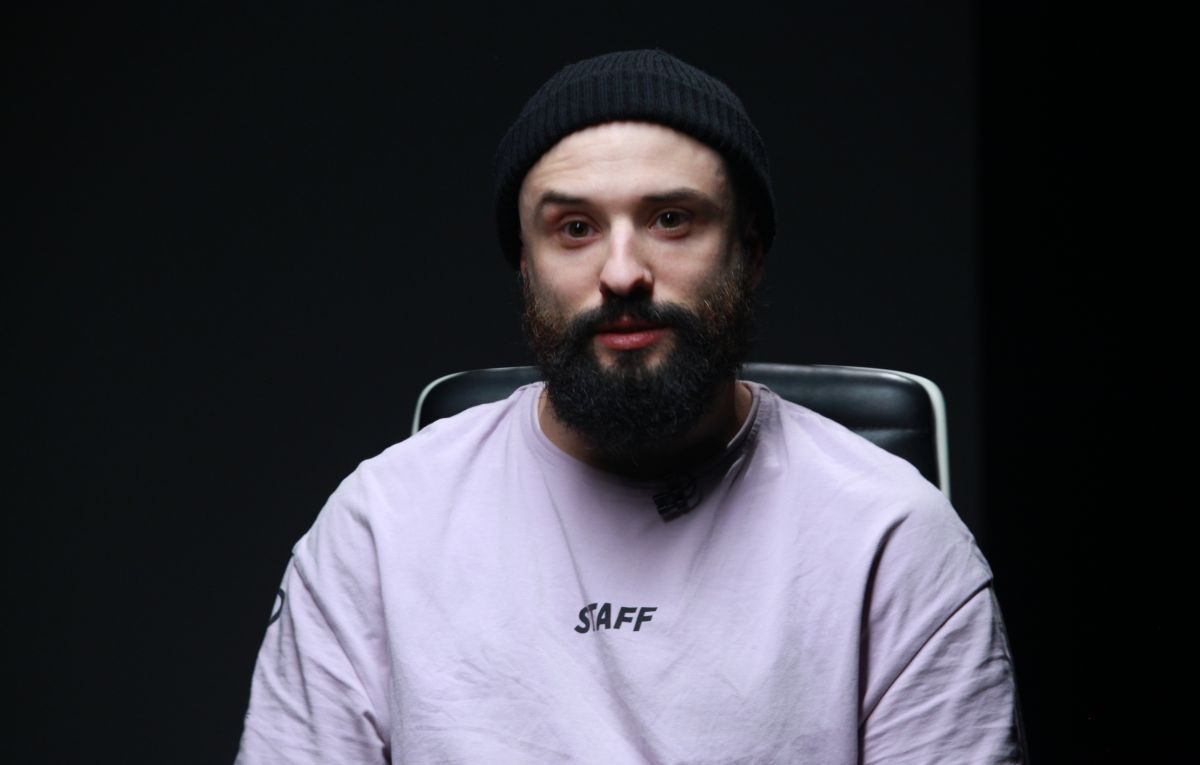
He also considers Ukrainian President Volodymyr Zelensky a patriot.
In a new episode of the program “Antipody” on the Iceland TV channel, Ukrainian comedian and participant of the 1+1 project “Prank Games” Viktor Rozovy talked about his attitude toward KVN, LGBT, the USSR and President Zelensky.
How do you feel about LGBT activism? Should people have the right to enter same-sex marriages in Ukraine?
They should. Honestly, I don't care at all. It doesn't bother me. Let them get married, let them march in parades. Absolutely indifferent.
You said that the so-called left now supports all these LGBT movements. What did you mean?
It's like a litmus test for the left. Because if it's not there, then they're not the left.
Why is that?
Well, freedom for minorities, freedom for ordinary people.
What's wrong with that?
Nothing wrong. There's nothing bad about LGBT at all.
No, I mean the left movements that effectively politicize this topic. Because LGBT can, in principle, be a matter of physiology, as far as I understand. Right? And it can exist separately from politics. Like anything else.
Your heterosexual identity, for example, can also exist separately from politics. You don't have to say, “I sleep with my wife because I'm a Poroshenko voter.”
I think the problem with the left right now, the left in general, if we take this global generalization of the left, is that in a legal society they are simply trying to occupy as many rungs as possible in the right-wing hierarchy.
That is, in some capitalist society they aren't trying to change the capitalist society, but just pushing their own people higher up these rungs of the hierarchy. Take gender gaps, for example. Now gender gaps are being leveled.
Is that bad or good?
I don't think it's bad, and I don't think it's unnecessary. At least right now, in Ukrainian realities. We exist within this kind of paradigm in general. I, for example, more or less understand politics. I know who the left are, I know who the right are, I know what conservatism and liberalism are, and what the basic principles of socialism are. I can even name the main ideologues of anarcho-corporatism and anarcho-syndicalism.
And when going to vote, what do I face? The bloc of Petro Poroshenko, the bloc of Yulia Tymoshenko, the Radical Party of Oleh Liashko, Voice and Svoboda. Who is that? Servant of the People. What is that? What political paradigm do we even live in? It's such absurdity. That is, how can parties just call themselves by a nice name? I go, I want to vote for Christian Democrats, for example. Where are they? Give me social liberals.
Well, in our country Christian Democrats are probably Poroshenko.
Well, it's not clear. How am I supposed to guess that? Even if you look at the European Parliament, everything is clear there. There are socialists, the left, social liberals, conservatives. Everything is clear. We don't live in a political paradigm. Right now we live more in a geopolitical paradigm, even in geopolitical uncertainty.
We live at the junction, the intersection of two worlds: the European Union and Rashka (Russia, in slang). That is, between strong geopolitical players. And we haven't yet determined where we're going. Are we Europeans, part of the European community, or are we still heading toward those nostalgic grandpas and grandmas who want bread for three kopecks? Who are we? I read Svoboda's election program, so Svoboda is not a right-wing party, as much as we would like it to be.
No, it's effectively a left party. It's like thinking, I'm not comparing Svoboda to National Socialists, but the National Socialists in Germany were a left party, a classic one, in fact.
Svoboda just has a clause, so you can say “I am a Ukrainian nationalist,” and Svoboda has a point about ensuring the activity of trade unions and the right to strike. So Karl Marx would come up, shake Tyahnybok's hand and kiss him right on the lips. We live in geopolitical uncertainty. And this geopolitical uncertainty present in our country, when it's not clear at all who is left, who is right, and what is happening in the country, we are eliminating gender gaps.
Well, we practically don't have these gaps. More precisely, people here don't know they exist. That is, we have a man, a woman, and that's it. This problem isn't articulated here. And honestly, I don't see this problem at all. They just haven't matured. Discussing the firmware of the twelfth iPhone in the Middle Ages or the Mesozoic.
That's exactly what I'm saying. The left doesn't deal with the problems of the left at all. Not with what they should be dealing with. That is, ultimately the whole essence of the left should be the death of the state, in the transition from vertical to horizontal. But here, the left are busy staying at the top of the vertical. Well, like our left, the left all over the world now does this.
Well, that's if you take communism. Because socialism doesn't imply the death of the state.
Well, ultimately.
Well, if you consider it as a stepping stone. Again, this is a Soviet concept, proposed, by the way, by Lenin, that socialism is a transitional stage toward communism.
But still, it's a transition from vertical to horizontal. In any case.
Yes, but not the abolition of the state. Socialism was supposed to have a state, and communism was supposed to be, like, I don't know, like the kingdom of heaven.
I don't want to compare the Soviet mess with socialism at all. That is, there was nothing socialist there, absolutely nothing.
We had socialism in one form...
It was totalitarianism.
Totalitarianism, absolutely. Under socialist slogans.
It was the same Russian imperialism, just with ignoramuses in power, and that's all. I'm just curious how communists explain to themselves that communism was supposed to lead to the death of the state, while Stalin said we would come to communism not through weakening power but through its maximum usurpation. And all the communists go, “yeah, right.”
And now even the communists who are alive still think within the framework of a strong state, a strong hand. That is another absurdity. And this absurdity is probably connected with the fact that they haven't even read some conventional Marx.
Why bother.
Well, yes. There's the Soviet sovok.
The main thing is continuity. Grandma was a Young Pioneer.
Yes. It's probably just nostalgia for the youth of this older generation. They were young, they were strong, they were beautiful, they loved, and it's some kind of nostalgia for those times. Whatever, how many genocides happened in the Soviet Union, whatever, but bread was three kopecks.
I think Freud probably works here. In any case, nobody really cares about bread for three kopecks or sausage for two twenty. That's Freud. Someone wants to suck *** like 50 years ago, and someone wants it to stand like never before. Maybe so. You agree that partly it could be like that?
I don't know, maybe it's some kind of bitterness toward a new, young, stylish, beautiful generation.
That's also Freud.
Maybe.
How important is political correctness? How important is it to choose your words?
Not important at all. Political correctness is absolutely not important. I'm against political correctness. In any case, censorship has no right to exist. These are all labels. And labels appear from a lack of arguments. When you have no arguments, I'll call you a sexist. You're a sexist. And you can ruin everything with one phrase. No.
Well, calling someone a sexist isn't offensive. But if you call me, say, “khokhol” (a slur for Ukrainians), I could smash you. That offends me.
That's right.
Well, okay. Then within the framework of a certain society.
That's just an insult. But the language of political correctness is when people get labeled. Like, you can't say that, because it's sexism, you're toxic, you're an abuser.
Let's cancel you.
What's that?
Well, cancel culture. When a person is canceled everywhere. Like, all social ties with them are cut. For me, it's called a f***ing Komsomol boycott. Like when you did something wrong at school, and at the class council, I wasn't a Komsomol member, I was a Pioneer, they'd announce a boycott.
And this is exactly what happens within this cancel culture. Our passionate activists constantly use it, and they call themselves right-wing although they're actually left.
There are no right-wingers in Ukraine. It seems to me there aren't.
What about Azov, about Biletsky?
It's a coincidence of historical circumstances. These are consequences of a post-Soviet, post-totalitarian society. With all due respect, but they're not right-wing, they're not right-wing. There's no idea in Ukraine about empire. Well, who supports, for example, the conquest of Kuban? Who would support that? No one. Ukrainian nationalism has always been built on the idea of a national liberation struggle.
So we're not Russophobes, we have no Russophobes. We have anti-imperialism, anti-totalitarianism, and the striving for freedom. Which runs orthogonal to the ideals of Rashka, that is, authoritarianism. Constant ideas of expanding state borders, some kind of militarism, a personality cult. We simply go orthogonal to all this, and that's it. They call it Russophobia, but it's not Russophobia.
No, well, if someone else were oppressing, like the same Poles, they were multiplied by zero in Lviv.
In which eighteenth year? The Ukrainian Galician Army. Nevertheless, at the Cemetery of the Eaglets, they put up a monument to the fallen soldiers of the Entente, and also a monument to those who died on the side of the Ukrainian Galician Army. And Kwaśniewski, if I'm not mistaken, and Yushchenko signed a treaty on friendship between Ukraine and Poland. That is, on the graves of people. You know, in a few years someone will sign a friendship treaty on the graves of Ukrainian soldiers and separatists too. History has this kind of flow of time.
Recently I had Ms. Farion as a guest here. And she was absolutely fundamentally, scientifically and professionally convincing me that the word “zhyd” is normal. That it's normal to use the word “zhyd” about Jews. And supposedly that's how it's written, it's written in all languages, it's even in the Bible. Supposedly Poles for some reason don't take offense. And Shevchenko, whom she kept invoking endlessly. And by the way, I say I changed my mind.
If it's Andre Gide, is that okay?
I don't know, I'm not sure that if I write his surname now, you won't be banned on Facebook. Well, there's a famous meme about a guy with the surname Gandon, who even won a lawsuit when someone called him a condom among politicians. The politicians filed suit. And he says, “Oh, that's some French sci-fi writer, Gandon.” Ive Gandon or something.
I'm serious. And he won the case. Must we say “Roma” about people who are called gypsies or are used to being called gypsies, or say “Jews” about people who are sometimes called zhyd?
Let's hear the question again.
I'm trying to phrase it politically correctly, because I'm the host. Come on, second try. There are different names for different ethnic groups in Ukraine. Let's say there are Jews, who, in the tradition of Galicia, conventionally speaking, I understand, following the Polish model, are called “zhyd.”
Roma, the word “Roma” appeared not so long ago. There was even a Gypsy theater, there were even honored artists of Gypsy theaters, so they were gypsies. Do we need to call them by these words? In our own country, or do we have to set rules about who to call what and how? Or should we listen and say: let's rather be Roma, not gypsies.
You know, in the case of the Roma, I don't know how much it concerns them. How worried are they that they're not called Roma? Well, you've seen it. Do they seriously care about this?
No, well, the Romani diaspora has more important matters, the gender gap again.
Exactly. Why is it only “Gypsy baron” and not “Gypsy baroness”? Well, there are no Gypsy baronesses. Feminists.
By the way, they've seen those golden houses built over there. Storm them, damn it. And why are there no baronesses, indeed.
Strange.
The answer is accepted. How many tattoos do you have?
I don't count.
But you're very covered.
Yes. At one point I had such a period in my life.
No, I radically welcome that, I'd say.
Blue disease, right? Are you trying to quit?
No.
And I'm trying.
I'm not drawn to it, but if I see something beautiful, something that happens in my life. Well, let's say I have a child, and if I have another child, I'll definitely tattoo their birth date. I don't know why. Well, I just want to. So I have my son's birth date, and I want to have it on my body. You said you can't stop.
Yes. Just once, for a year, every day, I walked around wrapped. Something hurt. When you get tattooed, your temperature keeps rising. And somehow it's not cool at all.
And you want to quit?
Already quit. But the point is that tattoo artists keep calling me, “Come on, I'll ink you, come on, let's make a sketch.” By the way, which is correct: “ekskiz” or “eskiz”?
Eskiz.
I apologize for my ignorance.
I forgive everything for Marcuse.
By the way, I'm now reading “Eros and Civilization.” I'm finishing the ninth chapter, about the aesthetic dimension.
Back to tattoos.
Yes, we went a bit off in another direction. I'm trying to count, I don't count. I had tattoos here and I covered them up. They were well done, but I once had this habit of just searching for sketches on the internet and getting them inked.
So they were like pop-style.
Yes, it was a copy. Just found on the internet.
What was it? A wolf?
No, a bathyscaphe or whatever it's called. That one for divers.
A diving suit.
Exactly that one, the helmet. It was depicted on the ocean floor. Then there was something else depicted on me too. I covered it up there.
Do all your tattoos mean something, or are they just there?
No.
So all my tattoos mean something.
When you're getting something inked for a year, you don't have time to put some sacred meaning into it.
What is true patriotism?
And so we smoothly moved on. Patriotism. True patriotism. In love. In love for the country. I'll answer in a banal way.
I'm not sure that's not the best answer I've heard. Because everyone starts getting pompous. But you can literally translate it and that's all. The semantics of words exist for a reason.
Love for the country. I love my country. I have no inferiority complex at all. I'm proud to be Ukrainian. I'm very proud. I'm not proud that there's a state, power, that we can capture everyone, that we have an army. I'm proud of my people, I love my people. I love my people very much.
I really like Ukrainians in terms of protest, in terms of expressing their will. If something doesn't please them, that's it, pickets, strikes, the right to strike. That's it, Maidan, everyone to Maidan.
And Maidan in general is a left format, probably? Or is it some pure form of human will? Closer to anarchy.
In any case, some manipulations followed later. I just read a book about psychological influence. It describes how you can gather a rally and how to disperse it. In Lviv there were similar situations. We have that one store, Epicentr. And there was a rumor that the Regionals were keeping it.
Gerega, yes.
Well, I didn't research that issue.
And now very big patriots, by the way. They're the title sponsor of the Ukrainian national football team.
Exactly. And there was such a technique back then: people gathered. And people went, it seems, to the main police department or to the SBU office in Lviv. It was night then, when all the district police offices were smashed. But at one point everyone was told, “Come on, let's go to Epicentr,” because the Regionals are keeping it. And this whole radically minded crowd went.
Some went on foot, some got on a minibus, some called a taxi, and it all dissolved. That's how you can manipulate in such cases. And regarding Maidan, I think in any case it was a very strongly positive experience for Ukraine, in which the nation somewhere rallied even more.
Yeah. So in any case it was more in a legal context. That's why our Maidan, I think, is what so upset and frightened Moscow, because it was clearly nationalistic.
Ukrainian nationalism still isn't a right-wing context.
It's still a struggle against the metropole, against the empire, all that.
Yes. Well, that's my subjective view.
No, I understand, I agree with you. Why I asked: even some pure form, not burdened by a specific political paradigm, is simply the striving for freedom, not even fully conscious.
Most likely. I'm saying Ukrainian nationalism cannot be compared, for example… Well, it's the same as Irish nationalism. That is, in any case it's an anti-imperial tradition, anti-imperial views. A struggle against totalitarianism, against some form of authoritarianism and the oppression of man by man.
The fact that historically some people in our country stand under swastika flags or Celtic crosses is a historical coincidence. With all due respect. Well, guys, you're not right-wing, you're not right-wing.
Can a Ukrainian patriot not know the Ukrainian language?
Well… they should learn it.
You said your mother speaks Russian at home.
She tries to speak Ukrainian.
How is that possible in Lviv?
I just come from a Russian-speaking family.
You studied in a Russian-language school.
Yes. But there were many teachers who were always pro-Ukrainian. And when I walk into the school and there's a big sign, “Pride of being a Lvivite.” Even despite the fact that it's a national minority, there are still those patriotic attitudes. I always positioned myself as Ukrainian, regardless of the language I speak. But still, for moral and ethical reasons, I switched to Ukrainian.
So, did I understand correctly that a true Ukrainian patriot still has to learn and know it?
At least try. A true Ukrainian patriot should never mock a person who is trying to switch from Russian to Ukrainian. This is very important. Because being mocked is like the ninth circle of hell, when you mock someone for saying “alivets” instead of “olivets” (pencil). If a Russian speaker wants to switch to Ukrainian and you start mocking him for words he says incorrectly, then you're a damn bastard.
In your opinion, is Zelensky a patriot?
I think so.
Describe Zelensky's main traits, considering your own experience of communicating with him.
When I communicated with him, he was a very open, positive person. Without pathos, without any excessive attitude, as a very good person. How much his political position has changed him, I'm not ready to reflect on. But yes, he's a good person.
Was it right of him to go into the presidency? Would you rather he had kept doing what he was doing?
Well, that's his right. We're left on our own. You can't tell a person: come on, dude, do what you do, come on, you don't need this. Well, if he decided so, it was his right.
What is he doing wrong now, in your opinion?
In a sense, he's loosening the grip on the pro-Russian segment.
Explain.
Personally, I don't like that, for example, from somewhere suddenly these people have crawled out, I think we all notice it. And artists returned, for example, who had no right to return to Ukraine. Let them just stay there. I don't like that. Those people who performed in Crimea. It just triggers me very much.
When I was studying at university, at the Lviv Polytechnic, every year I went from the Polytechnic to Alushta. We had a recreation base there, and it was just paradise on earth. It was damn awesome there. I can't describe it. And the fact that it was taken away triggers me very much. So now I have no way to go there, at any age.
It triggers me very much, and I just hate people who represent the state that did all this, and go there and perform. In other words, that's all. These people should be denied access to our country, whatever views they have. That's all. Just f*** off.
A fair proposal.
It's my personal opinion, I'm not imposing it on anyone. That is, for me it's some kind of trigger that provokes me into aggression. It's bad, but I have it, sort of. I have a very negative attitude toward it. I would ban it, and not for three years, or however long they ban it now, four. That's it, get the hell out.
Even in KVN there was a precedent when a team from Belarus didn't go. For moral and ethical reasons, probably. They said it was for some other reason, that there was something like coronavirus, something else, but everyone understands perfectly.
Is “The Laughter League” a good story?
Yes, very much.
Why? How much is it like KVN? I saw in some podcast that you jokingly said they just copied KVN and made their own.
No, I wouldn't say that. “The Laughter League” is Nietzsche. All the moral values of KVN have gone to the historical dump.
And Maslyakov died.
Maslyakov died, yes. That is, a team like ours, even despite the language, if a team like ours were Russian-speaking, it would never have any opportunities at all. None at all. That is, the system in KVN is so rotten that just, well…
And at the Laughter League festival we performed in borrowed sneakers. We were so poor that we didn't even have money to buy matching sneakers. So we just borrowed them from our colleagues from Ternopil. They have a team there, now called “Zbirna Zarobitchan” (The Migrant Workers' National Team).
They have a certain concept there. As if migrant workers returned to Ukraine and play for them here. Back then the team was called “Liapas” (Slap). And we borrowed sneakers from them to perform at the festival. It's pure nonsense and absurdity. Such a thing can't exist in the world of KVN.
What relations do you have now with Studio Quarter 95 and their production companies? Do you cooperate?
There's a very complicated system. When you're burning with creativity, legal department representatives give you something to sign, and you don't check it, you just sign it because in your head you're thinking about a performance, something fifth, tenth, you're trying to finish some jokes because you have to go on stage, and they tell you to sign a contract, and I'm like, well, okay. And then it turns out that even your Instagram belongs to them.
You raised a very important topic: that you have to speak your own language, and that when speaking Russian in Ukraine, you still use not the original, but some copy, some calque, maybe not a simulacrum, but still a copy.
And accordingly, you narrow your own consciousness and toolkit for understanding, and it becomes much harder for you to describe what you see, draw conclusions and reach new ones. Right?
Yes.
This is very important. Recently Ms. Farion was here, and she opened up to me from a completely different side, an unusual one. And she also talked about this.
About what exactly?
Namely, about the importance of the Ukrainian language in Ukraine. As trite as it sounds, it's precisely in the context of forming consciousness. Not that we must speak Ukrainian so that we speak as our grandmothers or great-grandmothers did.
Well, that's also important, actually. It's important in the sense that we, so to speak, defend our own, but primarily it's important from the point of view that every language is a planetary heritage, absolutely. And Nabokov, even when he received worldwide recognition, wrote “Lolita” in English. So this is very important.

Russian Attacks in Dnipropetrovsk Region: Two Killed, Seven Injured

Defense Forces Strike Four Russian Drone Control Points in Past Day, Including in Berdiansk

Britain Threatens Sanctions on Kremlin-Linked People; Poland Ready to Hand Ukraine Ammunition

Russia says it has completed "planned exercises" in the Black Sea

MVD: Fake Riots With Prop Blood Were Being Prepared Near Presidential Office

Law Enforcers Name Another Klitschko Deputy as Suspect

Berlin Holds Protest Against War in Ukraine; EU Prepares for Possible Russian Halt of Gas Supplies
North Korea Fires Ballistic Missile Over Record Distance in Five Years
Irish Fishermen Force Russia to Postpone Naval Drills

US sanctions in case of invasion of Ukraine could completely destroy Russia's economy, NYT reports
