
MP Viktoriia Siumar: a peacemaker or an alternative-free politician may win the presidential election a second time
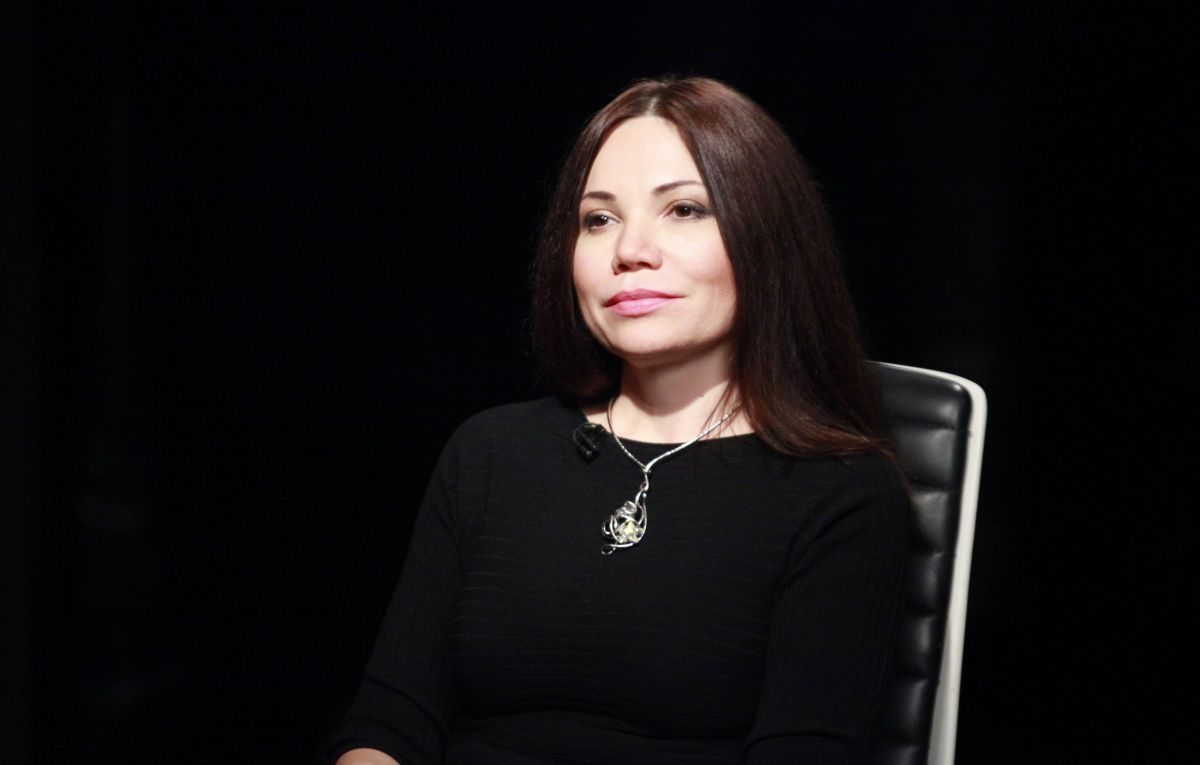
According to Siumar, she personally saw flags of the 'Odesa People's Republic'.
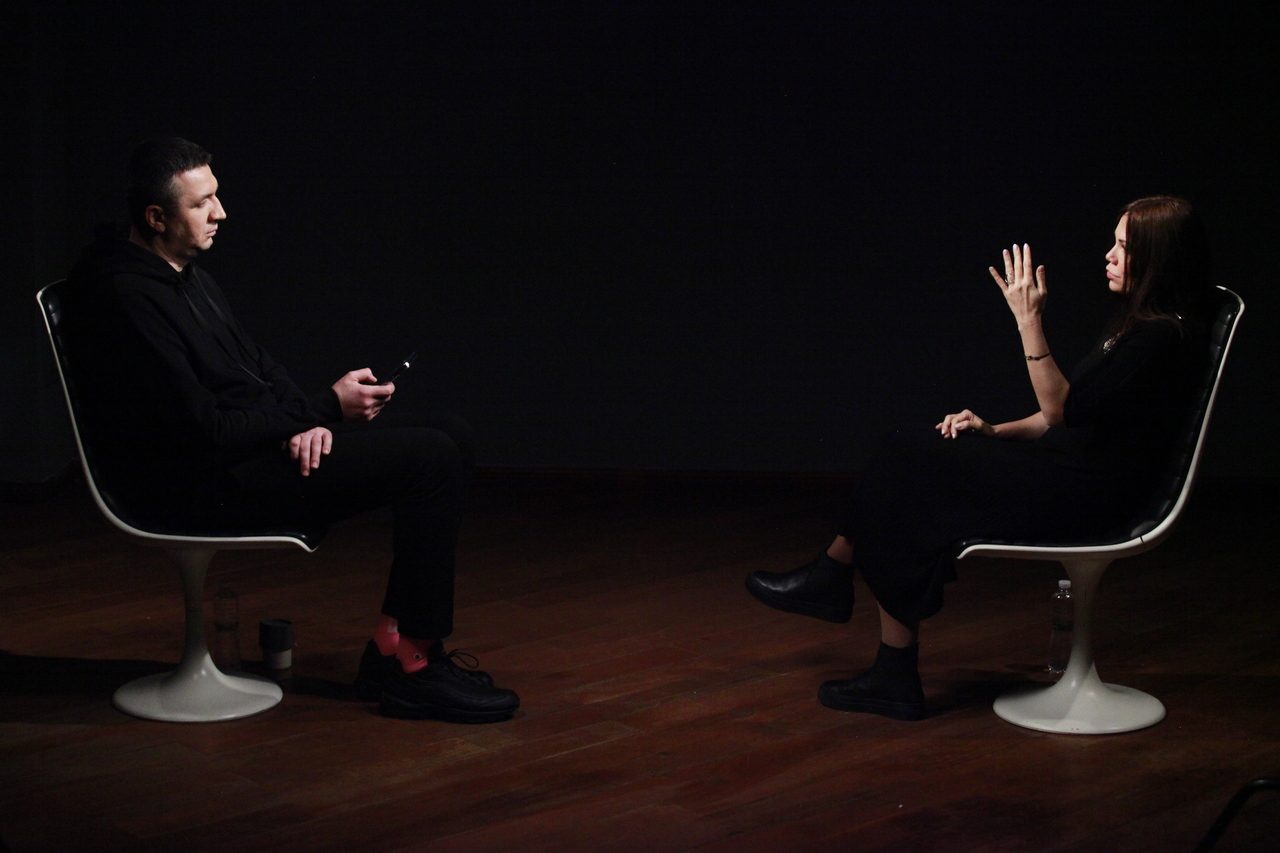
In a new episode of the Antipodes program on the Island TV channel, People's Deputy of the 8th and 9th convocations and former deputy secretary of the NSDC Viktoriia Siumar talked about the occupation of Crimea, opposition work in the Verkhovna Rada, the Bellingcat film, sanctions against Medvedchuk and the candidate who will win the presidential election in Ukraine twice.
I remember two of your speeches, when you were tearing into Zelensky and voicing claims at the top of your voice, practically impersonating him. Those were the kind of words that would offend him. I'm not saying you were swearing or anything like that. It coincided with Zelensky's statements that, supposedly, in 2014 they gave up Crimea and so on. So was that the reason for your resentment?
It really was after his speech. This was an address to the people, to parliament. And yes, it was there. You know, yes, it got to me, I won't hide it. About 2014 and what was going on there, and how hard it was and how close to the edge it was, some hours of possible loss: life for many, sovereignty for my country. Since it was an extraordinary effort, when we began meetings with journalists at 1:30 in the morning, we had to explain why certain sentences couldn't be said. And they already had logical questions. Right questions, about cause and effect. But it couldn't be said. Because it would really cause panic, the situation is extremely difficult.
And when you came to power, and you had an uncontrolled army, uncontrolled security services, a bunch of agents and everything in the world, and foreign intelligence services give you reports on what is happening, because nobody gives them to you from the Ukrainian (services). And you ask the defense minister: what to do? And he says: listen, we don't know how many tanks are capable of leaving the barracks at all. They simply haven't driven for a very long time. You understand, only people who were involved in this process, who at least knew that reality, can somehow discuss this story. But when a person who was not involved in it before, and without understanding, simply uses popular narratives taken from sociology, and I understand that narratives are mostly worked out today on Bankova Street, and it is very technological. I can agree with that. But when you understand that it was at the edge of life and death, really, and they are now just playing with this in order to say a successful phrase, toss it out, that's what made me furious.
No one gave up Crimea. Russia occupied Crimea. And it occupied it, probably, building such a plan. And it's good that now there is this pressure with the Kharkiv accords. I tried, if you look, in March 2014 — I wrote about this in blogs on Ukrainska Pravda — I tried to set this discourse, that, good people, Crimea was, unfortunately, doomed and depended on Russia's will at the moment when the Russian military contingent there exceeded the Ukrainian contingent. Significantly — it exceeded it twofold. And this became possible after the Kharkiv accords allowed it. The Kharkiv accords not only doubled the presence of Russian military, they allowed them to use airports, they allowed them to redeploy without notification. And, in fact, the seizure happened just like that. Tell me, please, is Russia so stupid a country that it did not plan this during the Kharkiv accords, understanding what it needed, what opportunities, to carry out such a 'gentle' occupation.
I think they understood everything. They understood that Yanukovych would not sit forever. I think they even calculated this person's psychotype. When they elected him, they understood that Ukraine would hardly tolerate this uneducated handyman. Because you can treat our society however you like, there is still a certain level. And even now I imagine what they might accuse Zelensky of, or, on the contrary, someone will accuse Havryliuk, meaning different political forces — there will always be some figure they can accuse of unprofessionalism, but come on, a twice-convicted jailbird.
So, the Russians understood what they were doing, and now the Ukrainians who prepared these accords. They could have calculated what the Russians needed the possibility of military redeployments for.
I know how a document is prepared, you know how a document is prepared. Visas are put on this document, right? I think you clearly imagine who had to visa this document. Who had to do it? The defense minister, the security service, the border service, right? I'm not even saying that the speaker of the Verkhovna Rada and the president at the time signed it.
And the prime minister signed too.
Azarov. Look here. At least two figures of these events were in Ukraine all this time. These are Lytvyn and his brother, who headed the border service.
You know, the fact that hands didn't reach this topic is one of our miscalculations. I'll tell you frankly. Because it's obvious that this was the basic reason and cause why Russia succeeded. Probably not the key one, because indeed the betrayal of Ukraine's top officials at that moment, including in the army, including Ukrainian units deployed in Crimea. You know, many heroes later appeared there, but it's real. Listen, we understood that if it started now, in what was the most difficult part of the story, we could start shooting, but there was no chance of victory. Moreover, we understood that there was the Georgian scenario, which we have already seen. When the Georgians did it, and Russian troops barely didn't reach Tbilisi. Remember, they stopped 60 kilometers away? And foreign intelligence told us clearly then: friends, look, if you start shooting in Crimea…
There, several units could be found that were ready to carry out orders, as they considered them, of the then 'illegitimate' president Turchynov or the head of the Verkhovna Rada. They said: listen, we have a legitimate government, we have a legitimate president, we will wait. Because otherwise we would commit a crime. And most said so. Which we also allowed, strategic planning: 80% of our military personnel who served there were from there, their families lived there — on the territory of Crimea. But some units could be found.
What would we do? These units would fire the first shot. The Russians say: they provoked, but the cleanup would not only be in Crimea. We understood that this whole machine was already standing at the border, and we understood which divisions were standing. There was the Sochi Olympics; after that all the troops that had been moved to southern Russia, supposedly for security during the Olympics, went back. Back there, to near Rostov, and further to the border. And that single shot was enough for that norm of Russian legislation on protecting Russian citizens on the territory of other states to be put into practice. And then there was also the State Duma decision, remember?
I remember. And what was stopping them from killing one of their own?
They were very afraid of such a provocation. Very afraid. We had information that Putin and many military generals were sitting then, and they were considering a variant of such a mainland special operation. Of course, the goal was to return the 'legitimately elected president' here, to suppress this 'junta'. They understood they could enter without problems. This would be very traumatic for Ukraine, it would be hard to hold these territories. And they needed a certain period to prepare their people who could become the government. They had already played this out in Crimea, and in fact this 'Russian Spring', which began in Donbas, was evidence of this. They really wanted to go further. Nobody thought it would be limited to Donbas, that little piece. They wanted it to burn everywhere — up to Transnistria. To provide Crimea with such a border with Russia. So that it would be Russian territory, or at least a gray zone.
I personally saw flags of the 'Odesa People's Republic' — they had already been sewn in Rostov — and our border guards were simply detaining batches of these flags. They did everything very symbolically, these Russians. That's how they approach it: we are an imperial nation, there must be a symbol, there must be a flag, a coat of arms, a leader, everything must be planned out. And further, they brought various quasi-state institutions to the uncontrolled territories. Their own tax service, for example.
Why didn't they go on?
They calculated that they wouldn't be able to hold it. Do you know what they initially were repelled by? Putin's rating was very high in Crimea at that time, something like 45% trust. But they didn't take into account that there is a partisan movement here. They calculated that these territories could be seized, but they could not hold them.
That they would get Chechnya, but many times larger.
Yes. On a much larger scale, many more zinc coffins would come back to Russia.
Well, plus it's financially very difficult.
And financially, to maintain afterward. Now it's hard for them to maintain these regions. Crimea has consumed a huge amount of the Russian budget. And will consume even more. But nonetheless, such plans existed. And for us this was also a huge threat. We could really lose Crimea. It could have ended in a split, could have ended in some dismemberment even. Because someone could have become interested, we understand, that we also have not-so-friendly stories in the West. Both Bukovina and Transcarpathia. We are being frank here now. They could have taken advantage of this.
And even when there were orders from Turchynov himself to sink ships. He said: if you can't take the ship out, because Cherkasy has been withdrawn… Well, it's good that we have such heroic examples. Of course, the order was to take it out, remove it… Then he (Turchynov) said that if you can't, then at least sink it. Take them, flood them and sink the ships. And people simply took suitcases of money from the Russians and released — sold these ships.
And who among those who refused to carry out the leadership's order then? Were there people who refused to carry out their orders and then went on to serve?
Well, if they refused, they stayed there. Do you remember Admiral Berezovsky?
Of course.
Just imagine: I start working in the first days, and Tenyukh submits a proposal to appoint the commander of the navy. So, Berezovsky. A general, a combat officer, professional, we can save the fleet. And imagine, it's the defense minister, from Svoboda, submitting this candidacy. He was appointed, because quick decisions were needed. If people come to you and say that this person is capable of saving the Ukrainian fleet. And this person was appointed in the morning, and in the evening betrayed and swore allegiance to the Russian Federation. And they tell me: Vika, come out, explain, tell the country about this. It still hurts me. If I were to drag this out of my memory, I wouldn't wish something like this on anyone.
I just see how you're getting worked up right now in real time. So the reaction in parliament becomes clearer to me. Although I don't know you from that side.
Politics is a power sport. You need to have balls, brains, a backbone, and the ability to adapt to various situations in order to get somewhere. I'm curious how the current guys, who supposedly didn't have any of this, are trying to master it all. And still, let's be frank, they hold on for a long time. What we've seen today, Razumkov managed to stop this rating. Because, to be honest, if you want to ask me whether Zelensky has become a patriot and realized some sort of threat to national security. We have no illusions that he just… Well, they painted him a theme: a second term, a pro-Western electorate — you need to get to them, you need to push others out of there.
But I have no doubts that Zelensky is a patriot, just as I have no doubts that Poroshenko is a patriot.
Look, Zelensky wanted to achieve peace for a very long time…
We understand that this is a matter of influence groups. We won't mention Rainin, yeah?
I myself spoke with him. And I heard his system of views from him personally. Maybe he has transformed and evolved them. Because it was still before the elections.
You yourself know what polishing a person goes through. I'm sure that Poroshenko before '19 and Poroshenko after... I'm sure these are two different people.
Still, I tend to think that as of now he is playing out the scenario of a political-technology event in this field. And again, this is a technological scenario. How much ideological truth there is inside the person, I won't assess. We'll see. By the way, I think this is good for the country. Certainly, when your leader understands that the EU is our strategic perspective, an open world is our strategic perspective, that Russia is an enemy. I didn't hear it in such direct articulation, but probably it comes to the realization that serious, let's say, restriction of Putin's crony's influence is underway. That's true. It's a concrete, very serious step.
No, I heard that Russia is an enemy, it is articulated absolutely clearly.
I think there is also the idea of achieving peace, signing some peace agreement, and trying to run for a second term on that basis. You understand who can win the presidential election a second time? Either a person who will truly become a peacemaker, who will say: I brought peace. Here, I was elected, I said that 'it's enough to stop shooting'.
Peace has two hypostases: victory or defeat. That's it. There is no third hypostasis.
I think they think a bit differently there, but nonetheless, returning territories into the composition on some conditions is regarded as peace. Demilitarization and so on. I think that there this image of a peacemaker or a second image — an alternative-free politician. Two images that are capable of winning elections in the second round.
Putin's crony 2.0?
Yes. When all the rest are an extremely bad alternative.
Objectively, is Poroshenko an oligarch?
He is a wealthy person who has media resources and is a politician.
Accordingly, an oligarch.
I think if we take classic definitions, he influences politics. Yes. He doesn't make money from politics now. That's for sure. That's the only difference from other oligarchs.
Does this upset him?
Ask him that.
Pass it on. I've already passed it on through Fedina.
Other things upset him, frankly. There are things that upset him.
And does he tell you anything in a narrow circle of party members? You don't have a very large faction; at meetings does he tell anything about his relations with Medvedchuk, which were there?
I perfectly understand that there were no close relations. There was such a factor, which exists in today's government too, it's called Putin. And they understood that one could expect very different things from Putin. Either escalation.
In short, they were playing all their roles?
Yes.
And now only fragments of these performances are being presented in various contexts.
The geopolitical picture has changed significantly now. And indeed, under President Biden it is simpler to do the things they are doing now than under President Trump, who dreamed of reconciling with Putin. And did not allow doing anything unpleasant to Russia. Still, geopolitics will affect us, whatever we say. That we strive for state sovereignty, these are very right words, but while we are dependent on IMF money, while we are dependent on military technologies that are in the West, and these technologies are even called vaccines — we have to take this into account.
So if we are interested in a Chinese vaccine and today we are quarrelling with the Chinese, that is not good. If we want to get an American vaccine, we need to talk with Americans. The same goes for weapons and many other things. So let's be realists. Because you can spout all sorts of nonsense, but we live in a real world, which is global. And a great deal depends on global processes. Today Ukraine can obtain strategic support from the United States, I very much want this to happen. Because it can really strengthen us a lot in the confrontation with the Russian Federation.
Maybe that's exactly why one should listen to the messages of the State Department, which approved the closure of TV channels?
Today one needs to work with the State Department so that at least a phone conversation between Biden and Zelensky takes place.
It's just that among Poroshenko's supporters... They say this decision is not Zelensky's, it's Biden's decision. Supposedly they called from the 'Washington regional committee' and said: shut it down.
This is Zelensky's decision, which became possible thanks to Biden's election.
Under Trump this wouldn't have happened?
It wouldn't have. Under Trump there were Giuliani and Derkach.
By the way, Giuliani. If the States impose sanctions on Yuriy Lutsenko, who was likewise, so to speak, a close person to Giuliani and was involved in this Burisma affair, would that be a blow to Poroshenko?
I don't think so.
Aren't they on good terms now?
Look, I don't know what 'very' or 'not very' means. I just understand that it was a game.
I mean, they're not very associated with each other.
No, I don't think that back then it was Poroshenko's game. It was not Poroshenko's game.
So Lutsenko was capable of such independent actions. Is it true that Poroshenko has now restored relations with Avakov and that they are starting to befriend against Zelensky?
I can't tell you anything about that. I'm definitely not initiated into any elements of friendship, but I haven't heard. No. By the way, whether Avakov is an enemy or not an enemy there, I don't know. But he deserves credit for his long tenure. This is achieved only by the ability to keep very correct distances.
All of Facebook — I can't say that all of society, I don't know how informed our society is — but Facebook and the active part of our society are waiting for the release of the Bellingcat film about the private military company 'Wagner' and about how, supposedly according to Yuriy Butusov and other journalists, this special operation was leaked. Which was supposedly planned jointly with the special services of the United States and Turkey. Do you believe this story?
I have grounds to believe it.
And who betrayed? At what level?
I think, at a high level.
You were deputy secretary of the National Security and Defense Council. You know how Bankova works. You know the format of such meetings. At what level, in principle, are such leaks possible?
I'll tell you more. I was present at all the NSDC sessions held in 2014. At the time when the war began, when the annexation of Crimea was taking place. But, nonetheless, I was never present at the planning of military operations. This is a very secret story. Current representatives of intelligence, the General Staff are invited there if it concerns war, and the top persons of the state. And that's it. Even an official at the level of NSDC deputy secretary — no.
So the story with the secretary and the interpreter doesn't work here?
Yes. That's impossible. I think that the nervous reaction of the Office of the President, certain persons who are trying now to negotiate something with someone — with MI6 or some other — it vividly testifies somewhere and immediately indicates who may be involved. The one who very much wanted to reach an agreement with Russia on the peace process. And probably did not want to spoil Putin's mood with such loud detentions. As far as I understand, who the Wagnerites are, these are indeed mercenaries who were trained on the base of the Russian army and sent to various hot spots of the world. Both to Ukraine and many others.
A law was practically passed in Russia for them, it seems in 2013-2014. Which allows using their units abroad.
Yes. They were recruited by military enlistment offices. It's not simple: you call some oligarch who has his own private army. They are gathered by military enlistment offices. They are trained by regular military personnel. In fact this is the creation of parallel military structures, which are trained under the most modern conditions of warfare. And why was the special operation joint with other special services? Precisely because it was already seriously worrying other countries. Because there are many such points. These are people involved in shooting down an IL aircraft in June 2014. These were serious special operations against Ukraine, these were serious operations in the east of the country. And in other states. And this network, it could have been exposed. And probably this would not have pleased Putin. Would it have spoiled his mood? I think so.
Understanding the logic and toolkit of Bellingcat investigations, I roughly understand whose surnames will be mentioned. What should the reaction be? Once Groysman's interpreter was exposed as a spy.
The article is called high treason. Just as with Groysman's interpreter, the same here. So this is a criminal case. It's not just about dismissal. It's about responsibility. High treason, as is known, has no statute of limitations. And this is also an indicative story. Let's look at the investigation. You understand, very many people, and not only inside Ukraine, want to shed light on this story. I'll say it in simple folk language: that's not how it's done. This is too serious an operation. Too much. It lasted a long time. And a great many people were involved in it, and the stakes were extremely high, and most importantly, the goal was extremely serious — to expose criminal activity all over the world. That's why the intelligence services of other states were involved.

Russian Attacks in Dnipropetrovsk Region: Two Killed, Seven Injured

Defense Forces Strike Four Russian Drone Control Points in Past Day, Including in Berdiansk

Britain Threatens Sanctions on Kremlin-Linked People; Poland Ready to Hand Ukraine Ammunition

Russia says it has completed "planned exercises" in the Black Sea

MVD: Fake Riots With Prop Blood Were Being Prepared Near Presidential Office

Law Enforcers Name Another Klitschko Deputy as Suspect

Berlin Holds Protest Against War in Ukraine; EU Prepares for Possible Russian Halt of Gas Supplies
North Korea Fires Ballistic Missile Over Record Distance in Five Years
Irish Fishermen Force Russia to Postpone Naval Drills

US sanctions in case of invasion of Ukraine could completely destroy Russia's economy, NYT reports
